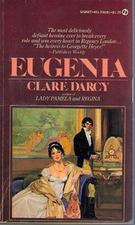
Eugenia by Clare Darcy
Walker and Company 1977, Signet 1978
[and other various reprints]
She had never thought a great deal about being in love before, not being romantically inclined and having read very few of the novels over which other young ladies at Miss Bascom’s had shed luxurious tears; but obviously, she thought, it was quite as uncomfortable a matter as those marbled volumes depicted it as being. [Eugenia, p. 231]
Clare Darcy’s Eugenia is a bit of a different confection than the usual Regency Romance. The Heroine is still the smart, feisty, quick-thinking, in this case tomboy-like young lady, and Our Hero is as expected, tall, dark and handsome, strong and muscular; but there are only rare moments of sword-crossing, none of the “they started off hating each other” – indeed, this Hero and Heroine are only occasionally found interacting on the page together, and barely ever alone – but it is quite charming all the same… and thankfully largely lacking the incessant “infant-brat-chit” talk!
We begin in Bath in May of 1811, and Miss Eugenia Liddiard, an orphan since her father’s death three years ago and schooled at the Miss Bascom’s Select Academy for Young Ladies, is finally returning “home” to the Essex seat of her cousin / guardian Lord Chandross. Lady Chandross, “not a proper guardian”, is to chaperon Eugenia in her first London Season, the goal to marry her off as soon as possible so she, Lady C, may return to to her own dalliances unencumbered. Eugenia wants none of this – she is practical and not romantic and has definitely made up her mind to propose marriage to her childhood friend Tom Rowntree, brother of her best friend Muffet, so she will no longer be a burdensome project, be able to settle on land adjacent to her former home Coverts in Kent [her “place of belonging” and now in the care of a hands-off elderly clergyman cousin], and to be free to just be, taking no orders from anyone.
Fortunately for all, characters and readers alike, the traveling chaise bearing Eugenia and her abigail is forestalled at the less than fashionable Kings Head Inn due to a raging storm and washed-out roads, and Eugenia, “who liked new experiences of any sort”, serendipitously runs into her cousin “Gerry” at the Inn, and the adventure begins. By page nine we have met our Hero, have a full understanding of the the Heroine’s character, beauty, love of adventure, and quite wild imagination with a penchant for concocting very tall tales when the occasion calls for it.
For “Gerry” is not Eugenia’s wild and reckless cousin Gerry at all, but the dead-ringer “Richard” [to wit, Jane Austen may not approve but he makes a fine Hero just the same!]. Richard is yet another cousin [isn’t is striking How Many Cousins there are in these Regency novels?!], also forestalled at the Inn and suffering from the lingering effects of a fever – and alas! he collapses in a dead faint in the Inn’s coffeehouse, Eugenia comes to the rescue and discovers the truth of his identity – he is the “by-blow” of her long-dead uncle Charles, thus not the true legitimate male heir to Coverts because he has only hearsay evidence, no written proof, of his parent’s marriage. Orphaned shortly after birth and raised by a clergyman in Ireland, Richard has returned to England to prove his birthright; Eugenia schemes for him to pass himself off as his look-alike cousin and come to her guardian’s estate to recuperate, offering her help to search the ecclesiastical records for the hoped-for marriage registry.
But, as all best-laid plans must indeed go awry or we wouldn’t have a tale to tell, real cousin Gerry is being sought by the Bow Street Runners for Highway Robbery and Murder – Richard must go into hiding until Gerry can be captured or he risks the gallows…
… so… her wondrous and fertile imagination madly at work, Eugenia sets up a new plan [she calls it “acting, not lying” ] – with much disguise, masquerading, outrageous fabrications to family and friends, and many a character entering her play – her old nurse Nan and her old groom Haggart to whom she confides Richard’s secrets; Lady Brassbororough [!], Lady B, the former “scarlet woman” famous for her stage past and various liaisons among the the rich of the ton, now a rather large woman covered in emeralds and diamonds, with a pug named Wellington who bites on command, with a resource of ready swears to send any man staggering into a corner, and who thankfully, in the end, saves the day.
I’ll tell no more – but Miss Darcy, like Heyer before her in False Colours, gives us an almost gentle tale of mistaken identity, complete with Regency cant, French sayings, and an abundance of Regency references [Stulz the tailor, the 1697 play “The Deceiver Deceived“, Hessian soup, Fanchon, ices at Gunter’s [though it is misnamed Gunther’s – her mistake or a typo?] are just a few examples … there are a good many more with the fun of looking them up!]; the two bumbling Bow Street Runners, Baker and Cartwright [perfect name for a TV show!]; dance requests and marriage proposals from all the wrong people; the “highest kick of fashion” described; the settings of Town and Country knowingly depicted; the ever-present cadre of servants, who keep “up a dignified pretence, for the sake of [their] positions, of being deaf and blind as well as quite uninterested” [p. 242]; the requisite pistols and grown men brawling; a charming and defiant Heroine who unromantic as she believes herself to be discovers “the joy of knowing love” and the pain of not having it returned; and finally The Hero, more Fitzwilliam Darcy-like – aloof and composed with a quiet, impenetrable reserve and decisive manner – and thankfully knows how to perform the proper Embraces and Crushing Kisses when so called upon.
Lady Chandross, “with her usual air of fashionable indifference“, sums it all up nicely with “so it seems that everything has turned out for the best in the end, quite in the manner of one of those dull little comedies where everyone reforms or is suitably paired off just before the curtain falls” [p. 224] – Miss Darcy may laugh so at her own little creation, but so do we, and again, though this is not Heyer, it is great fun – put it on your summer reading list!
I marvel each day the number of Austen-related blog posts, newspaper articles, and just plain references to “Jane Austen” that show up, sometimes in the unlikeliest of places. It’s like the old story if you buy a yellow VW, you will suddenly see a ton of yellow VWs running all over the place. My mother named me “Deborah” when the name was unheard of – and a year later, everywhere she went she heard mothers calling for their little “Debbies” – same for me when I gave my daughter 38 years ago my completely unheard of middle name of “Jessica”, a name from my English grandmother – and we all know how many of those are running around! … so I ask, was Austen always this much in the news, or is it because I am just paying attention??
That said, here are several of the more interesting Austen-sitings from the past week or so – and this barely touches the surface!
*First must start with a reminder to check out the JASNA.org site for information on the 2010 AGM in Portland Oregon – it is more than half-full, so if you have thoughts of attending this sure-to-be-fabulous gathering in celebration of Northanger Abbey, best to send in your registration as soon as possible.
**
*The Jane Austen’s House Museum in Chawton has put their shop online through Trail Publishing – many goodies – treat yourself!
**
* Speaking of Chawton – Tony Grant on his London Callingblog has posted on “Why do we want to visit Chawton” with a wonderful photograph of the staircase from the second story – search “Jane Austen” on his blog and you will find a variety of other Austen-related posts. Tony is also writing a weekly column for the Jane Austen Today blog: this week a post on “Jane Austen and the English Country Garden” – lovely pictures and commentary!
**
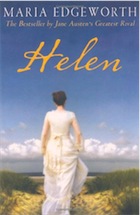
*John Mullan, Austen and 18th century scholar [he spoke at the Philadelphia AGM on “Sisterly Chat”, one of my favorite talks – now in Persuasions 31 [2009], pp. 59-68, but alas! not yet online], has written a review of the newly released reprint of Maria Edgeworth’s Helen – hopefully rekindling interest in this Irish authoress, much read and admired by Jane Austen. You can read his review here at The Guardian.
It bruises Emma that Jane Fairfax is so very good at playing the piano (if only she had practised a little more). Jane’s prowess at the keyboard becomes central to the plot. Who could be the donor of the expensive instrument that is delivered to Miss Bates’s house, where Jane is staying? It must surely be a male admirer. Well, yes, but Emma’s deductions lead her very astray.
Of course, I would have added Sense & Sensibility [Marianne’s haven, Brandon struck by love-at-first-sight] and Pride & Prejudice [Darcy and Elizabeth at the piano at Rosings is quite the character-revealing scene – and who can forget Lady Catherine’s exclamations of her own talents!] – but the other nine listed are worthy opponents, and Austen can not take over every list!
**
* and more on Ms. Edgeworth last month at Foyle’s online: in “Jane Austen continues to surpass Maria Edgworth”
Rosemary Goring, the literary editor of the Herald, pointed out that Edgeworth was considered to be a ‘far more fashionable and illustrious’ author than Austen when the two were writing and still has fans today, as evidenced by her recently reissued Helen. However, she noted that it is Austen who has captured the hearts and imaginations of modern readers, partly due to her reluctance to moralise and her willingness to include immorality in her works. ‘Edgeworth’s fiction may have been the bestselling work of her era, making her the richest novelist alive, but where she thumps the table and cranks up the melodrama, Austen quietly rips the rug from under her characters and her readers,’ Goring added.
[from Foyle’s Bookstores website]
**
* …the ball, it is quite a settled thing; and as soon as Nicholls has made white soup enough, I shall send round my cards.”[P&P, ch. 11]
Julie at Austenonly has given us a rousing post on the history of that ever-to-be-understood “White Soup” – certainly one the shortest throwaway lines in literature to generate such a number of articles! A lovely post with numerous illustrations and recipes. Nicholls would heartily approve!
**
*I had the pleasure last year to attend a play at the Theatre by the Lake in Keswick in the Lake District. We saw “The Maid of Buttermere “- I now get all their mailings, and usually bemoan the fact that I on the wrong side of the pond, but never moreso than this season for the staging of Northanger Abbey adapted by Tim Luscombe- it runs from May 29 – November 5, 2010.
**
* “To be published May 2011, Professor Rachel Brownstein’s book Why Jane Austen? considers reasons why the nineteenth-century English novelist “became a star during the last 20 years.” Brownstein, who teaches at Brooklyn College and the CUNY Graduate Center, is a renowned Austen scholar. Her first book, Becoming a Heroine: Reading about Women in Novels (Viking, 1982), stemmed from encounters with women returning to Brooklyn College after raising children. Those students “had special interest in the situation of women and in nineteenth-century novels, first among them Jane Austen’s,” says Brownstein. “In this new book, I write about the ways that feminism, anti-feminism, and post-feminism, among other factors, have fed the popular passion for Jane.” [from the Brooklyn College website] – oh boy! another book to add to the mix of Sutherland’s Jane Austen’s Textual Lives and Harman’s Jane’s Fame…] – and Brownstein’s Becoming Heroine is a must have for your library… wonderful chapter on Austen…
**
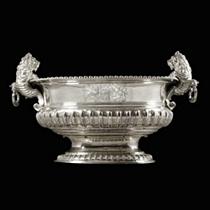
* Sotheby’s recent auction of “Treasures Aristocratic Heirlooms” with a sale total of 13,951,250 GBP for a mere 21 items! – anything from Rosings or Pembererly?
[wine cistern of Thomas Wentworth: 2,505,250 GBP ]
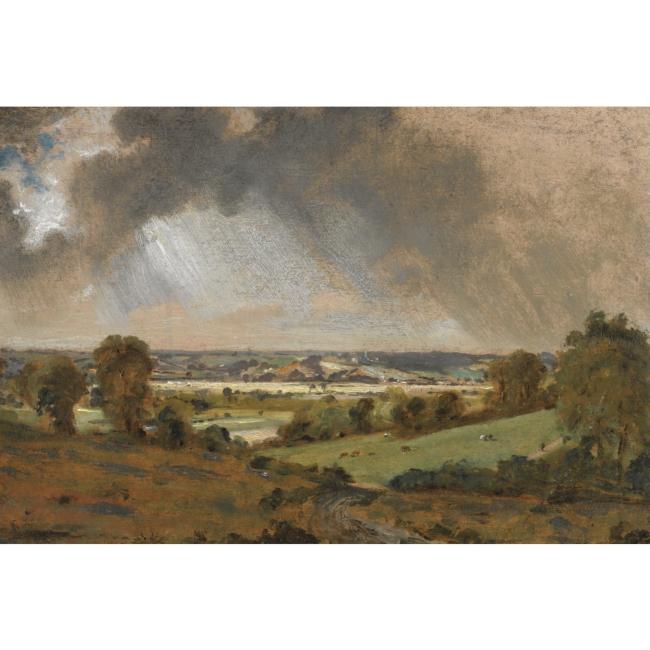
And today, Sotheby’s auction of Old Masters and British Paintings Day Sale [July 8, 2010] – worth a look for such works of art as this Constable: [hammer price – 289,250 GBP] *For the Georgette Heyer fans out there, Sourcebooks will be releasing a reprint of Jennifer Kloester’s Georgette Heyer’s Regency World in August 2010: [an invaluable resource!]
“The definitive guide for all fans of Georgette Heyer, Jane Austen, and the glittering Regency period”
**
*And Vic at the Jane Austen’s World blog has created another entirely new blog called Art & History Tour, a place for “historical posts and reviews not dealing with Jane Austen and the Regency era”… another lovely addition to cyberspace! [but hope this doesn’t take Vic away from “all things Austen” for too much of her time…]
*the Teach Me Tonight blog has announced the August release of the first issue of the Journal of Popular Romance Studies ~ great articles with open access online. Visit the IASPR website for more information [the International Association for the Study of Popular Romance]
**
* and last but certainly not least, Mags at Austenblog has a whole new look! – she comes out swinging her “Clubat” at the Very-Deserving Glenn Beck – see her post here [what was he thinking?!]
Georgina, by Clare Darcy.
NY: Walker and Company, 1971;
NY: Dell, 1977 [and other reprints]
***********
The opening scene finds us in a house on Great Pulteney Street in Bath, where a rejected marriage proposal has all the Power family at odds – we quickly see that Miss Georgina Power is not going to be forced into an arranged marriage with one Mr. Smallwoods, despite his prospective title and comfortable fortune – and to avoid the inevitable resulting gossip, she is quickly shipped off to Ireland to visit her father’s cousin, the widowed Arabella Quinlevan, who has her own plans for Georgina to marry her son Brandon. They reside at The Place of the Oaks, a fine estate, slowing running to seed since the death of the owner, Georgina’s uncle, whose daughter Nuala had recently died and the estate rather than going to the next rightful heir, our Heroine Georgina, fell to Nuala’s “odious adventurer” rake of a husband, Mr. Shannon. [phew! sufficiently confused?]
Now Mr. Shannon has all the qualities of the Regency Rake – but he has no place in this closed Society, as he is the “natural son” of the Scottish Lord Cartan, and this, coupled with his arrogant air and lack of proper manners and a bad reputation fueled by the gossip-mongers, sets the entire cast of characters off to a rousingly bad start when Shannon returns to The Place unannounced, asserts his rights as owner and expects the Quinlevans to vacate immediately.
He walked into the book-room with Brandon. Her concept of arrogance was immediately strengthened by the sight of a tall figure, carried with distinction and set off to careless advantage in a well-fitting drab coat, buckskins, and top boots, and a harsh-featured face with cool grey eyes.[p. 33]
Georgina labels him a “rag-mannered basket-scrambler” [p.36] and the sparks begin, that ever-present in a Regency Romance “crossing of swords”. Shannon IS an arrogant, cold-hearted Hero. They both are hot-tempered, she “devilishly obstinate” and persistent, with a sharp and honest tongue, displaying all manner of improper behaviors for a Lady; he showing no emotion, no feelings, but seemingly a hardened rake who had married Nuala for her fortune. But Georgina begins to see that in his fine management of the estate, the respect the servants and tenants show him, his growing friendship with Brandon, his protectiveness of her [like all Regency Heroes, he does have a penchant for showing up exactly when the Heroine has landed in the suds!], that perhaps the neighborhood’s opinion is not so justified after all – her efforts to defend him bring on the tattle-boxes and the damage is done.
True to this genre, the conventional escapades begin, Georgina in numerous scrapes, masquerades, marriage proposals in abundance – some for love, some for her fortune – balls, midnight runaways, the machinations of a few nasty and jealous Matrons, and like Heyer before her, Miss Darcy’s strong, silent, Hero does indeed have feelings – all conveyed in his Eyes: “the glad incredulous welcome in his eyes” changing to “an indifferent sardonic coolness”, “the contempt she read in those eyes”, “a look of such bleak unhappiness in those grey eyes”, “those hard grey eyes, strangely softening”, etc…, otherwise we would be at a loss…!
Georgina was Clare Darcy’s first book, though I did not read it first, and I recollect that I thought it more serious than anything Heyer had certainly ever written – truth be told, it lacks that expected humor and even Darcy’s own hand at it improves in her later works. I wonder perhaps that she was not sure where her Regency era talents would take her in this first book. There is a certain gravity to the narrative -we have a dark Hero, a mystery in his past about his marriage and the death of his wife, rejected by a Society that seems more mean-spirited than funny, and a Heroine who fights the fortune-focused, behavior-constraining society she lives in, breaking almost every Rule in the Book to clarify what she instinctively knows about this man. Thankfully, her young cohort Brandon, whose mother is set to have him betrothed to Georgina, is the salvation here – the bookish, Byron-like figure [with the required limp] is quite adorable and amusing, bringing much-needed levity.
I liked this book very much – and while we again know from the first moment that the name of Mr. Shannon is introduced on the page, where it is all headed, it was great fun. And one must like a book where the proposing Hero says: “Nay, I’m no hand at speeches!” – even Jane Austen’s Mr. Knightley would approve!
For the past year I have been interspersing my regular reading with a taste of Georgette Heyer – a delightful romp through her Regency romances – not quite done yet [gad! There are so Many! – not to mention the Mysteries and the Historicals…], and I fear as I look back that I am getting them all confused – I must learn to take better notes! – But I have taken a break for a bit, and in looking around for other such books to get my “Regency fix” [or is it the “romance”?!], I have discovered Clare Darcy – or at least discovered her books, as there seems to be cloak of complete mystery about the author. Even the know-it-all Internet brings up little evidence:
1. A Wikipedia entry that only lists her books and repeats the biography given on all the novels: “an American novelist from Ohio”
2. The Books Themselves: “…her recent Regency tales have all been acclaimed as the truest successors to those of Georgette Heyer. It is hard not to believe that Miss Darcy was born and raised in the best Society of that day – rather than in the Ohio of our own time.” All copyright notices state either the publisher “Walker and Company” or “Clare Darcy”
3. Rave Reviews: “The latest addition to the author’s piquant, literate romances of life among the ton in Regency England celebrates one of Darcy’s spunkiest heroines yet” [Publisher’s Weekly on Eugenia] and “An enchanting Regency novel…which makes one rejoice in finding what could have been taken for a new Georgette Heyer novel” [Library Journal on Victoire]
4. A Blog Post by the Regency author Lesley-Anne McLeod dated September 16, 2008: Ms. McLeod raises the same questions I have: Who was she? Where is she? Was she a “she” or a “he”? Is Clare Darcy a penname? [it must be!], Did she write other books? she is obviously versed in Heyer, but original and knowledgeable enough to put the reader into a living, breathing Regency world. Ms. McLeod asks for any information, and a reader commented: “I would like to point out in the front of my book it states that ‘this is the last of the novels discovered after Clare Darcy’s death’. It was first published in 1982.” – this last title is Caroline and Julia. [I have the Signet paperback and it makes no such mention, so this must be in the hardcover edition; but the author note in my copy says “Miss Darcy was very much at home in her special world, Regency England” and the previous books note that “she is very much at home…” [well, at least that answers ‘where she is’]
[and BTW, on another post, Lesley Ann lists her top dozen Regency reads: Clare Darcy’s Lydia sits in great company at number 11; Persuasion is 6, but the list is in no particular order]
5. At Good Tonthere is a list of all her works with character names and short summaries
6. There are two reviews at An Evening at Almack’s: one of Lydiaand one of Victoire
7. And finally at Fantastic Fiction, there is a list of titles with several images of book covers, but nothing else
So, scanty information! I’ll share some thoughts and pen a few “rapid reviews” over my next few posts [don’t want to give too much away!] – I begin with the titles of her fourteen published works [thankfully, more manageable than Heyer!] – all published by Walker, and in paperback by Signet, other various reprints, no longer in print but readily available from used booksellers. You can also search Amazon and read a few customer reviews.
Here’s the list:
Georgina [1971]
Cecily: Or a Young Lady of Quality [1972)]
Lydia: Or Love in Town [1973]
Victoire [1974]
Lady Pamela [1975]
Allegra [1976]
Elyza [1976]
Regina [1976]
Cressida [1977]
Eugenia [1977]
Gwendolen [1979]
Rolande [1979]
Letty [1980]
Caroline and Julia [1982]
*******************************
So far I have read eight of the fourteen in my continuing efforts to flunk my regular bookgroup – and now, as with my Heyer immersion, I am getting all the plot lines confused, relying on notes to keep them fresh in my mind, and now taking a much needed break [not to mention that I am increasingly frustrated with my husband for not wanting to dress in superfine blue waistcoats and a cravat in the Mathematical style, his “dark locks” in the Stanhope Crop, and must desist in those efforts for family harmony…]
I cannot compare Darcy to Heyer – she falls short; everyone does, just as anyone trying to imitate Jane Austen, fails miserably despite best efforts. Heyer is incomparable in plot, characterization, and laugh-out-loud humor – I first read Faro’s Daughter and at every turn of the page I yelled at myself for not Reading Her Before Now – so I will not compare them – read Clare Darcy for herself – here too we find great plots, characters [some that jump off the page], sparkling dialogue, and almost as much humor as Heyer – there is at least one classic scene in each novel that sends you into peels, and any of the books will certainly cure you of a “fit of the dismals”!
Some Regency Romance conventions:
The Romance Writers of America site defines the “Romance Genre” thusly – it must comprise these two elements:
A Central Love Story: The main plot centers around two individuals falling in love and struggling to make the relationship work. A writer can include as many subplots as he/she wants as long as the love story is the main focus of the novel.
An Emotionally-Satisfying and Optimistic Ending: In a romance, the lovers who risk and struggle for each other and their relationship are rewarded with emotional justice and unconditional love.
A “Regency Romance” must have these and be set for the most part in Regency England. And what else? – these seem to be the recurring conventions , what shows up in each tale, what we expect from page one to the end [I confess to NOT being a reader of romances, so bear with me as I try to piece all this together]
1. The Regency World of Town and Country:
real settings in England, either in London and during the London Season, or in a Country house; Ireland figures here and there, and one heroine is AMERICAN from New Orleans [and thus fashioned appropriately in all the latest French fashions]; Waterloo is also prominent: we see settings such as Vauxhall Gardens; the Covent Garden Theatres, complete with the acting greats Kean, Kemble, Siddons; the boxing saloons and gambling houses; Almack’s and its Patronesses; circulating libraries; Tattersalls and horses [“ a bang-up set of blood and bones”] and carriages [chaises and hackney coaches and fast-driven curricles and gigs] and coaching inns for traveling escapades, complete with races, mishaps and crashes; Restorative Pork Jelly makes an appearance, as does even the Prince Regent himself.
2. A world of Regency fashion:– where male and female dress is described in full, vivid, colorful detail, ones attention to their dress delineating their character – there is indeed an abundance of the color “puce” – the “why” of this I will persue further…
3. Regency language: Miss Darcy either kept lengthy notes while reading her Heyer or she had her own “Regency Lexicon” close by – each novel is replete with Regency cant, adding to the authenticity and the humor: you can read my post on Frederica where all I do is compile a list of Heyer’s terms – so here I list some of Darcy’s, in no particular order [and laughing at my frustrated spell-checker’s efforts!] – you can refer to the online Regency Lexicon if you need a definition!:
outside of enough; flummery; fustian; fall into the ropes; rake-shame; faradiddle; light-skirts; roundaboutations [my very favorite!]; Banbury Tales and Cheltenham Tragedies; bumblebroth; miff-maff; flying up into the boughs; cloth-headed; moonlings; Top of the Trees, Lady of Quality; the ton; shatter-brained; bird-witted; gudgeon; on dits and tattle-boxes; put-downs and cuts and quizzing glasses; those requisite vapours and dismals; don’t like it above half; rag-mannered; the high fidgets; cutting a wheedle; coming to cuffs; etc. – you get the idea – we are in Heyeresque territory here…and feel quite at home.
4. The Heroine: she will be independent, feisty and high-spirited; a Lady of Quality but unconventional in her behaviors, setting the tattle-boxes wagging their tongues and the Hero intrigued; sometimes wealthy in her own right, but usually in need of some assistance, either for herself or a family member and thus searching for work, rank, money, an introduction into Society, etc; always beautiful, not always a “traditional” beauty, but can be dark, or titian / chestnut or blond; usually tall and slim, but can be petite [Elyza]; will have numerous gentleman sitting at her feet, interested in all manner of coupling arrangements; knows all the dances, even the WALTZ; adept at male-dominated activities as riding, hunting, fishing, carriage driving; seems to be most adept at getting into scrapes – enter the Hero; always calls the Hero “abominable” or “wretch” and is always “crossing swords” with him [that’s how we know he is The Hero… or as Lady St. Abbs says in Lady Pamela:
You mark my words… when a woman comes to dagger-drawin’ with a man every time she meets him, there’s mischief in it! [p.126]
5. The Hero: usually wealthy, either by birthright or inheritance from a distant relative; always has some grand name like Lord Dalven, or Sir Derek Herington, Lord Wrexam, Viscount Northover, Cleve Redmayne [Cleve??!], the Marquis of Tarn, or Robert Ranleigh; he will be handsome but not perfectly so [compare to Lord Harlbury in Lydia, first name “Shafto”, reason enough to rule him out as Hero, but he is also “a very worthy young man – and the most beautiful creature I have ever set eyes on – and an earl – and fabulously rich-“ – but alas! NOT our Hero]; OUR Hero is handsome but this is usually coupled with a sardonic, cynical look, a darkening brow; mostly dark locks, occasionally fair, with grey or black eyes; dressed like a dandy in the fashion of the moment, but detached enough from his own appearance to be attractive not foppish, with only the occasional grab for his snuff box – he wears a well-fitting superfine blue coat, starched neckcloths, he is ALWAYS broad-shouldered and powerfully built; he calls the heroine all sorts of charming endearments: my girl, a chit, a vixen, hoyden, infant, brat [these can grate on my 21st century feminist leanings, but I shake it off in an effort to get into the spirit of it all…]; he is calm and rational and in control in the face of any hysteria, tribulation or catastrophe, his behavior bordering on the arrogant [those feminist sensibilities having trouble yet again…]; often languid with a “drawl” in speaking; a sense of humor, but has a “dangerous look” when pushed to the limit; is an accomplished boxer and knocks adversaries to the ground in one blow; and of course is an experienced whip. In short, the perfect man for us all… except for that horrible gossip-feeding reputation as… a Rake…
6. Other Characters: often a sibling of the heroine in need of Help, can be a bit “bird-witted”; the Other Men, hanging about the Heroine, often Mama’s boys, dandies, or wimps; those gossipy Matrons of the ton, and the Mothers with marriageable daughters a la Lady Catherine de Bourgh; a coterie of landladies, butlers, cooks, maids, grooms and tigers, each with their own personality that propel the plot, add the humor, and give the main characters someone to sound off to, play off of…
7. Like in Heyer, everything is revealed in the Eyes of the Hero – the gleam; the odd light; the intense warmth; the laughing eyes; the eyes that are alight; the hard grey eyes strangely softening… etc…
8. The Consummate Ending: the thickened voice of the hero; the melting heroine weak in the knees suddenly unable to look The Hero in the face; the “ruthless” nearly crushing embraces; the “violent” kisses… I could go on but won’t – you must read each ending…
9. And Austen? – well of course, all these Heroes are made of Darcy’s [as in Fitzwilliam] cloth, so Austen is everywhere really – but in Lady Pamela there is this wonderful reference to Sir Charles Grandison by The Hero:
In love with him! No, no – you mean you made up your mind to have him when you were a schoolroom chit and hadn’t any more idea of what you wanted in a man than what you read in novels. And I must say Babcoke [another name to surely alert us to his I-am-not-the-hero status] could do Sir Charles Grandison very well if he had the least idea of what it was all about and didn’t fall asleep in the middle of it. [p. 120]
Aah! The Hero has actually READ Sir Charles Grandison!
And like Austen in her Letters where she freely used Capital Letters, there is a penchant in Lady Pamela for the same: it adds to the humor in the dialogue, such as “I will Get to the Bottom of This”.
A quick summary – but lest you think that all the stories are the same, be not afraid of treading into Clare Darcy’s land – each story, like most romance novels, begins on page one and by page two you have figured out who is the Heroine and who will be Her Hero, and I suppose you could turn to the last few pages and get into all the Ending Embraces and Kisses and call it a day – but don’t do that – each story brings unique characters, fun plot lines, all that Regency chatter, the lovely fashions described, the Heroine’s adventures amidst the Society constraints on her Behavior, the Hero’s awakening to being a “marrying man” after all, and the Heroine realizing that she really has had a passion for this “abominable wretch” quite from the start – we knew it all along, but don’t pass up the ride…
Join me for several reviews, spaced over the next few days….
Jane Austen’s Pride and Prejudice has become part of the canon of Western literature, and it has a huge fan following. Why does this story still speak to us today, in both the original novel form and its many adaptations? We’ll explore the subject with four guests: two who are BYU professors and two who are integrally involved with its production at this year’s Shakespearean festival.
The Utah Shakespearean Festival is staging Pride & Prejudice through August 28th, with various Austen-related events during the “Jane Austen Week” of July 19-24. [and the JASNA Utah Region is very much involved.]
With thanks to Janeite Sylvia for this information [her son is the director!]
Laurel Ann at her Austenprose blog is currently posting a month-long group read through Pride & Prejudice – do visit and join in the discussion! – she is as always an insightful reader and discussion leader, and what better way to spend the first month of summer musing on P&P and the finer points of Austen’s magic!
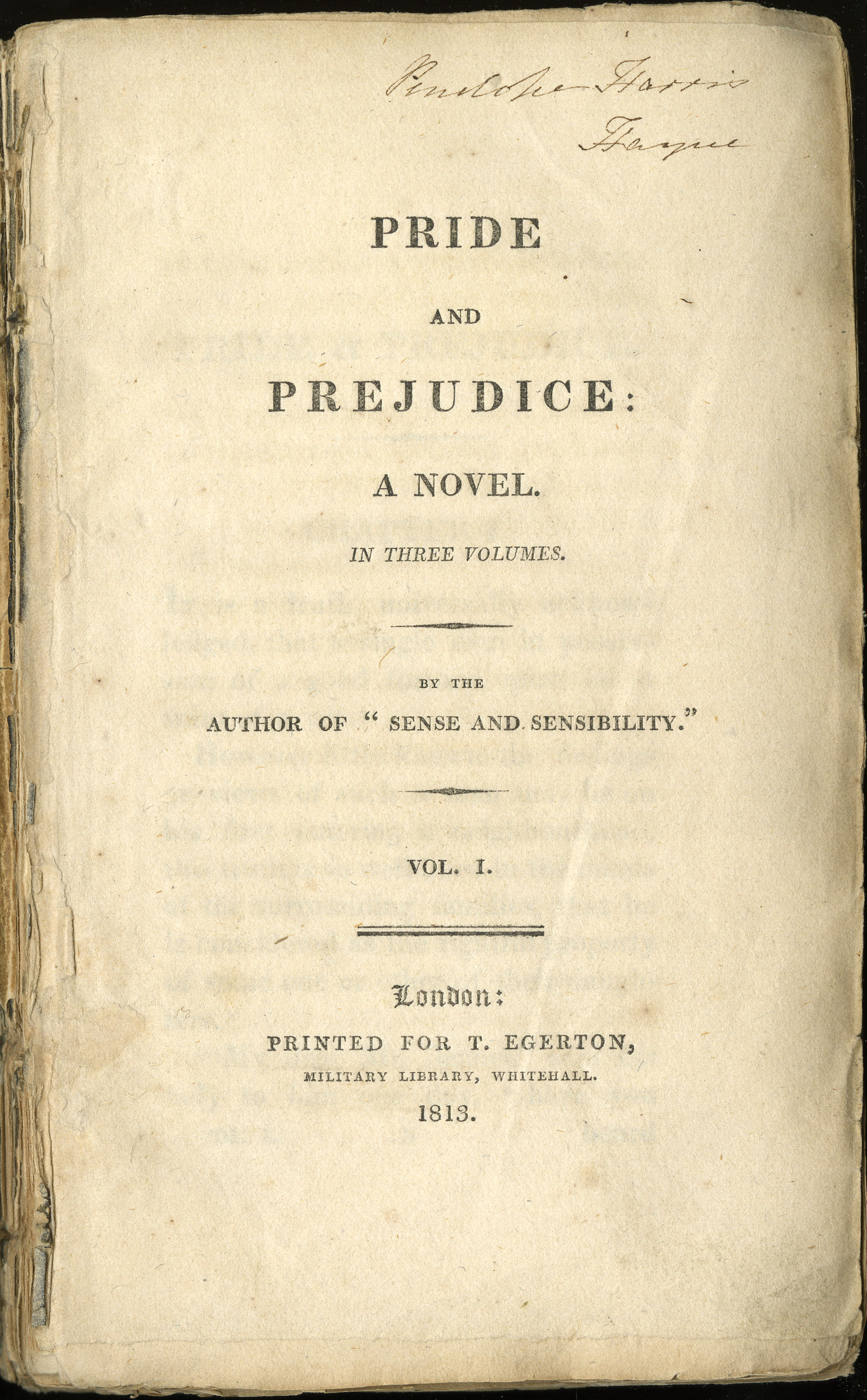
The publishing history of P&P, Austen’s most popular book, then and now, is an interesting study in the book trade of early 19th century England. First completed in 1797 [and called First Impressions] and rejected by the publisher her father took the manuscript to, Austen reworked P&P and submitted it to Thomas Egerton, the publishing house of her Sense & Sensibility, in 1812 [published January 28, 1813]. She sold the copyright outright for £110, and did not incur other expenses in its publication, as in the three other works published in her lifetime [see links below for more information.] How we would love to know her thoughts on this road to publication! – how we would love to have her letters written while in the process of the writing to give us some idea of her imagination at work [where WAS the model for Pemberley? was Mr. Darcy someone REAL? was Elizabeth Bennet her alter ego? was MR COLLINS drawn from life?], or to have the letters to her brother Henry and his to Egerton – but alas! we have nothing, just a few comments scattered among the surviving letters.
Austen does not give us much in her letters as to her writing practices or narrative theory [and thus such a disappointment when they were first published, criticized for their “mundaneness,” their focus on domestic nothings and neighborhood gossip!] – but if you dig for diamonds you will find them, and these scattered mentions are certainly diamonds – it is the feeling of having her right over your shoulder when you read that she is “disgusted” with the way her mother is reading her book aloud, or that she REALLY likes this earning money for her labors, or being miffed [but also full of pride!] with Henry for telling her Secret to one and all – we see Jane Austen here in her own words – the funny, ironic, brilliant Jane Austen – never enough, but this is as good as it is going to get.
So in this post I offer all the references she makes to Pride & Prejudice, her “own darling Child” – read them and enjoy!
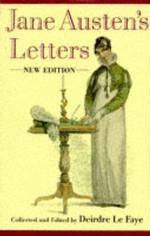
[NOTE: page references are to Deirdre Le Faye, ed., Jane Austen’s Letters, 3rd ed., Oxford, 1997; all abbreviations and spelling errors are retained]
Letter 17. January 8-9, 1799 to Cassandra, from Steventon
I do wonder at your wanting to read first impressions again, so seldom as you have gone through it, & that so long ago.[page 35]
[Le Faye notes that this is the first surviving mention of Austen’s literary work, this prototype of P&P having been finished in August 1797; Note, p. 366]
Letter 21. June 11, 1799, To Cassandra, from Bath
I would not let Martha read First Impressions again upon any account, & I am very glad that I did not leave it in your power. – She is very cunning, but I see through her design; – she means to publish it from Memory, & one more perusal must enable her to do it.[p.44]
Letter 77. November 29-30, 1812, to Martha Lloyd from Chawton
P.& P. is sold. – Egerton gives £110 for it. – I would rather have had £150, but we could not both be pleased, & I am not at all surprised that he should not chuse to hazard so much. – It’s being sold will I hope be a great saving of Trouble to Henry, & therefore must be welcome to me. – The Money is to be paid at the end of the twelvemonth. [p. 197]
Letter 79. January 29, 1813, to Cassandra from Chawton
I want to tell you that I have got my own darling Child from London; – on Wednesday I received one Copy, sent down by Falknor, with three lines from Henry to say that he had given another to Charles & sent a 3d by the Coach to Godmersham; just the two Sets which I was least eager for the disposal of. I wrote to him immediately to beg for my own two other Sets, unless he would take the trouble of forwarding them at once to Steventon & Portsmouth – not having any idea of his leaving Town before today; – by your account however he was gone before my Letter was written. The only evil is the delay, nothing more can be done till his return. Tell James & Mary so, with my Love. – For your sake I am as well pleased that it shd be so, as it might be unpleasant to you to be in the Neighborhood at the first burst of the business. – The Advertisement is in our paper to day [the Morning Chronicle of January 28, 1813]. – 18s – He shall ask £1-1- for my two next, & £1-8 – for my stupidest of all. I shall write to Frank, that he may not feel himself neglected. Miss Benn dined with us on the very day of the Books coming, & in the eveng we set fairly at it & read half the 1st vol. to her – prefacing that having intelligence from Henry that such a work wd soon appear we had desired him to send it whenever it came out – & I beleive it passed with her unsuspected. – She was amused, poor soul! that she cd not help you know, with two such people to lead the way [JA and her mother]; but she really does seem to admire Elizabeth. I must confess that I think her as delightful a creature as ever appeared in print, & how I shall be able to tolerate those who do not like her at least, I do not know. – There are a few Typical errors – & a “said he” or a “said she” would sometimes make the Dialogue more immediately clear – but “I do not write for such dull Elves” “As have not a great deal of Ingenuity themselves.” [from Scott’s Marmion] – The 2d vol. is shorter than I cd wish – but the difference is not so much in reality as in look, there being a a larger proportion of Narrative in that part. I have lopt & cropt so successfully however that I imagine it must be rather shorter than S. & S. altogether. – Now I will try to write of something else; – it shall be a complete change of subject – Ordination.[p. 201-2]
Letter 80. February 4, 1813, to Cassandra from Chawton
Your letter was truely welcome & I am much obliged to you all for your praise; it came at a right time, for I had had some fits of disgust. – our 2d evening’s reading to Miss Benn had not pleased me so well, but I beleive something must be attributed to my Mother’s too rapid way of getting on – & tho’ she perfectly understands the Characters herself, she cannot speak as they ought. – upon the whole however I am quite vain enough & well satisfied enough. – The work is rather too light & bright & sparkling; – it wants shade; – it wants to be stretched out here & there with a long Chapter – of sense if it could be had, if not of solemn specious nonsense – about something unconnected with the story; an Essay on Writing, a critique on Walter Scott, or a history of Buonaparte – or anything that would form a contrast & bring the reader with increased delight to the playfulness & Epigrammatism of the general stile. – I doubt your quite agreeing with me here – I know your starched Notions. – The caution observed at Steventon with regard to the possession of the book is an agreable surprise to me, & I heartily wish it may be the means of saving you from everything unpleasant; – but you must be prepared for the Neighbourhood being perhaps already informed of there being such a Work in the World, & in the Chawton World! Dummer will do that you know. – It was spoken of here one morng when Mrs. D. [Digweed] called with Miss Benn. – The greatest blunder in the Printing that I have met with is in Page 220 – Vol.3 where two speeches are made into one. – There might as well have been no suppers at Longbourn, but I suppose it was the remains of Mrs. Bennet’s old Meryton habits.[p. 203]
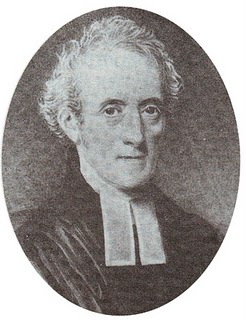
Mrs. George Austen
I had a letter from Henry yesterday, written on Sunday from Oxford; mine had been forwarded to him… he says that copies were sent to S. [Steventon] & P. [Portsmouth] at the same time as the others. [p. 204]
Letter 81. February 9, 1813, to Cassandra from Chawton
I am exceedingly pleased that you say what you do, after having gone thro the whole work – & Fanny’s praise is very gratifying; – my hopes were tolerably strong for her, but nothing like a certainty. Her liking Darcy & Elizabeth is enough. She might hate all the others, if she would. I have her opinion under her own hand this morning, but your transcript of it which I read first, was not & is not the less acceptable. – To me, it is of course all praise – but the more exact truth which she sends you is good enough. [p. 205]
Yes, I beleive I shall tell Anna – & if you see her, & donot dislike the commission, you may tell her for me. You know I meant to do it as handsomely as I could. But she will probably not return in time[p. 205, referring to telling her niece Anna that she is the author of S&S and P&P, note p. 414]
…- there is still work for one evening more.[p. 206, to finish reading P&P aloud, note p. 414]
Letter 85. May 24, 1813, to Cassandra from London
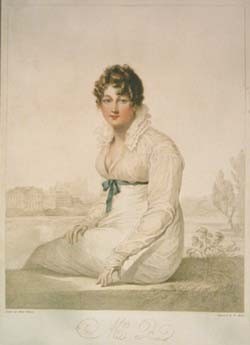
…Henry & I went to the Exhibition in Spring Gardens. It is not thought a good collection, but I was very well pleased – particularly [pray tell Fanny] with a small portrait of Mrs. Bingley, excessively like her. I was in hopes of seeing one of her Sister, but there was no Mrs. Darcy; – perhaps however, I may find her in the Great Exhibition which we shall go to, if we have time; – I have no chance of her in the collection of Sir Joshua Reynolds’s Paintings which now is shewing in Pall Mall & which we are also to visit. – Mrs. Bingley is exactly herself, size, shaped face, features and sweetness; there never was a greater likeness. She is dressed in a white gown, with green ornaments, which convinces me of what I have always supposed, that green was a favourite colour with her. I dare say Mrs. D. will be in Yellow. [p. 212]
[Portrait of a Lady, by J.F.M. Huet-Villiers]
a.k.a. Mrs. Bingley
I am very much obliged to Fanny for her Letter; – it made me laugh heartily; but I cannot pretend to answer it. Even had I more time, I should not feel at all sure of the sort of Letter that Miss D. would write…[p. 213, referring to a letter from Fanny written to and expecting a response from Georgiana Darcy – Note p. 417]
We have been to both the Exhibition & Sir J. Reynolds’, – and I am disappointed, for there was nothing like Mrs. D. at either. – I can only imagine that Mr. D. prizes any Picture of her too much to like it should be exposed to the public eye. – I can imagine he wd have that sort [of, omitted] feeling – that mixture of Love, Pride & Delicacy. [p. 213]
Letter 86. July 3-6, 1813, to Francis Austen from Chawton
You will be glad to hear that every Copy of S.&S. is sold & that it has brought me £140 – besides the Copyright, if that shd ever be of any value. – I have now therefore written myself into £250. – which only makes me long for more. – I have something on hand – which I hope on the credit of P. & P. will sell well, tho’ not half so entertaining…[referring to Mansfield Park] [p. 217]
Letter 87. September 15-16, 1813, to Cassandra from London
Lady Robert [Kerr, nee Mary Gilbert] delighted with P. & P – and really was so I understand before she knew who wrote it – for, of course, she knows now. – He [Henry] told her with as much satisfaction as if it were my wish. He did not tell me this, but he told Fanny. And Mr. Hastings – I am quite delighted with what such a Man writes about it. – Henry sent him the Books after his return from Daylesford – but you will hear the Letter too. // Let me be rational & return to my two full stops. [p. 218]
I long to have you hear Mr. H’s [Warren Hastings] opinion of P&P. His admiring of Elizabeth so much is particularly welcome to me. [p. 221]
Letter 89. September 23-24, 1813, to Cassandra from Godmersham Park
Poor Dr. Isham is obliged to admire P.&P. – & to send me word that he is sure he shall not like Mde. Darblay’s new Novel half so well.– Mrs. C. [Cooke] invented it all of course.[referring to Frances Burney’s The Wanderer, published in 1814] [p. 227]
Letter 90. September 25, 1813, to Francis Austen from Godmerhsam Park
I thank you very warmly for your kind consent to my application & the kind hint that followed it. [asking Frank if she can use the names of his old ships in her her current work, MP] – but the truth is that the Secret has spread so far as to be scarcely the Shadow of a secret now – & that I beleive whenever the 3d appears I shall not even attempt to tell Lies about it. – I shall rather try to make all the Money than all the Mystery I can of it. – People shall pay for their knowledge if I can make them. – Henry heard P. & P. warmly praised in Scotland, by Lady Robt Kerr & another Lady; – and what does he do in the warmth of his Brotherly vanity & Love, but immediately tell them who wrote it! – A Thing once set going in that way – one knows how it spreads! – and he, dear Creature, has set is going so much more than once. I know it is done from affection & partiality – but at the same time, let me here again express to you & Mary my sense of the superior kindness which you have shewn on the occasion, in doing what I wished. – I am trying to harden myself. – After all, what a trifle it is in all its Bearings, to the really important points of one’s existence even in the World![p. 231]
Henry Austen
There is to be a 2d Edition of S.&S. Egerton advises it.[p. 232, referring to her publisher]
Letter 104. August 10-18, 1814, to Anna Austen from Chawton
Now we have finished the 2d book – or rather the 5th – I do think you had better omit Lady Helena’s postscript; to those who are acquainted with P.&P it will seem an Imitation. [p. 268, referring to Anna’s manuscript sent to JA for advice]
Letter 128. November 26, 1815, to Cassandra from London
Mr. H is reading Mansfield Park for the first time & prefers it to P&P.[p. 301, referring to Mr. Haden, London surgeon, “who brought good Manners & clever conversation” ]
Letter 132(Draft). December 11, 1815, to James Stanier Clarke from London
My greatest anxiety at present is that this 4th work [Emma] shd not disgrace what was good in the others. But on this point I will do myself the justice to declare that whatever may be my wishes for its’ success, I am very strongly haunted by the idea that to those readers who have preferred P&P. it will appear inferior in Wit, & to those who preferred MP. very inferior in good sense… [p. 306]
Letter 134(A). December 27, 1815, from the Countess of Morley to JA at Chawton
I am most anxiously waiting for an introduction to Emma…. I am already become quite intimate in the Woodhouse family, & feel that they will not amuse & interest me less than the Bennetts [sic], Bertrams, Norriss & all their admirable predecessors – I can give them no higher praise-[p. 308]
************************************
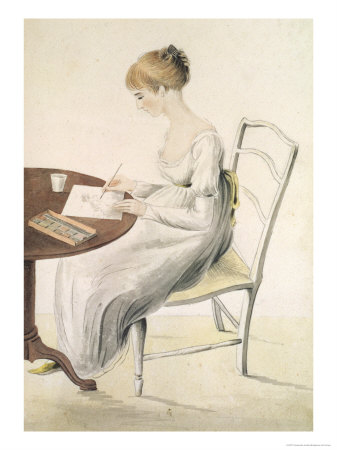
[a letter-writing Fanny Austen-Knight by Cassandra]
Mr. Grant has recently joined the Jane Austen Today blog as a weekly columnist – he has written on Jane Austen being fit and the recent post on Jane Austen’s World Cup football team [and thankfully we tied with the UK in the first game, though they may have won if they had had Mr. Darcy as the “goalscorer supreme’!]
Tony also alerted me to the website Geograph Britain and Ireland – a collection of photographs that represent every square kilometer of the UK. You can search any town relating to Jane Austen and find numerous current depictions of the area: Steventon, Lyme Regis, London, Bath, Chawton, etc… [Tony has contributed a number of his photographs as well…]
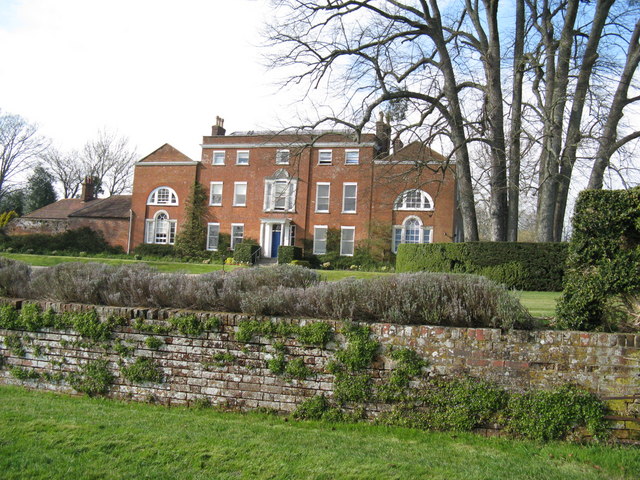
Worting House in Hampshire
[see below for the Austen connection*]
Janeite Marti sent me this link to the Two Nerdy History Girls post on the history of chocolate – there is a link to a video from American Heritage Chocolate on how chocolate was made in Colonial Williamsburg… YUM! – subscribe to the “two nerdy girls” [both historical fiction writers] blog for other great articles…
Here is a great blog idea – “letters written to fictional characters by actual people” – visit the blog at Letters with Character – visit here for two Austen-related letters: one to Elizabeth and one to Mr. Darcy. [what would YOU write to an Austen character?? ]
When Masterpiece Theatre produced and aired the Jane Austen programs two years ago, they also created “The Complete Guide to Teaching Jane Austen” which is available in a 24-page pdf file on their website – a wonderful resource for viewing and discussing all the films, not just the 2008 versions. Print it out and settle in for another marathon film adventure!
This guide offers ideas and tips on how to teach the works of Jane Austen, using film as another avenue into her world. The guide has been organized so it can easily be adapted for various needs. Sections that explore universal themes—Novel to Film, the Art of Adaptation, Self-Discovery, Society and the Self, Satire and Irony—provide questions and activities that can be used for any of Austen’s works. Before and After Viewing questions have been provided for each film so you can thoroughly explore whatever title you choose to teach. Other features include an essay about Austen’s continued popularity, biographical information, and an exploration of the role of biography in an author’s work.
[from the PBS / Masterpiece Theatre website]
The Dolphin Hotel in Southampton where Jane Austen danced away in the “Assembly Room” has been refurbished as the Mercure Southampton Centre. There is a “Jane Austen function room” suitable for weddings, etc., if you would like to celebrate in the same space Austen did on her 18th birthday in 1793. Austen lived in Southampton from 1805-1809 prior to her move to Chawton in 1809.
Robert Rodi at the Bitch in a Bonnet blog that I alerted you all to awhile back, has finished his summing up of Pride & Prejudice – lovely final words, worthy of a repeat:
Every time I read Pride and Prejudice, I laugh. It’s the laughter of philosophy; the clear, cold laughter of those who reside in the abyss but are untouched by its sweat-soaked, writhing tumult. We laugh, because Austen lifts us above the fray and nimbly escorts us to a farther shore, where there are kindred spirits waiting. We can’t stay there long; but we can return whenever we like…again, and again, and again, and again.
…makes you want to run right to your bookshelf and begin it all again, doesn’t it?
And speaking of P&P, Laurel Ann at Austenprose starts her month-long reading [no mash-ups, zombies, vampires, slashing heroines for Laurel Ann – yea!! – back to the real thing for her, thank goodness…] – it all starts on June 16th, so begin your reading of chapters 1-7 NOW and join in the analysis and discussion…
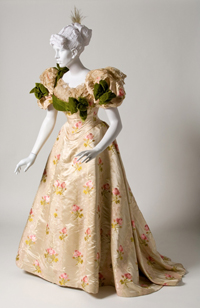
And finally, for the fashion-conscious, the Bruce Museum in Greenwich Connecticut has a new exhibit on The Dressmaker’s Art:
The Bruce Museum’s major summer exhibition, The Dressmaker’s Art: Highlights from the Bruce Museum’s Costume Collection, organized by guest curator Adrienne Saint-Pierre, features twenty-four elegant gowns and dresses along with displays of lavishly embellished accessories and underpinnings such as taffeta and lace petticoats, primarily taken from the collection of the Bruce Museum in Greenwich, Connecticut. Additional items are on loan from the Fairfield Museum and History Center.
[Ball gown, c1895, Worth, Paris]
The earliest gown is from 1820 and the exhibit displays fashions through the early 20th century – visit the Museum’s website for more information – a delight to have this exhibit here in New England!
*Jane Austen and Worting House: A visit by Jane Austen, probably one of many unrecorded, paid on the evening of Thursday December 20 1798 and mentioned by her in a letter dated December 24 to her sister Cassandra. In it she described a ball of the Basingstoke Assembly for which the authoress to be, then in her dancing days, was staying at Manydown with her friend Catherine Bigg – one of Squire Bigg-Wither’s seven daughters. She wrote:
I spent my time very quietly and pleasantly with Catherine. Miss Blachford is agreeable enough. I do not want People to be very agreeable as it saves me the trouble of liking them a great deal.- I found only Catherine and her when I got to Manydown on Thursday. We dined together and went together to Worting to seek the protection of Mrs Clarke with whom Lady Mildmay, her eldest son, and a Mr and Mrs Hoare………. Our ball was very thin, but by no means unpleasant………There were 31 People and only 11 Ladies out of the Number, and but five single women in the room….There were twenty dances, and I danced them all, and without any fatigue………My black cap was openly admired by Mrs Lefroy, and I secretly imagine by everybody else in the room.
[Letter 15, December 24-26, 1798, Jane Austen’s Letters, ed. Deirdre Le Faye, quoting the Bigg-Wither – Worting House website]
A rare insight into the family life of Jane Austen through her favourite songs. She collected songs all her life, but many of them have only just come to light, in manuscripts inherited by one of her descendants. Jazz singer Gwyneth Herbert performs some of these songs.
Professor Richard Jenkyns inherited a pile of music manuscripts which are only just being looked at by the Austen scholars. He shows us what he found: some have been laboriously copied out by Jane herself – among the music manuscripts in Jane’s handwriting is a piano piece which he believes she composed.
David Owen Norris brings him together with scholars Deirdre Le Faye and Samantha Carrasco at Jane Austen’s house in Chawton, Hampshire. Together they cast a new light on one of our best-loved and most enigmatic writers.
Some of the songs included are:
A romantic song by Robert Burns, to which she changed the words, so that the final words referred to herself -“the charms of your Jane.”
A tragic French song, “Les Hirondelles”, which ends with imprisonment and death. Jane’s sister in law Eliza had lived in France, and her first husband was guillotined in the Terror.
“The Ploughboy” – a popular song of the time, witty, and with a politically subversive message about corrupt politicians who are only interested in money, and manage to buy their way into power.
“Goosey Goosey Gander” – Jane had a lot of nursery rhymes, and was constantly surrounded by boisterous nephews and nieces.
Producer: Elizabeth Burke
A Loftus production for BBC Radio 4.
[Image and text from the BBC site]
[Posted by Deb, with thanks to Janeite Kerri]
…AND if you happen to be around the University of Southampton on June 30th, don’t miss this Jane Austen program at Turner Sims:
Calling all Jane Austen enthusiasts!
Discover the music that influenced Jane Austen whilst writing her classic novels, as pianist David Owen Norris explores the nine newly-discovered volumes of the Austen family music collection. Entertaining Miss Austen is on Wednesday 30 June at 8pm.
David Owen Norris is Professor of Musical Performance at the University of Southampton, an Honorary Fellow of Keble College, Oxford, an Educational Fellow of the Worshipful Company of Musicians, and an authority and leading performer on early pianos and rare piano concertos. Joined by soprano Amanda Pitt, David sheds unique light on the musical loves of Jane Austen and her family.
This fascinating recital includes favourite airs and dances – and the only piece of music actually mentioned in Jane’s novels; Kiallmark’s ‘Robin Adair’, which is performed expertly by Jane Fairfax in Emma.
Tickets are £10 and free to Friends of Turner Sims.
YOU’RE INVITED TO WATCH JANE AUSTEN’S FAVORITE PASTIME …
YOU’VE READ ABOUT ENGLISH COUNTRY DANCING
IN AUSTEN’S NOVELS ~
YOU’VE SEEN IT IN FILMS LIKE “PRIDE & PREJUDICE”~
NOW YOU CAN SIT ON STAGE TO LISTEN TO THE BEAUTIFUL LIVE MUSIC,
WATCH THE COSTUMED DANCERS
(MANY DRESSED IN AUSTEN-ERA GARB),
AND, IF YOU LIKE, INDULGE IN TASTY REFRESHMENTS AT THE BREAK
ACROSS THE LAKE An English Country Dance Gala
on the Vermont side of Lake Champlain
SATURDAY, JUNE 12, 2010
8 p.m. to 11 p.m.
Elley-Long Music Center
223 Ethan Allen Ave.
Colchester, VT
(in Fort Ethan Allen, off Route 15)
Prompting by Orly Krasner
Music by Earl Gaddis ~ violin
Mary Lea ~ violin & viola
Jacqueline Schwab ~ piano
Wayne Hankin ~ woodwinds & more
SPECTATOR’S PRICE, AT THE DOOR: $10 with sumptuous refreshments at break, $5 without
The set of Jane Austen’s novels published by Bentley in 1833 and up for auction at Bonham’s sale today [June 8, 2010] has come under the gavel and has sold for £3,360 [= @ $4827.] [the estimate was for £2000 – £3000 ]
Here are the details:
AUSTEN, Jane. Works, Bentley’s Standard Novel edition, 6 vol. in 5, 5 engraved frontispieces and additional titles, some light spotting to first and final few leaves, small corner tear to printed title “Pride and Prejudice”, without half-titles, ownership inscription of Eularia E. Burnaby (1856) on printed titles, bookplate of Henry Vincent, bookseller’s label of H.M. Gilbert, Southampton, uniform contemporary half calf, red and dark green morocco labels, extremities lightly rubbed [Gilson D1-D5], 8vo, R. Bentley, 1833
Sold for £3,360 inclusive of Buyer’s Premium
Footnote:
“No English reissue of JA’s novels is known after 1818 until in 1832 Richard Bentley decided to include them in his series of Standard Novels” (Gilson, p.211). See illustration on preceding page.
See the Bonham’s site here for details and other auction items in this ‘Printed Books, Maps and Manuscripts’ auction [Sale No. 17809]
See Laurel Ann’s post analyzing this set [along with her super sleuthing as to the provenance!] atAustenprose
Someone has gone home very happy today! [and hopefully this has gone to either a fine institution or a fine home with an Austen-loving owner…]



 Jane Austen in Vermont