Here is a new, thoughtful book-related game to play. Weekly Geeks offers up each week a theme to muse on and share with other “geeks” – “One week might be ‘catch up on your library books week’ and the next might be ‘redecorate your blog week’ or ‘organize your challenges’ week or ‘catch up on your reviews week’ – It’ll be fairly bookblogocentric, but not exclusively.”
Some past “weekly geeks” have been what are your passions other that books, how do you feel about “classic” literature?, and judging a book by its cover – go to the Weekly Geek website to learn about participating. This week’s theme is about characters:
For this week’s edition of Weekly Geeks, we’re going to take a closer look at character names. What are some of your favorite character names?
Go to Google or a baby name site like this one or this one, and look up a favorite character’s name. What does their name mean? Do you think the meaning fits the character? Why or why not?
If you’d like, look up your own name as well and share the meaning.
**************************************
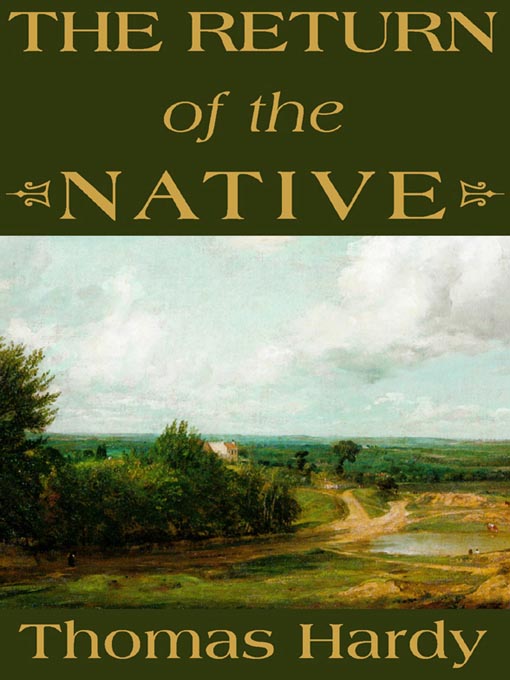
One of my favorite names from a novel was Eustacia from Hardy’s Return of the Native ~ such a sad, forlorn figure, her name conveying such an ethereal nature, always out of ones reach, aloof, never at rest, haunting.
I thought as a teenager that I would name my daughter Eustacia, but ended up dating a guy in college who had a sister with this name, so it never felt right after that ~ I do have a daughter, named her Jessica [after my grandmother and my middle name], but she also so loved the book and name she called her pet rabbit Eustacia!…so life comes full circle!
The “Tuttle Dictionary of First Names” [Tuttle 1992] says this:
[Eustace: Eustacia, feminine form; uncommon except for the derivative “Stacy”] This comes from the Greek meaning “good harvest” and was the name of a saint who was popular in the Middle Ages but who was probably fictional. His legend had many connections with that of St. Hubert; it involves the loss of possessions, wife and children and their miraculous recovery, in a form found elsewhere in medieval romance.
Other baby name sites refer to its Greek meaning as “bountiful grapes,” “fruitful,” yet another site says it is from the Latin and means “tranquil” [Eustacia Vye is not tranquil!]
Hardy obviously chose this name for its classical and tragic allusions – and how you interpret his meaning depends upon whether you sympathize with Clym or Eustacia in the novel (and that’s a whole other post, maybe a whole other BLOG!]
As for my name, Deborah:
a Hebrew name meaning “bee”. From the account of the original Deborah in the Old Testament book of Judges, she must have been a formidable woman, for at a time when the role of women was very much that of a subordinate, she was a prophetess, a judge of the people, and even a leader of the army.
[and so alas! that is a hard act to follow…]
I welcome your comments – what is your favorite character name? and if you have your own blog, check out Weekly Geeks and participate with other online book-lovers…
[for instance, why does Austen name Knightley “George”? did you know that “George” is derived from the Greek word for “farmer” ~ literally “earth-worker” and is also the name of the patron saint of England?]
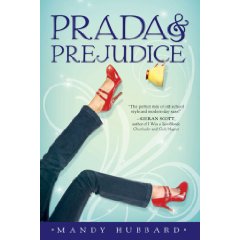
A new Pride & Prejudice knock-off, this time for the younger set and with all the proper ingredients of a rousing romantic plot, a time-travel adventure, and a setting in our favorite place, Regency England. The book, Prada & Prejudice, by Mandy Hubbard, and due out June 11, 2009, is what one author calls “Pride and Prejudice meets The Wizard of Oz meets The Princess Diaries.” Here’s the publisher’s blurb:
Fifteen-year-old Callie buys a pair of real Prada pumps to impress the cool crowd on a school trip to London. Goodbye, Callie the clumsy geek-girl, hello popularity! But before she knows what’s hit her, Callie wobbles, trips, conks her head… and wakes up in the year 1815!
She stumbles about until she meets the kind-hearted Emily, who takes Callie in, mistaking her for a long-lost friend. Sparks soon fly between Callie and Emily’s cousin, Alex, the maddeningly handsome—though totally arrogant—Duke of Harksbury. Too bad he seems to have something sinister up his ruffled sleeve…
From face-planting off velvet piano benches and hiding behind claw-foot couches to streaking through the estate halls wearing nothing but an itchy blanket, Callie’s curiosity about Alex creates all kinds of trouble.
But the grandfather clock is ticking on her 19th Century shenanigans. Can Callie save Emily from a dire engagement, win a kiss from Alex, and prove to herself that she’s more than just a loud-mouth klutz before her time there is up?
….hmmm! who knows? but if it is even half as good as Polly Shulman’s Enthusiasm, this P&P “Clueless”-like confection should be a great summer read for teens, and some of us oldsters besides!
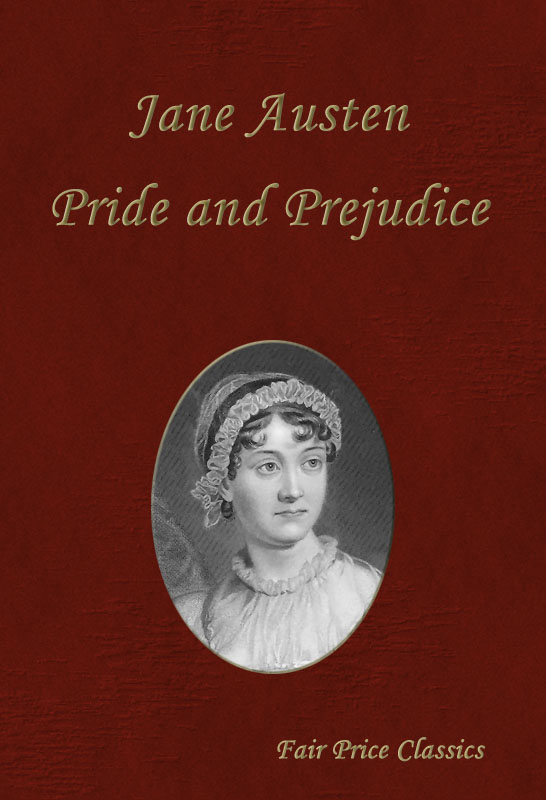
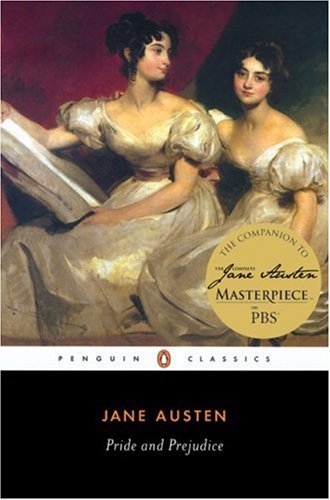
Check out this post at Belle of the Books ~ she has pulled together a variety of Pride & Prejudice covers that have been published through the years…. vote on your favorite!
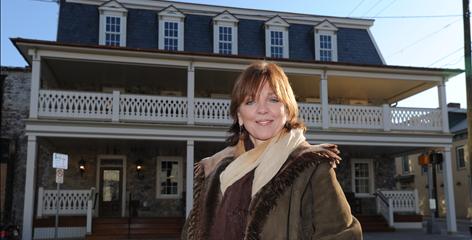
The latest news of a literary nature – and where our Dear Jane figures in – is the opening of the Nora Roberts’s Inn Boonsboro in Boonsboro, Maryland on February 17, 2009. Ms. Roberts, the author of over 170 novels (also under the name of J.D. Robb), has been renovating this seven bedroom bed & breakfast over the past two years. Wanting each of the rooms to be decorated with a fictional romantic theme, her biggest problem was finding in the literary canon seven happy couples! As she says,
Romeo and Juliet? Dead. Tristan and Isolde? Dead. Not happy. Dead, dead, dead. Rhett Butler and Scarlett? He didn’t give a damn. You try finding seven of them!
But seven she did find, and a rousing cast of characters of pure romance and happiness could not be better represented!
Nick & Nora Charles ~ sleak art deco and fussy Hollywood glamour
Lt. Eve Dallas & Rourke [from Roberts’s In Death Series] ~ modern with antique touches
Marguerite & Percy [Baroness Orczy’s Scarlet Pimpernel] ~ the opulence of 18th-century France
Shakespeare’s Titania & Oberon [A Midsummer Night’s Dream] ~ an organic, fanciful theme, as though waltzing in a magical forest
Jane & Rochester [Charlotte Bronte’s Jane Eyre] ~ with a fainting couch and free-standing copper tub for soaking in heather-scented water
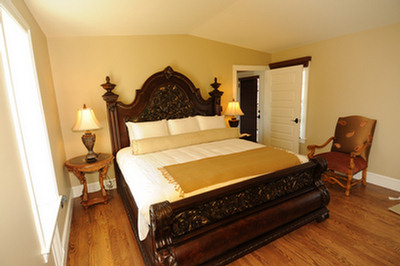
Elizabeth & Darcy [Jane Austen’s Pride & Prejudice] ~ a Regency period flavor, airy and traditional
Buttercup & Westley [William Goldman’s The Princess Bride] ~ an Old World style, fun and charming
Buttercup & Westley ~ The Princess Bride
There is also a non-themed suite called the Penthouse ~ lush, plush and baronial.
See the Inn Boonsboro website, where you can view some of the rooms [but alas! not the Darcy’s]; but you can take a video tour of the Inn. And just to whet your appetite, read this description of the Elizabeth & Darcy room:
Miss Bennett [sic] and Mr. Darcy would certainly approve of the distinction with which we’ve appointed our Regency-style guest room. The king bed, adorned by a richly-appointed head- and footboard, invites you to slip under the soft cashmere throw, settle back on our multitude of pillows to enjoy the 32″ flat screen TV. Or curl up with a book on the sumptuous velvet side chair with a cup of complementary tea or glass of wine and enjoy the peace of an English country house.
The exquisitely refined bath is a fine marriage of English charm and modern contrivance with a traditional claw-foot slipper tub designed for long bubble baths and a shower enhanced by four body jets. Let our English Lavender bath amenities transport you back to the courtly and romantic age of Pride and Prejudice.
Prices range from $220-280. / weekday night; $250-300. / weekend night; there are also various packages.
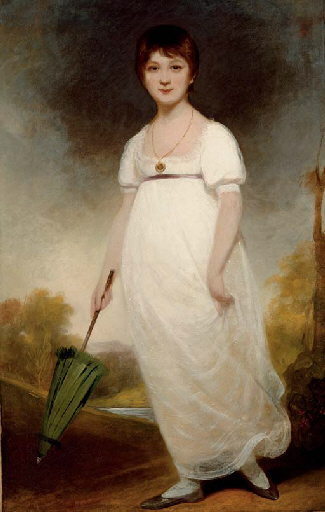
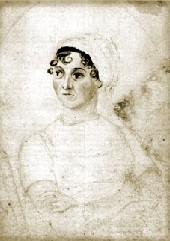
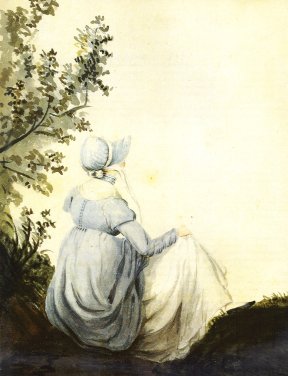
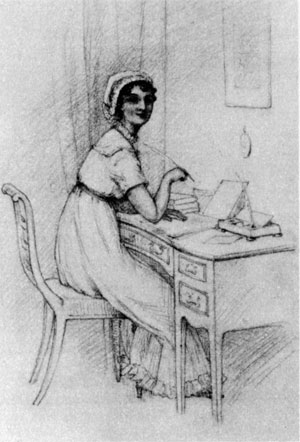
JASNA has just recently made Persuasions No. 5 (1983) available online. An alert Janeite (thanks Arnie!) raises a question on the article by Joan Austen-Leigh titled “Godmersham,” on the auction of this property once owned by Austen’s brother Edward Austen Knight. Also auctioned in that sale were two portraits of Jane Austen [reproduced below]. Does anyone know anything about these? The Jane of the second portrait looks very much like the infamous “Rice” portrait, still questioned as actually being Jane:
Jane Austen - "Rice" portrait
The only two pictures of Jane that are continually bandied about are the two watercolors done by her sister Cassandra:
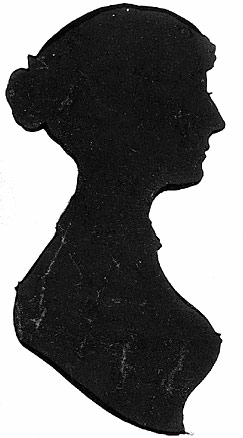
and this silhouette believed to be her:
Jane Austen silhouette? - circa 1810-1815
Has there been further research into these two mentioned in Austen-Leigh’s article? They are lovely, the first being exactly as I have pictured Austen (and also seems to be very like the “improved” renditions of the past fifty years.) Any thoughts appreciated…
Jane Austen - circa 1810, pencil & watercolor
Jane Austen - circa 1810, watercolor
P.S. When I posted this this morning, I did not do any research and have since had a few comments and done a little detective work and do find a few mentions of these portraits. See the comments below for more information and citations. But as I have been out of the loop for a few days and have not been checking the other Austen sites and blogs, I did not realize that Laurel Ann at Austenprose had posted a bit on Austen’s various portraits just 2 days ago!…so please check her site for a great run-through of the many faces of Jane Austen!
I have decided to open a Facebook account for our Jane Austen Region here in Vermont. One, because I hear tell from the New York JASNA Region and a few others who have done this that it is great way to reach out to the younger people in the area who are Austen fans, and Two, because it is just so easy!
I had set up an account last April, but never did anything with it…no profile, no pictures, no postings – I mean really, who wants to know that daily goings-on of a bookworm anyway? I envisioned posts like:
Deborah bought an estate of books today.
Deborah sold 3 books today.
Deborah cleaned and mylared 50 books today.
Deborah went to the post office today, same as yesterday.
Deborah spent too much time on her blogs today.
Deborah had peanut butter & jelly for lunch today – dinner isn’t looking much better.
etc., you get the picture; I mean really, WHO CARES?!
As my email was changing (thanks to the mighty Verizon-Fairpoint conversion), I was editing all my information on every site (a veritable nightmare), went into Facebookand found I had FIVE friends who wanted to connect with me. So I quickly filled everything out, uploaded a picture, found more friends, and now feel like I am comfortably in the 21st-century, though quite sure I will not spend a lot of time there – I am already way-too-tied to the computer as it is – but I did set up this Jane Austen account and will use it to advertise our events and connect with other Austen-folks out there. [I invite you to join us!]
A quick search however, was quite the eye-opener – the number of Austen-related accounts is absolutely mind-boggling, the number of members in each even more so, and I didn’t even search every possible combination, so know there must be many more. Some, like ours, are JASNA Chapter sites; some are quite funny; some anti-Austen / pro-Bronte, some hate Mr. Darcy, some want to be enslaved by Mr. Darcy!; some prefer Knightley or Henry Tilney [Mags, you should be running this one!]; and don’t even try to locate all the ones just on Pride & Prejudice – the book, the movies, the characters, the movie stars, on and on it goes. I really do wonder if anyone actually works or studies anymore! All manner of Austen-related things turn up – see for instance the recent “Austenbook” that renders the entire story of Pride & Prejudice into a Facebook posting – it’s near perfect! http://www.much-ado.net/austenbook/
And as always, a funny story ~ I was searching “Pride & Prejudice” and the results included all sorts combinations, and while scrolling down the first few, I discover my son’s name! – now this was a shock! – I mean my son is a great young man, but he and Jane Austen are like oil and water (he once called me from college to ask if she was dead yet!), and I have always tempered my effusions about her whilst in his presence – so as my son and I are “friends” on Facebook, I can look at his profile – and what to my surprise but I find he has listed P&P as one of his favorite books! – here’s his list: Crime and Punishment, Siddhartha, Where the Red Fern Grows, Into Thin Air, Undaunted Courage, Killer Angels, Pride and Prejudice, The Incredible Journey, Into the Wild, Eiger Dreams – there it is in black & white!- every Austen-lover’s dream! to pass it on! I recall he read P&P in high school after I bribed him into it for a pair of hiking boots; he read it, passed a quiz on its finer points and did confess to liking it, but to go PUBLIC with that??! Anyway, my faith is restored and I have hope for the world! [and he is adamant that it is not on there as a “chick-magnet”!]
So I give you a sampling [and member numbers on the date I searched]: take your pick and join any and all! It’s a whole new world out there – yikes! whatever would Jane say! [note: I abbreviate her name (JA) and novel titles]
Searching “Jane Austen Society”:
The Honorable Ladies Society for the Appreciation of Jane Austen [JA]- 30
JA Appreciation Society – 25
People who are vexed by people who are vexed by JA society – 22
JA made my expectations too high – 147 [with a “ditching Mr. Darcy” logo]
Students of a JA persuasion – 908
Ms. Sharp appreciation society – 77
Ultimate chick-flick appreciation society – 51
The Finer things club – 25
Bronte sisters pawn JA – 22
English Majors against JA [EMAJA] – 17
JA’s novels explain the universe – 13
Society for advocates for sound grammar & syntax – 13
The not so JA movie club –
I want to live in JA’s times – 7
Card & Quill society [see website: A Social Club for nostalgic ladies]
Amen to breeches, cravats & top hats! [with 5 reasons to join: Darcy, Wentworth, Mr. Thornton, Henry Tilney, & Roger Hamley]
Searching “Jane Austen”: [more than 500 results, many just names]
Jane Austen – 20,671 fans [+1; I just joined…]
JA fan club – 21,753
I love Mr. Darcy enough to make JA uncomfortable – 8,002
JA gave me unrealistic expectations of love – 4,393
I should be a JA character – 3, 185
JA books are ruining my sense of reality and I love it! – 2,617
Which JA character are you? – 4,013 [monthly active users]
Which JA heroine are you? – 1,168 [monthly users]
Searching “Pride & Prejudice”:
Addicted to P&P – 15, 684
BBC P&P appreciation society – 6,792
I can recite the BBC version of P&P word for word – 3, 978
I can’t stop watching P&P! – 3,154
If my life could be a book, I would want it to be P&P – 859
Which P&P guy are you? -76
For the love of P&P – 840
Darcy is for lovers- we love P&P – 609
For those who ardently admire & adore P&P – 503
Why can’t we dance like they do in P&P? – 610
Not only have I seen the movie, but I’ve actually read P&P – 286
Searching “Elizabeth Bennet”:
All I ever needed to know I learned from Elizabeth Bennet – 696
I love Mr. Darcy so much, it’s enough to make E.B. uncomfortable – 178
I wish I were E.B. – 154
In a perfect world, I’d be E.B., and Mr. Darcy would be my man – 125
My secret identity is E.B. – 24
I wish I were E.B. (so I could have sex with Mr. Darcy) – 6
Searching “Mr. Darcy”:
Colin Firth will always be my Mr. Darcy – 22,443
I refuse to settle for anything less than Mr. Darcy – 15,022
Every girl should have a Mr. Darcy in her life – 8,195
Take me to Pemberley, Mr. Darcy – 3,119
I have Mr. Darcy syndrome & it is f___ing up my life! – 771
Girls waiting for men to romantically wander out of the mists toward them – 1391
Mr. Darcy is an idiot – 45
Searching “Sense & Sensibility”:
We very much dislike Willoughby – 84
I know S&S by heart – 162
Searching “Mr. Knightley”:
Mr. Darcy … Mr Knightley… and other honorable gentlemen we love – 725
Mr. Knightley is better than Mr. Darcy – 36
I am going to marry one of the men in JA’s novels – 2,671
Searching “Henry Tilney”:
Basically I am in love with fictional men – 6, 129 [up to 6,164 today]
Henry Tilney is my gothic hero – 338
Searching “Captain Wentworth”:
I love Captain Wentworth – 414
All the good men lived 200 years ago in lonely women’s imaginations – 527
************************
What’s scary is this is just a sampling! and while we can assume there is overlap in numbers, we are still talking about upwards of 30,000 people! [shouldn’t we introduce them all to JASNA??] But I do take great comfort in the very obvious fact that Jane Austen in alive and well and joyfully being bandied about cyberspace!
[Now I think I must needs go & create my own “I love my Captain Wentworth Paper-doll” page!]
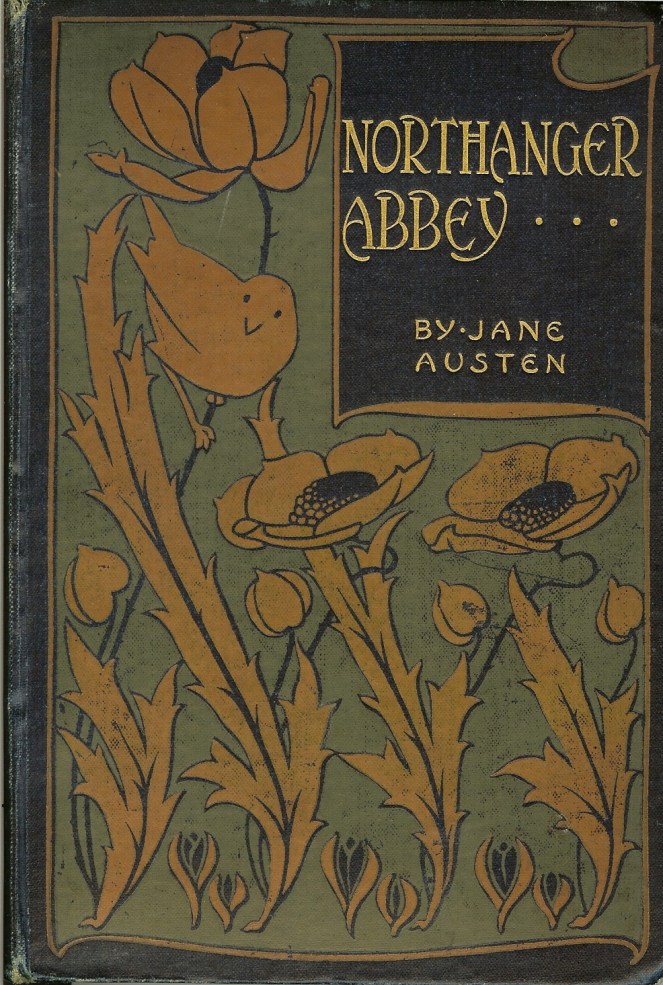
Laurel Ann at Austenprose asked about the illustration by Paul Hardy in my post on Henry Tilney. This illustration was the frontispiece in an undated Blackie & Son [London] edition from the late 19th – early 20th century ~ there is an inscription dated February 1902 that reads – “Florrie Steggles, for excellent work.” [this is why I love inscriptions!]… what a gift for a young lady to receive! I bought this book for its cover alone [alas! the pages are quite browned and there is only this one illustration], but the Art Nouveau unsigned decorative binding is just lovely ~ the front board is displayed here; the spine is similarly decorated, a welcome sight on the bookshelf!
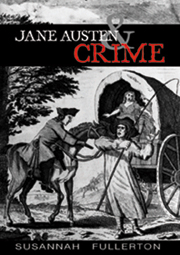
Jane Austen & Crime, by Susannah Fullerton. 3rd edition. Jones Books, 2006 [Fullerton is the President of the Jane Austen Society of Australia]
A new approach to Jane Austen seemed impossible, but Susannah Fullerton . . . has brilliantly hit on the theme of crime and punishment in Austen. Fullerton shows how the Regency world . . . was really a dangerous place with a fast rising crime rate and a legal system that handed out ferocious sentences. Her book will be essential reading for every Janeite.”-Claire Tomalin, author of Jane Austen: A Life
I admit to passing over this book when it was first available – somehow, I just didn’t want to sully my love of Austen and the “pictures of perfection” the world of her novels presents. One knows, of course, that it is there, lurking behind the scenes, with a brief reference here, or a shady character there; and as readers of Jane Austen know, these references would have been better understood by her contemporaries than by us today, unless we are well-versed in the social history of Georgian and Regency England.
My interest peaked with my recent absorption in several detective novels set in the Regency period (the Julian Kestrel series by Kate Ross) – these mysteries evoke the time beautifully – the lovely clothes, the balls, the always proper social behaviors – but also the underbelly of this world – the crime, the poverty, the seedy desperate lives, the world that Dickens and his characters inhabited. Indeed there are many non-fiction books on this subject, just on London alone [see below for further reading], but I turned to Fullerton’s book to get not only a quick overview of the crime of the time, but to see it in the context of Jane Austen’s life and works. As Fullerton begins:
Why Jane Austen and Crime? Why the juxtaposition of these seemingly disparate concepts? Simply put, because the relationship is there. Crimes against human life, crimes against property, crimes of passion, social crimes, grim punishments, and even fictional (Gothic) crime were very much a part of the Georgian world. Ever the perceptive observer of her society, Jane Austen does indeed include comments on crime and the effects of crime in her letters, in her juvenilia and, treated very differently, in her mature novels. An examination of crime in Jane Austen’s world and fiction suggests many new perceptions of her work and gives a greater understanding of her genius. [p.3]
And Fullerton ends with:
Jane Austen was not a reformer. She suggests no solution to these problems. Rather she was a highly perceptive observer of her society who commented incisively on the behaviour of men and women. She included criminal behavior in her works and she included punishment even, if unlike Dickens, she never made crime the climax of her story or chose a prison as the setting for a novel. She was aware of the confused laws which governed the Georgian age, she knew of the debates concerning the softening or abolishing of these laws, she wove her knowledge into the fabric of her writing. Crime became a part of her plots, crime revealed character, crime emphasized duty and responsibility, and crime even united some of the heroines and heroes. She examined the inclination to do evil, analysed the faulty propensity which drives a man to wrong-doing, depicted the damage cause by doing wrong and described criminal feelings in her characters. In doing so she reflected and commented on the Georgian criminal scene with accuracy and sharp intelligence. [p. 217]
And in between, Fullerton neatly presents the subject in fine organized fashion:
Crime against life (murder and suicide)
Crime against property (theft)
Crimes of passion (adultery, elopement, prostitution, rape, bastards)
Social crime (duelling, poaching, smuggling, gaming)
Gothic crime
Punishment and the law (gaols, hanging, other punishments, men of the law)
Within each section, the subject is analyzed in its historical context with many factual references to the laws and the notable crimes of the time, then in the context of Austen’s life; for example, her Aunt Leigh Perrot on trial for theft; her brother Edward Knight a magistrate at Godmerhsam. Fullerton then takes us through the novels and letters to show by example how any specific crime drives the plot or shapes a character – we see John Dashwood clearly painted as the thief he is; Willoughby as a serial seducer; the gravity of Wickham’s intended “elopement” with Georgiana and the actual with Lydia; even Mrs. Norris’s petty thefts, rather glossed over in Mansfield Park, but there for the close reader to see; we learn that Harriet Smith’s talking to the gypsies in Emma was actually a crime punishable by death by hanging!; how the theft of the chickens in Emma, actually brings about the marriage of Emma and Knightley; the smuggling of tea and other luxuries, a crime more serious than murder [London tea smugglers operated in gangs of up to 50!, and most of London enjoyed this favored beverage in its smuggled form [p. 142], certainly Jane loved her tea as did many of her characters]; the very brief reference to Brandon’s duelling with Willoughby in Sense & Sensibility, so deftly written by Austen that we barely know of it: “We met by appointment, he to defend, I to punish his conduct.” [Fullerton points out that with this one sentence, Brandon becomes the only one of Austen’s heroes to engage in criminal activity. [p.124]]. We see Emma’s slight of Miss Bates as more than just an uncomfortable rudeness, but really a crime of bad manners, a wickedness [p.217] on Emma’s part that tells us more about her than almost anything else in the book – it is the turning point in the story when Emma finally sees herself. And what of John Thorpe?- his lies and holding Catherine in his carriage against her will; the issues of adultery and imprisonment in Mansfield Park; the gaming laws that allowed only the wealthy to own sporting dogs, as John Middleton and Mr. Darcy. The list goes on with these references, some obvious, some mere mention, Fullerton pulling it all together, and by giving us a better understanding of the contemporary social and moral expectations, we better understand what Austen was speaking of…
”]I most appreciated Fullerton’s many references to the juvenilia – it is in these works that Austen shows us the realities of her greater society, all indeed presented in an exaggerated manner with her youthful humor, but we do see how she understood this underside of life in both London and her country villages, a knowledge also apparent in the quick, short references in her letters. For instance, in this short passage from Letter 95 [Le Faye, p. 248], Austen writes her sister from Godmersham Park:
Edward and I had a delightful morn for our drive there…. He went to inspect the Gaol, as a visiting Magistrate, & took me with him. – I was gratified – & went through all the feelings which People must go through I think in visiting such a Building.”
Austen then goes on to talk of shopping and a party, etc., but what did she actually SEE on that visit, and how frustrating she tells no more! Here Fullerton gives us what Jane doesn’t – she explains exactly what the Canterbury Gaol would have been like, exactly what Austen would have experienced. Austen’s reference to being “gratified” takes us back to the juvenilia where crimes are everywhere, punishment handily doled out, all in high humor.
I highly recommend this book – with all the factual references linked so well to Austen’s world, the many contemporary illustrations, helpful notes and bibliography aside – it is actually a fabulous and entertaining read! This is not a long book or a great scholarly analysis of Austen and how crime figures in her works, but the interweaving of the laws of the day, real crimes and punishments, with the innumerable references to the fiction and letters, some so easy to miss on a casual reading, all this gives us a heightened awareness of how while Austen seems to present a nearly perfect social order on a very tiny scale, that not far behind the scene are some very serious worldly concerns, frighteningly real and not so pretty.
Thomas Rowlandson - The Duel
5 Full inkwells (out of 5)
The book is available from Jones Books. However, the JASNA-VermontChapter has several copies for sale, so, if you would like to support our local group, please contact us directly.
Further Reading:
Fullterton provides a bibliography on the many aspects of crime of the period. I list here only a few:
Bovill, E.W. English Country Life: 1780-1830 [Oxford, 1962]
Collins, Philip. Dickens and Crime [Macmillan, 1962]
Emsley, Clive. Crime and Society in England 1750-1900[ Longman 1987]
Harvey, A.D. Sex in Georgian England [St Martin’s, 1994]
Ives, Sidney. The Trial of Mrs. Leigh Perrot [Stinehour, 1980]
Low, Donald. The Regency Underworld [Sutton, 1999]
McLynn, Frank. Crime and Punishment in Eighteenth Century England [Routledge, 1989]
Murray, Venetia. An Elegant Madness: High Society in Regency England [Viking, 1999]; published as High Society: A Social History of the Regency Period 1788-1830 in the UK in 1998]
Picard, Liza. Dr. Johnson’s London [St. Martin’s, 2002]
Sinclair, Olga. Gretna Green: A Romantic History [Chivers, 1989]
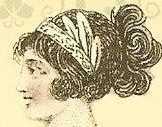
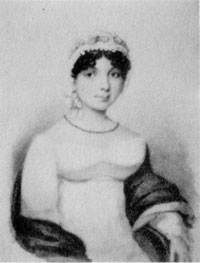
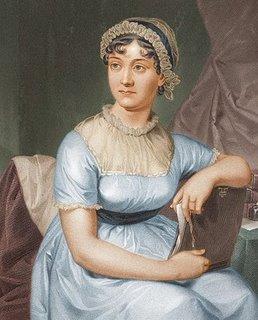
There are so few portraits of Jane Austen, that people keep reinventing her image – either from imagination, or by ‘tweaking’ what already exists. One of the oddest is the so-called Wedding Ring portrait:
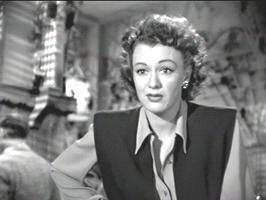
This has been in use for quite some time – from the New York Times‘ article announcing the formation of JASNA, to jackets for some decidedly scholarly tomes. There was always something about the face that felt familiar. One day the ‘why’ finally clicked:

 Searching “Pride & Prejudice”:

 A new approach to Jane Austen seemed impossible, but Susannah Fullerton . . . has brilliantly hit on the theme of crime and punishment in Austen. Fullerton shows how the Regency world . . . was really a dangerous place with a fast rising crime rate and a legal system that handed out ferocious sentences. Her book will be essential reading for every Janeite.”-Claire Tomalin, author of Jane Austen: A Life
![The three villains in horsemen's greatcoats [Thomson, NA]](https://janeausteninvermont.blog/wp-content/uploads/2009/02/thomson-horsemen-crime.jpg?w=663 "thomson-horsemen-crime") I most appreciated Fullerton’s many references to the juvenilia – it is in these works that Austen shows us the realities of her greater society, all indeed presented in an exaggerated manner with her youthful humor, but we do see how she understood this underside of life in both London and her country villages, a knowledge also apparent in the quick, short references in her letters. For instance, in this short passage from Letter 95 [Le Faye, p. 248], Austen writes her sister from Godmersham Park:
I most appreciated Fullerton’s many references to the juvenilia – it is in these works that Austen shows us the realities of her greater society, all indeed presented in an exaggerated manner with her youthful humor, but we do see how she understood this underside of life in both London and her country villages, a knowledge also apparent in the quick, short references in her letters. For instance, in this short passage from Letter 95 [Le Faye, p. 248], Austen writes her sister from Godmersham Park: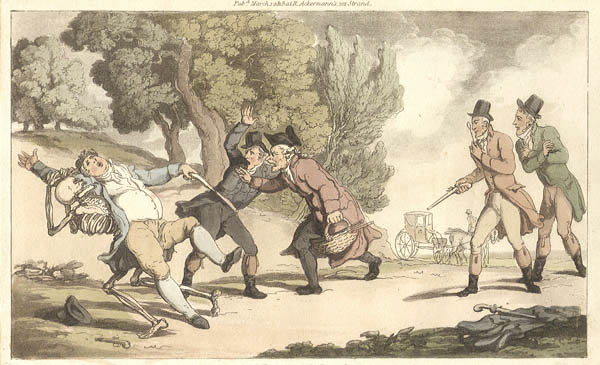

 Jane Austen in Vermont