Austen Literary History & Criticism · Books · Jane Austen · Jane Austen Popular Culture · Literature

Mr. Darcy’s Feelings; Or, More on the Inner Life of Jane Austen’s Hero…Part II

Please see the first post on Mr. Darcy’s Feelings – Pride and Prejudice Vol. I here

Now on to Volume II!

Skipping through the text to locate just commentary on Mr. Darcy’s feelings and instances of Elizabeth’s professed dislike of the man leaves out an awful lot of interesting passages – taking Jane Austen out of context is a dangerous thing! – we have missed Mr. Collins and his rejected proposal entirely! always too wonderful to skim over – for here we learn more about Elizabeth and her feelings on marriage and friendship than anywhere else in the novel.  I have always thought she is very quick to judgment on Charlotte’s choice of a partner – she forgets what is clear in the text to us and would have been for contemporary readers – that Charlotte is a rational creature and knows she has little choice if she is to have a “comfortable home” of her own… even the narrator is critical of Elizabeth, described as “less clear-sighted” in the case of Wickham’s marrying for money and independence than she is of her friend’s similar decision, a crucial point in seeing Elizabeth’s own prejudices.

CEBrock-collinsproposal-mollands

C. E. Brock. “Almost as soon as I entered the house I singled you out as the companion of my future life.”
P&P. Macmillan, 1895. Volume I, Ch. 19 [Mollands]

But I digress – we shall leave Mr. Collins and continue in search of Mr. Darcy’s feelings…

***********

Elizabeth blames Darcy for taking Bingley away, and he is “condemned [by everybody, except Jane Bennet] as the worst of men” (p. 107)* – she rants:

p. 119.

“Oh! if that is all, I have a very poor opinion of young men who live in Derbyshire; and their intimate friends who live in Hertfordshire are not much better. I am sick of them all. Thank Heaven! I am going to-morrow where I shall find a man [Collins] who has not one agreeable quality, who has neither manner nor sense to recommend him. Stupid men are the only ones worth knowing, after all.”

[And Darcy as always, though nowhere to be found in the book here, is not far from her thoughts, as so on seeing Miss De Bourgh:]

p. 122.

“I like her appearance,” said Elizabeth, struck with other ideas. “She looks sickly and cross. Yes, she will do for him very well. She will make him a very proper wife.”

p. 125. [on meeting Lady Catherine for the first time:]

??????????????????? Lady Catherine –  P&P 1995

When, after examining the mother, in whose countenance and deportment she soon found some resemblance of Mr. Darcy…

p. 131.

Elizabeth had heard soon after her arrival that Mr. Darcy was expected there in the course of a few weeks, and though there were not many of her acquaintance whom she did not prefer, his coming would furnish one comparatively new to look at in their Rosings parties, and she might be amused in seeing how hopeless Miss Bingley’s designs on him were, by his behaviour to his cousin, for whom he was evidently destined by Lady Catherine, who talked of his coming with the greatest satisfaction, spoke of him in terms of the highest admiration, and seemed almost angry to find that he had already been frequently seen by Miss Lucas and herself.

p. 131. [The ever-observant Charlotte]:

…and to the great surprise of all the party, when Mr. Collins returned, the gentlemen [Darcy and Col. Fitzwilliam] accompanied him. Charlotte had seen them from her husband’s room crossing the road, and immediately running into the other, told the girls what an honour they might expect, adding —

“I may thank you, Eliza, for this piece of civility. Mr. Darcy would never have come so soon to wait upon me.”

Elizabeth had scarcely time to disclaim all right to the compliment before their approach was announced by the door-bell, and shortly afterwards the three gentlemen entered the room. Colonel Fitzwilliam, who led the way, was about thirty, not handsome, but in person and address most truly the gentleman. Mr. Darcy looked just as he had been used to look in Hertfordshire — paid his compliments, with his usual reserve, to Mrs. Collins, and whatever might be his feelings towards her friend, met her with every appearance of composure. Elizabeth merely curtseyed to him, without saying a word.

p. 132. Col. Fitzwilliam and Elizabeth at the pianoforte:

Mrs. Collins’s pretty friend had moreover caught his fancy very much. He now seated himself by her, and talked so agreeably of Kent and Hertfordshire, of travelling and staying at home, of new books and music, that Elizabeth had never been half so well entertained in that room before; and they conversed with so much spirit and flow, as to draw the attention of Lady Catherine herself, as well as of Mr. Darcy. His eyes had been soon and repeatedly turned towards them with a look of curiosity…

p. 133.

[Lady Catherine] “…though Mrs. Collins has no instrument, she is very welcome, as I have often told her, to come to Rosings every day, and play on the piano forte in Mrs. Jenkinson’s room. She would be in nobody’s way, you know, in that part of the house.”

 Mr. Darcy looked a little ashamed of his aunt’s ill-breeding, and made no answer. 

p. 133-35. [a long passage but one the most important exchanges between them; and notice Darcy’s smiles!]

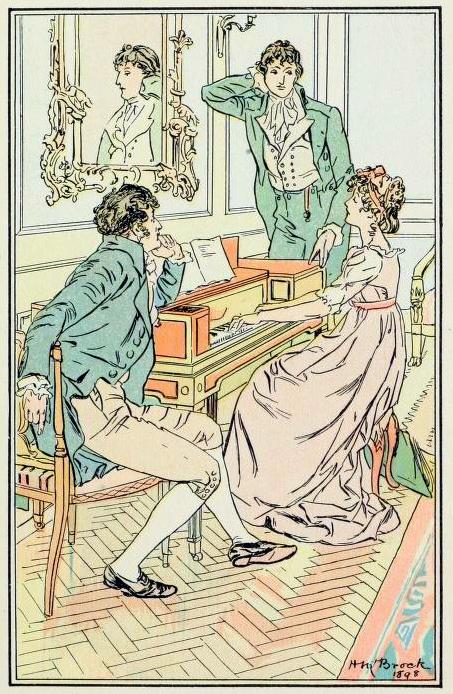
He [Col. Fitzwilliam] drew a chair near her. Lady Catherine listened to half a song, and then talked, as before, to her other nephew; till the latter walked away from her, and moving with his usual deliberation towards the pianoforte, stationed himself so as to command a full view of the fair performer’s countenance. Elizabeth saw what he was doing, and at the first convenient pause, turned to him with an arch smile, and said –

CEBrock-atpianoforte-adelaide

H. M. Brock. “At the pianoforte”. P&P. Dent, 1898 [Adelaide]

“You mean to frighten me, Mr. Darcy, by coming in all this state to hear me? But I will not be alarmed though your sister does play so well. There is a stubbornness about me that never can bear to be frightened at the will of others. My courage always rises with every attempt to intimidate me.”

“I shall not say that you are mistaken,” he replied, “because you could not really believe me to entertain any design of alarming you; and I have had the pleasure of your acquaintance long enough to know that you find great enjoyment in occasionally professing opinions which in fact are not your own.”

Elizabeth laughed heartily at this picture of herself, and said to Colonel Fitzwilliam, “Your cousin will give you a very pretty notion of me, and teach you not to believe a word I say. I am particularly unlucky in meeting with a person so well able to expose my real character, in a part of the world where I had hoped to pass myself off with some degree of credit. Indeed, Mr. Darcy, it is very ungenerous in you to mention all that you knew to my disadvantage in Hertfordshire — and, give me leave to say, very impolitic too — for it is provoking me to retaliate, and such things may come out as will shock your relations to hear.”

“I am not afraid of you,” said he smilingly.

“Pray let me hear what you have to accuse him of,” cried Colonel Fitzwilliam. “I should like to know how he behaves among strangers.”

“You shall hear then — but prepare yourself for something very dreadful. The first time of my ever seeing him in Hertfordshire, you must know, was at a ball — and at this ball, what do you think he did? He danced only four dances! I am sorry to pain you — but so it was. He danced only four dances, though gentlemen were scarce; and, to my certain knowledge, more than one young lady was sitting down in want of a partner. Mr. Darcy, you cannot deny the fact.”

“I had not at that time the honour of knowing any lady in the assembly beyond my own party.”

“True; and nobody can ever be introduced in a ball room. Well, Colonel Fitzwilliam, what do I play next? My fingers wait your orders.”

“Perhaps,” said Darcy, “I should have judged better had I sought an introduction; but I am ill qualified to recommend myself to strangers.”

“Shall we ask your cousin the reason of this?” said Elizabeth, still addressing Colonel Fitzwilliam. “Shall we ask him why a man of sense and education, and who has lived in the world, is ill qualified to recommend himself to strangers?”

“I can answer your question,” said Fitzwilliam, “without applying to him. It is because he will not give himself the trouble.”

“I certainly have not the talent which some people possess,” said Darcy, “of conversing easily with those I have never seen before. I cannot catch their tone of conversation, or appear interested in their concerns, as I often see done.”

“My fingers,” said Elizabeth, “do not move over this instrument in the masterly manner which I see so many women’s do. They have not the same force or rapidity, and do not produce the same expression. But then I have always supposed it to be my own fault — because I would not take the trouble of practising. It is not that I do not believe my fingers as capable as any other woman’s of superior execution.”

Darcy smiled and said, “You are perfectly right. You have employed your time much better. No one admitted to the privilege of hearing you can think anything wanting. We neither of us perform to strangers.”
p. 135. [Elizabeth watching Mr. Darcy very closely!]

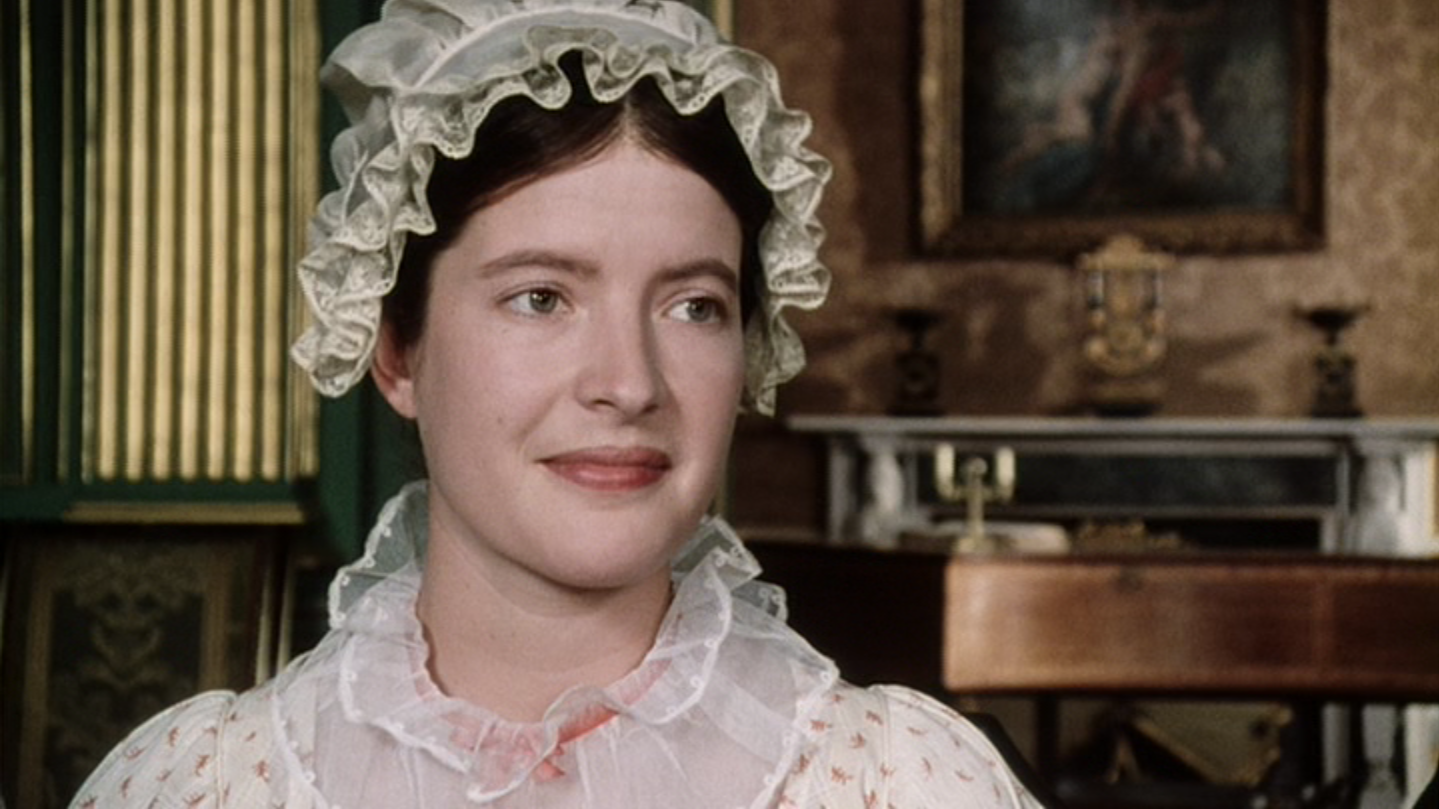
AnnedeBourgh-P&P2005

Anne de Bourgh. P&P 2005.

Elizabeth looked at Darcy to see how cordially he assented to his cousin’s praise; but neither at that moment nor at any other could she discern any symptom of love; and from the whole of his behaviour to Miss De Bourgh she derived this comfort for Miss Bingley, that he might have been just as likely to marry her, had she been his relation.

p. 136.

…when the door opened, and to her very great surprise Mr. Darcy, and Mr. Darcy only, entered the room.

He seemed astonished too on finding her alone, and apologised for his intrusion by letting her know that he had understood all the ladies to be within.

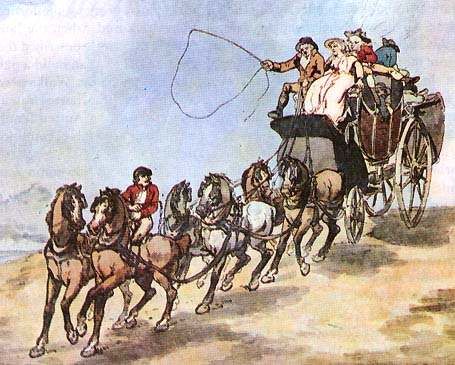
p. 137… [the “50 miles of good road” discussion, each misunderstanding the other…]
coach

“It must be very agreeable to her to be settled within so easy a distance of her own family and friends.”

“An easy distance, do you call it? It is nearly fifty miles.”

“And what is fifty miles of good road? Little more than half a day’s journey. Yes, I call it a very easy distance.”

“I should never have considered the distance as one of the advantages of the match,” cried Elizabeth. “I should never have said Mrs. Collins was settled near her family.”

“It is a proof of your own attachment to Hertfordshire. anything beyond the very neighbourhood of Longbourn, I suppose, would appear far.”

As he spoke there was a sort of smile which Elizabeth fancied she understood; he must be supposing her to be thinking of Jane and Netherfield, and she blushed as she answered …–

p. 138. [love this!]

Elizabeth looked surprised. The gentleman experienced some change of feeling; he drew back his chair, took a newspaper from the table, and, glancing over it, said, in a colder voice —

“Are you pleased with Kent?”

p. 138.

“What can be the meaning of this?” said Charlotte, as soon as he was gone. “My dear Eliza, he must be in love with you, or he would never have called on us in this familiar way.”

But when Elizabeth told of his silence, it did not seem very likely, even to Charlotte’s wishes, to be the case; and after various conjectures, they could at last only suppose his visit to proceed from the difficulty of finding anything to do, which was the more probable from the time of year. All field sports were over.

p. 139. [inside Charlotte’s head…]

charlotte lucasBut why Mr. Darcy came so often to the Parsonage it was more difficult to understand. It could not be for society, as he frequently sat there ten minutes together without opening his lips; and when he did speak, it seemed the effect of necessity rather than of choice — a sacrifice to propriety, not a pleasure to himself. He seldom appeared really animated. Mrs. Collins knew not what to make of him. Colonel Fitzwilliam’s occasionally laughing at his stupidity proved that he was generally different, which her own knowledge of him could not have told her; and as she would have liked to believe this change the effect of love, and the object of that love her friend Eliza, she set herself seriously to work to find it out. She watched him whenever they were at Rosings, and whenever he came to Hunsford; but without much success. He certainly looked at her friend a great deal, but the expression of that look was disputable. It was an earnest, steadfast gaze, but she often doubted whether there were much admiration in it, and sometimes it seemed nothing but absence of mind.

She had once or twice suggested to Elizabeth the possibility of his being partial to her, but Elizabeth always laughed at the idea; and Mrs. Collins did not think it right to press the subject, from the danger of raising expectations which might only end in disappointment; for in her opinion it admitted not of a doubt, that all her friend’s dislike would vanish, if she could suppose him to be in her power…
p. 139-40.

More than once did Elizabeth, in her ramble within the Park, unexpectedly meet Mr. Darcy. She felt all the perverseness of the mischance that should bring him where no one else was brought, and, to prevent its ever happening again, took care to inform him at first that it was a favourite haunt of hers. How it could occur a second time, therefore, was very odd! [Ha!]  Yet it did, and even a third. It seemed like wilful ill-nature, or a voluntary penance, for on these occasions it was not merely a few formal enquiries and an awkward pause and then away, but he actually thought it necessary to turn back and walk with her. He never said a great deal, nor did she give herself the trouble of talking or of listening much; but it struck her in the course of their third rencontre that he was asking some odd unconnected questions –

p. 140.  Elizabeth asks Col. Fitzwilliam:

“Do you certainly leave Kent on Saturday?” said she.

“Yes — if Darcy does not put it off again. [my emphasis]But I am at his disposal. He arranges the business just as he pleases.”

“And if not able to please himself in the arrangement, he has at least great pleasure in the power of choice. I do not know anybody who seems more to enjoy the power of doing what he likes than Mr. Darcy.”

p. 144. [after Elizabeth learns from Col. Fitzwilliam of Darcy’s intervention between Bingley and Jane]

When they were gone, Elizabeth, as if intending to exasperate herself as much as possible against Mr. Darcy, chose for her employment the examination of all the letters which Jane had written to her since her being in Kent.

p. 145.  The Proposal: [his timing could not have been any worse!] –won’t put it all here… I direct you to re-read the whole thing! [pp. 144-48.] – or you can watch the 6.14 minute 1995 movie version here:

or the 4 minute, and very wet version here [P&P 2005]

-In spite of her deeply rooted dislike she could not be insensible to the compliment of such a man’s affection, and though her intentions did not vary for an instant, she was at first sorry for the pain he was to receive; till, roused to resentment by his subsequent language, she lost all compassion in anger….

– she could easily see that he had no doubt of a favourable answer…. Etc, etc…

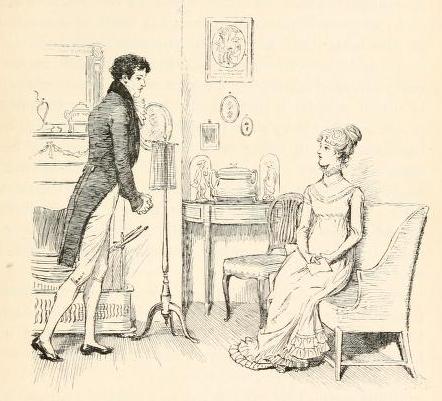
-Mr. Darcy, who was leaning against the mantlepiece with his eyes fixed on her face, seemed to catch her words with no less resentment than surprise. His complexion became pale with anger, and the disturbance of his mind was visible in every feature. He was struggling for the appearance of composure…

thomson-darcyproposal2

Hugh Thomson, illus. P&P. George Allen, 1894.
p. 148.

That she should receive an offer of marriage from Mr. Darcy! that he should have been in love with her for so many months! — so much in love as to wish to marry her in spite of all the objections which had made him prevent his friend’s marrying her sister, and which must appear at least with equal force in his own case — was almost incredible! — it was gratifying to have inspired unconsciously so strong an affection. But his pride, his abominable pride…

Chapter 12.  [Elizabeth avoids meeting Darcy on her walk, but he finds her and passes her The Letter (he could not have delivered it any other way in order to protect her reputation…)]

CEBrock-darcyletter-mollands

C. E. Brock. “Would you do me the honour of reading that letter?” P&P. Macmillan 1895. Volume II, Ch. 12. [Mollands]

p. 150.

With no expectation of pleasure, but with the strongest curiosity, Elizabeth opened the letter, and, to her still increasing wonder, perceived an envelope containing two sheets of letter-paper…

The Letter: [like The Proposal, read this! pp. 150-56.]

Darcyletter-writing

Mr. Darcy writing The Letter – P&P 1995

p. 156.

Astonishment, apprehension, and even horror, oppressed her. She wished to discredit it entirely, repeatedly exclaiming, “This must be false! This cannot be! This must be the grossest falsehood!” — and when she had gone through the whole letter, though scarcely knowing anything of the last page or two, put it hastily away, protesting that she would not regard it, that she would never look in it again.

p. 159.

…that proud and repulsive as were his manners, she had never, in the whole course of their acquaintance — an acquaintance which had latterly brought them much together, and given her a sort of intimacy with his ways — seen anything that betrayed him to be unprincipled or unjust — anything that spoke him of irreligious or immoral habits: that among his own connexions he was esteemed and valued….

She grew absolutely ashamed of herself. Of neither Darcy nor Wickham could she think without feeling that she had been blind, partial, prejudiced, absurd.

“How despicably have I acted!” she cried; “I, who have prided myself on my discernment! I, who have valued myself on my abilities! who have often disdained the generous candour of my sister, and gratified my vanity in useless or blameable distrust. How humiliating is this discovery! yet, how just a humiliation! Had I been in love, I could not have been more wretchedly blind. But vanity, not love, has been my folly. Pleased with the preference of one, and offended by the neglect of the other [my emphasis] on the very beginning of our acquaintance, I have courted prepossession and ignorance, and driven reason away, where either were concerned. Till this moment I never knew myself.”

p. 161. [Lady Catherine’s take on Darcy has always caused me a full laugh-out-loud moment:]

….“They were excessively sorry to go! But so they always are. The dear colonel rallied his spirits tolerably till just at last; but Darcy seemed to feel it most acutely; more, I think, than last year. His attachment to Rosings, certainly increases.”

p. 163. – another favorite! [underlines are my emphasis ]

Reflection must be reserved for solitary hours; whenever she was alone, she gave way to it as the greatest relief; and not a day went by without a solitary walk, in which she might indulge in all the delight of unpleasant recollections….

….Mr. Darcy’s letter she was in a fair way of soon knowing by heart. She studied every sentence; and her feelings towards its writer were at times widely different… and his disappointed feelings became the object of compassion. His attachment excited gratitude, his general character respect; but she could not approve him; nor could she for a moment repent her refusal, or feel the slightest inclination ever to see him again. [Ha!]

….it may be easily believed that the happy spirits which had seldom been depressed before, were now so much affected as to make it almost impossible for her to appear tolerably cheerful.

p. 166.  [telling Jane about the Proposal]

To know that she had the power of revealing what would so exceedingly astonish Jane, and must, at the same time, so highly gratify whatever of her own vanity she had not yet been able to reason away….

p. 171. [Elizabeth to Jane about Wickham and Darcy]

“… There is but such a quantity of merit between them; just enough to make one good sort of man; and of late it has been shifting about pretty much. For my part, I am inclined to believe it all Mr. Darcy’s; but you shall do as you chuse.”

p. 172. Elizabeth to Jane:

“Oh! no, my regret and compassion are all done away by seeing you so full of both. I know you will do him [Darcy] such ample justice, that I am growing every moment more unconcerned and indifferent. Your profusion makes me saving; and if you lament over him much longer my heart will be as light as a feather.”

[Elizabeth:] “And yet I meant to be uncommonly clever in taking so decided a dislike to him, without any reason. It is such a spur to one’s genius, such an opening for wit, to have a dislike of that kind. One may be continually abusive without saying anything just; but one cannot be always laughing at a man without now and then stumbling on something witty.”

[Elizabeth:] The general prejudice against Mr. Darcy is so violent, that it would be the death of half the good people in Meryton to attempt to place him in an amiable light….”

p. 175.

She [Elizabeth] felt anew the justice of Mr. Darcy’s objections; and never had she before been so much disposed to pardon his interference in the views of his friend.

p. 183.

Derbyshire-P&P2005

With the mention of Derbyshire there were many ideas connected. It was impossible for her [Elizabeth] to see the word without thinking of Pemberley and its owner. “But surely,” said she, “I may enter his county with impunity, and rob it of a few petrified spars without his perceiving me.”

p. 184. [Mrs. Gardiner to Elizabeth:]

“My love, should not you like to see a place of which you have heard so much?” said her aunt; “A place, too, with which so many of your acquaintance are connected. Wickham passed all his youth there, you know.”

Elizabeth was distressed. She felt that she had no business at Pemberley, and was obliged to assume a disinclination for seeing it. She must own that she was tired of great houses; after going over so many, she really had no pleasure in fine carpets or satin curtains….

Elizabeth said no more — but her mind could not acquiesce. The possibility of meeting Mr. Darcy, while viewing the place, instantly occurred. It would be dreadful! She blushed at the very idea, and thought it would be better to speak openly to her aunt than to run such a risk…

…and her alarms being now removed, she was at leisure to feel a great deal of curiosity to see the house herself; and when the subject was revived the next morning, and she was again applied to, could readily answer, and with a proper air of indifference, that she had not really any dislike to the scheme. — To Pemberley, therefore, they were to go.

pemberley-photo

Lyme Park, a.k.a. Pemberley P&P 1995

End of Volume II – anything I missed that you want to share?

Stay tuned for Volume III!

*Page citations from: Austen, Jane. Pride and Prejudice. Ed. James Kinsley. Introd. Fiona Stafford. New York: Oxford UP, 2008.

c2013 Jane Austen in Vermont
Austen Literary History & Criticism · Jane Austen · Jane Austen Popular Culture · Literature

Mr. Darcy’s Feelings; Or, What Jane Austen Really Tells Us About Her Hero…

Much has been made of the film adaptations of Pride and Prejudice and the need to make the feelings of the hero more apparent to the viewer, the complaint being that Jane Austen really doesn’t give us much to go on regarding her Heroes and their inner life.  Andrew Davies famously says he had to “sex her up” to make the films work for a modern audience, and while I like to see Colin Firth in a wet shirt and Matthew Macfadyen bare-chested at dawn as much as the next swooning female, I do take issue with the need to edit the text to the point of it seeming more like a modern romance than an early nineteenth-century novel.  One of Jane Austen’s greatest strengths and why we still read her year after year over the past 200 years, is her creation of believable characters who live and breathe on and off the page – and the need for our imaginations to bring whatever we will to the reading…

PP2005-mcfadyen-dawn

P&P 2005 – Matthew Macfadyen as Mr. Darcy

This year has brought with it any number of celebrations of Pride and Prejudice from plays and festivals to conferences and all sorts of fan fiction and games and “stuff” one cannot live without, but the best way to celebrate the book in my mind is to just find a quiet corner somewhere and re-read it, perhaps for the umpteenth time, but read it again nonetheless.  We know from her letters that Jane Austen read the book aloud to her family any number of times – whether she read it during and after the many alterations she made to the text is not so clear … but her family began what has become for many of us an annual reading, and we enjoy it as much as they did, our only loss in not having Austen to answer our questions –

I began this year of celebrating the bicentenary of P&P with a close reading in January, my intention to make note of every time Austen comments as the narrator or has Darcy express or state anything regarding his feelings for Elizabeth Bennet, as well as her feelings in return – and I find so much more than I ever thought was there, and seeing them out of context is quite enlightening – I don’t think that Andrew Davies had to add anything at all to the text – it is already there, as you shall see.


 P&P 1995 – Colin Firth as Mr. Darcy – “The Look”

John Wiltshire recently wrote an essay on “Mr. Darcy’s Smile” ** – and one might have asked ‘did Mr. Darcy EVER smile?’, our first impression no different than Elizabeth’s in assigning him to the Snob pile. Professor Wiltshire rescues him from that place of the aloof, observing, not present fellow, by telling us how often in the text Jane Austen has her Mr. Darcy actually Smile. So let’s see what we find, see what Austen tells us directly about Darcy’s feelings – for some reason we gloss over it all too easily and have come to depend upon Andrew Davies to visually remind us …

The other vexing question is of course when does Elizabeth fall for Mr. Darcy?  This is a controversial point – some believe her tongue-in-cheek statement to Jane,

“It has been coming on so gradually, that I hardly know when it began. But I believe I must date it from my first seeing his beautiful grounds at Pemberley.” 

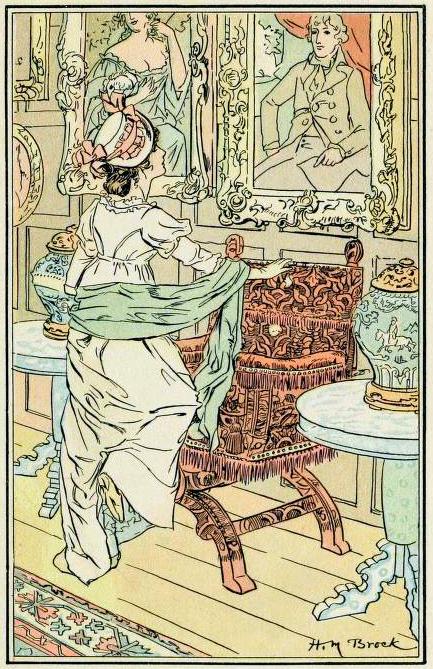
-this one sentence dividing Janeites, scholars and fans alike as to Elizabeth’s perhaps overly mercenary view of the world and her need to “land” a wealthy partner, that “to be mistress of Pemberley might be something!”  Some don’t see Elizabeth at all attracted to Darcy with any sort of passion like the films are overwrought with – that she comes to admire and then Love Darcy because of all his good qualities once his Asperger / shy/ snob demeanor crashes around him… But again, reading the text closely, both the actions, dialogue, and the narrator’s commentary, we are shown an Elizabeth both humiliated by Darcy’s apparent disdain of her [and her eager willingness to accept the neighborhood gossip that disses him at his first appearance], and her awareness in every moment they are in the same room together, of everything he is doing – she sees him watching her mother, reacting to her mother and other family members, sees him change color upon meeting Wickham, watches closely his relationship with Caroline Bingley, and most importantly sees him watching her, always passing it off as some strange behavior on his part, protesting too much because she knows he cannot tolerate her – in short she is always in a state of heightened awareness whenever Darcy is in her space. What changes for her at Pemberley is not its grandeur and its grounds, but his portrait, where she for the first time can look at him directly, his eyes upon her as in life, “with such a smile over [his] face, as she remembered to have sometimes seen, when he looked at her” (p. 189), but here she does not have to turn away in a confused embarrassed state…

Dent 1898-HMBrock-eatdpicture-adelaide

“In earnest contemplation” – H. M. Brock. P&P. Dent, 1898.
Image: Adelaide ebook

I had wanted to post on this as this celebratory year began, but here I am nearly the end of the year and ready to launch into celebrating Mansfield Park !– but shall post these quotes now, just under the wire… starting today with Volume I. *

From Volume I:

p. 7. [where it all begins! – Darcy’s insult, Elizabeth’s humiliation and wounded pride]

“Which do you mean?” and turning round, [Darcy] looked for a moment at Elizabeth, till catching her eye, he withdrew his own and coldly said, “She is tolerable; but not handsome enough to tempt me; and I am in no humour at present to give consequence to young ladies who are slighted by other men. You had better return to your partner and enjoy her smiles, for you are wasting your time with me.” 

   Mr. Bingley followed his advice. Mr. Darcy walked off; and Elizabeth remained with no very cordial feelings towards him. She told the story, however, with great spirit among her friends; for she had a lively, playful disposition, which delighted in any thing ridiculous.

Macmillan1895-cebrock-darcy-tempt-bw-mollands

C. E. Brock. P&P. Macmillan 1895

p. 13.  [but Elizabeth later says:]  

“That is very true,” replied Elizabeth, “and I could easily forgive his pride, if he had not mortified mine.”

p. 16.  [How quickly Darcy changes his mind about Elizabeth!]:

Occupied in observing Mr. Bingley’s attentions to her sister, Elizabeth was far from suspecting that she was herself becoming an object of some interest in the eyes of his friend. Mr. Darcy had at first scarcely allowed her to be pretty; he had looked at her without admiration at the ball; and when they next met, he looked at her only to criticise. But no sooner had he made it clear to himself and his friends that she had hardly a good feature in her face, than he began to find it was rendered uncommonly intelligent by the beautiful expression of her dark eyes. To this discovery succeeded some others equally mortifying. Though he had detected with a critical eye more than one failure of perfect symmetry in her form, he was forced to acknowledge her figure to be light and pleasing; and in spite of his asserting that her manners were not those of the fashionable world, he was caught by their easy playfulness. Of this she was perfectly unaware; — to her he was only the man who made himself agreeable nowhere, and who had not thought her handsome enough to dance with. 

   He began to wish to know more of her, and as a step towards conversing with her himself, attended to her conversation with others. His doing so drew her notice. It was at Sir William Lucas’s, where a large party were assembled. 

   “What does Mr. Darcy mean,” said she to Charlotte, “by listening to my conversation with Colonel Forster?” 

[and the teasing begins!]

p. 18.  Sir William Lucas:

Brock-P&P-Lucas-dance

C. E. Brock. P&P. Dent, 1898. [Mollands]

“My dear Miss Eliza, why are not you dancing? — Mr. Darcy, you must allow me to present this young lady to you as a very desirable partner. You cannot refuse to dance, I am sure, when so much beauty is before you.” And, taking her hand, he would have given it to Mr. Darcy, who, though extremely surprised, was not unwilling to receive it, when she instantly drew back, and said with some discomposure to Sir William — 

   “Indeed, sir, I have not the least intention of dancing. I entreat you not to suppose that I moved this way in order to beg for a partner.” 

   Mr. Darcy, with grave propriety, requested to be allowed the honour of her hand, but in vain. Elizabeth was determined; nor did Sir William at all shake her purpose by his attempt at persuasion. 

   “You excel so much in the dance, Miss Eliza, that it is cruel to deny me the happiness of seeing you; and though this gentleman dislikes the amusement in general, he can have no objection, I am sure, to oblige us for one half-hour.” 

   “Mr. Darcy is all politeness,” said Elizabeth, smiling. 

   “He is indeed; but considering the inducement, my dear Miss Eliza, we cannot wonder at his complaisance — for who would object to such a partner?” 

   Elizabeth looked archly, and turned away. Her resistance had not injured her with the gentleman, and he was thinking of her with some complacency… 

p. 19.   [Darcy to Miss Bingley who is ever in pursuit…]:

missbingley“Your conjecture is totally wrong, I assure you. My mind was more agreeably engaged. I have been meditating on the very great pleasure which a pair of fine eyes in the face of a pretty woman can bestow.” 

   Miss Bingley immediately fixed her eyes on his face, and desired he would tell her what lady had the credit of inspiring such reflections. Mr. Darcy replied with great intrepidity — 

   “Miss Elizabeth Bennet.” 

   “Miss Elizabeth Bennet!” repeated Miss Bingley. “I am all astonishment. How long has she been such a favourite? — and pray, when am I to wish you joy?” …

p. 24.  [Elizabeth arriving at Netherfield to offer comfort Jane]:

Mr. Darcy said very little, and Mr. Hurst nothing at all. The former was divided between admiration of the brilliancy which exercise had given to her complexion, and doubt as to the occasion’s justifying her coming so far alone. The latter was thinking only of his breakfast.

P&P2005-Elizabeth walking-jasna

 Kiera Knightley as Elizabeth – image: jasna.org

p. 26.

“I am afraid, Mr. Darcy,” observed Miss Bingley, in a half-whisper, “that this adventure has rather affected your admiration of her fine eyes.” 

   “Not at all,” he replied; “they were brightened by the exercise.”

p. 28. [this is an interesting: Elizabeth has been reading a book while the others plays cards – but when the talk turns to Mr. Darcy’s library at Pemberley, she takes such an interest in what is being said, that she puts her book aside and moves close to the card table…and what follows is the discussion of the “accomplished woman.”]:

Elizabeth was so much caught by what passed as to leave her very little attention for her book; and soon laying it wholly aside, she drew near the card-table, and stationed herself between Mr. Bingley and his eldest sister, to observe the game. 

chatsworth-house-library-BritMag

The Library at Chatsworth a.k.a. Pemberley
[Britain Magazine]

p. 33. [Elizabeth says; notice how she “trembles”:]

I wonder who first discovered the efficacy of poetry in driving away love!” 

 “I have been used to consider poetry as the food of love,” said Darcy. 

“Of a fine, stout, healthy love it may. Everything nourishes what is strong already. But if it be only a slight, thin sort of inclination, I am convinced that one good sonnet will starve it entirely away.” 

 Darcy only smiled; and the general pause which ensued made Elizabeth tremble lest her mother should be exposing herself again. She longed to speak, but could think of nothing to say… 

p. 38.

Elizabeth could not help observing, as she turned over some music books that lay on the instrument, how frequently Mr. Darcy’s eyes were fixed on her. She hardly knew how to suppose that she could be an object of admiration to so great a man; … 

p. 38.

… and Darcy had never been so bewitched by any woman as he was by her. He really believed that, were it not for the inferiority of her connexions, he should be in some danger. 

p. 39.

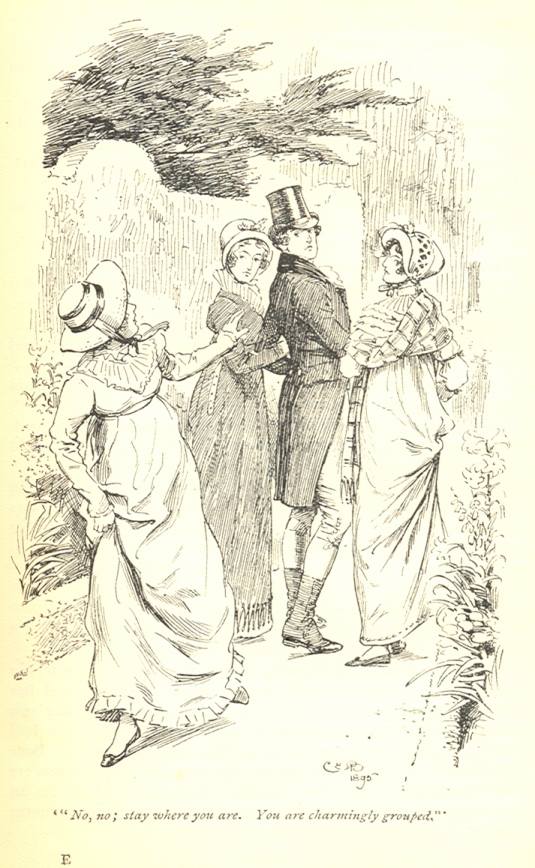
CeBrock-macmillan1895-group

C. E. Brock. P&P. Macmillan 1895 [Mollands]

Mr. Darcy felt their rudeness
[i. e Caroline and Mrs. Hurst leaving Elizabeth to walk by herself…]

p. 44.

…and Darcy, after a few moments recollection, was not sorry for it. He began to feel the danger of paying Elizabeth too much attention. 

p. 44.

To Mr. Darcy it was welcome intelligence: Elizabeth had been at Netherfield long enough. She attracted him more than he liked — and Miss Bingley was uncivil to her, and more teasing than usual to himself. He wisely resolved to be particularly careful that no sign of admiration should now escape him, nothing that could elevate her with the hope of influencing his felicity; sensible that if such an idea had been suggested, his behaviour during the last day must have material weight in confirming or crushing it. Steady to his purpose, he scarcely spoke ten words to her through the whole of Saturday, and though they were at one time left by themselves for half an hour, he adhered most conscientiously to his book, and would not even look at her.

p. 55.

Mr. Darcy corroborated it with a bow, and was beginning to determine not to fix his eyes on Elizabeth…

p. 72.  [during their dance]…

…on each side dissatisfied, though not to an equal degree, for in Darcy’s breast there was a tolerable powerful feeling towards her, which soon procured her pardon, and directed all his anger against another.

[And here Elizabeth always watching Darcy and his reactions to her and her family]:

p. 68.

…when she found herself suddenly addressed by Mr. Darcy, who took her so much by surprise in his application for her hand, that, without knowing what she did, she accepted him. He walked away again immediately, and she was left to fret over her own want of presence of mind…

 Limiteded1940-darcyandelizabeth

Helen Sewell. P&P. Limited Editions Club, 1940

p. 69.

…took her place in the set, amazed at the dignity to which she was arrived in being allowed to stand opposite to Mr. Darcy, and reading in her neighbours’ looks their equal amazement in beholding it.

p. 76.

Elizabeth blushed and blushed again with shame and vexation. She could not help frequently glancing her eye at Mr. Darcy, though every glance convinced her of what she dreaded; for though he was not always looking at her mother, she was convinced that his attention was invariably fixed by her. The expression of his face changed gradually from indignant contempt to a composed and steady gravity.

p. 78.

She was at least free from the offence of Mr. Darcy’s farther notice; though often standing within a very short distance of her, quite disengaged, he never came near enough to speak.

*********************

marveldarcy

Mr. Darcy – P&P – Marvel Comics

*****************

Stay tuned for quotes from Volume II. Do you find any that I have missed that somehow allude to this connection between Darcy and Elizabeth from nearly the first moment they set eyes upon each other?

*********************

*Page citations from: Austen, Jane. Pride and Prejudice. Ed. James Kinsley. Introd. Fiona Stafford. New York: Oxford UP, 2008.
** See John Wiltshire, “Mr. Darcy’s Smile.” The Cinematic Jane Austen: Essays on the Filmic Sensibility of the Novels. Ed. David Monaghan, Ariane Hudelet, and John Wiltshire. Jefferson, NC: McFarland, 2009. 94-110.

c2013 Jane Austen in Vermont
Books · Jane Austen · Literature

A Better Title for Jane Austen’s Mansfield Park?

There is a fabulous and funny blog out there called Better Book Titles, by Dan Wilbur, a comedian and writer – he says:

This blog is for people who do not have thousands of hours to read book reviews or blurbs or first sentences. I will cut through all the cryptic crap, and give you the meat of the story in one condensed image. Now you can read the greatest literary works of all time in mere seconds!

A new Better Book Title will be posted every weekday. Every Friday a reader’s submission will be posted. Redesign and titles by Dan Wilbur unless credited otherwise. Please use proper credits when reprinting.

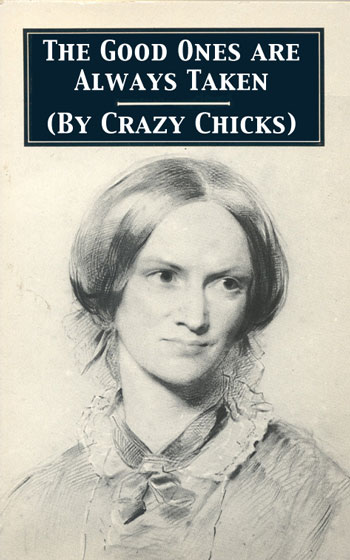
 It is well-worth your time to sort through the posts [you can also search for an author – go to bottom of page and click on “Archives” and a search screen will appear at the top of the page] – as expected, the Brontes are quite funny and spot-on:

[Charlotte Bronte – Jane Eyre]

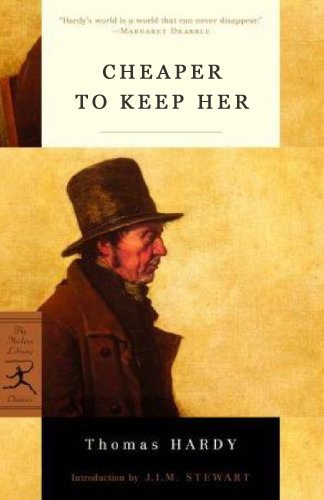
as is Thomas Hardy’s The Mayor of Casterbridge:

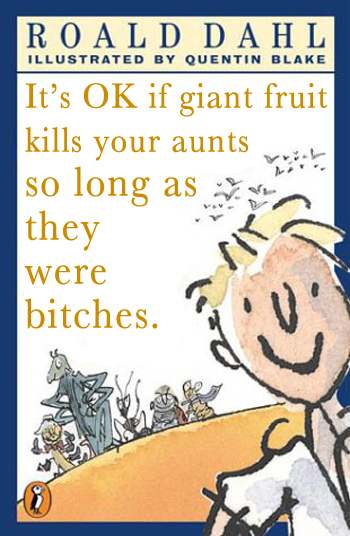
Here is one of my laugh-out-loud favorites:

[Roald Dahl – James and the Giant Peach]

and this:

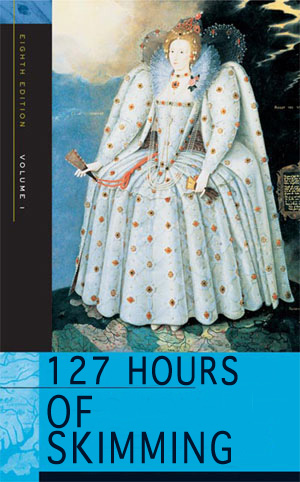
 [Norton Anthology of English Literature ]

and who can resist this by Virginia Woolf?

[ Virginia Woolf – The Waves ]

But what of Jane Austen? – well, she has only one title represented, and this a reader submission [ by Henry Schenker ] last November:

 [ Jane Austen – Mansfield Park ]

…which we can all appreciate! But surely Mr. Wilbur can come up with something for Austen’s other titles! – is it perhaps that he just can’t bring himself to read her books? – at any rate, what might you submit for an Austen “better book title”?? – put on your thinking caps and comment below!

All images from the Better Book Titles website, which you must visit – check out all the Shakespeare…

You can follow Mr. Wilbur on twitter: http://twitter.com/#!/betterbooktitle

Copyright @2011 Deb Barnum, of Jane Austen in Vermont
Auctions · Books · Jane Austen · Literature · Museum Exhibitions · News

The Penny Post Weekly Review ~ All Things Austen

The Penny Post Weekly Review

  August 7, 2011

It’s been way too long since the “weekly” Penny Post has arrived in your mailbox – I am afraid to change the name to “monthly” (though more accurate today!)  because then I shall not be diligent enough to get it out at all! – so some of this may be old news, but I am including it if it is worthy of a mention in case you missed it on the first go-round on the blog-sphere … 

News & Gossip:

Book Giveaway! – Don’t forget to comment on the Rachel Brownstein interview post to be included in the drawing for a copy of Why Jane Austen? – deadline is Wednesday August 17.

Chawton House Library: Jane Austen’s SENSE AND SENSIBILITY: a bicentennial celebration – Saturday 17 September 2011:  http://www.chawtonhouse.org/news/files/studydayflyerincprog0511.pdf

The Austenesque Extravagana is in full-swing at the Austenesque Reviews blog – join the fun – it lasts all month! : http://janeaustenreviews.blogspot.com/


The Circulating Library:  

The John Murray archive at the National Library of Scotland [Murray was Jane Austen’s publisher]:  http://digital.nls.uk/jma/

Dickens and Massachusetts: A Tale of Power and Transformation – at UMass Lowell:  http://www.uml.edu/college/arts_sciences/English/Dickens/default.html

At the Circulating Library: A Database of Victorian Fiction, 1837-1901 offers a biographical and bibliography database of nineteenth-century British fiction. Currently, the database contains 7335 titles by 2494 authors (more statistics). The database is hosted by the Victorian Research Web, a major and free research resource for Victorian scholars:  http://www.victorianresearch.org/atcl/

The English Novel 1830-1836http://www.cf.ac.uk/encap/journals/corvey/1830s/

British Fiction, 1800-1839http://www.british-fiction.cf.ac.uk/

Thackeray exhibit at the Houghton Libraryhttp://hcl.harvard.edu/libraries/houghton/exhibits/thackeray/


Websites, blogs, etc: 
 

Indie Jane.org:  Indie Jane is a new blog and community that celebrates and supports independent/non-traditionally published Austenesque literature:  http://indiejane.org/   [currently discussing Sense & Sensibility: http://indiejane.org/2011/08/book-club-questions-are-up/  ]

A blog just about teapots!:  http://teapotsteapotsteapots.blogspot.com/

Museums / Exhibitions: 

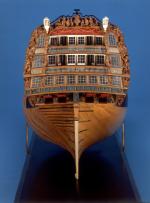
The Royal George Warship , 1756

George III ship models at the National Maritime Museumhttp://collections.nmm.ac.uk/usercollections/
7d7ded6fb50d6031e2884961a201bd85.html
 
[see other online collections here as well]

Caricature exhibition at the Library of Congresshttp://myloc.gov/Exhibitions/swanngallery/Pages/default.aspx?s_cid=500015


Articles of Interest:

A follow-up on these posts on TEA by Mary Ellen Foley: here are the links to all 5 posts: 

[And see also this link  http://www.nicecupofteaandasitdown.com/ ]

Henry Tilney alert!:  http://teachmetonight.blogspot.com/2011/07/dancing-with-metaphors.html

Thoughts on the sale of The Watsons at The Culture Concept: http://www.thecultureconcept.com/circle/in-trust-for-a-nation-a-jane-austen-treasure-the-watsons

WashingtonPost:  Five Myths about Jane Austen:  http://www.washingtonpost.com/opinions/five-myths-about-jane-austen/2011/07/08/gIQAZALCEI_story.html

A blog post on the gardens at Jane Austen’s Chawton house: http://sisterarts.typepad.com/sister-arts-gardens-po/2011/07/jane-austens-gardens.html

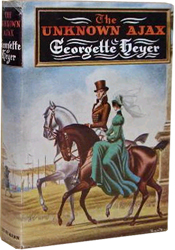
On Georgette Heyer, at Abebooks:  http://www.abebooks.com/books/historical-regency-romance-bestselling-detective/georgette-heyer.shtml?cm_mmc=nl-_-nl-_-110630-h00-georgetCA-_-01cta 

On Princess Diana – Magazine covers, 1981-1997:
http://www.howtobearetronaut.com/2011/07/diana-on-the-cover-of-a-magazine-1981-1997/?utm_source=feedburner&utm_medium=email&utm_campaign=Feed%3A+HowToBeARetronaut+%28How+to+be+a+Retronaut%29 

Byron memorial book found at a Church book sale [and thankfully donated to the Library!]:  http://www.nls.uk/news/press/2011/07/byron-memorial-book 

Diana Birchall shares her latest trip to England in ongoing posts – these so far, with tons of fabulous photographs!:

Tiles stolen from Wiltshire church where Jane Austen’s uncle was the vicar and where he is buried:  http://www.thisiswiltshire.co.uk/news/9181605.
Tiles_are_stolen_from_rural_church_for_third_time_in_under_a_month/

Book Thoughts:


Lev Raphael’s take on P&P – Pride and Prejudice: The Jewess and the Gentile: http://www.levraphael.com/pride-and-prejudice-jewess.html

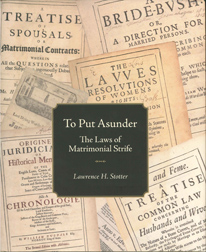
To Put Asunder: The Laws of Matrimonial Strife by Lawrence A. Stotter  http://www.oakknoll.com/detail.php?d_booknr=106293
– ISBN 9781587902109 – Price: $ 150.00   
From the website: 

Taking its cue from Matthew 19:6, “What, therefore, God hath joined together, let not man put asunder,” this book describes humankind’s actions in doing just that. 

A readable selected history of family law, To Put Asunder traverses more than two thousand years of continuing attempts by various societies to inhibit the desires of men and women, kings and commoners, to terminate their unsatisfactory marriages. The stories revealed are surprisingly engaging when the reader is introduced to the lives and personalities of some who were directly affected by family law.

The Supernatural Jane Austen series website [by Vera Nazarian]:  http://www.norilana.com/sja.htm


The Regency Period:
 

Amanda Vickery on The Old Bailey: http://yalebooks.wordpress.com/2011/07/27/amanda-vickery-returns-to-radio-4-for-series-two-of-voices-from-the-old-bailey/

A short article at How to Be a Retronaut on the science of phrenology in 1831:  http://www.howtobearetronaut.com/2011/07/sixty-miniature-heads-used-in-phrenology-1831/?utm_source=feedburner&utm_medium=email&utm_campaign=Feed%3A+HowToBeARetronaut+%28How+to+be+a+Retronaut%29

Auctions: 

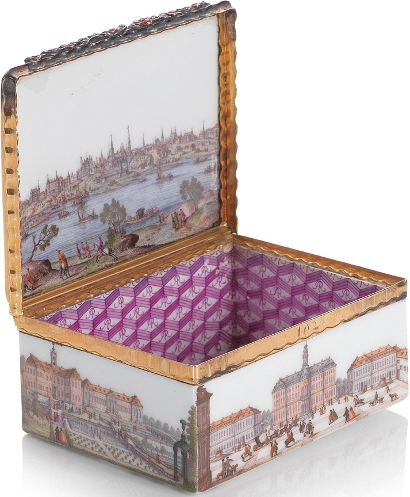
Meissen gold-mounted Royal snuff box made for Augustus III, Elector of Saxony and King of Poland: sold for 1.3 million 

The Snuff box collection at Bonhams auction sold for:  £1,700,000 ($2.7m) in London, on Tuesday July 5: http://www.paulfrasercollectibles.com/section.asp?docid=7381&n=060711  
[see the auction link for listing of all the snuff boxes and sale prices]

Shopping: 

18th century shoes at The American Duchesshttp://www.american-duchess.com/ [thank you Marti!]


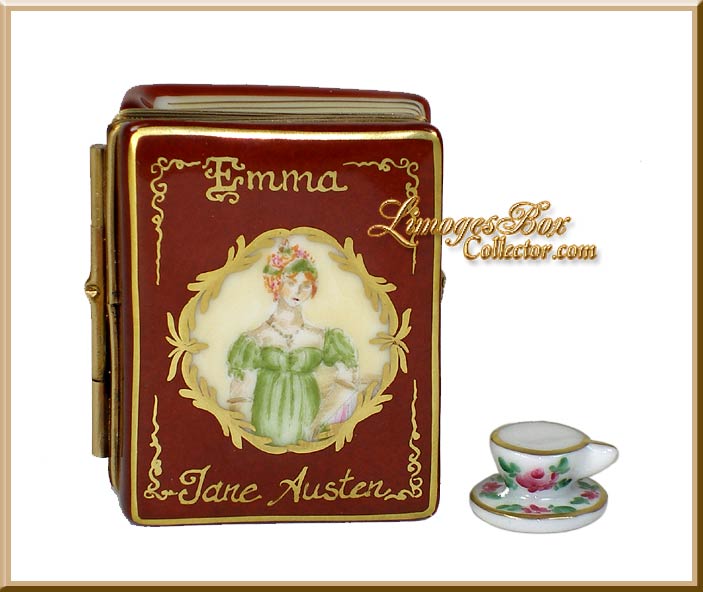
Jane Austen Limoges boxes on sale: https://www.limogesboxcollector.com/index.php?cPath=138&osCsid=s5l4u07plc3fdkqar01nbh2fp1

For Fun: 

Word Fighter gamehttp://blogs.forbes.com/traceyjohn/2011/07/20/jane-austen-throws-down-in-new-word-fighter-game/

Jane Austen’s Pride and Prejudice Trivia Game:http://www.marinagames.com/pandp/pandptrivia.html

*********************************************

If you find any especially interesting Austen-related bits, please email me – I will include items in next week’s Penny Post Weekly Review!

Copyright @2011 by Deb Barnum, of Jane Austen in Vermont 
Books · Jane Austen · Literature · News · Regency England · Social Life & Customs

The Penny Post Weekly Review ~ All Things Austen

The Penny Post Weekly Review* 

June 4, 2011

News and Gossip: 

1.   “Josiah Wedgwood Tradesman – Tycoon, firing up the modern Age” at The Culture Concept Circle:  http://www.thecultureconcept.com/circle/josiah-wedgwood-tradesman-tycoon-firing-up-the-modern-age

 2.  http://www.e-enlightenment.com/free access through the month of June:   user ID: ee2011 / PW:  enlightenment

3.  How timely is this, as I just started to re-read Evelina last week! You can follow the Group read of Frances Burney’s Evelina at The Duchess of Devonshire’s Gossip Guide: here is the first post: http://georgianaduchessofdevonshire.blogspot.com/2011/06/evelina-volume-1-letters-1-20-and.html

The full reading schedule is here: join in if you can!http://georgianaduchessofdevonshire.blogspot.com/2011/05/evelina-group-read-rundown.html

  • 2 June: Volume 1 Letters 1-20
  • 9 June: Volume 1 Letter 21- Volume 2 Letter 6 (21-37)
  • 16 June: Volume 2 Letter 7- 22 (38-53)
  • 23 June: Volume 2 Letter 23- Volume 3 Letter 9 (54-71)
  • 30 June: Volume 3 Letter 10-23 (72-84)

4.  In the UK: The Jane Austen Regency Week [ June 18 – June 26, 2011], celebrating the time Jane Austen spent in Alton and Chawton, is sponsored by the Alton Chamber of Commerce – website with event information here: http://www.janeaustenregencyweek.co.uk/index.html

5.  As part of the above Regency Week celebration, the Chawton House Library will be hosting tea, talk, and tours on June 21st and 23rd : http://www.chawton.org/news/

6.  Two posts on the British and their lovely habit, the drinking of tea: at Mary Ellen Foley’s Anglo-American Experience blog:

Part 1: http://mefoley.wordpress.com/2011/05/15/tea-part-1/
Part 2: http://mefoley.wordpress.com/2011/05/27/tea-part-2/
Part 3: http://mefoley.wordpress.com/2011/06/04/tea-part-3/
Part 4:  coming soon, so check back

Chinese Flowers, Old Foley pottery, from M.E. Foley's blog

7.  Dressing the Part: Dolley Madison’s Life Through Fashion, an exhibit at James Madison’s Montpelier, June 15, 2011 – March 29, 2012: http://www.montpelier.org/explore/collections/dressing_the_part.php

8.  The In Fashion: High Style 1620-2011 exhibit at The Shelburne Museum opens June 18, 2011: http://shelburnemuseum.org/exhibitions/in-fashion/

9.  An interview with Diana Birchall at Maria Grazia’s The Jane Austen Book Club: [includes a book giveaway] http://thesecretunderstandingofthehearts.blogspot.com/2011/06/talking-jane-austen-with-diana-birchall.html

10.  I don’t even know where to begin re: V. S. Naipaul’s trashing women writers and Jane Austen’s “sentimentality” [see this article at the Guardian: http://www.guardian.co.uk/books/2011/jun/02/vs-naipaul-jane-austen-women-writers ]

– but as one gentleman on one of the listservs I subscribe to so eloquently said: “Oh yeah Naipaul, how many movies have been made from YOUR books, huh?”

**************************** 

New Books just out / about to be: 

1.  Why Jane Austen? By Rachel Brownstein. ColumbiaUniversity Press, 2011:  http://cup.columbia.edu/book/978-0-231-15390-4/why-jane-austen  [publication date: June 16, 2011 or thereabouts – more on this book next week!]

2.  Vauxhall Gardens, by David Coke and Alan Borg:  http://www.vauxhallgardens.com/ – the book is to be published by Yale University Press on June 8, 2011

3.  Jane Austen: Two Centuries of Criticism, by Laurence Mazzeno. Camden Press, 2011:

http://www.camden-house.com/store/viewitem.asp?idproduct=13605

***************************** 

A few blogs / websites to check out:

1.  This one deserves repeating:  The Jane Austen Music Transcripts Collection at Flinders Academic Commons, transcribed by Gillian Dooley [this is a wonderful resource, most all from Austen’s music manuscript notebooks]: http://dspace.flinders.edu.au/dspace/handle/2328/15193

2.  William Godwin’s Diary: Reconstructing a Social and Political Culture, 1788-1836:  http://godwindiary.politics.ox.ac.uk/   [husband to Mary Wollstonecraft, Mary Shelley’s father, Austen’s time]

3.  The Beau Monde Bloghttp://thebeaumondeworld.wordpress.com/

Beau Monde Blog header

4.  The Carlyle Letters Onlinehttp://carlyleletters.dukejournals.org/ [i.e Thomas and Jane]

5.  The George Eliot blog:  [new!]http://desperatelyseekinggeorge.wordpress.com/

6.  The Yale Center for British Art – their fabulous new website:  http://britishart.yale.edu/

Mercier - 'The Sense of Hearing' - detail - YCBA

 *****************************

* I hope to return to doing a weekly update of various Austen-related discoveries – so much out there – so little time – one must set aside some time for BOOKS, don’t you think??

Copyright @2011 Deb Barnum, at Jane Austen in Vermont
Books · News

RED-The Reading Experience Database 1450-1945

The Reading Experience Database 1450-1945 is a project the Open University (UK) launched in 1996, with the aim of accumulating data about the reading experience of British subjects.  It is a searchable database of all citations in printed materials (i.e. letters, memoirs, diaries, journals, reading notebooks, autobiographies, court records, annotations, marginalia, etc.) linking an individual to their reading.  An example is Susan Ferrier, who commented in a letter on reading Jane Austen’s Emma in 1816, and there are many citations to Jane Austen’s own reading.  This material is already prompting the need for a reassessment of the opinions about 18th and 19th century reading practices.  For instance, the belief that 19th-century women read nothing but novels is disputed by the findings that women of this period read an extremely wide range of genres, including philosophy, mathematics and the Classics.  You can find the link at:  http://www.open.ac.uk/Arts/RED/index.html (the link is also in our ‘Literary Resources” list.) And note that RED actively solicits contributions of material for inclusion in the database. 1

[1.  See The Female Spectator, vol.11, no.1, Spring 2007]

JASNA-Vermont events

A New JASNA Chapter in Vermont

The newly formed Vermont Regional Chapter of JASNA (The Jane Austen Society of North America) had its first public gathering on Sunday, March 30, 2008, at Champlain College in Burlington, Vermont. Professor Robyn Warhol-Down of the University of Vermont spoke to a group of about 65 people on “‘I Quit Such Odious Subjects’: Austen’s Narrative Refusals.”  Professor Warhol-Down talked about her research into the ways that narrators in 19th-century British novels talk about parts of their stories they will not or cannot tell, and focuses on Dickens, Charlotte Bronte, Henry James and, of course, Jane Austen.  Her forthcoming book is titled “Narrative Refusals: What Doesn’t Happen in 19th-century British Novels.”  A lively discussion followed.

The Regional Coordinators of the chapter are Kelly McDonald and Deborah Barnum; Marcia Merrill will be the treasurer; Carol Madden our secretary; and Lynne Hefferon, the refreshments coordinator.  And we are always looking for more volunteers!  We plan on having quarterly events to which the public is invited (Champlain College has graciously offered conference rooms for our use), as well as JASNA-only member gatherings for book readings and discussion (and of course, movies as well, as they always slip into every such conversation!)

We hope to keep everyone informed of our activities via this blog.  We welcome your comments and encourage discussion.  There is certainly a lot of Austen-talk to be had, especially with the newest crop of films on Masterpiece Theatre, and we hope you will participate with us.

Please check the “Schedule of Events” page to see what we have planned for the rest of 2008, as well as thoughts for 2009 and beyond.  Please join us whenever you can!