


We are off to Winchester College to learn of its history and its connection to Jane Austen – several of her nephews went here – and we were privileged to see many of the treasures in the library, as well as the what was to be an exterior visit to 8 College Street, the location where Austen dies on July 18, 1817….

What a wonderful and unexpected surprise to find that the College, who owns the building, had just the day before put some of the finishing touches on the house, readying it for the onslaught of Jane people in this 250th anniversary year. They had literally just finished painting some of the wall signs and quotations just the day before, and while the restoration is still ongoing, this very welcome gift to us on the JASNA tour is too much to put into words. I have been to this house before a couple of times, standing across the street and looking longingly at the spot where Austen spent her last weeks – but to go inside and see the interior walls, painted now as they were in her time, was so much more emotional than I expected [this now just edging out my seeing where Keats* died in Rome as the saddest literary moment I’ve experienced…]
Just showing a few of the photos I took – you really do need to be there yourself to feel the intensity of this place…tears flowed from many of us.
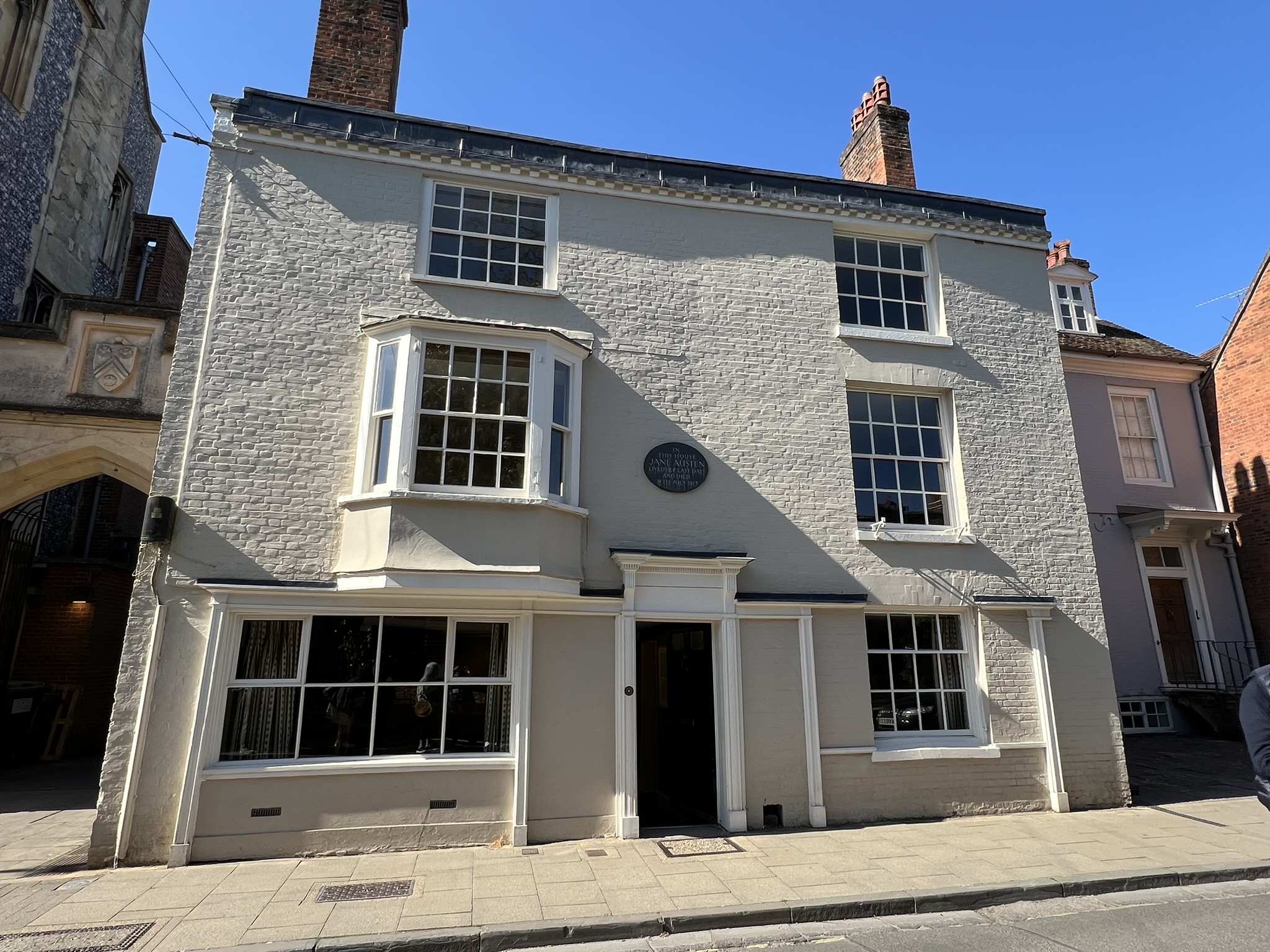
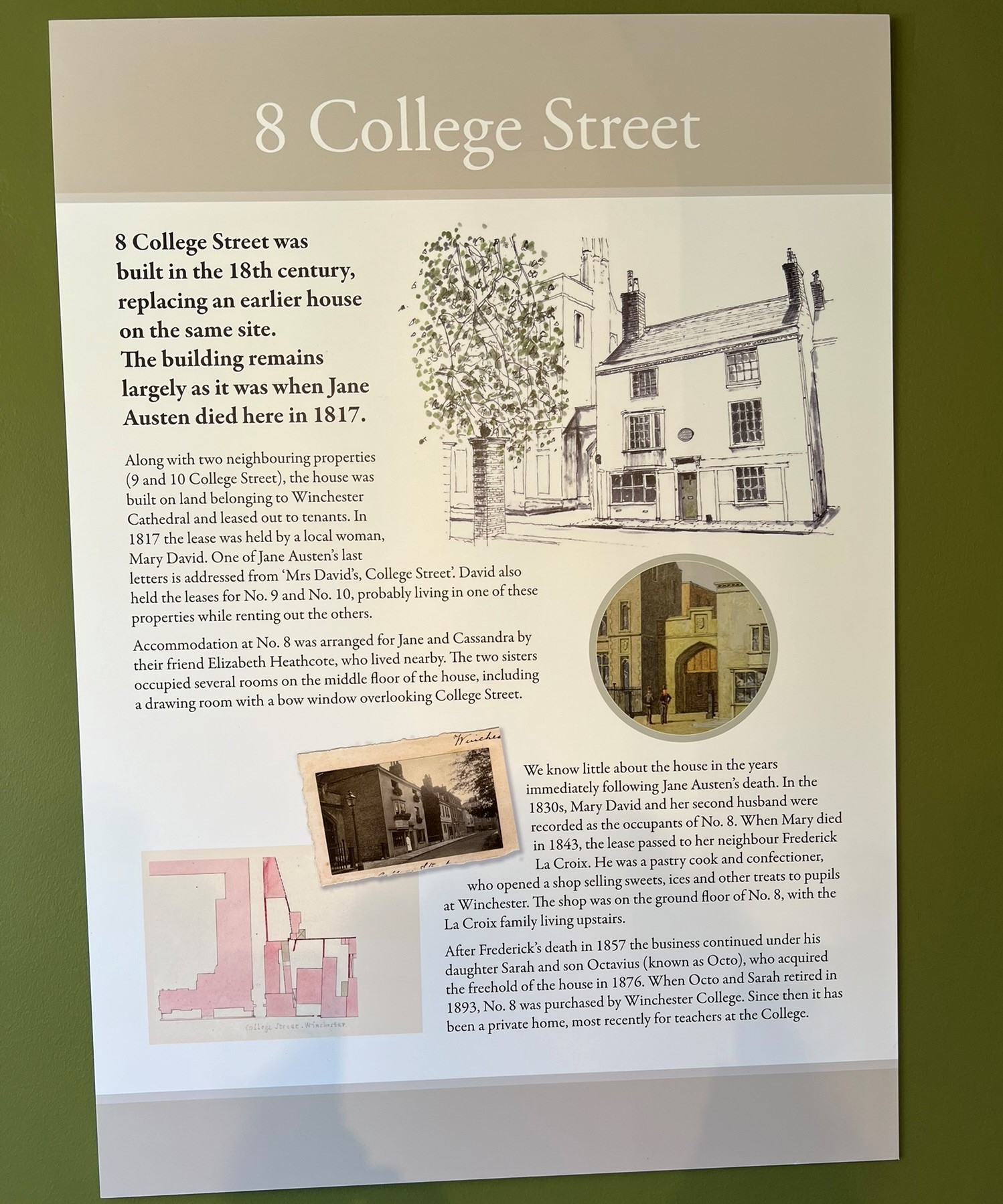
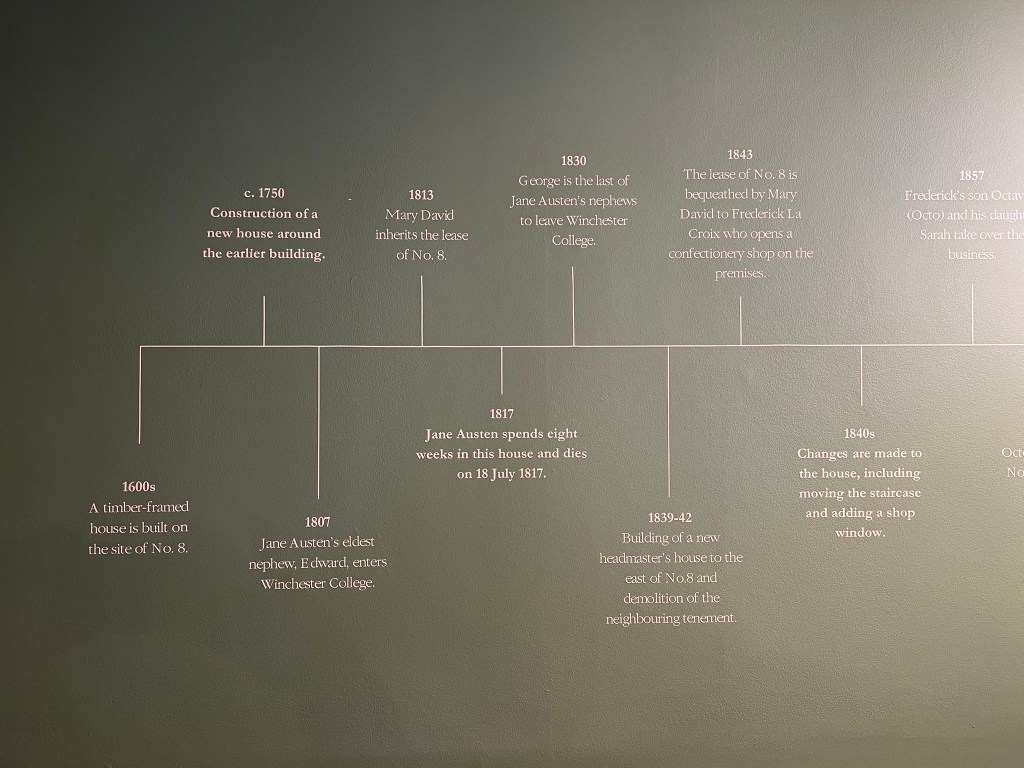
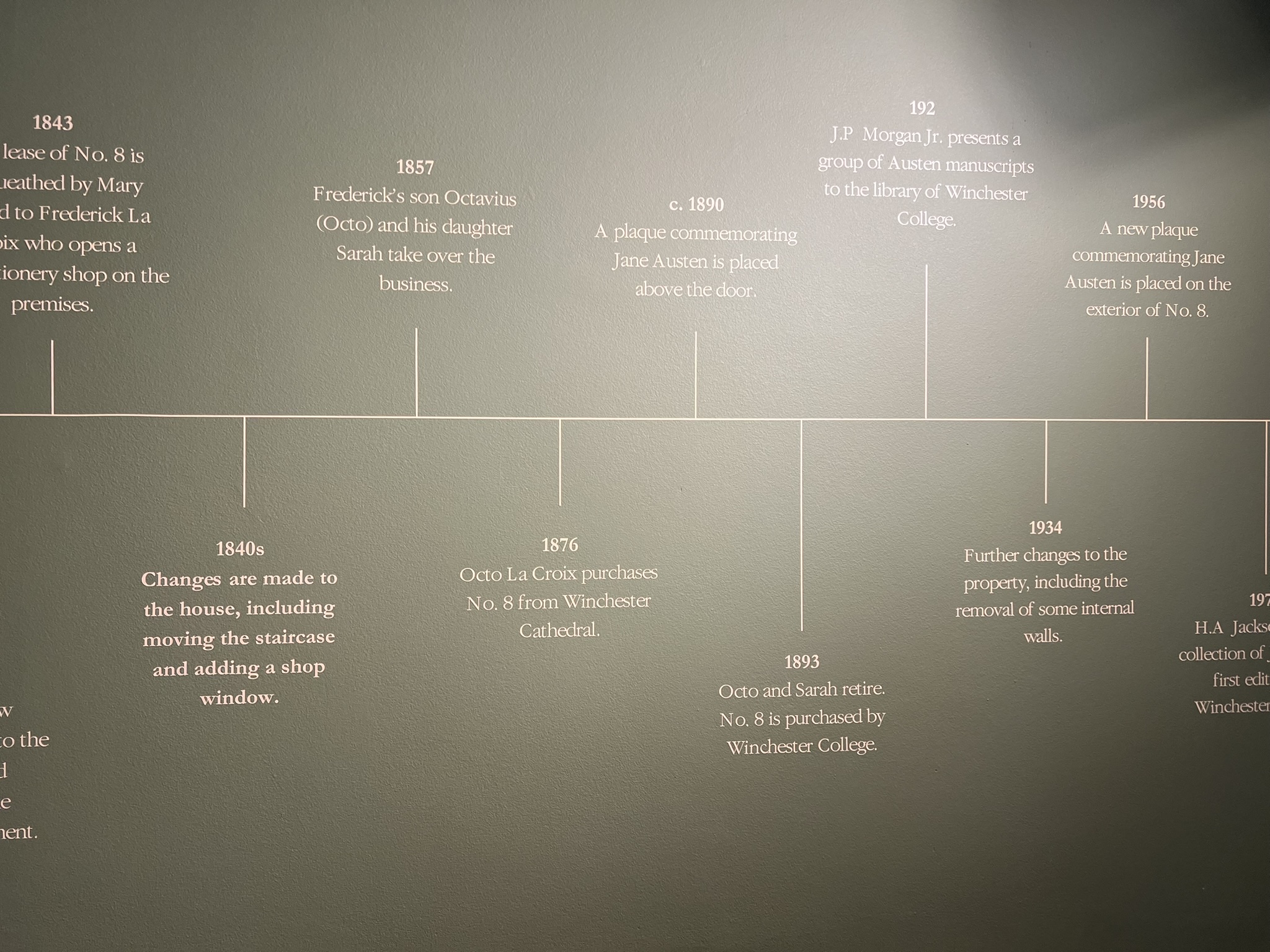
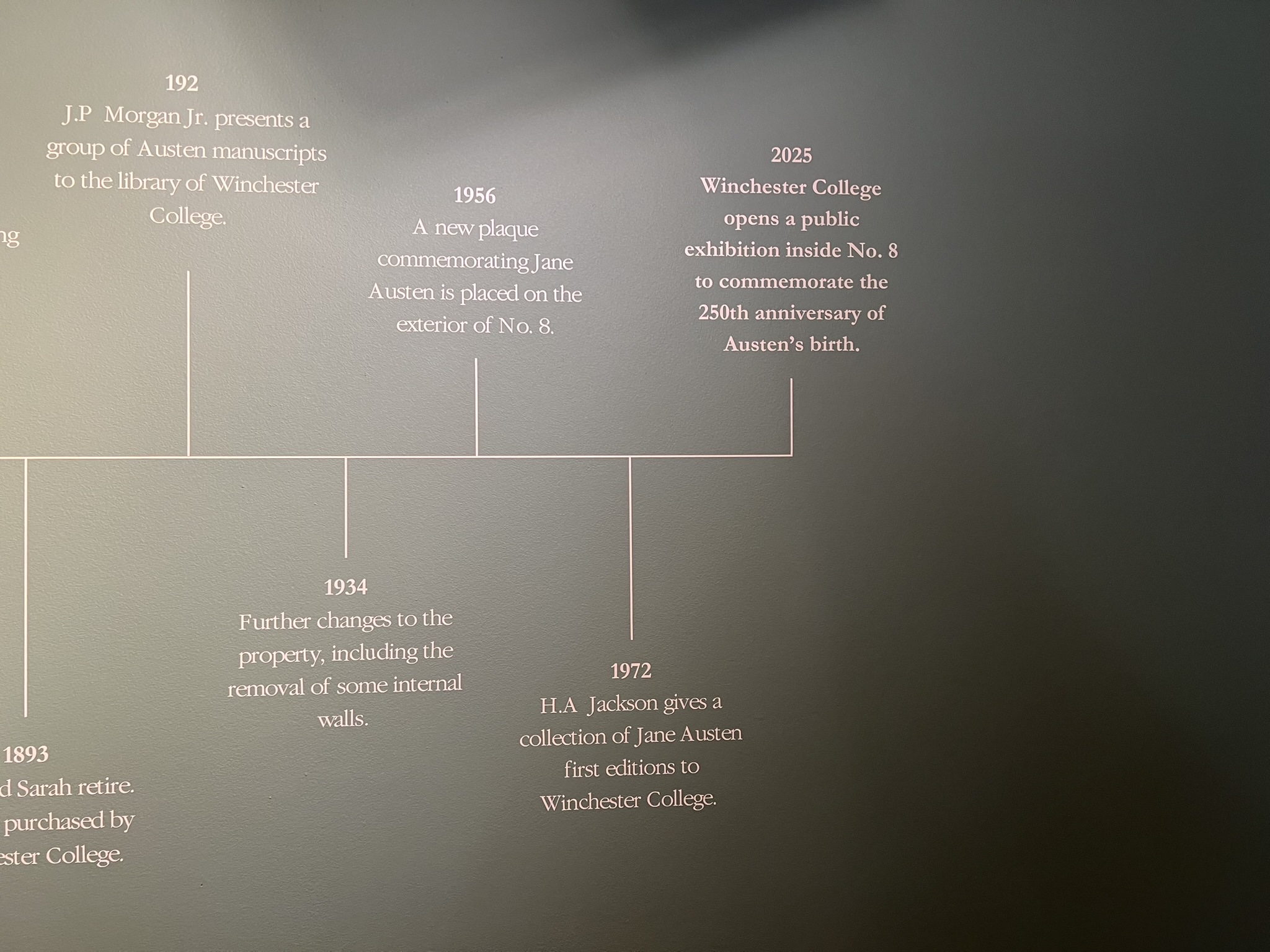
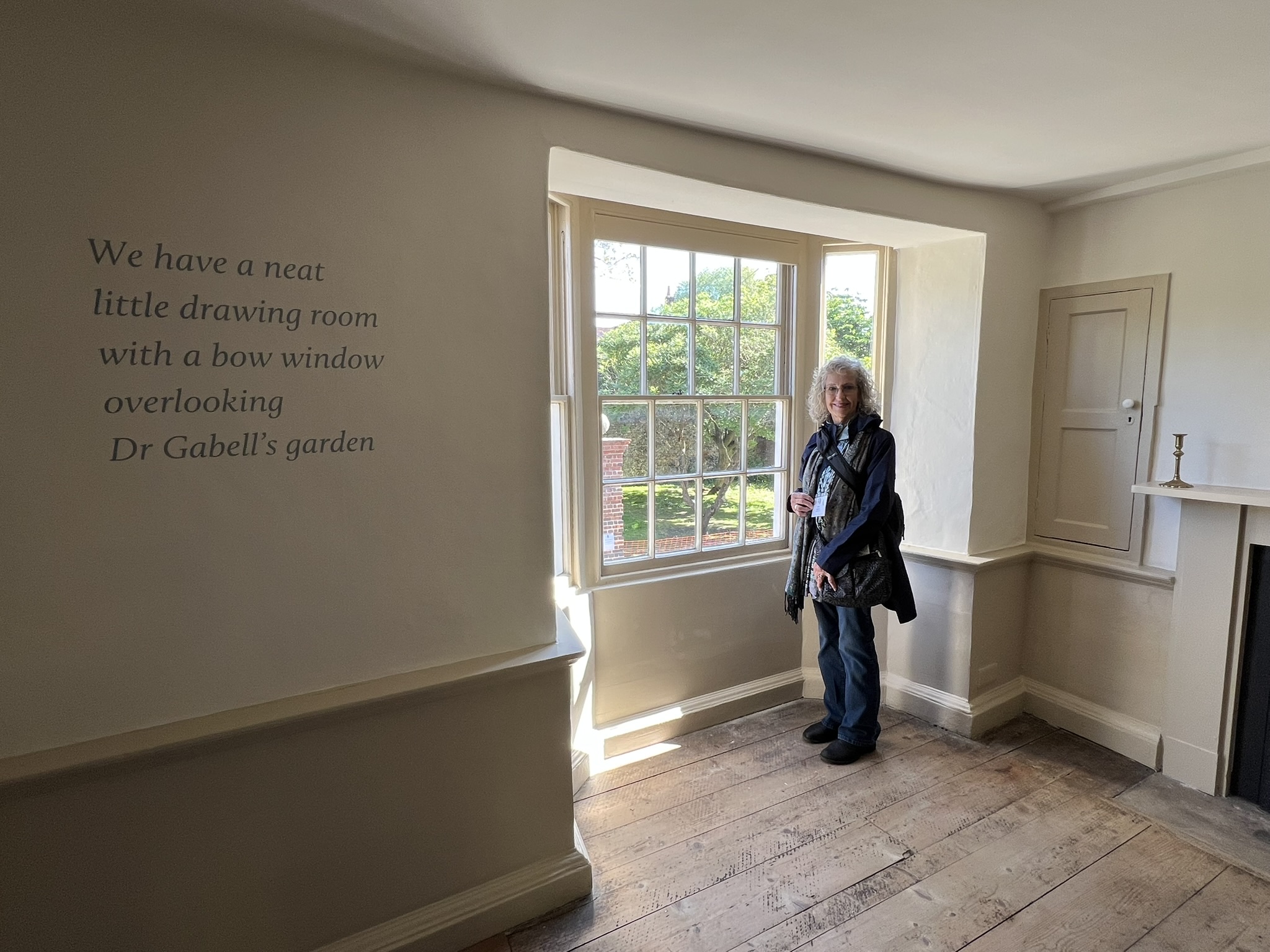
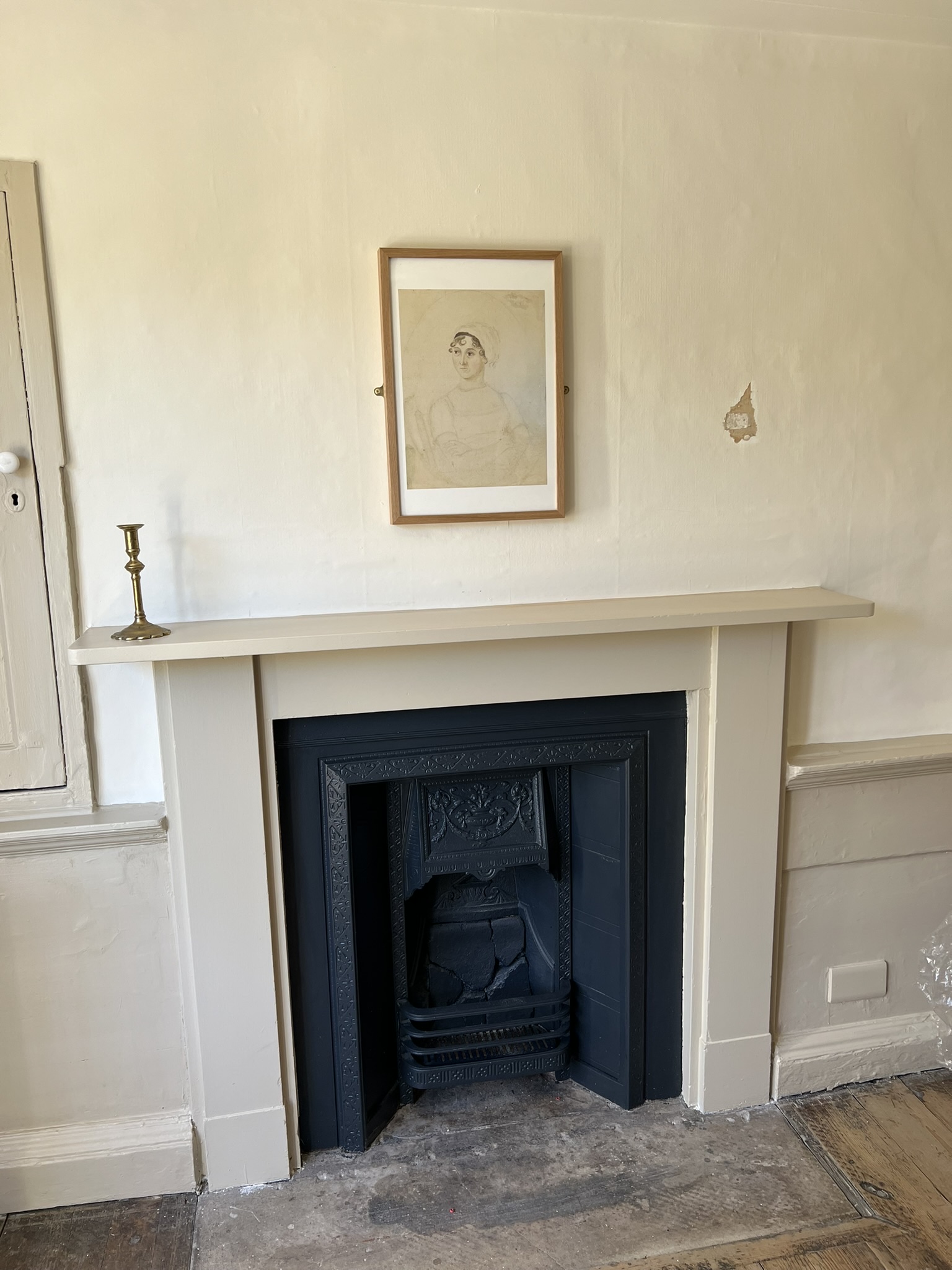
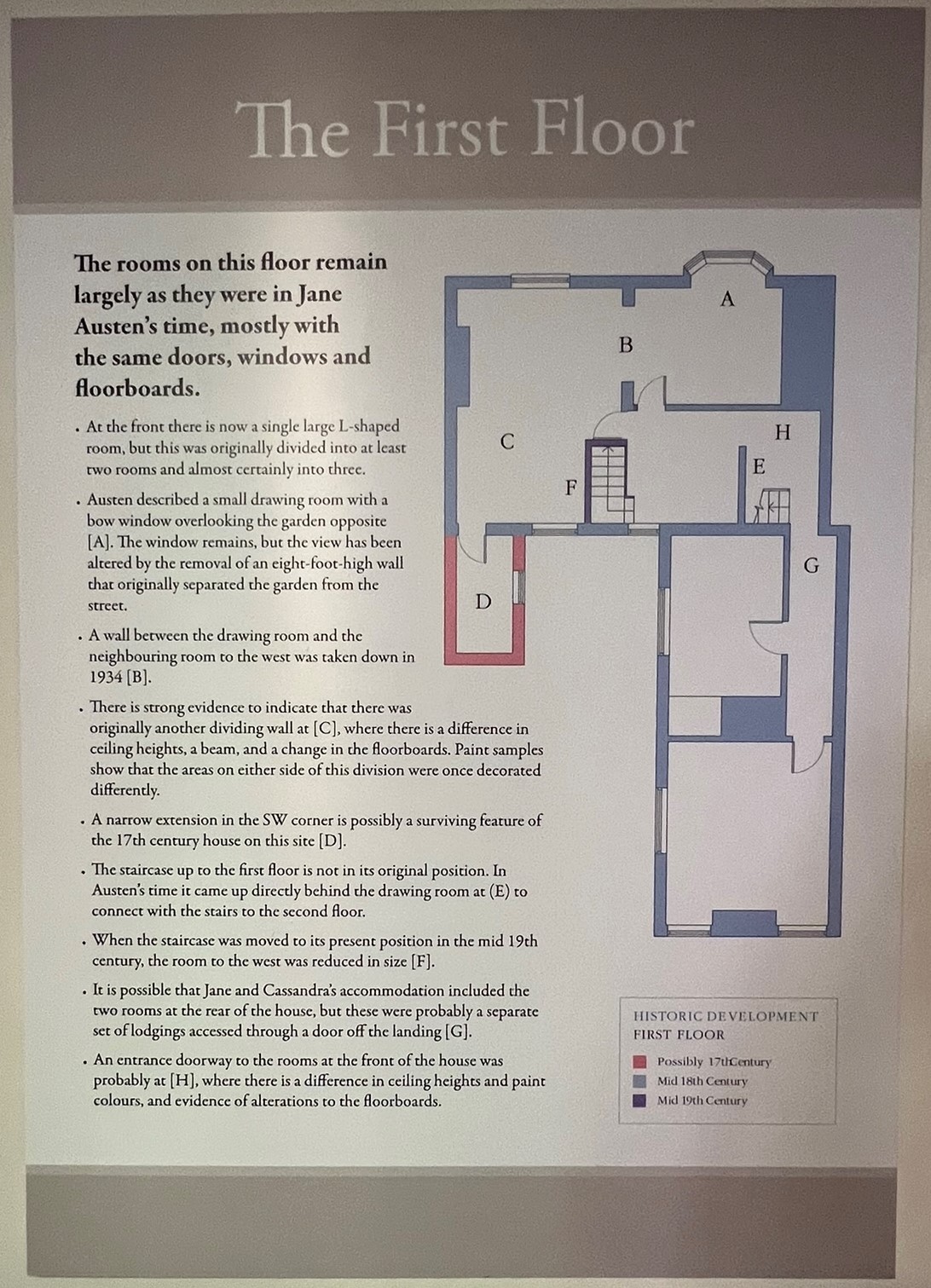

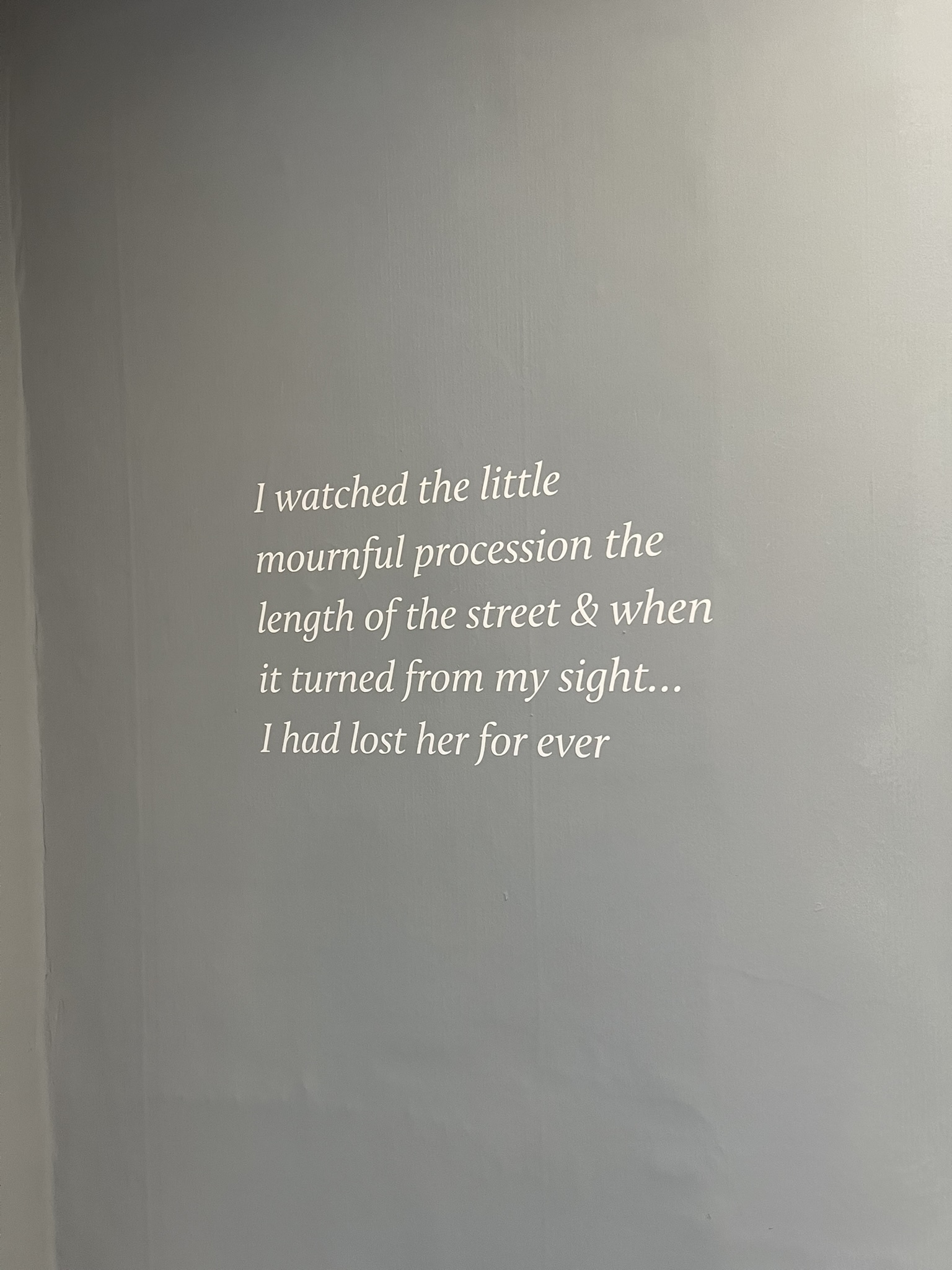
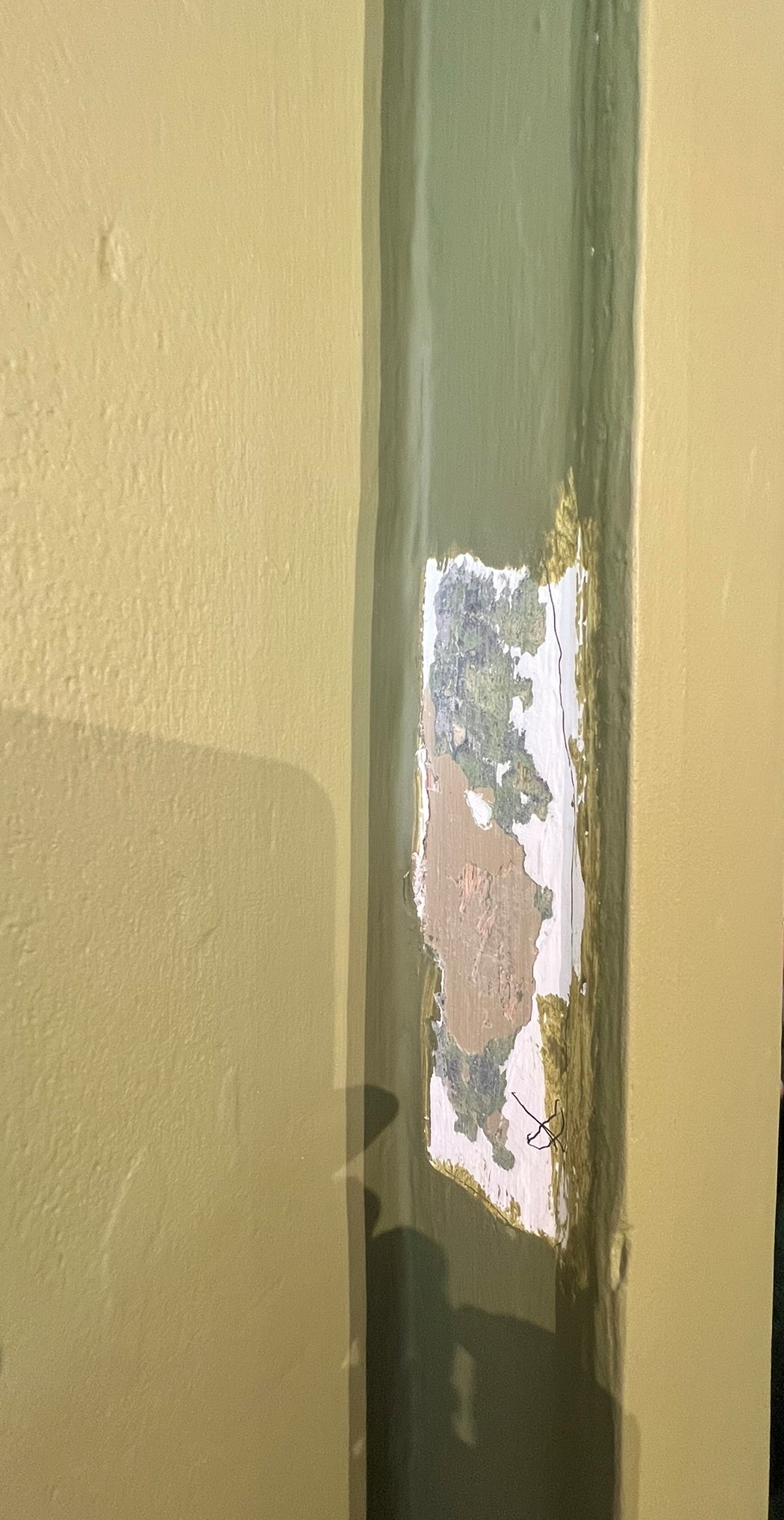
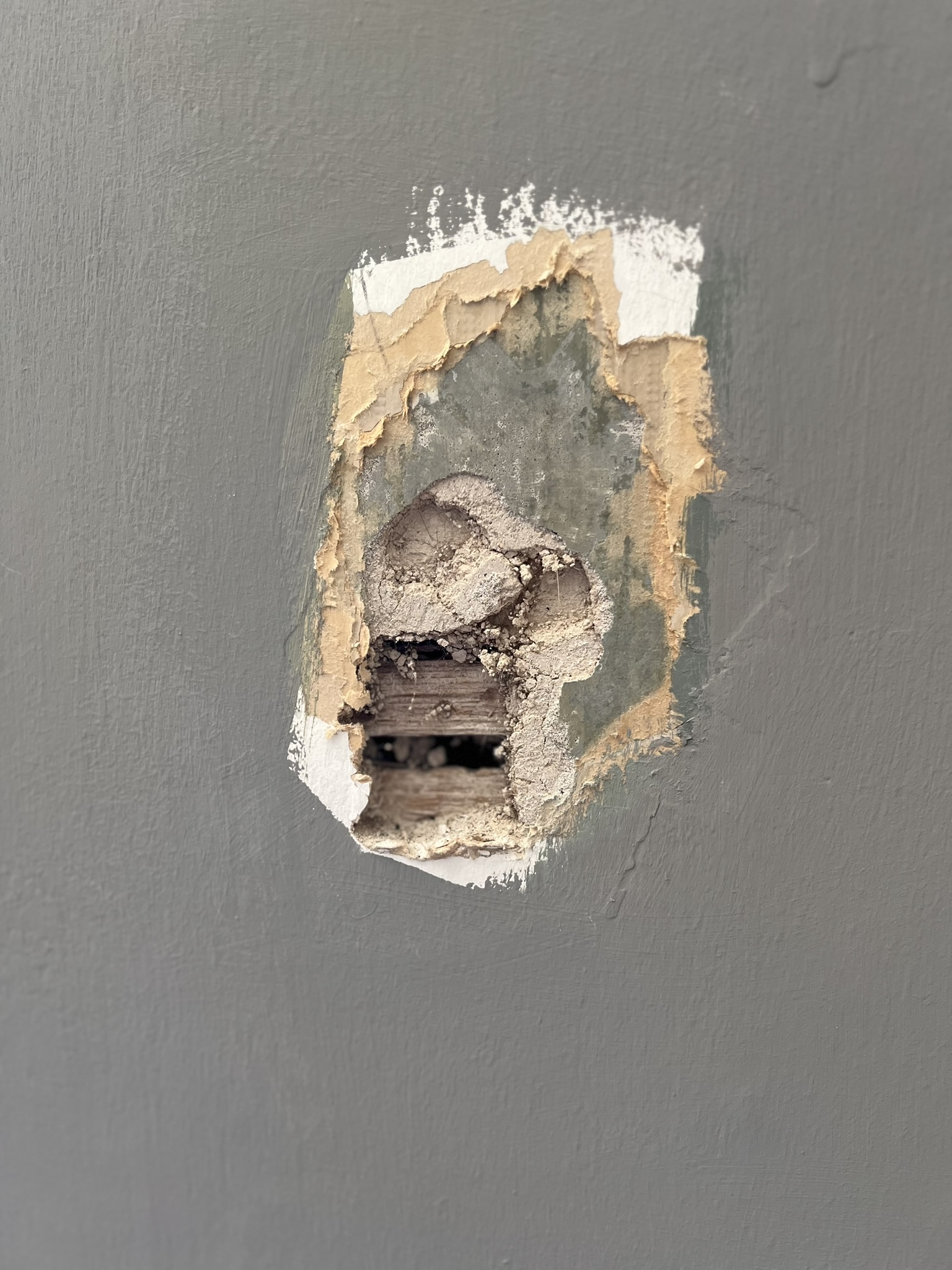
Matching the original paint colors…[the colors surprised me – different in every room, colorful and deep – I didn’t take photos of every room sorry to say…]
It was here at 8 College Street that Austen penned her final verse about St. Swithin’s Day – “Venta” just a few days before her death. You can read the poem here.
****************
Then we headed back to the College:
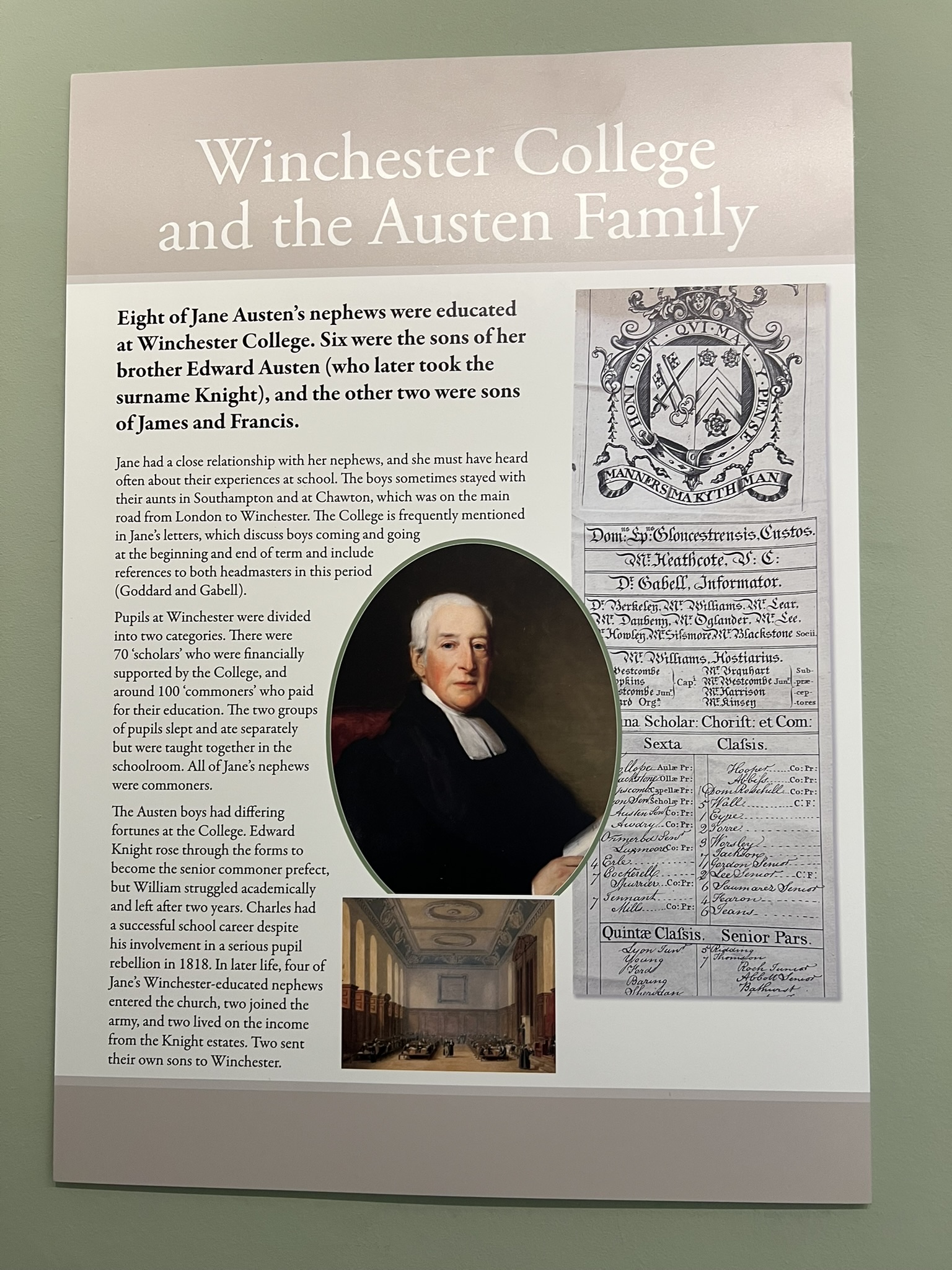
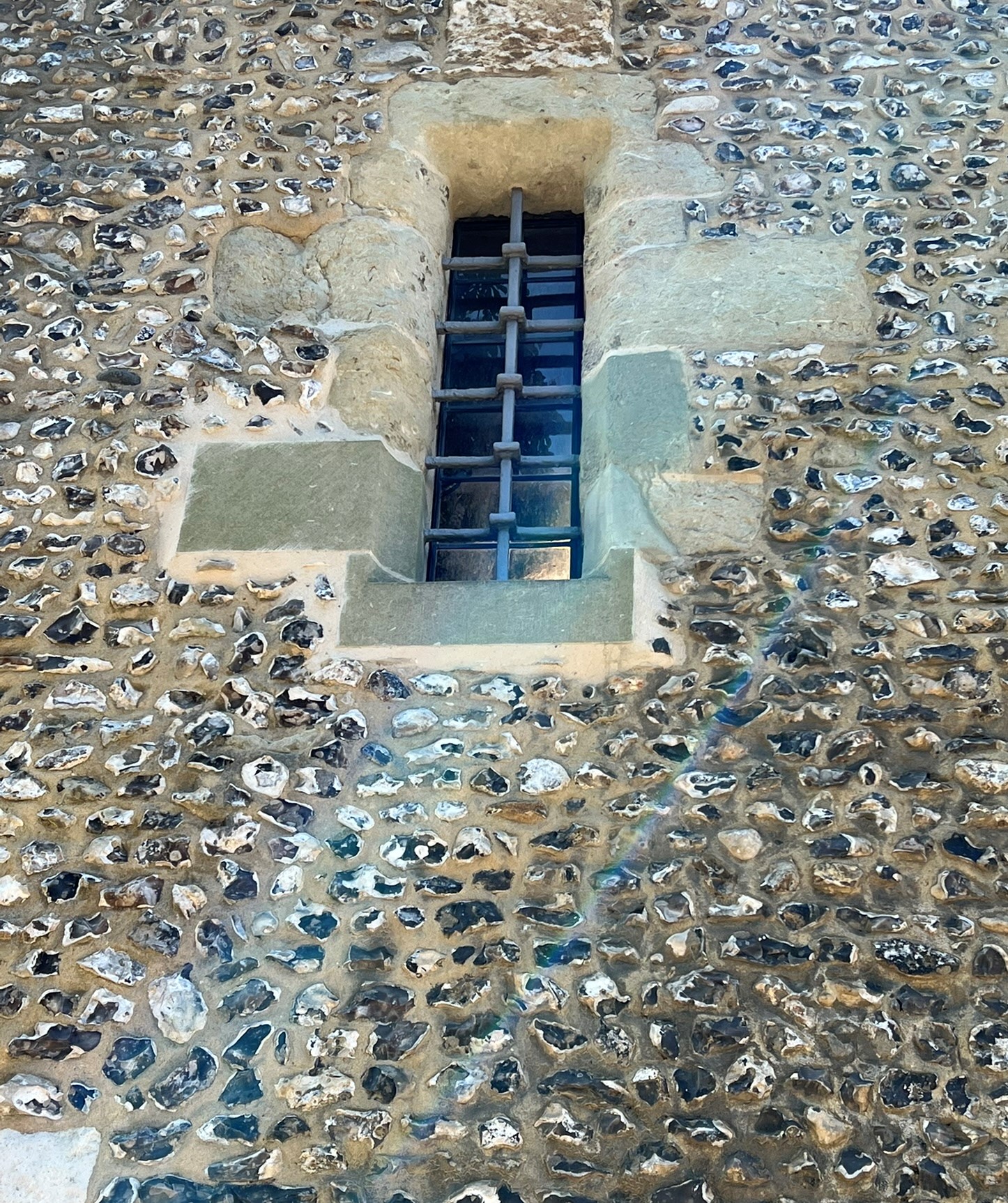
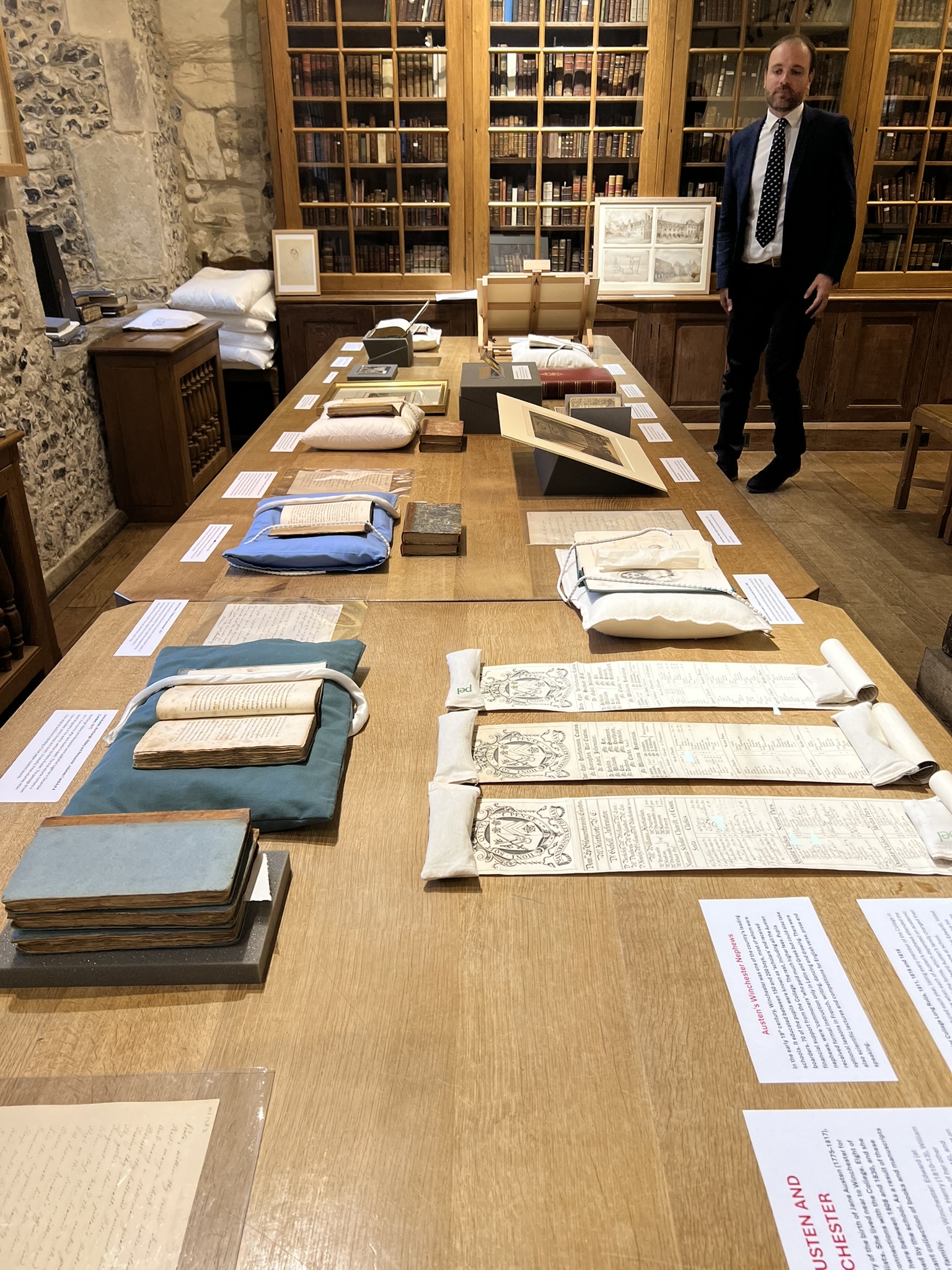
And then to the library where the Special Collections Librarian Dr. Richard Foster spoke to us about the several items of interest to a crowd of Janeites – including the rolls of students where we could see the names of her attending nephews.
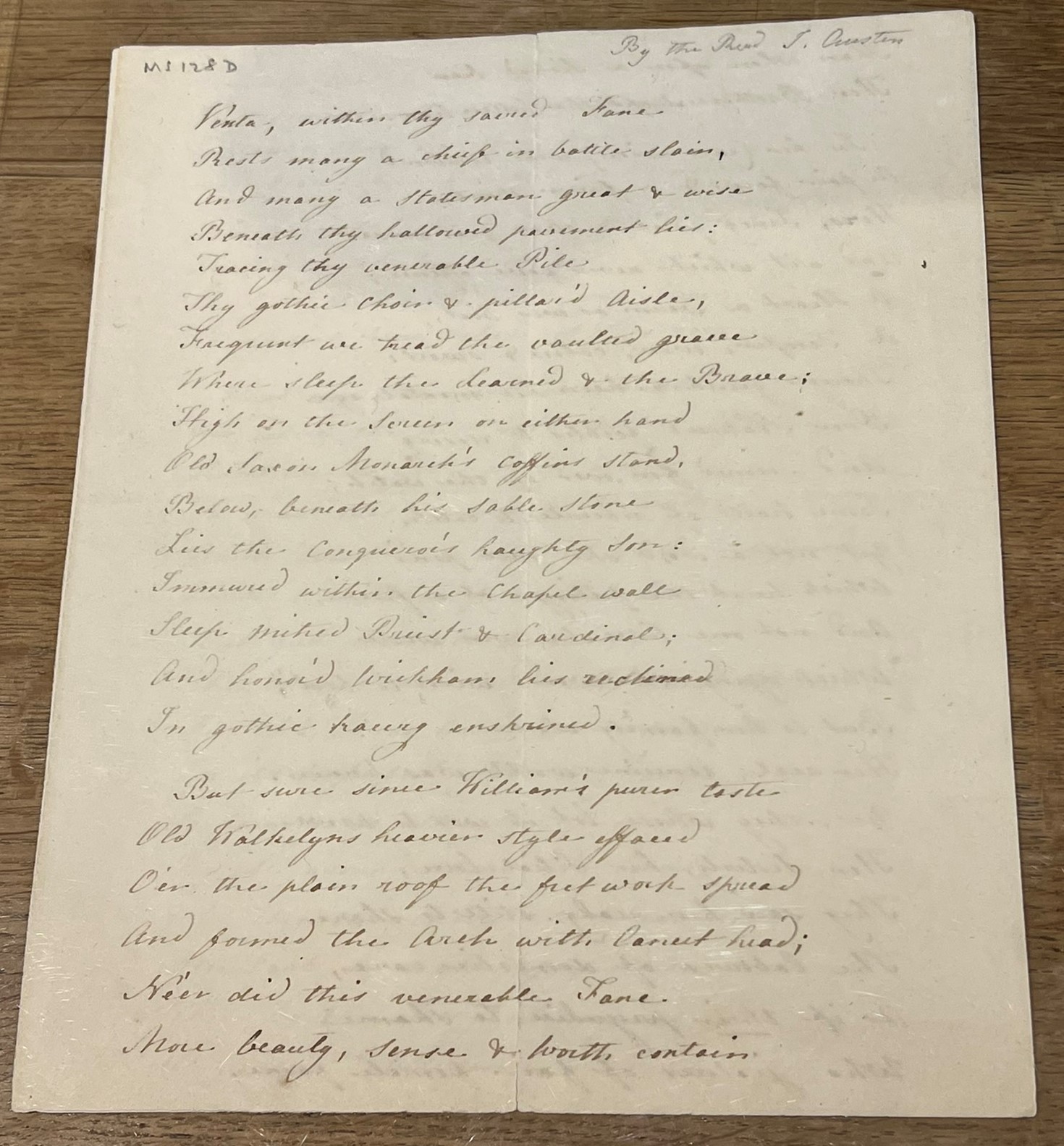
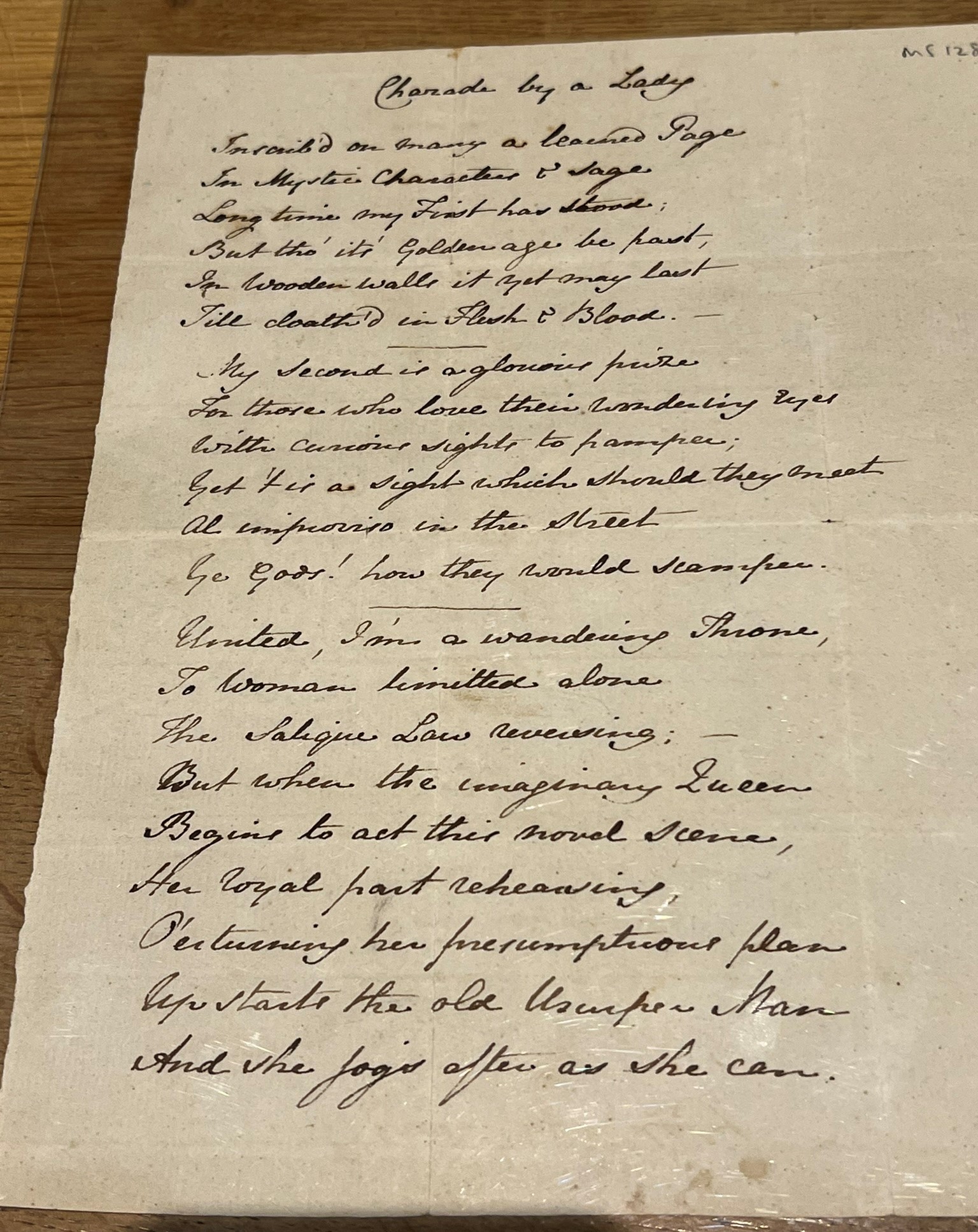
here is a poem written out by James Austen / and a charade by Jane:
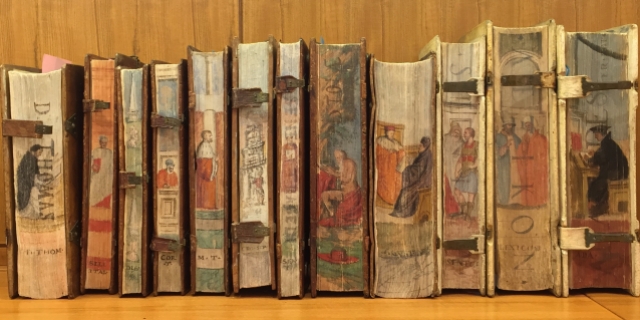
a book on the history of the College with a fantastic fore-edge painting of the College [for more information on fore-edge paintings, visit here – and here – an exhibition at the Lilly Library.]

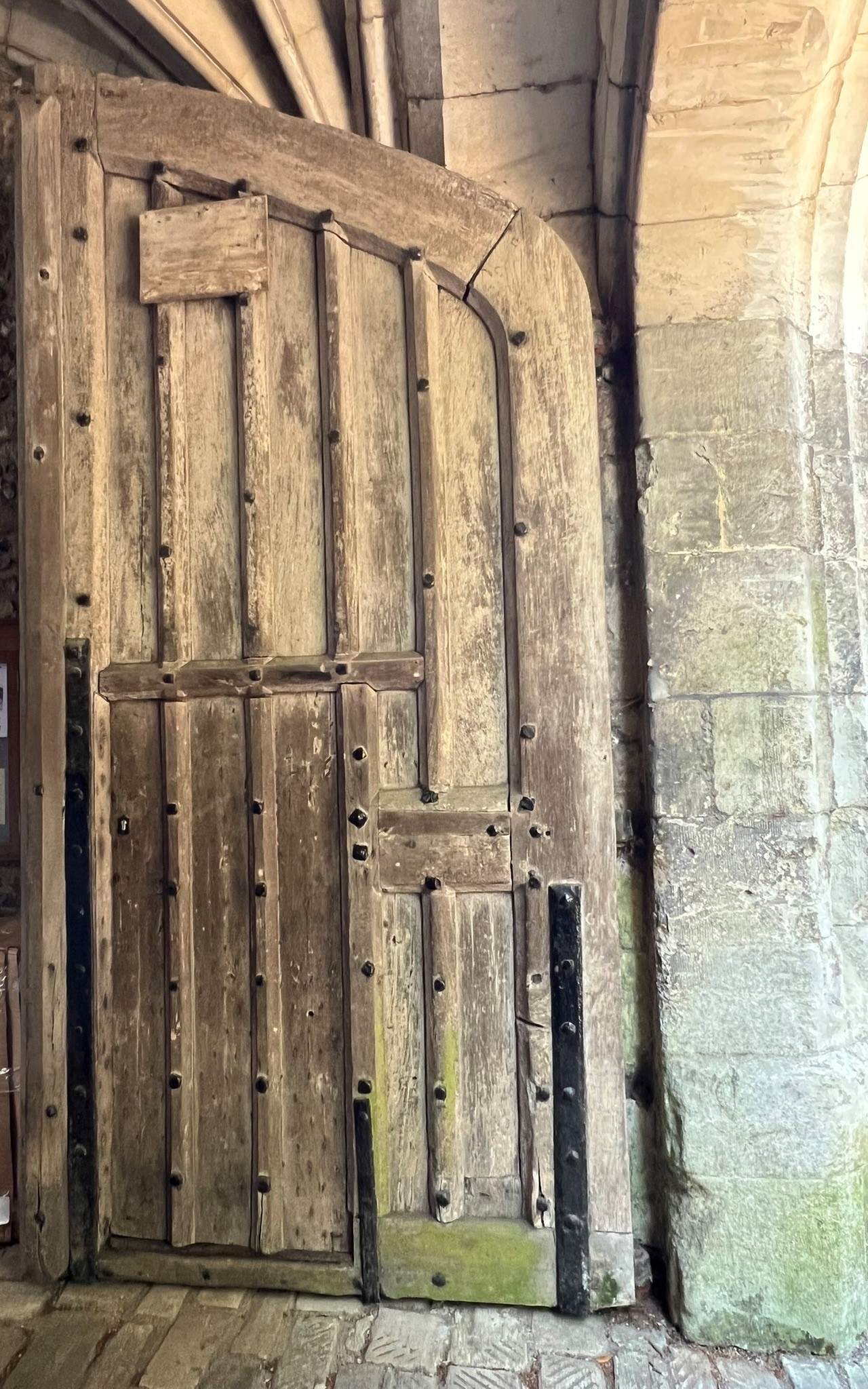
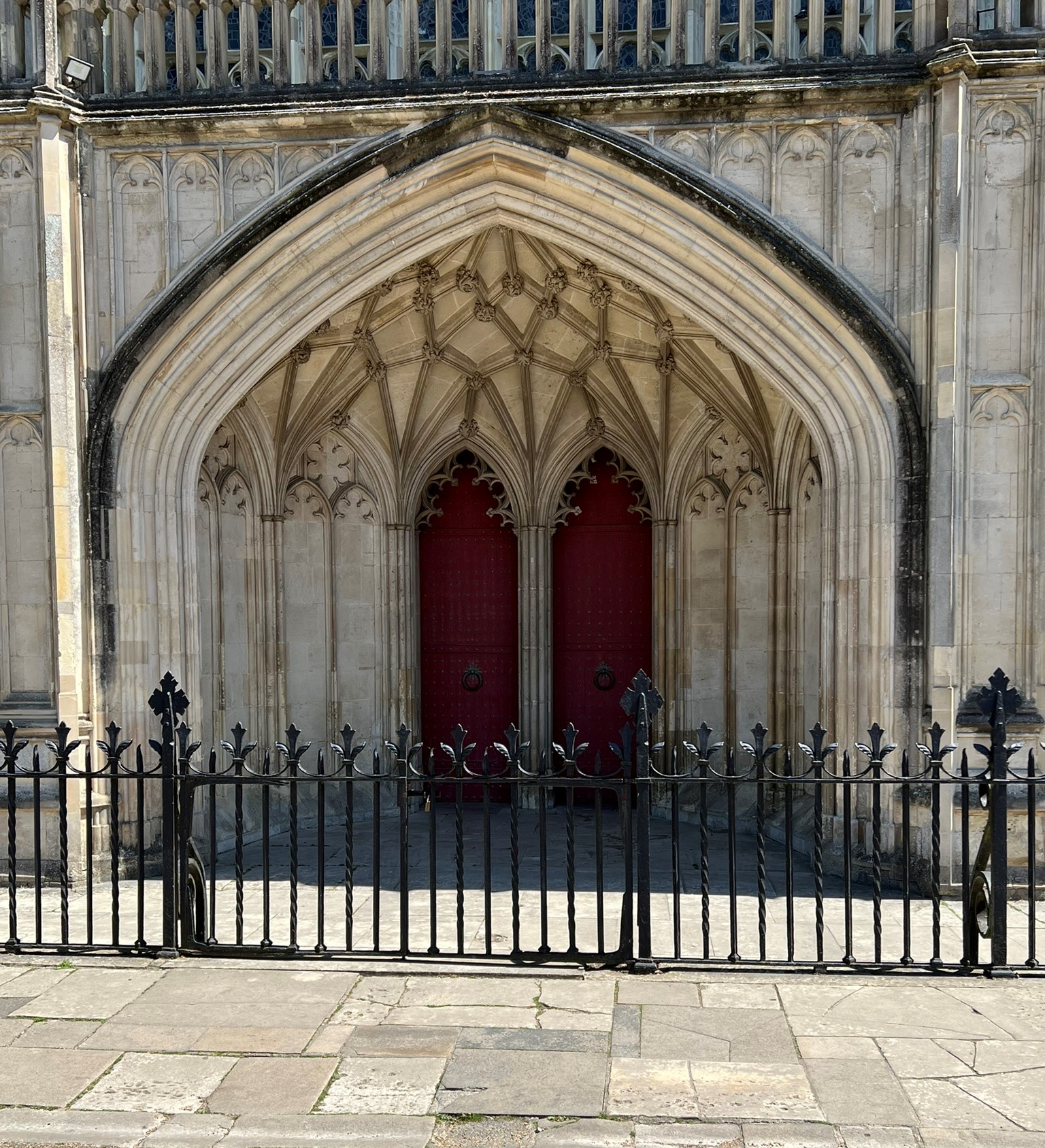
and a door in need of a photo…

****************
Our guided walk to Winchester Cathedral followed:
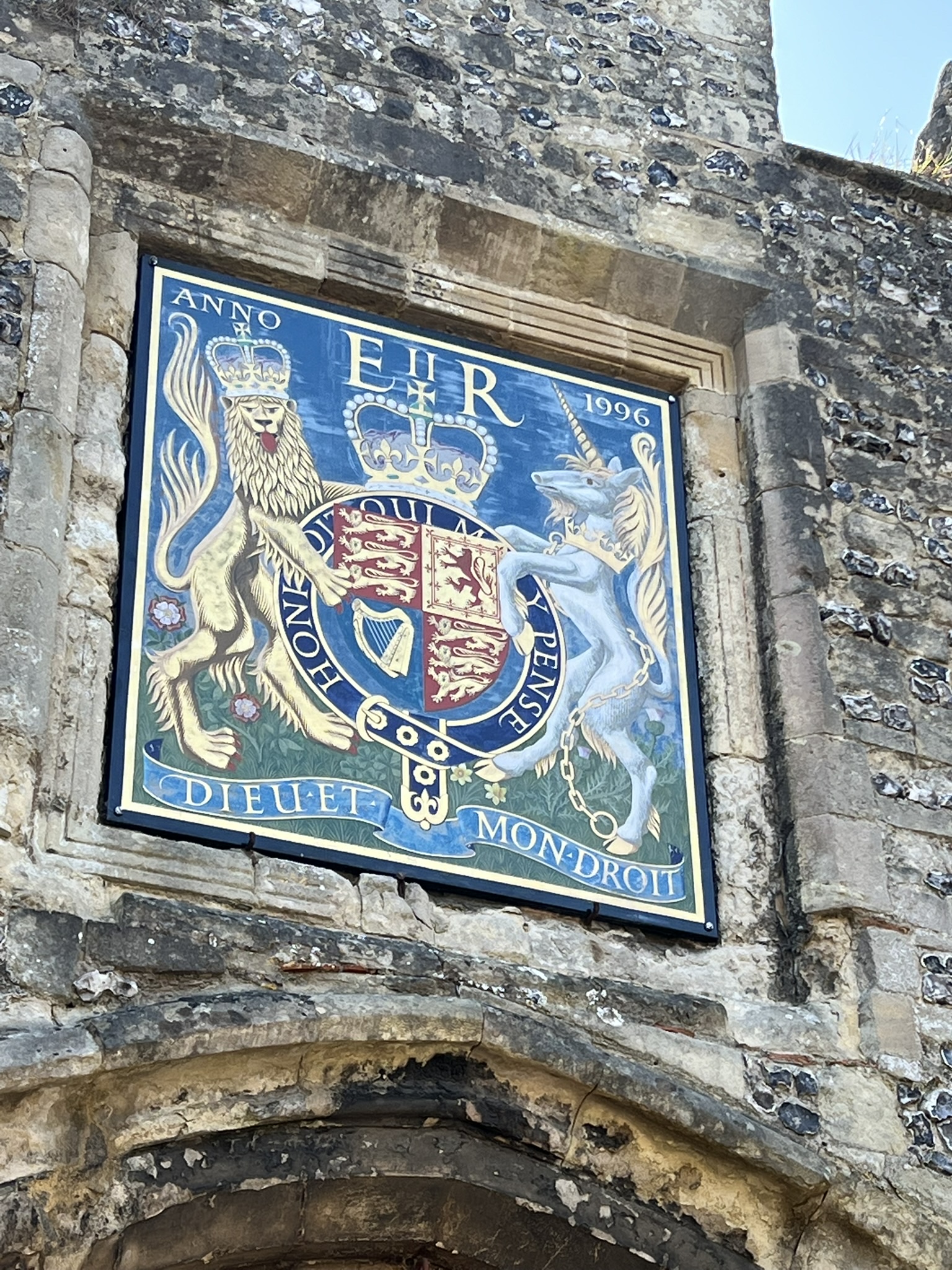
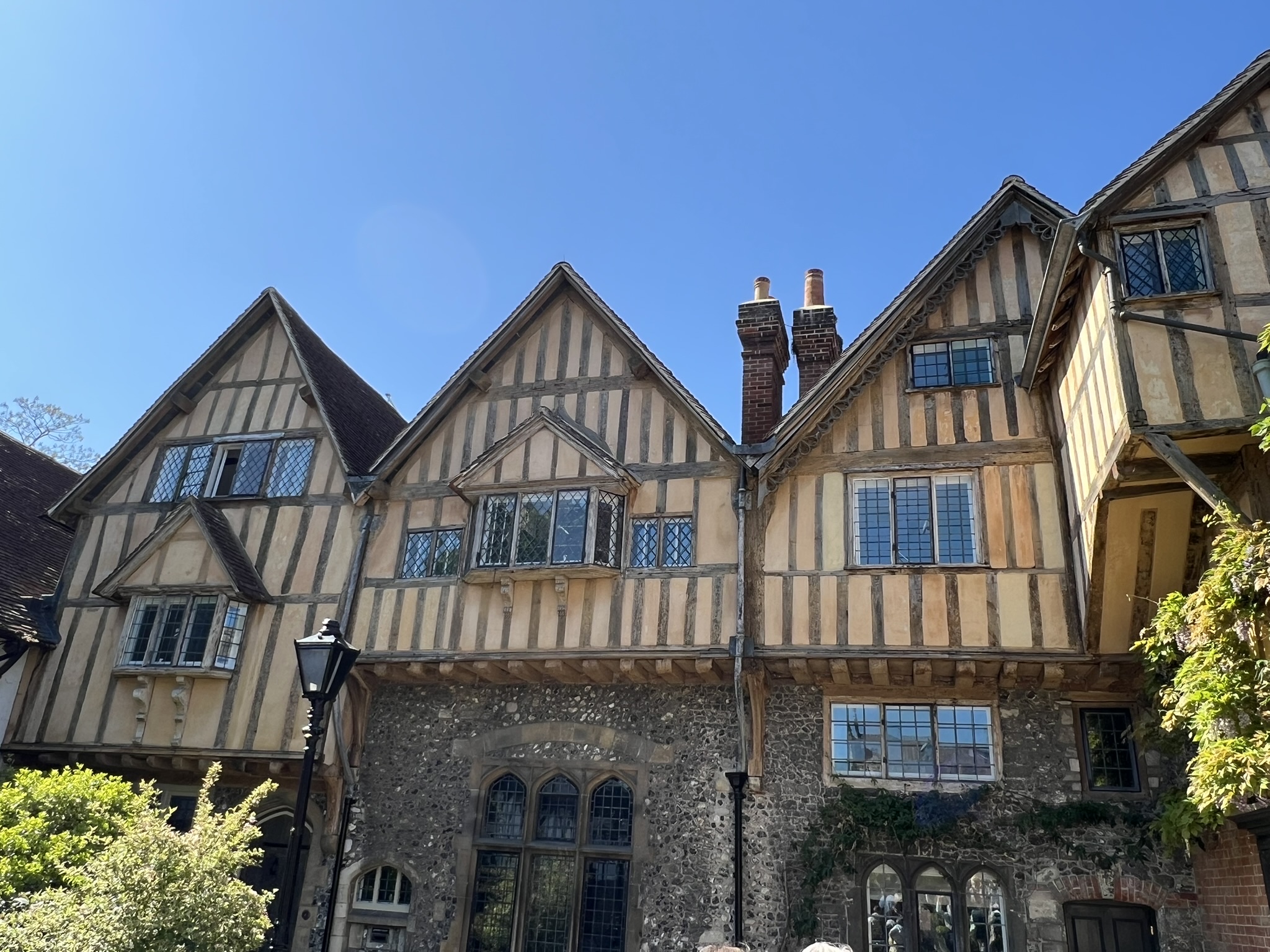
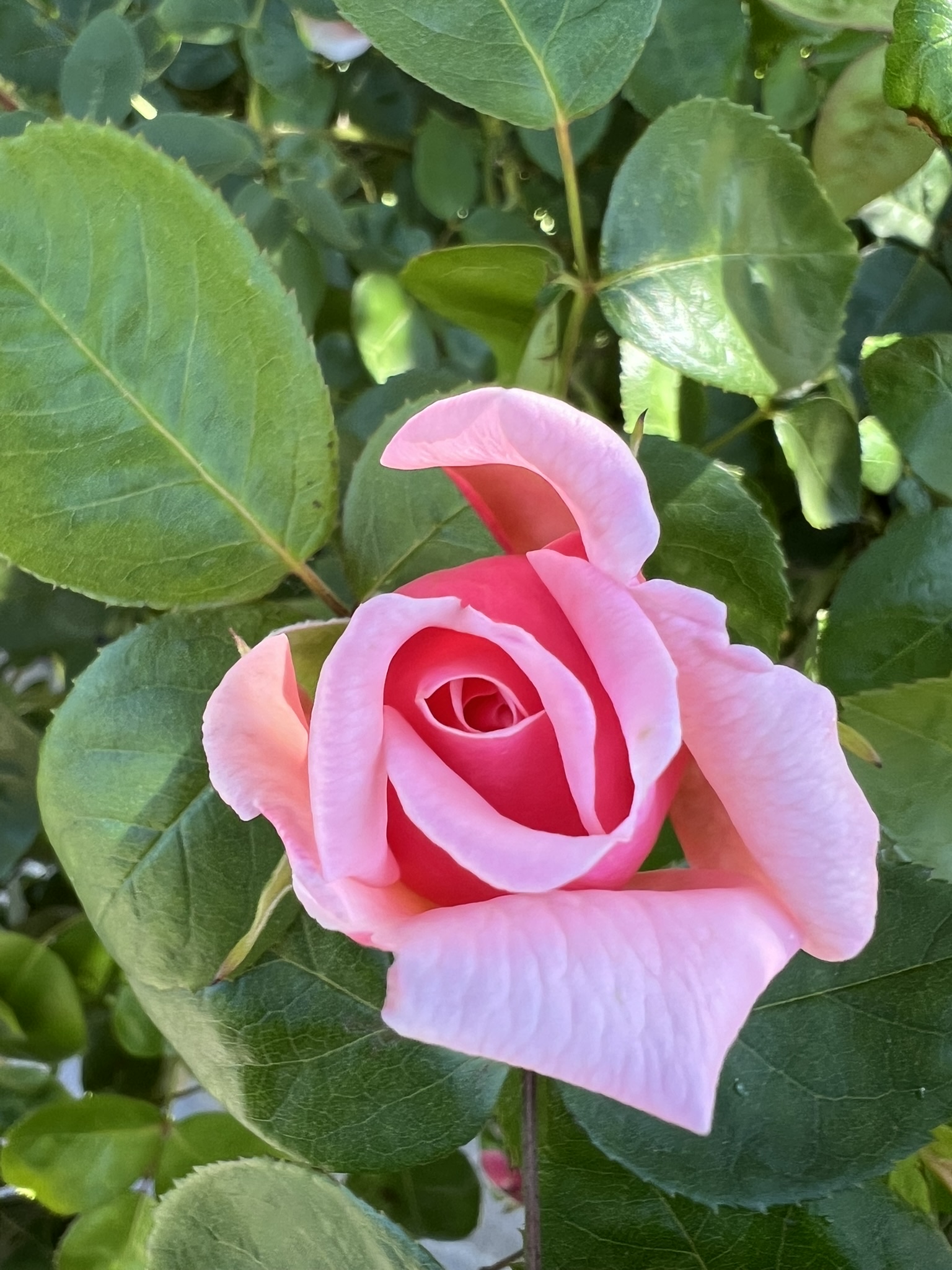


***********
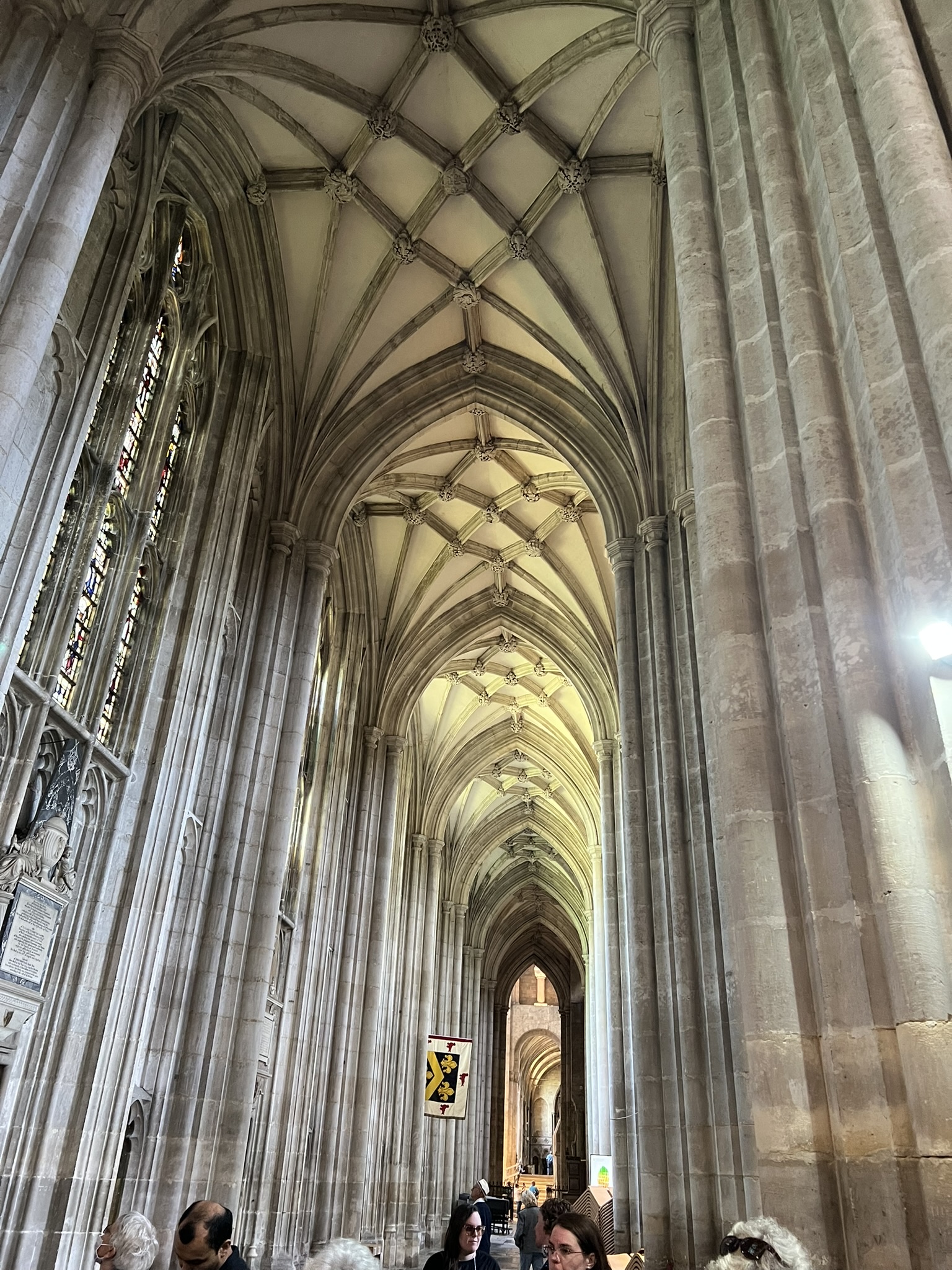
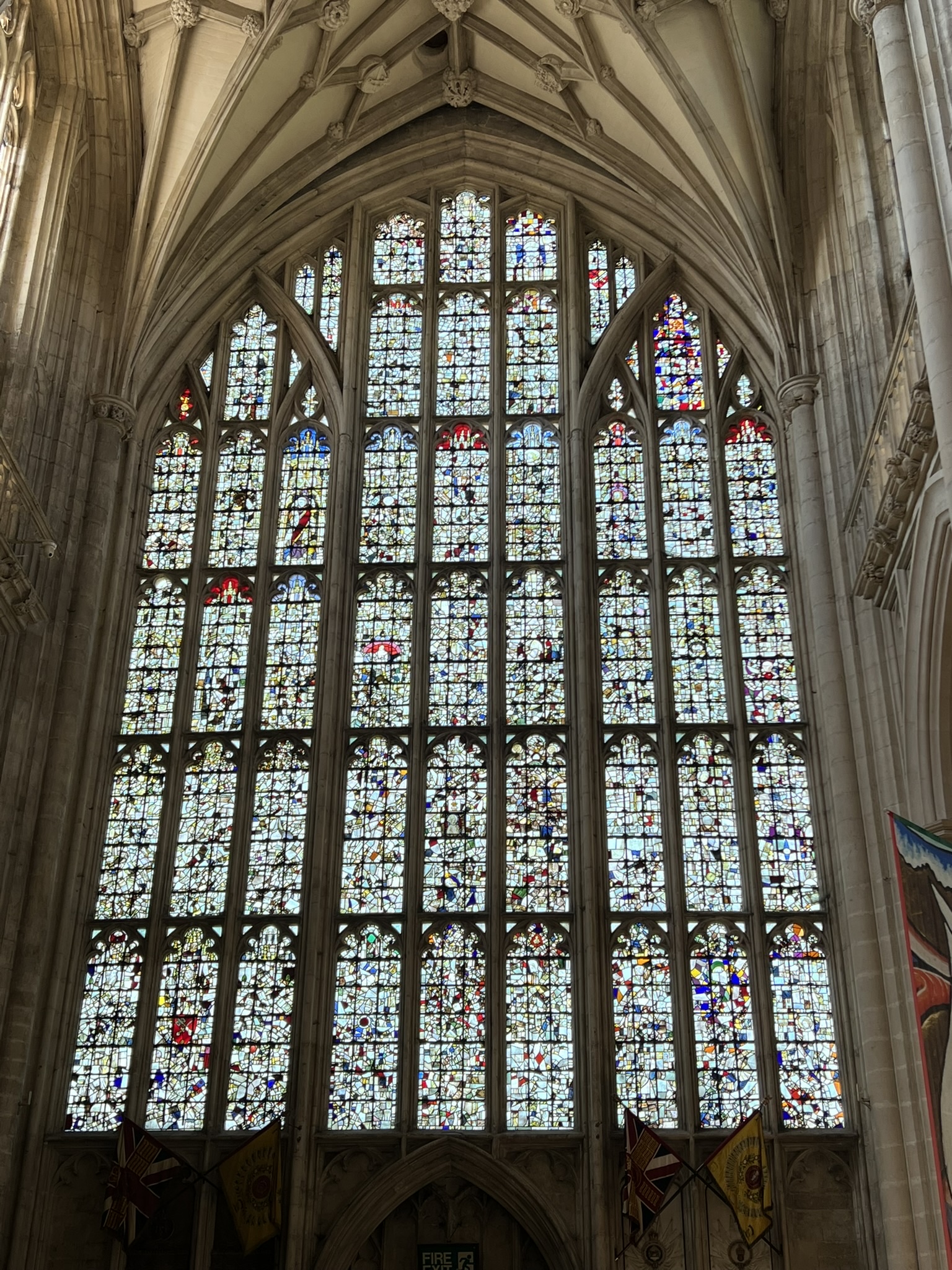
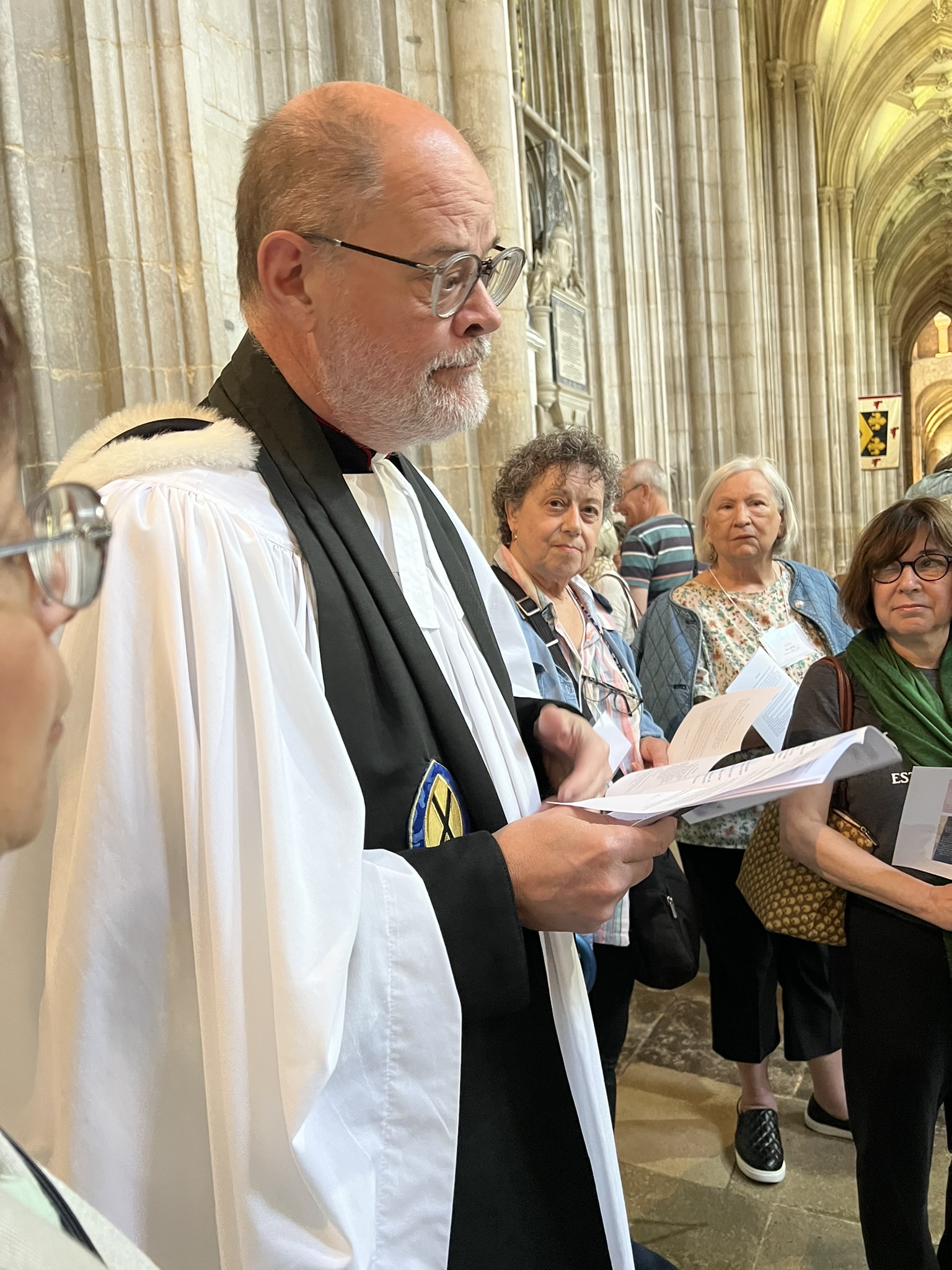
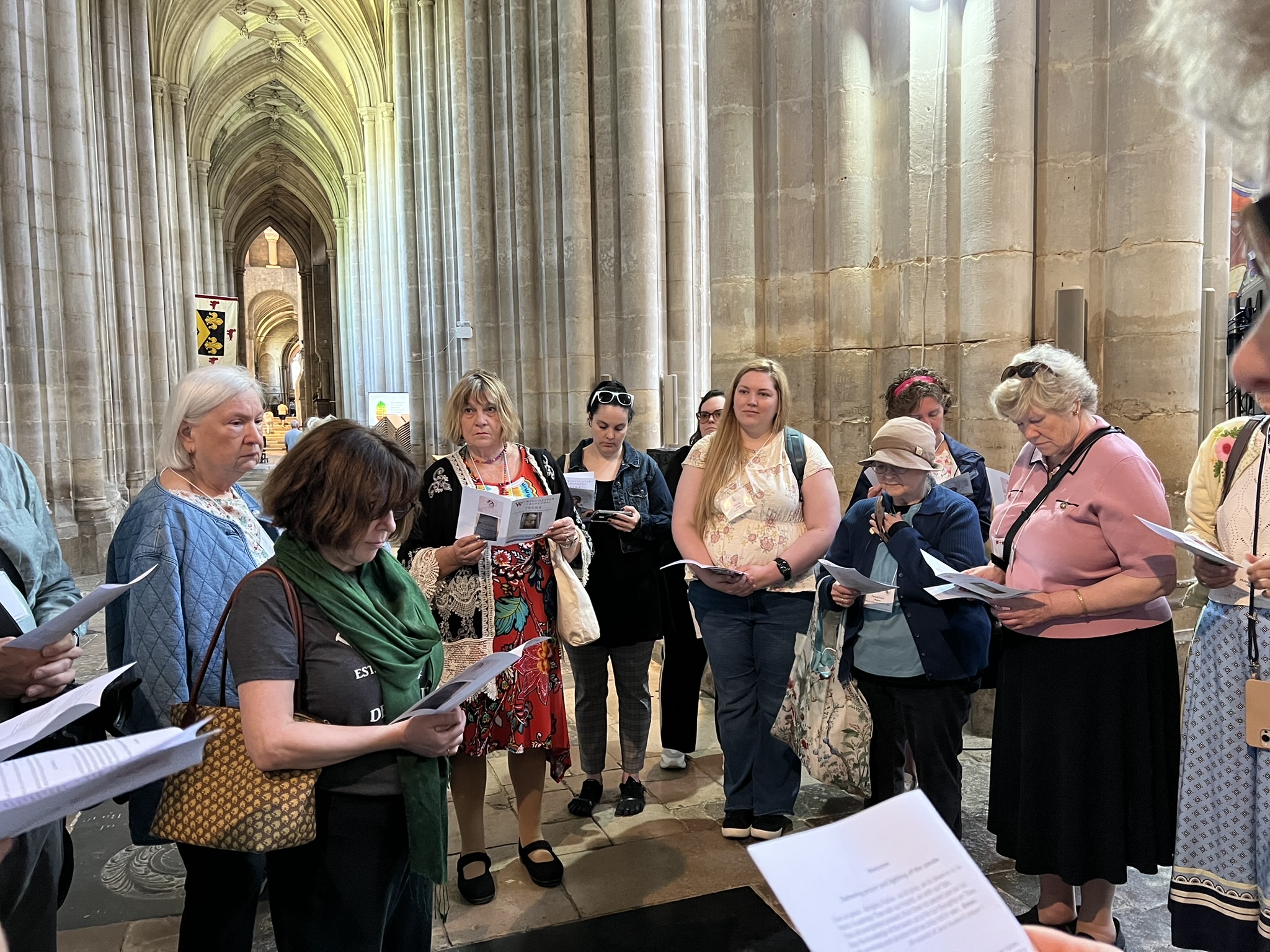
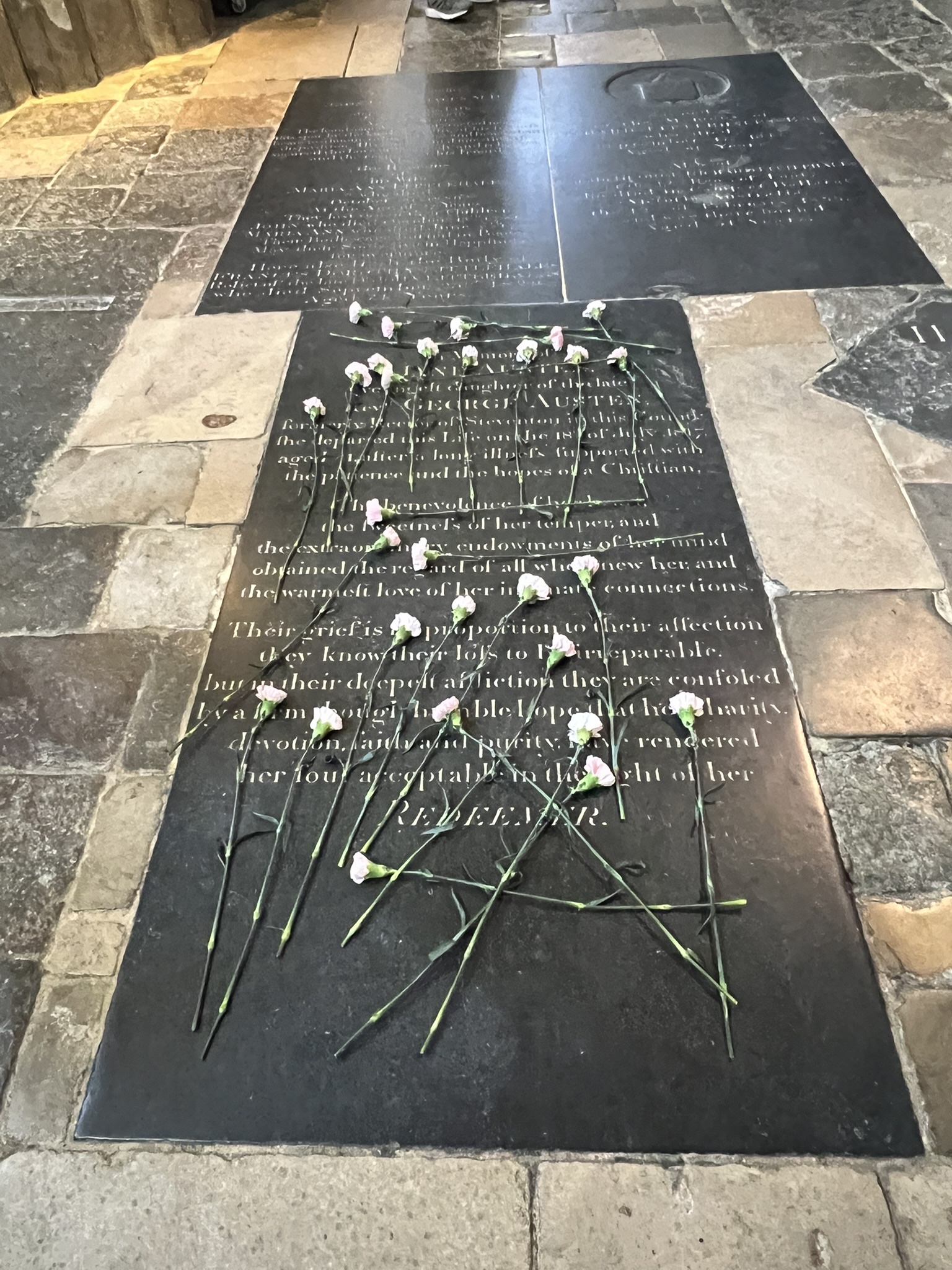
Inside the Cathedral, we find Austen’s grave, another somber spot – and the wall memorial – here one of the deacons awaited our arrival to perform a short celebratory service of prayers and a short eulogy as we stood around the memorial – each given a pink carnation to then leave on the tomb:
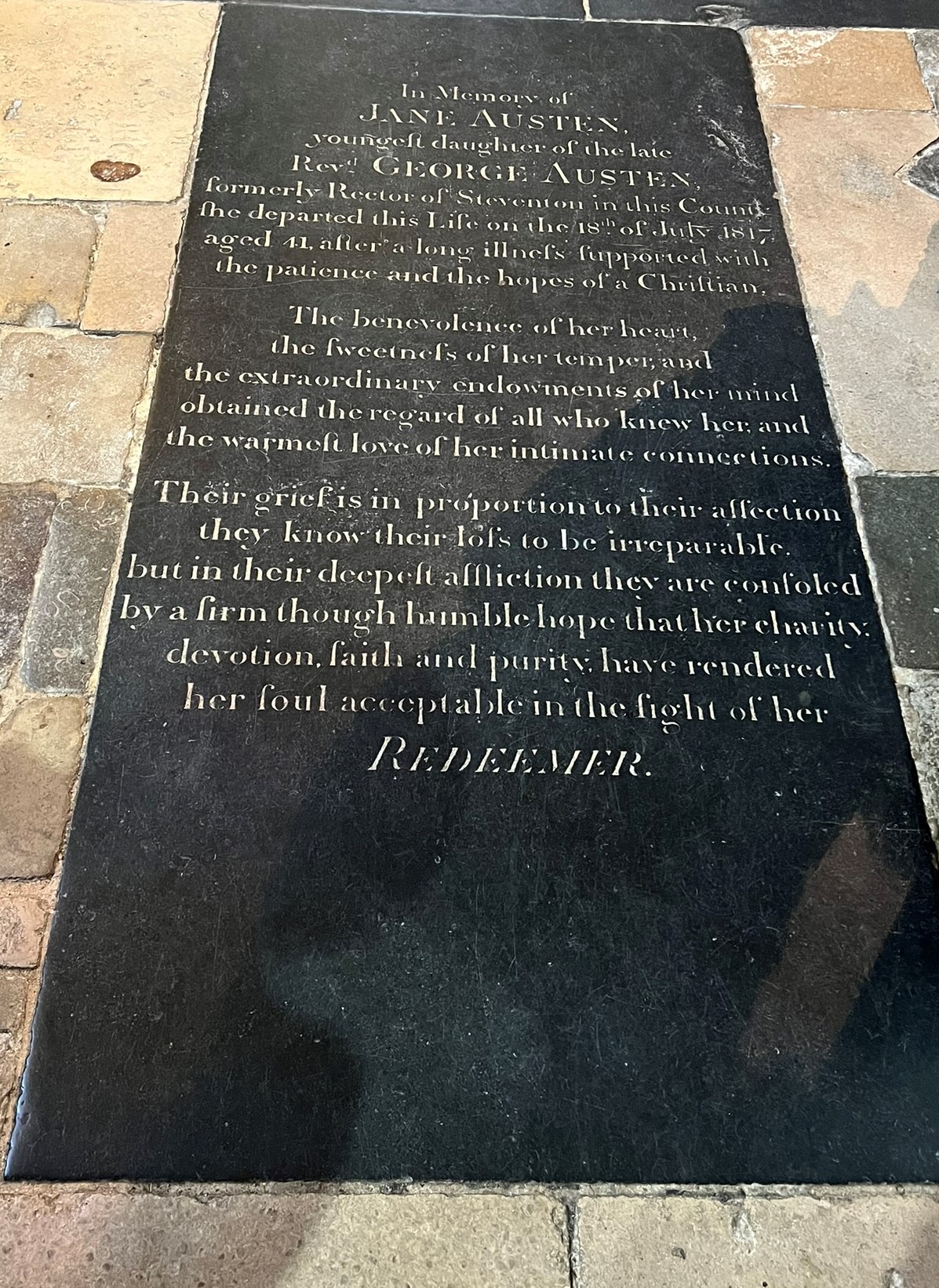
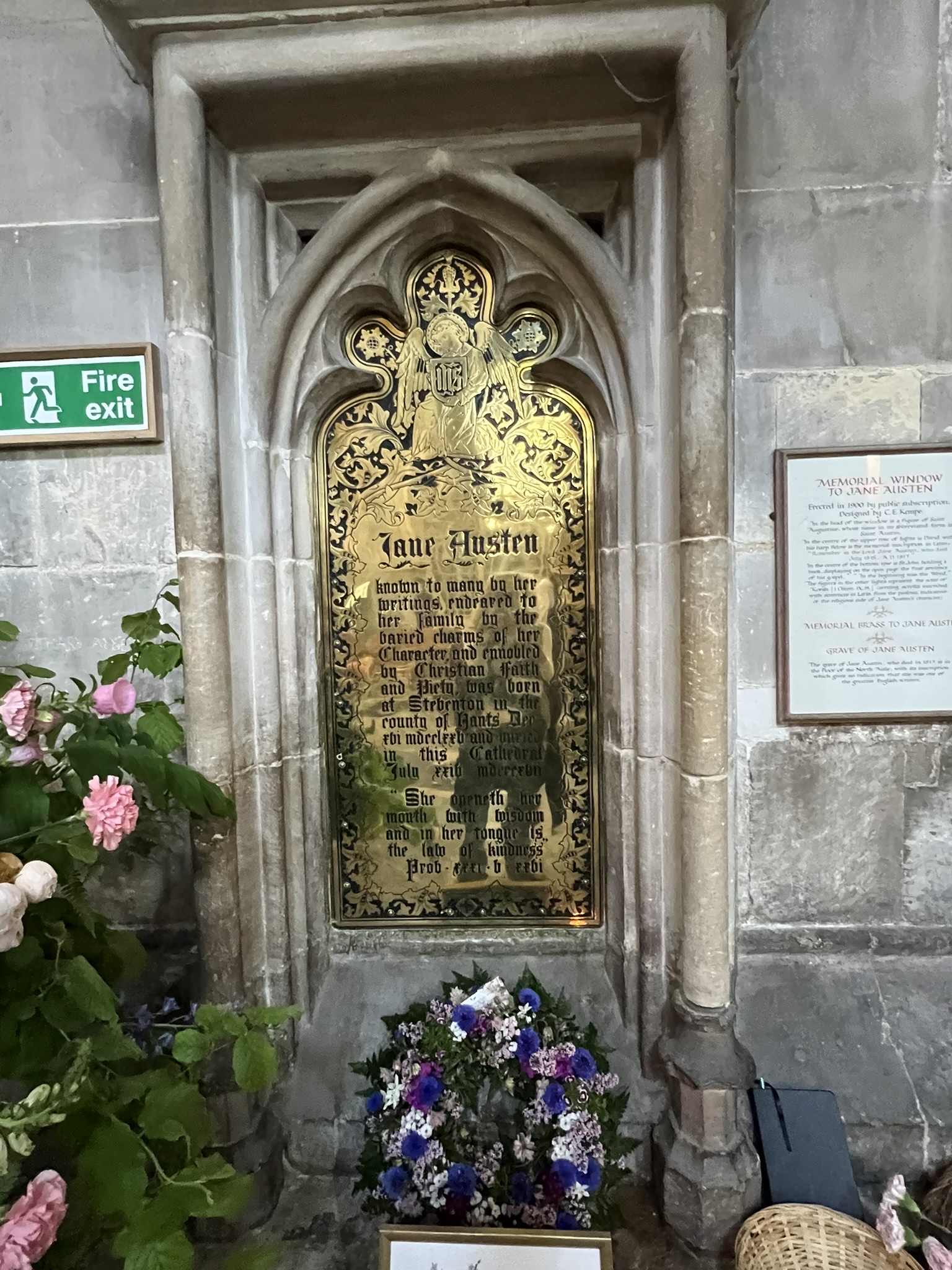
– it was quite lovely –
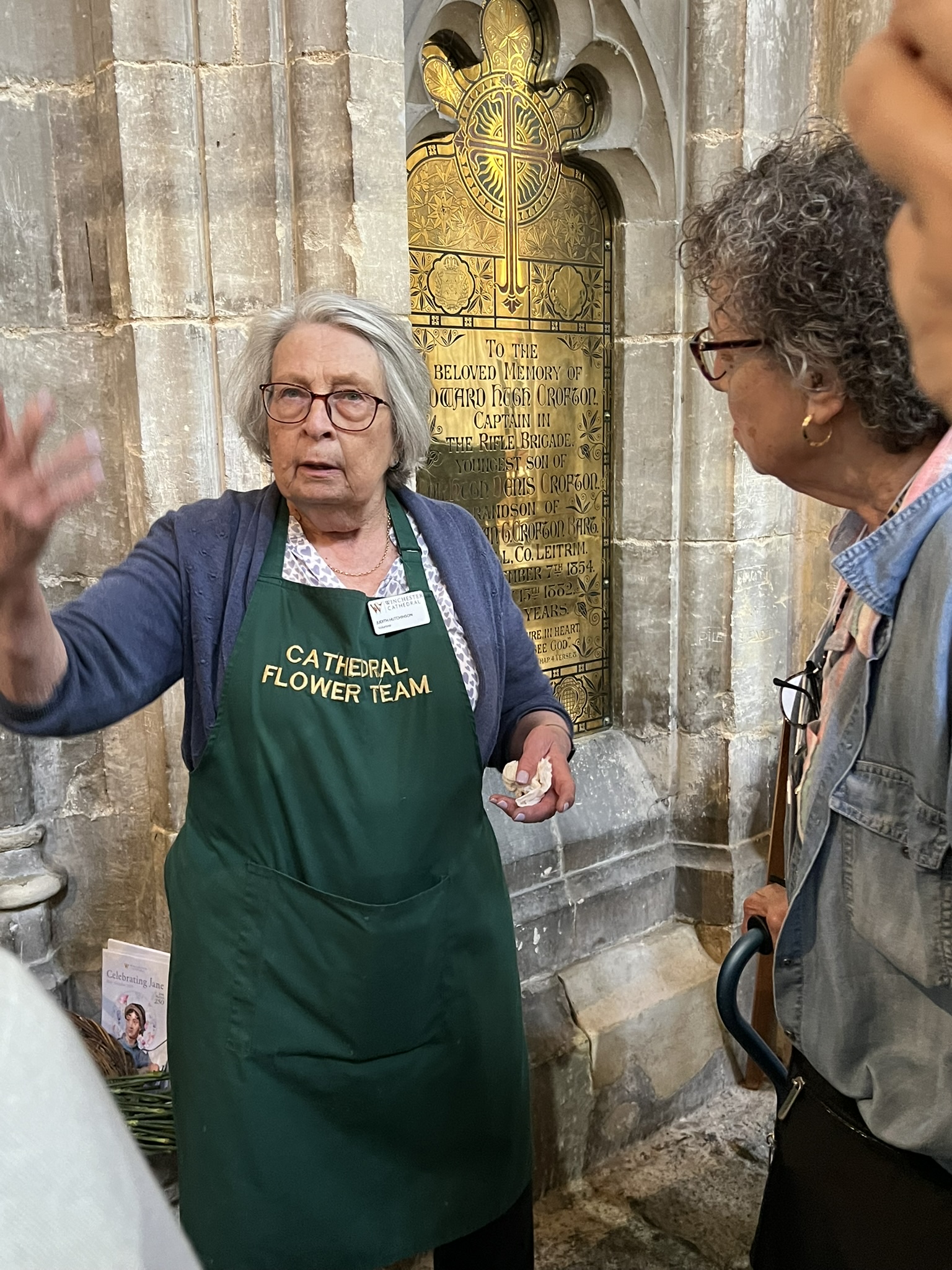
– a quick chat with the flower lady cheered me immensely – how they replace all the flowers around the wall memorial on a weekly basis – she agreed with me when I said I thought she had the best job in the entire cathedral!
And of course one cannot but sing [or at least whistle] the tune “Winchester Cathedral” – have I really spent my entire life since the 60s thinking the Beatles sang this song??
It is actually by the New Vaudeville Band – also appearing here on the Ed Sullivan Show… [lots of others think the Beatles sang this too – it comes up in Google as a common search!]

Following the service we went to one of the private chapels to listen to Cathedral Curator and Librarian Eleanor Swire talk on the poem Jane Austen wrote about the death of her dear friend Madame Lefroy – the manuscript of the poem is housed here and it was another emotional moment to gaze on it for a bit… written four years after Anne Lefroy’s death on Austen’s birthday after falling off a horse – you can read the poem here.

This Epiphany Chapel houses the most stunning stained glass windows, designed by Pre-Raphaelite artist Edward Burne–Jones. Here is one image I took:

but you can read and see more about them here:
and here at the Victorian Web.
We were then sent off on our own to explore the Cathedral as we chose, so I just wandered around for a bit to find this kneeler by the author Tracy Chevalier memorializing Hampshire women (Florence Nightingale, Charlotte Yonge, and Jane Austen):

And then I could not resist a trek to the nether regions of the crypt and the guided tour did not disappoint. Who knew that any piece of absolutely anything that falls off the Cathedral has to be kept in perpetuity – that means any pieces of exterior sculpture or stone or anything inside that has fallen or removed is moved to the crypt – so it is full of all sorts of disused figures, columns, etc. – quite fun – these original pieces are then sourced for any ongoing restoration work:
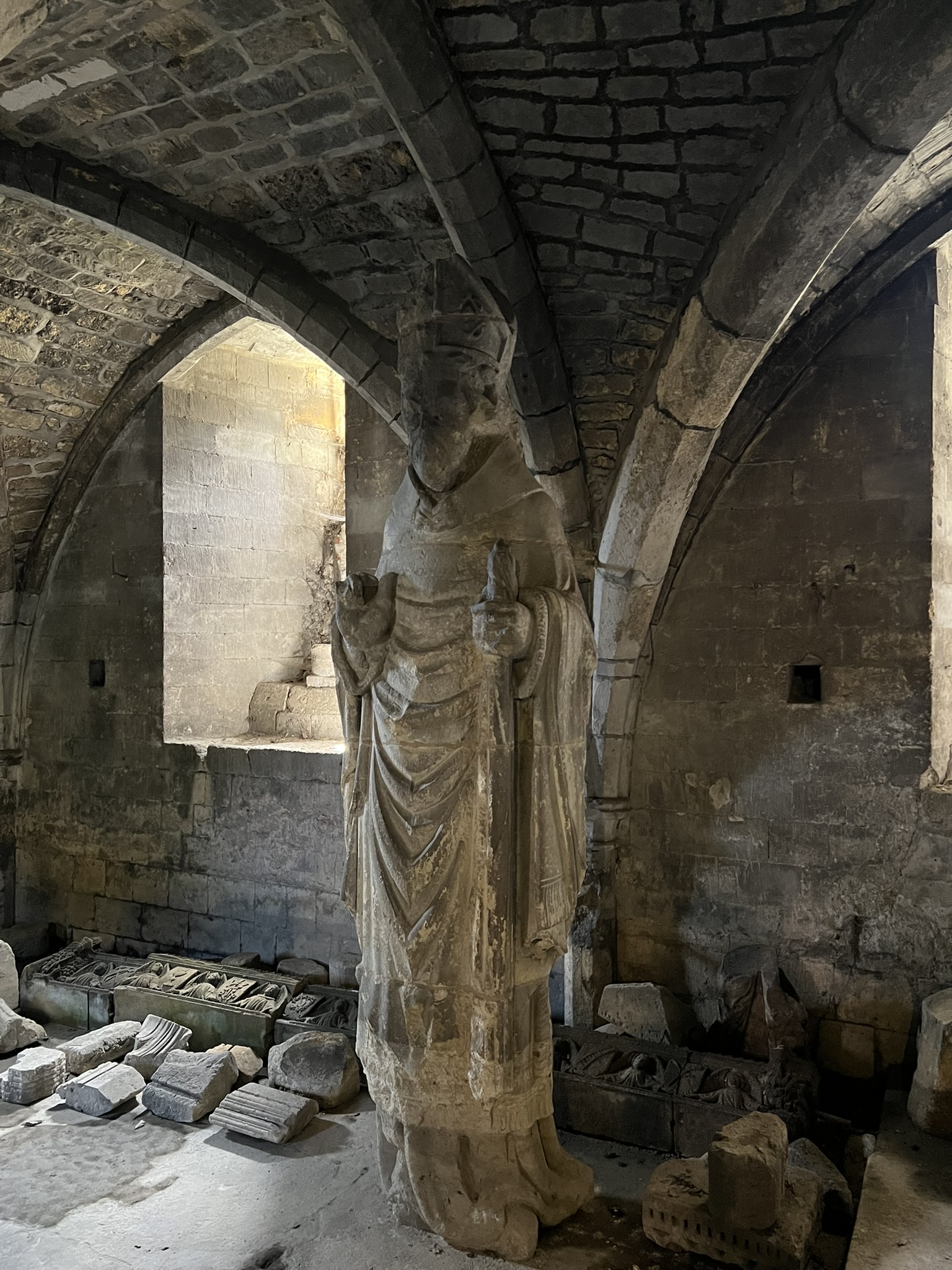
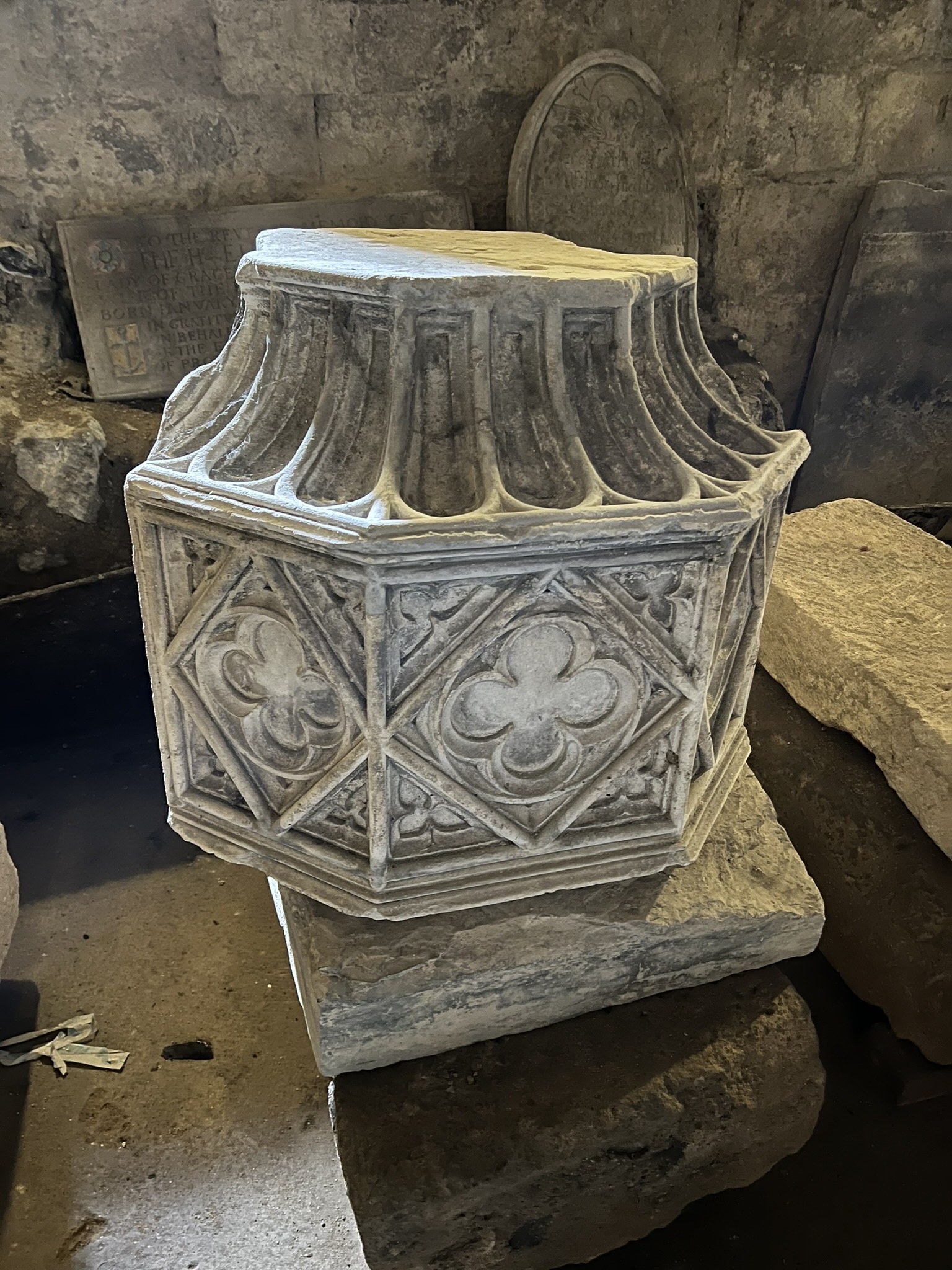
Even more interesting was to find that the entire Cathedral at one point risked collapsing because of how the water table rose to such heights in the crypt that it was only a matter of time until it all fell down – an amazing story of one man, William Walker, an experienced diver who would spend several years diving below the surface and reinforcing the foundation with concrete – today the water still rises in the crypt and you can see the levels on the walls – along with this very modern sculpture “Sound II” by Antony Gormley that periodically finds itself knee-deep in water as well as actually holding water in his cupped hands… :
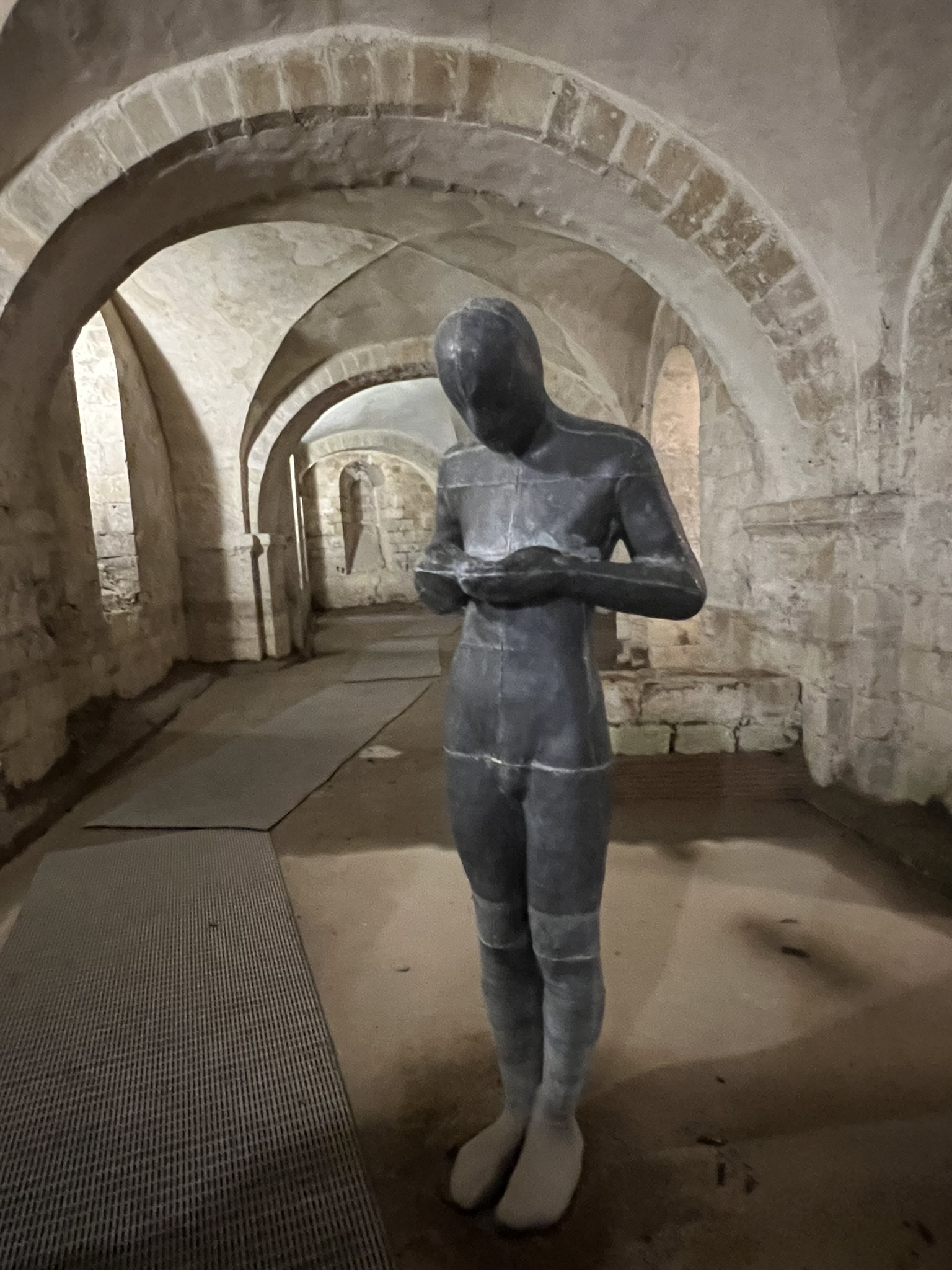
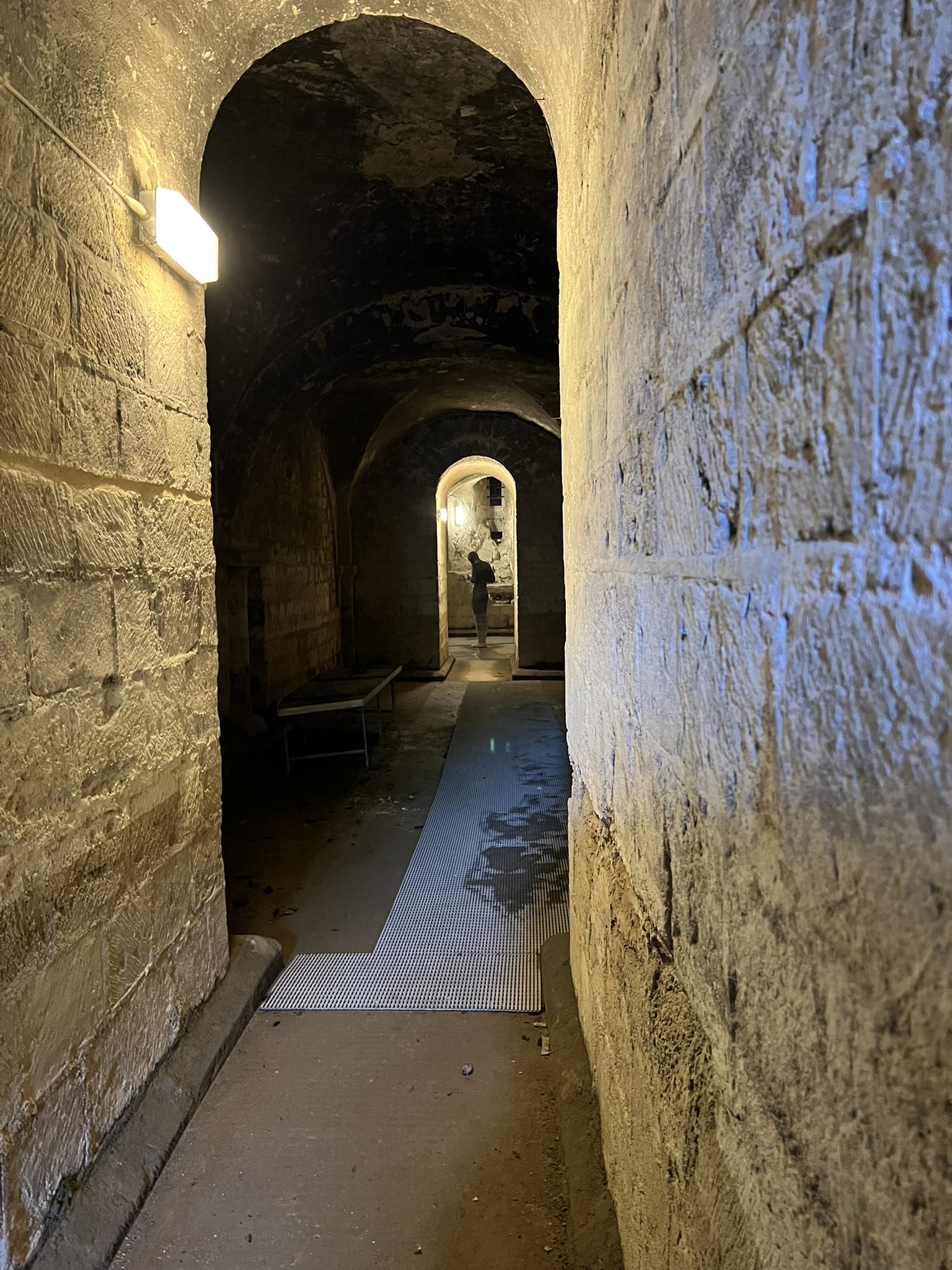
[quite unnerving really because you come upon it unexpectedly from various vantage points]
During lunch at the Cathedral café I found this monument to William Walker, known affectionately as “Diver Bill” – “The diver who with his own hands saved Winchester Cathedral.” Nothing to do with Jane, but good to know the building which holds her tomb is safe from disintegrating…

***********
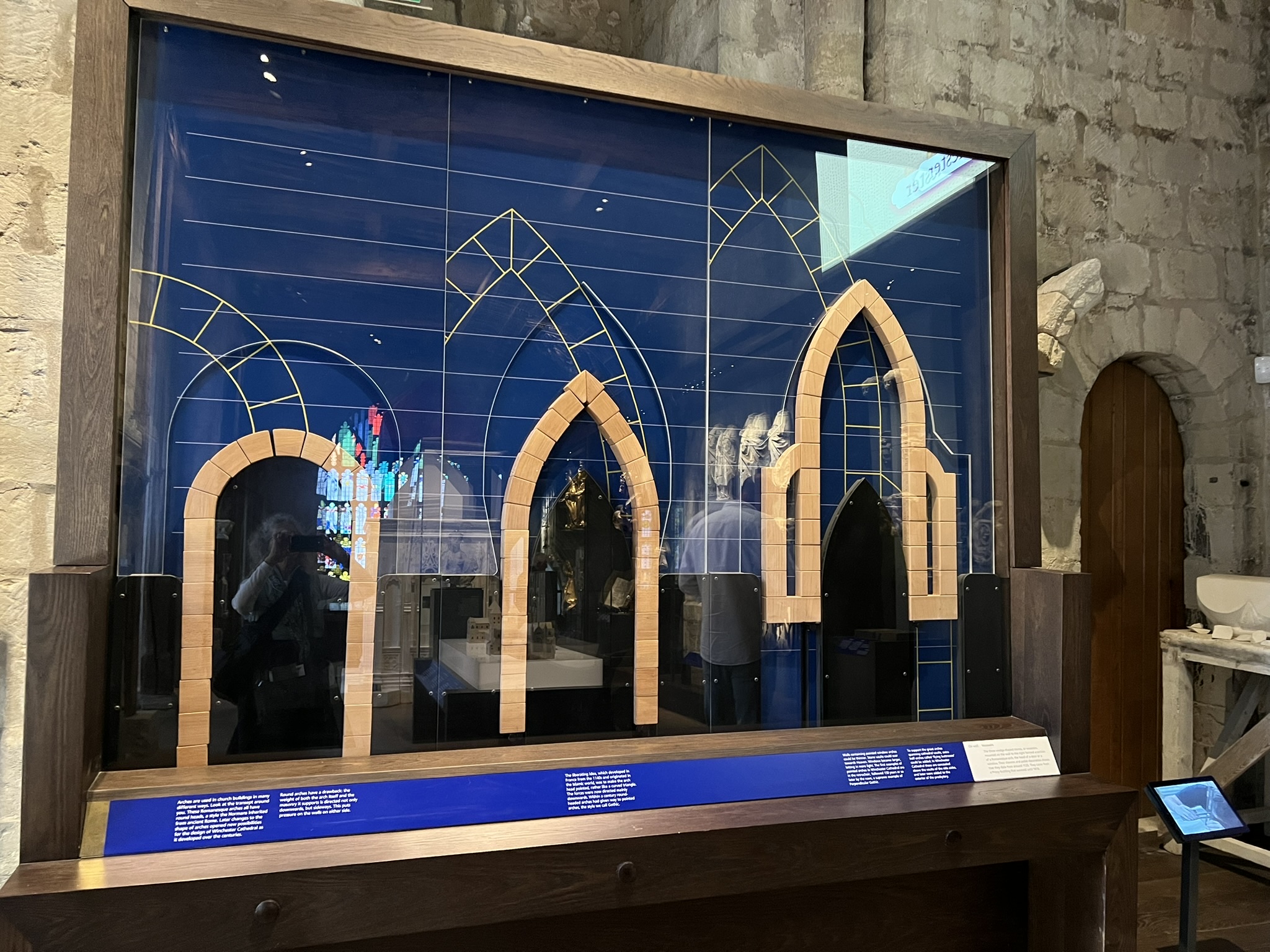
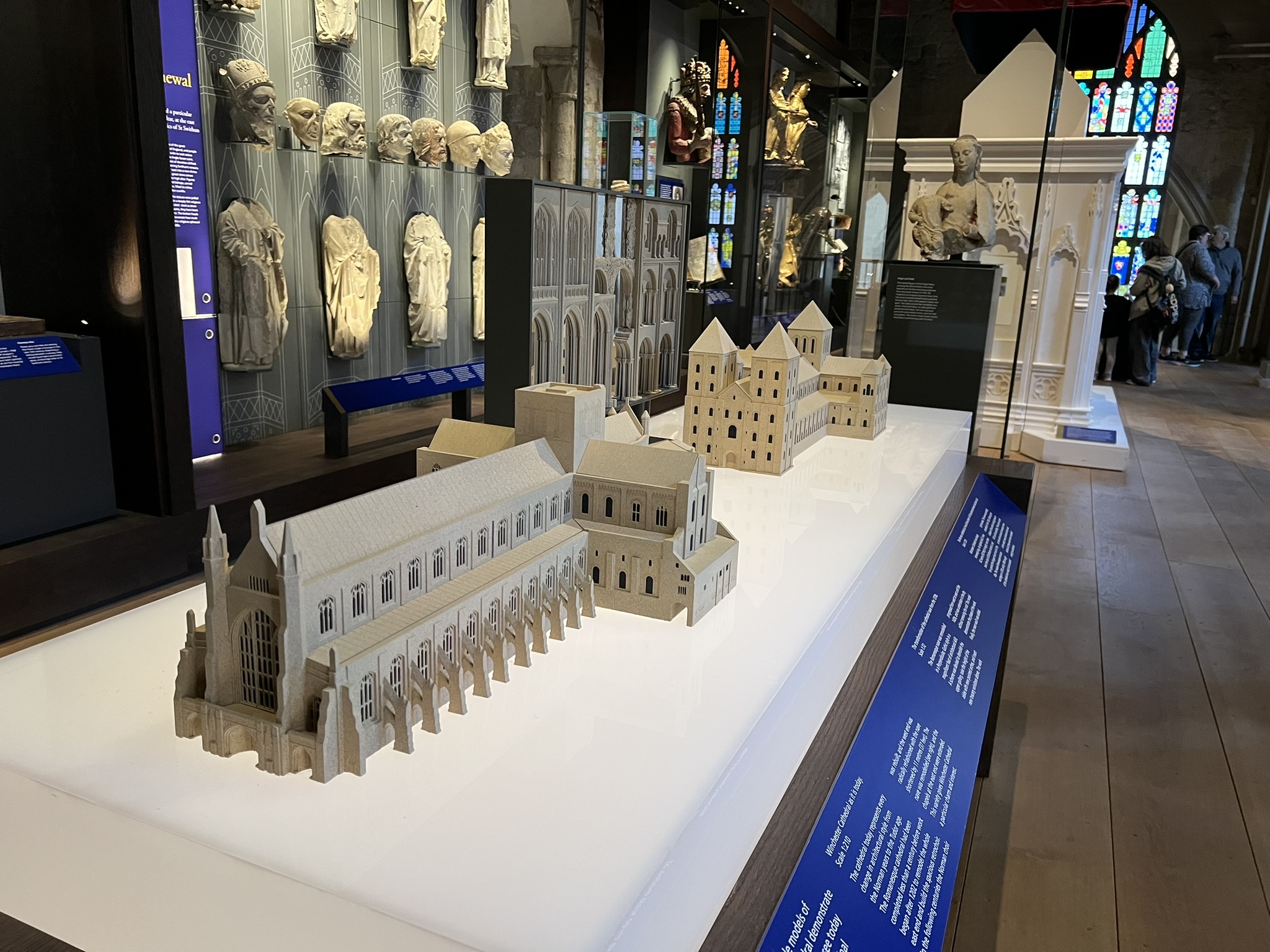
The Cathedral exhibition “Kings and Scribes: Birth of a Nation” tells the over 1,000 year history of Britain with many treasures, as well as this nicely done explanation of the architectural differences through the ages:
And the various illuminated manuscripts – you can see a bit of it here in this video: [since I didn’t take many photos]
https://www.facebook.com/winchestercathedral/videos/307368896851773
Leaving the Cathedral, I had lunch at the café, then wandered around in search of Bookshops – first finding the current building of The Hampshire Chronicle, publishing since 1772 – and certainly a paper the Austens would have read:
The P&G Wells bookshop is just down the street from 8 College St and where the Austens had a standing account with the then bookseller John Burdon. I missed an exterior photo but I do have this tile of the front, a gift from my roomie Joy! : it looks just like this:

– the interior retains much of the original Georgian furniture – the bookshelves, drawers, etc.
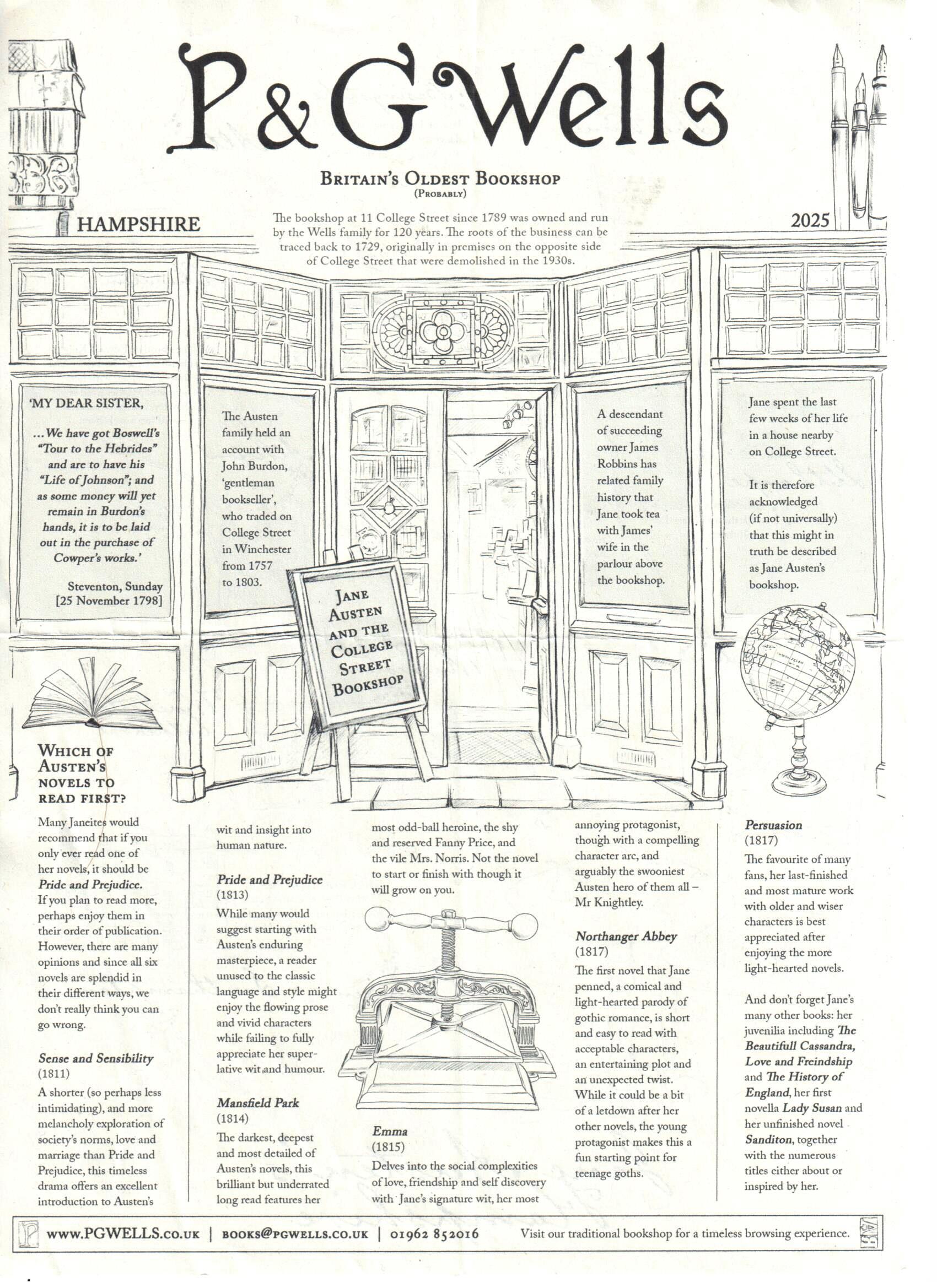
Here is the flier they have celebrating Jane Austen’s 250th:
[I didn’t buy anything, but did find this Ladybird book [didn’t buy; didn’t handle…] – apparently “specially planned to help grown-ups with the world about them” – what a concept…

The Deanery Bookstall in the Cathedral’s Inner Close, run completely by volunteers, was a book searcher’s delight – not enough time to spend as one would want… but did find a few things [and knowing now I would have to buy another suitcase to get home…once you pass that point, there is no stopping you…will tell the tale of the actual suitcase in the last of these posts…]
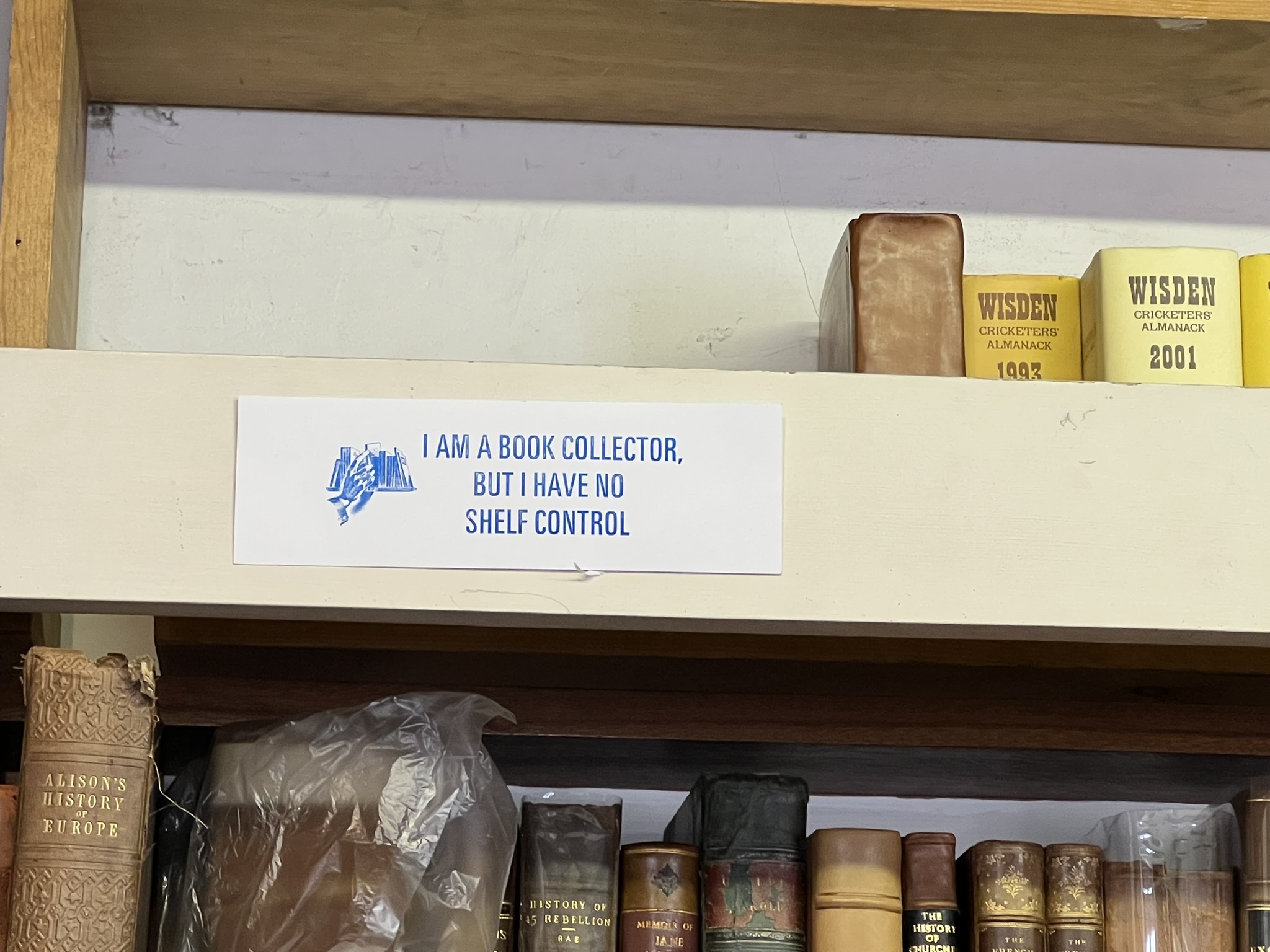
Found The Winchester Bookshop on St. Georges St – and DID find a few things there, including this sign, one I had never seen before, though it certainly could be my mantra…
I like nothing better than a staircase in a bookshop that beckons…

A day is always well-spent with it ending in random book searching … and of course, yet another dose of wisteria:

c2025JaneAustenInVermont
*There is a Keats walking tour in Winchester – he visited here for about two months in the late summer and early fall of 1819, his daily walks inspiring his poem “To Autumn”. I did not follow the tour but you can download the guide here:













































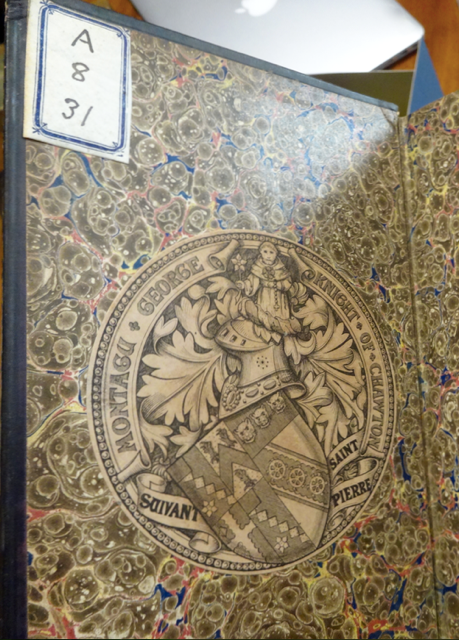 [CHL book with bookplate and shelf ticket]




 Jane Austen in Vermont