Jane Austen · JASNA-Vermont events · News · Regency England

Join Us! ~ ‘Jane Austen’s London in Fact & Fiction’

Cavendish Square

You are Cordially Invited to JASNA-Vermont’s March Meeting 

~Jane Austen’s London in Fact & Fiction ~ 

with 
  Suzanne Boden* & Deborah Barnum** 

Jane Austen and London! ~ Why did she go & How did she get there? ~ Where did she stay & What did she do? ~ Was it a ‘Scene of Dissipation & Vice’ or a place of lively ‘Amusement’ filled with Shopping, the Theatre, Art Galleries & Menageries? ~ And her fiction? ~ How does Mr. Darcy know where to find Lydia and Wickham? And Why does nearly everyone in Sense & Sensibility go to Town? To find out all this  & more absolutely essential Austen biographical & geographical trivia, please… 

Join Us for a Visual Tour of Regency London!

*****

Sunday, 27 March 2011, 2 – 4 p.m. 

 Champlain College, Hauke Conference Center,
375 Maple St Burlington VT

Free & Open to the Public
Light refreshments served

For more information:   JASNAVermont [at] gmail [dot] com  Please visit our blog at: http://JaneAustenInVermont.wordpress.com

************************************ 

Suzanne & Deb will share their mutual love of London! ~ *Suzanne Boden is the well-traveled proprietress of The Governor’s House in Hyde Park, where she regularly holds Jane Austen Weekends:  http://www.onehundredmain.com/ ; **Deb Barnum is the owner of Bygone Books, a shop of fine used & collectible books, the Regional Coordinator for the Vermont Region of JASNA,  author of the JASNA-Vermont blog, and compiler of the annual Jane Austen Bibliography.   

Upcoming:  June 5: A Lecture & Organ Recital on ‘The Musical World of Jane Austen’ with Professor William Tortolano.  At Vermont College of Fine Arts, Montpelier.  See blog for details.

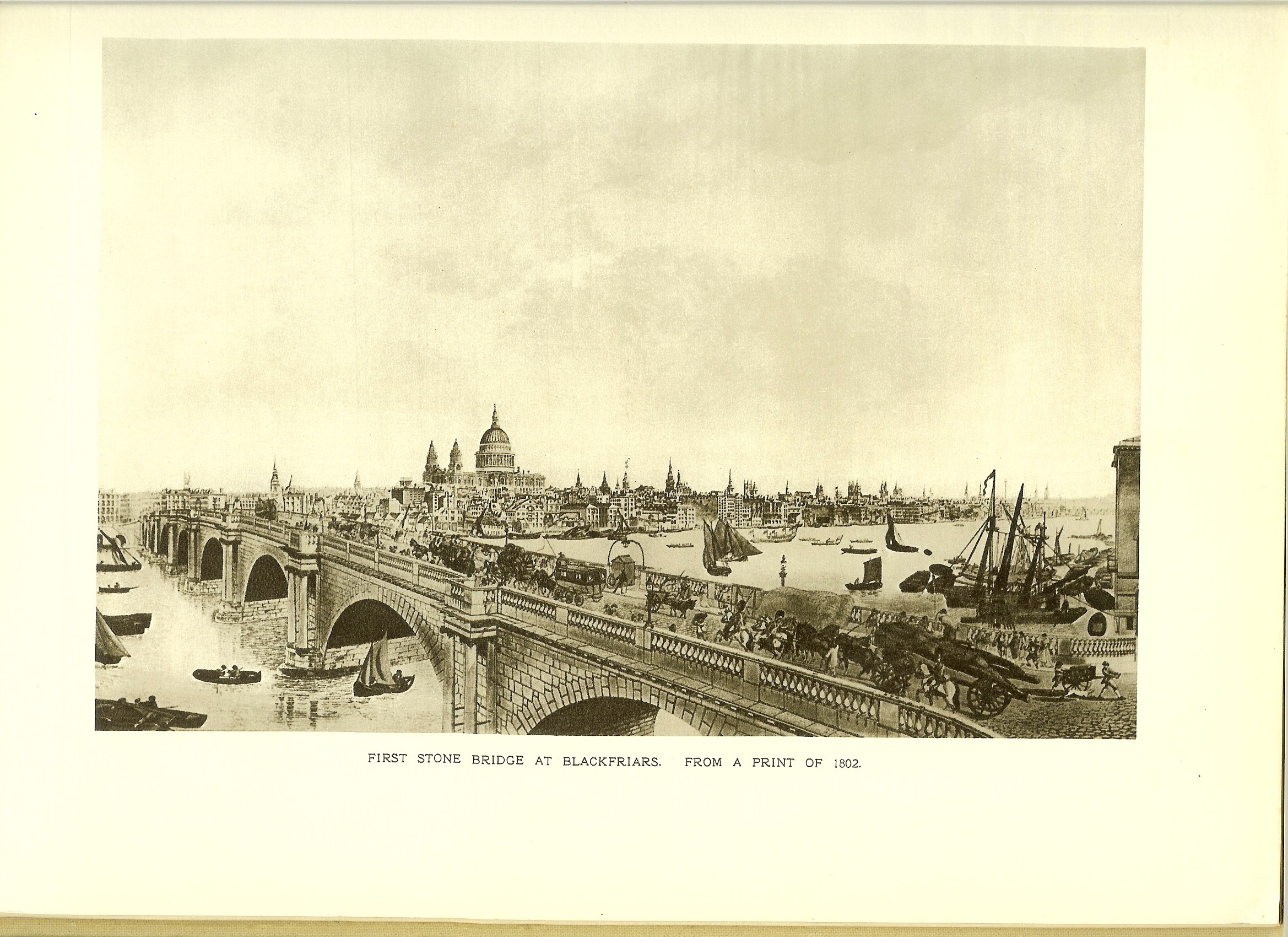
[Image:  Blackfriars Bridge, 1802.  The City of London.  London: The Times, circa 1928, facing p. 192]

Copyright @2011, by Deb Barnum, at Jane Austen in Vermont
Jane Austen · News · Regency England · Social Life & Customs

The Regency Woman ~ take an online class with Nancy Mayer

Want to understand more about the life of a Regency-era woman? Nancy Mayer of Regency Researcher  fame will be offering an online workshop on “The Regency Woman.” The class is offered through the Colorado Romance Writers  and will run from April 4 – 29, 2011. Cost is $25. for non-members, $20. for members. 

The Regency Woman: Online Workshop at Colorado RomanceWriters

April 4 – 29, 2011

DESCRIPTION: The Regency woman. She was a woman of stern morals and little laughter. A governess who didn’t feel oppressed and a governess who did. She owned her own business. She was an author, a poet, a scientist, a runaway. She lived a discreet and quiet life and she was notorious. She was the faithful wife and the mother of many children, or a divorced woman who had to give up her children to escape her husband.

No one pattern, not even a pattern card of propriety, fits all the women but despite their differences there were some things they had in common. The class will look at the world of the Regency woman from the domestic, political, social, and economic angles, using the lives of real women as examples. While I will try to include a great deal of new material, some of the information I have presented before has to be repeated.

BIO: Nancy Mayer has been trying to write Regency romances for more years than she wants to remember. She is always getting distracted and sidetracked by research.

*******************

[text and image from CWR]

Visit the website for more information and to sign-up. Scroll down to find Nancy’s class and read about the other interesting workshops as well! [The class is run as a Yahoo Group.]

Copyright @2011, by Deb Barnum, of Jane Austen in Vermont
Fashion & Costume · Jane Austen · Jane Austen Popular Culture · Regency England · Social Life & Customs

The Regency Encyclopedia ~ An Interview with Sue Forgue

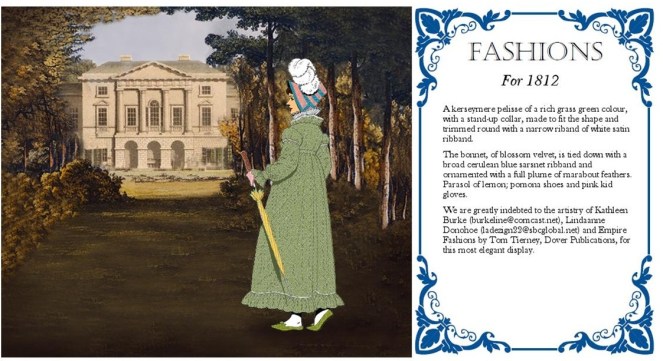
Please join us today as we interview Sue Forgue, creator of the fabulous Regency Encyclopedia  website.  I did a Follow Friday  for Sue’s website a few months back, and Laurel Ann at Austenprose  did the same a few weeks ago to announce the recent changes to the fashion module.  Sue has also recently written two articles:    “The Mighty Muslin in the JASNA News (Vol. 26, No. 3, Winter 2010); and What’s in a Name?” JASNA News (Vol. 25, No. 3, Winter 2009) –  where you can get a taste of what is in the “encyclopedia.”

So we welcome Sue, as she celebrates the fifth anniversary of her Regency-related undertaking!

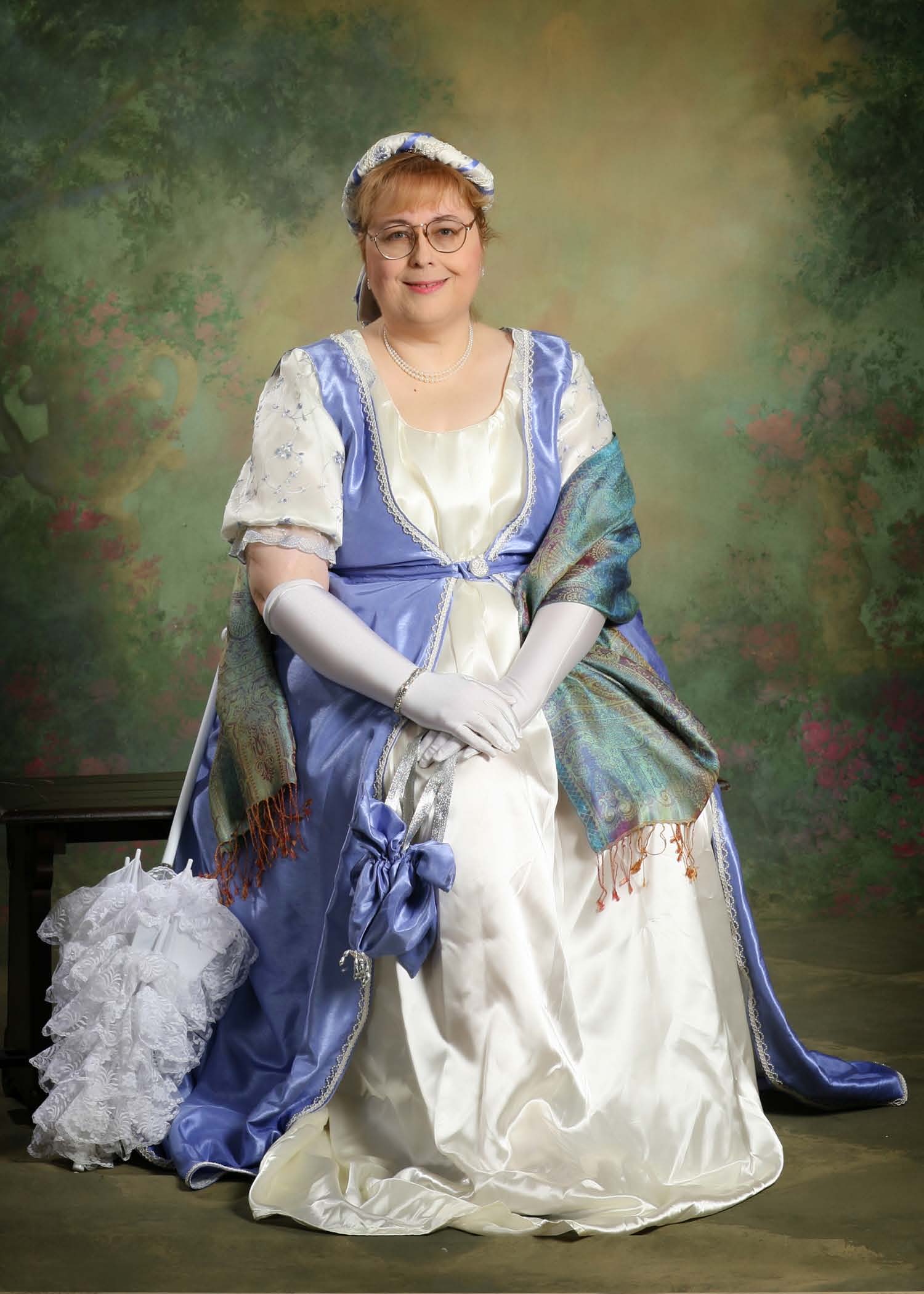
JAIV:  Hello Sue!  Lovely photograph of you in your Regency attire!  It is nice to connect in cyberspace if not right here in Vermont – and great to meet you in Portland  –  I can finally put a face to your name! – So please start if you will, by telling us a little about yourself.

SF:  I enjoyed meeting you in Portland too but I’ve greatly enjoyed our emails pondering the details of Regency London since then as well. Briefly, my background is that I’m an accountant working for a family with a very wide array of interests. My degree is in classical voice and I thought I was going to be an opera star in my twenties but yeah, life happened.

JAIV:  An opera star! – how exciting!

How and when did you begin the website? Is this completely an avocation or part of your work-life? And why the Regency period – why this time and place?

SB:  After the 1995 version of P & P, an explosion of Austen fan fiction websites exploded all over the web. At first, the community was pretty small and I got a reputation as one of the history buffs. Writers would ask me questions about the period and many times when I went to research, I’d get caught up reading something else in the book I was paging through. Six or eight hours later, maybe I’d remember I was supposed to be looking for an answer for someone. So, to be a lot more disciplined, I started typing my notes into an Excel spreadsheet. When one of those writers turned out to be a programmer, Victoria of JAFF Index fame, and heard about the spreadsheet, she was the one who encouraged me to make it into a website. Since then, the site has grown organically through users’ suggestions and contributions of their own research. Yes, this is completely maintained by me in my free time – it’s my labor of love and contribution to the cosmos.

As to why the Regency period, there are certain times in history that just appeal to me and Regency England is one of them. While there were many bad things the Victorians have to be thanked for getting rid of, the Georgians seem to be more accessible to us because of their upper class elegance and their more realist attitudes to subjects such as the seven deadly sins.

Although I have to say, while I love this period, just about any outside source will get me started researching a historical era. For example, when I Claudius aired, not only did I read the Robert Graves books it was based on, but I actually went back to the original Suetonius and read that too. I guess I’m just historically curious.


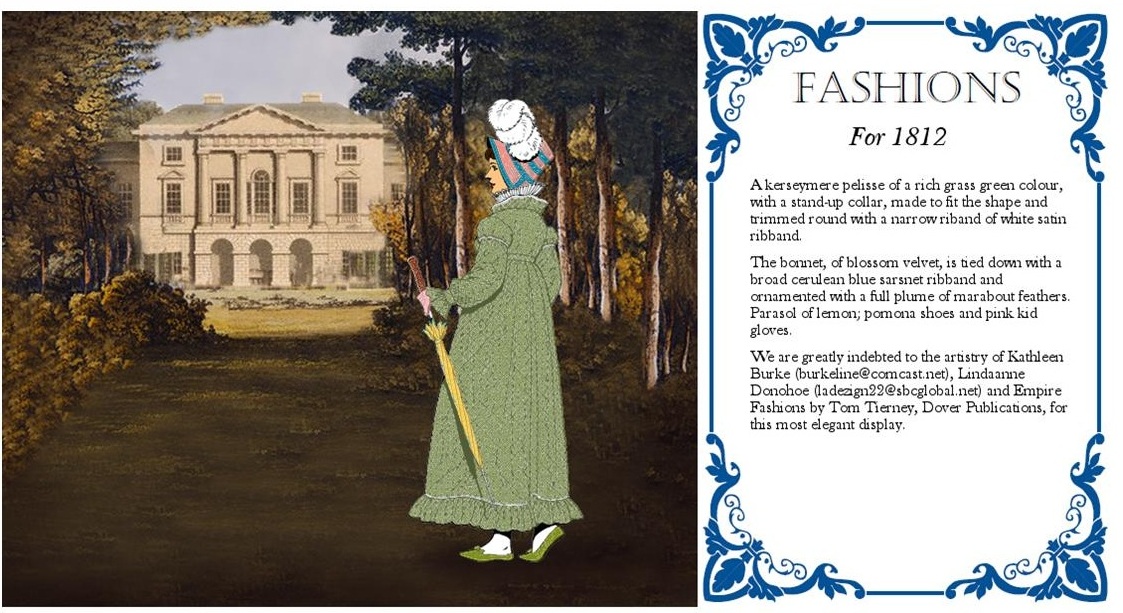
JAIV:  The Fashion Gallery is very extensive and impressive! – when did you begin your love affair with Regency fashion?

SF:  Oh that’s easy to answer – I grew up with it. My mother graduated from the Art Institute of Chicago with a degree in fashion design and had a career before she married my father, so there were lots of art books in the house and on every vacation, we were sure to visit an art museum in every place we visited. Don’t know why, but I was always more interested in the history of fashion books that were stored in our basement.

JAIV:  The new fashion modules of color palettes and ‘Dressing the Doll’ is great fun! – I have been mixing and matching teals and lavenders and coming up with all sorts of lovely (and hideous!) fashion statements! Was this suggested to you to do or was it always in your plans if the technology bugs could be worked out?
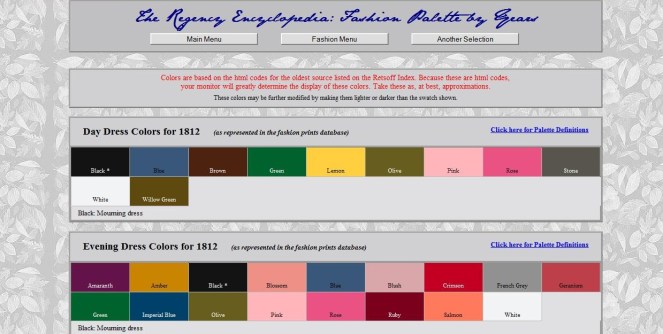
SF:  The Dress the Doll feature was something I’ve wanted to do from the beginning and did have to wait for the right time both because of the programming to achieve it and I felt there were more pressing projects that needed to be launched first such as the Map Module. However, as I said, this has been a priority from the beginning but as there are already a few very fine websites where you can play around and have a lot of fun doing it, I didn’t know how historically accurate the colors chosen were or if the garments were just copied from the movie adaptations. Since I had a huge database of prints given to me in 2009, the time was then right to explore that ready-made gold mine of information. The more I catalogued, the more curious I became about what exactly morone or hessian green looked like and the grand search commenced to find something that showed me what those colors were. Still haven’t found that ultimate source but I did the best I could with the html codes for the color swatches.
 

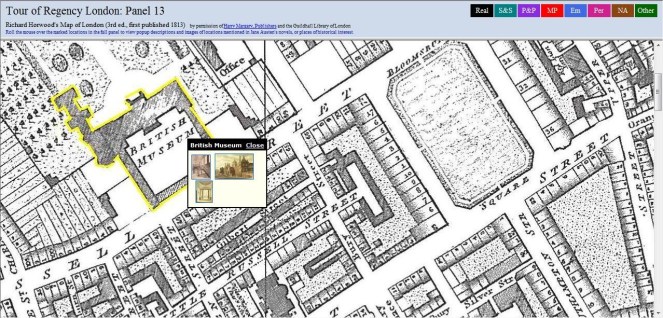
JAIV:  The Map Gallery is an amazing creation! – all that information of where places were, when addresses changed, buildings disappearing, and so many maps! I have been doing some of this locating on maps and find there are at times discrepancies in written texts about addresses, etc. What is your most reliable source for verifying locations? And explain if you can about how you have acquired permission to use the Horwood maps [see below for an example].

SF:  Thank you, I have to say the Tour of London is my favorite part of the website. I used many sources to identify the shops. There are historians’ books that mention addresses in passing plus I have three digitized London directories from 1799, 1819 and 1822 that gave me some addresses. Also, some of the shops still in existence like Fortnum & Mason have a history section on their websites and that could be helpful as well as merchants moved around a lot.

I stumbled into using the Horwood map panels and I’m very grateful that I did. The users told me that they wanted a more detailed map of London than what I had for the Time and Distance calculations and I identified a couple of possibilities. The first person I contacted ignored me and the second refused permission to use their map panels, even with me paying for permission. A Google search brought me to the A to Z Guide of Regency London that you’ve quoted many times in your blog posts. A few phone calls to the UK and my credit card to purchase the rights from the publisher and the Guildhall Library got the ball rolling.

JAIV:   You say the site is “a collection of interesting sound bites about the era” – are there any areas you would like to develop further?
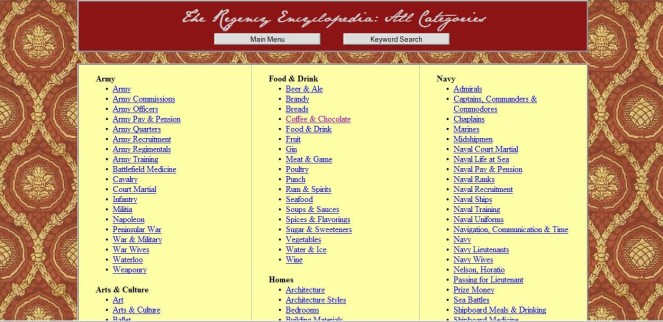
SF:  Oh gosh yes. Have to finish the other five Dress the Dolls first but then I want to expand the Chronology module with a late Georgian era almanac – you know, if this is your birthday, you share a birthday with…. and these are the famous things that happened in … and maybe add a few other bells and whistles.

After that, I’ve been kicking around an apothecary’s module with a database of plants used in what remedies curing what ailments. If I do it, I have a source I can use, but as I’m not a scientist, I don’t know if I’d get royally bored with all the Latin and medical terms.

And who knows, I’ve been surprised with special gifts from friends. The original source material for both the Georgina Names and the Fashion Gallery was given me from a friend in the UK and that happily detoured the update of the Chronology module twice.

JAIV:  Oh, I love this idea of an apothecary module!  And Mr. Perry could be our gossipy guide!

You do keep the website as requiring a log-in and password, but see that you have recently added links to other sites that have made the logins public [with your permission of course!] – Why do you prefer to maintain it as a private site? And have there been any problems with making it more accessible?

SF:  It started out as a hindrance to nasty hackers, as my programmer was very much concerned about unauthorized people messing with the site but I’ve found it very helpful to know where people are coming from, as knowing who’s using the site does play a part in determining what’s the next module or how we’re going to enhance the current ones. For example, we get more visitors from the fan fiction community than from academia, so I’m more inclined to provide programming that’s of a more “practical” usage to authors actively writing.

I’ve had a couple of people complain about trying to find the entrance information but if you know the site is called the Regency Encyclopedia and Google it, the first couple of entries will bring you to sites with a user id and password. But, I do want to be welcoming, so that’s why we have the links to other sites upfront while still putting up a hurdle for hackers.

JAIV:  I know you have been begun to do a series of talks on Jane Austen’s London in your area [alas! too far for me!] – Tell us a little about your talks. And what questions are you most often asked?

SF:  And I wish I could be at your lecture! Jane Austen mentioned all these London street names in the novels and we sort of let that all slide past us as we’re reading. When I started plotting them out for the Tour of Regency London and looked around the neighborhood, all kinds of Duh moments hit me in the head. When you locate these streets on a period map, you’ll start to see all sorts of possibilities in terms of Austen’s characters. My lecture concentrates on the social geography of where Austen’s characters live and we travel from the City of London in the east to Mayfair in the west, talking about the social implications of living where she put those characters.

As to questions, hmmm, they’ve been all over the map. Sorry, bad pun. People are really interested in how people lived so they question me on those details. LOL, I was more scared of not being able to answer people’s questions than giving the lecture that first time.
 

JAIV:  We could talk at length about London, but will ask “What is your favorite place in London?” or at least the place you would want to spend more time in?

SF:  Oh, unlike Elizabeth Bennet, put me any fine house richly furnished and I’ll be happy, lol. Of course, most of those houses also have a lot of history and portraits of people in them too. Seriously, the National Portrait Gallery is one of my favorite haunts as I’m fascinated by how people wanted to present themselves to the world over the centuries. I’ll probably be found there for an afternoon when I’m back in the UK in July.

JAIV:  Do you think Jane Austen liked London, or was it as she humorously says “A Scene of Dissipation and Vice” where her morals were sure to be corrupted!?

SF:  As I say in the conclusion of my lecture, I feel that just by the amount of misfortune Austen sets in London that she disapproves of the metropolis, as most people of the time did, but you also see her fascination with it as a source of dramatic momentum. Things “happen” in London.

JAIV:  You have a very nice bibliography of sources listed on the site. What would you consider the most indispensable of your reference sources? And after that? – if someone was starting a Regency collection, what top five books should they have?

SF:  Everything by Deirdre Le Faye to start with. I also like the David M. Shapard annotations and the Claire Tomalin biography of Austen. These are the first ones that come off the top of my head for starting a collection. I have other favorites for certain subjects but that’s more specialized and maybe not of interest for someone just getting their feet wet.
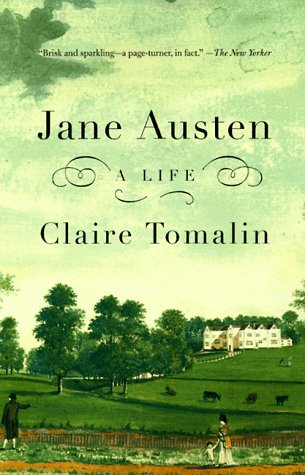
JAIV:  Yes, the Tomalin biography is lovely, as are all her other biographies.  And what would we do without Deirdre Le Faye!

What title would you say in on the top of your wish-list?

SF:  Ha! You mean after more time and money? I was quite disappointed that Santa spent all his time at the second-hand bookstores and missed the easy purchase of the new Selwyn book on Children. [David Selwyn, Jane Austen and Children] Hope the message gets through loud and clear to the Birthday Bunny.

JAIV:  Well, hopefully that ‘Birthday Bunny’ is reading this! – it is a great read, so I do hope you get it soon!

I find I learn something new every day – there is so much “out there” and unless one stays on top of it every minute, a whole new website or blog or image or map will have passed you by? How do you stay current?

SF:  It’s not easy, that’s for sure. I have two methods of staying current: the first is to make a daily constitutional of all my Austen bookmarked sites. Most times, I’ll get my first notice of new blogs or book recommendations from all of you. The second is to use my website statistics where I can track the URLs of people stopping by to visit.

JAIV:  What has been a recent discovery for you? And what has been your latest “I’m completely stumped” moment?

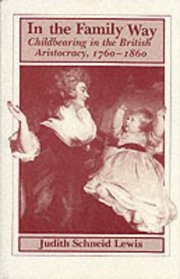
SF:  Last year, I read a book on pregnancy and childbirth that came highly recommended to me (Judith Schneid Lewis, In the Family Way, Childbearing in the British Aristocracy, 1760-1860) where I was stunned to learn that unlike the Victorians, women did not hide away if they were showing and that a confinement started when the baby was born. The other eye-opener was to read about all the double entendres in Austen’s fiction according to Jill Heydt-Stevenson’s Austen’s Unbecoming Conjunctions. That book alone has provided hours of stimulating conversation among friends and family.

The stumper, and I hope this doesn’t gross people out, is that I’m still wondering about those female hygiene matters. I assume they used rags for their monthlies but how did they stay put without safety pins? Wearing those flimsy dresses, did ladies shave their underarms or did they sew shields in their sleeves like the men had in their shirts? I know I’ll be visiting the Museum of Fashion in Bath in July, so hopefully a curator there can answer that for me.

JAIV:  Any plans to write a book of your own?

SF:  Oh heck no. But then again, I never expected to be writing articles or a lecture either.

JAIV:  What do you do in your spare time?? [ is there any?!]

SF:  Not as much as I’d like for all my other interests. I love traveling and seeing things when I can afford the time and expense. So many things, like needlework and singing, I used to enjoy but don’t have time for any more.

JAIV:  What else do you read other than Regency period books? – Fiction? Non-fiction? Biography? Regency Romance?

SF:  Politics, Current Events and yes, I have a stash of Regency Romance too. They’re my therapy when the accounting gets too overwhelming and I start dreaming in numbers.

JAIV:  So who is on your Regency Romance shelf?

Two most favorite Regency writers are Julia Quinn & Regina Jeffers. Reading too many historians to venture into the actual literature of the age – though I did force myself to read Pierce Egan’s Life in London.  Sigh, I thought I was going to enjoy it a lot more than I did. I swear, I just cannot understand these writers’ love affair with the semi-colon.

JAIV:  And of course the oft-asked- really-cannot-answer-question: What is your favorite Jane Austen? And Why?

SF:  You can’t knock a classic like Pride and Prejudice off the literary pedestal since I know I wish I were more like Elizabeth Bennet in temperament and I just love the decorous but biting social humor in it. While the other novels do have elements of social satire, I don’t think you’re chuckling from almost end to end in any other of the major novels. However, I do have soft spots in my heart for Marianne Dashwood as I was just as bad a hopeless romantic at age 17 as she is and I also cheer for Anne Elliot, who triumphs over every hurdle thrown her way with such grace.
JAIV:  Your thoughts on Google Books and ebooks, etc…

SF:  I love both books you can hold in your hands and the ebooks. For me, I want to have a physical book for the Austen related subjects so I can flip through it again and again easily. But there are very few books on politics or current events that once I’ve read them, I want to keep on my bookshelf collecting dust, so I actually prefer those on ebooks.

JAIV:   Anything else you want to share about your website or your plans for future additions to it?

SF:  Well, I sort of let the cat out the bag earlier on the future direction of the website but I do thank you for these very thoughtful questions. I’ve very much enjoyed answering them. You’re a treasure Deb and I value your friendship. Thank you for all you do!

*********************

Thank YOU Sue, for all that You do! and for stopping by here to give the very interesting details about yourself and your on-going Regency project.  If anyone has any questions for Sue, please ask away – I will see that she answers them! – alas! no prize giveaways here today, except the prize of learning more about Sue’s website and the Regency period! – Take some time and go for a walk through the pages of the Regency Encyclopedia, ending it all with “dressing the doll” in the costume of your choice!

Note:  to access the site you will need the following: [case-sensitive]

Login:  JAScholar
Password: Academia

Thanks again Sue – It has been great fun learning more about you!
Everyone else ? – please comment with any questions for Sue!

[Images from The Regency Encyclopedia, @ Sue Forgue, 2011]

Copyright @2011, by Deb Barnum at Jane Austen in Vermont
Books · Rare Books · Regency England · Social Life & Customs

On My ‘Books Wanted’ List ~ ‘Ackermann’s Regency Furniture’

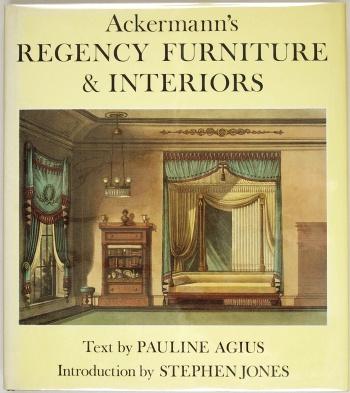
What does one do with the books we want but cannot now justify the expense or even afford at all?  I maintain an endless list of such books I discover in my reading or book-hunting travels.  I periodically search to see if I can find a copy that doesn’t break the bank.  Here is one book I have had on my wish-list for ages, but it is impossible to find for much less than $200.  But is is oh! so lovely! and I want it – I see it today in the Joslin Hall Rare Books catalogue and other than drooling all over my keyboard for a bit, I shall have to pass on the $300. price tag, yet again:

[Page Image from JHRB March Catalogue]

Agius, Paul[ine]. “Ackermann’s Regency Furniture & Interiors” Marlborough; The Crowwood Press: 1984. Published between 1809 and 1828, Ackermann’s ‘Repository of Arts, Literature, Commerce, Manufactures, Fashions and Politics’ provides an unparalleled window into the high-class world of Regency England. Gathered here are several hundred illustrations of furniture and interiors as first published by Ackermann. A Regency-style tour de force. Hardcover. 10″x11″, 200 pages, color and b/w illustrations, dj. Minor wear. $300.00

For Sale at Joslin Hall Rare Books

Anyone out there fortunate enough to have a copy? or perhaps a second copy you don’t know what to do with?

Copyright@2011, by Deb Barnum at Jane Austen in Vermont
Austen Literary History & Criticism · Jane Austen · Jane Austen Societies · News · Regency England · Social Life & Customs

Hot off the Press! ~ ‘Jane Austen’s Regency World Magazine’ ~ 50th Issue!

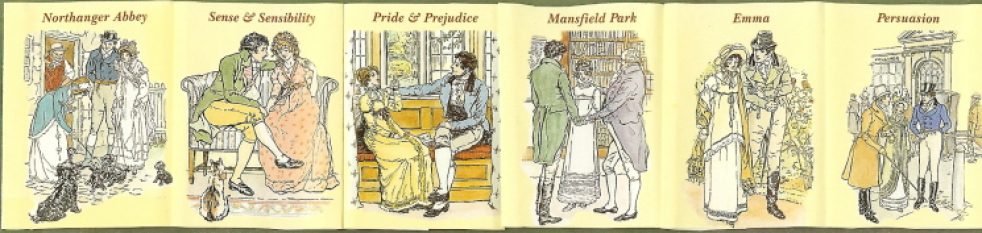
The March/April 2011 issue of Jane Austen’s Regency World magazine – the fiftieth edition! – is now on sale. 

In the new issue: 

JARW AT FIFTY  ~ The Jane Austen community worldwide celebrates the 50th edition of Jane Austen’s Regency World Magazine

SANDY LERNER INTERVIEW  ~ The entrepreneur who rescued Chawton House speaks exclusively about the pleasure and pain of such a significant project 

REGENCY ROYAL WEDDINGS  ~ What Prince William and Kate Middleton can learn from Georgian nuptials

HOME COMFORTS ~ Maggie Lane on how Jane Austen’s books show how ideas about the home were changing 

CLERICAL FATHERS  ~ Contrasting the lives of George Austen and Patrick Brontë 

NO NOOSE IS GOOD NEWS ~ The convict who started Australia’s first newspaper 

TAKEN BY THE PRESS ~ The fear of press gangs stalked the streets of Regency Britain 

Plus: All the latest news from the world of Jane Austen, as well as letters, book reviews, quiz, competition and news from JAS and JASNA – and from the Jane Austen Society of the Netherlands 

For further information, and to subscribe, visit: www.janeaustenmagazine.co.uk

And direct from publisher Tim Bullamore: “Apologies once again to subscribers in the US whose deliveries of the last issue were delayed by increased security checks, seasonal closures, industrial action and bad weather on both sides of the Atlantic!”

Hope our wait will be a short one this time!

Copyright @2011, by Deb Barnum at Jane Austen in Vermont
Books · Jane Austen · Regency England

Winner announced! ~ “Walks Through Regency London”

And the winner is…?

 Kelly! –   Congratulations Kelly! – you will have this for your anniversary celebration in London!  Happy touring through the early 19th century!

Please email me your address [info at this link ] and I will get this off to you right away.  If I do not hear from you by Monday March 7th, I will choose another name from the  mix.

Those of you who did not win? – You can still order the book directly from Louise Allen at her website.

Thanks one and all for participating, and hearty thanks to Louise for her great interview and responses to comments! 

Copyright @2011 by Deb Barnum at Jane Austen in Vermont.
Austen Literary History & Criticism · Collecting Jane Austen · Jane Austen · News · Regency England · Social Life & Customs

In My Mailbox! ~ ‘Jane Austen’s Regency World Magazine’ ~ Finally!

Well, better late than never! – the last issue [Jan / Feb 2011, Issue 49] of Jane Austen’s Regency World Magazine has finally shown up in my mailbox – yesterday! – I wrote about it in a post back in December

As always, cram-packed with interesting articles and images, this issue is devoted to Sense and Sensibility at 200.

So nice to curl up on a sofa with something to read – no kindle, no computer, just an old-fashioned hand-held magazine! You can subscribe here at their website:  janeaustenmagazine.co.uk – the March/April issue, which goes on sale March 1, 2011,  is celebrating its own anniversary – the magazine’s 50th issue! – articles on Royal Weddings in Austen’s time;  Sandy Lerner on why she bought Chawton, and a comparison of the clerical careers of Patrick Bronte and George Austen – plus lots more!  Hope this one arrives sooner rather than later!

Copyright @2011, by Deb Barnum at Jane Austen in Vermont
Jane Austen · JASNA · JASNA-Vermont events · Regency England · Schedule of Events

JASNA-Vermont Event ~ March 27, 2011 ~ A Visual Tour of Regency London!

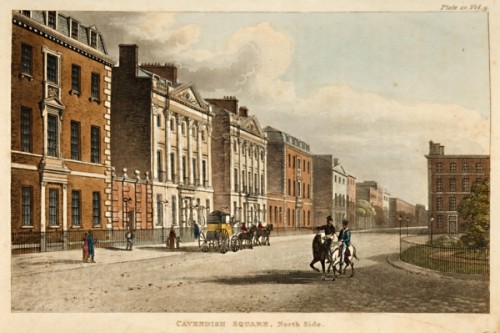
Cavendish Square


You are Cordially Invited to JASNA-Vermont’s March Meeting 

~Jane Austen’s London in Fact & Fiction ~ 

with 
  Suzanne Boden* & Deborah Barnum** 

Jane Austen and London! ~ Why did she go & How did she get there? ~ Where did she stay & What did she do? ~ Was it a ‘Scene of Dissipation & Vice’ or a place of lively ‘Amusement’ filled with Shopping, the Theatre, Art Galleries & Menageries? ~ And her fiction? ~ How does Mr. Darcy know where to find Lydia and Wickham? And Why does nearly everyone in Sense & Sensibility go to Town? To find out all this  & more absolutely essential Austen biographical & geographical trivia, please 

Join Us for a Visual Tour of Regency London!

*****

Sunday, 27 March 2011, 2 – 4 p.m. 

 Champlain College, Hauke Conference Center,
375 Maple St Burlington VT

Free & Open to the Public
Light refreshments served

For more information:   JASNAVermont [at] gmail [dot] com  Please visit our blog at: http://JaneAustenInVermont.wordpress.com

************************************ 

Suzanne & Deb will share their mutual love of London! ~ *Suzanne Boden is the well-traveled proprietress of The Governor’s House in Hyde Park, where she regularly holds Jane Austen Weekends:  http://www.onehundredmain.com/ ; **Deb Barnum is the owner of Bygone Books, a shop of fine used & collectible books, the Regional Coordinator for the Vermont Region of JASNA,  author of the JASNA-Vermont blog, and compiler of the annual Jane Austen Bibliography.   

Upcoming:  June 5: A Lecture & Organ Recital on ‘The Musical World of Jane Austen’ with Professor William Tortolano.  At Vermont College of Fine Arts, Montpelier.  See blog for details.

[Image:  Blackfriars Bridge, 1802.  The City of London.  London: The Times, circa 1928, facing p. 192]

Copyright @2011, by Deb Barnum, at Jane Austen in Vermont
Jane Austen · Regency England · Social Life & Customs

Travel in Sense & Sensibility ~ Part V ~ Carriages ~ Regency Sports Cars!

We have looked at travel and the various carriages of the Regency Period in four previous posts.  You can re-visit them here:

R. Havell – Roe, Sporting Prints

Now the fun part – on to the Regency sports cars! – those carriages that Austen assigns her young men and her rakes, those vehicles that Georgette Heyer made famous in her works, driven by all manner of her Regency bucks, and in many cases by her independent heroines.  We start with the Phaeton, the last of the four-wheeled vehicles but much more stylish than the larger, practical coaches we have looked at previously…    


Phaeton (Georgian Index)


The Phaeton:   termed “deliciously dangerous”

  • from the Greek “to shine” – in Greek mythology, the boy who tried to drive the sun chariot
  • a light 4-wheeled carriage with open sides in front of the seat; the front wheels were usually smaller that the rear
  • sleigh-like single body, for two passengers, luggage below
  • some had a folding top [a calash or callech = folding top] – a fair-weather carriage
  • for pleasure driving, it is owner-driven with no box or postillion
  • usually 1-2 horses or ponies
  • the largest and most varied of all pleasure carriages, the phaeton remained popular until the end of the carriage era
  • often called a “chaise” in England, a “cabriolet” in France
  • variations:  High-Perch Phaeton or “High-Flyer” – fast, sport driving with two horses – the favorite of the Prince Regent, later George IV who had six horses!  –  he used a low Phaeton after his weight increased to such a degree that he could not get into the high carriage!
  • Who in Austen?:  only Miss DeBourgh who has a pony phaeton; Mrs. Gardiner wants “a low phaeton with a nice little pair of ponies”  
Phaeton – NY Coachmakers

Two fashionable ladies in a “high-Perch Phaeton” driving about to see and “be seen”: 


High-Perch Phaeton


************ 

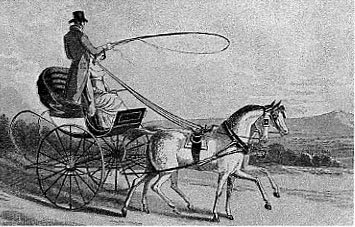
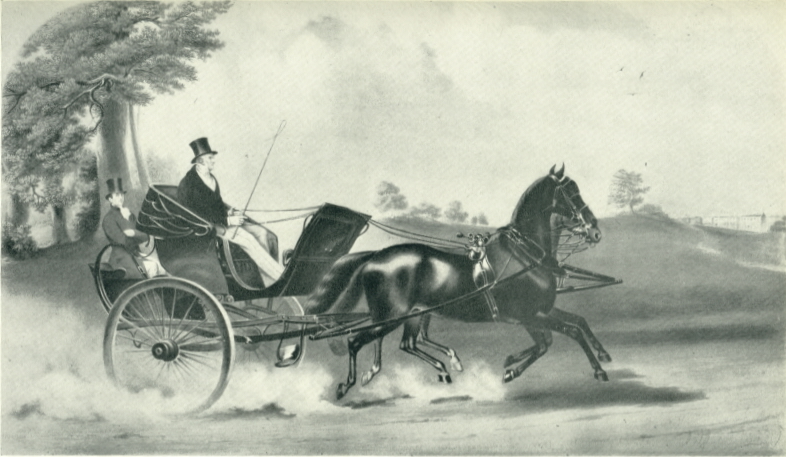
The Curricle: [only English] – the “Regency sports-car”

  • name from the Latin: curriculum = running course, a (race) chariot
  • a two-wheeled vehicle driven by a pair of horses that are perfectly matched, a bar across the back of the horses to carry the pole
  • has a folding hood
  • owner-driven, holds two passengers
  • C-springs – after 1804, equipped with elliptical springs
  • the popular Regency show-off vehicle – for long distances or park rides
  • cost @ 100 pounds
Curricle

A picture of the Marquis of Anglesey:


Curricle (Georgian Index)


In Sense & Sensibility: Willoughby has a curricle though he cannot afford it:

-Willoughby on Colonel Brandon:  “He has found fault with the hanging of my curricle…”     

-Narrator on the carriage drives:  …they might procure a tolerable composure of mind by driving about the country.  The carriages were then ordered.  Willoughby’s was first, and Marianne never looked happier that when she got into it.  He drove through the park very fast, and they were soon out of sight; and nothing more of them was seen till their return, which did not happen till after the return of the rest.   “Did not you know,” said Willoughby, “that we had been out in my curricle?” 
[Willoughby to Mrs. Jennings]

-then later, Marianne explains the impropriety to Elinor: “We went in an open carriage, it was impossible to have any other companion.”

Who else in Austen? – Mr. Darcy, Henry Tilney [sigh!], Charles Musgrove, Walter Elliot, Mr. Rushworth, and Charles Hayter; and Austen’s brother Henry Austen [see Letter 84, where Henry drives Austen back to London in his “Curricle”].


********** 

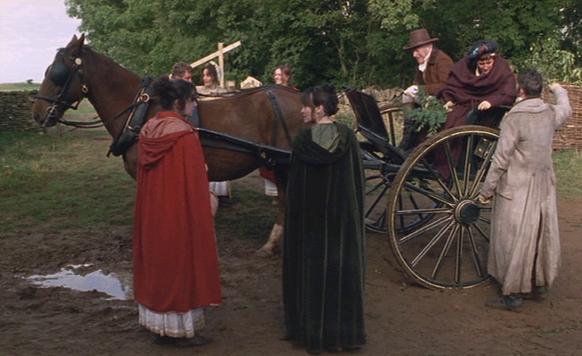
The Gig:  

“Many young men who had chambers in the Temple made a very good appearance in the first circles and drove about town in very knowing gigs” 


Chair back gig


  • Similar to the curricle, but more popular and economical; women could easily drive
  • Two-wheeled, but pulled by one horse, two passengers, owner-driven
  • Better suspension, easy to turn, more sophisticated than a chaise [often called a “one-horse chaise”]
  • Had various names and modifications:  the Dennet, Tilbury, Stanhope
  • one common variation:   a single seat behind the box for a groom, or a tiger
  • cost:  about 58 pounds
  • Who else in Austen?  the Crofts in Persuasion– they offer Anne a ride in their 2-passenger seat; Mr. Collins, Sir Edward Denham in Sanditon  
Persuasion – Croft’s gig (Jane Austen’s World)

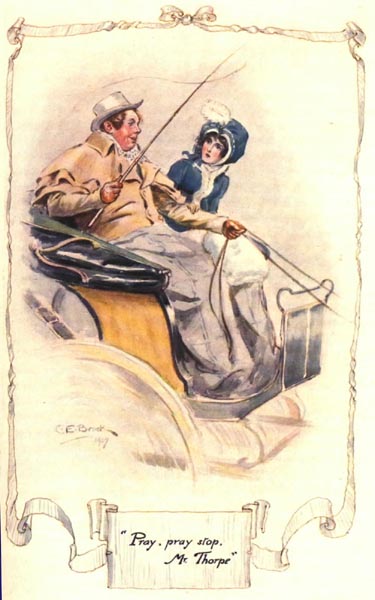
-and of course, John Thorpe in Northanger Abbey, the most horse-obsessed character in all of English literature!

Brock – NA (Molland’s)

“I defy any man in England to make my horse go less than ten miles an hour in harness… look at his forehead; look at this loins; only see how he moves; that horse cannot go less than ten miles an hour: tie his legs and he will get on.  What do you think of my gig, Miss Morland? a neat one, is not it?  Well hung; town built; I have not had it a month… curricle hung you see; seat, trunk, sword-case, splashing boards, lamps, silver moulding, all you see complete; the iron-work as good as new, or better… etc. on and on! 

-And the Narrator who must have her say, so we know just how Catherine and the Narrator feel about John Thorpe [and Henry Tilney!]:

“A very short trial convinced her that a curricle was the prettiest equipage in the world…But the merit of the curricle did not all belong to the horses; – Henry drove so well, – so quietly – without making any disturbance, without parading to her, or swearing at them; so different from the only gentleman-coachman whom it was in her power to compare him with! – To be driven by him, next to being dancing with him, was certainly the greatest happiness in the world.”

[ Brock, Northanger Abbey (Molland’s)]
————————–
In Sense & Sensibility, there are many instances where Austen does not name the specific carriage:  we can assume by the context that it was a post-chaise or owner-owned chaise:

-the Narrator on Colonel Brandon when he leaves to get Mrs. Dashwood: “The horses arrived before they were expected, and Colonel Brandon…hurried into the carriage; it was then about twelve o’clock” [he returns the following day sometime after 8pm]

When Willoughby travels from London to Cleveland, a distance of about 124 miles, he is in a chaise with four horses, it takes 12 hours, 8am – 8pm, a trip that would normally take two days:

-the Narrator on Elinor:  …she heard a carriage driving up to the house … the flaring lamps of a carriage were immediately in view.  By their uncertain light she thought she could discern it to be drawn by four horses; and this, while it told the excess of her poor mother’s alarm, gave some explanation to such unexpected rapidity.  – [and she runs downstairs to find it is Willoughby…!


******

Other Carriage terms:  not all are found in Austen 

  • Hackney = for hire, often discarded carriages of the wealthy
  • Dog Cart = a gig with a ventilated locker for dogs; for 4 people, 2 behind the driver seat back-to-back
  • Sulky = driver-only – one passenger, one horse
  • Tandem = a two-wheeled carriage drawn by 2 horses one in front of the other – Sidney Parker in Sanditon 
  • Whiskey or Chair – an early chaise; a light 2-wheeled vehicle without a top, in The Watsons 
  • Sedan-Chairs  – a seat in a box with 2 poles 10-12 ft long, carried by two men. In efforts to lessen the crowded streets in London, but by 1821 there were only a half dozen public sedans, by 1830 there were none.

  • “Britzochka” = German origin, most common of all carriages, for traveling [ called a “Brisker” or “Briskey”]
  • “Droitzeschka” = “Drosky” – Russian origin, low to ground for “the aged, languid, nervous persons and children”

 And finally, what did Jane Austen have? 

  • At Chawton she had a donkey cart
  • Henry Austen had a curricle and a barouche:  

“The Driving about, the Carriage [being] open, was very pleasant. – I liked my solitary elegance very much, & was ready to laugh all the time, at my being where I was. – I could not but feel that I had naturally small right to be parading about London in a Barouche.”  [Ltr. 85, 24 May 1813, p. 213-14] 

I love to think of Austen “parading” around London and enjoying her “solitary elegance” and laughing all the while! – one of my favorite passages from her letters…

Final post:  a Carriages Bibliography ~ Stay tuned!

Copyright @ 2011, Deb Barnum, of Jane Austen in Vermont
Jane Austen · Social Life & Customs

Travel in Sense & Sensibility ~ Part IV ~ Carriages, cont’d

Finally, the next part of my post on travel and carriages in Sense & Sensibility!

You can re-visit the first three posts here:

***********************

Now on to the specific types of coaches of the Regency era, the great coaching age of travel, pre-steam, pre-railroad, an age where the roads saw improvement, carriages became more comfortable [slightly, that is!], and the higher classes traveled more easily from place to place – it is good to remember that the majority of people still traveled by foot.   Austen knew her carriages and is often very specific in what type of carriage a character has – as stated before, we know in just learning a little about the costs of carriages, the cost of horses and their upkeep, that Willoughby in Sense & Sensibility is living far beyond his means by owning a curricle, that his giving a horse [Queen Mab] to Marianne is outrageous, not only in its impropriety but also its lack of fiscal responsibility.  Austen does this throughout her works, and even if she does not specifically tell us the type of carriage or the exact income, we understand, as the readers of her day would have understood, another piece of the puzzle about any given character.

The last post ended with the generic term “Coach” – so now some specific types:

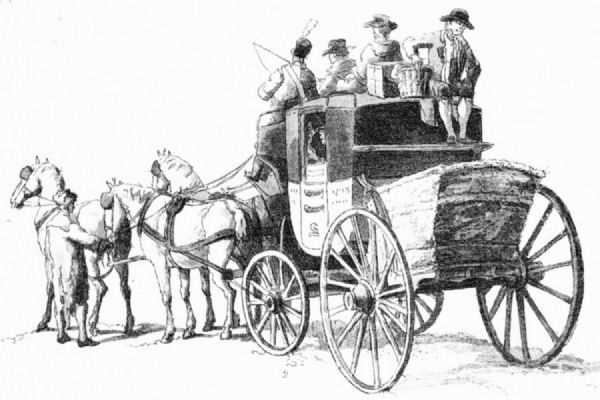
The Stage Coach:

  • very colorful
  • four passengers inside, up to eight outside
  • stopped at various pre-appointed stages, usually every 10 miles to pick up / drop-off passengers and to change horses
Stage Coach


The Royal Mail Coach:  [after 1784] – there were 50 mail coaches in 1784, 700 in 1835

  • set paint color:  red wheels, maroon doors and lower body; black upper body; royal arms on each door
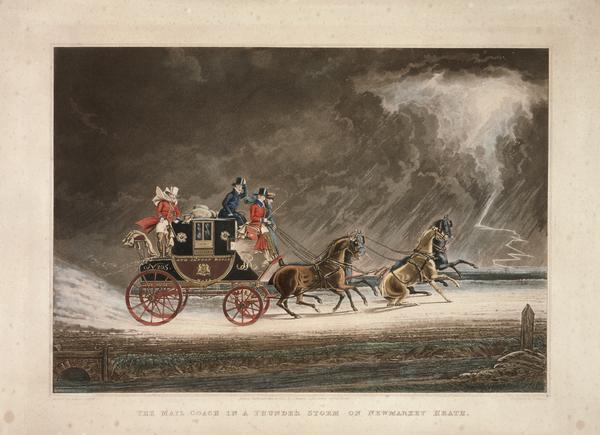
  • speed and excellence of Royal Mail service, usually six horses – faster because there were no tolls
  • held four inside passengers, and up to eight outside
  • Guard – a 3′ tin horn
  • cost about 1 penny / mile more than the stage coach but safer for passengers because of the guards
Royal Mail Coach


Private Coaches: 

  • simple color schemes with coat of arms on doors and boot
  • a fine carriage with owner livery, postilions, etc
  • expense:  coachman, postilions, under coachman, stable boys, footmen
  • not common because of the expense:  taxes on carriages and horses; even the wealthy often borrowed carriages and rented horses
  • cost in 1796 @ 130 pounds
  • in Sense & Sensibility:  Elinor and Mrs. Jennings visit Kensington Gardens by carriage, where Elinor connects with Miss Steele:   Miss Steele to Elinor:   “Mrs. Richardson was come in her coach to take one of us to Kensington Gardens”; and “He [Mr. Richardson] makes a monstrous deal of money, and they keep their own coach.”
  • who else:  the Bennet’s, the Musgroves [both large families]
Town Coach


Chaise:

  • an enclosed 4-wheel carriage, almost 1/2 the size of a full coach, seating up to three people, making this very tight, with one forward-facing seat, and often with a pull-out seat to add 2 more people
  • no coach box, driven by a postilion [rider mounted on one of the horses, the rear or left horse], usually two horses
  • cost @ 93 pounds in 1801 
  • In Sense & Sensibility:  Mrs. Jennings, the John Dashwoods; Robert Ferrars
  • a note on Mrs. Jennings’s carriages:  she has a chaise and a chariot, but did she have two carriages or as Chapman suggests, was Austen being uncharacteristically forgetful?  

“It will only be sending Betty by the coach and I hope I can afford that, we three will be able to go very well in my chaise.” 

Narrator:  Thomas seeing Mr. Ferrars and Lucy Steele ~“They was stopping in a chaise at the door of the New London Inn.”

  • who else?:  Mr. Bingley [ chaise & four]; General Tilney [a chaise & four]; Lady Catherine; Lady Bertram; Sir William Lucas;  and Mr. Gardiner

The Post Chaise = a chaise used with rented horses; always yellow; overlap with “hack-chaise”;

  • often a larger chaise with four horses with postilions on both lead horses and left near horse; you had more control over your trip rather than on the Stage Coach
  • a traveler who owned a carriage and horses would travel the first stage with them and then send them home with servants and rent horses the rest of the way

In Sense & Sensibility:  when Mrs. Jennings asks the Miss Steeles on their arrival in London: “Well my dear, how did you travel?”   Miss Steele to Mrs. Jennings:  “Not on the stage I assure you,” replied Miss Steele with quick exultation; “we came by post all the way and had a very smart beau to attend us.  Mr. Davies was coming to town, and we thought we would join him in a post chaise; and he behaved very genteelly, and paid ten or twelve shillings more than we did.”


Post Chaise


Chariothas the same body as the chaise, the difference is the addition of a coach-box and driver.

  • driver’s box, with four horses, four passengers, two seats facing forward like an automobile 
  • a classy vehicle, lighter than a coach, comfortable, speedy 
  • In Sense & Sensibility:  Mrs. Jennings, John Dashwoods:  Narrator on Fanny Dashwood:  …the great inconvenience of sending her carriage for the Miss Dashwoods [we know that the John Dashwoods have a chariot]
  • who else?:  Mrs. Rushworth


Barouche:
 

  • member of the coach family, a medium-sized, heavy 4-wheeled coach with two seats facing each other for four people with a folding top that covers only the rear seat
  • four horses with a driver box on outside for two people
  • aristocratic vehicle, for dress occasions, mainly used in town 
  • In Sense & Sensibility:  Palmers [her second carriage], though the narrator on Fanny about Edward:  It would have quieted her ambition to see him driving a barouche.  But Edward had no turn for great men or barouches. 
  • others:  Lady Dalrymple, Henry Crawford 


Barouche


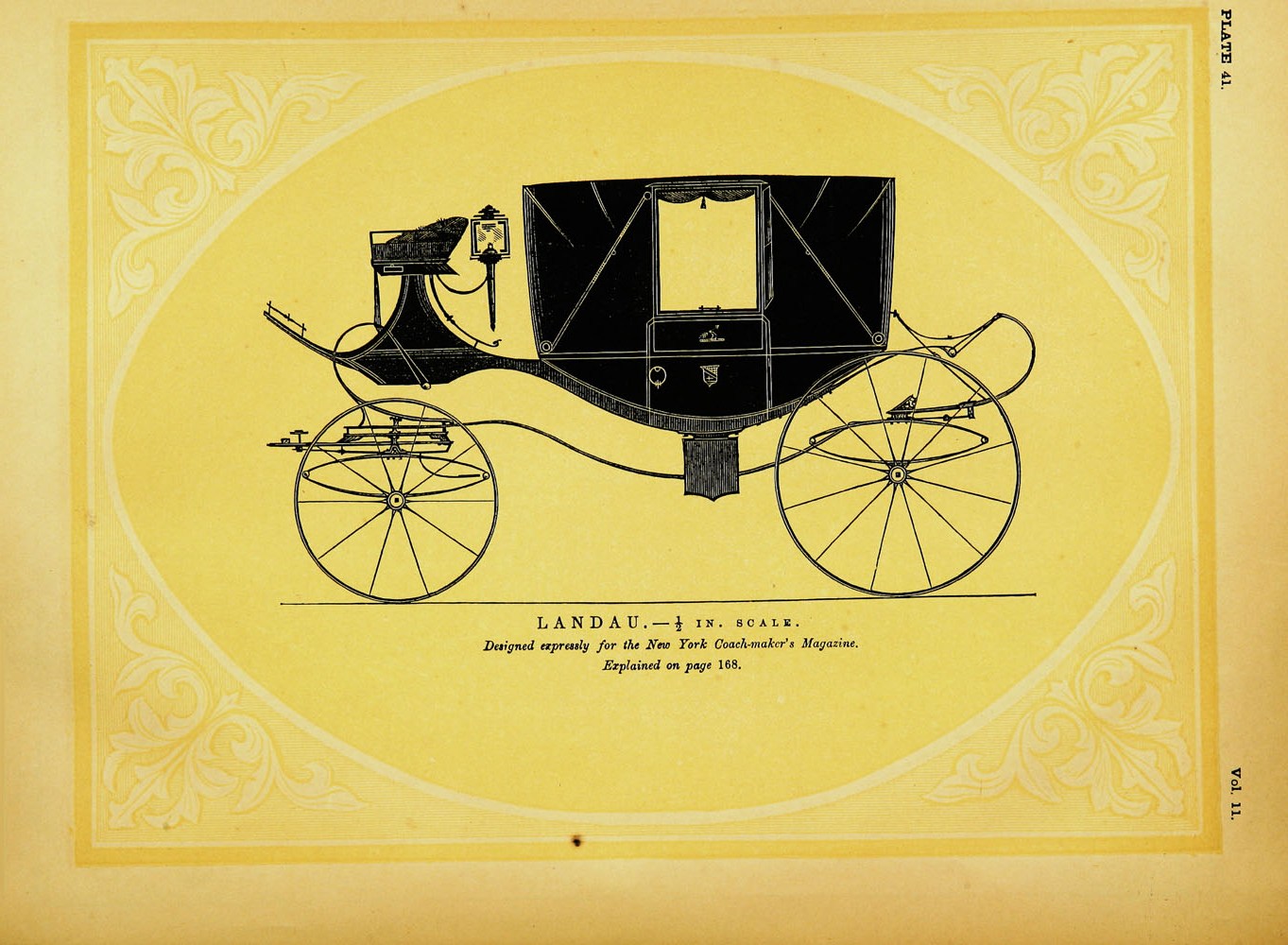
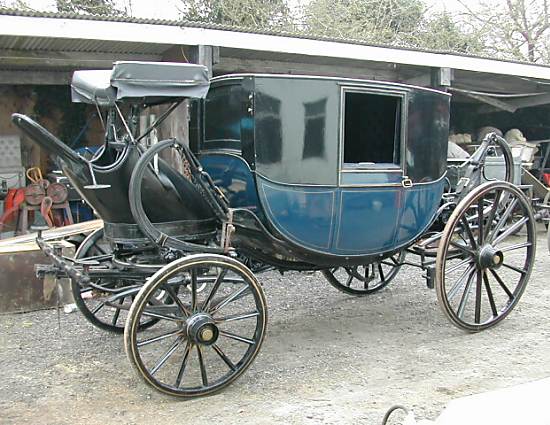
Landau [coach family]: 

  • a four-wheeled light carriage, two seats facing each other
  • two or four horses
  • high driver’s seat
  • two soft folding tops that close and lock in the middle [often made of leather], a low door
  • expensive to build and maintain:  cost @ 185 pounds, but it was popular due to its versatility in all weathers
  • In Sense & Sensibility: no one


Landau

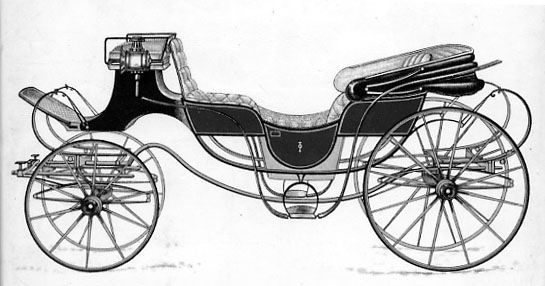
Landaulette: 

  • landau for two passengers only; cost @ 156 pounds
  • In Sense & Sensibility:  no one
  • who else?  Anne Elliot Wentworth in Persuasion
Landaulette


Barouche-Landau:  “approach in awe”!

  • features of both, but not very popular 
  • a high driving seat
  • a rumble for two servants 
  • in Austen:  the only specific carriage named in Emma – Mrs. Elton’s sister, Mrs. Suckling
  • Chapman in the 1954 edition of Minor Works  finally supplies the illusive illustration [from Beau Monde, 1806] 
Barouche-Landau

Up next:  the sports cars of the Regency Period… [i.e Willoughby and friends!]

Copyright @2011, Deb Barnum, Jane Austen in Vermont