Book reviews · Jane Austen · Regency England

Book Review ~ “Regency Buck” by Georgette Heyer

regency-buck-cover2

Georgette Heyer had a bit of a formula for many of her Regency novels – the established man in his mid-30s, often a fashionable dandy, and the younger woman he somehow becomes responsible for, and against all odds and all possible personality conflicts, they come together and all ends well.  Indeed, quite funny along the way, and filled with period details of such accuracy, the reader wonders how Heyer wrote these in the early 20th century and was not herself a “Lady of Quality” in early 19th century England!

So I began Regency Buck thinking I may have already read it – had to indeed check my list to be sure! – but a few pages in, I knew that, though it all seemed familiar enough, Heyer had succeeded yet again in setting a scene and telling a tale peopled with well-drawn characters [really, who can resist a character with the name of Mrs. Scattergood?], abounding in witty repartee, bringing the Regency period to life, and this time with a bit of a mystery thrown in for good measure.

The wealthy Judith Taverner, a feisty, independent almost-of-age beauty and her brother Peregrine, a year younger and the inheritor of a large estate, are on the way to London to settle in town after the death of their father to meet their unknown guardian, the Fifth Earl of Worth, and expecting one of their father’s gout-ridden comrades are shocked to discover Lord Worth to be a young handsome man of fashion and great friend to a select group of higher ups in London society .  Due to a previous encounter with him involving a hair-raising road accident and for Judith a less than appropriate embarrassing kiss, the young Taverners take an instant dislike to their guardian and he in turn makes it quite clear that he is not amused by suddenly having two wards foisted upon him. 

Here is Judith as we first see her~

She was a fine young woman, rather above the average height, and had been used for the past four years to hearing herself proclaimed a remarkably handsome girl.  She could not, however, admire her own beauty, which was of a type she was inclined to despise.  She had rather had black hair; she thought the fairness of her gold curls insipid.  Happily, her brows and lashes were dark, and her eyes which were startlingly blue (in the manner of a wax doll, she once scornfully told her brother) had a directness and a fire which gave a great deal of character to her face.  At first glance one might write her down a mere Dresden china miss, but a second glance would inevitably discover the intelligence in her eyes, and the decided air of resolution in the curve of her mouth.

And here is Lord Worth as first seen by Miss Taverner ~

From the first moment of setting eyes on him she knew that she disliked him…He was the epitome of a man of fashion.  His beaver hat was set over black locks carefully brushed into a semblance of disorder; his cravat of starched muslin supported his chin in a series of beautiful folds; his driving-coat of drab cloth bore no less than fifteen capes, and a double row of silver buttons. Miss Taverner had to own him a very handsome creature, but found no difficulty in detesting the whole cast of his countenance.  He had a look of self-consequence; his eyes, ironically surveying her from under weary lids, were the hardest she had ever seen, and betrayed no emotion but boredom.  His nose was too straight for her taste.  His mouth was very well-formed, firm but thin-lipped.  She thought it sneered….. His driving had been magnificent; there must be unsuspected strength in those elegantly gloved hands holding the reins in such seeming carelessness, but in the name of God why must he put on an air of dandified affectation?

And thus we are introduced.  Heyer serves up her usual mix of shenanigans, the endless clashing of wills, and the historically accurate Regency social life so well portrayed, such as this detailed description of the Royal Pavilion in Brighton, that you, the reader are instantly transported ~

royal_pavilion_brighton_3

At first site it was all a blaze of red and gold, but after her [Miss Taverner] first gasp of astonishment she was able to take a clearer view of the whole, and to see that she was standing, not in some fantastic dream-palace, but in a square apartment with rectangular recesses at each end, fitted up in a style of Oriental splendour.  The square part was surmounted by a cornice ornamented with shield-work, and supported by reticulated columns, shimmering with gold-leaf.  Above this was an octagon gallery formed by a series of elliptical arches, and pierced by windows of the same shape.  A convex cove rose over this, topped by leaf ornaments in gold and chocolate; and above this was the central dome, lined with scale-work of glittering green and gold.  In the middle of it a vast foliated decoration was placed, from whose calyx depended an enormous luster of cut-glass in the shape of a pagoda.  To this was attached by chains a lamp made to resemble a huge water-lily, coloured crimson and gold and white.  Four gilded dragons clung to the under-side of the lamp, and below them hung a smaller glass water-lily… still more dragons writhed above the window draperies, which were of blue and crimson satin and yellow silk.  The floor was covered by a gigantic Axminster carpet where golden suns, stars, serpents, and dragons ran riot on a pale blue background; and the sofas and chairs were upholstered in yellow and dove-coloured satin….

We are treated to various episodes of cock-fighting, boxing, horse racing, and carriage rides of all sorts; fashion displays of the first quality; and gatherings with the real life characters of Beau Brummell and the Prince Regent himself!  and with further references to Byron’s poetry and Austen’s Sense & Sensibility!  we are truly comforted by the authenticity of the times. 

cockfighting

But danger lurks – the Taverner’s wealth make them both targets in their new London environment and Heyer juxtaposes the humor of the avaricious suitors for Judith’s hand [to include nearly every eligible young man within striking distance and a few skin-crawling efforts [to this reader!] by the over-zealous Prince Regent!] – all this set against the apparent attempts to murder Peregrine – who would most benefit from his death? – his own sister? a long-lost on-the-skids cousin who begins to fall in love with Judith? or their guardian’s brother Charles, the second son in the military with no money of his own who becomes immediately smitten with his brother’s comely and wealthy ward? or indeed, Lord Worth himself, with his expensive tastes and a penchant for gambling and horse-racing?

And who of the lot will capture the heart of the lovely Judith? and can she withstand her guardian’s efforts to keep her in line according to HIS rules of a lady’s behavior for the very long year before her 21st birthday?   Worth is insufferable and rude and nearly cruel on one too many occasions to keep this reader from cringing a bit with my feminist sensibilities on high alert…  but Heyer, as expected, brings it all to a fine conclusion,  all in fun and with a satisfying end where all are accorded their just dues, a great ride! … definitely add this gem of a read to your TBR pile!

 4 full inkwells [out of 5]

Regency Buck, by Georgette Heyer.  Sourcebooks, 2008 [originally published in 1935]

[also available in the UK from Arrow Books, 2004]

For further reading, see my review of Faro’s Daughter, which appends reading lists, etc. about Heyer.

Book reviews · Literature · Regency England

Book Review ~ ‘Whom the Gods Love’

book-cover-whom-gods-loveJulian Kestrel is back in this third Kate Ross mystery, Whom the Gods Love [Viking 1995], again faced with a murder the authorities cannot solve.  The larger than life Alexander Falkland, one of the leaders of The Quality, young, handsome, with a beautiful wife, elegant home and many admirers, is found murdered in his study, bludgeoned with a fireplace poker during a house party.  Falkland’s father, Sir Malcolm, so frustrated by the dead-end investigations of the Bow Street Runners, turns to Kestrel to find his son’s killer.  Faced with a good number of suspects among family, friends and servants (so many in fact, that Ross prefaces the work with a listing of the cast of characters!), Kestrel falls whole-heartedly into his role as amateur sleuth.  A dandified man of fashion [but we the reader know him to be so much more], Kestrel knows many of Falkland’s set and embarks on his questioning of all suspects in his charming way, all the while wondering if Alexander Falkland may not be all that he seems. 

Ross is a master of plot and character – even the minor parts are well-fleshed out, and as the story turns and clues are uncovered with each chapter (Ross’s chapter headings alone are perfectly tuned), the reader is drawn deeper and deeper into the complicated mystery surrounding Falkland’s death.  Kestrel stumbles upon another murder, and as in Ross’s previous two mysteries, Cut to the Quick and A Broken Vessel, Kestrel needs to identify an unknown woman as well as unravel the mystery of who had reason to kill her. 

We are again transported into Regency London, with all the social life at Almacks, Tattersalls, Cornhill, Rotten Row, the Grand Strut in Hyde Park, and various outlying Inns, all portrayed as it would have been.  The language of the lower classes and the “Beau Monde” is spot-on [blue-deviled, missish], the carriages: gigs, cabriolets, hackneys, etc.; architectural details abound; fashion description is so exact, you feel you are there, sitting in the room:  in this passage, one of the “Quality” suspects is thusly described:

 Felix was about Julian’s age, the son of an autocratic peer from the bleak northeastern counties.  Julian suspected that the grey, barren landscapes of his childhood accounted for his taste in clothes, which certainly needed excusing.  Today he was wearing a canary-yellow tailcoat, white trousers, and two waistcoats, the inner of scarlet satin, the outer with black and white stripes.  His neckcloth was a cherry-coloured India print, splashed with blue and yellow flowers.  A bunch of gold seals, all shaped like chessmen, dangled from his watch-chain.  He had an amiable rangy figure and curly brown hair that tended to stand on end.  [p. 132]

[Yikes!]

regency-male-fashion

[from The Regency Fashion Page]

Ross depicts the legal system in England at the time – Lincoln’s Inn figures prominently, and Kestrel is often critical of the lack of a strong police force and the present state of law enforcement [the magistrate system and the Bow Street Runners].  There is much scholarly discussion between the characters, with references to Wollstonecraft’s “A Vindication of the Rights of Women” and the state of the woman’s position in society; there is even a bit of phrenology thrown in! 

But it is Julian Kestrel who pulls all these diverse goings-on together.  He is witty [“I’m afraid I’m obliged to trample on your sensibilities”], with a ready retort always at hand to put one on edge, but also sensitive and sympathetic, always with a kind word or deed to put one at ease.  And, as in the previous two books, Ross gives us fleeting glimpses of Kestrel’s own past, his background as mystifying to the other characters and to us readers as the mystery he is set on solving.  In this book, we hear only a faint mention of Sally from A Broken Vessel; we learn that he and his father went to London plays; that he gained his wide knowledge from his own stay on the Continent where he read the controversial Wollstonecraft in French translation; and we learn more about his actress mother and his disinherited father.  Kestrel remains the most loveable enigma, with all his shadowy past life, his apparent shallow present life of leader of fashion extraordinaire:

      In the afternoon, Julian went home for a session with his tailor.  His hobby of detection could not be allowed to interfere with his profession of dress.  The tailor measured him for some sporting garments for the autumn and made yet another attempt to persuade him to pad his coats.  ‘The very latest fashion, Mr. Kestrel!’ he pleaded.

      ‘My dear man, if I followed the fashions, I should lose any power to lead them.  And not for you nor anyone else will I consent to look like a pincushion with legs.’ [p. 169] 

With all this, Kestrel masterfully guides us along in solving the murders, feeling at home in the halls of the Quality, as well as in the environs of the poorer classes. I will tell no more of the plot – it is a fabulous journey, and leaves me quite anxious to get on to the next book!

5 full inkwells

 See my reviews of Cut to the Quick and A Broken Vessel

Book reviews · Books · Regency England

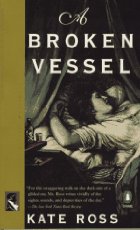
Book Review ~ “A Broken Vessel”

ross-broken-vessel-coverJulian Kestrel returns in this second mystery by Kate Ross [Viking 1994], A Broken Vessel.  Several months after his amateur but superior sleuthing at Bellegarde, home of the Fontclairs, [see Ross’s first book, Cut to the Quick, and my review] Kestrel is again thrown into the mix of murder and mayhem when the sister of his manservant, Dipper, shows up in her brother’s life after a two-year absence.  Sally Stokes is a prostitute and a thief, made of the same cloth as her now-reformed [hopefully] pick-pocket brother. After an evening of turning tricks with three very different “coves,” from each of whom she steals a handkerchief,  she discovers a letter written by an unknown woman, mysteriously locked up in an unnamed place, begging forgiveness and help from her family.  But whose pocket did Sally lift the letter from? – Bristles, the middle-aged skittish man; Blue Eyes, the elegant and handsome gentleman of the “Quality”; or Blinkers, the be-speckled young man who played all too rough with Sally, leaving her sore, battered and frightened. 

Here is how we first see Sally: 

She pulled the pins out of her hair and put them on the washstand for safe-keeping; she was always losing hairpins.  Her nut-brown hair tumbled over her shoulders: long at the back, but curling at the front and sides, in imitation of the fashion plates in shop windows.  Not that she would ever look like one of them, with their fair skins, straight noses, and daintily pursed lips.  She had a brown complexion, a snub nose and a wide mouth, with a missing tooth just visible when she smiled.  Still, she was satisfied with her face.  There was not much an enterprising girl could not do with a little cunning and a pair of liquid brown eyes.

So Dipper brings Sally to his apartment to get her off the street and give her a chance to heal.  He shares this apartment with his employer, Julian Kestrel, the Regency dandy, known far and wide for his fashion and manners, the man everyone emulates in all things dress and gentlemanly behavior.  We have already learned in Ross’s first book that there is so much more to Kestrel than this dandified appearance – his growing friendship with Dr. MacGregor serves as a foil for the reader to see Kestrel in more human terms, and MacGregor’s unasked questions become ours: all we know is that Kestrel’s father was a gentleman, disinherited upon marrying an actress, and that Kestrel has been an orphan for a good many years.  Although he appears to have money and is viewed as such by his cohorts, we, the reader, and Dipper know this not to be the case – but where DOES he get the funds to lead this gentleman’s life, buy these fine clothes, live in France and Italy for years before settling in London?  We learn a bit more in this book…but not much!

 Here is Dr. MacGregor, not of London and critical of all the goings-on there, learning about the gentlemanly art of duelling:

 ‘If you thought he was lying or hiding something. Why didn’t you tax him with it?’ asks MacGregor.

[Kestrel]  ‘If I called him a liar point-blank, I should have had to stand up with him, which would have been deuced inconvenient, and not at all part of my plans.’

‘Do you mean to say you’d have exchanged pistol shots with him over a mere matter of words?’

‘Not if there were any honourable way to avoid it.  But accusing a gentleman of lying is the deadliest of insults. If he’d insisted on receiving satisfaction, I should have had no choice but to give it to him.”

‘But that’s preposterous! It’s criminal!  I don’t understand you at all.  One minute you’re investigating a possible murder with all the seriousness it deserves – and the next minute you say you’d stand up and shoot at a man because he took offence at something you said!’

‘Duelling isn’t murder, whatever the press and pulpit say about it.  If one gentleman insults another, he knows what the consequences will be: they’ll fight according to the laws of honour, as nations fight according to the laws of war.  Killing an unarmed man, or -God forbid!- a woman, is completely different.’

‘Well, I suppose you can’t help those wrong-eaded notions.  You probably learned them at your father’s knee before you were old enough to know better.’

‘Oddly enough, my father had much the same view of duelling as you do.  But then, my father was too good to live.’ He added quietly,  ‘And he didn’t.’


 The discovery of the letter wrapped up in one of Sally’s stolen handkerchiefs sets the plot in motion – they must find which of the three men carried the letter, who the woman is, and where she is being held.  Many plot twists, many characters appearing, each with a tale to tell – are they all connected in some way, or are they all separate unrelated but oh so interesting mysteries of their own?  When Sally finally discovers that the woman who wrote the letter was an “inmate” of the Reclamation Society’s prison-like home for recovering prostitutes and has been found dead from an apparent suicide, Kestrel’s shackles are raised, his detective skills in high gear, and he, Sally and Dipper pursue the three men to find out the truth.  And along the way, we see Dr. MacGregor’s astute eye upon Sally and her effect on Kestrel – can this street-wise, sharp little spitfire possibly soften the edges of the leader of the ton?  Or is Kestrel immune to such feminine wiles? (and those “liquid brown eyes!) 

Ross writes a compelling tale, her research into Regency England, its language (she is adept at presenting the dialect of the streets and the Regency-speak of the “Quality”), the manners and mores, evident on every page; her knowledge of the underside of London life makes the telling very graphic and realistic – you will learn much about prostitution on the streets of London, the religious zealots who acted against it (indeed, the title is from a Psalm), the Bow Street Runners and the all too-ineffective police forces of the time, and best of all, the mystery is excellent!  and while I often “figure” these things out, I was most pleased to have the various side stories pull together with a few surprises along the way.  All in all, a fine mystery, with wonderfully drawn characters, and enough tidbits about Kestrel’s background to more than gently coax this reader into the third book in the series, Whom the Gods Love.

 4 1/2 full inkwells (out of 5)

Book reviews · Jane Austen · Movies · News · Regency England · Social Life & Customs

In My Mailbox ~

I love my mailman ~ it seems he brings me a surprise almost daily!  Today, I find the latest issue of Jane Austen’s Regency World  [Jan/Feb 2009, Issue 37], and here give you some thoughts on the contents:

jarw_37_cover

“End of the Regency” about the soon to be released film on young Queen Victoria [March 2009 in Britain], starring Emily Blunt (on the cover above) as Victoria and Rupert Friend as Prince Albert (he starred in the 2005 P&P as Wickham and was fabulous in Mrs. Palfrey at the Claremont

“Write-on” about the importance of correspondence and the ways of letter-writing in Jane Austen’s time

“Why I Dig Jane” a talk with Alan Titchmarsh, popular British TV personality, gardener, and novelist [his latest book, Folly, is set in Bath and currently on the British best-selling fiction list] ~ He confesses that his favorite character is Emma.

“Illustrating Jane Austen” an article on the incomparable Hugh Thomson

“Playing Mary Bennet” on the actress Ruby Bentall, who acted the role of Mary Bennet in the Lost in Austen series (“with spindly glasses and horrible hair”…)

“Pottery and Poetry” which traces the life of Thomasina Dennis, 1770-1809, a comtemporary of Austen’s who worked for the Wedgwood Pottery family.  The article includes some history of Josiah Wedgwood and his business [ironically, this week the Waterford / Wedgwood company announced it is filing for bankruptcy]

“Petticoat Politics” looks at the complex nature of Regency undergarments, never mentioned, but a large part of “dressing Jane” and her contemporaries

“Madame de Stael” and the story of why perhaps Jane Austen refused to attend a London literary salon at which Madame de Stael was to be present (could it have been her tempestuous love-life??)

“My Jane Austen” the column this month by Virginia Claire Tharrington on her months as an intern at the Jane Austen Centre in Bath (she also posted several weekly articles on Austenprose while she was there)

“A Goodly Heritage” by Marsha Huff, President of JASNA, on this past year’s Annual JASNA AGM in Chicago

“Portrait of a Lady” on the Jane Austen Society of the U.K. and the event presented in the fall by History Wardrobe on the fashion of Austen’s time

And Joceline Bury offers three book Reviews:  An Aristocratic Affair by Janet Gleeson, a biography of Henriette Ponsonby, Countess of Bessborough and sister of Georgiana, Duchess of Devonshire [The American title is: Privilege and Scandal: The Remarkable Life of Harriet Spencer, Sister of Georgiana];  The Immortal Jane Austen by Maggie Lane, a no-frills biography of a mere 50 pages, but laced with many illustrations and highly recommended by the reviewer; and Jane Austen Visits London by Vera Quinn, the charming little book that concentrates only on Austen’s travels to and writings about London [see my comments on this book here.]

So all in all a fine issue, and a perfect way to spend the upcoming weekend, immersed in all things Regency!

Book reviews · Books · Regency England

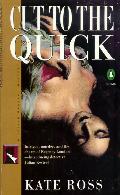
Book Review ~ “Cut to the Quick”

cut_to_the_quickI spent a good part of the December holidays making the acquaintance of Julian Kestrel – Regency dandy, amateur sleuth, and main character in a series of mysteries by Kate Ross [alas! not unlike Jane Austen, Ms. Ross died of cancer at a young age and we have only four of these Kestrel novels to read, and re-read, and likely read again.]  I highly recommend you head immediately to your local library or local bookstore and start the first book, RIGHT NOW.  You are in for a most fabulous journey!
 

 Cut to the Quick [Viking 1993] is sort of an Agatha Christie whodunit – all the characters together in a large cavernous country house named Bellegarde, partly built in the time of Queen Elizabeth I, with winding staircases and secret passageways; an unknown woman is found dead, everyone in the house has a back story and the plot unfolds…. 

The novel begins with Julian Kestrel rescuing a very “in his cups” Hugh Fontclair from a game of hazard at a London gaming establishment. In gratitude Fontclair asks Kestrel to be best man at his wedding, though they have only just met, and as Kestrel has no idea why he is being asked, he decides to head to the country to find out why. 

Enter the characters:  Hugh Fontclair, just 21, forced into a marriage with a woman he does not know; Sir Robert and Lady Fontclair, Hugh’s parents, agreeing to the marriage but obviously hiding something; Lady Tarleton, Sir Robert’s sharp-tongued, very angry sister; Colonel Fontclair, Sir Robert’s brother, a war hero; Guy, the Colonel’s son, a likeable, ne’er do-well, often drunk rake; Philippa Fontclair, Hugh’s eleven-year old sister, immediately smitten with Kestrel; Isabelle, the orphaned cousin with hopeless feelings for Hugh; Maud Craddock, Hugh’s wife-to-be, a pawn in her father’s plans, who befriends Kestrel; Mark Craddock, Maud’s father, a wealthy tradesman shunned by the Fontclairs – but he holds all the cards; Dr. MacGregor, summoned to the house to deal with the dead body – he becomes Kestrel’s confidante and friend; Dipper, Kestrel’s manservant; and of course, the unidentified corpse … WHO is found dead in Kestrel’s bed.  As they are the unknown house quests, both Kestrel and Dipper are the prime suspects, and Kestrel is drawn into solving the crime, at first to prove his own and Dipper’s innocence and then because his sleuthing skills are far superior to anyone else’s, including the local magistrates and London’s Bow Street Runners.  Not all is as it seems at Bellegarde. 

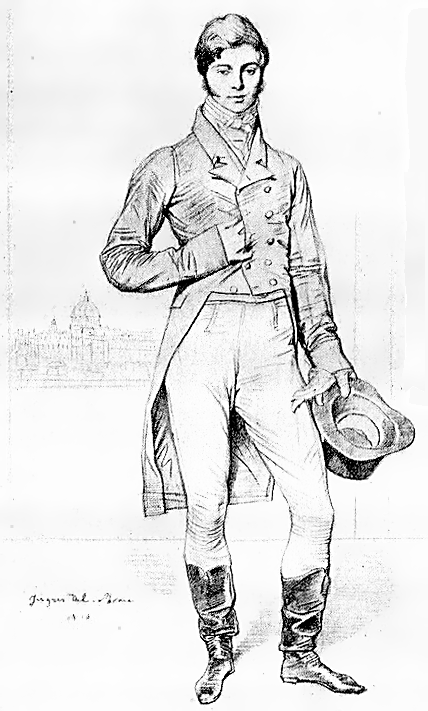
And so we are introduced to Ross’s alter ego, her young Regency dandy, the “top of the tree,” the fashionista of London’s “Quality”, where what Kestrel does (or doesn’t do) is copied by one and all: 

Kestrel had first appeared in London society a year or two ago, and hardly anything was known about him, though he was said to be related in some dubious way to a landed family in the north.  If he had been anything but a dandy, such vagueness about his pedigree would have been fatal, but of course the most spectacular of the dandies was absolved from society’s usual inquisition into breeding and birth.

 ‘He always wears black in the evening – it’s all the crack in the dandy set, and of course Kestrel, being such a howling swell, was one of the first to take it up…’

 And we learn more about his appearance through the eyes of 11-year old Philippa when she first sees him:

 She looked at him approvingly, liking him much better that the dull, handsome men [her sister] Joanna admired.  He had a dark, irregular face and hair of a rich brown, like mahogany.  His eyes were brown too, but with a green gleam about them, especially when he smiled, or was looking at you very intently.  He was slender and spare and not above medium height, but he had presence – the way royalty probably did in the old days, before it was fat and fussy and came from Germany.  He looked splendid in his clothes, and yet there was nothing showy or striking about them, except that his linen was so spotless, and everything fit him so well.  Being a dandy was not so much what you wore, Philippa decided, but how you wore it.

regency-dandy

But we quickly learn that Kestrel too is not what he seems – he has a past we only see glimpses of, his present life of apparent wealth not quite the case; he has a thief for a manservant; and he has a charm and a wit that disarms most every woman he encounters, and many of the men as well.  His integrity is never in doubt – he is honest and true, and he can read others with little fuss – in short, the perfect objective detective [even his name is telling!] – he is another Peter Wimsey, Adam Dalgliesh, Alan Grant, Roderick Alleyn – all themselves a mystery to draw the reader in, but here with the setting of Regency England.  And in each book, Ross gives out a few tidbits of information about him: see how much we discover about him from this description of his home:

 Julian Kestrel lived in a first-floor flat in Clarges Street.  The ceilings were high, and the windows large.  The walls were painted ivory.  The mahogany furniture was handsome but not too plentiful; Julian hated clutter.  Here and there were keepsakes he had picked up on his travels:  a Venetian glass decanter, a Moorish prayer rug, a marble head of a Roman goddess, an oil painting of the Tuscan hills.  Crossed rapiers hung over the mantelpiece; they looked ornamental, but closer inspection revealed they had seen a good deal of use.  A small bust of Mozart occupied a place of honor by the pianoforte.  Under the piano was a canterbury full of well-worn sheets of music.

 And Ross showcases the Regency in all its glories – it helps to know something of the period (the Regency Lexicon is most useful!), as she weaves her story through country roads, in carriages and coaches, in London’s streets, the architecture of the houses, the description of the fashions, the elegant social life – it is all here.  And did I mention that this is a MYSTERY?? – it is deftly drawn, Ross a master of characterization and plot.  No more on that score, as you must just read the book! But as for me, I am on to the next, Broken Vessel, another mystery with hopefully a few more facts about Kestrel and I will continue my reviewing henceforth!

4 1/2 full inkwells (out of 5)

Books · Jane Austen · News · Regency England · Social Life & Customs

Regency Christmas Anthology ~ an e-book

I append this post from another blog:  the We Write Romance Blog

A Regency Christmas Anthology  by Carolynn Carey 

When, in the spring of 2008, I was offered the opportunity to submit a novella for a proposed Regency Christmas anthology, I was delighted. After all, I love the Regency period, and I love the traditions of Christmas.

But I realized, of course, that tremendous differences exist between Christmas as it was observed in England in 1816 and Christmas as we celebrate it in America today. I immediately understood that I needed to do considerable research into the traditions of a different time and a different culture.

Fortunately, since I’ve had a long-time interest in the Regency period, I already possessed quite a few research resources. I delved into my files and soon found myself learning about the Christmas traditions during the Regency period. This in turn led to my writing a story called “A Tradition of Love” about Alethea, who adores Christmas, and her new husband, Robert, who says he has no time for trivialities such as Boxing Day, the Wassail Bowl, the Christmas Candle, the Yule Log, and Christmas Dinner. With just three weeks to go before Christmas Eve, Alethea struggles to find a way to teach her solemn husband to accept help with his responsibilities and to join her in creating their very own Christmas traditions. 

 “A Tradition of Love” is one of four novellas that make up the anthology entitled A Cotillion Country Christmas, to be released December 4, 2008, as an ebook by Cerridwen Press. The first story, “A Christmas Surprise” by Cynthia Moore, features Clara, who has loved Julian since she first saw him at a debutante ball in London. Several years later, Julian is forced to marry Clara because of gambling debts. After traveling to India soon after their marriage, Julian is now returning home for the holidays and Clara uses the magical spirit of Christmas to her advantage.

 Amy Corwin is the author of “Christmas Mishaps” in which the magic of Christmas transforms a series of misfortunes into a gift of love for Caroline Bartlett. Now it is up to her to overcome her mistrust of the unexpected offer from a younger man. 

 And Barbara Miller’s “Country House Christmas” tells the story of Diana Tierney, who is so caught up in the past mystery of why Richard Trent was shipped off to war that she doesn’t realize he is coming to love her as much as she has always loved him. 

Books · Collecting Jane Austen · Jane Austen · Regency England · Social Life & Customs

Jane Austen’s Christmas

In my email today, the latest newsletter from the Jane Austen Centre in Bath:  see this link to an article on “Christmas Day with the Austen Family.”

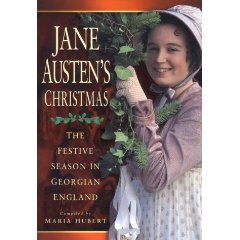
jachristmas-coverAnd on my bookshelf … I highly recommend the book Jane Austen’s Christmas:  the Festive Season in Georgian England, compiled by Maria Hubert [Sutton Publishing, 1996] (the book is out of print: search at www.biblio.com or www.abebooks.com; available copies are mostly in the UK). 
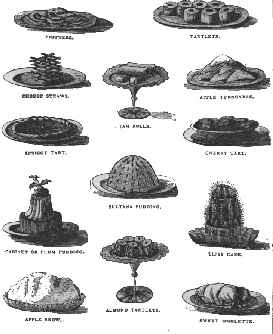
Hubert offers a mix of selections from Austen’s novels and letters, and from other contemporary writers; there are poems about Christmas, along with games and dances and recipes ~ all accompanied by black and white illustrations from various sources.  It is a must-have addition to your Austen collection. 

You can visit this link at The Christmas Archives for a few excerpts from the book, as well as information on several of the author’s other books on Christmas (Shakespeare’s Christmas; Brontes’ Christmas; Christmas in Wartime are a few examples.]

Here is one of the excerpts ~ a recipe for

BLACK BUTTER

Black Butter would have been a novel recipe indeed, which one of the Austen’s wide circle of seafaring family and friends might have brought them.


Take 4 pounds of full ripe apples, and peel and core them. Meanwhile put into a pan 2 pints of sweet cider, and boil until it reduces by half. Put the apples, chopped small, to the cider. Cook slowly stirring frequently, until the fruit is tender, as you can crush beneath the back of a spoon. Then work the apple through a sieve, and return to the pan adding 1lb beaten (granulated) sugar and spices as following, 1 teaspoon clove well ground, 2 teaspoons cinnamon well ground, 1 saltspoon allspice well ground. Cook over low fire for about ¾ hour, stirring until mixture thickens and turns a rich brown. Pour the butter into into small clean jars, and cover with clarified butter when cold. Seal and keep for three months before using. By this time the butter will have turned almost black, and have a most delicious flavour.

beetonxmasdesserts1

Copyright Maria Hubert von Staufer March 1995

[I will be posting more on the holidays in Jane Austen’s time after our tea this weekend!]

Books · Jane Austen · News

Tidbits of the week… All Things Austen

The Central New Jersey JASNA Chapter posts about the Christmas celebration: “A Jane Austen Christmas: Vignettes of Customs and Traditions,” which will include “holiday recreations as inspired by the writings of Jane Austen.” On December 10 at 7 p.m., Margaret C. Sullivan [author of AustenBlog] will speak about Christmas traditions in Jane Austen’s time and sign copies of her book, The Jane Austen Handbook: A Sensible Yet Elegant Guide to Her World.  [Click on the Chapter link for more information.]

The Dolphin Hotel, home to Jane Austen’s various balls when she lived in Southampton, is on the market.  See this article in The Daily Echo.co.uk

Lady Helga continues her Golden Couple’s Series ,  this week with Emma and Mr. Knightly.

 A new collection of Elizabeth Bowen’s essays includes her words on Jane Austen; read this review of the new book People, Places, Things: Essays by Elizabeth Bowen, edited by Alan Hepburn  [Edinburgh, December 2008]

bowen-people-cover

Another Georgette Heyer review at Jane Austen TodayThe Reluctant Widow; and also one for Simon the Coldheart

A few bits of Austen movie trivia at the Becoming Jane Fansite:  Hugh Grant too handsome for Edward Ferrars??  of course he was!

A few blog posts on Regency weddings:  at Historical Romance UK and at Jane Austen’s World

The author of the blog Jane Austen, Here I Come! is sharing all her plans for a trip to England and Austen country in May 2009.  The blog has some great links for planning your own such itinerary as well…

 A graphic design blog has created two Jane Austen book covers, for Emma and Pride & Prejudice

On the blog History Hoydens, Kathrynn Dennis posts on  “Mending the Bodice”  and how the term “bodice ripper” came into common use as a derogatory reference to romance novels.  There is also an excellent post on this same topic at the Teach Me Tonight blog, as well as a good number of thoughtful comments.

Here is an interesting bit of news that restores my faith in all things technical (I think, anyway … I will forever favor a real book to touch!), but Nintendo has announced the release of its 100 Classic Book Collection, available December 26 in the UK, which features an initial 100 classic books to read from, with 10 additional books available for download from Nintendo Wi-Fi Connection. A bookmark feature allows you to save your place in a book, and a suitability feature similar to Cooking Guide allows you to select a novel based on time constraints and subject matter.   See this article at N-Europe for information and a listing of the 100 titles:  all of Austen’s works are included, as well as many of Shakespeare, Dickens, the Brontes, Hardy, Hugo, Alcott, Stevenson, Trollope, Burnett, Twain, and many more.  If this is the way to reach young readers, I am all for it!

The JASNA site has added a map of Bath to its “Maps of the Novels” page, as well as the full-text online of Persuasions No. 6  (St. Louis, 1984 and largely on Persuasion).  Check the Table of Contents for this early and hard-to-find JASNA journal.

And finally, as Jane Austen’s birthday on December 16th is fast approaching, the Becoming Jane Fansite is requesting anyone who would like to submit birthday wishes or gift ideas for Jane to their site prior to December 16, when they will post all submissions.

Book reviews · Books · Regency England

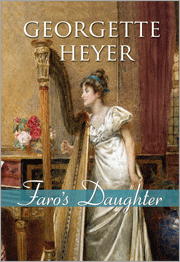
Book Review ~ “Faro’s Daughter” by Georgette Heyer

 I’ve said it before – I am not an Austen sequel’s reader or a romance reader.  I wrote about the Chicago AGM and my delight in the evening on Romance and have since been a regular reader of the “Teach me Tonight” blog.  As soon as I returned from Chicago,  a quick run to the local used bookstore that stocks romances sent me home with all of the novels of Eloisa James’s Desperate Duchesses” series.  The first was a quick and enjoyable read – the rest await my time!

 So with this intro, it is easy to confess that Jane Austen lover that I am, as well as all things English and Regency, I have never read ANY Georgette Heyer (is this perhaps slightly worse than my previous admission that I am a NY Yankees fan?…)  and not that I haven’t wanted to…. She has been on my to-be-read list for years, and among some great company, but I’ve never been sure where to start.  So I was thrilled to receive a review copy of Faro’s Daughter, originally published in 1941 now reprinted by Sourcebooks, and have finally begun my Heyer journey, and what a delightful beginning!

faros-daughter-cover


Deborah Grantham (called Deb, so perhaps I am taken in immediately!), is an independent, feisty, level-headed, take-no-prisoners, absolutely beautiful heroine – living with her Aunt, Lady Bellingham, who runs a high-society London gaming establishment and is presently in serious financial straits.  Here is Deb as we are first introduced:

 ...a tall young woman with chestnut hair, glowing in the candlelight, and a pair of laughing, dark eyes set under slim, arched brows.  Her luxuriant hair was quite simply dressed, without powder, being piled up on top of her head, and allowed to fall back in thick, smooth curls.  One of these had slipped forward, as she bent over the table, and lay against her white breast… the lady’s eyes were the most expressive and brilliant…. ever seen.  Their effect upon an impressionable youth would…be most destructive.

 Several suitors seek her favor, the young Lord Adrian Mablethorpe and the older, odious Mr. Ormskirks.  The book begins with a Mr. Ravenscar  visiting his Aunt, Lady Mablethorpe, Adrian’s mother, who is in a near apoplectic state over Adrian’s wishes to marry Deb; Lady M wishes her nephew to prevent this at all costs, and from here the plot is in motion and the fun begins – a fast-paced, highly amusing high-jinx comedy of manners – the insults and name-calling and behaviors suiting neither a Regency lady nor a proper gentleman run rampant – and I can tell no more, no spoilers here!

Similarities to Pride & Prejudice abound:  Deb is not unlike Lizzie Bennet – she speaks her mind, she reacts strongly to insults to her character and social standing (though she goes to quite unlady-like lengths to exact her revenge!) and she is a caring niece, sister and employer…. and of course those “dark eyes” !…. ; there are moments of Mrs. Bennet in both Lady Bellingham and Lady Mablethorpe (Oh! my nerves!); Miss Ravenscar as an interesting mix of Georgiana Darcy and Lydia Bennet; young Adrian needing advice much like Mr. Bingley; and Ravenscar who makes his entrance on page one: 

...very tall, with a good pair of legs, encased in buckskins and topboots, fine broad shoulders under a coat of superfine cloth, and a lean, harsh-featured countenance with an uncompromising mouth, and extremely hard grey eyes. His hair, which was black, and slightly curling, was cut into something perilously near a Bedford crop

... so is Max Ravenscar our Darcy, or a Willoughby ? or even a Wickham?

But there are also similarties to Eloisa James’s Desperate Duchesses (perhaps because it is still fresh in my mind, or likely because they all follow a basic formula) – in both books we see gaming strategies, the tensions, sexual and otherwise, the characters of Ravenscar and the Duke of Villiers both made of the same cloth.  It is clear that you have been to this place before, but that’s fine ~ it’s a great place to visit!

Filled with Regency terminology and slang, card games and some well-described female and male fashions (and fashion faux-pas!) – have your Regency dictionary close at hand [see this online Regency Lexicon for starters.]  Heyer weaves her knowledge of late 18th– early 19th century London:  the streets and squares (St. James, Brunswick Square, Grosvenor, Brook St, Vauxhall Gardens), all manner of carriages; card games; horse-racing and betting; the male clubs Brookes’s and White’s; the world of the “good ton” and the not so good; the vulnerability of females – at the mercy of their parents maneuverings, their need to marry for financial security, the risk of social ostracism for not following the “rules.”

Heyer is brilliant at presenting these regency realities with a plot that though predictable, (you don’t need to be a romance reader to know where this is headed from page one!) is so entertaining and the heroine and her sidekicks so engaging, the plot so outrageous within the social confines of the time, that I am not sure when I last read a book I just had to finish RIGHT NOW.  Just not sure what to pick up next!  Are they all this much fun? …  so I seek any suggestions and recommendations from the greater world out there of seasoned Georgette Heyer readers.  Can I really have gone through my life thus far without having read a single one of her books?  I am shamed!


Further reading:  there is a wealth of information on Heyer, both in print and online… I append a few sources for your perusal ~ it is just a beginning…

Reference books (see the bibliography listed in online resources; I list here just a few must-haves)

  • Georgette Heyer’s Regency World, by Jennifer Kloester [2005, already out-of-print; newly published by Arrow 2008 in pb]
  • Georgette Heyer’s Regency England, by Teresa Chris [London, 1989] ~  impossible to find at an affordable price.
  • The Regency Companion,  by Sharon Laudermilk and Teresa L. Hamlin [Garland 1989] – ditto
  • The Private World of Georgette Heyer, by Jane Aiken Hodge [1983] ~ the biography, available from used bookshops.
  • Georgette Heyer: A Critical Retrospective, by Mary Fahnestock-Thomas [PrinnyWorld Press, 2001] ~ includes Heyer’s short published pieces, reviews of her books, obituaries and responses, and critical articles and books – an indispensible resource.

 Further Reading: online

Blogs either reviewing or chatting about Heyer are too numerous to list… but here are a few:

Jane Austen · News · Regency England

Weekly Round-Up…All Things Austen

Austenprose celebrated its first anniversary this week… so we offer hearty congratulations to Laurel Ann for her consistently insightful “musings” with hopes that she shall continue to enlighten us every day with her “celebration of the brilliance of Jane Austen’s writing.”  It has been an especially fine month of Gothic doings delving into the hidden crannies of Northanger Abbey… 

Jane Austen’s World was selected for two blog awards… 1) Elizabeth from Scandalous Women, and

2)  Alyssa Miller from The Love Coach,  (who also selected Austenprose)…these are both great literary blogs to add to your favorites; and then link to Jane Austen’s World to see her choices for best blogs (hint:  Ms. Place most kindly chose JAIV … so thank you Vic!  I now need to select my own 15 favorites…so stand-by for that!)

AustenBlog has posted information on Sue Forgue’s online Regency Encyclopedia, a first-stop resource for all things Regency, geared toward fan-fiction writers.  The site is searchable and browse-able by subject and includes interactive maps, book lists and links to online resources.   Go to Austenblog for the information and user password that Mags provides.  Expect to be visiting the site for at least the entire weekend… !  I have just taken a fabulous tour through Regency London….and am now perhaps off to Bath…


Jane Odiwe shares one of her watercolors of Austen based on the Cassandra sketch, as well as a few words on the Chawton Cottage and gardens.

Here’s a new one…a horse named Jane Austen won big in the the latest Irish racing event.  Read all about it here at the independent.ie

Ellen Moody’s blog on her latest readings on Austen life and works, along with some lovely pictures of Steventon and Chawton.

Two patterns for cross-stich samplers with Jane Austen quotes can be found at Pattern Mart; click here for the second pattern.

Sunday, November 2, 2008, a lecture at the Princeton Branch of the English Speaking Union on “The Facts and Fictions of Jane Austen”by Elizabeth Steele, the regional coordinator of the Eastern PA JASNA Chapter.  See the article and website for more information.

Paul Johnson at the Spectator.uk writes on “Jane knew All about a Banking Crisis”, giving some history of Jane’s knowledge of banking issues through her brother Henry’s mostly disastrous banking experiences.  But see Jezebel where she sounds off on just being plain exhausted with seeing Jane Austen’s name linked to EVERYTHING going on in the world!  (I heartily concur!)

See the Regency World of author Lesley Anne McLeod blog  for information on a new contest offering the out-of-print book “Everybody’s Historic England” :  the contest begins October 31…. there are also several new additions to her website.

See this Architect Design blog post about the 2006 BBC movie about Beau Brummell, the Regency dandy…starring the always fabulous James Purefoy (Vanity Fair, Rome, he also played Tom Bertram in the newest Mansfield Park); however did I miss this one??

Lady Helga at her Jane Austen PodNovel blog has hit the 50 mark, i.e. her 50th show…stay tuned for her next podcast! [she has been reading P&P]

 This of interest to those in New England:  an interactive touring map linking you to the websites of stores specializing in children’s books in the New England area [the map is at the site of the the New England Children’s Bookselling Advisory (NECBA)]  My favorite shop here in Vermont is the Flying Pig Bookstore in Shelburne.

For you lovers of Patrick O’Brian, click on the following link for POB’s Riches, a listing of (nearly) all the literary (and non-literary) quotations and allusions in O’Brian’s books. [with thanks to an alert Janeite who posted this on the Janeites discussion group]…. in a very cursory browse, I find only one direct quote to Jane Austen, though we know he loved her dearly.  And speaking of Mr. O’Brian, I have recently added to my bookshelf “Lobscouse & Spotted Dog” a gastronomic companion to the Aubrey/Maturin novels, by Anne C. Grossman and Lisa G. Thomas [Norton, 1997], and will be brushing up on my Whipt Syllabub [page 26], as Jane would be pleased…

For a little much needed humor, here are the rules for “The Jane Austen Drinking Game” created by Mostly Water Theater.  Click on the YouTube link for their rendition of the game while viewing Sense & Sensibility.

Book reviews: I link you to only one this week…(more to come I promise): Ms. Place on Mansfield Revisited.

And I end this post, it being Halloween, I give you a fine post by Ms. Place on some Halloween happenings at Jane Austen Today… see also her link to the History of Halloween.