I have been reader of Austen for many years; was re-introduced when my daughter was in college and reading "Emma" and I read it along with her, and thus re-discovered Austen with a whole new appreciation! Happily my daughter, Jess, "got" that "Emma" was quite funny, the only one to do so in her class, I might add.
I re-read the books periodically and find them a tonic for the soul, as well as the best gauge of humanity I have ever encountered....and the humor helps immensely (not to mention Darcy!) My favorite book is Persuasion, I find Fanny the truest of feminists, NOT the major milktoast of all fiction characters, Elizabeth is a delight, and I often forget that these people ARE NOT REAL!
I have a group of friends scattered around New England who gather together several times a year to discuss books, most often Austen, as she is really the anchor (all due to the delightful, wonderful Ingrid G. of New Hampshire, who started this all many years ago with a weekend at Pinkham Notch at the base of Mount Washington in NH with a workshop "I'd Rather be Reading Jane Austen"!)...we call ourselves the Wild Women, but really, how can that be possible, trekking about the White Mountains, sipping tea and conversing about Austen!
And it all helps that I have a used bookstore called Bygone Books, now only an online presence. Every booklover's dream is to own a bookstore....and I challenge each and everyone of you to try it for a week!
I am currently the Advisory Chair for the JASNA-South Carolina Region. I post information about both this region and the JASNA-Vermont Region and its events on this blog.
Watching the Christies auction live! – the James Stanier Clarke Friendship Book with the illustration [as speculated] of Jane Austen had a highest bid of just £28,000 [estimate was 30,000 – 50,000]
Charles Dickens, A Christmas Carol. 1st ed, 1st state: £2800 [hammer price]
Samuel Richardson, Pamela. 1st ed.: PASS
Shakespeare and John Fletcher, Two Noble Kinsman. £26,000 [hammer price]
BUT, there was money passing hands at this auction ~ note this item!
MERIAN, Maria Sibylla (1647-1717). Blumenbuch. Nuremberg: Johann Andreas Graff, 1675-1677-1680.
Estimate: £60,000 – £90,000 ($98,100 – $147,150)
Price realized:£470,000 [ £565,250 ($924,184) with buyer’s premium]
Together, 3 fascicules, 2°. 2 leaves of letter-press text and 36 engraved plates COLOURED BY A CONTEMPORARY HAND, numbered in the plate 1-12, 14-124, 1-12, including an engraved title-page with a different elaborate botanical border as plate 1 to each fascicule. Watermarks: tower with counter-mark ‘S H’ (pts. 1 and 2); coat-of-arms of Amsterdam (pt. 2); crowned double eagle with pendant ‘4 S H’ (pt. 3). Plates trimmed to plate edge (208 x 150mm) and tipped onto modern paper mounts (305 x 221mm), text leaves trimmed to type-area; loose in modern marbled paper folding box (upper joints split). An 18th-century German hand has added numbering (sometimes on the plate) and German plant-names, now mounted as caption labels beneath each plate, the register also annotated, 19th-century manuscript title-page in German. Provenance: the von der Osten family, Schloss Plathe, Pomerania, and by descent; nationalised by the DDR, transferred to the state archive in Potsdam, and subsequently restituted to the family.
A REDISCOVERED, APPARENTLY UNIQUE COPY, FINELY COLOURED, OF THE TRUE FIRST EDITION OF MERIAN’S FIRST AND RAREST WORK. The Blumenbuch was issued in 3 parts consisting of 12 plates each in 1675, 1677 and 1680, respectively. In 1680 also appeared a composite issue of all three parts newly entitled Neues Blumenbuch and 2 leaves of text containing an introduction and a register of plant names. The present copy conforms to the first edition, issued as 3 fascicules, with individual title-pages dated 1675, 1677 and 1680. Furthermore, the watermarks conform to the Bern copy of the 1675 and 1677 fascicules. NO OTHER COMPLETE COPY OF THE FIRST EDITION IS KNOWN. It is highly likely that it was acquired at or close to the time of publication by a von der Osten ancestor and has been in the family ownership for the subsequent 3 centuries. In c. 1900 it is recorded in the only surviving catalogue of the family library as being trimmed and mounted on loose sheets. Interestingly, several scholars have noted that the work seems to have remained in loose sheets for considerable periods; it is possible that the present copy was never bound.
The colouring in the present copy closely resembles that in copies considered to have been done by Merian herself (Dresden, London). If not by Merian, it is certainly by an accomplished contemporary artist, as is the Bern copy. In the introducton Merian states that she has produced the work as a model book, providing patterns to be copied in paint or embroidery. She thus joins a long tradition of florilegia serving this purpose. She also outlines briefly ‘tulip fever’ and the price of 2000 Dutch guilders paid for a single tulip, Semper Augustus. The plates for the Blumenbuch were not re-issued in Merian’s lifetime, but were reworked with the addition of insects for a 1730 edition, Histoire des Insectes de l’Europe. THE BLUMENBUCH IMAGES ARE THUS THE RAREST OF MERIAN’S PUBLISHED IMAGES.
Only five copies of individual fascicules survive: Vienna (pt. 1, ?lacking pl.2); Bern (pts. 1 and 2 [lacking II:12]); and Nuremberg (pt. 3, lacking pls. 8, 11, 12). Of the 1680 Neues Blumenbuch only 6 copies (3 with contemporary coluring) are known, in addition to a unique copy of coloured counterproof plates sold in Christie’s rooms in 2000. Blunt & Stearn, pp. 142-46; Nissen BBI 1340.
Copyright @2011 by Deb Barnum, of Jane Austen in Vermont
The title of the second book in the Chawton House Library / Honno Press Jane Austen Short Story Award has been announced – the anthology will be released November 17, 2011. Title? Wooing Mr. Wickham. [alas! – no cover image yet]
This year’s collection, which follows on from the huge success of the inaugural award set up in 2009 to celebrate the bicentenary of Jane Austen’s arrival at Chawton, takes as its point of inspiration the heros and villains in Jane Austen’s books. [from the Honno Press Newsletter]
This year’s Chair of the Judges is novelist Michele Roberts, who will write the introduction to the anthology. Ms. Roberts is the author of twelve highly acclaimed novels, including The Looking Glass and Daughters of the House, which was short-listed for the Booker Prize and won the W.H Smith Literary Award. You can learn more at the Michele Roberts website.
Wooing Mr. Wickham is available for pre-order at WHSmith – or wait until it is available through either Chawton House Library or Honno Press directly.
Copyright @2011 by Deb Barnum. of Jane Austen in Vermont
Christie’s Sale 8021: Valuable Printed Books and Manuscripts 8 June 2011
London, King Street
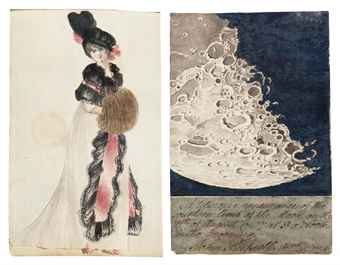
[Jane Austen? by James Stanier Clarke]
James Stanier Clarke’s Friendship Book will be auctioned off tomorrow, June 8, 2011 at Christie’s London. Clarke was the Prince Regent’s librarian at Carlton House – he famously invited Jane Austen to visit, requested her to dedicate her next book to the Prince [Emma], and carried on a lively correspondence with Austen – thankfully these letters survive to give us a rare insight into Austen’s own view of her talents.
This collection of Clarke’s watercolors is of interest to Jane Austen followers because it includes the portrait of a young woman, purportedly Jane Austen, as based on the research of Richard Wheeler [see: Richard James Wheeler, James Stanier Clarke: His Watercolour Portrait of Jane Austen Painted 13th November 1815 in his “Friendship Book.” Kent: Codex, 1998].
There remain questions that this is indeed Austen – as there are only two known portraits, the small sketch by Cassandra in the National Portrait Gallery that all other “imaginary” portraits have been modeled on (and which family members said was not nearly a good likeness of her), and the second watercolor, also by Cassandra, offers us only a rear view – we are left with wanting more – what did she look like?!
To get a great overview of the study of this possible Jane Austen image, please read this article by former JASNA President and Austen scholar Professor Joan Ray in Persuasions 27 (2005 ) [and co-authored by Richard James Wheeler] – you can find it here in a pdf file: http://www.jasna.org/persuasions/printed/number27/ray-clarke.pdf
Read below from the Christie’s Auction Catalogue for the description of the other watercolors in Clarke’s book. The Austen portrait however is the main selling feature, and the catalogue does tell the tale of Austen’s famed visit to Clarke at Carlton House on November 13, 1815.*
James Stanier CLARKE (?1765-1834). Album amicorum, 1791-1804 and n.d., comprising approx 47 drawings and watercolours of portraits, figures, landscapes, maritime scenes and other subjects, including (f.53) a watercolour portrait of an elegantly-attired young woman bearing a muff which has been identified as a PORTRAIT OF JANE AUSTEN (perhaps executed by Clarke himself on the occasion of their meeting, 13 November 1815), as well as contributions by George ROMNEY (the temple of Fame atop a mountain, with a 5-line verse, 2 July 1792), John FLAXMAN (unsigned, a wash drawing of a seated young woman and two children), John RUSSELL (‘A telescopic appearance of the southern limbs of the Moon on the 7th of August 1787’, the inscription dated 1796), William HODGES (wash drawing and verse, 1794), an anonymous portrait of the future Queen Caroline, possibly by Clarke himself (as chaplain on the Jupiter on which she sailed to England in March/April 1795), and 12 sketches closely related to Nicholas Pocock’s illustrations for Clarke’s 1804 edition of William Falconer’s The Shipwreck: A Poem, together with 16 silhouettes and an engraving; and manuscript contributions including by William COWPER (‘I were indeed indifferent to fame Grudging two lines t’immortalize my name’, Weston-Underwood, 28 October 1793), William Hayley (1792), Johann Kaspar Lavater (1792), Charlotte Smith (1793), Anna Seward (poem to Clarke, 12 lines) and Thomas Masterman Hardy (‘late Capt of the Mutine’).
Physical description: Approx 47 inscriptions and 12 cut signatures, 109 leaves, oblong 8vo (99 x 157mm), (some leaves weak at inner margin), green morocco gilt, lettered on spine ‘Sacred to Friendship J.S.C.’; remains of marbled-paper slipcase.
Provenance: Richard Wheeler — by descent to the present owner. Perhaps the best-known incident in the life of James Stanier Clarke took place on 13 November 1815, when, as chaplain and librarian to the Prince Regent, he showed Jane Austen around Carlton House: it was he who passed on the proposal that resulted in Emma being dedicated to the Prince, and who famously suggested, in their ensuing correspondence, that Austen devote future efforts either to a portrait of ‘an English Clergyman … of the present day’ or to a ‘Historical Romance illustrative of the History of the august house of Cobourg’. Richard Wheeler, in James Stanier Clarke, His Watercolour Portrait of Jane Austen (1998), makes a forceful case, based in particular on comparison of facial measurements with other Austen portraits and on dress, for the identification of the portrait in the present album with the novelist. The other entries in the album are marked by a close early association of Clarke with the circle of the poet and biographer William Hayley at his estate at Eartham in Sussex; by a tour to Germany and Switzerland in 1792; and by his association with the navy which was to colour his life from 1795 onwards, even after his appointment as domestic chaplain to the future George IV and, from 1805, librarian of Carlton House.
Estimate: £30,000 – £50,000 ($49,260 – $82,100)
*****************************
Alas! – once again outside my range! – one wonders what will happen – the 2007 auction of the Rice portrait, another hoped-for likeness of Austen, did not fare so well – it did not sell…
3. Chris Viveash. James Stanier Clarke: Librarian to the Prince Regent, Naval Author, Friend of Jane Austen. Winchester: Privately Printed / Sarsen Press, 2006.
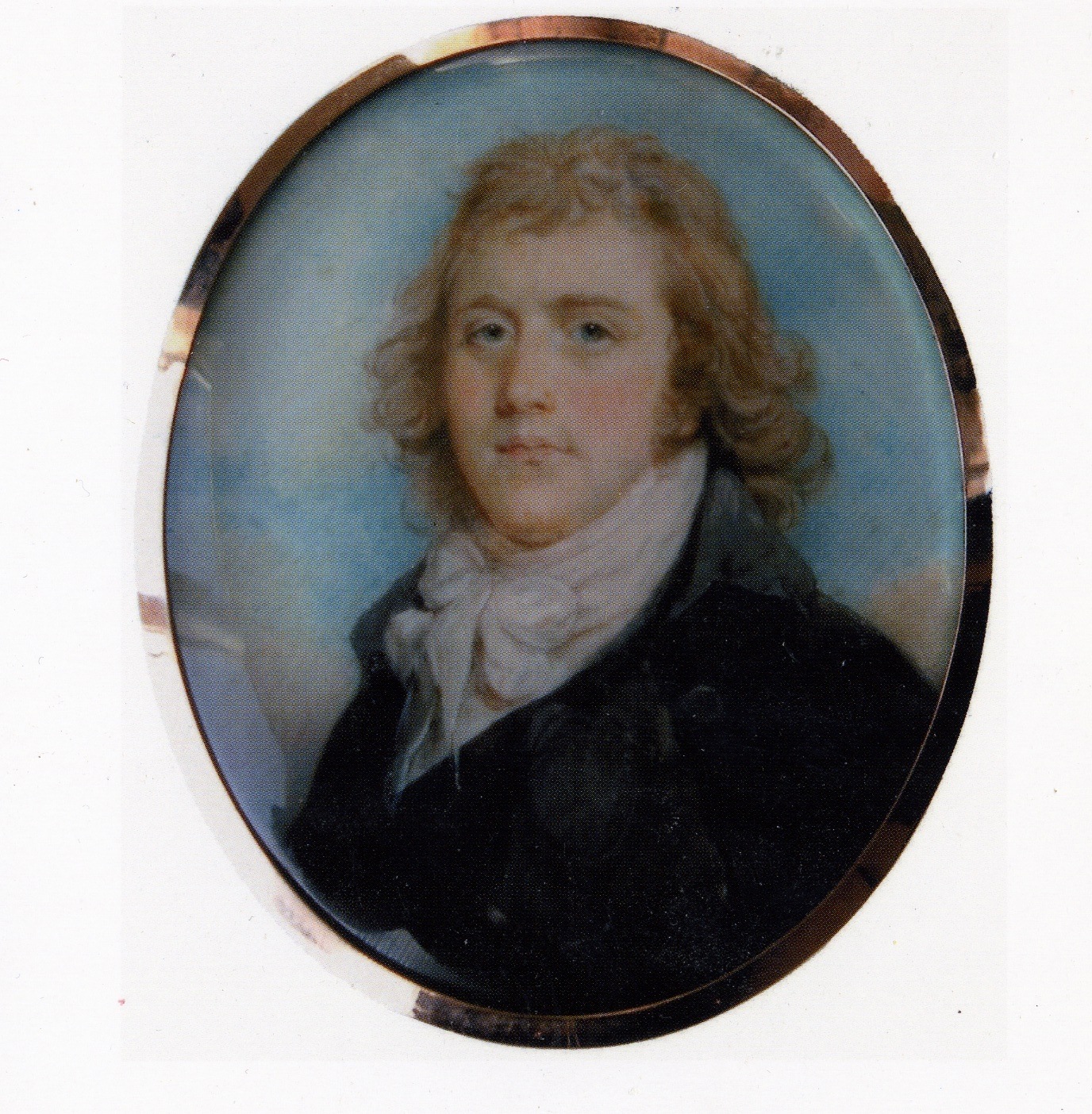
[Image: James Stanier Clarke, courtesy of Austenonly]
Copyright @2011 by Deb Barnum, of Jane Austen in Vermont
9 June: Volume 1 Letter 21- Volume 2 Letter 6 (21-37)
16 June: Volume 2 Letter 7- 22 (38-53)
23 June: Volume 2 Letter 23- Volume 3 Letter 9 (54-71)
30 June: Volume 3 Letter 10-23 (72-84)
4. In the UK: The Jane Austen Regency Week [ June 18 – June 26, 2011], celebrating the time Jane Austen spent in Alton and Chawton, is sponsored by the Alton Chamber of Commerce – website with event information here: http://www.janeaustenregencyweek.co.uk/index.html
5. As part of the above Regency Week celebration, the Chawton House Library will be hosting tea, talk, and tours on June 21st and 23rd : http://www.chawton.org/news/
6. Two posts on the British and their lovely habit, the drinking of tea: at Mary Ellen Foley’s Anglo-American Experience blog:
– but as one gentleman on one of the listservs I subscribe to so eloquently said: “Oh yeah Naipaul, how many movies have been made from YOUR books, huh?”
2. Vauxhall Gardens, by David Coke and Alan Borg: http://www.vauxhallgardens.com/ – the book is to be published by Yale University Press on June 8, 2011
3. Jane Austen: Two Centuries of Criticism, by Laurence Mazzeno. Camden Press, 2011:
1. This one deserves repeating: The Jane Austen Music Transcripts Collection at Flinders Academic Commons, transcribed by Gillian Dooley [this is a wonderful resource, most all from Austen’s music manuscript notebooks]: http://dspace.flinders.edu.au/dspace/handle/2328/15193
2. William Godwin’s Diary: Reconstructing a Social and Political Culture, 1788-1836: http://godwindiary.politics.ox.ac.uk/ [husband to Mary Wollstonecraft, Mary Shelley’s father, Austen’s time]
* I hope to return to doing a weekly update of various Austen-related discoveries – so much out there – so little time – one must set aside some time for BOOKS, don’t you think??
Copyright @2011 Deb Barnum, at Jane Austen in Vermont
A reminder about our JASNA-Vermont event, tomorrow June 5, 2011 from 2-4 pm!
~The Musical World of Jane Austen ~
with
Dr. William Tortolano
Dr. Tortolano is Professor Emeritus of Fine Arts at Saint Michael’s College and an internationally-known expert on Gregorian Chant. A forty-seven year faculty member at the college, he leads a busy “non-retirement” life as educator, concert organist, church musician, editor, author and director of Gregorian Chant workshops. He will be presenting a short lecture on the music of Jane Austen’s world, followed by an organ / piano recital of works
she would have known and heard:
Froberger, Pachelbel, Handel, Mozart, Purcell, Gluck and more…
If you love English Country Dance, then Burlington Vermont is the place to be this summer!
There are two English Country Dance classes that are being offered:
This first one is through the UVM OLLI program [ Osher Lifelong Learning Institute ]:
English Country Dancing in Jane Austen’s World Instructor: Judy Chaves Date: Monday, July 11, 6-8pm Location: Ira Allen Chapel at UVM Price: Members – $20 / Non-Members – $30
Do you enjoy 19th-century British literature? If you’ve ever read any of Jane Austen’s novels or seen any of the recent film adaptations, English country dance plays a prominent role in the culture of the time. The forerunner of American contra dance, English country dance is done in two facing lines (sometimes in squares, less often in circles) and requires no more than a knowledge of left from right and the ability and willingness to move to simply wonderful music. Through a combination of lecture (not much) and dance (as much as we can), you’ll learn the basics of the dance, gain an insider’s appreciation of the vital role it played in the lives of Austen’s characters, understand the etiquette and logistics underpinning Austen’s dance scenes–and have a great deal of fun in the process. You may come by yourself or as a couple!
****************
Judy is also teaching a series of classes in Charlotte, VT…
at the Charlotte Senior Center, Wednesdays from 4:30 to 6 pm, starting on July 22 and running for 5 weeks. It will be geared for beginners. Come with or without a partner. Cost is $45 and registration is required. Call 425-6345 to register.
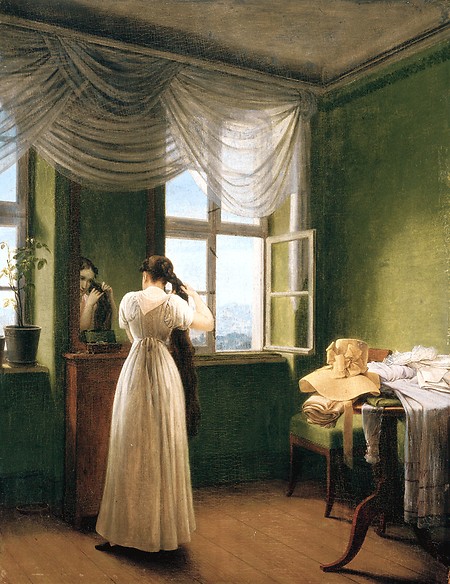
When I travel, and when I have the good sense to have my camera with me, I most often take pictures of windows and doors – I am fascinated by these architectural details. But when I return, my husband invariably laments the lack of PEOPLE in my photos, completely bored by the endless stream of such details on rarely identifiable buildings! I often don’t disagree! – but I cannot help it – even as I look around my house, most of the artwork depicts windows and doorways, looking in and looking out. This says something about me psychologically I would suppose, but I needn’t go there today!
This exhibition focuses on the Romantic motif of the open window as first captured by German, Danish, French, and Russian artists around 1810–20. These works include hushed, sparse rooms showing contemplative figures, studios with artists at work, and window views as sole motifs. The exhibition features some thirty oils and thirty works on paper by, among others, C. D. Friedrich, C. G. Carus, G. F. Kersting, Adolph Menzel, C. W. Eckersberg, Martinus Rørbye, Jean Alaux, and Léon Cogniet. Loans to the exhibition have come from museums in Germany, Denmark, France, Austria, Sweden, Italy, and the United States.
Murder will out …. Taking a slight detour from the usual Jane Austen and Regency Period fare here at Jane Austen in Vermont, I shall alert you today to the website The Westminster Detective Library.
Hosted by McDaniel College in Westminster, Maryland:
It is the mission of the Westminster Detective Library to catalog and make available online all the short fiction dealing with detectives and detection published in the United States before Sir Arthur Conan Doyle’s “A Scandal in Bohemia” (1891).
We have posted our working bibliography and will add full-text copy of its entries as we prepare them. We welcome comments and solicit both additional bibliographical entries and texts.
Editors: LeRoy Lad Panek Mary M. Bendel-Simso -McDaniel College
A work in progress, the site offers a short tales by Dickens, Poe, Wilkie Collins, and a good number of more obscure writers, the first story from 1834, “A Story of Circumstantial Evidence” by Daniel O’Connell. You can access the stories from the Bibliography, where you can browse by title, author, or chronologically. Stories are formatted as they may have originally appeared in a journal or newspaper, but the handy “printer-friendly” button allows the more modern full-screen view you may print out for bed-time reading, the best place for any and all detective fiction.
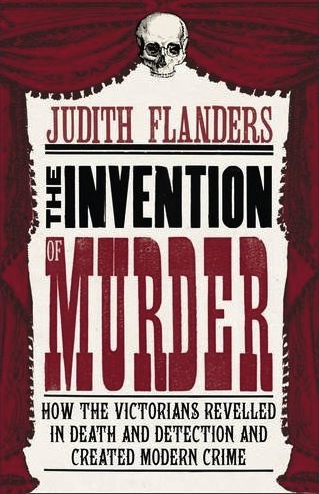
As murder seems to be on my mind [more on my escape from the elegant Regency to the dark side of Victorian London with a visit to the Sherlock Holmes Museum in a future post], I point you to a new work on just this subject: murder in Victorian Britain. Judith Flanders, author of the very enjoyable informative work The Victorian Home, as well as Consuming Passions, and A Circle of Sisters, has just published The Invention of Murder: How the Victorians Revelled in Death and Detection and Created Modern Crime:
In the nineteenth century, murder – a rarity in reality – was ubiquitous in novels, in broadsides and ballads, in theatre and melodrama and opera – even in puppet shows and performing dog-acts. As Punch wrote, ‘We are a trading community, a commercial people. Murder is doubtless a very shocking offence, nevertheless as what is done is not to be undone, let us make our money out of it.’
In this meticulously researched and compellingly written exploration of a century of murder, Judith Flanders examines some of the most gripping and gruesome cases, the famous and the obscure, the brutal and the pathetic – to build a rich and multi-faceted portrait of Victorian society. The Invention of Murder is both a gripping tale of crime and punishment, and history at its most readable.
‘Dare I say it would be a crime not to read this book?’ – Donna Leon
[Image and text from Judith Flanders website]
And so as I now appear to be obsessed with murder, I also remind you of the running of the Agatha Christie murder mysteries on Masterpiece Theatre – beginning this past Sunday with “Murder on the Orient Express“. This PBS summer series includes: (online viewing dates in parentheses following the national broadcast date)
May 22 (May 23 – Jun 5) Poirot: “Murder on the Orient Express” (Encore)
(May 23 – Jun 21) “David Suchet on the Orient Express: A Masterpiece Special” 60 min. (Encore)*
May 29 (May 30 – Jun 12) Marple: “The Secret of Chimneys” (Encore)*
Jun 5 (Jun 6 – Jun 19) Poirot: “Appointment with Death” (Encore)*
Jun 12 (Jun 13 – Jun 26) Poirot: “The Third Girl” (Encore)*
The exciting news this past week on the impending sale of the manuscript pages of Jane Austen’s The Watsons certainly sent most us into a mild depression about how unattainable such a piece is for most of us. But today, Sotheby’s has made its New York June 17th auction of Fine Books and Manuscripts available online, and I see there are several Austen titles up for sale, still perhaps unattainable for most of us, but a little more reasonable just the same… again, one can only lament how Austen struggled to earn a pittance for her labors, and how Cassandra sold all the copyrights believing that her sister’s popularity had crested as she sank rather rapidly into obscurity! Aah! Hindsight!
Here are the six lots for sale ~ you can go to the Sotheby’s website for more information on these lots and how to bid online:
Pride and Prejudice: A Novel. London: T. Egerton, 1813
3 volumes, 12mo (6 3/4 x 4 in.; 170 x 100 mm). Half-titles; light, scattered staining in all 3 vols. but withal a clean copy, a few short marginal tears in vol. 1, oxidized catchword in 1:O8, paper creased in lower right corner of 2:F1 and so printed. Contemporary mottled calf, smooth spines with gilt rules resembling chained links; spine labels lacking on vols. 1–2, vol. 1 boards detached, joints starting on vols. 2–3, craquelure on spines, minor loss to head of spine of vol. 3. 25,000—35,000 USD
LOT 50
Sense and Sensibility.London: Printed for the Author and published by T. Egerton, 1811
3 volumes, 12mo (6 3/8 x 3 7/8 in.; 161 x 98 mm). Lacks half-title in vol. 1 and terminal blanks in all 3 vols., half-title guarded in vol. 3, strong offsetting from morocco library label in vol. 1 to title-page, washed and pressed with residual foxing and staining throughout vol. 1, quires A–F in vol. 2, and quire B in vol. 3. Sympathetically bound in half mottled calf antique over marbled boards, spines in 6 compartments, russet and black lettering and numbering pieces, plain endpapers, edges uniformly marbled with boards. 15,000—25,000 USD
LOT 51
Pride and Prejudice: A Novel. London: T. Egerton, 1813
3 volumes, 12mo (6 3/4 x 4 1/16 in.; 170 x 104 mm). Lacks all half-titles, washed and pressed with residual staining and browning but less pronounced in vols. 2–3, strong offsetting from morocco label and binding to title-page and B1 in vol. 1, offsetting from binding to title-pages and terminal leaves in vols 2–3, short tears to inside lower left corners in vol. 1, quire B. Modern half black calf over marbled boards, spines in 6 compartments, red morocco labels, endpapers and edges plain. 10,000—15,000 USD
LOT 52
Mansfield Park.London: Printed for T. Egerton, 1814
3 volumes, 12mo (7 x 4 in.; 175 x 100 mm). Lacking final blanks in vols. 2–3 and all 3 half-titles, long tears at 1:P12 costing at least 4 words, quire 1:Q loose, long tear in 2:C1 touching 5 lines, small perforations in gutters of 3:C3–6, title-page tipped in vol. 3, occasional light staining, chiefly marginal, a few short tears. Modern brown buckram, black morocco spine labels, plain endpapers and edges. 6,000—8,000 USD
LOT 53
Emma: A Novel.London: Printed for John Murray, 1816
3 volumes, 12mo (6 3/4 x 4 1/8 in.; 170 x 104 mm). Half-titles; washed and pressed with some residual foxing and staining, particularly to half-titles, short split to vol. 1 half-title near gutter. Half mottled calf, marbled boards, spines in 6 compartments (2 reserved for lettering pieces), the others ornamented with gilt marguerites and floral cornerpieces, plain endpapers, top edges gilt; joints and spine ends a trifle rubbed, endpapers renewed. Blue holland paper slipcase; faded and stained. 10,000—15,000 USD
LOT 54
Northanger Abbey: and Persuasion. London, John Murray, 1818
4 volumes, 12mo (6 3/4 x 4 1/8 in.; 170 x 104 mm). Lacking half-titles in vols. 2–4 and blanks P7,8 in vol. 4 called for by Gilson, marginal offsetting to title-pages from bindings, washed and pressed with some residual toning and foxing. Uniformly bound with Emma (see previous lot); joints rubbed. Blue holland paper slipcase; faded and stained. 6,000—8,000 USD
Go in and browse the online catalogue – there are amazing items in this sale: Dickens, Bronte, Dickinson, Beatrix Potter and Arthur Rackham, Steinbeck letters, Mark Twain, and so much more !
[Images and description text from the Sotheby’s catalogue]
Copyright @2011 by Deb Barnum, of Jane Austen in Vermont
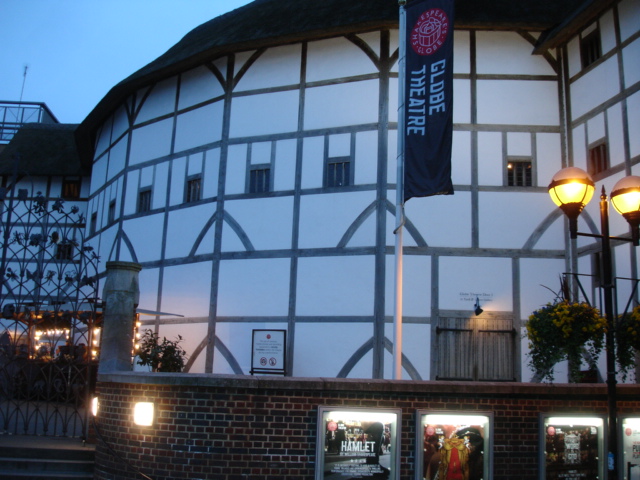
A visit to the Globe Theatre in Southwark is an essential stop in London. Close to its original site, re-built through the efforts of Sam Wanamaker, the Globe had its official opening season in June 1997. Tours are conducted year-round and the museum housing the Globe Exhibition is a must-see – I have taken this tour a few times but have never been in London during the show season, usually late April to early October [ click here for this year’s offerings ] – so I was thrilled this trip to finally see a performance, and a play I have neither read nor seen: All’s Well That Ends Well!
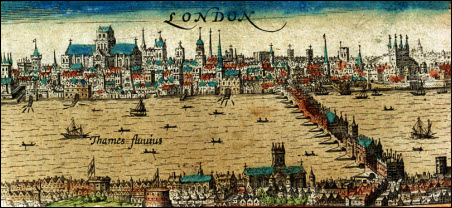
London 1611, John Speed map. Genmaps.
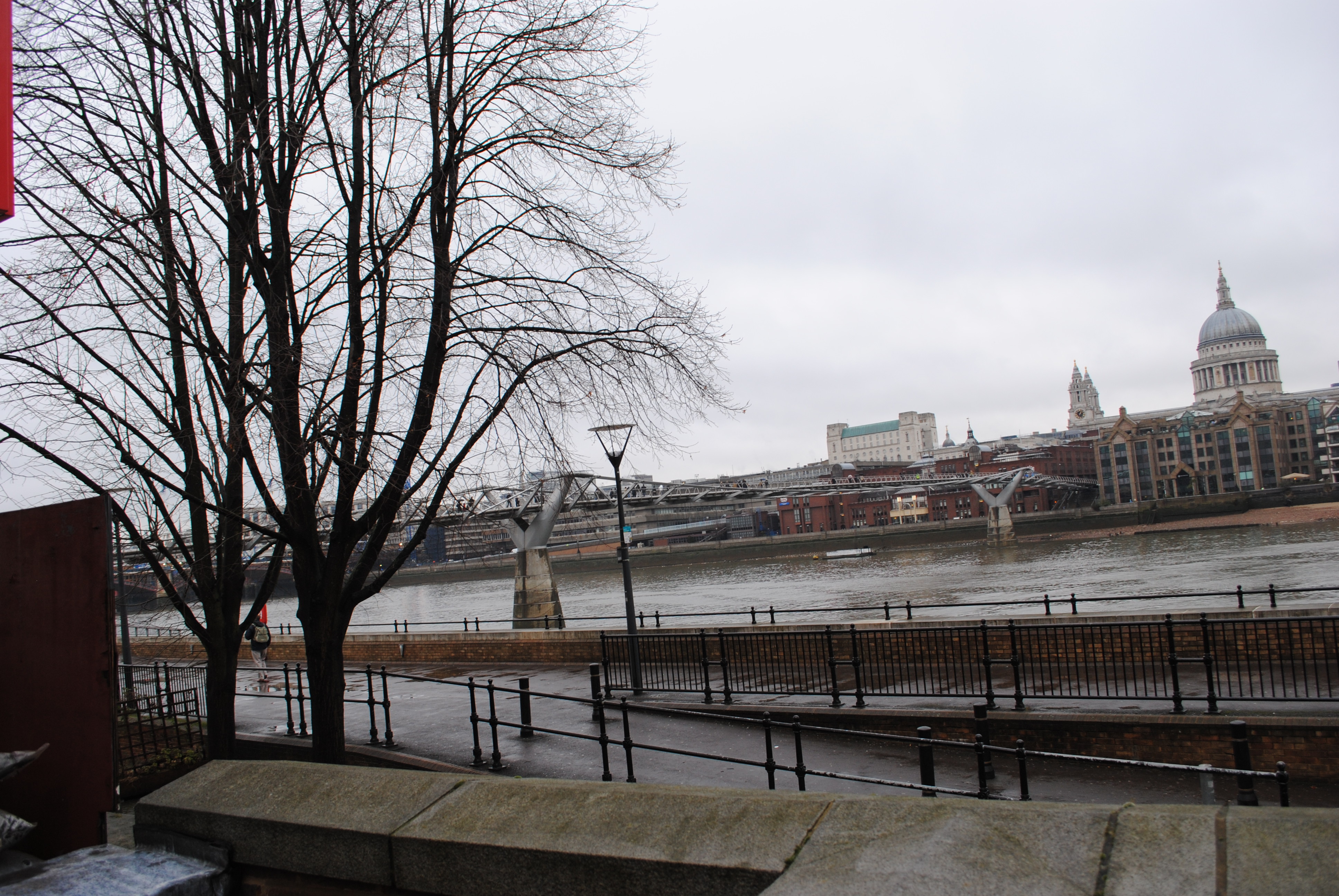
The best way to get there is to walk across the Millenium Bridge:
Millenium Bridge from the Globe – 2010 rainy visit!
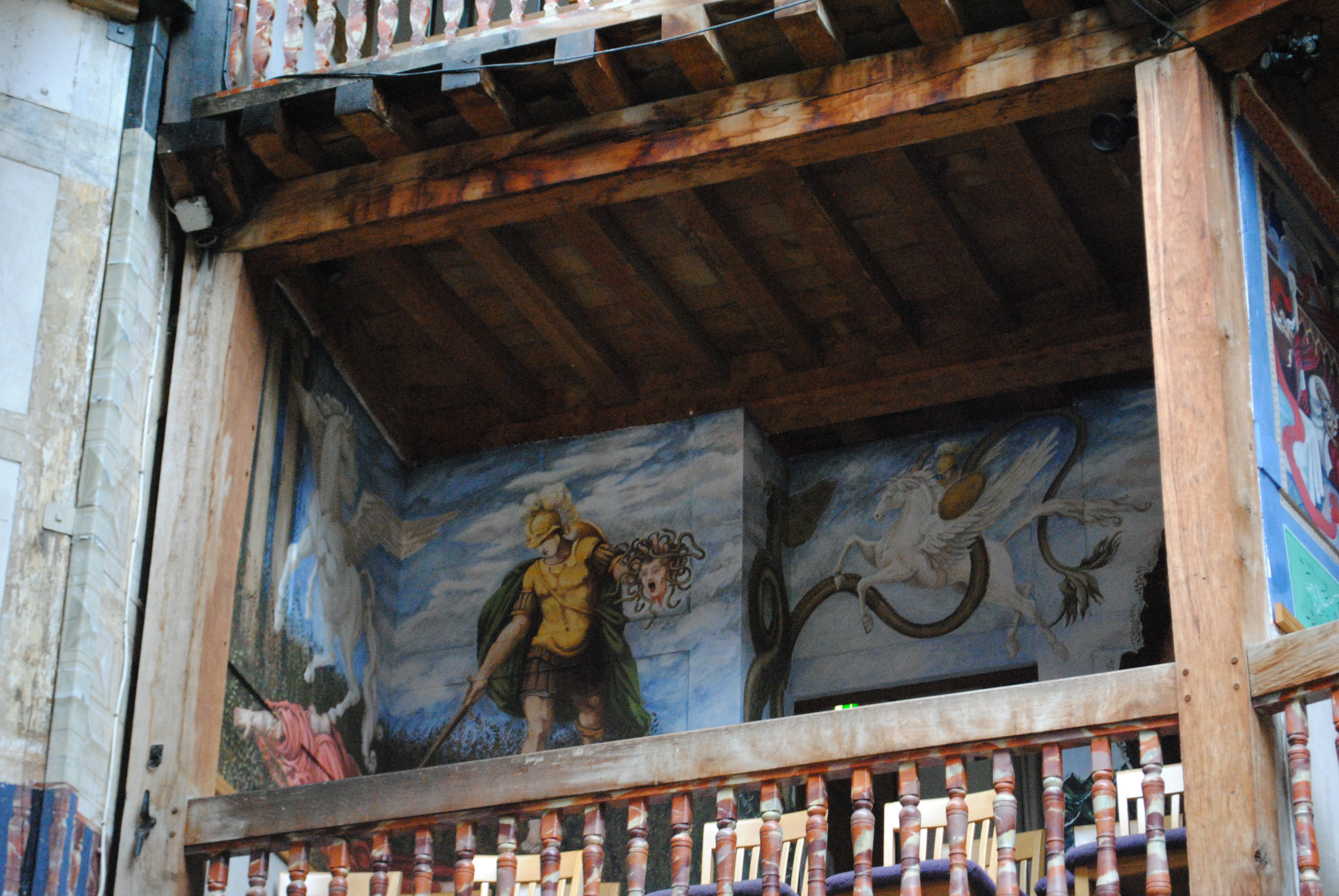
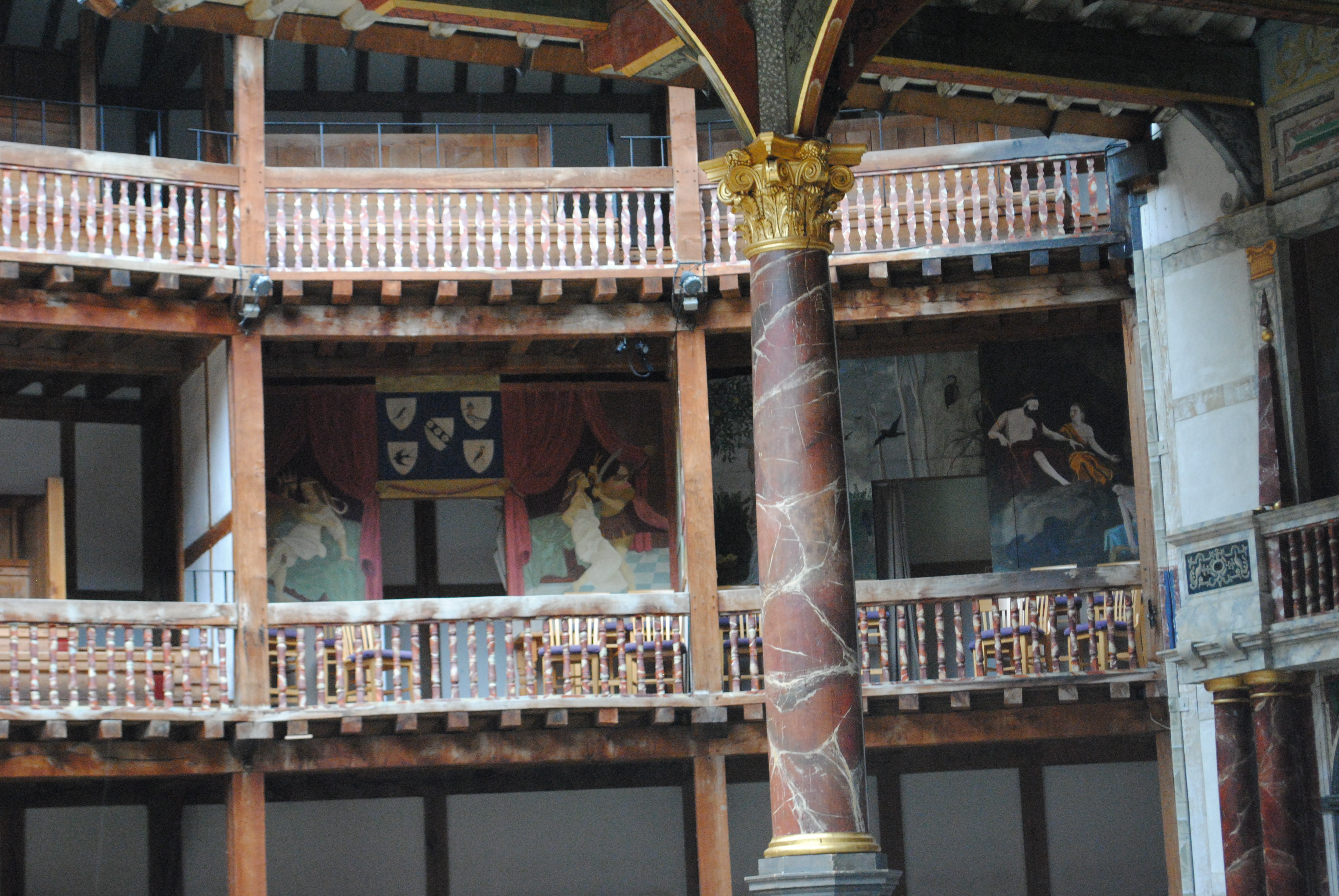
Globe Stage
We had fabulous seats, front row of the first balcony with the railing to lean on, looking down onto the stage and the lowly “pit-dwellers” [and cautioned to NOT drape anything or hold drinks over the rail for fear of droppings on the standing-room only crowd below] – and one piece of advice – either bring your own or rent a cushion – offered for £1 and worth every pence!]
The Seats! - the Globe Tour, Feb 2010, hence the coats
What an experience! – transported back into Shakespeare’s day –
the language, the costumes, the comedy! Though there was no such
Globe Theatre during Austen’s day, Shakespeare was produced in the
theatres and Austen was a regular theatre-goer when visiting Henry
and Eliza in London. Austen and Shakespeare is, however, book not
blog post material! – there are numerous allusions to Shakespeare in
her letters and writings [ Richard III, Macbeth, King John, Hamlet, Henry IV, The Merchant of Venice for starters…], but as heard in this
dialogue between Henry Crawford and Edmund Bertram in Mansfield Park,
we can perhaps get a sense of Austen’s true feelings about Shakespeare:
Crawford: “… I do not think I have had a volume of Shakespeare in my hand before since I was fifteen. I once saw Henry the Eighth acted, or I have heard of it from somebody who did, I am not certain which. But Shakespeare one gets acquainted with without knowing how. It is a part of an Englishman’s constitution. His thoughts and beauties are so spread abroad that one touches them everywhere; one is intimate with him by instinct. No man of any brain can open at a good part of one of his plays without falling into the flow of his meaning immediately.”
And Edmund replies: “No doubt one is familiar with Shakespeare in a degree from one’s earliest years. His celebrated passages are quoted by everybody; they are in half the books we open, and we all talk Shakespeare, use his similes, and describe with his descriptions; but this is totally distinct from giving his sense as you gave it. To know him in bits and scraps is common enough; to know him pretty thoroughly is, perhaps, not uncommon; but to read him well aloud is no everyday talent.”
[Mansfield Park, Vol. III, Ch. 3, p. 338]
But back to All’s Well That Ends Well: I turn to my trusty Shakespeare
text from college [we were using the G. B. Harrison text of 1952 in 1967!
yikes!] – now, I confess, quite torn and tattered, one of the few books I vigorously attacked with marginalia and underlining – but alas!, AWTEW remains pristine, a glaring anomaly, and I wonder what my professor had against this play?! This must be one of Shakespeare’s duds – a comedy
without humor, a romance without a hero. Indeed, this textbook says
[dated though it is!):
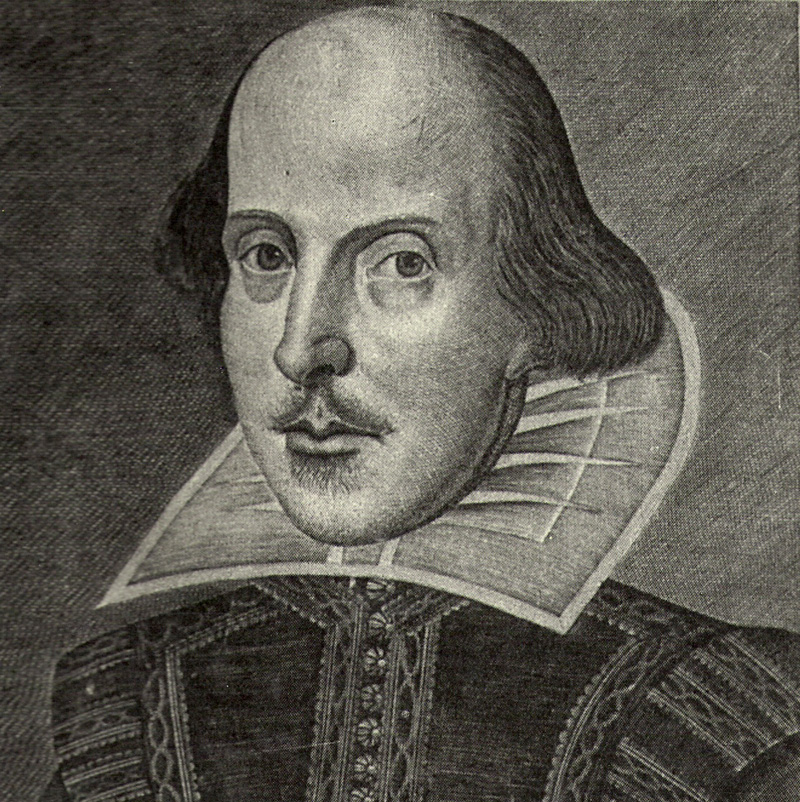
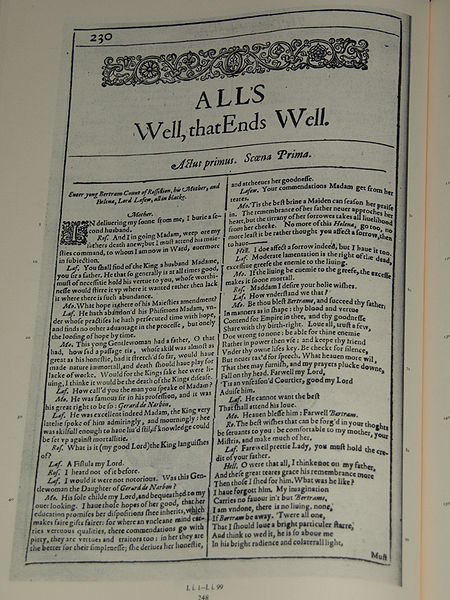
“The play seems never to have been popular. Scholars have found no contemporary mention of quotation. There is, therefore, no external fact by which the date of writing can be determined, nor is there any topical allusion or other clue within the play itself. The style is uneven, but in the best passages, both verse and prose, there is a maturity which shows that the play was written in the latter half of Shakespeare’s career…. [thus] a date is assigned somewhere between 1601 and 1604.” [Harrison, p. 1018.] It first appeared in print in the First Folio of 1623, after Shakespeare’s death in 1616.
First Folio - AWTEW - Wikipedia
Its original source was from Boccaccio’s Decameron, likely from William Painter’s collection of Italianate tales, The Palace of Pleasure (1566), Shakespeare following the tale of Giglietta de Narbone and Beltram de Rossiglione quite closely, with his usual added subplots of fools and
braggarts.
Basic story: Bertram, a young Count whose father has just died, leaves
home to attend the Court of the ailing King of France. Bertram bids adieu
to his mother, the delightful Countess* of Roussillon, and her ward, Helena,
the daughter of a well-respected physician. Helena is in love with Bertram,
but as she is of a lower class, her affection is not, cannot be reciprocated [though Bertram does carry Helena’s handkerchief with him for the entire play, all the while eschewing her love]. Conveniently the King of France is dying; Helena offers to cure him with the knowledge she has learned from her father; her prize if she is successful to choose a husband from his courtiers; the Countess sends her off to Paris, and the fun begins.
The King is cured, Helena chooses Bertram [the selection process is very funny!], he declines due to her low social status [he is a man on the way UP],
the King insists, they marry, and Bertram sends her home without a wedding night. He then heads off to war in Italy to make a name for himself, writing Helena that he will remain her husband in name only unless she can get the
ring from his finger and prove she is pregnant with his child [difficult with no wedding night…]. Helena leaves immediately for Italy, with full approval of
her now mother-in-law The Countess who loves her as a true daughter, and she discovers Bertram making merry with the young Italian lasses, one in particular named Diana. Helena tells her tale of woe to Diana and her mother and they agree to the infamous “bed-trick” whereby Helena will secretly appear to Bertram as his lover Diana – she requests his ring, she, or course, is left with child, her identity is revealed, Bertram confesses his true love after all, and as the saying goes, “all’s well that ends well”! [This very brief summary gives
short shift to the subplot of Bertram’s right-hand man, Parolles, a coward and
a traitor, blindly followed by Bertram until his true colors are revealed – and
all up to humorous par with Shakespeare’s other such braggarts.]
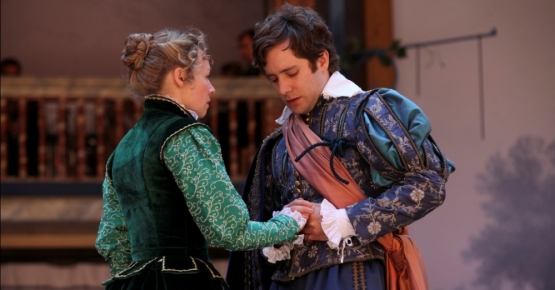
Helena (Ellie Piercy) & Bertram (Sam Crane) - Globe website
The play has been rarely acted, and has no glowing reviews, as the following example of Samuel Johnson attests:
The play has many delightful scenes, though not sufficiently probable, and some happy characters, though not new, nor produced by any deep knowledge of human nature. …I cannot reconcile my heart to Bertram, a man noble without generosity, and young without truth, who marries Helen [sic] as a coward, and leaves her as a profligate; when she is dead by his unkindness, sneaks home to a second marriage, is accused by a woman he has wronged, defends himself by falsehood, and is dismissed to happiness.
[Samuel Johnson, Notes on the Plays of Shakespeare, 1765] –
in Harrison, p. 1019.
But enjoyable it was, despite the hero being a bit of a jerk [does “Bertram’
have a familiar ring as a hero sorely lacking??!] – he does every thing to hurt Helena, is obsessed with his social status, chooses friends who are scoundrels, whines, whines and whines again, lies his way into the beds of maidens, and in the last five minutes, is, as Johnson says, “dismissed to happiness.”
But who needs a dashing romantic hero when one has The Globe in one’s periphery and a play with much lively wit in prose and verse [the King’s
timely “I am wrapped in dismal thinkings” nearly brought the roof down, though alas! no roof in sight! – I shall now use this phrase repeatedly and annoy all my friends!], and it all ends with a lengthy round of dancing – all characters participating in the raucous festivities where one is finally able to see Bertram as a more lively and affectionate lover. My traveling companion and I agreed – all plays should end in such a way! [we later in the week saw Wicked and were much disappointed that the characters came out only for a bow and did not break into ten minutes of dancing!]
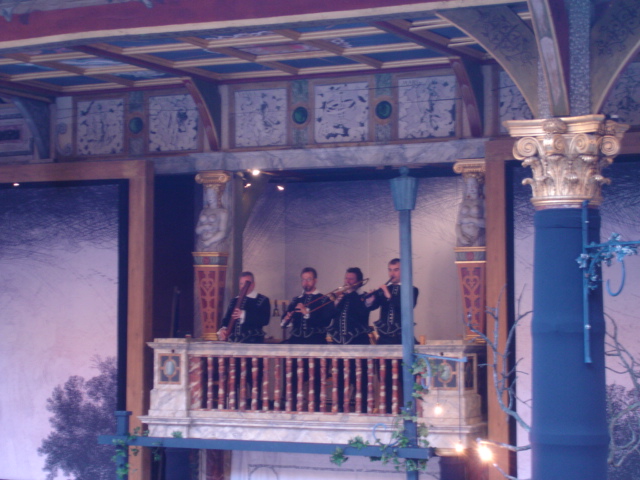
Musicians for AWTEW
* an Austen 6 degrees of separation stretch but worthy of note!:
The Countess is played by Janie Dee, who is also cast as Adam Dalgliesh’s lovely Emma in P. D. James’s Death in Holy Orders and The Murder Room – Emma of course being the perfect mate for her Austen-loving detective and recipient of a very Wentworth–worthy letter of Dalgliesh’s professed love!
Helena and the Countess (Janie Dee) - The Telegraph
A side note: the program guide is worth the price of admission! – with a short history of the Globe, Shakespeare in London, the background and history of the play to include its contemporary contexts all with pictures, photographs of the actors in rehearsal, extensive biographies of the cast, excellent ads, and the latest news at The Globe, a very exciting bit being the new indoor Jacobean Theatre which will allow winter performances. Hurray!
If you are in London this season, I can only emphatically say, get thee hence to The Globe! – this season’s offerings besides AWTEW are Hamlet, As You Like It, Much Ado About Nothing, Doctor Faustus, Anne Boleyn, The Globe Mysteries, and The God of Soho – see the link here for more information.
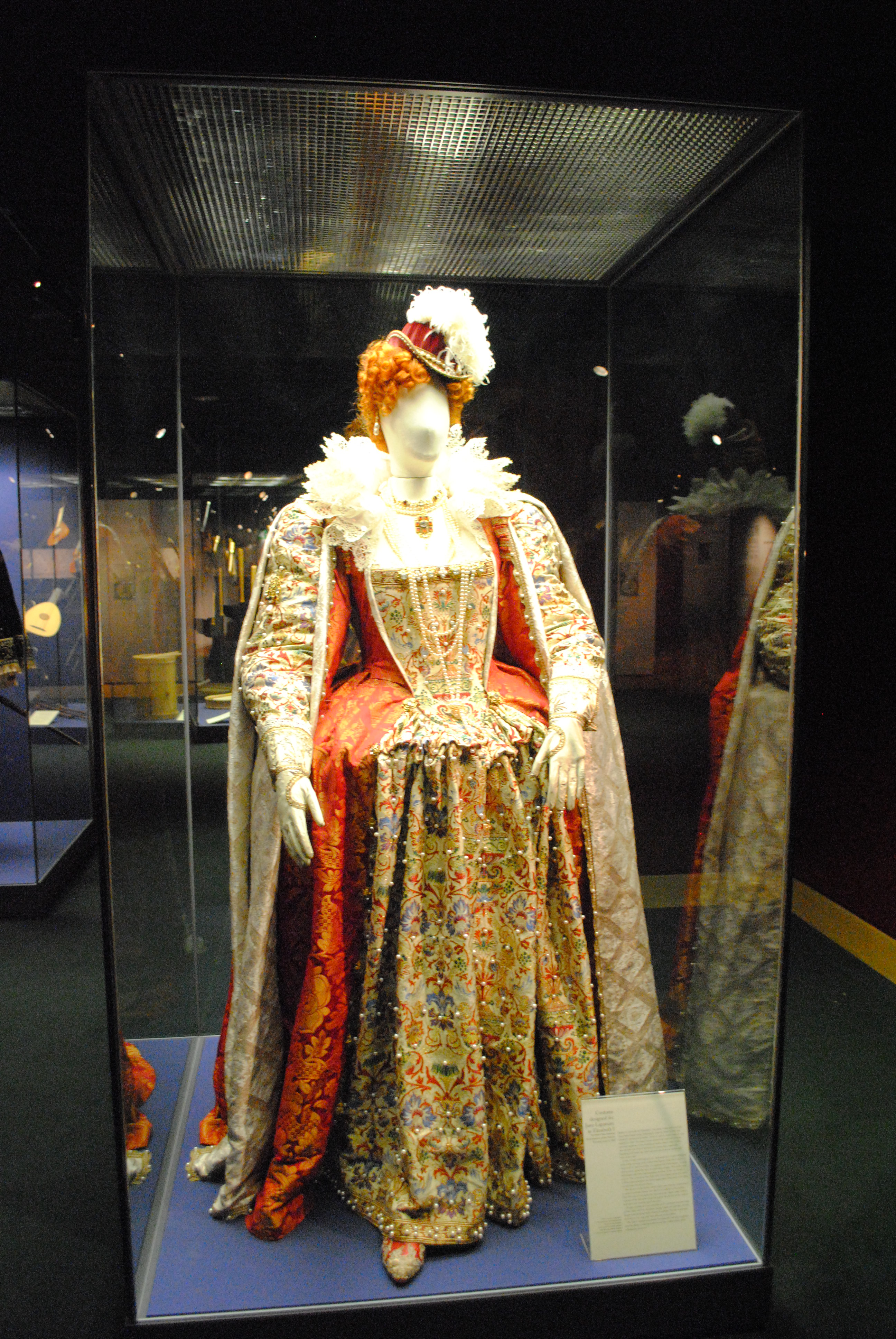
From The Globe Exhibition:
Elizabeth I dress
FurtherReading: [a very brief smattering of Shakespeare]
Shakespeare, William. Shakespeare, the Complete Works. Ed. G. B. Harrison. New York: Harcourt, 1952.
Shakespeare’s Globe Theatre: http://www.shakespearesglobe.com/ visit for this season’s schedule, the shop, membership, tour information, etc…

















 Jane Austen in Vermont