
[Vintage Postcard from my collection]
Hope your day is filled with Love, Jane Austen, and Chocolate!
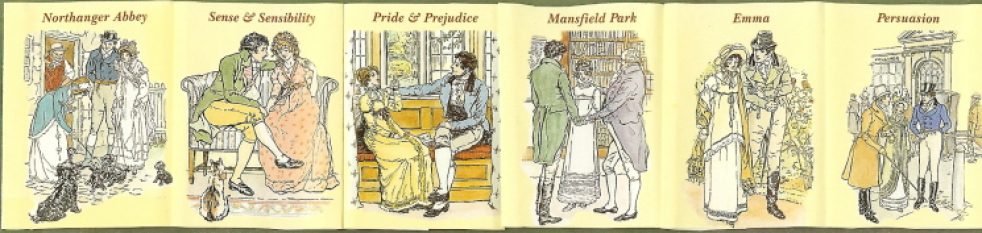
Hope your day is filled with Love, Jane Austen, and Chocolate!
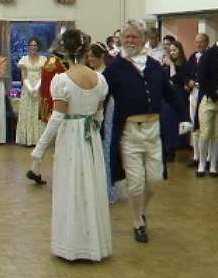
Regency Dancing was how young ladies and young gentlemen met and courted, and the dance floor was often the only place they could talk without being overheard by their chaperones. As was to be expected, the dancing was lively and flirtateous. The dancing needs to be accurate and elegant, but always remember that it is also about love and young people having fun.

A lovely email from a Gentleman in England alerted me to this new website on Regency Dances [ http://RegencyDances.org ].
From his email:
Launched in January, the site is a free learning resource for Regency Dances. As well as providing dance notations, the dances are shown as animations. This combination of watching the animation while following the notation has been found to be an excellent way of quickly understanding the structure of a dance. The dances are taken from original 18th -19th century sources and written into modern notation by experienced dancers under the watchful eye of a recognised international expert.
Two or three new dances are added each week. To keep informed you can “follow” them on Twitter at http://twitter.com/RegencyDances
The objective of http://RegencyDances.org is to create an international shared website resource independent of any specific dance group for (a) sharing genuine Regency dances of known provenance, (b) sharing news of upcoming Regency balls, and (c) sharing information about other Regency groups.
The site includes a history of the dances, the various dance steps presented in animations, lists of dances and music sources, plans on how to organize a Regency party, a listing of various societies and upcoming events, and a very informative section on “What to Wear” which includes the details of the era fashions and how to locate or make your very own costume.

Please visit the site if you have any interest in the dance of Jane Austen’s period – new information is being constantly added, and the site editors are “looking for sources of recorded music that we may use, videos of single dances to be selected as examples of ‘good practice’ and a few more editors.”
If you are a member of a Regency dance group, certainly add your name and events to their growing list.
[Image: Regency Dances website]

I happened to catch this on CBS’s Sunday Morning while trekking on my tredmill – a very nice piece on the Royal School of Needlework, located in the Hampton Court Palace:

The RSN is the international centre for teaching, practicing and promoting hand embroidery across a wide range of techniques.
We offer hand embroidery courses for all levels; conservation and restoration of historic needlework or creation of new embroideries in our Studio; tours to see some of our needlework Collection and more. [you can schedule private tours to see pieces in the collection that are not viewable to the general public]

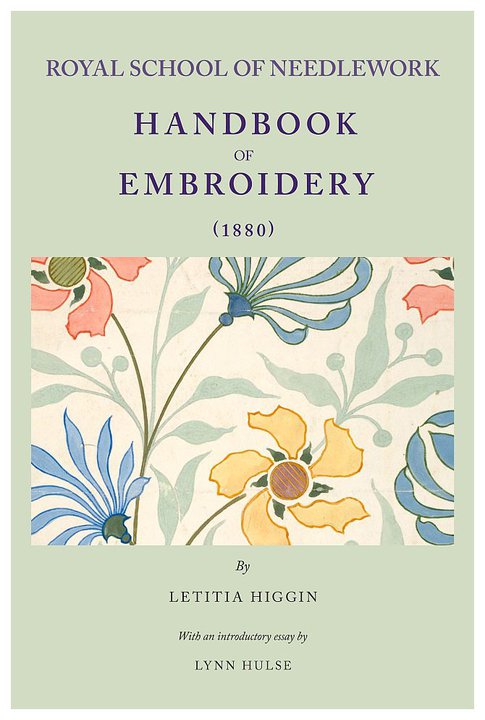
There are various books offered in the shop – here are two examples:

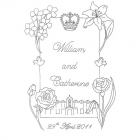
You can order the whitework sampler kit celebrating the upcoming royal wedding of William and Kate for £30:
You can view the CBS video here:
http://www.cbsnews.com/video/watch/?id=7363014n

[Hampton Court Palace: image from Evan Evans Tours]
Embroidery images from the RSN website; you can join their Facebook page here: http://www.facebook.com/pages/Royal-School-of-Needlework/185840784788771
The Huntington Library is hosting an exhibit “Revisiting the Regency: England, 1811-1820” from April 23 – August 1, 2011:
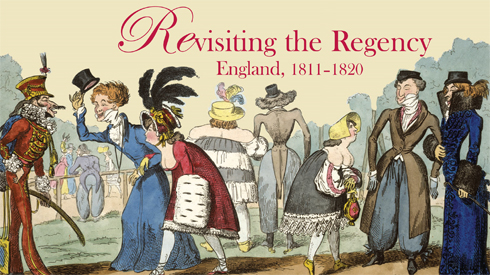
A new exhibition takes a closer look at a glittering yet turbulent era. In October of 1810, England’s King George III slipped into that final madness from which only death would release him, nearly a decade later. The following February, Parliament authorized the king’s estranged and profligate eldest son, the Prince of Wales (the future George IV), to rule in his place as regent. Extravagant, emotional, controversial, and self-indulgent, the prince regent lent his name and many of his characteristics to a glittering era.
In commemoration of the 200th anniversary of this extraordinary decade, The Huntington presents an exhibition titled “Revisiting the Regency: England, 1811–1820.” Opening April 23 in the West Hall of the Library and continuing through Aug. 1, the exhibition draws on The Huntington’s extensive holdings of rare books, manuscripts, prints, and drawings documenting this historic era.
The term “Regency England” usually evokes Jane Austen’s world of graceful country-house living and decorous village society, the elegance of London’s fashionable elite, or the licentious activities of the prince and his aristocratic Carlton House set. Ladies followed the latest fashions in La Belle Assemblée while gentlemen copied Beau Brummell’s severe elegance. Readers found new works by a generation of England’s greatest poets and novelists: Austen, Lord Byron, John Keats, Samuel Taylor Coleridge, and Sir Walter Scott. Londoners enjoyed a rich theatrical and musical life, watching Edmund Kean’s premiere in Richard III or hearing the first English production of Mozart’s Don Giovanni. Art lovers followed the latest exhibits at the Royal Academy. Under the prince’s patronage, architect John Nash created the fantasy Royal Pavilion at Brighton and remade London’s West End with the new developments of Regent’s Park and Regent Street.
Yet underneath this ordered upper-class surface lay a far more complex and turbulent world: more than a century of intermittent war with France ended at Waterloo, but peace revealed wrenching poverty, social unrest, the strains of rapid industrialization, and growing calls for political reform. The first railroads, gas lighting, and other advances in technology altered the landscape of everyday life.
This rich cavalcade of people and events provided irresistible targets for a brilliant generation of visual satirists. The witty, savage, and iconic images of George Cruikshank and his fellow caricaturists, well represented in the exhibition, capture all the vagaries of an extraordinary decade in English arts, letters, science, and society.

[Text and images from the Huntington Library website]
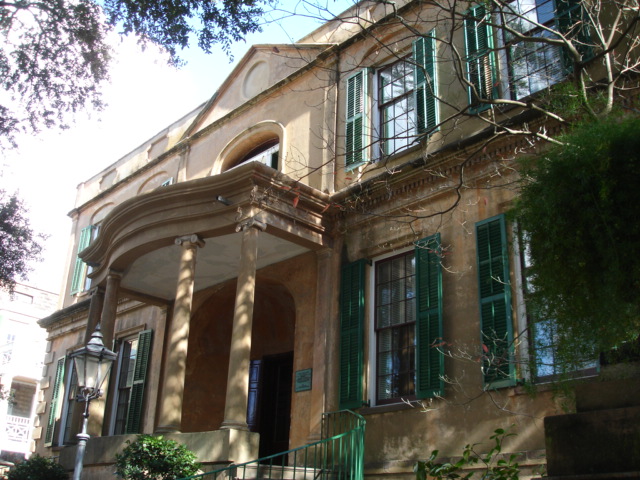
The Owens-Thomas House in Savannah, Georgia is considered by architectural historians to be one of the finest examples of English Regency architecture in America. Inspired by classical antiquity, this style of architecture takes its name from England’s King George IV, who ruled as Prince Regent from 1811 to 1820.
The house was designed by the young English architect William Jay (1792-1837), one of the first professionally-trained architects practicing in the United States. The elegant residence was built from 1816-1819 for cotton merchant and banker Richard Richardson and his wife Francis Bolton. Mr. Richardson’s brother-in-law was married to Ann Jay, the architect’s sister.
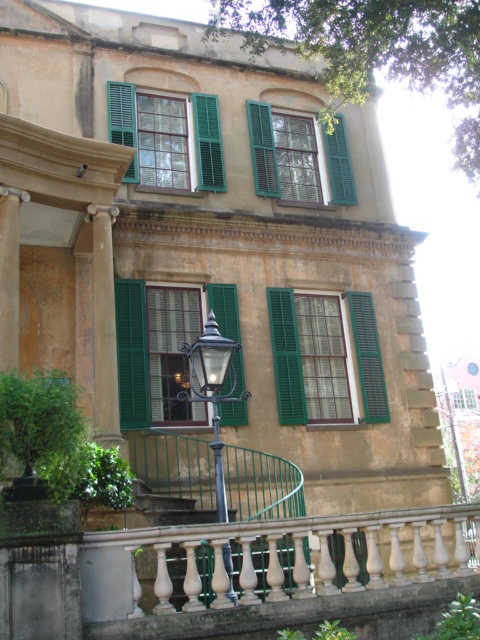
Three years after the house’s completion, Richardson suffered financial losses and sold his house, which later came under possession of the Bank of the United States. For eight years, Mrs. Mary Maxwell ran an elegant lodging house in the structure. Revolutionary War hero Marquis de Lafayette was a guest of the city in 1825 and stayed at the home. On March 19, he is believed to have addressed a throng of enthusiastic Savannahians from the unusual cast-iron veranda on the south facade.
In 1830, planter, congressman, lawyer, and mayor of Savannah, George Welshman Owens, purchased the property for $10,000. It remained in the Owens family until 1951 when Miss Margaret Thomas, George Owens’ granddaughter, bequeathed it to the Telfair Museum of Art.
A National Historic Landmark, the stately former residence is now a historic house museum. It boasts a decorative arts collection comprised primarily of Owens family furnishings, along with American and European objects dating from 1750-1830. The site also includes a beautiful English-inspired parterre garden and an original carriage house—which contains one of the earliest intact urban slave quarters in the South.
[From the website]


I had the fortune to visit the House last fall – I am just getting to posting these pictures! Unfortunately, no pictures are permitted inside the house, so I only have several exterior and garden shots. The Museum publishes an illustrated guidebook which does contain interior views. If you want to get an idea of what Regency life in America was like during Austen’s lifetime, I highly recommend a visit if you are in the area.



Further Reading:
[/source]
You must look in on this online exhibition at the Smithsonian’s National Museum of American History: The Miniature World of Faith Bradford

The scale of this 23-room house is one inch to one foot, accommodating the miniatures that Faith Bradford (1880–1970) played with as a girl and collected as an adult. She imagined the dwelling as the turn-of-the century household of Mr. and Mrs. Peter Doll, their ten children, two visiting grandparents, five servants, and twenty pets.
You can select from the “Additional Pages” drop down menu and take a tour through the various floors of rooms.
*********************
You can also visit the online exhibition of the Thorne Miniature Rooms at the Art Institute of Chicago:
- Thorne Miniature
The 68 Thorne Miniature Rooms enable one to glimpse elements of European interiors from the late 13th century to the 1930s and American furnishings from the 17th century to the 1930s. Painstakingly constructed on a scale of one inch to one foot, these fascinating models were conceived by Mrs. James Ward Thorne of Chicago and constructed between 1932 and 1940 by master craftsmen according to her specifications.
********************
So you may wonder how this may tie in with Jane Austen? – I want to share with you the pictures of the amazing miniature collection of a good friend of mine – she gives me permission to post these, just no names or location – but at the end you will see the Jane connection ~ enjoy the tour!
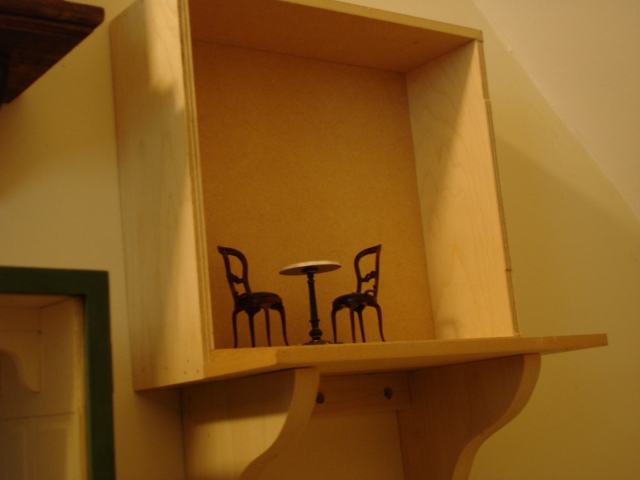


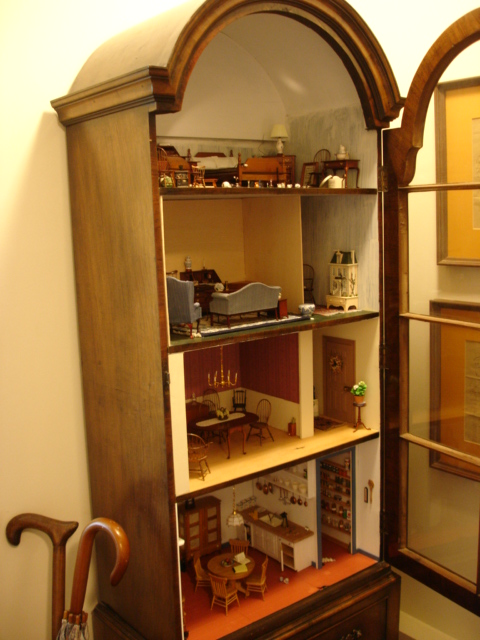

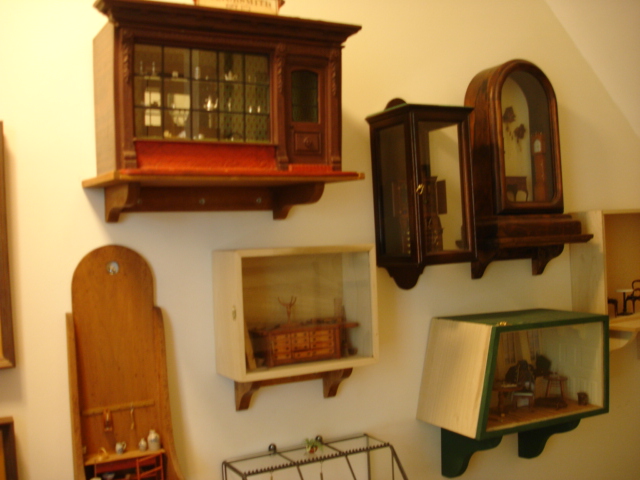

[Note the third shelf down on the right!]
And now for our Hero:


Patrick O’Brian’s Post Captain, his tribute to Jane Austen – now does that JA stand for Jack Aubrey or is it indeed Jane Austen that O’Brian named his Hero after?
Thank you, good buddy, for letting me into your sanctuary of miniatures!

Want to get in the spirit of the upcoming nuptials of Prince William and Kate Middleton? How about reading about some of the previous such celebrations that captured the world from the 12th to the 19th century!
A press notice from Harlequin, publisher of Romance with a capital ‘R’: yesterday they announced the release of seven novellas in ebook format, the “Royal Weddings Collection” – each focusing on a different royal wedding, each written by a different author.
These seven short stories brilliantly capture the drama, pomp and ceremony and high passion of real-life royal weddings,” senior editor Linda Fildew said in a press release. “From Eleanor of Aquitaine to Queen Victoria, these royal romances through the ages bring history vividly to life.”
The titles include:
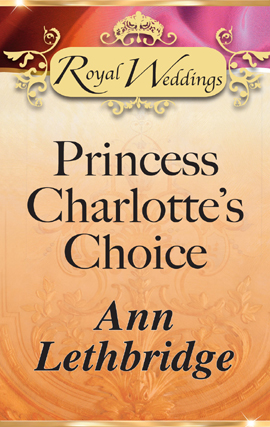
You can find the seven ebooks at the eharlequin website. They are on sale there for $1.79 each. And if you go to the “Watch the Royal Wedding” website, scroll down for a coupon code for an additional 10% off! [if you are a true lover of Royal Weddings, you should be following this site on a daily basis anyway…]
Time to fire up my Kindle – who can resist!
[ebook covers from the eharlequin website]
No April Fool’s Day post here – just the usual first day of the month “Rabbit, Rabbit, Rabbit'” salute to one and all!
Will share this very oft-quoted poem of W. H. Auden where he expresses his views on Jane Austen :
**********************
Letter to Lord Byron
…There is one other author in my pack
For some time I debated which to write to.
Which would least likely send my letter back?
But I decided I’d give a fright to
Jane Austen if I wrote when I’d no right to,
And share in her contempt the dreadful fates
Of Crawford, Musgrove, and of Mr. Yates.
Then she’s a novelist. I don’t know whether
You will agree, but novel writing is
A higher art than poetry altogether
In my opinion, and success implies
Both finer character and faculties
Perhaps that’s why real novels are as rare
As winter thunder or a polar bear.
The average poet by comparison
Is unobservant, immature, and lazy.
You must admit, when all is said and done,
His sense of other people’s very hazy,
His moral judgements are too often crazy,
A slick and easy generalization
Appeal too well to his imagination.
I must remember, though, that you were dead
Before the four great Russians lived, who brought
The art of novel writing to a head;
The help of Boots had not been sought.
But now the art for which Jane Austen fought,
Under the right persuasion bravely warms
And is the most prodigious of the forms.
She was not an unshockable blue-stocking;
If shades remain the characters they were,
No doubt she still considers you as shocking.
But tell Jane Austen, that is if you dare,
How much her novels are beloved down here.
She wrote them for posterity, she said;
‘Twas rash, but by posterity she’s read.
You could not shock her more than she shocks me;
Beside her Joyce seems innocent as grass.
It makes me most uncomfortable to see
An English spinster of the middle-class
Describe the amorous effects of ‘brass’,
Reveal so frankly and with such sobriety
The economic basis of society…
***************
Auden ends this lengthy poem with:
…I hope this reaches you in your abode,
This letter that’s already far too long,
Just like the Prelude or the Great North Road;
But here I end my conversational song.
I hope you don’t think mail from strangers wrong.
As to its length, I tell myself you’ll need it,
You’ve all eternity in which to read it.
*****************
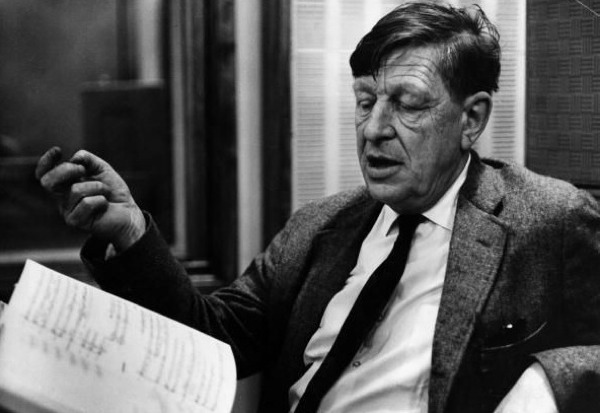
From “Letter to Lord Byron”, Letters from Iceland, London: Faber and Faber, 1937. Revised text in Longer Contemporary Poems, Penguin, 1966.
You can read the full text here.
Penguin Classics will be publishing a new edition of Emma in the Fall, this time with cover art by Jillian Tamaki, as part of its Penguin Threads series [Black Beauty and A Secret Garden will also be released.]

and just the front with more detail:
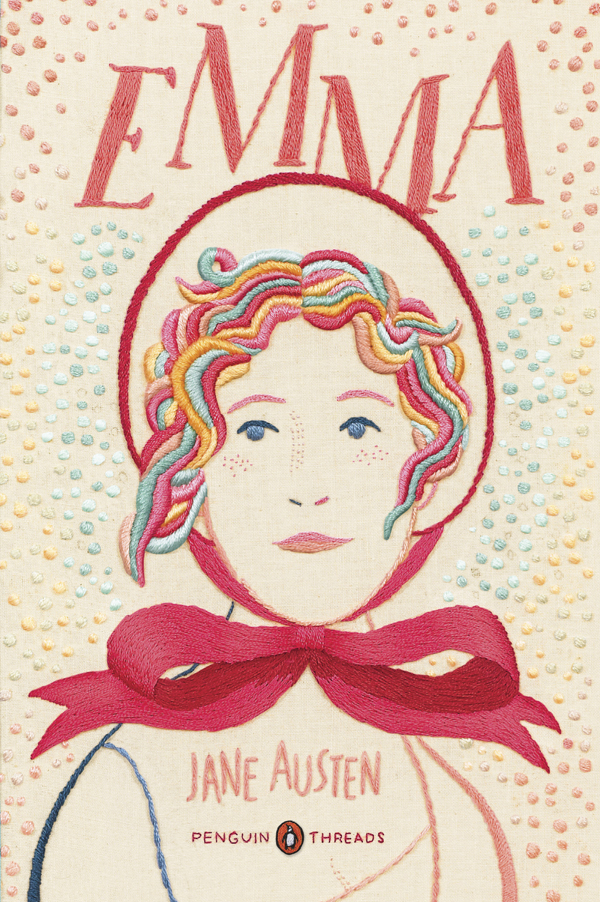
[Source: Atlantic.com]
See also Tamaki’s “Sketchblog” for details on the process and the other book covers. Just lovely, don’t you think? [especially if you do handiwork…]
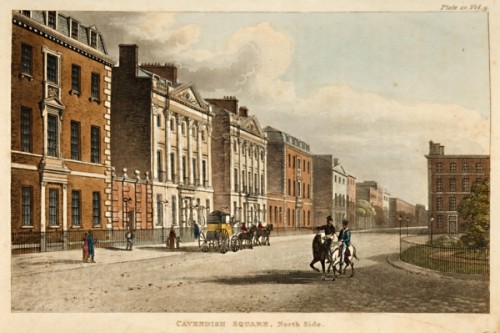
You are Cordially Invited to JASNA-Vermont’s March Meeting
~Jane Austen’s London in Fact & Fiction ~
with
Suzanne Boden* & Deborah Barnum**
Jane Austen and London! ~ Why did she go & How did she get there? ~ Where did she stay & What did she do? ~ Was it a ‘Scene of Dissipation & Vice’ or a place of lively ‘Amusement’ filled with Shopping, the Theatre, Art Galleries & Menageries? ~ And her fiction? ~ How does Mr. Darcy know where to find Lydia and Wickham? And Why does nearly everyone in Sense & Sensibility go to Town? To find out all this & more absolutely essential Austen biographical & geographical trivia, please…
Join Us for a Visual Tour of Regency London!
*****
Sunday, 27 March 2011, 2 – 4 p.m.
Champlain College, Hauke Conference Center,
375 Maple St Burlington VT
Free & Open to the Public
Light refreshments served
For more information: JASNAVermont [at] gmail [dot] com Please visit our blog at: http://JaneAustenInVermont.wordpress.com
************************************
Suzanne & Deb will share their mutual love of London! ~ *Suzanne Boden is the well-traveled proprietress of The Governor’s House in Hyde Park, where she regularly holds Jane Austen Weekends: http://www.onehundredmain.com/ ; **Deb Barnum is the owner of Bygone Books, a shop of fine used & collectible books, the Regional Coordinator for the Vermont Region of JASNA, author of the JASNA-Vermont blog, and compiler of the annual Jane Austen Bibliography.
Upcoming: June 5: A Lecture & Organ Recital on ‘The Musical World of Jane Austen’ with Professor William Tortolano. At Vermont College of Fine Arts, Montpelier. See blog for details.
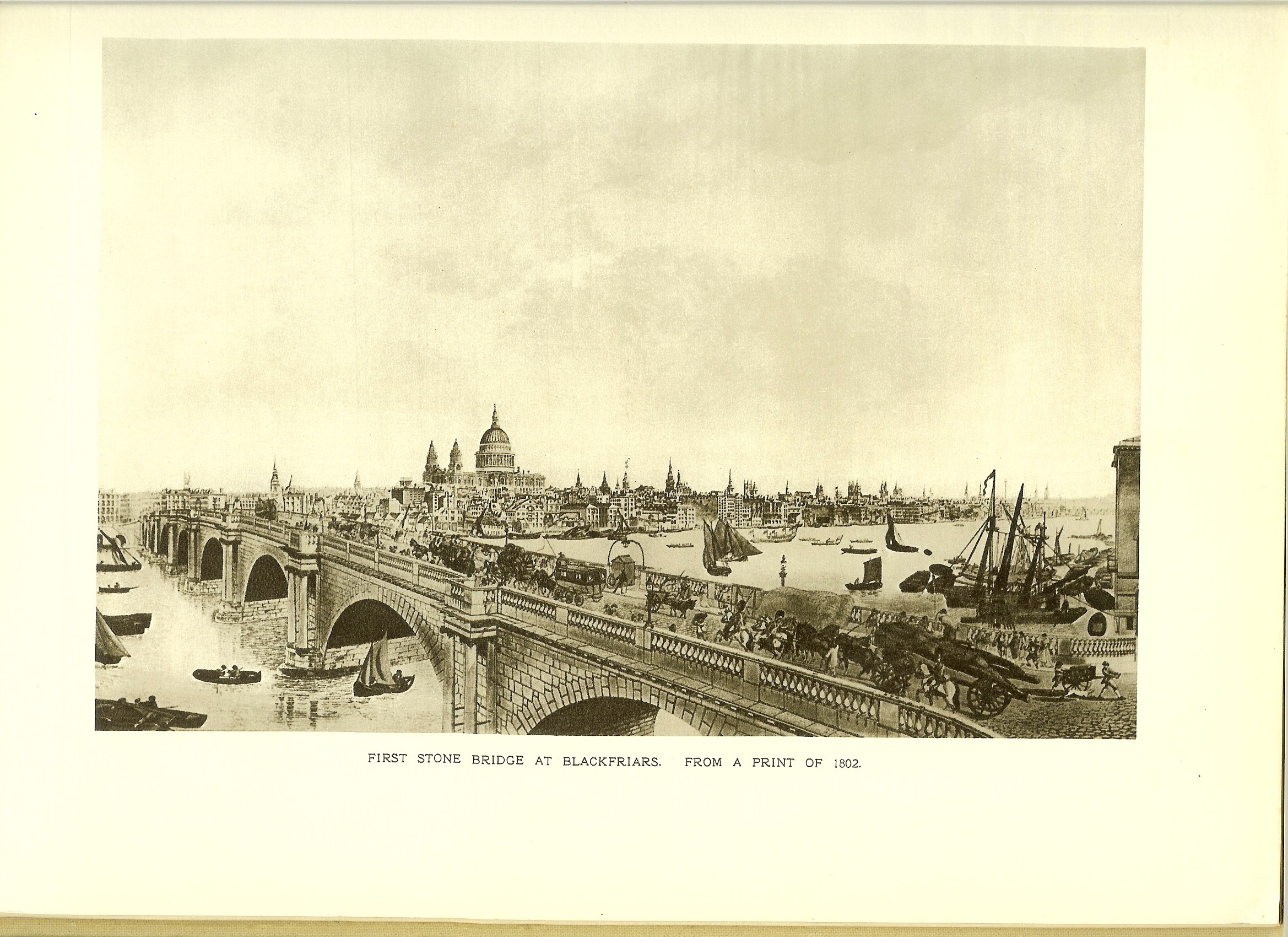
[Image: Blackfriars Bridge, 1802. The City of London. London: The Times, circa 1928, facing p. 192]

 Jane Austen in Vermont