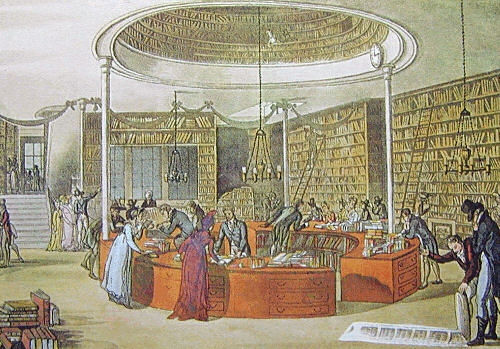
Austen Literary History & Criticism · Jane Austen · Publishing History

A Letter from Henry Austen ~ October 20-21, 1815

Henry Austen

Today in Jane Austen’s life: October 21, 1815

One of my favorite letters in the collection Jane Austen’s Letters, ed. by Deirdre Le Faye (Oxford, 1995) is Letter No. 122 (A)(D), 21 October 1815.  This is a draft of a letter from Henry Austen to John Murray on his sister’s behalf and it gives us the rare direct glimpse into the wit of Henry Austen. Jane Austen is in Town and working on negotiations with John Murray for the publication of Emma. This is the visit of her famous meeting with the Prince Regent’s Librarian James Stanier Clarke and his request for Austen to dedicate her next work to the Regent.  The amusing correspondence between Austen and Clarke follow this letter, as well as Austen’s own letters to Murray, written directly to the publisher due to Henry’s grave illness and his inability to correspond.  These, plus her few letters to Cassandra during this time, are strong evidence of  Austen’s direct involvement and concerns in the negotiations and publication of her work – all these letters make great reading!  But today, let’s just look at Henry’s letter:

  ?Friday 20 / Saturday 21 October 1815

[A Letter to Mr. Murray which Henry dictated a few days after his Illness began, & just before the severe Relapse which threw him into such Danger. – ]

Dear Sir

Severe illness has confined me to my Bed ever since I received Yours of ye 15th – I cannot yet hold a pen, & employ an Amuensis [sic]. – The Politeness & Perspicuity of your Letter equally claim my earliest Exertion. – Your official opinion of the Merits of Emma, is very valuable & satisfactory. – Though I venture to differ occasionally from your Critique, yet I assure you the Quantum of your commendation rather exceeds than falls short of the Author’s expectation & my own. – The Terms you offer are so very inferior to what we had expected, that I am apprehensive of having made some great Error in my Arithmetical Calculation. – On the subject of the expense & profit of publishing, you must be much better informed that I am; – but Documents in my possession appear to prove that the Sum offered by you, for the Copyright of Sense & Sensibility, Mansfield Park & Emma, is not equal to the Money which my Sister has actually cleared by one very moderate Edition of Mansfield Park –(You Yourself expressed astonishment that so small an Edit. of such a work should have been sent into the World) & a still smaller one of Sense & Sensibility…

*******************************

Such a Brother was he! – a good businessman and witty in the process! an ‘error in my Arithmetical Calculation’ indeed!

Henry’s very serious illness prompted Austen to call all her family members to his bedside, and it was not until a few weeks later that Austen herself takes on the writing of letters to Murray to complete the Emma negotiations – she writes requesting him to call on her in Hans Place because “a short conversation may perhaps do more than much Writing.”  [Ltr. 124, Nov. 3, 1815; To John Murray]

[Henry’s Draft letter in Austen’s hand is in the Bodleian Library; a facsimile is in Modert, F-361 and F-362]

Austen Literary History & Criticism · Jane Austen · Regency England · Social Life & Customs

Thoughts on Travel in ‘Sense and Sensibility’ ~ Part II

Part II.  A Study of Character’s Movement in Sense and Sensibility

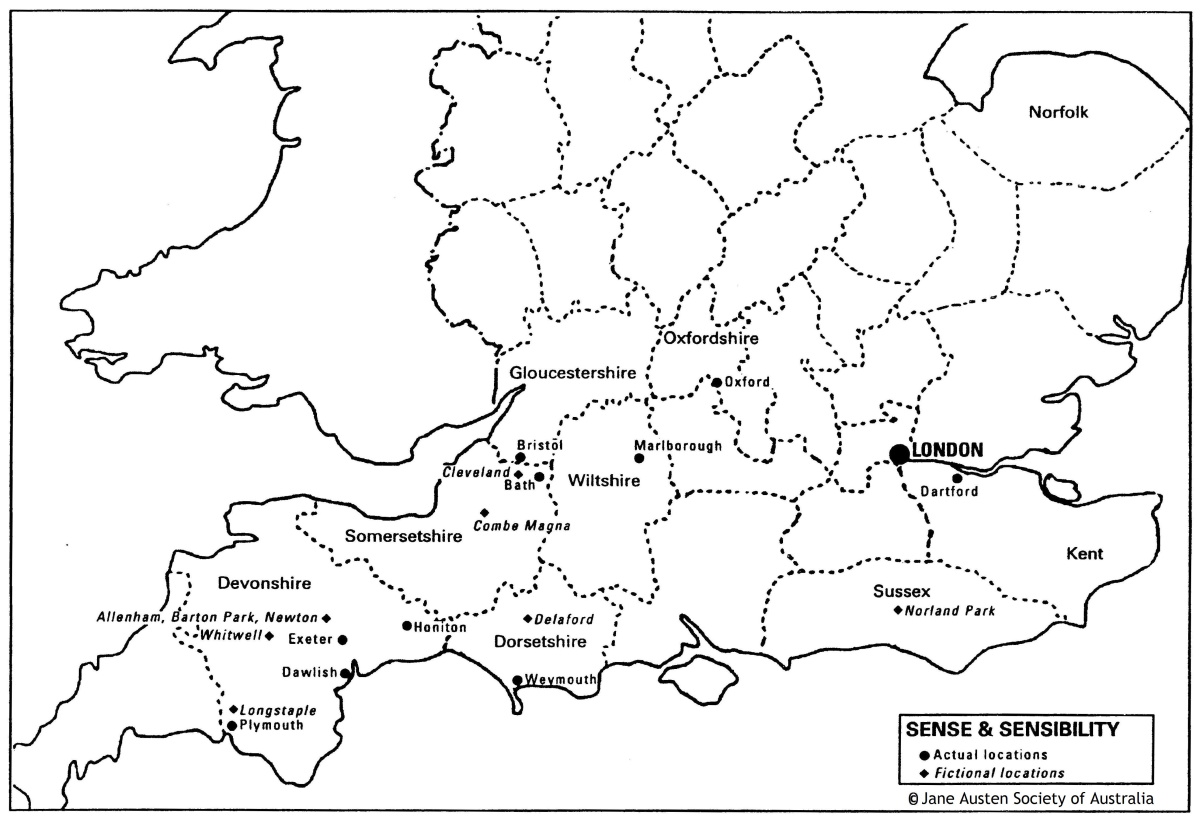
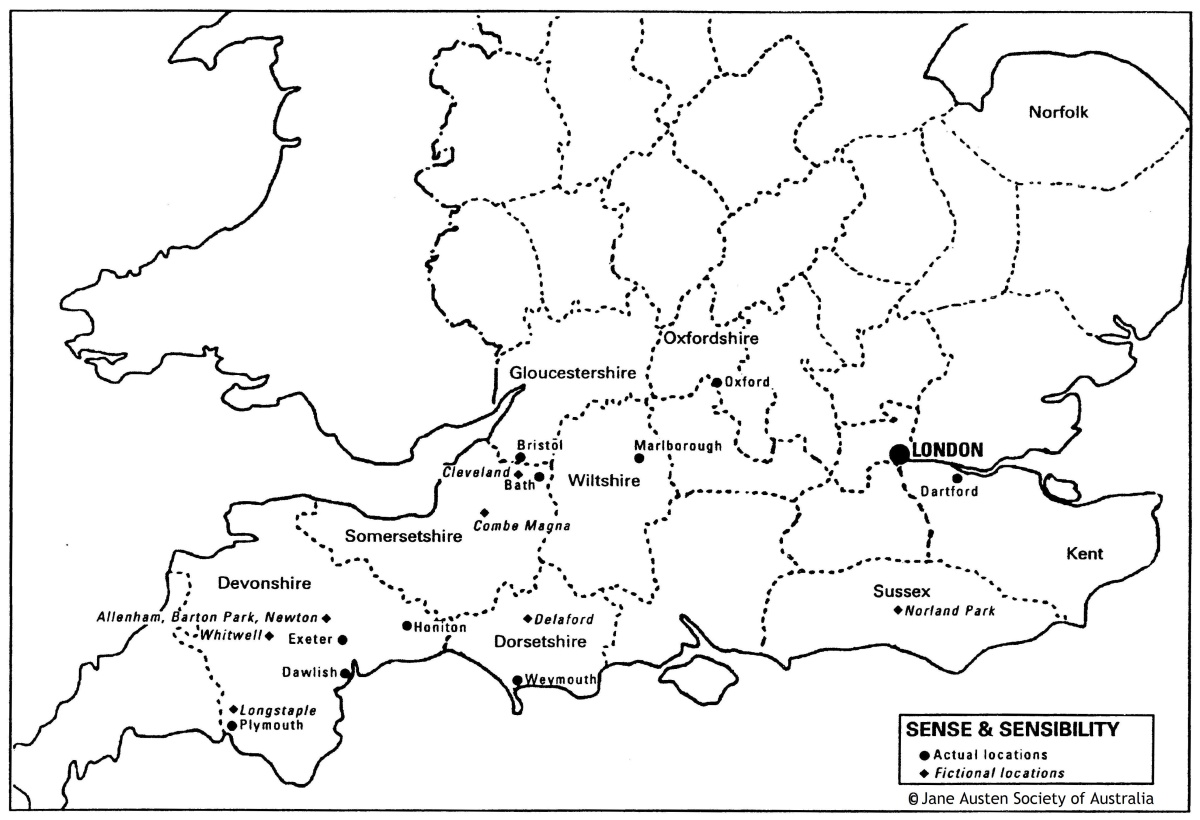
Fig. 1. Sense & Sensibility map

A startling fact! – there are 49 mentions of movement and 46 mentions of carriages [to include a few referring to travel by horseback] – and people say that nothing happens in Jane Austen!  That is a great deal of  traveling in what I have just described in the previous post as a not easy or inexpensive world to travel in!

To begin, let’s place the characters where they live and their income if known:

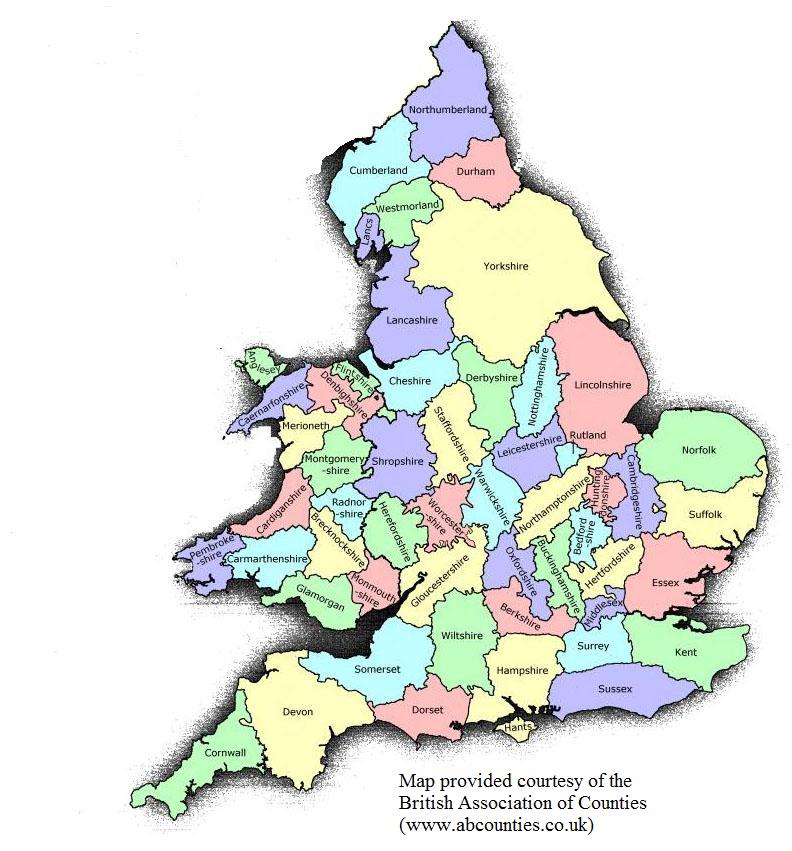
A.  Where the characters live:  see the map of England’s Counties below, and the map of places, both real and fictional above

  • Counties = Sussex, Somerset, Dorset, Devon
  • London [“Town” = London], largely Mayfair


The Dashwoods:

  • Henry Dashwood – Norland, Sussex
  • Mrs. Henry Dashwood – Norland, moves to Barton Cottage, Devonshire – £7000 = £350 / yr
  • Mrs. Dashwood’s mother – Stanhill [Sussex]
  • John and Fanny Dashwood –  Norland, Sussex; Harley St, London [renting?]; purchase East Kingham Farm, near Norland – £5,000 – £6,000 / year
  • Elinor / Marianne / Margaret:  Norland, Sussex, move to Barton Cottage, Devonshire; each have £1000 capital from their uncle = £50 pounds each annual income = £500 total for the four of them  [150 + 350 = £500]
Sussex
Devonshire

Colonel Brandon:  Delaford in Dorset; St. James St, London –  £2000 / year

  • Eliza Williams, his ward – Avignon [Brandon’s sister] – where? – found her in London
  • Brandon’s brother-in-law:  Whitwell,  near Barton
Dorset

The Ferrars:

  • Mrs. Ferrars – Park St, London
  • Edward –  his mother’s house; Pall Mall, London, after leaving home; Oxford; Edward and Elinor after marriage will have £350 / year (though this will increase to £850 with Edward’s inheritance of £10,000 from Mrs. Ferrars, reluctantly given!)
  • Robert – his mother’s house? later London with Lucy Steele
  • Fanny Ferrars Dashwood [see above]
Cavendish Square, London

John Willoughby – Combe Magna, Somerset; Bond St, London –  about £600-700 /yr 

  • Mrs. Smith, Willoughby’s Aunt – Allenham Court, Devonshire
  • Miss Gray, Willoughby’s wife – £50,000 = £2,500 /yr

The Jennings / Middletons / Palmers:

  • Sir John and Lady Mary Middleton [Mrs. Jennings daughter]:  Barton Park, Devonshire; Conduit St, London
  • Mrs. Jennings:  Berkeley St, London,  near Portman Square, otherwise she is visiting her daughters
  • Mr. Thomas Palmer and Charlotte Palmer [Mrs. Jennings’ daughter]: Cleveland, Somerset; Hanover Square, London [renting?]
Hanover Square, London

The Steeles:

  • Lucy and Anne [Nancy] Steele – Bartlett’s Buildings, London
  • Mr. Pratt  [the Steele’s Uncle] –  Longstaple [near Plymouth]


Miss Morton:
 Edward’s intended, London somewhere – £30,000 = £1500/yr 

Fig. 2. England Counties

**************************************

 B.  Movement of characters – a quick summary:

1.  The novel starts out with Mrs. Dashwood and her three daughters moving from Norland Park [Sussex] to Barton Cottage [Devonshire] – their furniture goes by way of the water [i.e. canal system]

 2.  The Elinor and Marianne go to London with Mrs. Jennings [and most everyone else], then return to Cleveland, then back to Barton Cottage, where they await their destiny, both ending up at Delaford.

 3.  Colonel Brandon lives in Delaford, but he is quite often at Barton Park, he goes to London to see his ward, later moves to London with everyone else, and when staying in London, he goes back and forth to Delaford “a few times”, and then later returns home via Cleveland and has to fetch Mrs. Dashwood in the middle of the night back and forth from Cleveland to Barton Cottage, and then finally seems to be at Barton Park / Cottage an awful lot…

Barton Cottage

4.  Edward Ferrars visits Barton Cottage and later we find that he was actually first in Plymouth – he travels a few times back and forth to London to his mother’s, then off to an unnamed Inn somewhere after he is disinherited, then to Oxford, then back to London settling in Pall Mall, and then of course to Barton to visit then marry Elinor, and they move to the parsonage at Delaford and we expect will live happily ever after…

5.  Willoughby lives in London, has his estate home at Combe Magna in Somerset, visits his Aunt in Allenham Court [Devonshire], leaves for London when HE is disinherited; he later visits Cleveland [Somerset] to see the dying Marianne, and then back to London to live with his boring, but wealthy wife

Willoughby

6.  The Middletons live at Barton Park [Devonshire], but travel to London with everyone else…

7.  The Palmers live at Cleveland [Somerset], they visit Barton Park [Devonshire], then back to Cleveland and then to London with everyone else; return to Cleveland and then leave again as Marianne falls ill.

8.  Mrs. Jennings, of course, lives in London but travels all over to visit her children at Barton Park and Cleveland

9.  the Miss Steeles live in Plymouth with their Uncle, visited Exeter and then to Barton Park, then to London where they stay with first the Middletons, then the John Dashwoods, then Lucy with her now husband Robert Ferrars leave London for Dawlish, then return to London to live unhappily ever after, while her abandoned sister has to borrow money from Mrs. Jennings to catch a coach back to Plymouth [in the endless, hopeless search of her Doctor…]

10.  Mrs. Dashwood is taken to Cleveland by Col. Brandon to see Marianne at Cleveland [Somerset]; she is the only character who does not go to London.

11.  As noted above, Everyone but Mrs. Dashwood goes to London, and while there they travel for their daily visiting calls and excursions around Town.

12.  And of course, Mrs. Ferrars stays put, selecting / de-selecting her heir from her comfortable seat in London – BUT the book ends with her visiting Elinor and Edward: ‘She came to inspect the happiness which she was almost ashamed of having authorized.”

Fig. 3. 1812 Cary map England

And how did they travel?? –  stay tuned for Part III:  Carriages in Sense and Sensibility

*****************************************

Sources:  Fig. 1 and 2 maps from the JASNA.org website; Fig. 3 Cary map from Pemberley.com

Austen Literary History & Criticism · Book reviews · Books · Collecting Jane Austen · Jane Austen · Literature · Publishing History · Regency England

Book Review ~ ‘The Annotated Persuasion’

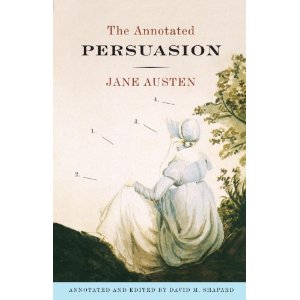
Last week I ran into Barnes & Noble to pick up the latest annotated Pride and Prejudice, edited by Patricia Meyer Spacks, and since then I have been “gadding about” as Austen would say – so no time to really give it a complete read and review; but in another trek yesterday into yet another Barnes & Noble [no worries, I also have haunted the local USED booksellers!], my husband stumbled upon the just published [as in October 5, 2010]  The Annotated Persuasion, annotated and edited by David M. Shapard [New York: Anchor Books, 2010; paperbound; ISBN:  978-0-307-39078-3] – and I have discovered a veritable feast! 

Shapard is known for his annotated edition of Pride and Prejudice [which I have but it is not in hand, as I am in “gadding about” mode as mentioned above…] – so I cannot compare this book to that edition [his annotated Sense & Sensibility is to be, I believe, published in April 2011] – though I have found that work quite useful as a reliable reference source – it was first published in hardcover followed by a paperback edition; this Persuasion is only in paperback… it is also a smaller format, likely because the novel is so much shorter, but this renders the many illustrations quite small – but I quibble about these few drawbacks …. publishers decisions do not always make the most sense… 

I first look for the extras:  

An Introduction which gives a brief history of the publishing of Persuasion, and the differences in this final novel from Austen’s other works

A Chronology of the novel [will compare this to Ellen Moody’s calendar 

Maps of sites that relate to the characters and storyline: the world, England, Somerset, Lyme, and two of Bath 

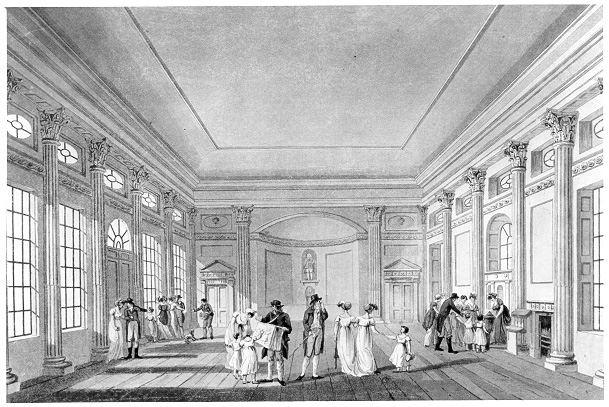
A good number of b/w Illustrations – there is unfortunately no listing of these; the source is indicated under each picture, but a listing would have served as an index to the subjects, which cover all manner of Regency life:  architecture such as that in Bath with interior and exterior scenes of the Assembly Rooms; various carriages; fashion; furniture; Naval life; the Cobb in Lyme Regis; etc.  – many of these illustrations will be familiar to most readers with a modicum of knowledge about the period – and color would have been nice – but the point here of these illustrations is to serve as a starting reference for further research, and it is an added plus to have any of these included. 

Bibliography:  this also serves as a starting point – it is in no way a complete listing of sources, but likely those sources that Shapard relied on for his research.  How complete can a bibliography of Austen be without mention of Claire Tomalin’s biography under that category, or Claudia L. Johnson’s Jane Austen: Women, Politics and the Novel or Kaplan’s Jane Austen Among Women nowhere to be found – but as Shapard is an historian, it is that strength that resides in this bibliography, again a great starting point for further study – it is organized by broad subjects:  language; cultural and literary background; marriage and the family; position of women; children; housekeeping and servants; entails and estates and the landed gentry; rural and urban life; the military; medicine; the law; education; books, media, libraries; writing; postal service; transportation; theater [but no mention of the two works Jane Austen and the Theatre – two works with the same title and both quite comprehensive]; music and dance; sports; weather; the seaside resorts; houses and gardens; fashion; food; etiquette and female conduct books; and others – again, a good select listing of resources on various topics.   

The Literary commentary and annotations:  Shapard begins with the caveat that “the comments on the techniques and themes of the novel represent the personal views and interpretations of the editor…such views have been carefully considered, but inevitably they will still provoke disagreement among some readers “ [xi] – which Shapard encourages…; these annotations include such literary commentary, historical context, and definitions of words in context if they had a different meaning in Austen’s time, some repeated when necessary or cross-references provided.  

The book is arranged with the original text on the verso, the annotations and illustrations on the recto – the annotations are extensive as the following few very random examples show: 

  1. Persuasion starts with the full description of Sir Walter Elliot’s obsession with both his own personal charms and his listing in the baronetage – Shapard here provides information on that book and others of the time and the definition of “baronet” and how Sir Walter acquired his own status…
  2. Gout is fully described on pages 311 and 315, when Anne learns that the Crofts are removing to Bath dues to the Admiral’s “gouty” condition.
  3. “replaced” – [p. 103] – “they suspected great injury, but knew not where; but now the collar-bone was soon replaced”   – the annotation explains that the word “replaced” had the meaning in Austen’s time of “to be put back in its original position” rather than “to take the place of” – there is also a description of anatomical knowledge as understood at the time.
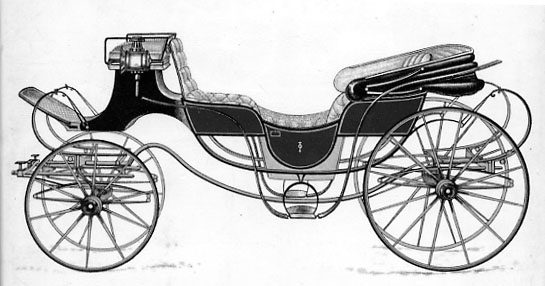
  4. Carriages get much attention whenever they are mentioned in the text – so we have descriptions and illustrations of barouches and chaise and fours, and chairs and of course Anne’s pretty little “landaulette” [p. 483]                                                                         
         

    a barouche


  5. Money and wealth – Wentworth’s income explained [p. 145]
  6. Servants:  various duties outlined [p.  87]
  7. Street names, shops, locations explained throughout; e.g. The Cobb; Tattersall’s [a mention on p. 14 with an illustration]; Milsom Street; Westgate Buildings;…etc…
  8. The Clergy in Austen’s time
  9. Austen’s language as delineating character:  as in the following: “Lady Russell had only to listen composedly, and wish them happy; but internally her heart reveled in angry pleasure, in pleased contempt” [p. 232] – and the annotation reads:  “Her reveling in such emotions indicates her moral inferiority to Anne, who never derives pleasure from anger or contempt.” [p. 233]
  10. Social rules and strictures:  some examples – Sunday traveling [p. 305]; shaking of hands between men and women [p. 427]; not using first names, even those of friends such as Anne and Mrs. Smith

 A look at a few key scenes will also illustrate Shapard’s invaluable commentary: 

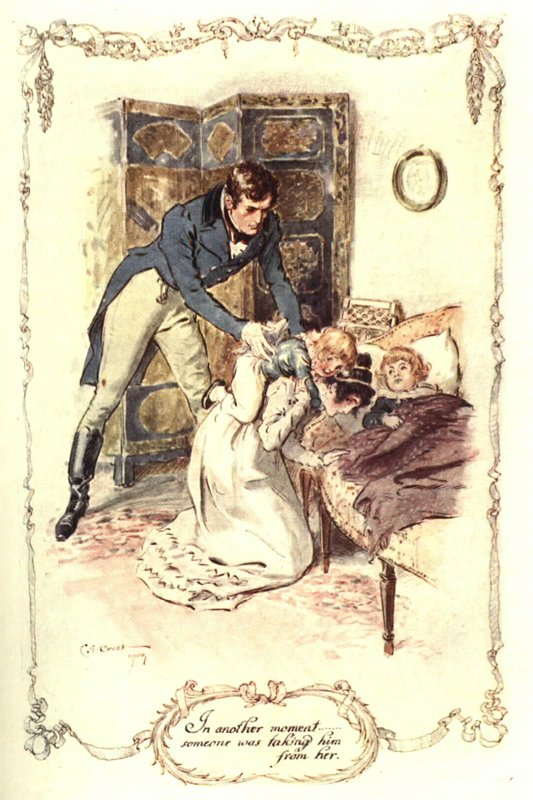
  1. Wentworth removing young Walter Musgrove from around Anne’s neck [pp. 152-5]:  Shapard emphasizes the importance of this scene in displaying both Anne’s and Wentworth’s feelings – he quotes William Dean Howell’s how “this simple, this homely scene, is very pretty, and is very like things that happen in life, where there is reason to think that love is oftener shown in quality than quantity, and does its effect as perfectly in the little as in the great events. [from Heroines of Fiction].  Shapard also suggests that Wentworth’s reluctance to converse with Anne about what has just happened is as much due to his efforts to remain aloof as it is to a “simple dislike of thanks,” [p. 155], as is true of Mr. Knightley in Emma. 
                                                                                                        

    Brock illus - from Molland's


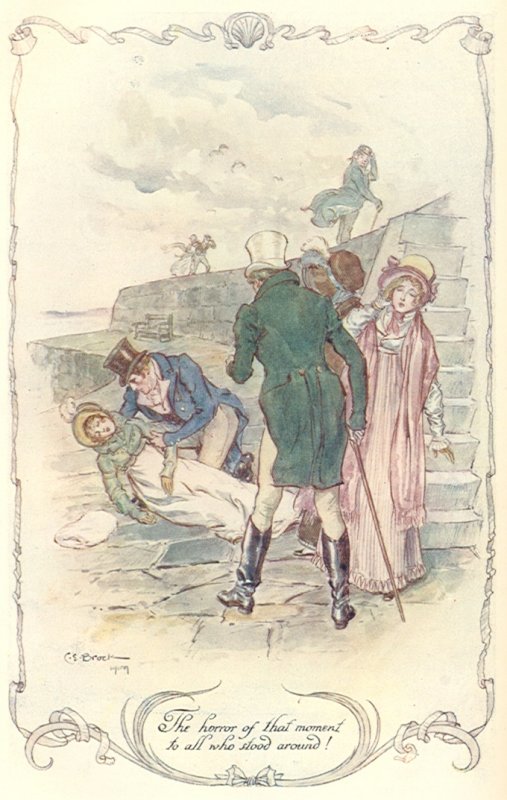
  2. Louisa’s fall in Lyme Regis [p. 210-15]:  Shapard describes the Cobb, the steps that were the scene of The Fall, comments on the feelings of Anne and Wentworth, the strength of the former and the uncharacteristic weakness of the latter; Anne’s carrying the “salts” [have you ever wondered why Anne IS carrying smelling salts and conveniently has them in her possession? – “here are salts – take them, take them.” [p. 210]]; the calling for the surgeon and the differences between he and an apothecary; the comic relief of “the sight of a dead young lady, nay, two dead young ladies, for it proved twice as fine as the first report.” [p. 213-4] 
    "The horror of the moment" - from Molland's


  3. and of course, The Letter! [p. 452] – Shapard so rightly states that “Wentworth’s passionate language contrasts him with other Jane Austen heroes, who are often much cooler and more rational.  It also fits with the more intense emotional tone of this novel … the letter itself is arguably the moment of highest emotion in her works…” [p. 453]  – and we are given a picture of a writing table of the time [p. 457] – there is also extensive commentary on the conversation between Capt. Harville and Anne. 

As referred to above, there are disappointments in this work – I would most wish for an index to the annotations – these could be just general subject areas, such as similar divisions as in the bibliography – so for instance – all annotations which discuss medicine could be cited, or any references to carriages, or fashion, or Bath locations, the Navy, or examples of Free Indirect Discourse, the literary allusions such as Byron’s The Corsair and Matthew Prior’s poem “Henry and Emma”, etc.  As it is, one needs to read through the entire work to find the references, and as Shapard wishes for this to be a work for reference purposes, this addition of an index would seem to be a necessity.  A index of Characters would have also been a helpful addition – one must reach for their Chapman for this information; and finally there is also no “note on the text”, important information in any such reference source – the bibliography lists Chapman’s 1933 edition, Spacks’s Norton critical edition [1995]; and the latest Cambridge edition edited by Janet Todd and Antje Blank [2006] – but I would have liked to see from whence he took the exact text…

That all said – this is a delightful and fact-filled addition to your Austen Library – and if you are already fairly well-versed in the Regency period and Austen criticism, this will serve as a copy of Persuasion where much of this information is at your fingertips; if you are just starting your adventure in reading Austen, this will be a great introduction to the very rich world of her writings, her world, and her literary themes – what more can we ask for!  [other than a hardcover with an index!]

 4 full inkwells out of 5

[please note that the illustrations are meant to illustrate this post and are not illustrations in the work being reviewed] 

Austen Literary History & Criticism · Jane Austen · Regency England · Social Life & Customs

Thoughts on Travel in ‘Sense and Sensibility’

Sense & Sensibility is about so many things, but there is an emphasis on income, inheritance and money, and how the world of the late 18th, early 19th century figured in the lives of Austen’s characters, especially the women in her novels.  But one of the things one notices after a number of readings is the amount of movement in this novel – the constant  comings and goings of the characters, with their visiting, travels to London, moving from one end of England to the other.  On first reading, you might almost miss the extent of this movement, after all, nothing really ever happens in Austen, isn’t that what we always hear?!  But take a look at the map on the JASNA.org site for Sense and Sensibility and you will see what I mean. And if you know anything about travel in late 18th – early 19th century England, you will be know how arduous such travel was.  I am going to chart the movement of characters in the novel and the means whereby they moved from place to place, or as Mrs. Jennings so aptly asks of the Misses Steele:  “How did you travel?”  

Austen knew first-hand the travel issues of her day [read her letters!] – and she was very knowledgable and consistent in writing about it in her novels – often not necessarily specific but there are clues all around!   But alas!, there is so much to discuss about travel: carriages and their parts; the history of the postal system; the history of coaching and the turnpike system; the economics of the time – taxation, income and inheritance – all these; but I will in the next several posts offer a brief outline of the travel in Regency England, its difficulty and costs with a few thoughts on economics; then a discussion of movement in S&S; the types of carriages in use in Regency England and those used by Austen’s characters; and finally a few words on the London of S&S – it has the most mention of any of her novels, and interesting to see where each character was housed in Town.  And at the end of this series of posts, I will provide a bibliography and further reading references.
 

 Part I:  Travel in Regency England  

[English Counties: Map from JASNA.org]

  • -The difficulty of travel due to the condition of the roads – each parish was responsible for its own roads but they were largely dirty and muddy, and dangerous
  • -most people traveled by foot:  certainly true of the lower classes, but recall Mrs. Dashwood: 

 …his [Mr. Middleton’s ] repeated assurances of his carriage being always at their service, the independence of Mrs. Dashwood’s spirit overcame the wish of society for her children; and she was resolute in declining to visit any family beyond the distance of a walk.  

  •   -traveling in vehicles in the daytime or only in the nights with bright moonlight, little travel in winter, no travel on Sunday
  • -improper for women to travel alone [if you read Austen’s letters, you will see that she was completely dependent upon her brothers to visit anyone or travel any distance; and how outrageous that Northanger Abbey’s Catherine Morland was put on that coach all alone!]
  • -for overnights at coaching inns, travelers often brought their own linens or silverware…
  • -travel vehicles were uncomfortable and dangerous due to the road conditions and highwaymen
  • -despite all this, the late 18th-century saw a great improvement in the roads, and one could travel great distances more quickly [and if they had the money!].   Paterson’s British Itinerary, a travel guide had 17 editions between 1785-1832 – it outlined the roads used by the stage and mail coaches, the tolls, the bridges, etc.   

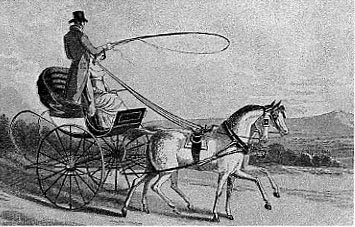
[Image from Georgianindex.net]

A quick review of travel times [varies depending upon vehicles]:  

  • – Mr. Darcy:  8 miles/hr –  recall his famous line to Elizabeth:  ‘what is 50 miles of good road? little more than half a day’s journey’
  • -the Stage Coach [and General Tilney]:  7 miles /hr
  • -average travel time:  4-6 miles / hr
  • -100 miles = 2 days of travel [and remember, no travel on Sunday]
  • -in 1800, London to Edinburgh took 60 hrs; London to Norwich, 19 hrs 

The estimated mileages in Sense and Sensibility: [this is in todays distances] 

  • London to Bristol = @ 106 miles
  • London to Bath = @ 97 miles
  • London to Exeter = @ 157 miles
  • London to Plymouth = @ 192 ,iles
  • Exeter to Honiton = @ 16 miles
  • Honiton to Weymouth = @ 35 miles

[Map of S&S: from JASNA.org]

Cost of living ~ some basic facts: 

The economy in Britain during this time was very unstable – hard to effectively calculate the meaning of what the cost of living was in the early 19th century and to compare it with ours today; also some items cost more in Austen’s times than they do today, some less.

One 1988 article calculated that one pound in 1811 = $33., so Darcy’s income of 10,000 = $330,000.  The following month another article said that to compare 1810 with 1990, one should multiply today’s average per capita income by 300 [in 1990 this was $20,894.] = $6,300,000. would be Darcy’s income in today’s language.  Another article:  the pound in 1800 = $100. , so Darcy’s 10,000 = 1 million! – to be honest I just got dizzy with this whole thing!  [There are various websites where you can play around calculating these amounts, such as Measuring Worth, and the National Archives Currency Converter]

And remember that Austen often tells you exactly what someone is worth – this was common knowledge at the time and was not considered rude to talk about it.  But when there is a reference to money, for the men, she is referring to their annual income [Darcy 10,000; Bingley 5,000; Brandon 2,000; etc], but when referring to a woman, the reference is to her total assets, i.e. this money would be invested at 5% and she would earn the income from that each year, so Miss Gray’s 50,000 [Austen’s richest woman] is not her income, but rather the income from that, so £2,500 / year to live on.  [note that this is not always consistent, but is largely a general rule in Austen]

 So rather than trying to figure out what something would be worth today, it is better to look at the cost of living, i.e. what things cost in Austen’s time,  so to gain some perspective, keep the following in mind:

  • the world that Jane Austen writes about and the world we see visually in the film adaptations portrays a very small minority of the population, the “Polite World”, the upper 10,000; Austen might give various clues in each novel to that other world, but it is easy to forget it when reading about the romance and balls and carriages and fashion, etc.   
  • Edward Copeland, an Austen scholar who has written much on the economics of Austen’s world, and says she was “meticulous” in presenting these economic truths, states that this economic world in S&S is presented in terms of the power that money brings with it, and the frightening aspect of this for the women in the novel, where it seems that the “wicked, foolish and selfish” are rewarded.  
  • in 1799, in order to support and pay for the war with France, the British Government imposed a tax of 2s / pound on all income over £200; there were also taxes on windows, on malt, sugar, tea, coffee [considered a luxury tax], etc… 

Some hard economic facts ~ in a world where the lowest “respectable” income would be about £50 / year: 

  • a common laborour:  £25 / year – this to maintain himself, his wife, and 6 children in food, lodgings, clothes and fuel 
  • governess:  £25 / year 
  • curate w/ house and garden:  £40 / year  
  • average gentleman = £150 /yr
  • for a gentleman in 1825 with an income of £250 – for himself, his wife, three children and a maidservant, food cost a little over £2.5 / wk = £135 /yr.
  • £370 /yr – will support 2 servants 
  • £500 /yr – will support two servants, a boy, an occasional gardener  [Mrs. Dashwood and three daughters] 
  • Edward & Elinor when married will have £850  [after his mother gives him money – they would have married with only 350 – see Copeland in Cambridge Companion.]
  • £800 – 1200 will support a carriage  [hence Willoughby is living way beyond his means, as we shall see…]
  • £5000+ – the minimal income needed to partake of the “London Season” – [The John Dashwoods, etc] – renting and running the household, elegant parties, stabling horses, clothing, etc.

So if Austen doesn’t tell us directly about a character’s income, you can figure it out by inference:  London? any carriage? how many servants? 

 Costs of travel:  [estimates for 1800] 

  • Stage Coach:  2-3 pence / mile = 1.25 pounds from London to Bath / half-price if up top / outside [but remember the average income was about £30 / year 
  • Hired post-chaise =  estimate about £1 / mile [i.e @1 shilling / horse / mile, to include the postillion] 

Costs of Horses: for hunting, racing, riding, pleasure drives

  • -expensive to buy and maintain:  cost = 100 pounds; annual maintenance 120 pounds to stable in London
  • -costs of the carriages [discuss later] – but there were also taxes on private carriages and horses; toll roads
  •  -for perspective:  in 1801, 8 million population in England; in 1814, there were 69,200 taxed carriages [i.e. less than 1 / 100]:  23,400 four wheeled; 27,300 two-wheeled; 18,500 “tax-carts” [basic springless vehicles] [quoting All Things Austen]

 The economic realities in S&S ~ remember that Mrs. Dashwood could not keep a horse or a carriage after the loss of their inheritance:  

1.  Narrator on the Henry Dashwoods: 

…the horses that were left her by her husband had been sold soon after his death, and an opportunity now offering of disposing of her carriage, she agreed to sell that likewise at the earnest advice of her eldest daughter.  [and she had 500 pounds a year!]

 2.  Narrator on Willoughby’s gift of a horse to Marianne [his irresponsibility – the realities of owning a horse]:  

 …Willoughby had given her a horse, one that he had bred himself on his estate in Somersetshire, and which was exactly calculated to carry a woman.  Without considering that it was not in her mother’s plan to keep any horse, that if she were to alter her resolution in favour of this gift, she must buy another for a servant, and keep a servant to ride it, and after all, build a stable to receive them…

 3.  Marianne on a competence:  she wants 2000 pounds a year: 

I am sure I am not extravagant in my demands. A proper establishment of servants, a carriage, perhaps two, and hunters, cannot be supported on less.   [the irony being that that is exactly the income of Colonel Brandon!]  – and of course, Elinor responds:

TWO thousand a year! ONE is my wealth!

4.  Fanny Dashwood in the infamous scene talking down the inheritance: 

Their housekeeping will be nothing at all.  They will have no carriage, no horses, and hardly any servants; they will keep no company, and can have no expenses of any kind!

 And on that happy note, I will pause ~ next up:  what is the income of the characters in S&S, where do they live, and to where do they travel in this novel of many travels?


[Posted by Deb]

Austen Literary History & Criticism · Books · Collecting Jane Austen · Jane Austen · News

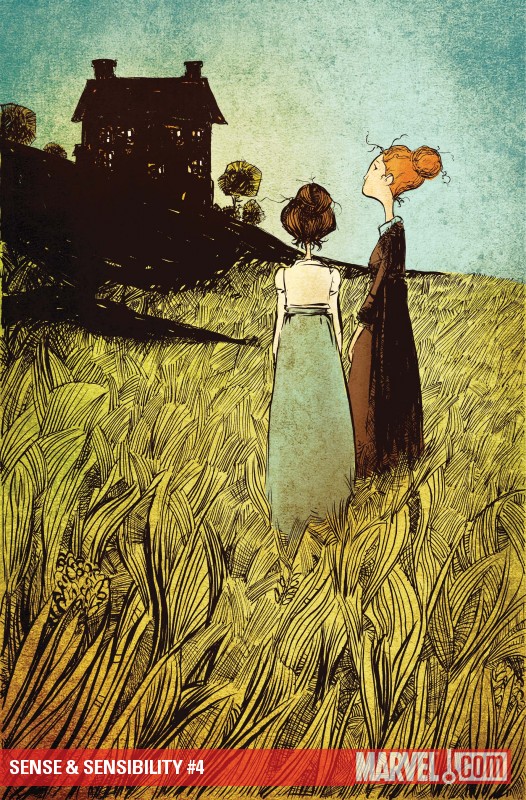
‘Sense & Sensibility’ Marvel edition ~ An Interview with Nancy Butler

This is today on the B&N Romance Blog  ~ Marisa O’Neill posts her interview with the Marvel Comics / Jane Austen adaptations writer Nancy Butler:

Marisa O’Neill: What gave you the idea to create graphic books from the Jane Austen classics?

Nancy Butler: I’ve been friends with Marvel senior editor Ralph Macchio for many years. Since we first met, I’ve been nagging him to create comics that would bring in more female readers. Whenever he described the Marvel Illustrated line, he kept bringing up “boy” books . . . Treasure Island, Moby-Dick, Three Musketeers, etc. I finally asked him why they didn’t do something that would appeal to female readers. “Like what?” he asked. Pride and Prejudice immediately popped into my head. He was a bit skeptical, but when he pitched it to marketing, they bit. And then they asked him if he knew someone who could write the adaptation. Ralph knew my background writing Regency romances, knew I had a fan following and contacts in the Austen world, so he suggested me.

MO: Why Pride and Prejudice?

NB:  I pointed out to Ralph that between the enduring BBC series with Colin Firth, the Bridget Jones movies, and the Kiera Knightly movie, P&P was hot, hot, hot. He thought I was exaggerating, but before the hardcover compilation was even available for sale, the Jane Austen Society had ordered enough copies to put the project in the black. The sales manager also reported that they were getting more emails about that comic than almost any other title on their list. Ultimately, P&P was reviewed in Entertainment Weekly, spent 13 weeks on the NY Times Graphic Novel bestseller list, and was the featured photo in an article on graphic adaptations in Publisher’s Weekly. I was also interviewed by Vanetta Rogers of Newsarama and by Bill Radford, the comics guru at the Colorado Springs Gazette. (Bill told me his column on P&P was among the most shared for 2009.) Naturally, after all this attention, Marvel was eager to do another Austen title and they chose Sense and Sensiblilty.

MO: How do you go about condensing each book to fit into the installments?

NB: This is the tricky part. First of all, I had never done an adaptation before. And I had to learn the Marvel style—which involves creating a detailed plot and then writing a script after the art is done. I knew I couldn’t condense every part of these complex novels into five 22-page comics. So I focused on the parts I knew people expected to see . . . all the favorite “beats”—the clever exchanges, the arguments, the catty comments, the heartfelt revelations. Once I built that basic framework of “must have” scenes, I filled in directly from Austen to flesh out the stories. Whenever possible, I use Austen’s dialogue and observations. I’m always amazed—after each issue is completed—by how much I was actually able to fit in there! My great hope is that readers don’t find the comics either crowded or choppy.

MO: Did you work closely with the graphic artist?

NB: Yes, it’s critical to have good communication with the artists, especially since they weren’t as familiar with the Regency era as I was. I worked with Hugo Petrus of Barcelona on P&P. Hugo has a very traditional comic style that some felt was wrong for Austen. But I liked his attention to detail. Sonny Liew of Singapore did three of the P&P covers . . . and based on favorable reader response, Marvel decided to have him do the interiors of S&S. His style is more lyrical and idiosyncratic, and I think it fits Austen very well.
___________________________________________________________

[see the full text at the BN Romance Blog]

Note that Issue # 4 [cover above] was released on August 25, 2010; Issue #5 will be released on September 22; and the hardcover edition on November 10th.  At $3.99 / comic and $19.99 for the hardcover, this might be the least expensive [and most fun!] addition to your Austen collection! so call your local comic book store today!  [in Burlington, this is Earth Prime Comics on Church Street].

[Posted by Deb]

Austen Literary History & Criticism · Jane Austen · Query

Today in ‘Pride & Prejudice’ ~ Inquiring Readers Want to Know…

According to Ellen Moody’s calendar for Pride & Prejudice , it is on Friday / Saturday, Sept 4 -5, 1812, that Elizabeth writes to her Aunt Gardiner for an explanation of Lydia’s reference to Mr. Darcy’s attendance at her wedding:  Vol. III, ch. IX, 319-20 (Chapman).

   “Mr. Darcy!” repeated Elizabeth, in utter amazement. 

   “Oh, yes! – he was to come there with Wickham, you know. But gracious me! I quite forgot! I ought not to have said a word about it. I promised them so faithfully! What will Wickham say? It was to be such a secret!”

   “If it was to be secret,” said Jane, “say not another word on the subject. You may depend upon my seeking no further.”    

  “Oh! certainly,” said Elizabeth, though burning with curiosity; “we will ask you no questions.” 

   “Thank you,” said Lydia; “for if you did, I should certainly tell you all, and then Wickham would be angry.” 

   On such encouragement to ask, Elizabeth was forced to put it out of her power by running away. 

   But to live in ignorance on such a point was impossible; or, at least, it was impossible not to try for information. Mr. Darcy had been at her sister’s wedding. It was exactly a scene, and exactly among people, where he had apparently least to do, and least temptation to go. Conjectures as to the meaning of it, rapid and wild, hurried into her brain; but she was satisfied with none. Those that best pleased her, as placing his conduct in the noblest light, seemed most improbable. She could not bear such suspense; and hastily seizing a sheet of paper, wrote a short letter to her aunt, to request an explanation of what Lydia had dropped, if it were compatible with the secrecy which had been intended.

    “You may readily comprehend,” she added, “what my curiosity must be to know how a person so unconnected with any of us, and (comparatively speaking) a stranger to our family, should have been amongst you at such a time. Pray write instantly, and let me understand it – unless it is, for very cogent reasons, to remain in the secrecy which Lydia seems to think necessary; and then I must endeavour to be satisfied with ignorance.”

    “Not that I shall, though,” she added to herself, as she finished the letter; “and, my dear aunt, if you do not tell me in an honourable manner, I shall certainly be reduced to tricks and stratagems to find it out.” 


[Aunt Gardener’s reply is dated Sept. 6 from Gracechurch-street, in Ch. X, 321-325]

So, Inquiring Readers, my question is, as we read this last paragraph – does Elizabeth say that last line to herself, or is it written in the letter to her Aunt?

[Posted by Deb] 

Austen Literary History & Criticism · Books · Jane Austen · News · Uncategorized

New issue! ~ ‘Jane Austen’s Regency World Magazine’

News from the Editor of  Jane Austen’s Regency World magazine: the September/October 2010 issue is published this week:  


Featured on the cover is a scene from The Secret Diary of Anne Lister, the BBC’s new drama about a Georgian heiress who follows an unconventional path in life and love.

Highlights of the new issue of the magazine include: 

  • The Latin touch: how Jane’s fame is spreading in Brazil 
  • A very secret diary: the heiress Anne Lister’s love for a woman has been turned into a film 
  • A Cornish exile: Maggie Lane explores the life and times of Charles Austen, Jane’s seafaring brother 
  • Jane’s best jest: Paul Bethel compares Emma with Mansfield Park 
  • Required reading: Sue Wilkes explains how no Georgian gentleman could afford to miss 
  • Enter stage right: Jane Austen would have known the old Theatre Royal in Bath 
  • My Jane Austen, Marsha Huff: The outgoing president of JASNA shares her love of Jane Austen

Full details of Jane Austen’s Regency World Magazine, which is published every two months, are available on our website http://www.janeaustenmagazine.co.uk/

******

 Jane Austen’s Regency World Magazine is also delighted to announce that it will be at the following events:

  •  Bath Jane Austen Festival, country fayre at the Guildhall, Bath, on Saturday, September 19
  •  JASNA AGM, Regency Emporium, in Portland, Oregon, October 28-30

Readers are invited to visit our stand and say hello!

[Posted by Deb, who will write more on this when it shows up in her mailbox…]

Austen Literary History & Criticism · Jane Austen · JASNA-Vermont events · News · Schedule of Events

JASNA-Vermont ~ Schedule of Events

I append here the information on our next meeting, the full schedule of the JASNA-Vermont Region events for 2010-11, and the year’s schedule for the JASNA-Massachusetts Region.  We certainly can say the Northeast is doing its very best to share and enjoy Jane! ~ if only one could go to all of them…

***

You are Cordially Invited to JASNA-Vermont’s
September Meeting 

Marsha Huff on 

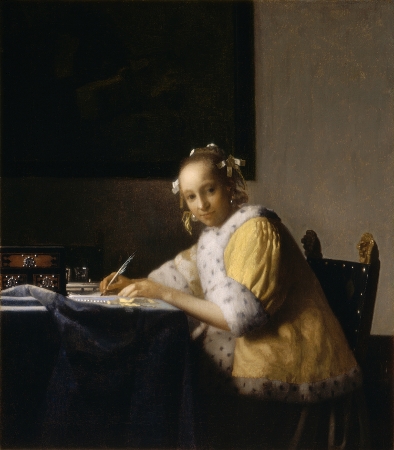
~Viewing Austen through Vermeer’s Camera Obscura*~  

~Ms. Huff is the current President of JASNA~
*An illustrated lecture pairing paintings by Vermeer with scenes from Austen’s novels  


**********


Sunday, September 26, 2010   2 – 4 pm 

~ An event of the Burlington Book Festival ~
~ Sponsored by Bygone Books ~
Hosted by: Champlain College,
Hauke Conference Center

375 Maple St Burlington VT  

Free & Open to the Public!
Light refreshments served 

For more information:   JASNAVermont [at] gmail [dot ] com 
Please visit our BLOG at: http://JaneAustenInVermont.wordpress.com
Burlington Book Festival:  http://www.burlingtonbookfestival.com

************************************ 

JASNA ~ Vermont
‘Dates for Your Diary’ ~ 2010 – 2011 

September 26, 2010, 2 – 4 pm     

“Viewing Austen through Vermeer’s Camera Obscura”
With JASNA President Marsha Huff
Burlington Book Festival ~ sponsored by Bygone Books
Place:  Champlain College 

December 5, 2010, 2 – 5 pm 

Annual Jane Austen Birthday Tea !!
w/ Dr. Peter Sabor [McGill University] on the Juvenilia*
and Dr. Elaine Bander [Dawson College / JASNA-Montreal] on Mr. Darcy*[*subject to change]
Place:  Champlain College
$20. / person

 March 27, 2011, 2 – 4 pm 

 “Jane Austen’s London in Fact and Fiction”
A visual tour w/ Suzanne Boden & Deb Barnum
Place:  Champlain College 

June 5, 2011, 2 – 4 pm 

Music in Jane Austen’s World:  A Concert with Dr. William Tortolano
[Professor Emeritus, St. Michael’s College]
Place:  Chapel at Vermont College of Fine Arts [Montpelier]
$10. / person 

******************************

JASNA-Massachusetts Region
‘Dates for your Diary’ ~ 2010-2011

September 19, 2010 

             Pamela Bromberg: “The Films of Northanger Abbey:
‘are they all horrid?’ 

SPECIAL EVENT       October 17, 2010 

         John Wiltshire: “Mr. Darcy’s Smile”

 November 14, 2010 

         Sarah Emsley: “Everything She Ever Wanted: Marriage and Power in Novels by Jane Austen and Edith Wharton” 

December 12, 2010 

         BIRTHDAY CELEBRATION: TBA 

March 20, 2011

          Nancy Yee: “John Thorpe, Villain Ordinaire: The Modern Montoni/Schedoni” 

May 1, 2011 

         Rachel Brownstein: “Why Jane Austen?”

*********************

Hope you can join us for some [or even better, all] of the events!

[Posted by Deb] 

Austen Literary History & Criticism · Books · Jane Austen · News · Regency England · Schedule of Events · Social Life & Customs

A Jane Austen Weekend in Vermont!

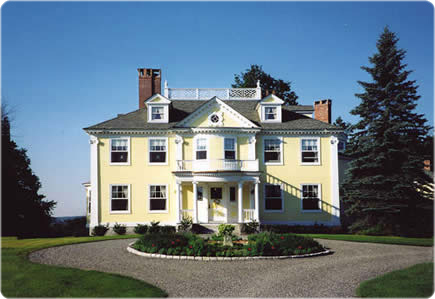
The Governor’s House in Hyde Park will be hosting another Jane Austen event this coming weekend August 13 -15, 2010  ~ topic is Sense and Sensibility.

 Jane Austen Weekend: Sense & Sensibility
The Governor’s House in Hyde Park
Friday to Sunday, August 13-15, 2010

http://www.OneHundredMain.com/jane_austen.html
802-888-6888, tollfree 866-800-6888 or info@OneHundredMain.com

 Reservations are required! 

A leisurely weekend of literary-inspired diversions has something for every Jane Austen devoteé. Slip quietly back into Regency England in a beautiful old mansion. Take afternoon tea. Listen to Mozart. Bring your needlework. Share your thoughts at a discussion of Sense & Sensibility and how the movies stand up to the book.  Attend the talk entitled ~ “Making Sense of Jane Austen’s World” * ~  Test your knowledge of Sense & Sensibility and the Regency period and possibly take home a prize. Take a carriage ride. For the gentleman there are riding and fly fishing as well as lots of more modern diversions if a whole weekend of Jane is not his cup of tea. Join every activity or simply indulge yourself quietly all weekend watching the movies. Dress in whichever century suits you. It’s not Bath, but it is Hyde Park and you’ll love Vermont circa 1800. 

  **************************

* “Making Sense of Jane Austen’s World” – Inn owner Suzanne Boden will be talking on the architecture, furnishings and other decorative arts of the Regency Period; Deb Barnum of JASNA-Vermont [yours truly] will be talking about travel in the late 18th and early 19th century – the horse and carriage era – and how Austen’s characters travelled in Sense & Sensibility – [and there is a lot of moving about in this book!]

*Or come for just an afternoon or evening and choose from these activities:

  • Informal Talk with Coffee and Dessert, Friday, 8:00 p.m., $14.00
  • Afternoon Tea, Saturday, 3:00 p.m., $20.00
  •  Book Discussion and Dinner, Saturday, 7:00 p.m., $35.00
  •  Jane Austen Quiz and Sunday Brunch, Sunday, 11:30 a.m., $15.00
  • All four activities: $75.00

The Governor’s House in Hyde Park
100 Main St
Hyde Park, VT 05655
http://www.OneHundredMain.com/jane_austen.html
802-888-6888, tollfree 866-800-6888 or info@OneHundredMain.com

**If you cannot make this weekend, make a note on your calendars of the  following dates as well:

series 3: Sense and Sensibility
Friday evening talk: Making Sense of the Regency World

Friday – Sunday, September 10 – 12, 2010
Friday – Sunday, January 7 – 9, 2011

******************************

and for your 2011 calendar:

series 4: Persuasion
Friday evening talk: Captain Wentworth’s Royal Navy
Friday – Sunday, January, 28 – 30, 2011
[other dates TBA]

Austen Literary History & Criticism · Book reviews · Books · Collecting Jane Austen · Jane Austen · Publishing History

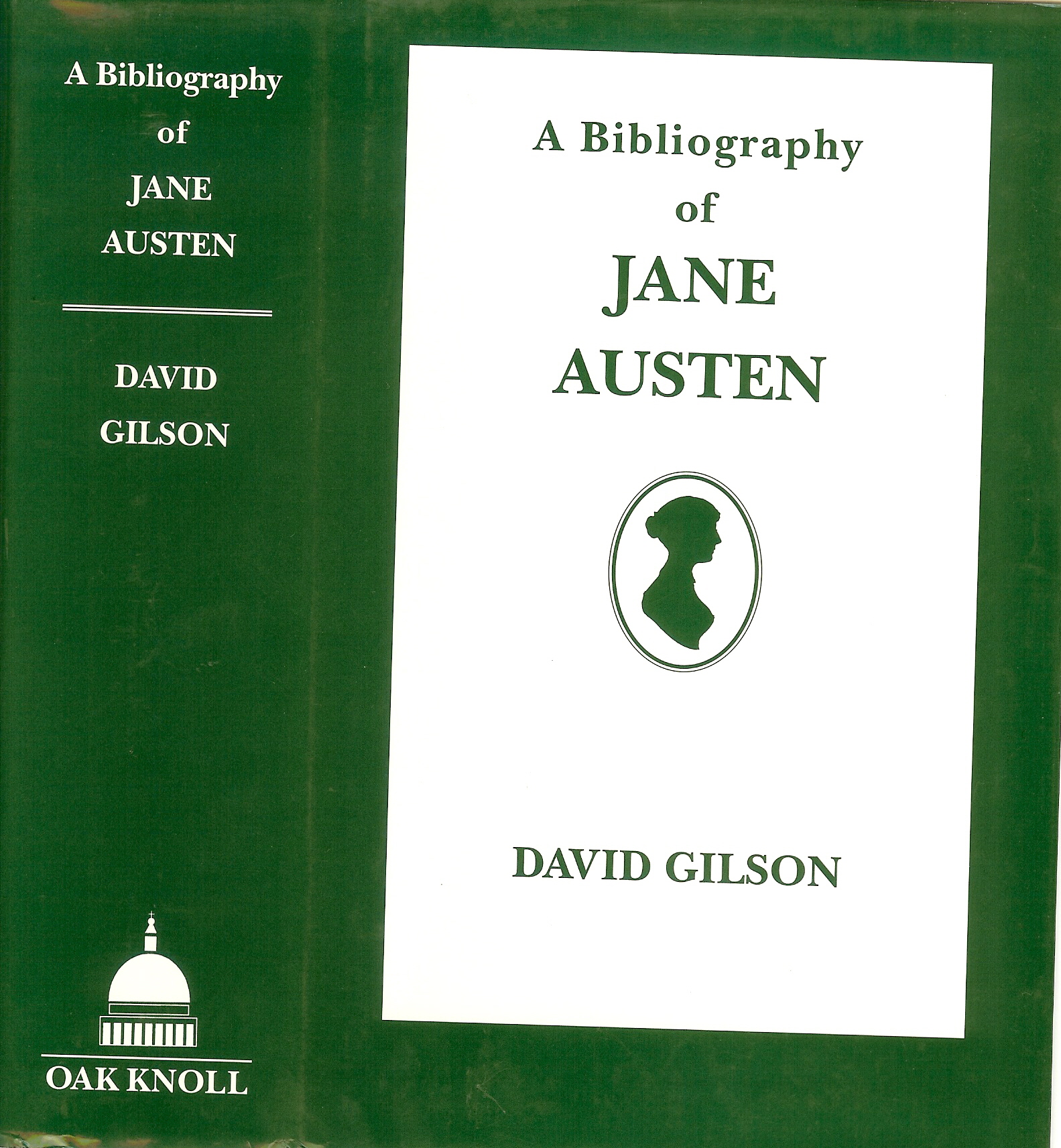
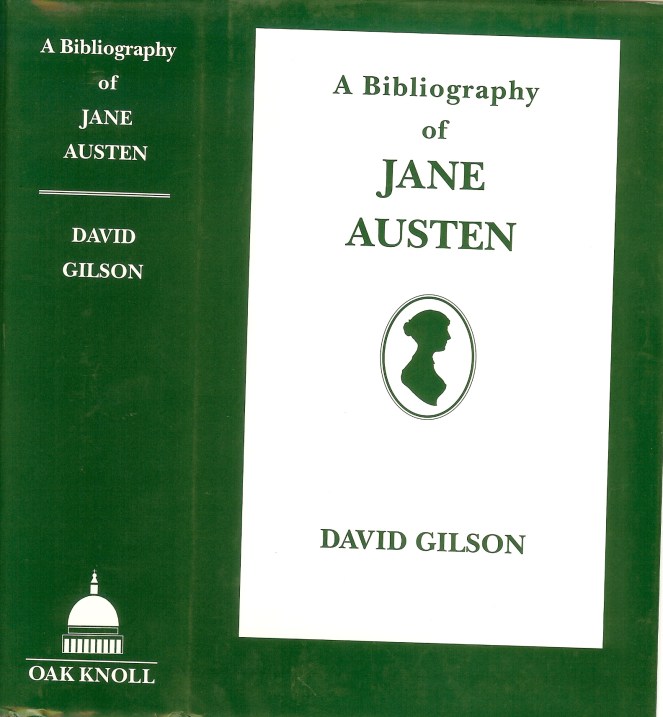
Your Jane Austen Library ~ Gilson’s Bibliography ~ a Review

Gilson, David.  A Bibliography of Jane AustenNew Introduction and Corrections by the Author.  Winchester: St. Paul’s Bibliographies  / New Castle, Delaware: Oak Knoll Press, 1997.

***********************

 I am often asked what I would consider the most important book to add to ones own “Jane Austen Library.”  Primary sources of course, the Chapman Oxford set of all the novels, minor works, juvenilia, etc – these volumes remain the source for citation in any scholarly work.  The new Cambridge edition would be lovely, but presently beyond my pocketbook, so the local University Library suffices for this ;  though I do wonder when this edition of the works will supplant the Chapman for citation purposes – shall start saving now…

But after that, what?   I would choose and most highly recommend David Gilson’s Bibliography of Jane Austen.  Originally published in 1982, Gilson had set out to revise and update the Sir Geoffrey Keynes’ 1929 Nonesuch Press Austen bibliography, after discovering the lack of information in the Keynes relating to the early American editions of Austen’s works.  Gilson wrote about these and other discoveries of the various early translations in his articles for The Book Collector.  At Keynes’ suggestion, Gilson began a second edition but found it best to present a whole new work based on Keynes but with much additional information and to include the work of Chapman in his 1955 Austen bibliography.  The 1997 edition is not a revision of the 1982 work but does include a new introduction, corrections, some additions, and a brief bibliographic essay on material published since 1978It is less physically attractive and lacks the frontispiece illustrations of the 1st edition, but I consider this very comprehensive work [at 877 pages!] the starting point for all Austen research. Gilson writes a very informative essay prefacing each of the twelve chapters, includes a chronological listing of editions and reprints and an exhaustive index that links back to all the entries.

I offer here a brief capsule of each of these chapters:  

A.  The Original Editions:  Gilson follows the principles set down by Philip Gaskell in his New Introduction to Bibliography [1972] and the entry for each original edition is exhaustive: full bibliographical details of the physical book [title; collation; contents; technical notes on the paper, printing, headlines, chapter headings and endings, binding; etc]; its publishing history; reviews and contemporary comments; later publishing history; auction records [fascinating!]; listing of copies examined; and other copies known to exist. [I LOVE this stuff!] 

B.  First American Editions:  as Austen mentions nothing about foreign editions of her work, Gilson assumes she knew nothing about the Emma that was published by Matthew Carey in 1816, a very rare edition, and unknown of by the earlier bibliographers – [Gilson B1].  Gilson again gives full bibliographical data as for the original editions, noting the textual variations in punctuation and spelling. 

C. Translations:  as Gilson states, despite that “JA’s opinion of the French seems not to have been high [citing her letter of Sept  8, 1816]…the French first paid her the compliment of translating her novels in 1813 and 1815.” [Gilson, p. 135]  Same full bibliographic details here for the various translations. 

D.  Editions Published by Richard Bentley:  no reissue of Austen’s novels is known after 1818 until 1832 when Richard Bentley decided to include them in his series of Standard Novels [quoting Chapman].  The copyrights had been sold to him by Cassandra for £210 and the P&P copyright was purchased from Egerton for £40.  [Gilson, p. 211]  Covers all the Bentley editions through 1882, with bibliographical details. 

E.  Later Editions and Selections:  lists “as far as it has been practicable” all other later editions of the novels from the 1830s onwards, with cursory bibliographical details and a focus on the statistical details for these editions, excepting the “textually significant edition edited by Chapman (E150)” [Gilson, p. 238] – there are 425 entries in this section. 

F.  Minor Works:  great literary history here! – with complete bibliographical details for Lady Susan, The Watsons, Charades, Love & Freindship, Sanditon, “Plan of a Novel”, Persuasion chapters, Prayers, the Juvenilia, etc. 

G.  Letters:  Brabourne, Bodley Head, Chapman editions, Le Faye coming later [the new 3rd edition, in 1995] 

H.  Dramatisations:  Gilson states that in 1929 Keynes could only find three dramatic adaptations, but fifty are listed here, and only those that are published works, and surprise of surprises, P&P being the most popular. [Gilson, p. 405]

J.  Continuations and Completions  [no “I” so not skipping anything]:  Gilson lists 14, adds a good number in his 1997 update, but since then the world has been inundated with all manner of sequels, prequels, and mash-ups –  this chapter is a good starting point for some of the less known early sequels that have gotten lost in the back room library stacks – some are quite good [Brinton and Bonavia-Hunt for example]

K.  Books Owned by Jane Austen:  there is much evidence of what Austen actually read – in Chapman’s indexes and other studies on literary influences on her – but as Gilson states, “the actual copies prove more elusive” [p. 431], so these twenty entries listed are noted in some way to have been subscribed to by her or inscribed in some way – the essay here is very informative and great to learn of the provenance of some of these titles Austen owned and read.  [Note:  I have set up a page in the Bibliography section on this blog titled Jane Austen’s Reading ~ a Bibliography –  a list of all the books that Austen owned or is known to have read, compiled from various sources – it makes a great reading list! – (it is still a work in progress…)]

L. Miscellaneous:  the ever-needed catch-all and quite a little find, as Gilson says “unclassifiable miscellanea (with yet a curious fascination of their own!) [p. 449] – for example an Elizabeth Goudge short story “Escape for Jane”, a romanticized re-telling of the Harris Bigg-Wither episode (L24), a number of works adapted for children, and a few works on the Leigh-Perrot trial.

M.  Biography and Criticism:  everything from 1813 on, to include books, journal articles, reviews, etc, chronologically arranged and annotated [though not consistently], 1814 items in total, with a bibliographical essay in the updated version to touch on recent resources, ALL examined by Gilson personally.  No words here to adequately explain this section – just an amazing piece of scholarship –

Appendix:  ca chronological listing of all editions, reprints and and adaptations of JA’s works recorded in the bibliography

Index:  pp. 753-877 – exhaustive!

… but here of course is where any printed book falls short – before it hits the stands, it is outdated. Recent efforts to keep Austen bibliography current have been largely produced by Barry Roth in his three works:

  • Roth, Barry and Joel Clyde Weinsheimer.  An Annotated Bibliography of Jane Austen Studies, 1952-1972.  Charlottesville, VA: University Press of Virginia, 1973.
  • Roth, Barry. An Annotated Bibliography of Jane Austen Studies, 1973-1983.  Charlottesville, VA: University Press of Virginia, 1985.
  • __________.  An Annotated Bibliography of Jane Austen Studies, 1984-1994.  Ohio University Press, 1996.
  • __________ .  bibliographies  in Persuasions and Persuasions On-Line published annually by the Jane Austen Society of North America [JASNA]: each annual issue has a bibliography titled “Jane Austen Works and Studies” [and later the  “Jane Austen Bibliography”] and is available online since the 1999 bibliography appeared in the 2001 Persuasions On-Line. [Note that the bibliographies in the earlier issues of Persuasions were compiled by Patricia Latkin, and later by Latkin and Roth together, then just by Professor Roth.]

And now the Internet with such immediate access to journals and books, tons of bibliographies, etc. has made all of us capable of being completely on top of everything every minute of the day – but for me, there is nothing quite like going to my Gilson to get back to those earlier days of bibliography, when a scholar such as he lovingly handled each work and made the effort to describe with such fullness each edition so it may become present before you [because you certainly cannot afford them!] and thus we are brought a little bit closer to the Austen we all love and admire – indeed, we can feel as excited as she did upon receipt of her own first copy of Pride & Prejudice as she exclaimed to Cassandra I want to tell you that I have got my own darling Child from London “ [Le Faye, Letter 79, p. 201]

If you don’t have this book, get it – it makes for fascinating reading! [I confess to being a librarian and I know we are all a little bit weird about this bibliography and classification thing, but this book will give you much to ponder, trust me…]

Further Reading:

  • Chapman, R.W.  Jane Austen:  A Critical Bibliography. 2nd ed.  London: Oxford University Press, 1969.
  • Keynes, Geoffrey.  Jane Austen:  A Bibliography.  NY:  Burt Franklin, 1968 [originally published in London, 1929]
  • The Roth bibliographies noted above 

A few other sources, mostly Gilson, though not a complete list:

  • Gilson, David.  “Auction Sales,” in A Jane Austen Companion, ed. J. David Grey.  NY:  Macmillan, 1986.  See also his “Editions and Publishing History,” “Obituaries, “ and “Verses” in this same volume.
  • ____________. “Books and Their Owners: Some Early American Editions of Jane Austen.” Book Collector 48 (1999): 238-41.
  • ___________. “The Early American Editions of Jane Austen.”  The Book Collector 18 (1969): 340-52.
  • ___________. “Henry Austen’s ‘Memoir of Miss Austen,” Persuasions 19 (1997):12-19.
  • ___________. “Later Publishing History with Illustrations” in Jane Austen in Context, ed. Janet Todd. The Cambridge Edition of the Works of Jane Austen, Cambridge University Press, 2005.      
  • ____________.  Putting Jane Austen in Order.  Persuasions 17 (1995):12-15
  • ____________.  “Serial Publication of Jane Austen in French,” The Book Collector 23 (1974): 547-50.
  • Latkin, Patricia.  “Looking for Jane in All the Wrong Places: Collecting Books in Gilson’s Category J.”   Persuasions 15 (1993):  63-68.       

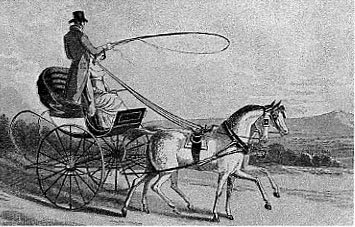
[Image from Ackermann’s via hibiscus-sinensis.com]

* I will be posting occasional reviews of books recommended “For Your Austen Library” – these will be listed on the bibliography page so titled.  You can also visit the the other Bibliography pages for more reading recommendations.

[Posted by Deb]