Austen Literary History & Criticism · Author Interviews · Book reviews · Books · Collecting Jane Austen · Jane Austen · Literature

Part II: Interview and Book Giveaway! ~ Why Jane Austen? by Rachel Brownstein

Contrary to the main current of popular opinion today, Jane Austen’s novels are not first of all and most importantly about pretty girls in long dresses waiting for love and marriage; and they are not most importantly English and Heritage, small and decorous and mannerly and pleasant. Read with any degree of attention, they do not work well as escape reading: there are too many hardheaded observations and hard, recalcitrant details in them…  
[ Rachel Brownstein, Why Jane Austen? p. 247]


Hello Professor Brownstein! And welcome to Jane Austen in Vermont

I had the pleasure of hearing you read from your newest work Why Jane Austen? at the JASNA-Massachusetts May meeting [see photo below].  You have very graciously agreed to this interview (as well as to speak at our June 2012 JASNA-Vermont gathering!] – so I heartily welcome you today to discuss your new book on Jane Austen. 

JAIV:  You strive in this work to undercut conventional thinking on Jane Austen, by offering us a good number of “essays” on novels, authorship, women writers [but much on Byron!], neighbors, gossip, language, biography, the importance of re-reading – you move from the real life, the fictions, the use of words, and personal anecdote in such a seamless weaving of thoughts, that I marvel at the weight of each sentence [for example, I love this one:  “Emma is as nosy as a novelist about private lives” [p. 223] – one could think about that sentence for hours! 

But to start, just tell us a little about why you titled your book Why Jane Austen?

RB:  The book asks why there is so much interest in this particular long-dead woman novelist: why Jane Austen right now and not, say, George Eliot or Virginia Woolf, or Jane Austen’s contemporary, the novelist and poet Charlotte Smith?


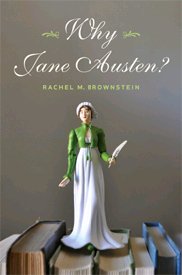
JAIV:  And one must ask about the cover! – Who decided to use the Jane Austen action figure?

RB:  It was I who brought my action figure—along with other pieces of Austeniana I own–to the office of Columbia University Press.  It was the brilliant art director who decided to put it on the cover, and the brilliant photographer, I think, who placed the figure on top of the books. 


JAIV:  I completely agree with your insistence on calling her “Jane Austen” – unable to call her “Austen” (“would have startled her, makes me wince a little” [p. 11]), nor just “Jane”, nor certainly “Dear Jane” – why is this so for Jane Austen and for no other author?

RB:  I think it’s Claire Harman, in her book, “Jane’s Fame,” who observes that she’s the only author people call by her first name alone.  This is a really interesting question.  I think she’s “Jane” because of a mix of doting indulgence and a condescension that verges on contempt—the kind familiarity brings.  It’s partly a function of her being a woman, and unmarried, and long-ago, and therefore girlish, and in some way small—you know, they talk about her small canvas, her narrow range.  It’s deplorable, really—and really a function of misreading her novels as merely delightful.


JAIV:  One of the main themes in your book is based on the Katherine Mansfield quote that serves as an epigraph:

 “The truth is that every true admirer of the novels cherishes the happy thought that he alone – reading between the lines – has become the secret friend of their author.”

Is this why you think that Jane Austen has and continues to have such a profound pull on her readers?

RB:  Yes.  I think her conspiratorial confidence in her readers is flattering and engaging.  After all, she’s so smart and so charming, and she takes us into her confidence. 

JAIV:  Your first chapter begins with Pride and Prejudice and its emphasis on “truth” – the first sentence staking its claim on the rest of the novel with this term: “it is a truth universally acknowledged” (certainly the most discussed opening line in literary history!) – you say the word “truth” occurs in Pride and Prejudicetwenty-four times, and one of your main themes is to show the power of the novel to reveal truths. This isn’t a question, but please explain a little if you can.

RB:  One of the reasons I start there is to begin to suggest it’s worth looking at the words in Jane Austen’s novels—not only the stories and the characters and the themes, but the words that convey all those.  Also, the great matter of truth is the question about novels, isn’t it: why spend time reading fictions that don’t tell you anything that’s true? What’s the value of other people’s fantasies? What can we learn from novels?  What truths do they have to tell?  Jane Austen wrote that novels are about human nature; George Eliot suggested later on that novels give a reader “a shape” for her “expectations.”  Neither of these is clear, but both seem to me very suggestive.   

Jane Austen’s novels, it seems to me, raise questions about the language in which we say what’s true and not true, and therefore about the capacity to know and tell truths, or the truth.
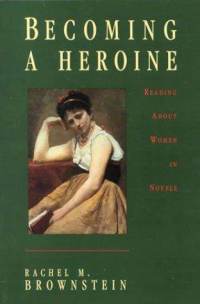
 

JAIV:  Your seminal book Becoming a Heroine: Reading about Women in Novels was published in 1982, and re-published in 1994 with a new postscript.  You were then trying to place your own learning and thinking and writing in the context of the feminist criticism of the previous decade.  Are there any shifts in your thinking since then that you could comment on? [You mention that this new book is really an atonement – that such previous readings of Jane Austen as “a paragon of proto-feminist romance” are misreadings, i.e. “not reading her as she is meant to be read.” [p. 8]  – and that Why Jane Austen? is written in “defense of Jane Austen and in self-defense as well…” [p. 10]]

RB:  I’m a little tongue-in-cheek about the matter of atonement, and a little serious too.  I’m sorry about some things that have been done in the name of feminism, but I continue to be a feminist, and a feminist literary critic, and I am especially feminist as a meta-critic, or critic of the critics.  It seems to me immensely important that Jane Austen was a woman. 

Austen’s relationship to romance is complicated: she wrote romances that are also anti-romances.  Reading them as books about women’s issues, I think, does Jane Austen a disservice. They are about men and women, and dreams and realities, and greed and social climbing.  She said they were about human nature; and she adds that they are written in “the best chosen language.” My argument is that it’s worth paying attention to all of that, not only to some of it. 


JAIV:  Again about Becoming a Heroine: Would you write about the same books today? [note: Heroine contains a full chapter on Jane Austen that touches on all her novels; the other works discussed in separate chapters are: Richardson’s Clarissa; Charlotte Bronte’s Villette; The Egoist by George Meredith; George Eliot’s Daniel Deronda; Henry James’s Portrait of a Lady; and Mrs. Dalloway by Virginia Woolf] 

RB:  No—but I still love all those novels, and enjoy teaching and talking about them. 

JAIV:  So if “No”, what works would you write about now?

RB:  I don’t think I can answer your question about the books I’d include in another version of “Becoming a Heroine”–I’d have to write another book. In other words, the novels I DID write about there come together in a series or sequence that (to my mind) suggests a development in the idea of a heroine. A novel reader who has an even slightly different idea could set up a different sequence of novels.  So no, there’s nothing I’d change, unless I changed everything–or something basic in the central idea.


JAIV:  This new work is similar to Heroine in being more a meditation on Jane Austen, combining scholarly and textual analysis, literary biography, historical context, all melded together with your own story as a reader, a student, and a teacher.  I found it a very engaging read, each sentence packed-full, the approach to the subject very different from the usual scholarly work.  As soon as I finished, I knew a re-read was required, not to mention the need to re-read all of the novels and look again with your critical eye!  If one could take only one thing from this book, what would you want it to be?

RB:  Thank you for your very kind words.  The one thing I would want a reader to take from my book is this: go and reread Jane Austen!


JAIV:  You write constantly posing questions to the reader – a wonderful teaching strategy! – and especially effective in one’s efforts to make a “Life of Jane Austen” out of the details in the novels – and in our efforts to find her in her characters, in her language, in her plots, we find her all the more illusive..  We cannot help ourselves – we have only such scant tidbits of information! Why do you think this is a dangerous approach?

RB:  It’s dangerous if you believe the life story you compose for Jane Austen—but taken with a grain or two of salt it’s fun. 

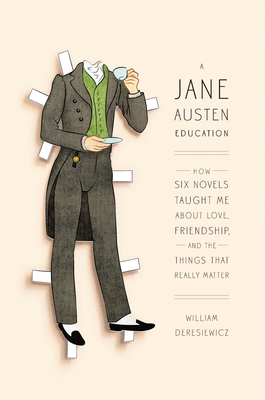
JAIV:  Your personal story that you so generously weave through this book is similar in some ways to William Deresiewicz’s new work A Jane Austen Education [and he indeed writes a lovely blurb for your work on the jacket cover (note: this is quoted in yesterday’s post)] – at least your “confession” of early on being way too clever and cool to read Jane Austen, then later way too clever and cool to not be in the know about Jane Austen – do you think that this is still the view of readers / non –readers of Jane Austen?

RB:  Deresiewicz, who is a generation younger and a man, says he started out thinking those classic novels were dull and boring, and not for readers like him. My story is very different.  When I was in college—and I went to a woman’s college, in the mid-1950s–literary girls were expected to know Jane Austen without taking a course in the novels.  My freshman English teacher engaged me in a conversation about Pride and Prejudice although it was not assigned reading: it was as if just because you were a young woman reader you already knew your Jane Austen.  Things are different now: being in the know about Jane Austen has changed a lot since then.  Today, for many people, it means being up on the latest pop-cultural Jane-related phenomenon, the zombies or whatever.


JAIV:  Any comment on Deresiewicz’s book? – it seems to have generated mixed reviews.

RB:  Let’s take another page from Jane Austen’s book—Northanger Abbey—and leave the reviewers out of it.  The Deresiewicz book is a lively read and the voice is engaging.  And I am amused by the idea of a man owning up to learning life lessons from Jane Austen. 

   
JAIV:  I like your answer of taking that cue from Jane Austen

There are a number of anecdotes you tell where you put yourself in time and place (and these are not always pleasant encounters!) – is there any concern of people discovering themselves between the pages? – or is everything politely disguised?

RB:  I don’t know about politely.  I scrambled details, left things out, and added bits, and no one actually real is all there, I sincerely hope.  You’ll recognize the echo of Henry Austen: my aim was to write about human nature, not individuals.


JAIV:  Which Jane Austen novel did you first read? Does it remain your favorite? [a horrible question, but one must ask!]

RB:  Pride and Prejudice: a predictable answer, but one must try to tell the truth. 

JAIV:  Your commentary about the movie adaptations – “adaptation is translation” [p. 35] is a wonderful essay.  You mention loving “Clueless” – can you share what other of the various adaptations worked the best? The least?
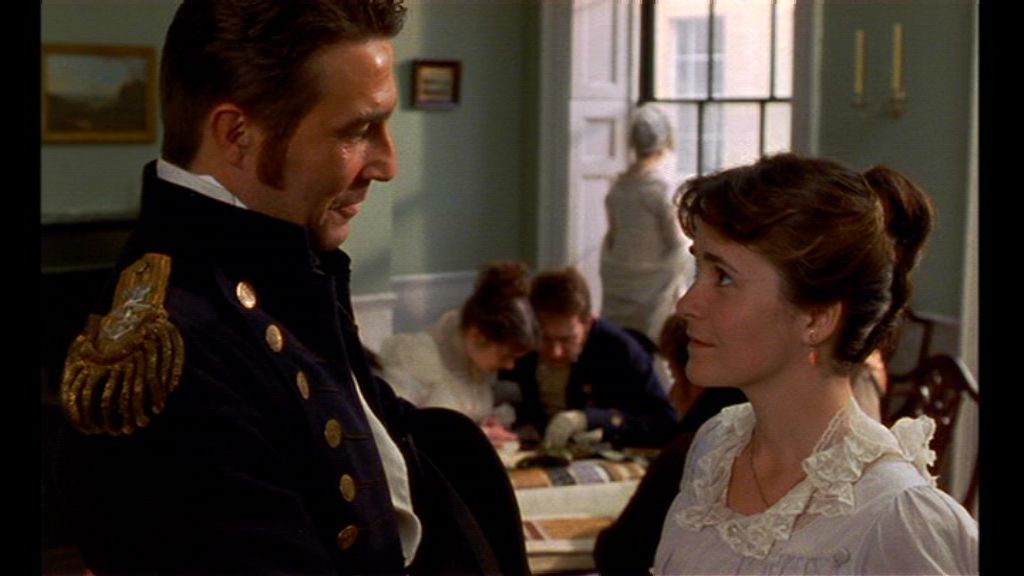
RB:  I admire Roger Michell’s beautiful film version of Persuasion, and I found lots to like in the astute choices made in making the Emma Thompson -Ang Lee Sense and Sensibility.  And of course I love the BBC miniseries of Pride and Prejudice—so much that Joe Wright’s version, starring the thoroughly miscast Keira Knightley, seems to me all wrong.

JAIV:  The inevitable Sequels / Continuations question:  What are your thoughts!?

RB:  Some work; others don’t; several work well in parts, but don’t measure up.  Jane Austen sets the bar very high.  I was surprised and delighted by the first half of Colleen McCullough’s The Independence of Miss Mary Bennet.   


JAIV:  Well then, I must ask what you think about the second half!

RB:  I was disappointed in the second half of “Miss Mary Bennet” because the emphasis moved–disproportionately, I felt–from Mary to Darcy, and the plot thickened too much.  I liked the stuff that seemed Austenian but a little outre–Mary and her money falling in the muck–and was less interested in the stuff about enslaved children imprisoned in caves.  It is of course very professional–being by a pro–but then it gets extravagant and falls apart.  It’s Darcy’s fault.


JAIV: Oh dear! – I thought Darcy could never be at fault for anything! 

But as for another of Jane Austen’s heroes, you call Edward Ferrars “morose, depressed, self-involved, and boring” [p. 247] – are you in the camp of preferring Colonel Brandon as the more proper mate for Elinor? What then happens to Marianne?

RB:  I was writing as a reader, not a novelist. 

 JAIV:  Good answer! 

You speak of Jane Austen’s best readers being those who feel they are complicit with her take on human nature – I could say the same about your writing – you invite the reader into your secret world of ‘Understanding the truth about Jane Austen’ – you brought me into your world years ago when I read of you [in Heroine] as a fifteen-year-old hiding out in the bathroom reading Henry James hugging your “secret knowledge that [your parents] were harboring a viper in their bathroom.” [p. 5]  I love this!  Do you find students still coming to you with that wide-eyed wonder of discovering literature as transporter, as transformer?

RB:  Yes.  This is one important reason why I continue to love teaching.


JAIV:  You make many references to “best readers” or “reading well” or “close readers”  – how I would have loved to taken one (or more!) of your classes, where you question, question, question, to make the student sit up, take notice, and shift his / her thinking –  [you offer a wide range of bibliographical references that shall add weight to my bookshelves and deduct funds from my book budget!] –  How does one become such a reader without going back to school?!

RB:  I’m with Elizabeth Bennet, when she tells Lady Catherine, of her and her sisters, that “We were always encouraged to read.”  Read and reread, is my advice—and don’t believe everything you read.


JAIV:  Your chapter on “Why We Reread Jane Austen” focuses on Emma – and you devote a number of pages to just the use of the word “understanding” – can you tell us a little about this?

RB:  I’m fascinated by the word and by the process of coming to understand something or someone and by what Locke called “the understanding,” the mind.  And you can see that word as a key to Emma, where insistent repetitions of the word begin to make the reader understand its shades of meaning.  The heroine prides herself on her understanding, or intellectual power, but she misunderstands what’s going on, and imagines mutual understandings among her friends—relationships, we call them–that sometimes do and sometimes don’t exist. 


JAIV:  Your last sentence:

 “And in the face of the Kindle and the Nook, the iPad and the graphic novel, not to mention the ongoing crisis in education and the widely lamented decline of serious reading, there is some anticipatory nostalgia as well for the once-thriving, once-glamorous, once-literary book business.” 

Can you explain your concerns?

RB:  I was nostalgically harking back to a time when the book business was more literary, and not so commercially driven. 

 
JAIV:  In your Heroine, you tell an amusing anecdote about visiting your Doctor and his comments about Georgette Heyer, and in so doing give a lovely tribute to her writings.  Have you continued to read her?  Can I ask that horrible question again of which is your favorite? 

RB:  I haven’t read Heyer for such a long time – I adored all the novels with their saucy heroines years ago; I’m going to revisit them again; but I’m afraid I have nothing more to say about them now… sorry! 


JAIV:  The oft-asked question of a writer:  How do you work? 

RB:  In fits and starts—and with a lot of false starts.  I’ve finally learned to write on my laptop, but I still have to print the thing out and go over it with a pen, and that remains my favorite part of the writing process.


JAIV:  And finally, have you ever written any fiction yourself?  Is there a novel in you somewhere??

RB:  Yes I have, and Yes I think there is, but No, I’m not ready to talk about it.


JAIV:  Anything else you would like to share

RB:  Thank you.  I enjoy the opportunity to clarify what I might have left unclear, and I enjoy the chance to keep on talking about Jane Austen.  One of the things I learned from Lionel Trilling—the mid-20th-century critic whose last unfinished essay, “Why We Read Jane Austen,” is echoed by the title of my book—is that the conversation around Jane Austen is almost as interesting as what she herself says.  I am always eager to engage in that conversation, which always interests me.

JAIV:  Thank you so much Rachel for joining us today – it is true that the conversation around Jane Austen is endlessly interesting! – and your book asks many probing questions of its readers for those conversations to continue!  
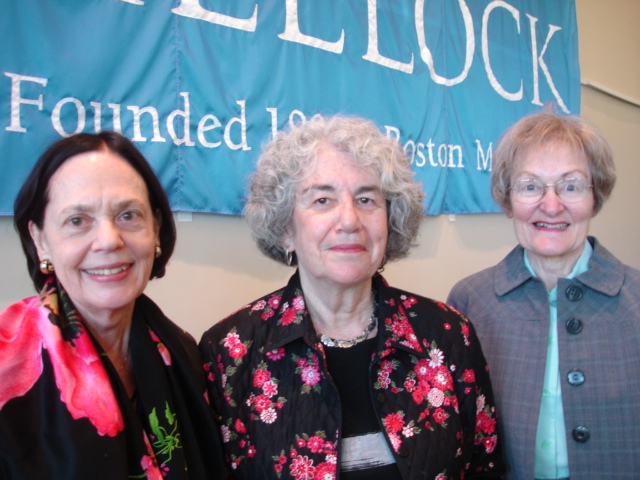
l. – r.: Marcia Folsom, Rachel Brownstein, and Nancy Yee,
JASNA-Mass Meeting, May 2011 at Wheelock College
[photo – D. Barnum]

*******************

 Book Giveaway!

If anyone has a comment or a question for Professor Brownstein, please post it on either this post or yesterday’s post – – you might like to answer “Why Jane Austen? in your own life! –

 You will be entered into the Book giveaway random drawing for a copy of Why Jane Austen?  – the deadline is midnight next Wednesday night August 10, 2011 – Winner will be announced on Thursday August 11, 2011  [worldwide eligibility].

************************

Why Jane Austen?, by Rachel Brownstein
Columbia University Press, 2011
ISBN:  978-0231153904 ; $29.50
search inside at Amazon.com

About the Author: Rachel M. Brownstein is professor of English at Brooklyn College and the CUNY Graduate Center. She is the author of two critically acclaimed books, Becoming a Heroine: Reading About Women in Novels and Tragic Muse: Rachel of the Comédie-Française.

Click here for my review and bibliography

Copyright @2011 by Deb Barnum, of Jane Austen in Vermont
Austen Literary History & Criticism · Books · Collecting Jane Austen · Jane Austen · Jane Austen Popular Culture · Literature

Part I: Rachel Brownstein on Why Jane Austen? ~ An Interview and Book Giveaway!

Why Jane Austen? indeed! We might all ask that of ourselves, the question of why she is still avidly read these 200 years later; why the movies; why the many continuations, the fan fiction and the mash-ups; why all the Austen-related blogs and social networking sites; and why the continuing scholarly interest in finding and discussing yet another approach, another meaning.  A few years ago we had Jane’s Fame by Claire Harman (Cannongate, 2009) and Jane Austen’s Textual Lives by Kathryn Sutherland (Oxford, 2005), both brilliant analyses of the past two centuries of Jane Austen studies and cultural popularity.  Now in the bicentennial year of Austen’s first published work, Rachel Brownstein has given us an engaging treasure-filled meditation on Jane Austen as writer, woman, social commentator, and 21st-century icon.  Don’t miss reading this book…

I had the good fortune to hear Dr. Brownstein speak to the JASNA-Massachusetts region this past May.  Brownstein has been one of my very own heroines ever since the publication of her Becoming a Heroine: Reading about Women in Novels (Viking, 1982), where she weaves her own personal narrative into an analysis of the various feminist literary critical approaches to late 18th and 19th century literature.  Heroine is notable also for its loving critique of Austen’s six novels – it is a must read.  [She further discusses Richardson’s Clarissa, Bronte’s Villette, George Meredith’s The Egoist, Daniel Deronda by George Eliot, Portrait of a Lady by Henry James, and Virginia Woolf’s Mrs. Dalloway.] 

But what I love most about this book was her own story, her hiding in the bathroom at fifteen, behind a locked door, discovering literature, and “feeling transformed into someone older, more beautiful and graceful, moving among people who understood delicate and complex webs of feeling, patterned perceptions altogether foreign to my crude ‘real’ life … [all the while hugging] the secret knowledge that [her parents] were harboring a viper in their bathroom.” [p. 5] – didn’t we future English majors all find ourselves in that bathroom?

So what does an early feminist critic make of Jane Austen’s continuing popularity? And how as an English professor does Brownstein  make Jane Austen relevant to a college student in the 21st century, most all baffled by and suspicious of Austen’s world where “virgins are bent on finding rich husbands and no one works”, where everything is really about love and money, but we are shown nothing of the sex or the working [quoting Brownstein, May, 2011].

At this May talk, Dr. Brownstein read from her first chapter, surely making each of us wishing to be transported into one of her classrooms, to have her question our complacent assumptions, to dare to strip the works of all the critical analysis and take each sentence, each word back to the writer who wrote them – she dares us to be better readers, closer readers, understanding more with each re-read.  What does Jane Austen say to us and why does she continue to speak to us 200 hundred years later? 

I read this book on the heels of William Deresiewicz’s A Jane Austen Education: How Six Novels Taught me About Love, Friendship, and the Things That Really Matter (Penguin, 2011) – also a meditation of sorts, a very engaging personal one on how reading each of the novels changed the author’s life, each chapter a probing essay on how he saw way too much of himself in the least–liked of Austen’s characters.  Deresiewicz’s is an easy read, a well-written journey of discovery and we willingly and happily go along for the ride, having countless ah!-ha! moments as we nod in agreement at his insights.  But while Brownstein’s Why Jane Austen? is similar in its personal aspects, it is a far more scholarly text, with extensive notes, referencing previous criticism, biographies and popular culture run amok [what she calls “Jane-o-mania”, deliberately following the term “Byromania’ [p. 6]] with such a slight-of-hand, so jam-packed, that just like an Austen novel, a re-read is absolutely required!

Deresiewicz, incidentally, offers a lovely tribute on the cover of Why Jane Austen? – it is worth sharing:

Why Jane Austen? Is a warm-hearted, personal, and humane meditation on Austen and Austenolatry.  It is also in the tradition of Becoming a Heroine, smart, witty, eloquent and joyfully wide-ranging, a mixture of anecdote, cultural criticism, biography, literary history, and close reading.  By bringing serious literary thought to a wider audience – the book is accessible to anyone acquainted with Austen’s novels – it performs one of the most important services of humanistic scholarship.

I cannot say it better myself! In this book where the emphasis in on truth, the truth that fiction affords us, Brownstein shows us by beginning her work with an epigraph of Katherine Mansfield’s famous comment on Austen:

The truth is that every true admirer of the novels cherishes the happy thought that he alone – reading between the lines – has become the secret friend of their author.

– she shows us that we who read and re-read Austen indeed become sure and fast friends, illusive though she be.  Brownstein just brings us closer, and it is a lovely journey.

***********************

Book Giveaway!!

Dr. Brownstein has been most gracious in doing an interview here at Jane Austen in Vermont [as well as coming to speak to our JASNA-Vermont region in June 2012! – we cannot wait!]  Please join me tomorrow when I post the interview, and hear directly from Prof. Brownstein as to “why Jane Austen?” –  any comments and questions will be forwarded to Dr. Brownstein for her response – you indeed might like to address “Why Jane Austen? in your own life!

 You will be entered into the Book giveaway contest for a copy of Why Jane Austen? by leaving a comment on either this post or on tomorrow’s interview – the deadline is midnight next Wednesday night August 10, 2011 – Winner will be announced on Thursday August 11, 2011  [worldwide eligibility].

*****************************

Further reading:

**Note the following upcoming event: Reading at Gibson’s Bookstore, Concord, NH. Thursday, August 25 at 7 p.m. – come in costume! see the flyer here: Why Jane Austen

 *****************************

BIBLIOGRAPHY 

Works: 

Becoming a Heroine: Reading about Women in Novels. New York: Viking, 1982 [reprinted Columbia UP, 1994 with a new postscript]

“ChosenWomen.” Out of the Garden: Women Writing on the Bible.  Ed. Christina Buchmann and Celina Spiegel. New York: Ballantine, 1994.

“Endless Imitation: Austen’s and Byron’s Juvenilia.”  The Child Writer from Austen to Woolf.  Ed. Christine Alexander and Juliet McMaster. Cambridge: Cambridge UP, 2005. 122-37. [reviewed in JASNA Newshttp://www.jasna.org/bookrev/br222p17.html ]

“England’s Emma. Persuasions 21 (1999): 224-41.

“The Importance of Aunts.” Fay Weldon’s Wicked Fictions. Ed. Regina Barreca. Lebanon, NH: UP of New England, 1994.  [pp.]

“Interrupted Reading: Personal Criticism in the Present Time.”  Confessions of the Critics. Ed. H. Aram Veeser. New York: Routledge, 1996. 29-39.

Northanger Abbey, Sense and Sensibility, and Pride and Prejudice.” The Cambridge Companion to Jane Austen. Ed. Edward Copeland and Juliet McMaster. Cambridge: Cambridge UP, 1997. 32-57.

“Out of the Drawing Room, Onto the Lawn.”  Jane Austen in Hollywood. Ed. Linda Troost and Sayre Greenfield. Lexington, KY: UP Kentucky, 1998. 13-21.

 “Personal Experience Paper.” Personal Effects: The Social Character of Scholarly Writing. Ed. Deborah H. Holdstein and David Bleich. Logan, UT: Utah State UP, 2001. 220-31. 

“Rachel, au Coeur des lettres.” Rachel, Une Vie Pour le Théâtre, 1821-1858. Paris: Musée d’art et d’histoire du Judäisme, 2004.  41-55.

“Romanticism, a Romance: Jane Austen and Lord Byron, 1813-1815.”  Persuasions 16 (1994): 175-84.     

Tragic Muse: Rachel of the Comedie-Francaise. New York: Knopf, 1993. 

Book Reviews:

Rev. of Jane Austen, by Deirdre Le Faye. http://www.jasna.org/bookrev/br153p25.html

“Tenderized.” Rev. of The Uncommon Reader, by Alan Bennett.  Commonweal 135, 10 May 2008.

Rev. of Our Kind: A Novel in Stories, by Kate Walbert. WSQ: Gender and Cutlure in the 1950s. 33. 3-4 (2005): 365-68.

“What Becomes A Legend.”  Rev. of Blonde, by Joyce Carol Oates, and Seeing Mary Plain, by Frances Kiernan. The American Prospect, August 28, 2000.

Rev. of Secrets of the Flesh: A Life of Colette, by Judith Thurman.  Boston Sunday Globe, October 31, 1999.

Rev. of God’s Funeral, by A.N. Wilson.  Boston Sunday Globe, June 20, 1999.

Rev. of I Married a Communist, by Philip Roth. Commonweal, January 15, 1999.

Rev. of Shakespeare: The Invention of the Human, by Harold Bloom. Boston Sunday Globe, November 1, 1998.


Recent web articles and links:

A radio interview with Mark Lynch of “Inquiry” on WICN (90.5 FM), on NPR:
http://www.wicn.org/podcasts/audio/rachel-m-brownstein-why-jane-austen

Rachel Brownstein’s response to the Kathryn Sutherland kerfuffle last November on the Language Log blog: http://languagelog.ldc.upenn.edu/nll/?p=2805

The Daily Beast – her response to V. S. Naipaul on Jane Austen http://www.thedailybeast.com/articles/2011/06/23/jane-austen-unsentimental-writer-for-our-times.html

The Huffington Post:  Jane Austen books you may not have discovered yet – Professor Brownstein offers up 11 lesser known works:  http://www.huffingtonpost.com/rachel-m-brownstein/jane-austen-books_b_885281.html#s298967&title=Northanger_Abbey

The Page 99 Test blog: http://page99test.blogspot.com/2011/06/rachel-brownsteins-why-jane-austen.html

An essay by Professor Brownstein at Austenprose:  http://austenprose.com/2011/06/28/why-jane-austen-blog-tour-with-author-rachel-m-brownstein-and-a-giveaway/

An essay at the Montreal Reviewhttp://www.themontrealreview.com/2009/Why-Jane-Austen.php


Reviews of Why Jane Austen?:

At the Chronicle of Higher Education, by Gina Barreca: http://chronicle.com/blogs/brainstorm/37550/37550

At The New York Times:  “Lessons from Jane Austen” by Miranda Seymour: http://www.nytimes.com/2011/06/12/books/review/book-review-a-jane-austen-education-and-why-jane-austen.html?_r=2&ref=review

at Simple Pleasures Books blog: http://simplepleasuresbooks.wordpress.com/2011/07/01/book-review-why-jane-austen-by-rachel-m-brownstein/

at Bluestalking Bloghttp://bluestalking.typepad.com/the_bluestalking_reader/2011/06/why-jane-austen-by-rachel-brownstein.html

this just added: “A Pleasure, but not a guilty one” at Commonweal.com –  http://commonwealmagazine.org/verdicts/?p=413

 Copyright @2011 by Deb Barnum, of Jane Austen in Vermont
Books · News · Women Writers

The Truth is Out ~ Georgette Heyer & Barbara Cartland

Those who have read anything of Georgette Heyer, her writings, and her life know about the hushed-up squabble with another romance writer during the 1950s – Heyer chose not to sue for plagiarism, but Heyer had her say and the writer was “politely” asked to just stop it.  Now finally the story is out, Barbara Cartland the offender, all the juicy details to be revealed in Jennifer Kloester’s* new work, Georgette Heyer: Biography of a Bestseller, to be released this fall by Heinemann.

Here is the story from Bookseller.com:

Heinemann to explore Heyer’s plagiarism fury

29.07.11 | Benedicte Page

A literary plagiarism allegation from the 1950s is set to be given its first detailed airing in a new biography of much-loved novelist Georgette Heyer.

Georgette Heyer: Biography of a Bestseller by Jennifer Kloester (Wm Heinemann, hb, £20, October) reveals the outrage felt by the queen of witty regency romances at the obvious similarities between Barbara Cartland’s historical novel Knave of Hearts and her own youthful story These Old Shades (published in 1926), when they were brought to her attention in 1950.

“I think I could have borne it better had Miss Cartland not been so common-minded, so salacious and so illiterate,” Heyer told her agent, Leonard Parker Moore, in no uncertain terms. “I think ill enough of the Shades, but, good God! That 19-year-old work has more style, more of what it takes, than this offal which she has written at the age of 46!”

Heyer was also indignant at Cartland’s “borrowing” of various character names. “Sir Montagu Reversby”, a character in Cartland’s novel Hazard of Hearts, was blatantly pinched, Heyer felt, from Sir Montagu Revesby, a character in her novel Friday’s Child.

But it was Cartland’s historical and linguistic errors that really offended the writer‚ herself a stickler for accuracy. “She displays an abysmal ignorance of her period. Cheek by jowl with some piece of what I should call special knowledge (all of which I can point out in my books), one finds an anachronism so blatant as to show clearly that Miss Cartland knows rather less about the period than the average schoolgirl,” said Heyer, who told her agent she would “rather by far that a common thief broke in and stole all the silver”.

A solicitor’s letter to Cartland followed, and according to Kloester: “There is no record of a response . . . but Georgette later noted that ‚’the horrible copies of my books ceased abruptly’.”

Kloester’s biography has been written with the backing of Heyer’s son and the late Jane Aitken Hodge, whose own biography was entitled The Private World of Georgette Heyer. The book’s editor, Georgina Hawtrey-Woore, said the book contains much new material, including photos and 400 of Heyer’s letters.

 [Thanks to the Teach Me Tonight blog for the information]

*Dr. Jennifer Kloester’s previous book, Georgette Heyer’s Regency World, is an engaging fact-packed compilation of all things Heyer.  She visited the Word Wenches blog last November – you can read her interview here where she talks about this upcoming biography.

For further reading on Georgette Heyer, see my bibliography post here, as well as the link to all the book reviews from Austenprose‘s fabulous Heyer celebration last year.

Copyright @2011 by Deb Barnum, of Jane Austen in Vermont
Books · Fashion & Costume · Jane Austen · JASNA · Museum Exhibitions · News · Regency England

The Penny Post Weekly Review ~ All Things Austen

The Penny Post Weekly Review

June 11, 2011

 Some goodies for this week – have you found anything of interest you would like to share? – please do!

 News and Gossip:

*Don’t miss this! – June 11 with Rick Steves: A Proper English Hour: Home, High Tea, and Jane Austen’s England Bill Bryson examines private life during the Victorian age; London guide Britt Lonsdale explains how to enjoy a proper afternoon tea service; and screenwriter Andrew Davies [soon to be the JASNA AGM in Fort Worth!] shares his appreciation for the works of Jane Austen.

Click here to find where it airs in your area [alas! In Vermont, nowhere!] http://www.ricksteves.com/radio/whereitairs.htm

But, thankfully, beginning on June 12, the show will also be available to download any time from their website archives at this page: http://www.ricksteves.com/radio/archive.htm

*Masterpiece Theatre announces its fall lineup: watch for Bill Nighy, Rachel Weisz, Alan Rickman, Emma Thompson, Ralph Fiennes and more! http://www.pbs.org/wgbh/masterpiece/schedule/fall_2011.html

*The Jane Austen Regency Week in the UK has several events worth either attending OR lamenting if you are on the wrong side of the pond: http://www.basingstokegazette.co.uk/leisure/general/9071636.Jane_Austen_s_Women_brought_to_life_by_Eastleigh_actress/

http://www.basingstokegazette.co.uk/leisure/general/9072738.Don_t_miss_Regency_Day_at_The_Vyne_on_Saturday/

*For those of us who are on the western shore of the Atlantic, there is the fabulous JASNA Louisville 4th annual Jane Austen Festival July 9 – 10, 2011: information and registration here: http://www.jasnalouisville.com/

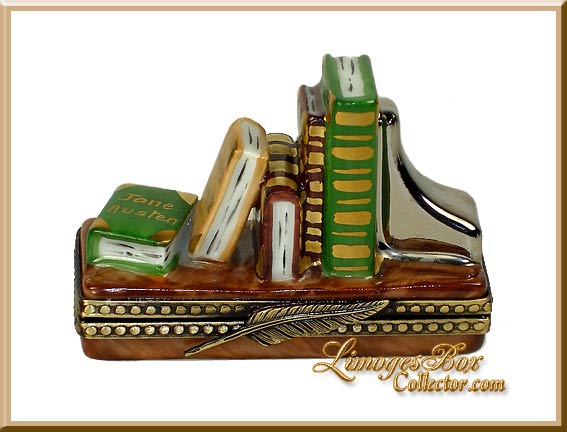
*see  LimogesBoxCollector.com at https://www.limogesboxcollector.com/product_info.php?products_id=2183&osCsid=m86f91l6la8d4g1th82filhu66 for your very own Jane Austen bookshelf [$249.00]:

– the latest issue of Jane Austen’s Regency World mentions a Pride & Prejudice Limoges Box, which was announced by Limoges in March 2011 – only the above box appears on the Limoges website, so perhaps they are sold out? – here are the two boxes in the announcement – let me know if you bought one!:


Blogs, websites, and such:

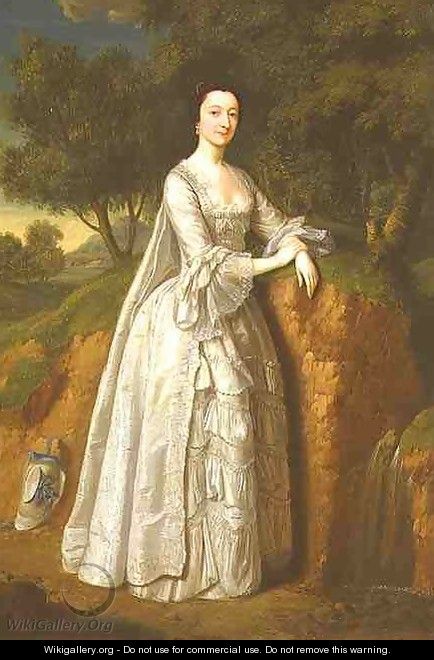
Elizabeth Montague by Edward Haytley

*Elizabeth Montague and the Bluestocking Circle: http://elizabethmontaguletters.co.uk/home

Their project to put all her letters online: Our goal is to prepare a fully annotated electronic edition of Elizabeth Montagu’s correspondence. The author and bluestocking salonnière (1718-1800) was the leading woman of letters and artistic patron of her day. The 8,000 extant letters, ‘among the most important surviving collections from the eighteenth century’ (Schnorrenberg) is held in the British Library, the Bodleian and the Huntington Library, the latter of which holds 6,000 of them. Less than a quarter of these documents has been previously published and then in partial archaic print selections.
*Oxford Bookworms, where Pride and Prejudice is a bestseller in its Stage 6 series:  http://www.oup-bookworms.com/oxford-bookworms.cfm 

*World Digital Library, http://www.wdl.org/en/about/site.html – a joint venture of the Library of Congress and other world libraries – alas! no Austen, but this growing database is worth searching – in a quick look I find the Gutenberg Bible,  William Blake’s The Book of Urizen http://www.wdl.org/en/item/201/?ql=eng&s=william+blake&view_type=gallery

and an abundance of Robbie Burns!: http://www.wdl.org/en/search/gallery?ql=eng&s=robert+burns

*Angela Thirkell – For lovers of Trollope in need of more Barset stories, you should add Angela Thirkell to your book shelf – there is also yet another Society to join!  http://www.angelathirkell.org/

*Lit Lists: an interesting blog for lovers of lists – here, all literary ones:   http://litlists.blogspot.com/ – an example? – “Five Best New Ways of Portraying Lives” which includes Claire Harman’s Jane’s Fame http://litlists.blogspot.com/2011/06/five-best-new-ways-of-portraying-lives.html

* The recently established Fresno Area Regency England Fellowship http://fresnoarearegency.com/ has a nice website, where you can sign up for their monthly newsletter and facebook page.


Books – Reviews – Recommendations:

*A book review: Laura Miller at Salon.com on A Jane Austen Education:

http://www.salon.com/books/laura_miller/index.html?source=newsletter&utm_source=contactology&utm_medium=email&utm_campaign=Salon_Daily%20Newsletter%20%28Not%20Premium%29_7_30_110

*Miranda Seymour at the NYTimes on A Jane Austen Education and Rachel Brownstein’s Why Jane Austen?: http://www.nytimes.com/2011/06/12/books/review/book-review-a-jane-austen-education-and-why-jane-austen.html

*Reading lists:  I have found two perfect reading lists for what to read when you have read all of Jane Austen:


Other recommendations to add to your Austen Library:


Museums / Exhibitions:

The Musee McCord in Montreal – considered the leading collection of Canadian dress and the second most important collection of costume in Canada, this collection has grown since 1957 to contain some 18,845 items of dress and accessories – the Museum has the following 19th century fashion-related games online: [with thanks to JASNA-New Jersey http://cnjjasna.blogspot.com/ for this link]

Also in Musee des Beaux-Arts de Montreal: an exhibit of the Museum’s collection of Napoleon artifacts:  http://www.mbam.qc.ca/en/expositions/exposition_134.html

***************************

To close, I append a quote [and not even from Jane!] I found on a listserv – from Steven Wright [I love Steven Wright!]

“I was reading the dictionary. I thought it was a poem about everything.”
– Steven Wright, comedian (1955- )

He must have been reading Johnson’s Dictionary!

Copyright @2011 by Deb Barnum, of Jane Austen in Vermont
Books · Jane Austen · Jane Austen Popular Culture · News

Book Alert! ~ Wooing Mr. Wickham

The title of the second book in the Chawton House Library / Honno Press Jane Austen Short Story Award has been announced – the anthology will be released November 17, 2011.  Title?  Wooing Mr. Wickham.  [alas! – no cover image yet]

This year’s collection, which follows on from the huge success of the inaugural award set up in 2009 to celebrate the bicentenary of Jane Austen’s arrival at Chawton, takes as its point of inspiration the heros and villains in Jane Austen’s books. [from the Honno Press Newsletter]

Image: Brock, P&P - Molland's

The short list of authors was released on June 3, 2011 on the Chawton House Library website. Stay tuned for the winner and runners-up announcement!

This year’s Chair of the Judges is novelist Michele Roberts, who will write the introduction to the anthology. Ms. Roberts is the author of twelve highly acclaimed novels, including The Looking Glass and Daughters of the House, which was short-listed for the Booker Prize and won the W.H Smith Literary Award. You can learn more at the Michele Roberts website.

Wooing Mr. Wickham is available for pre-order at WHSmith –  or wait until it is available through either Chawton House Library or Honno Press directly.

Copyright @2011 by Deb Barnum. of Jane Austen in Vermont
Books · Jane Austen · Literature · News · Regency England · Social Life & Customs

The Penny Post Weekly Review ~ All Things Austen

The Penny Post Weekly Review* 

June 4, 2011

News and Gossip: 

1.   “Josiah Wedgwood Tradesman – Tycoon, firing up the modern Age” at The Culture Concept Circle:  http://www.thecultureconcept.com/circle/josiah-wedgwood-tradesman-tycoon-firing-up-the-modern-age

 2.  http://www.e-enlightenment.com/free access through the month of June:   user ID: ee2011 / PW:  enlightenment

3.  How timely is this, as I just started to re-read Evelina last week! You can follow the Group read of Frances Burney’s Evelina at The Duchess of Devonshire’s Gossip Guide: here is the first post: http://georgianaduchessofdevonshire.blogspot.com/2011/06/evelina-volume-1-letters-1-20-and.html

The full reading schedule is here: join in if you can!http://georgianaduchessofdevonshire.blogspot.com/2011/05/evelina-group-read-rundown.html

  • 2 June: Volume 1 Letters 1-20
  • 9 June: Volume 1 Letter 21- Volume 2 Letter 6 (21-37)
  • 16 June: Volume 2 Letter 7- 22 (38-53)
  • 23 June: Volume 2 Letter 23- Volume 3 Letter 9 (54-71)
  • 30 June: Volume 3 Letter 10-23 (72-84)

4.  In the UK: The Jane Austen Regency Week [ June 18 – June 26, 2011], celebrating the time Jane Austen spent in Alton and Chawton, is sponsored by the Alton Chamber of Commerce – website with event information here: http://www.janeaustenregencyweek.co.uk/index.html

5.  As part of the above Regency Week celebration, the Chawton House Library will be hosting tea, talk, and tours on June 21st and 23rd : http://www.chawton.org/news/

6.  Two posts on the British and their lovely habit, the drinking of tea: at Mary Ellen Foley’s Anglo-American Experience blog:

Part 1: http://mefoley.wordpress.com/2011/05/15/tea-part-1/
Part 2: http://mefoley.wordpress.com/2011/05/27/tea-part-2/
Part 3: http://mefoley.wordpress.com/2011/06/04/tea-part-3/
Part 4:  coming soon, so check back

Chinese Flowers, Old Foley pottery, from M.E. Foley's blog

7.  Dressing the Part: Dolley Madison’s Life Through Fashion, an exhibit at James Madison’s Montpelier, June 15, 2011 – March 29, 2012: http://www.montpelier.org/explore/collections/dressing_the_part.php

8.  The In Fashion: High Style 1620-2011 exhibit at The Shelburne Museum opens June 18, 2011: http://shelburnemuseum.org/exhibitions/in-fashion/

9.  An interview with Diana Birchall at Maria Grazia’s The Jane Austen Book Club: [includes a book giveaway] http://thesecretunderstandingofthehearts.blogspot.com/2011/06/talking-jane-austen-with-diana-birchall.html

10.  I don’t even know where to begin re: V. S. Naipaul’s trashing women writers and Jane Austen’s “sentimentality” [see this article at the Guardian: http://www.guardian.co.uk/books/2011/jun/02/vs-naipaul-jane-austen-women-writers ]

– but as one gentleman on one of the listservs I subscribe to so eloquently said: “Oh yeah Naipaul, how many movies have been made from YOUR books, huh?”

**************************** 

New Books just out / about to be: 

1.  Why Jane Austen? By Rachel Brownstein. ColumbiaUniversity Press, 2011:  http://cup.columbia.edu/book/978-0-231-15390-4/why-jane-austen  [publication date: June 16, 2011 or thereabouts – more on this book next week!]

2.  Vauxhall Gardens, by David Coke and Alan Borg:  http://www.vauxhallgardens.com/ – the book is to be published by Yale University Press on June 8, 2011

3.  Jane Austen: Two Centuries of Criticism, by Laurence Mazzeno. Camden Press, 2011:

http://www.camden-house.com/store/viewitem.asp?idproduct=13605

***************************** 

A few blogs / websites to check out:

1.  This one deserves repeating:  The Jane Austen Music Transcripts Collection at Flinders Academic Commons, transcribed by Gillian Dooley [this is a wonderful resource, most all from Austen’s music manuscript notebooks]: http://dspace.flinders.edu.au/dspace/handle/2328/15193

2.  William Godwin’s Diary: Reconstructing a Social and Political Culture, 1788-1836:  http://godwindiary.politics.ox.ac.uk/   [husband to Mary Wollstonecraft, Mary Shelley’s father, Austen’s time]

3.  The Beau Monde Bloghttp://thebeaumondeworld.wordpress.com/

Beau Monde Blog header

4.  The Carlyle Letters Onlinehttp://carlyleletters.dukejournals.org/ [i.e Thomas and Jane]

5.  The George Eliot blog:  [new!]http://desperatelyseekinggeorge.wordpress.com/

6.  The Yale Center for British Art – their fabulous new website:  http://britishart.yale.edu/

Mercier - 'The Sense of Hearing' - detail - YCBA

 *****************************

* I hope to return to doing a weekly update of various Austen-related discoveries – so much out there – so little time – one must set aside some time for BOOKS, don’t you think??

Copyright @2011 Deb Barnum, at Jane Austen in Vermont
Books · Jane Austen · Literature

Follow Friday ~ The Westminster Detective Library

Murder will out …. Taking a slight detour from the usual Jane Austen and Regency Period fare here at Jane Austen in Vermont, I shall alert you today to the website The Westminster Detective Library

Hosted by McDaniel College in Westminster, Maryland:

It is the mission of the Westminster Detective Library to catalog and make available online all the short fiction dealing with detectives and detection published in the United States before Sir Arthur Conan Doyle’s “A Scandal in Bohemia” (1891).

We have posted our working bibliography and will add full-text copy of its entries as we prepare them. We welcome comments and solicit both additional bibliographical entries and texts.

Editors:
LeRoy Lad Panek
Mary M. Bendel-Simso
-McDaniel College

A work in progress, the site offers a short tales by Dickens, Poe, Wilkie Collins, and a good number of more obscure writers, the first story from 1834,  “A Story of Circumstantial Evidence” by Daniel O’Connell.  You can access the stories from the Bibliography, where you can browse by title, author, or chronologically.  Stories are formatted as they may have originally appeared in a journal or newspaper, but the handy “printer-friendly” button allows the more modern full-screen view you may print out for bed-time reading, the best place for any and all detective fiction.

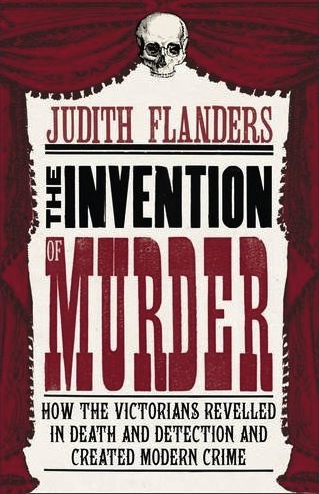
As murder seems to be on my mind [more on my escape from the elegant Regency to the dark side of Victorian London with a visit to the Sherlock Holmes Museum in a future post], I point you to a new work on just this subject: murder in Victorian Britain.  Judith Flanders, author of the very enjoyable informative work The Victorian Home, as well as Consuming Passions, and A Circle of Sisters, has just published The Invention of Murder: How the Victorians Revelled in Death and Detection and Created Modern Crime:


In the nineteenth century, murder – a rarity in reality – was ubiquitous in novels, in broadsides and ballads, in theatre and melodrama and opera – even in puppet shows and performing dog-acts. As Punch wrote, ‘We are a trading community, a commercial people. Murder is doubtless a very shocking offence, nevertheless as what is done is not to be undone, let us make our money out of it.’

In this meticulously researched and compellingly written exploration of a century of murder, Judith Flanders examines some of the most gripping and gruesome cases, the famous and the obscure, the brutal and the pathetic – to build a rich and multi-faceted portrait of Victorian society. The Invention of Murder is both a gripping tale of crime and punishment, and history at its most readable.

‘Dare I say it would be a crime not to read this book?’  – Donna Leon

[Image and text from Judith Flanders website]

And so as I now appear to be obsessed with murder, I also remind you of the running of the Agatha Christie murder mysteries on Masterpiece Theatre – beginning this past Sunday with “Murder on the Orient Express“.  This PBS summer series includes: (online viewing dates in parentheses following the national broadcast date)

  • May 22 (May 23 – Jun 5) Poirot: “Murder on the Orient Express” (Encore)
  • (May 23 – Jun 21) “David Suchet on the Orient Express: A Masterpiece Special” 60 min. (Encore)*
  • May 29 (May 30 – Jun 12) Marple: “The Secret of Chimneys” (Encore)*
  • Jun 5 (Jun 6 – Jun 19) Poirot: “Appointment with Death” (Encore)*
  • Jun 12 (Jun 13 – Jun 26) Poirot: “The Third Girl” (Encore)*
  • Jun 19 (Jun 20 – Jul 19) Poirot: “Three Act Tragedy”
  • Jun 26 (Jun 27 – Jul 26) Poirot: “The Clocks”
  • Jul 3 (Jul 4 – Aug 2) Poirot: “The Hallowe’en Party”
  • Jul 10 (Jul 11 – Aug 9) Marple: “The Pale Horse 

Enjoy!

Copyright @2011 by Deb Barnum at Jane Austen in Vermont 
Austen Literary History & Criticism · Books · Jane Austen · Literature · Publishing History · Rare Books

Austen on the Block! ~ Sotheby’s June 17, 2011

The exciting news this past week on the impending sale of the manuscript pages of Jane  Austen’s The Watsons certainly sent most us into a mild depression about how unattainable such a piece is for most of us. But today, Sotheby’s has made its New York June 17th auction of Fine Books and Manuscripts available online, and I see there are several Austen titles up for sale, still perhaps unattainable for most of us, but a little more reasonable just the same… again, one can only lament how Austen struggled to earn a pittance for her labors, and how Cassandra sold all the copyrights believing that her sister’s popularity had crested as she sank rather rapidly into obscurity!  Aah! Hindsight!

Here are the six lots for sale ~ you can go to the Sotheby’s website for more information on these lots and how to bid online:   

 Sotheby’s Sale No. NO8755: Fine Books and Manuscripts

LOT 5

Pride and Prejudice: A Novel. London: T. Egerton, 1813

3 volumes, 12mo (6 3/4 x 4 in.; 170 x 100 mm). Half-titles; light, scattered staining in all 3 vols. but withal a clean copy, a few short marginal tears in vol. 1, oxidized catchword in 1:O8, paper creased in lower right corner of 2:F1 and so printed. Contemporary mottled calf, smooth spines with gilt rules resembling chained links; spine labels lacking on vols. 1–2, vol. 1 boards detached, joints starting on vols. 2–3, craquelure on spines, minor loss to head of spine of vol. 3.   25,000—35,000 USD

 LOT 50


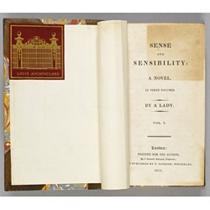
Sense and Sensibility. London: Printed for the Author and published by T. Egerton, 1811 

3 volumes, 12mo (6 3/8 x 3 7/8 in.; 161 x 98 mm). Lacks half-title in vol. 1 and terminal blanks in all 3 vols., half-title guarded in vol. 3, strong offsetting from morocco library label in vol. 1 to title-page, washed and pressed with residual foxing and staining throughout vol. 1, quires A–F in vol. 2, and quire B in vol. 3. Sympathetically bound in half mottled calf antique over marbled boards, spines in 6 compartments, russet and black lettering and numbering pieces, plain endpapers, edges uniformly marbled with boards.  15,000—25,000 USD

LOT 51

Pride and Prejudice: A Novel. London: T. Egerton, 1813

3 volumes, 12mo (6 3/4 x 4 1/16 in.; 170 x 104 mm). Lacks all half-titles, washed and pressed with residual staining and browning but less pronounced in vols. 2–3, strong offsetting from morocco label and binding to title-page and B1 in vol. 1, offsetting from binding to title-pages and terminal leaves in vols 2–3, short tears to inside lower left corners in vol. 1, quire B. Modern half black calf over marbled boards, spines in 6 compartments, red morocco labels, endpapers and edges plain.  10,000—15,000 USD

 LOT 52

Mansfield Park.London: Printed for T. Egerton, 1814

3 volumes, 12mo (7 x 4 in.; 175 x 100 mm). Lacking final blanks in vols. 2–3 and all 3 half-titles, long tears at 1:P12 costing at least 4 words, quire 1:Q loose, long tear in 2:C1 touching 5 lines, small perforations in gutters of 3:C3–6, title-page tipped in vol. 3, occasional light staining, chiefly marginal, a few short tears. Modern brown buckram, black morocco spine labels, plain endpapers and edges.  6,000—8,000 USD

 LOT 53

Emma: A Novel. London: Printed for John Murray, 1816

3 volumes, 12mo (6 3/4 x 4 1/8 in.; 170 x 104 mm). Half-titles; washed and pressed with some residual foxing and staining, particularly to half-titles, short split to vol. 1 half-title near gutter. Half mottled calf, marbled boards, spines in 6 compartments (2 reserved for lettering pieces), the others ornamented with gilt marguerites and floral cornerpieces, plain endpapers, top edges gilt; joints and spine ends a trifle rubbed, endpapers renewed. Blue holland paper slipcase; faded and stained.  10,000—15,000 USD

LOT 54

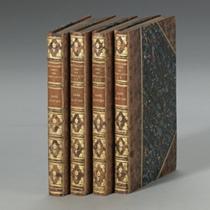
Northanger Abbey: and Persuasion. London, John Murray, 1818

4 volumes, 12mo (6 3/4 x 4 1/8 in.; 170 x 104 mm). Lacking half-titles in vols. 2–4 and blanks P7,8 in vol. 4 called for by Gilson, marginal offsetting to title-pages from bindings, washed and pressed with some residual toning and foxing. Uniformly bound with Emma (see previous lot); joints rubbed. Blue holland paper slipcase; faded and stained.   6,000—8,000 USD

Go in and browse the online catalogue – there are amazing items in this sale: Dickens, Bronte, Dickinson, Beatrix Potter and Arthur Rackham, Steinbeck letters,  Mark Twain, and so much more !

[Images and description text from the Sotheby’s catalogue]

Copyright @2011 by Deb Barnum, of Jane Austen in Vermont 
Austen Literary History & Criticism · Books · Jane Austen · Regency England · Social Life & Customs

Susannah Fullerton on Jane Austen and Crime ~ An Audio Lesson

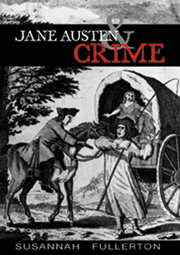
The ABC Sydney, Australian Broadcasting Corporation, has posted online its weekly “Self-Improvement Wednesday.”  This week’s lesson is an 11 minute chat on “Jane Austen’s  Crime” with Susannah Fullerton, the JASA President and author of the fabulous Jane Austen & Crime.

You can listen to the audio and then take the quiz to test your retention skills here:  http://www.abc.net.au/local/audio/2011/05/04/3207499.htm?site=sydney

Enjoy this very quick and entertaining run through all the possible crimes in Georgian England as seen in Austen’s writings:  adultery and crim con, dueling, prostitution, murder, elopement, rape, theft, smuggling, gaming, and the various punishments.  Better yet, read the book! [you can read my review here.]

Copyright @2011 by Deb Barnum, of Jane Austen in Vermont
Austen Literary History & Criticism · Books · Collecting Jane Austen · Jane Austen · Literature · News

Your Austen Library ~ ‘A Jane Austen Education’


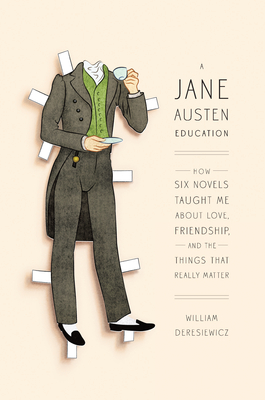
In A Jane Austen Education, Austen scholar William Deresiewicz turns to the author’s novels to reveal the remarkable life lessons hidden within. With humor and candor, Deresiewicz employs his own experiences to demonstrate the enduring power of Austen’s teachings. Progressing from his days as an immature student to a happily married man, Deresiewicz’s A Jane Austen Education is the story of one man’s discovery of the world outside himself.

A self-styled intellectual rebel dedicated to writers such as James Joyce and Joseph Conrad, Deresiewicz never thought Austen’s novels would have anything to offer him. But when he was assigned to read Emma as a graduate student at Columbia, something extraordinary happened. Austen’s devotion to the everyday, and her belief in the value of ordinary lives, ignited something in Deresiewicz. He began viewing the world through Austen’s eyes and treating those around him as generously as Austen treated her characters. Along the way, Deresiewicz was amazed to discover that the people in his life developed the depth and richness of literary characters-that his own life had suddenly acquired all the fascination of a novel. His real education had finally begun.

Weaving his own story-and Austen’s-around the ones her novels tell, Deresiewicz shows how her books are both about education and themselves an education. Her heroines learn about friendship and feeling, staying young and being good, and, of course, love. As they grow up, they learn lessons that are imparted to Austen’s reader, who learns and grows by their sides.

A Jane Austen Education is a testament to the transformative power of literature, a celebration of Austen’s mastery, and a joy to read. Whether for a newcomer to Austen or a lifelong devotee, Deresiewicz brings fresh insights to the novelist and her beloved works. Ultimately, Austen’s world becomes indelibly entwined with our own, showing the relevance of her message and the triumph of her vision.

A Jane Austen Education: How Six Novels Taught Me About Love, Friendship, and the Things That Really Matter

ISBN 9781594202889
272 pages
Release date: 28 Apr 2011
The Penguin Press:  available in hardover for $25.95;  ebook / adobe reader for $12.99

About the author:   

William Deresiewicz was an associate professor of English at Yale University until 2008 and is a widely published literary critic who writes for a popular audience. His reviews and criticism regularly appear in The New Republic, The Nation, The American Scholar, the London Review of Books, and The New York Times. In 2008 he was nominated for a National Magazine Award for reviews and criticism.

Text From the  publisher’s website:  Penguin Press

Deresiewicz also authored Jane Austen and the Romantic Poets  (Columbia UP, 2005)

He will be conducting a blog tour as follows:  info from TLC Book Tours]

Copyright @2011 by Deb Barnum, at Jane Austen in Vermont