Austen Literary History & Criticism · Decorative Arts · Fashion & Costume · Georgian Period · Great Britain - History · Jane Austen · Jane Austen Circle · Regency England · Social Life & Customs

Jane Austen & The Arts Conference ~ March 23-25, 2017 at SUNY-Plattsburgh

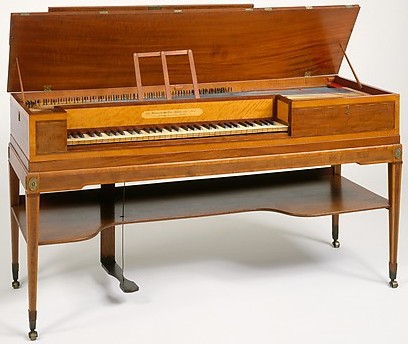
John Broadwood & Sons square piano (1797), NY-MMA - 1982.76
John Broadwood & Sons square piano (1797), NY-MMA

Mark your calendars! The “Jane Austen & The Arts” Conference, scheduled for March 23-25, 2017 at SUNY-Plattsburgh has just announced its speaker line-up – a terrific group! – here they are alphabetically: (and note that our very own Hope Greenberg will be sharing her thoughts on Fashion!)

  • Elaine Bander (Dawson College, CA), “Austen’s ‘Artless’ Heroines: Catherine and Fanny”
  • Barbara Benedict (Trinity College, CT), “‘What Oft was Thought’: Wit, Conversation, Poetry and Pope in Jane Austen’s Works”
  • Natasha Duquette (Tyndale University College, CA), “‘A Very Pretty Amber Cross’: Material Sources of Austenian Aesthetics”
  • Tim Erwin (UNLV), “The Comic Visions of Emma Woodhouse”
  • Marilyn Francus (West Virginia University), “Jane Austen, Marginalia, and Book Culture”
  • Marcie Frank (Cornell), “Theater and Narrative Form in Austen’s Mansfield Park”
  • Hope Greenberg (University of Vermont), “Jane Austen and the Art of Fashion”
  • Jocelyn Harris (University of Otago, NZ), “What Jane Saw–in Henrietta Street”
  • John Havard (Binghamton University), “Jane Austen and Woody Allen”
  • Jacqueline George (SUNY New Paltz), “Motion Sickness: The Fate of Reading in ‘Modern’ Sanditon”
  • Nancy E. Johnson (SUNY New Paltz), “Jane Austen and the Art of Law”
  • John Lefell (SUNY Cortland), “The Art of Speculation in Austen’s Sanditon”
  • Ellen Moody (George Mason University), “Ekphrastic Patterns in Jane Austen”
  • Tonay J. Moutray (Russell Sage Colleges, NY), “Religious Views: Austen’s Picturesque and Sublime Abbeys”
  • Douglas Murray (Belmont University, TN), “Jane Austen Goes to the Opera”
  • Cheryl Nixon (University of Massachusetts), “Jane Austen and Family Law”
  • John O’Neill (Hamilton College), “Adaptation, Appropriation, and Intertextuality in Whit Stillman’s Love and Friendship”
  • Deborah C. Payne (American University), “Jane Austen and the Theatre? Perhaps Not So Much”
  • Peter Sabor (McGill University), Keynote Address: “Portrait Miniatures and Misrepresentation in Austen’s Novels”
  • Juliette Wells (Goucher College, MD), “‘A Likeness Pleases Everyone’: Portraiture, Ekphrasis, and the Accomplished Woman in Emma”
  • Cheryl Wilson (University of Baltimore), “Jane Austen and Dance”

More info here: https://janeaustenandthearts.com/

c2016 Jane Austen in Vermont
Austen Literary History & Criticism · Georgian Period · Jane Austen · Jane Austen Circle · Jane Austen Societies · JASNA · JASNA-Vermont events · Literature · Regency England · Schedule of Events

JASNA~Vermont Meeting ~ September 18, 2016 ~ Jane Austen & Mary Wollstonecraft

Photos can be viewed on the event facebook page: https://www.facebook.com/events/2094244057466958/permalink/2116252491932781/

Thank you Nancy for a delightful talk!

~
You are Cordially Invited to JASNA-Vermont’s September Meeting
at the Burlington Book Festival 

“Planting the Seeds for the Austen Oeuvre:
Mary Wollstonecraft and the Rights of Woman.”
with
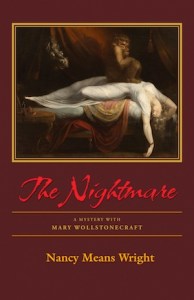
Nancy Means Wright*

OLYMPUS DIGITAL CAMERA

In an illustrated talk, Wright will describe 18th-century writer Mary Wollstonecraft’s traumatic and unconventional life in an era when women were victims of primogeniture and considered incapable of reason. She will discuss Mary’s groundbreaking Vindication of the Rights of Woman, and her Unitarian publisher’s circle of Dissidents; her years in revolutionary Paris when she lost her head to a feckless American captain – and her voyage to Scandinavia as a lone woman in search of a missing “silver ship.” She will also consider the ongoing question: Was Jane Austen influenced by Mary Wollstonecraft?

Sunday, September 18, 2016 2 – 4 pm
Morgan Room, Aiken Hall**
83 Summit Street
Champlain College
Burlington VT

********
Sponsored by JASNA-Vermont and Bygone Books

~ Free & open to the public ~
~ Light refreshments served
 ~ 

For more information:   JASNAVTregion [at] gmail.com 
Please visit our blog at: http://JaneAustenInVermont.wordpress.com
Burlington Book Festival website: http://burlingtonbookfestival.com/ 

************************************  

*Vermont author Nancy Means Wright has published fiction with St Martin’s Press, Dutton, Perseverance Press, and elsewhere, including a trilogy of historical mysteries featuring 18th-century Mary Wollstonecraft. Her most recent works are Queens Never Make Bargains, a novel, and The Shady Sisters, a collection of poems. Short stories and poems appear in American Literary Review, Green Mountains Review, Carolina Quarterly, and others. Her children’s books have received an Agatha Award and a grant from the Society of Children’s Book Writers. A former teacher and Bread Loaf Scholar, Nancy lives in Middlebury, Vermont, with her spouse and two Maine Coon cats. Her books will be available for purchase and signing.

**Aiken Hall is located at 83 Summit St – #36 on the map here: https://www.champlain.edu/Documents/Admissions/Undergraduate%20Admissions/Campus-Map.pdf  Parking is on the street or in any College designated parking during the event.
wollstonecraft_vindication-tp-britannica
[Britannica.com]

************
Hope you can join us!

c2016, Jane Austen in Vermont
Decorative Arts · Georgian Period · Great Britain - History · Jane Austen · Jane Austen Circle · Jane Austen Genealogy

Heraldry Windows at Chawton House Library ~ Part I: The Great Gallery

Dear Readers: Today I am posting in response to a question on Tony Grant’s post about visiting the Emma exhibition at Chawton House Library a few weeks ago. One of Tony’s pictures at the end of the post was of stained glass windows at the Library, and “Lady L” inquired about them. Tony had not seen anything about the various windows and portraits, but he confessed to be solely focused on Emma to really pay close attention. I have since discovered that all the heraldic windows are indeed explained at CHL, and that one of the Library’s many terrific volunteers has researched the history and meaning of all of them. Edward Hepper has graciously sent me his write-ups along with pictures and with his and CHL Executive Director Gillian Dow’s permission, I share this with all of you. Mr. Hepper is a long-term member of the British Heraldy Society, http://www.theheraldrysociety.com/home.htm and is quite knowledgeable on the family coats-of-arms that grace the windows of CHL – you will see some connections to Jane Austen and her family…but there is much other British history in these windows as well!

**************

Chawton House Library

We will start today in the Great Gallery:

These three windows were commissioned by Montagu Knight from the London firm Powell, of Whitefriars. They were installed between 1910 and 1913. The first window, furthest from the Great Staircase, shows the families of the freeholders from the 11th century over the next five hundred years. They were all descendants from the de Ports, to whom William the Conqueror granted the estate, although sometimes the lack of a male heir meant that Chawton passed through the female line with a change of name and coat of arms. The last of this family was Leonard West, by whom Chawton was sold to the Arundels.

CHL - Great Gallery-1

  1. St John, successors to the DePorts
  2. St Philibert
  3. Poynings
  4. Bonville
  5. Fulford
  6. West (NB the punning ‘W’)

**********

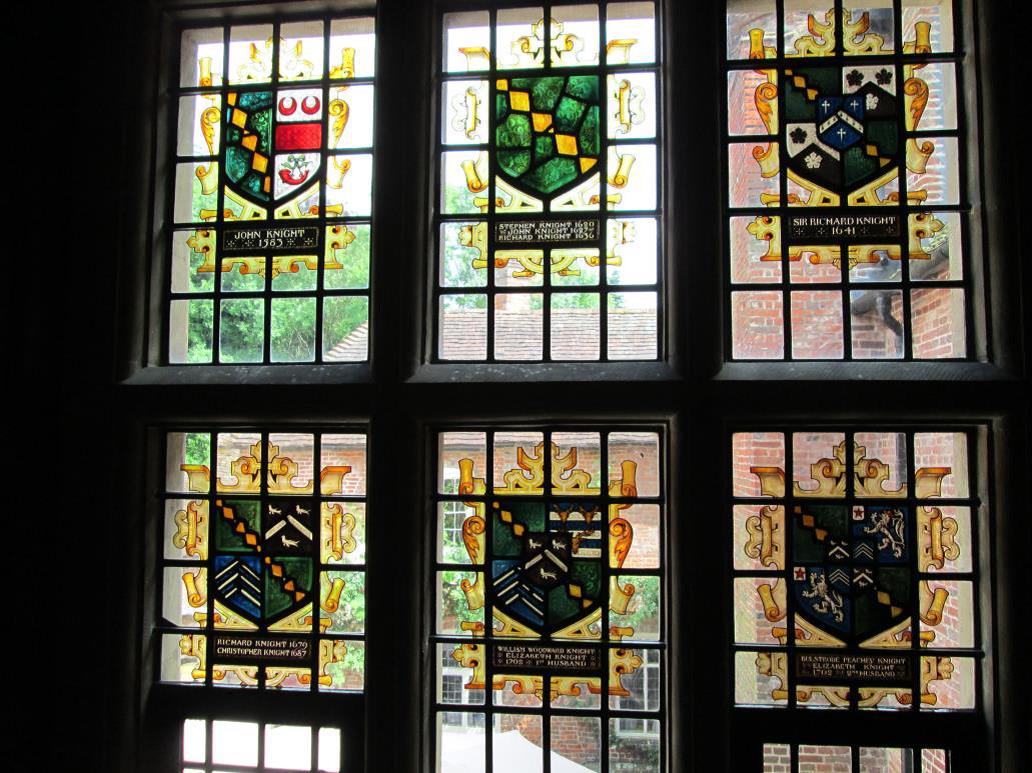
Within a few years, they sold to Nicholas Knight, whose son John, started to build the present house in 1583. The Knight family have held the freehold ever since – over four hundred years, although it has several times passed through the female line to other branches of the family which have had to adopt the name and arms of Knight (usually slightly differenced).

The succeeding Knights are shown in the next two windows and the dates next to their names indicate the year in which each of them succeeded to the freehold.

CHL - Great Gallery-2

  1. John Knight & Mary Neale (1583)
  2. Stephen & Richard Knight  (1620, 1637)
  3. Sir Richard Knight & Priscilla Reynolds (1641)
  4. Richard & Christopher (Martin) Knight (NB punning martins) (1679, 1687)
  5. Elizabeth (Martin) Knight & William Woodward Knight (1702)
  6. Elizabeth (Martin) Knight & Bulstrode Peachey Knight (1702) [Elizabeth Martin Knight had two husbands: William Woodward and Bulstrode Peachey (you cannot make up a name like that…)]

Here are their portraits, to put a face to a name:

Sir Richard Knight    –    Richard (Martin) Knight

Christopher (Martin) Knight  –  William Woodward

Elizabeth (Martin) Knight – Bulstrode Peachey

******************

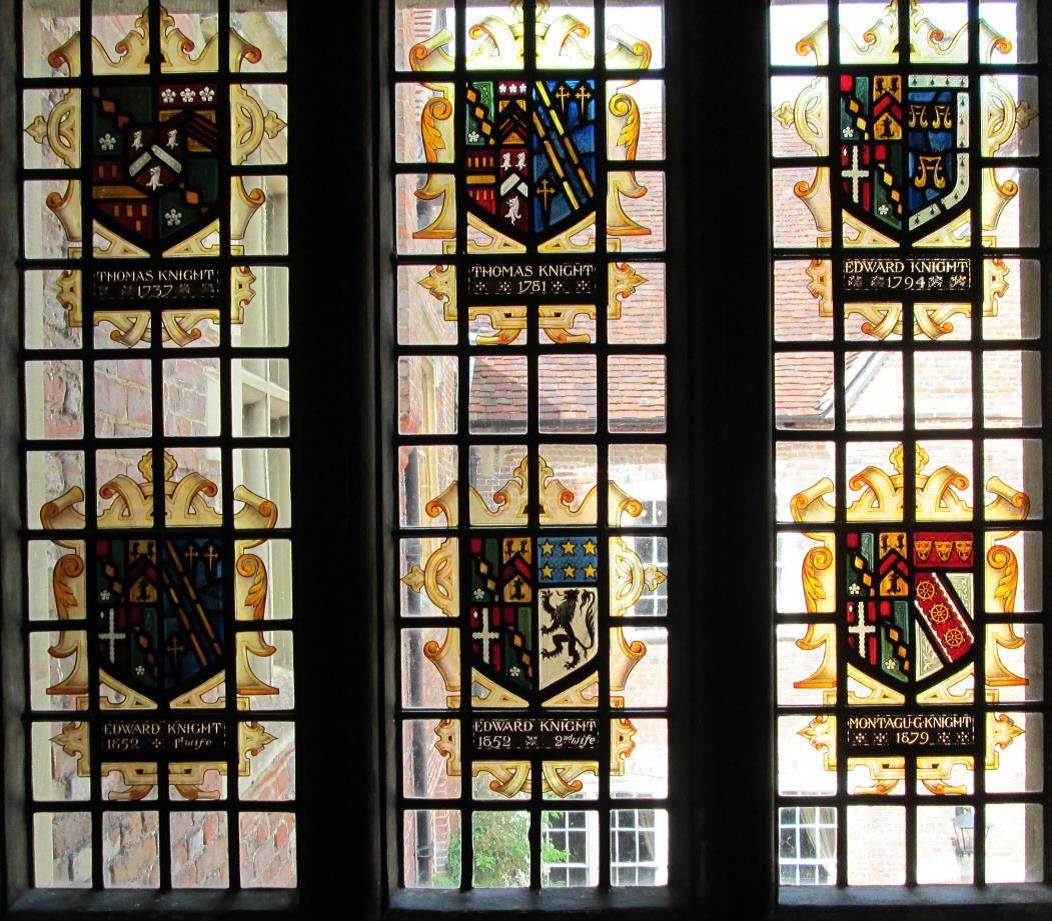
The third window brings us to Jane Austen territory:

CHL-Great Gallery-MonkKnight

  1. Thomas (Brodnax) Knight & Jane Monk (1637)
  2. Thomas Knight (jr) & Elizabeth Knatchbull (1781)
  3. Edward (Austen) Knight & Elizabeth Bridges (1794)
  4. Edward Knight (jr) & Mary Dorothea Knatchbull (1st wife) (1852)
  5. Edward Knight (jr) & Adela Portal (2nd wife) (1852)
  6. Montagu Knight & Florence Hardy (1879)

And their portraits:

Thomas (Brodnax) Knight  –  Jane Monk, wife of Thomas Knight (sr)

Thomas (Brodnax) Knight (jr)  – Edward (Austen) Knight (Jane Austen’s brother)

Edward Knight (jr)  –  Montagu Knight

*****************

Hearty thanks to Edward Hepper for allowing me to post on this – stay tuned for more information on the other windows … And I will be conversing with Ron Dunning to make sense of all these names and their connections to Austen – see his Jane Austen Genealogy for starters…

c2016 Jane Austen in Vermont; text and photos c Edward Hepper

Austen Literary History & Criticism · Decorative Arts · Georgian England · Georgian Period · Great Britain - History · Jane Austen · Regency England

Musing on a Passage in Jane Austen’s “Persuasion” ~ Guest Post by Heather Brothers

Gentle Readers: I welcome today one of our JASNA-Vermont members, Heather Brothers, as she muses on a certain passage in “Persuasion” that she “discovered” during a recent re-listen. We’ve had a bit of an email discussion over this, so now want to it share with you and solicit your thoughts too.

Persuasion-Naxos-Stevenson

The Musgrove’s Parlour

Several years ago I came upon the audio version of Persuasion as read by Juliet Stevenson. The manner of her reading infused more meaning into Persuasion than I ever picked up reading it myself. And through listening to this several times, I have noticed some fascinating passages that I would otherwise have overlooked. Here is one and I am happy to share others:

Anne-MrsMusgrove-Kellynch

Anne Elliot and Mrs Musgrove: http://www.kellynch.com/Anne.php

Anne has arrived at Uppercross and is going to visit the Musgroves with Mary…

To the Great House accordingly they went, to sit the full half hour in the old-fashioned square parlour, with a small carpet and shining floor, to which the present daughters of the house were gradually giving the proper air of confusion by a grand piano forte and a harp, flower-stands and little tables placed in every direction. Oh! Could the originals of the portraits against the wainscot, could the gentleman in brown velvet and the ladies in blue satin have seen what was going on, have been conscious of such an overthrow of all order and neatness! The portraits themselves seemed to be staring in astonishment.

[Persuasion, Vol. I, Ch. 5]

******************

I have come to understand that Persuasion is written on the cusp of a new time period. Just before this passage above, Mr. and Mrs. Musgrove are described as representing the old ways and the two Miss Musgroves as the new ways. I get the impression that Jane Austen is using even the parlor in the Musgrove house as showing this change – that the minutia of interior design itself represents a change from the old ways to the new ways.

What was happening in interior design at this time? What architectural changes were taking place? I understand from fashion that ionic columns and flowing lines were the mode, but simplicity doesn’t seem to be the case with the Musgrove girls’ additions to the parlor. When I read this piece to my husband, who is an architect, he immediately got the impression that the girls were over-decorating; that they were building up the style to improve and impress.

This leads me to think that the astonishing overthrow of all order and neatness is both referring to the style of the room but also to the girls themselves. What would the portraits have thought of Henrietta and Louisa Musgrove in their endless pursuit of happiness, fun and excitement?

Seen in an earnest light, Henrietta and Louisa’s behavior is seriously flawed. Henrietta almost loses a good, stable life with a man she really likes and Louisa almost kills herself through taking their love-struck silliness to too high of a level. Did it all start in the parlor? Would the piano forte have been sufficient, but the additional harp, flower-stands and little tables represent the overthrow of moderation? Is Jane Austen’s commentary on the parlor a harbinger of what’s to come for these girls or for society?

If anyone can recommend books on this subject – please let me know!

********************

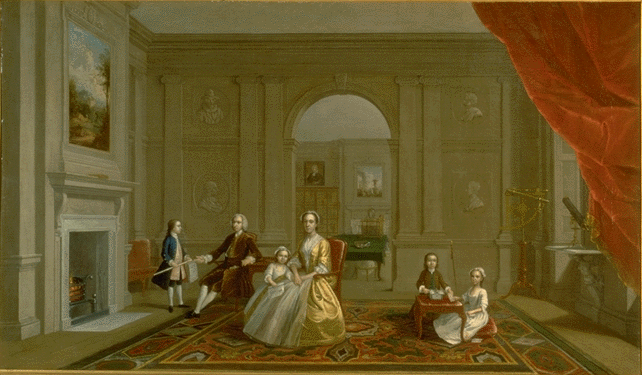
This portrait may serve as an example of what Jane Austen is referring to, hanging on the Musgrove parlor walls “against the wainscot,” where all is “order and neatness.”

devis2alg

1742-1743 the John Bacon family, by Arthur Devis
(Yale Center for British Art – New Haven, CT)
[Source: http://www.gogmsite.net/reign-of-louis-xv/1742-1743-john-bacon-family.html]

Austen packs into this one rather obscure sentence much about what is going on in the Musgrove household and the wider world! Thoughts anyone?

cover-IntroGent-BrothersHeather Brothers is one of our “Team of Janeites” in Vermont who helps with Hospitality and Boutique sales at our quarterly meetings. She is a young mother of two adorable girls, and also the author of a Regency-era novel, The Introduction of a Gentleman (2013) – it is a terrific read – you can find it on Amazon (and interesting to note that the cover depicts a young lady sitting at a pianoforte!)

Heather has also initiated at our meetings “The Awesome Austen Moment” – where we ask someone to read aloud a short passage from any of the Works, just to remind us all exactly what Austen could convey in any given sentence, this Persuasion piece a perfect example.

You can read more about Heather and her book here:

Books · Collecting Jane Austen · Georgian England · Georgian Period · Great Britain - History · Jane Austen · Jane Austen Circle · London · Regency England · Social Life & Customs

Guest Post: Into the Shadowy World of “Regency Spies” ~ Sue Wilkes on The Cato Street Controversy

Join us today for a guest post by Sue Wilkes, as she shares one of her spy tales from her new book Regency Spies: Secret Histories of Britain’s Rebels & Revolutionaries (more information on the book below).

reg spies highrescover1

The Cato Street Conspiracy, 1820

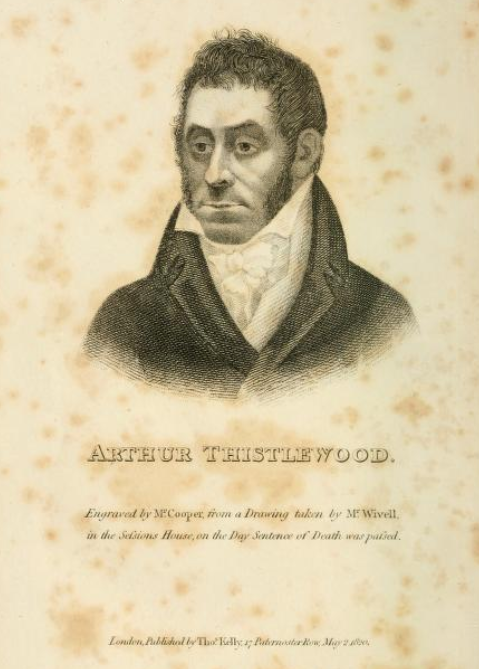
The year 1820 began with grave news – the death of George III on 29 January, after years of illness. The King was buried a week later with great pomp and ceremony on 16 February. But his son George IV’s reign did not get off to a good start. A week later, news broke to an astounded British public of the arrest of ‘a gang of diabolical ruffians’ at Cato Street, in London. The conspirators, led by the ‘notorious’ Arthur Thistlewood, planned to kill members of the Cabinet (government ministers) while they dined at Earl Harrowby’s house in Mansfield Street (Gentleman’s Magazine, February 1820).

Arthur Thistlewood

This was no chance discovery, however. Thistlewood and his gang were well known to the authorities – the government’s spies had kept them under surveillance for years. Arthur Thistlewood, a brooding, dangerous man known to be deadly with a sword, led a group of revolutionaries called the ‘Spencean Philanthropists’.

The Spenceans were followers of the late Thomas Spence, who advocated the common ownership of all land – a truly anarchic idea in an unequal society rooted in land, wealth and property. Thistlewood first came to prominence in the Spa Fields riot of December 1816 in London. The riot was thought to be a ‘trial run’ by the Spenceans to see if they could get enough popular support to attack the Tower of London, Bank of England, and seize the city. Thistlewood and his friends were arrested and tried for treason the following year, but acquitted as most of the evidence against them was based on unreliable spy evidence.

After his release from prison, Thistlewood and his followers were constantly watched. In 1817 a spy called Shegoe reported, ‘They entertain the plan of assassination, and Lords Castlereagh, Sidmouth, Liverpool and Ellenborough have been marked as objects of their pursuit’. Some conspirators guessed that Shegoe was a spy, however, and his usefulness declined.

A new spy, George Edwards (code-name ‘W—r’ in the surveillance reports) infiltrated the gang and actively encouraged their plans. Edwards also recruited more conspirators: one of the people he ‘groomed’ was John Thomas Brunt, a shoe-maker. Another was Richard Tidd, who came from Thistlewood’s native Lincolnshire, and met Edwards through Brunt. Edwards’ actions and words were so ludicrously violent that several men he approached sent him packing, convinced that he was trying to entrap them.

Early in 1820, Edwards brought Thistlewood the news he had been waiting for: a Cabinet dinner was planned at Lord Harrowby’s house. Thistlewood and his gang rented a loft in Cato Street. They arranged to meet on Tuesday 22 February, bringing as many weapons as they could lay their hands on. But thanks to Edwards, the time and place for the planned assassination were already known to the police and Home Office. Everything was now set to nip the conspiracy in the bud.

Cato St execution - Newgate

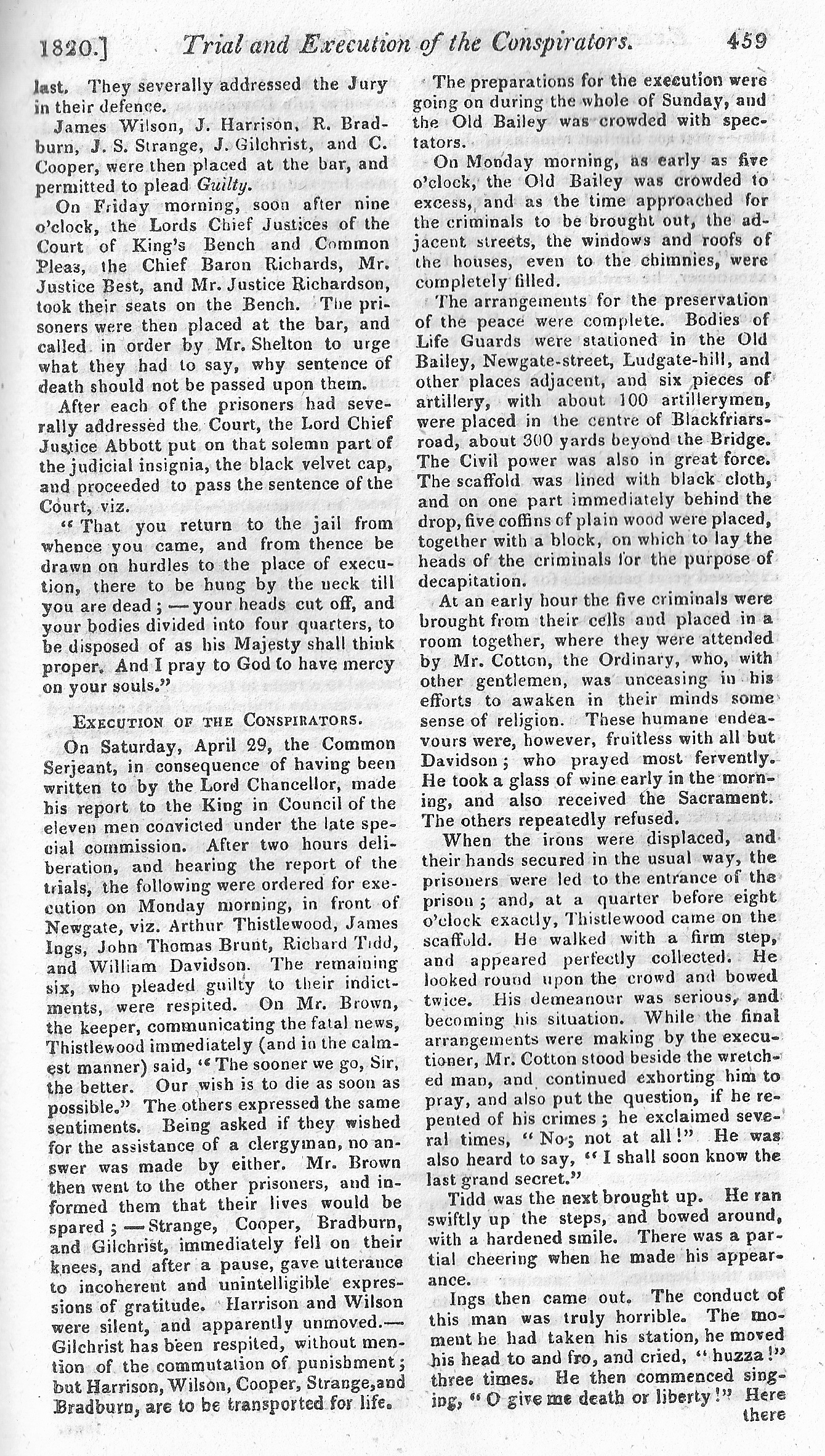
On Monday 1 May 1820, Arthur Thistlewood, James Ings, John Thomas Brunt, Richard Tidd and William Davidson were executed guilty for high treason at Newgate. But was it really Thistlewood’s idea to kill the Cabinet – or was it the spy George Edwards’s plan, as Arthur claimed at his trial?

cato st gentmag may1820 exec1

An account of the death sentence passed by the judge, and the conspirators’ execution,
from the Gentleman’s Magazine, May 1820. (Author’s collection).

********************

About the book: [from the jacket]

reg spies highrescover1In her new book, Sue Wilkes reveals the shadowy world of Britain’s spies, rebels and secret societies from the late 1780s until 1820. Drawing on contemporary literature and official records, Wilkes unmasks the real conspirators and tells the tragic stories of the unwitting victims sent to the gallows.

In this ‘age of Revolutions’, when the French fought for liberty, Britain’s upper classes feared revolution was imminent. Thomas Paine’s incendiary Rights of Man called men to overthrow governments which did not safeguard their rights. Were Jacobins and Radical reformers in England and Scotland secretly plotting rebellion? Ireland, too, was a seething cauldron of unrest, its impoverished people oppressed by their Protestant masters.

Britain’s governing elite could not rely on the armed services – even Royal Navy crews mutinied over brutal conditions. To keep the nation safe, a ‘war chest’ of secret service money funded a network of spies to uncover potential rebels amongst the underprivileged masses. It had some famous successes: dashing Colonel Despard, friend of Lord Nelson, was executed for treason. Sometimes in the deadly game of cat-and-mouse between spies and their prey suspicion fell on the wrong men, like poets Wordsworth and Coleridge.

Even peaceful reformers risked arrest for sedition. Political meetings like Manchester’s ‘Peterloo’ were ruthlessly suppressed, and innocent blood spilt. Repression bred resentment – and a diabolical plot was born. The stakes were incredibly high: rebels suffered the horrors of a traitor’s death when found guilty. Some conspirators’ secrets died with them on the scaffold…

Sue Wilkes4About the author:

Sue Wilkes is the author of several works of social and family history: Regency Spies (Pen & Sword, 2016) and A Visitor’s Guide to Jane Austen’s England (Pen & Sword, 2014), Regency Cheshire (Robert Hale, 2011), The Children History Forgot (Robert Hale, 2010), Narrow Windows, Narrow Lives (Tempus, 2007), as well as guides for family historians on tracing ancestors in various UK counties and towns.

Read her blogs at:

Book info:

Publisher: Pen and Sword (February 19, 2016)
ISBN-10: 1783400617 / ISBN-13: 978-1783400614
Price: $39.95 / £19.99
Pen & Sword: http://www.pen-and-sword.co.uk/Regency-Spies-Hardback/p/11177
Amazon: http://www.amazon.com/Regency-Spies-Histories-Britains-Revolutionaries/dp/1783400617

Read another post by Sue here: Regency Explorer

*************

Thank you Sue for telling us about one your tales! This book is filled with such – I will be interviewing Sue in the coming weeks, so please return to learn more about this world of spies in Jane Austen’s time … my first question? Whatever would our dear Henry Tilney have to say about it all?!

NA-Brock-staircase-mollandsDear Miss Morland, consider the dreadful nature of the suspicions you have entertained. What have you been judging from? Remember the country and the age in which we live. Remember that we are English, that we are Christians. Consult your own understanding, your own sense of the probable, your own observation of what is passing around you. Does our education prepare us for such atrocities? Do our laws connive at them? Could they be perpetrated without being known, in a country like this, where social and literary intercourse is on such a footing, where every man is surrounded by a neighbourhood of voluntary spies, and where roads and newspapers lay everything open? Dearest Miss Morland, what ideas have you been admitting?”
[NA, Vol. II, Ch ix. Image: Mollands.net]

Image sources:

All four images from George Theodore Wilkinson, The Newgate Calendar Improved Vol. 5, (Thomas Kelly, 1836). Courtesy the Internet Archive, archive.org.

c2016, Jane Austen in Vermont
Books · Georgian England · Georgian Period · Great Britain - History · Jane Austen Circle · Regency England · Social Life & Customs

For your Bookshelf: “What’s the Play and Where’s the Stage?” by Alan Stockwell

Today a guest post by Alan Stockwell, author of What’s the Play and Where’s the Stage? A Theatrical Family of the Regency Era, as he tells us a bit about his new book. I shall add this to my TBR file – it has all the makings of a Regency era soap opera of the highest order, all the better because it is all true! Please comment below if you have any questions for Mr. Stockwell…

Stockwell-cover

What’s the Play and Where’s the Stage?
A Theatrical Family of the Regency Era

The lives of eminent London actors of the Regency period – Kean, Mrs Siddons, Kemble, Cooke, Macready, Grimaldi et al, are more than amply recorded. This book ploughs a more unusual, rarer, furrow.

It reveals the theatrical lives of a family of provincial players who tramped the highways and byways bringing the latest London hits and classic plays to unsophisticated audiences in tiny country theatres and large manufacturing towns. The author offers not a specialist tome for theatre historians – although they will find previously unknown material and new revelations here – but a beguiling story of a family of three thespian siblings, their spouses and their children.

This is a Regency world far removed from the novels of Jane Austen. There are highs and lows, riches and poverty, twists and turns, and extraordinary events as in the script of any modern television saga.  The marked difference being that – for the Jonas and Penley Company of Comedians – this was real life.

In Georgian and Regency times even the tiniest country town had its theatre visited regularly by travelling players. These companies were usually family based and my book is an account of one such troupe – more adventurous than most – the Jonas & Penley Company, grandiloquently self-styled “His Majesty’s Servants of the Theatre Royal Windsor”. The troupe under their indefatigable leader Sampson Penley comprised three siblings, their spouses and two dozen children.

EdmundKean-GarrickClub-vesperhawk

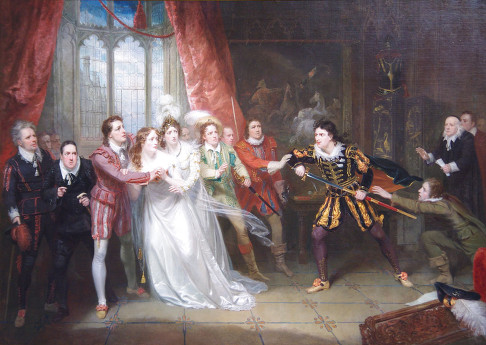
This picture from the Garrick Club shows Edmund Kean the brightest star of the Regency stage.  The man in pink on the left is Sampson Penley Jr of the once well-known Penley family of provincial players.
[Source: VesperHawk.com ]

I purposely divided the text into discrete biographies, allowing the narrative of each to flow. However, the subjects all being closely related, the parts form an inter-connected whole. So that their separate stories are easy to read, and are not interrupted by notes etc, all such things are grouped in appendices, which can be ignored if you are not interested in the research necessarily compiled for such a project as a historical biography. Although the book revolves around the theatre of the time there is much information on other aspects of social history – wages, transport, childbirth, postal system etc, which all impinged on the everyday life of players. Authors of Regency fiction may find such things of professional interest. Below is a brief look at the family members described:

  • Sampson Penley & his brother-in-law John Jonas and all their trials and tribulations setting up a circuit of theatres in south-east England during the Napoleonic Wars while touring with ever-enlarging families. Events include becoming lessees of the Windsor theatre and playing to the royal family; leasing a London theatre (a failure); the first English company to tour the continent in 1814 after the fall of Napoleon; the first English company to play in Paris since Elizabethan times and the riot that ensued; imprisonment for debt and bankruptcy.
  • Mr & Mrs William Penley who were Sampson’s brother and sister-in-law. For several years Mrs W P was the leading tragedy queen in the Jonas & Penley company while her husband was at Drury Lane theatre for ten seasons. Of outstanding interest is that George III’s queen “adopted” their six-year old son, had him educated at public school and provided £300 to facilitate his joining the Indian army where he ended up a major.  William became affluent and two of his sons became artists – Aaron of sufficient eminence to paint Queen Victoria and Prince Albert.
  • Sampson Penley Jr who was a leading man at sixteen, joined Drury Lane where he was a principal member of the company for many years in spite of receiving the most consistently damning of reviews. He wrote several plays but only one success. He supported Edmund Kean in many plays and when he lost his place in London he became a manager in Windsor, Newcastle and Leicester. He fell in love at first sight and married after a whirlwind courtship, fled to Paris to avoid debts and died there far too young.
  • The three acting daughters of Sampson, Rosina, Phoebe and Emma Penley relate their careers in tandem. Rosina was the most important and she was the first British actress to be hailed by the intelligentsia of Paris for her Shakespearean performances. Rosina’s peregrinations as a respectable single woman travelling throughout the land, playing a multitude of parts in many towns and circumstances is very different from the typical lives of other women of the period whether rich or poor. Her sisters Phoebe and Emma played the same repertory of parts and on many occasions pairs of sisters acted together.
  • Sampson’s son Montague Penley who was an artist and drawing teacher (a pupil was Princess Augusta) as well as an actor, scenic artist and manager. He acquired the lease of the Lyceum theatre in London which resulted in a swift financial debacle and yet another Penley fleeing to France.
  • Belville Penley was Sampson’s youngest son who as a child acted in Brussels on the eve of Waterloo and afterwards with his family visited the battlefield. He did not become an adult actor but was a theatre manager. His wife was a singer whom he impregnated prior to marriage causing press condemnation. Belville went into partnership with the actor James Anderson at Leicester, Cheltenham and Gloucester. The partnership ended with another bankruptcy. Mrs Belville Penley went on to be a well-known singer of oratorio and religious works and her husband became lessee of the Roman Baths at Bath.
  • Cousins Maria Jonas and Frederick Jonas who also had substantial theatrical careers.

Stockwell-rearcover

*******************

What’s the Play and Where’s the Stage? is a hardback of 420 pages with an ISBN 978-0-9565013-6-3. You can visit my website for more information www.vesperhawk.com.

And what is the significance of the title? It is a quotation from an anecdote you will find on page 28!

*************

About the Author: Alan Stockwell MBE was a professional puppeteer for over forty years. Latterly, he has devoted much of his time to writing, and is the author of several books and many articles on the theatre, magic, circus and puppetry. He is a long-time member of the Society for Theatre Research and the Irving Society [that would be Henry, not Washington].  And has written on Sherlock Holmes and Charles Dickens (see website for more information).

Thank you Alan for sharing about your book! – Readers, please reply below if you have any comments or questions.

You can purchase the book here:

c2016 Jane Austen in Vermont
American History · Georgian Period · Jane Austen

Finding Jane Austen in the Most Unlikely Places: Savannah, Georgia

How to annoy friends and loved ones: offering daily proof that all things come back to Jane Austen, no matter the context. There have been a good number of very funny and unexpected results to support this theory – I always surprised and delighted in these “sightings” of Austen in the strangest places – my friends? – they merely roll their eyes. But a discovery a few weeks ago while on an architectural walking tour of Savannah Georgia might be the most bizarre yet… As we trekked around the beautiful and history-laden downtown, the whole of it a National Historic Landmark, our guide was asked how James Oglethorpe was able to communicate with the Native Americans he encountered when he chose Savannah for his settlement.

James Oglethorpe - HistoryCentral.com
James Oglethorpe – HistoryCentral.com

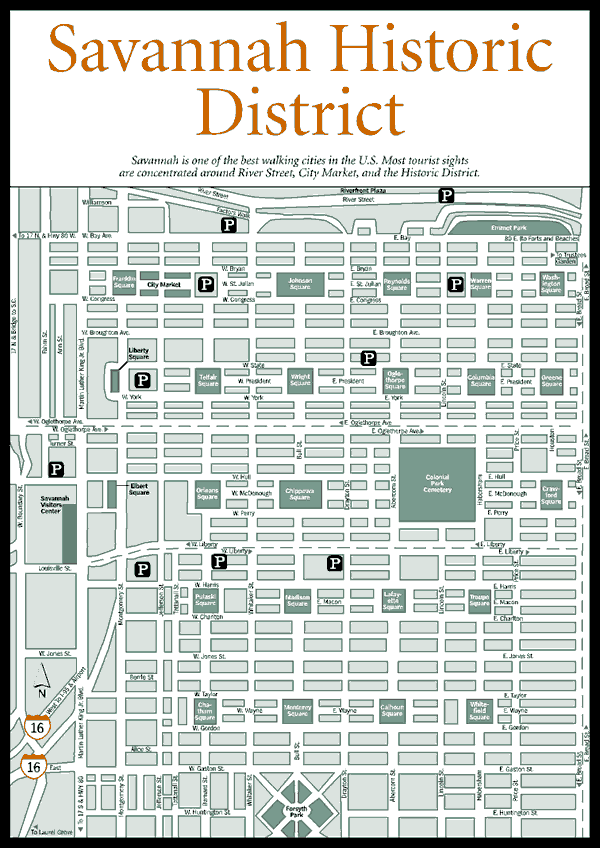
This was in 1733 and much later than the earlier colonies in South Carolina, Virginia, and those in the north, when Oglethorpe, under a charter granted by King George II, founded Georgia on the spot of this small river town. He started out with the best of intentions – he designed one of the most interesting towns likely ever planned and only thankfully for the machinations of a group of women in the 1950s, this city of twenty-two squares remains largely intact today (there were originally 24 squares). But Oglethorpe saw perfection not only in his architectural plan of Savannah – he expected it of his fellow colonists: no slavery, no Catholics (due to the proximity to the Spanish-controlled area of Florida just south), and no liquor…all of these prohibitions were eventually lifted.  [There is an old-wives tale that lawyers were banned as well, but I shall leave that to the history writers to separate fact from fiction!]

SavannahCityPLan-1734

Savannah City Plan 1734
source: http://www.georgiaencyclopedia.org/articles/history-archaeology/savannah-city-plan

[The original caption of this print by Paul Fourdrinier reads: “A View of Savannah as it stood on the 29th of March 1734. To the Hon[orable] Trustees for establishing the Colony of Georgia in America. This View of the Town of Savannah is humbly dedicated by their Honours Obliged and most Obedient Servant, Peter Gordon.” – Courtesy of Hargrett Rare Book and Manuscript Library, University of Georgia Libraries]

map_savannah_historicdistrict

Savannah Historic District map: see this link for a description of the 22 squares. http://sherpaguides.com/georgia/coast/northern_coast/savannah_historic_district.html

*************

My intention here is not to give you a full-blown accounting of the founding of Savannah, fascinating subject though it be – but merely to share this tidbit. Back to our walking guide: it seems that there was a Creek woman, married to an English trader, who lived comfortably in both her worlds and served as interpreter, translator, and facilitator to Oglethorpe and his band of colonists, and therefore was largely responsible for the peaceful establishment and development of Savannah. Her name? Mary Musgrove. Now I know the guide was in a quandary when I yelped aloud and burst out laughing (I did explain the outburst after the walk – but when I said that Mary Musgrove was the name of one of Jane Austen’s most infamous characters, I am quite sure he was even more baffled…)

But there you have it – Mary Musgrove in America and Jane Austen once again rears her brilliant head!

Oglethorpe, Mary Musgrove, and Chief Tomochichi
Oglethorpe, Mary Musgrove, and Chief Tomochichi – Courtesy of Ed Jackson*

Now I am not saying that Jane Austen knew of this Mary Musgrove of course – there is nothing in her hypochondriac self-absorbed character to link her to a Creek woman living in the colonies nearly a century before. But it gave me a start nonetheless – and there is always the slight chance that Jane Austen may have seen something in her history books. Oglethorpe returned to England in 1734 with the chief of the Yamacraw Tomochichi and others from the Creek tribe to meet the King, and Mary’s husband John Musgrove went along to serve as interpreter. Mary remained in the Georgia colony and ran the trading post – but she too traveled to England in 1754 with her third husband Thomas Bosomworth [now there’s a name…] to settle the twenty year-long dispute over her ownership of several of the Georgia sea islands. In the end, she was granted title only to St Catherines Island, where after several more years as interpreter between the colonists and the Creeks, she died around 1765. Could any of this very interesting history have been part of the Austen family dinner conversation?

[*Image above from Ed Jackson’s website with thanks: http://georgiainfo.galileo.usg.edu/gastudiesimages/Oglethorpe-Mary%20Musgrove-Tomochichi%201.htm ]

There is another important aside with respect to Oglethorpe and slavery. He was one of the earliest to speak out against it, his founding of the Georgia colony prohibiting slaves proof of his humanistic beliefs. It was he who brought Granville Sharp and Hannah More into the argument – and they, after Oglethorpe’s death in 1785, joined with William Wilberforce and others in fighting slavery in England, on the seas, and in the colonies. For those of us who see the subtext of the slavery issue in Mansfield Park, it is certainly a possibility that Jane Austen knew of Oglethorpe, his history in settling Georgia, and his anti-slavery sentiments – and maybe something perhaps about Mary Musgrove?

Musgrove-GAEncycl

Mary Musgrove (pictured with her third husband, the Reverend Thomas Bosomworth) –
From First Lessons in Georgia History, by L. B. Evans
Source: http://www.georgiaencyclopedia.org/articles/history-archaeology/mary-musgrove-ca-1700-ca-1763

She was known as Coosaponakeesa among the Creek Indians, the daughter of an English trader Edward Griffin and a Creek Indian mother (the Creeks were a matrilineal society and children took the clan identities of their mothers). Living among both cultures she learned to speak both English and Muskogee (the language of the Creeks), and learned from her father the trading post business. Her marriage to John Musgrove, the son of a South Carolina trader and planter and a Creek mother, was settled to reinforce the peace treaty between the Native Americans and the English. They lived within the Creek culture until they established a trading post near the Savannah River, and where Oglethorpe found them in 1733. We know that Oglethorpe was appreciative of her efforts on the colonists’ behalf because in his will he left her £100 and a diamond ring from his finger … And Musgrove was important enough to the history of Georgia that in 1993 she was inducted into Georgia Women of Achievement. http://georgiawomen.org/

****************

Sophie Thompson as Mary Musgrove (1995)

 Source:  https://www.pinterest.com/pin/460844974341615969/

As for Austen’s own Mary Musgrove – here are a few of the priceless quotes:

“My sore-throats, you know, are always worse than anybody’s.” 

“If there is anything disagreeable going on, men are always sure to get out of it.” 

“So, you are come at last! I began to think I should never see you. I am so ill I can hardly speak.” 

“Yes, I made the best of it; I always do: but I was very far from well at the time; and I do not think I ever was so ill in my life as I have been all this morning: very unfit to be left alone, I am sure. Suppose I were to be seized of a sudden in some dreadful way, and not able to ring the bell!” 

“…. as long as I could bear their noise; but they are so unmanageable that they do me more harm than good. Little Charles does not mind a word I say, and Walter is growing quite as bad.” 

“… and it is so very uncomfortable, not having a carriage of one’s own.” 

***********************

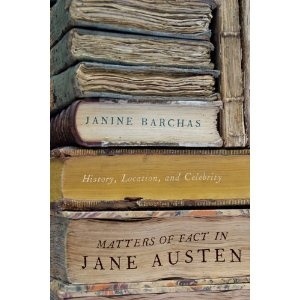
book-cover-barchas-mattersJanine Barchas in her book Matters of Fact in Jane Austen offers the possibility that Austen took the name from a small village in Somersetshire called Charlton-Musgrove and that this served as a real world setting for her imaginary Uppercross. In her geographical mapping of Persuasion, Barchas notes that this village as well as Lyme and Bath would be within the travel distances Austen lays out from her fictional “Uppercross” and “Kellynch Hall” [p. 235-6].

And this has nothing to do with any of this naming of characters, but I have always wondered why ever did Austen have Mary Elliot marry Charles Musgrove on December 16th, her very own birthday? Any thoughts?

***********

Further reading: [there is a great deal on Mary Musgrove – I take some of this bibliography from the online Georgia Encyclopedia] 

  1. Baine, Rodney M. “Myths of Mary Musgrove,” Georgia Historical Quarterly 76 (summer 1992).
  2. Fisher, Doris. “Mary Musgrove: Creek Englishwoman,” (Ph.D. diss., Emory University, 1990). 
  3. Frank, Andrew K. “Mary Musgrove (ca. 1700-ca. 1763).” New Georgia Encyclopedia. http://www.georgiaencyclopedia.org/articles/history-archaeology/mary-musgrove-ca-1700-ca-1763 
  4. Georgia Women of Achievement: http://georgiawomen.org/2010/10/bosomworth-mary-musgrove/
  5. Gillespie, Michele Gillespie. “The Sexual Politics of Race and Gender: Mary Musgrove and the Georgia Trustees.” The Devil’s Lane: Sex and Race in the Early South. Ed. Catherine Clinton and Michele Gillespie. New York: Oxford UP, 1997.
  6. Green, Michael D. “Mary Musgrove: Creating a New World.” Sifters: Native American Women’s Lives. Ed. Theda Perdue. New York: Oxford UP, 2001.
  7. Hahn, Steven C. The Life and Times of Mary Musgrove. Gainesville: UP of Florida, 2012.
  8. Irby, Richard E., Jr. “Mary Musgrove, Queen of the Creeks.” On the About North Georgia website: http://www.aboutnorthgeorgia.com/ang/Mary_Musgrove,_Queen_of_the_Creeks
  9. Perdue, Theda. “Native Women in the Early Republic: Old World Perceptions, New World Realities.” Native Americans in the Early Republic. Ed. Ronald Hoffman and Frederick Hoxie. Charlottesville: U of Virginia P, 1999.
  10. Sweet, Julie Anne. “Mary Musgrove: Maligned Mediator or Mischievous Malefactor.” Georgia Women: Their Lives and Times, Vol. 1. Ed. Ann Short Chirhart and Betty Wood. Athens: U of Georgia P, 2009.
  11. Wikipedia on Mary Musgrove: http://en.wikipedia.org/wiki/Mary_Musgrove
  12. And even a YouTube! “Mary Musgrove: Georgia’s Own Pocahontas”- https://www.youtube.com/watch?v=Jwy8dvPTPVo
  13. [Legal] indenture executed by Henry Ellis and Thomas [and] Mary Bosomworth [with sworn statements and opinion], 1760 Apr. 19 – Thomas and Mary Bosomworth (a.k.a. Mary Musgrove or Coosaponakeesa) and Henry Ellis (Royal Governor of Georgia, 1757-1760). The Bosomworths herein agree to cede the two islands of Ossabaw and Sapelo to the Crown in exchange for a sum of money and title to St. Catherine’s Island. Sworn statements given by Mary Bosomworth and her husband, Thomas, follow the indenture as does criticism, offered by an unknown author, relative to the negotiations between the Governor and Bosomworths. [WorldCat]

There is also a book for young people: published in 1997 with the title Call the River Home, a 2nd edition was published in 2011 as Mary Musgrove, Queen of Savannah:

bookcover-MaryMusgrove-Statham

And here we find Mary Musgrove very present in present-day Savannah:

IndianTradingPostsign

c2015 Jane Austen in Vermont
Austen Literary History & Criticism · Collecting Jane Austen · Georgian England · Georgian Period · Great Britain - History · Jane Austen · Jane Austen Circle · Jane Austen Popular Culture · Regency England

Hot off the Presses! ~ Jane Austen’s Regency World Magazine, Issue 74

Be on the lookout in your mailbox! – the March/April 2015 (issue 74) of Jane Austen’s Regency World magazine is published this week and is being mailed to subscribers. In it you can read about:

cover-74

  • The Iron Duke: A major exhibition marks the Duke of Wellington’s triumph at the Battle of Waterloo
  • A Book’s Life: One of the rare books at Chawton House Library reveals all
  • Anyone for Pyms? Barbara Pym, the novelist who was known as the “Jane Austen of the 20th century”
  • Georgian Illnesses: Examining some of the ailments suffered by Jane Austen’s characters
  • From Daylesford to Delaford: Is there a connection between Warren Hastings and Sense & Sensibility?

*Plus News, Letters, Book Reviews and information from Jane Austen Societies in the US, UK and Australia

*To subscribe now click here – and make sure that you are among the first to read all the news from Jane Austen’s Regency World!

[Text and image courtesy of JARW].

c2015 Jane Austen in Vermont
Austen Literary History & Criticism · Books · Collecting Jane Austen · Georgian Period · Jane Austen · Jane Austen Societies · JASNA · London · Rare Books · Regency England

My Jane Austen Book Stash from the 2014 JASNA AGM in Montreal!

mp-200-logo

The JASNA AGM in Montreal was quite wonderful – five days immersed in Mansfield Park! – Fanny Price and Jane Austen were celebrated in style and received their just due in attention and adoration… The Montreal-Quebec Region outdid themselves in making us all comfortable [much more than “tolerable”!], entertained, and enlightened! I haven’t had a chance to post anything but start here with my annual compilation of book purchases at the Emporium [Jane Austen Books, Traveller’s Tales from Picton Ontario, and The Word Bookstore in Montreal] – successful as always with finding several goodies at the book stalls! – in no particular order…

1. Mudrick, Marvin. Jane Austen: Irony as Defense and Discovery. Berkeley: U of California P, 1968. [originally published in 1952 by Princeton UP].

One of the classic works of Austen literary criticism – I’ve always borrowed this from the library – now happy to have my own copy. Mudrick was one of the earliest to appraise the ironic aspects of Jane Austen – “her ironic detachment that enabled her to expose and dissect, in novels that are masterpieces of comic wit and brilliant satire, the follies and delusions of eighteenth-century English society.” In his preface, Mudrick writes “this book began as an essay to document my conviction that Emma is a novel admired, even consecrated, for qualities which it in fact subverts or ignores.” – and he goes on from there to apply his theory to all the novels, juvenilia and minor works. A must have for your Austen collection…

MrsBeetonNeedlework 2. Mrs. Beeton’s Book of Needlework, Consisting of Descriptions and Instructions, Illustrated by 600 Engravings. London: Bounty Books, 2007.

A facsimile of the original 1870 edition by Ward, Lock and Tyler. Just because I didn’t have this, and do quite adore anything my dear Mrs. Beeton [despite being in the wrong period].

  1. 3.  Fleishman, Avrom. A Reading of Mansfield Park: An Essay in Critical Synthesis. Minneapolis: U of Minnesota P, 1967.

One of the few critical works just on an Austen novel, and in this year of celebrating MP, I wanted to add this to my collection… I have not read it other than in excerpts in other essays.

4.  Favret, Mary A. Romantic Correspondence: Women, Politics and the Fiction of Letters. Cambridge: Cambridge UP, 1993.

Has a chapter “Jane Austen and the Look of Letters” which examines the letters in Austen’s fiction as well as her real-life correspondence. A must-have…

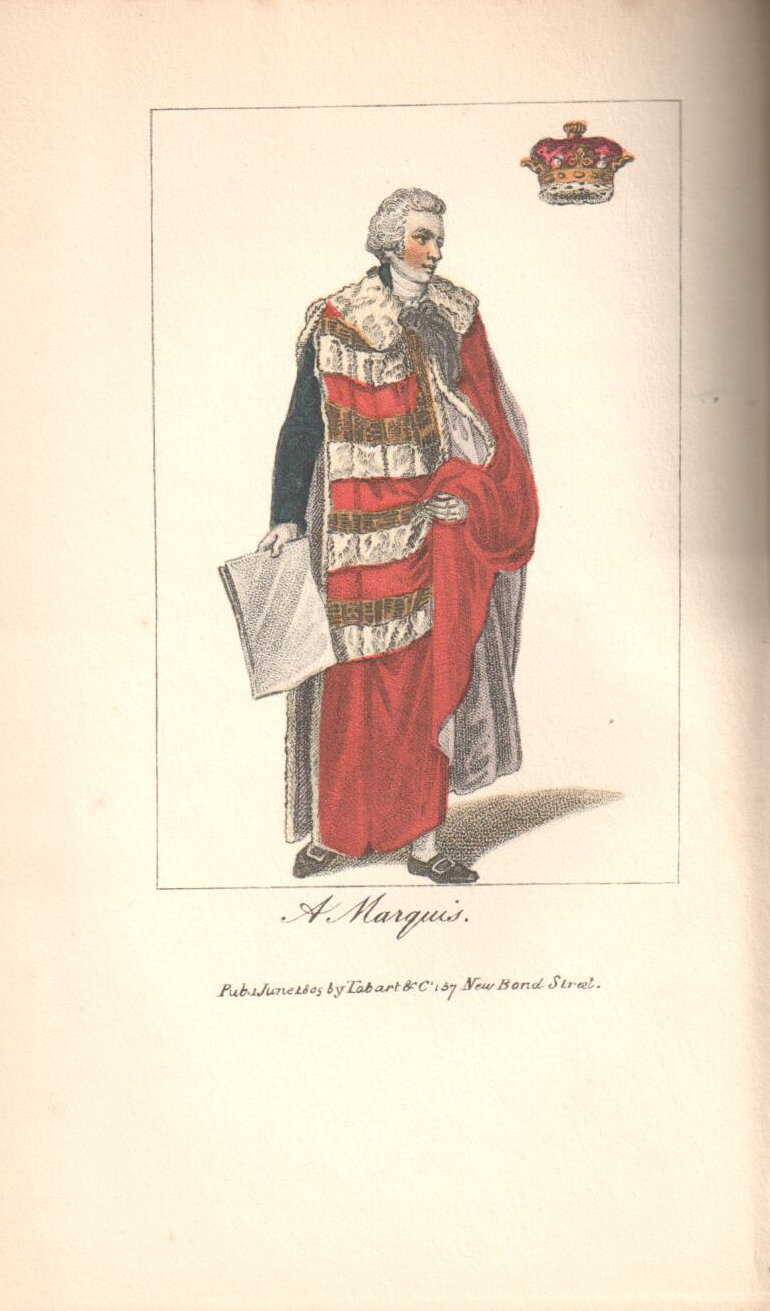
5. Lamb, Charles. The Book of the Ranks and Dignities of British Society. London Jonathan Cape, 1924.
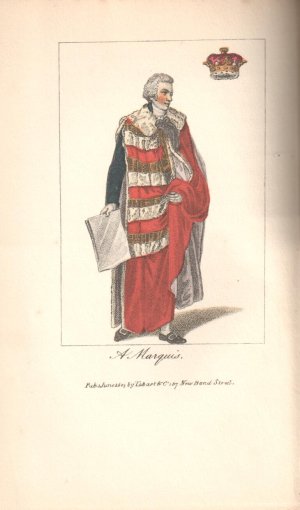
Marquis-Lamb

A reprint of Lamb’s 1805 edition published by William Henry for Tabart & Co. Includes 8 coloured plates and 16 in monochrome [the original edition has 24 in color]. I couldn’t resist, as you can see from this plate of “A Marquis.” The original seems to range upwards from $350.

*********

6.  Tristram, W. Outram. Coaching Days and Coaching Ways. Illus. Hugh Thomson and Herbert Railton. London: Macmillan, 1894.
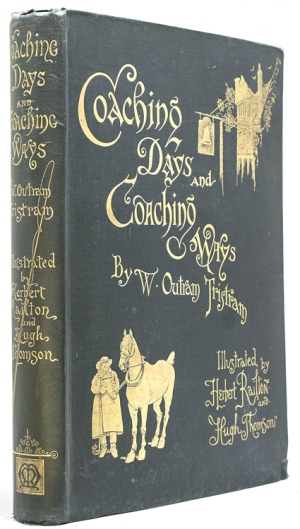
Tristram-Coaching-Cummins

A 3rd printing of the 2nd edition [first edition published in 1888] – another must-have for anyone with an interest in travel and the carriages of Austen’s period – with the added plus of Thomson’s and Railton’s 214 illustrations. [You also must try to say the author’s name 10 times very fast …]

7.  Waldram, Richard. Overton in Regency Times. Illus. Rosemary Trollope. Overton, Hampshire: Parsonage Farmhouse, 2008.

OvertonRegency

From an exhibition during the Overton Regency Sheep Fair, 2008. With many illustrations of ephemera from the time. Overton was near Steventon and Basingstoke; Austen would have walked there and mentions it in her letters.

8.  The Knight Family Cookbook; Preface by Richard Knight. Introd. Gillian Dow. Chawton House Press, 2013. KnightFamilyCkBk-CHL
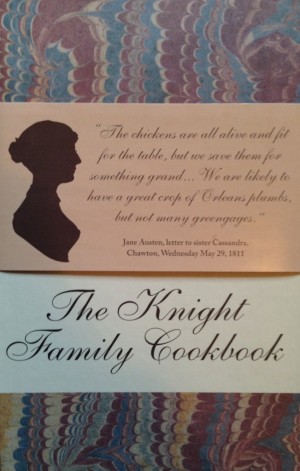
A Facsimile edition of the handwritten cookbook of the Knight Family, never published but dated circa 1793. Who can resist this family treasure so you too can make some of the recipes that were in use at Chawton House and Godmersham Park during Jane Austen’s time:

  • To Make Plumb Porridge (p. 70)
  • To Make Cracknails (p. 51)
  • To Make Hedge-Hog-Cream (p. 35)
  • To Make Tansy without Frying (p. 28)
  • To dress a Codds-Head (p. 111)
  • To Pickle Pigeons (p. 193)

There is even a handwritten index, but alas! I find nothing to help make Mr. Woodhouse’s famous gruel – just as well I think!

This book was published by subscription; i.e. if you had made a donation to Chawton House Library as a subscriber (just as Jane Austen subscribed to Frances Burney’s Cecilia), your name will be listed on the “subscriber” page. More information on this at the CHL website. Their next book is The Duties of a Lady’s Maid; with directions for conduct, and numerous receipts for the toilette (1825). Make a donation if you can and see your name in print!

9.  Simo, Melanie Louise. Loudon and the Landscape: From County Seat to Metropolis, 1783-1843. New Haven: Yale UP, 1988. LoudonLandscape

John Claudius Loudon (1783-1843) was the designer of England’s first public park and inventor of the means to construct curvilinear glasshouses, and the first landscape gardener to address the problems of the modern city. A must-have study to have on your shelves next to your Humphry Repton, Capability Brown, and others. Illustrated with maps, photographs, and drawings.

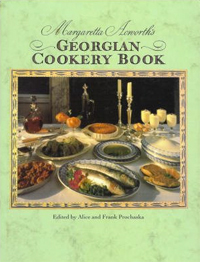
10.  Prochaska, Alice and Frank Prochaska, eds. Margaretta Acworth’s Georgian Cookery Book. London: Pavilion / Michael Joseph, 1987.AcworthCkBk

The cookery book of a London housewife of the Georgian period, of which 90 recipes are transcribed and “updated” with modern ingredients and modern cooking practices by the Prochaskas. Lovely black and white and full-page color illustrations. The introduction offers biographical background on Acworth.

11.  Lucas, E. V. Mr. Punch’s County Songs. Illus. Ernest H. Shepard. London: Methuen, 1928.

A delightful book of poems by Lucas on each county in England with each on the recto, verso is blank. Shepard’s [of Winnie-the-Pooh fame] drawings get you into the spirit of each place, and the poems tell of history and story.
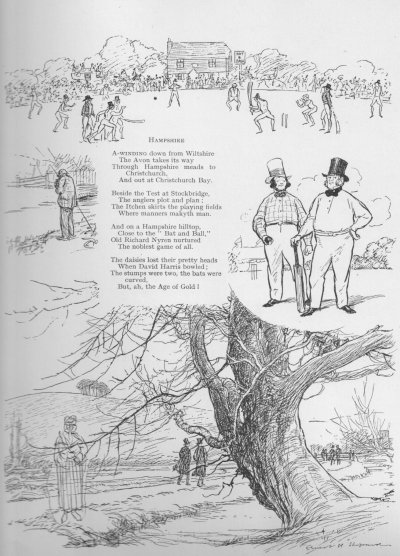
Lucas-Hampshire

 Here is the page on Austen’s own Hampshire

But I bought this solely for its page on London:

Though a Wren built St. Paul’s, sacerdotal and grey,

That fame is a stronghold of pigeons today:

They bill there and coo there and bring up their brood,

And swarm on the pavement at lunchtime for food. 

…. Etc.

**********

12.  Archbold, Rick. Last Dinner on the Titanic. Recipes by Dana McCauley. Introd. Walter Lord. New York: Hyperion, 1997.Archbold-TitanicDinner
Wonderful illustrations of the Titanic interior and the various recipes from the last meal. Why you ask? Well, I have been obsessed with the Titanic since I was a little girl. Both my parents emigrated from England as children, but my father was 11 years old in 1912, when his entire family boarded a ship to take them to America only a few months after the Titanic had taken its maiden and tragic voyage. I always thought that if my father had been on the Titanic I would not exist – I also have marveled at how brave they all were to do this crossing… so hence I have collected various Titanic things for years. I do not have this book and especially like it because it is signed by the author…

 13.  The Infant’s Grammar, or a Picnic Party of the Parts of Speech. London: Scholar Press, 1977. Reprint of the original 1824 edition by Harris and Son.

This picture says it all:

InfantsGrammar

 *******

14. Rocque’s Map of Georgian London, 1746. Colchester, Essex, UK: Old House, 2013.

Nothing to say except that this is fabulous: here is the description from their website: http://www.shirebooks.co.uk/old_house_books/

RocqueMap1746

First published in 1746, it extends from Marylebone to Bow and from Vauxhall to Knightsbridge and Hyde Park. Reproduced here in four detailed sheets, it gives a fascinating glimpse of Georgian London in the early industrial age and is a perfect research tool for the historian and genealogist. As well as over 5,500 street and place names, the survey also includes: Markets, churches, barracks, parks, bridges, hospitals, workhouses, schools, prisons, asylums, theatres, inns and much more.

*********

15.  Crow, Donna Fletcher. A Jane Austen Encounter (#3 The Elizabeth and Richard Mysteries). Boise: StoneHouse Ink, 2013.Crow-JAEncounter

I haven’t read the previous two mysteries (about Dorothy L. Sayers and Shakespeare), but this one is about the married professors Elizabeth and Richard on a vacation trekking through Jane Austen country – they encounter murder and mayhem and a missing letter about The Watsons. Can’t wait to read this one…

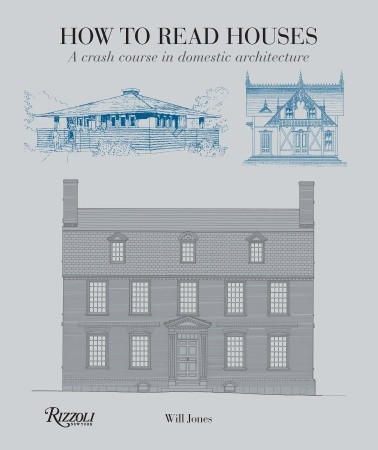
16.  Jones, Will. How to Read Houses: A Crash Course in Domestic Architecture. New York: Rizzoli, 2014.

I picked this up at the Musee des Beaux-Arts Montreal shop – a compact little guide to architecture with photographs and drawings and enlightening text to answer all your questions about the differences between Queen Ann and Georgian and Federal and all the various decorations…
Jones-Houses

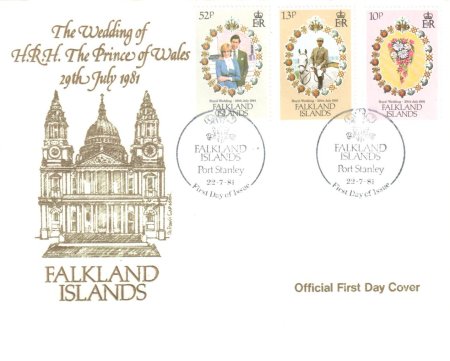
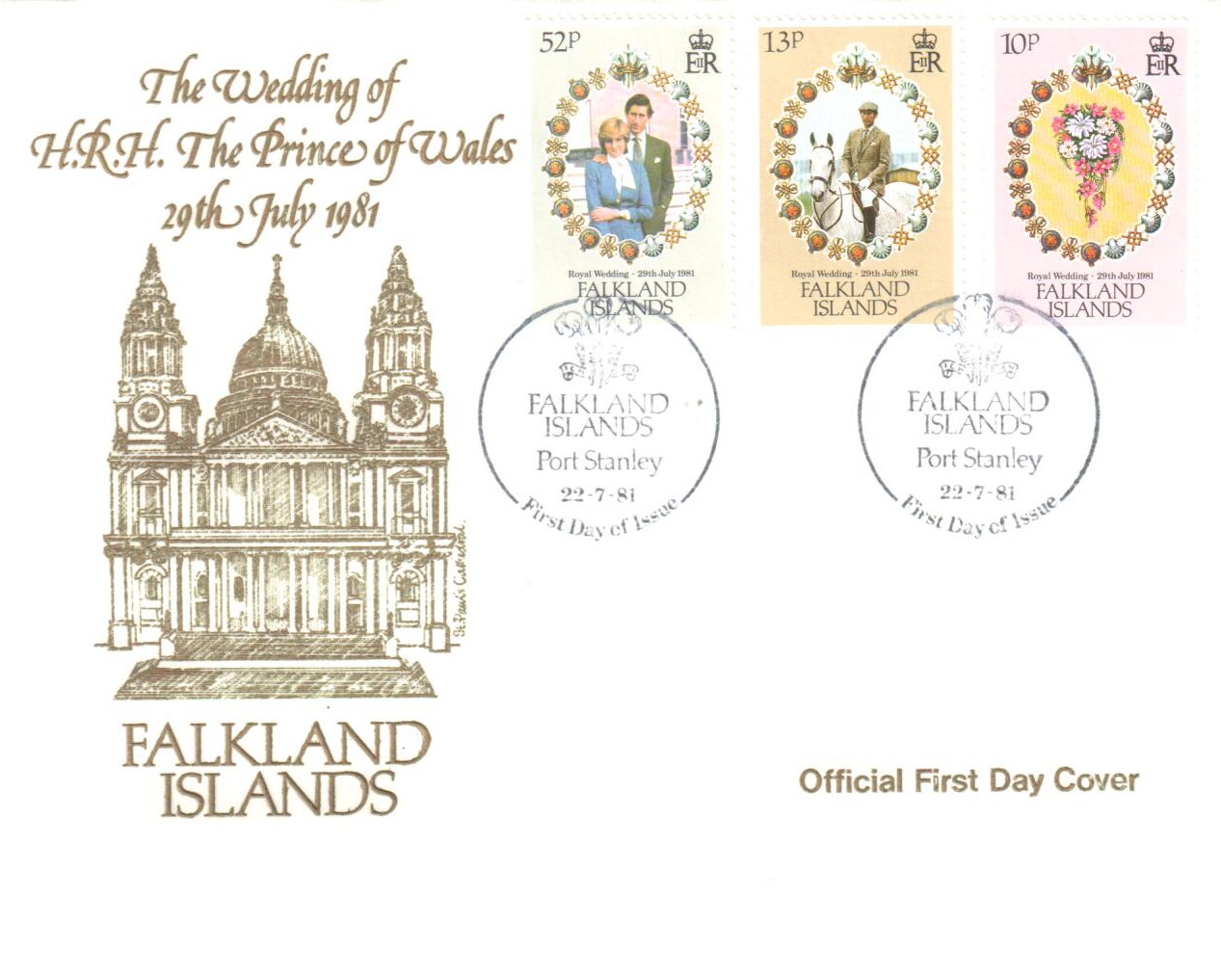
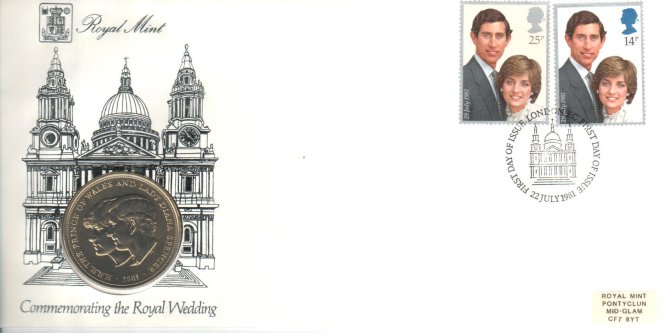
17.  First Day of Issue – Royal Mint coin commemorating Charles and Diana’s wedding with stamps; and another First Day of Issue from the Falkland Islands with new stamps:
RoyalMint-FDOI

Stamps-FDOI-Falklands

***********

So, all in all, a goodly haul – this time I didn’t have to worry about luggage weight, only crossing through immigration from Canada into Vermont. They only seem to ask about alcohol, cigarettes and fruit! so Jane Austen passed through with nary a glitch… now to find room on the bookshelves and the added dilemma of time for reading…

What did you buy at the AGM??

c2014 Jane Austen in Vermont
Auctions · Decorative Arts · Georgian England · Georgian Period · Great Britain - History · Jane Austen · Jane Austen Circle · Regency England

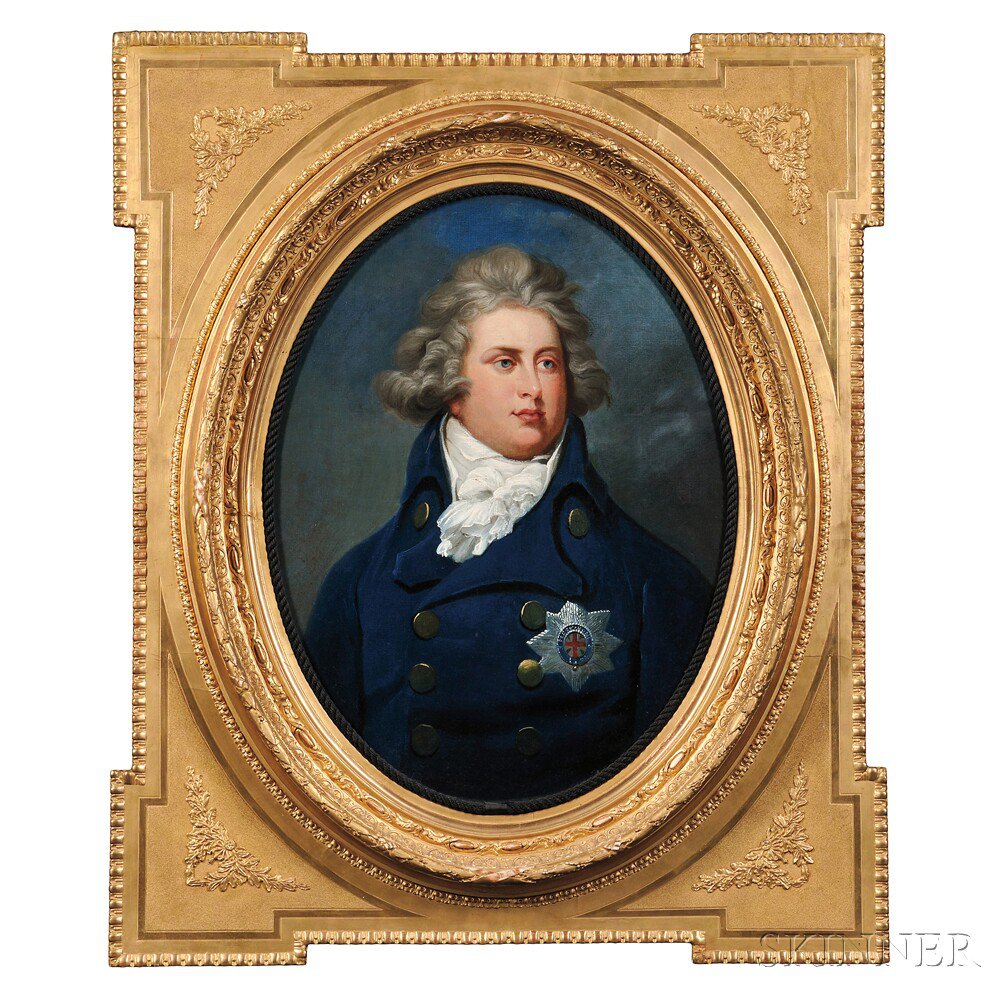
Auction alert! ~ For Your Library Walls: The Prince of Wales, later the Prince Regent, later George IV

Updated with results below:

This week, a portrait of the Prince Regent, a.k.a. Prinnie and later George IV, is up for sale at Skinner. Here is the chance you’ve been waiting for – to have his mighty visage staring down at you from your library walls! Whatever would Jane Austen say? – she was not, as we know, a big fan of the Prince. [for more information on Austen’s 1815 visit to Carlton House and the Prince Regent’s Librarian, click here.]

Prince of Wales
Prince of Wales

British School, 18th/19th Century ~ George IV as The Prince of Wales

Auction Details: 

Skinner 2754B European Furniture & Decorative Artshttp://www.skinnerinc.com/auctions/2754B
October 11, 2014 10:00AM, 63 Park Plaza, Boston

Lot 566: British School, 18th/19th Century ~ George IV as The Prince of Wales http://www.skinnerinc.com/auctions/2754B/lots/566

Estimate: $1,000 – $1,500 SOLD for $615.

Description:

British School, 18th/19th Century – George IV as The Prince of Wales

  • Unsigned, with labels including one from The Closson Art Galleries, Cincinnati, on the stretcher.
  • Oil on canvas, 28 1/4 x 23 3/4 in. (71.5 x 60.5 cm), framed.
  • Condition: Lined, retouch, fine craquelure, surface accretions.

N.B. The portrait is somewhat similar in feel to that painted by John Russell, RA, in 1789, now in the collection of the Fogg Art Museum, Harvard University, which may have been the inspiration for this copy.

Stretcher incised “W.MORRILL/LINER” u.c. bar. Also with a label from Art Conservation & Services, San Francisco, California, on the stretcher. Other period labels on the stretcher are unattributed and variously inscribed with numbers. One more promising label is inscribed “S.Buckly & Co/8-5-21”

 ************

See the full Auction catalogue for a stunning collection of fine silver, snuff boxes, paintings, porcelain, furnishings, and other decorative arts.

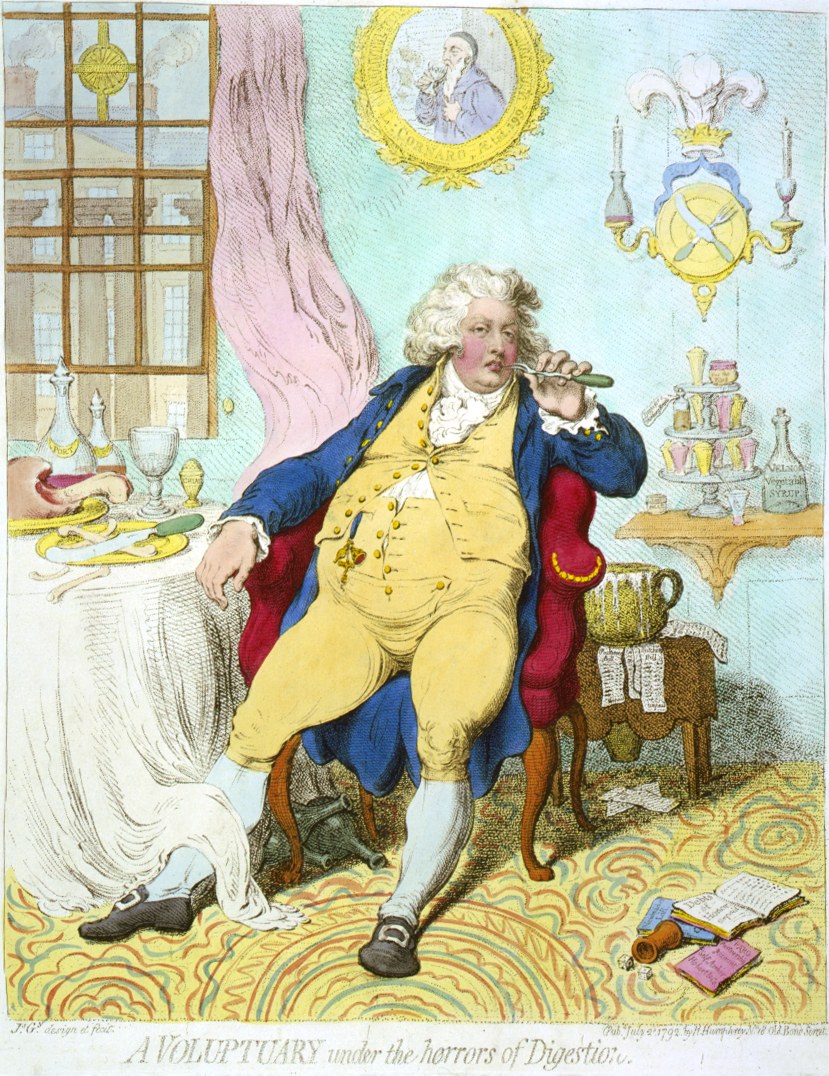
And here is the Prince later as George IV and what the caricaturists and his own profligate ways made of him:

A-voluptuary-wp

A Voluptuary under the horrors of Digestion (1792)
by  James Gillray  [Wikipedia]


c2014 Jane Austen in Vermont