Today a guest post by Alan Stockwell, author of What’s the Play and Where’s the Stage? A Theatrical Family of the Regency Era, as he tells us a bit about his new book. I shall add this to my TBR file – it has all the makings of a Regency era soap opera of the highest order, all the better because it is all true! Please comment below if you have any questions for Mr. Stockwell…
What’s the Play and Where’s the Stage? A Theatrical Family of the Regency Era
The lives of eminent London actors of the Regency period – Kean, Mrs Siddons, Kemble, Cooke, Macready, Grimaldi et al, are more than amply recorded. This book ploughs a more unusual, rarer, furrow.
It reveals the theatrical lives of a family of provincial players who tramped the highways and byways bringing the latest London hits and classic plays to unsophisticated audiences in tiny country theatres and large manufacturing towns. The author offers not a specialist tome for theatre historians – although they will find previously unknown material and new revelations here – but a beguiling story of a family of three thespian siblings, their spouses and their children.
This is a Regency world far removed from the novels of Jane Austen. There are highs and lows, riches and poverty, twists and turns, and extraordinary events as in the script of any modern television saga. The marked difference being that – for the Jonas and Penley Company of Comedians – this was real life.
In Georgian and Regency times even the tiniest country town had its theatre visited regularly by travelling players. These companies were usually family based and my book is an account of one such troupe – more adventurous than most – the Jonas & Penley Company, grandiloquently self-styled “His Majesty’s Servants of the Theatre Royal Windsor”. The troupe under their indefatigable leader Sampson Penley comprised three siblings, their spouses and two dozen children.
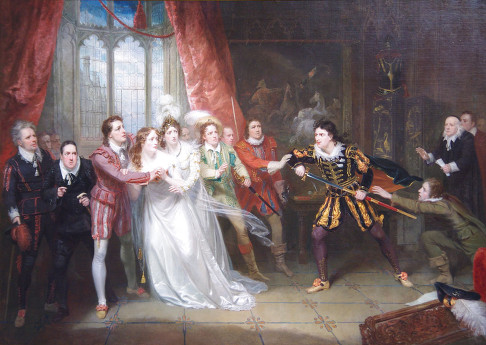
This picture from the Garrick Club shows Edmund Kean the brightest star of the Regency stage. The man in pink on the left is Sampson Penley Jr of the once well-known Penley family of provincial players.
[Source: VesperHawk.com ]
I purposely divided the text into discrete biographies, allowing the narrative of each to flow. However, the subjects all being closely related, the parts form an inter-connected whole. So that their separate stories are easy to read, and are not interrupted by notes etc, all such things are grouped in appendices, which can be ignored if you are not interested in the research necessarily compiled for such a project as a historical biography. Although the book revolves around the theatre of the time there is much information on other aspects of social history – wages, transport, childbirth, postal system etc, which all impinged on the everyday life of players. Authors of Regency fiction may find such things of professional interest. Below is a brief look at the family members described:
Sampson Penley & his brother-in-law John Jonas and all their trials and tribulations setting up a circuit of theatres in south-east England during the Napoleonic Wars while touring with ever-enlarging families. Events include becoming lessees of the Windsor theatre and playing to the royal family; leasing a London theatre (a failure); the first English company to tour the continent in 1814 after the fall of Napoleon; the first English company to play in Paris since Elizabethan times and the riot that ensued; imprisonment for debt and bankruptcy.
–
Mr & Mrs William Penley who were Sampson’s brother and sister-in-law. For several years Mrs W P was the leading tragedy queen in the Jonas & Penley company while her husband was at Drury Lane theatre for ten seasons. Of outstanding interest is that George III’s queen “adopted” their six-year old son, had him educated at public school and provided £300 to facilitate his joining the Indian army where he ended up a major. William became affluent and two of his sons became artists – Aaron of sufficient eminence to paint Queen Victoria and Prince Albert.
–
Sampson Penley Jr who was a leading man at sixteen, joined Drury Lane where he was a principal member of the company for many years in spite of receiving the most consistently damning of reviews. He wrote several plays but only one success. He supported Edmund Kean in many plays and when he lost his place in London he became a manager in Windsor, Newcastle and Leicester. He fell in love at first sight and married after a whirlwind courtship, fled to Paris to avoid debts and died there far too young.
–
The three acting daughters of Sampson, Rosina, Phoebe and Emma Penley relate their careers in tandem. Rosina was the most important and she was the first British actress to be hailed by the intelligentsia of Paris for her Shakespearean performances. Rosina’s peregrinations as a respectable single woman travelling throughout the land, playing a multitude of parts in many towns and circumstances is very different from the typical lives of other women of the period whether rich or poor. Her sisters Phoebe and Emma played the same repertory of parts and on many occasions pairs of sisters acted together.
–
Sampson’s son Montague Penley who was an artist and drawing teacher (a pupil was Princess Augusta) as well as an actor, scenic artist and manager. He acquired the lease of the Lyceum theatre in London which resulted in a swift financial debacle and yet another Penley fleeing to France.
–
Belville Penley was Sampson’s youngest son who as a child acted in Brussels on the eve of Waterloo and afterwards with his family visited the battlefield. He did not become an adult actor but was a theatre manager. His wife was a singer whom he impregnated prior to marriage causing press condemnation. Belville went into partnership with the actor James Anderson at Leicester, Cheltenham and Gloucester. The partnership ended with another bankruptcy. Mrs Belville Penley went on to be a well-known singer of oratorio and religious works and her husband became lessee of the Roman Baths at Bath.
–
Cousins Maria Jonas and Frederick Jonas who also had substantial theatrical careers.
*******************
What’s the Play and Where’s the Stage? is a hardback of 420 pages with an ISBN 978-0-9565013-6-3. You can visit my website for more information www.vesperhawk.com.
And what is the significance of the title? It is a quotation from an anecdote you will find on page 28!
*************
About the Author: Alan Stockwell MBE was a professional puppeteer for over forty years. Latterly, he has devoted much of his time to writing, and is the author of several books and many articles on the theatre, magic, circus and puppetry. He is a long-time member of the Society for Theatre Research and the Irving Society [that would be Henry, not Washington]. And has written on Sherlock Holmes and Charles Dickens (see website for more information).
Thank you Alan for sharing about your book! – Readers, please reply below if you have any comments or questions.
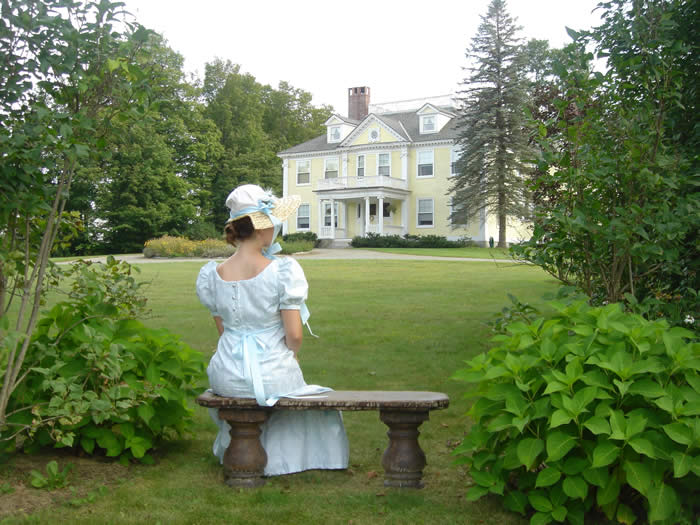
My friend Suzanne is the Innkeeper at the Governor’s House in Hyde Park, Vermont, where she four times a year holds Jane Austen Weekends for those of us who like to retreat into the early 19th century for a few days. She also offers an annual In-Character Weekend, where all manner of various Austen characters people the Inn and where one must remain in character for the whole time or risk being evicted… it is all in good fun, what with archery, and fencing, and quill-making and dancing and efforts to make bonnets and turbans , one easily forgets the call of the internet or the chatter of cell phones, and as long as a resident Lady Catherine or Mr. Collins, or a grave General Tilney do not ruin the festivities, one can really get quite lost in it all. One such weekend is coming up August 7-9, 2015 and you can read all about it here: Governor’s House-JA weekends.
But I write here today about Suzanne’s and my Love of London, discovered several years ago, and about which we have yet to stop talking… We have been there together, and alas! separately, and as she was in the UK this spring without me (I am struggling to forgive her…), I here offer a post that Suzanne wrote on her Innkeeper’s blog a few weeks ago about her latest trip and the rather alarming number of encounters she had with Jane Austen! – here is the first paragraph with a link to the rest of the post … a perfect trip for armchair travelers!
After a tough Vermont winter and a serious bout of flu what form of R and R would be good before getting back to the 24/7 business of running a small inn? As is so often the case, a little Jane Austen seemed like a good plan. I’d been noticing how amazingly often JA is mentioned in whatever I’m reading, from Mr. Churchill’s Secretary to a serious article in the Economist just last week. So I wondered how many encounters there might be as I did some walking in her part of England and decided to chronicle my adventures. And all I can say now is that it is a truth universally acknowledged that Jane Austen truly is everywhere!
Day 1
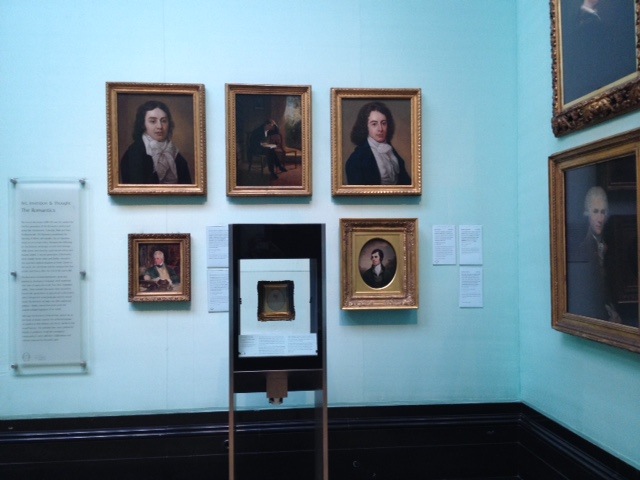
Arriving in London after an overnight flight, I immediately set out for a walk. First stop was Hatchard’s, England’s oldest bookshop founded in 1797. JA’s writings were well represented and it’s always a great place to look for guides to Regency London and places with literary ties, but the appeal for me is the list of authors who were also customers. Next stop was the National Portrait Gallery for “Sargent: Portraits of Artists and Friends”, John Singer Sargent’s striking portraits of Monet, Rodin, Robert Louis Stevenson and others, but certainly not JA who’d lived a century earlier. But returning the long way down from the third floor ladies, I came to this wall of JA’s contemporaries surrounding the tiny portrait of her we know so well.
You can read more about the In Character Jane Austen Weekend for August 7-9, 2015 here: http://www.onehundredmain.com/events/jane-austen-weekends/ – it is not too late to sign up to give the performance of your life, Mr. Collins anyone?? and all you closet Mrs. Allens (dare I say Mrs. Norris??) can come and rave about your fashions to your heart’s content…
Showing off the Regency style turbans they made that afternoon in Hope Greenberg’s workshop
*********
On another note of interest to members of JASNA-Vermont – Suzanne is hosting us at the Governor’s House for an Afternoon Tea on July 26, 2015, from 2-4, where we will hear my good friend Ingrid Graff speak on “A Home of Her Own: Space and Synthesis in Sense and Sensibility.” As a member of JASNA, Suzanne is offering us this Tea at minimal cost to us, $8. / per person – reservations are required, so please email or call – invitations are being emailed later today to all on our JASNA-Vermont mailing list. Hope to see many of you there!
[Images courtesy of Suzanne B. from her Governor’s House website]
Quite fascinating. I am particularly interested in your comment that Edward had more land and less money than many thought then and today. I know there are those who revile Edward today for not doing more for his mother and sisters instead of praising him for what he did do. . I’d love to have a copy of that book as much for what it says about general conditions and Edward’s in particular. – I have the impression that Mr. Knightley also had more land than cash on hand and that his brother John received an allowance or something from their estate.
Nancy, please contact me as soon as possible with your contact details, and Linda will get the book sent off to you right away.
Thanks all for your terrific comments, and to Linda for her generosity for the guest post and responding to all your questions. Those of you who didn’t win, I encourage you to do it the old-fashioned way and buy the book – it is worth every penny and more of the $11.95!
And apologies for delay in announcing the giveaway – the Holiday caught me up short!
Gentle Readers: Today I welcome Linda Slothouber, author of Jane Austen, Edward Knight, & Chawton: Commerce & Community (Woodpigeon Publishing, 2015), the result of her research at Chawton House Library in 2013. As the recipient of a grant through JASNA’s International Visitor Program, Linda’s project was to research the management of the Chawton estate in Hampshire during Edward Knight’s [nee Austen] ownership and this recently published book presents her findings. It is a most interesting and informative read, giving insights into the life and character of Jane Austen’s brother, thereby showing us how knowledgeable Jane Austen was in creating her own Heroes as landlords [think Mr. Knightley and Mr. Darcy! Henry Crawford, not so much…] – she had a fine model in her very own brother! I cannot improve upon what Deirdre Le Faye has written, that this book is “an essential addition to the Austenian bookshelf.”
I asked Linda how she chose this topic, what prompted her to apply for the JASNA grant, and here is her response: “Having written about other businesses in Jane Austen’s time, such as Wedgwood and Richard Arkwright’s cotton-spinning empire, I was very interested in how the business of estate management worked, both in the real world and in Jane Austen’s fiction. I made some preliminary inquiries and found out from Chawton House Library about the Knight Archive and other potential resources. My original intention, when I applied to JASNA’s International Visitor Program, was to write a much shorter book, but each question I answered spawned two more, and I discovered some stories and information I just couldn’t bear to leave out.” She tells us more about it all in her post below.
Linda has generously offered us a copy of her book for a giveaway, so please leave any comments and questions for her after this post in order to be entered into the random drawing [details below].
**************
Edward Knight, Landlord by Linda Slothouber
The number of books, websites, magazines, and television programs that aim to explain the world in which Jane Austen lived must number well into the hundreds. Many of them give a broad view of historical events and cultural conditions, compressing decades of time and significant regional diversities into a notional Georgian/Regency England.
In researching my book, Jane Austen, Edward Knight, & Chawton: Commerce and Community, I wanted to complement the more general histories by looking closely at specific people in a specific place. My goal was to answer my own questions about the structure and economy of the English estate by looking at the experience of the estate-owner who would have been most familiar to Jane Austen: her brother, Edward. Adopted by rich relations, Edward inherited Godmersham Park in Kent; property in Chawton, Steventon, and elsewhere in Hampshire; and property in three other counties, changing his surname to Knight as a condition of the inheritance. (Ronald Dunning gives more background on the Knight family here.)
Presentation of Edward Austen to Thomas and Catherine Knight – wikipedia
I knew that the landed gentry made their money from renting and using their inherited lands, but how exactly did that happen? How involved were landowners in estate management? Jane Austen’s brother was an excellent case study. I also wanted to explore how Chawton actually functioned as a community and get a better look at the people who lived in the cottages and farmhouses. Who were the people that Jane Austen would have encountered during her years in Chawton? When Chawton Great House was vacant or in the hands of tenants, what effect did that have on the estate and the village?
A View of Chawton @1740 by Mellichamp. Chawton House Library (BBC – Your Paintings)
My research into these questions was possible because of the availability of the Knight Archive, a treasure trove of several centuries’ worth of papers. In 1961, 1986, and at various points in the 1990s, the Knight family gathered up record books, official documents, and random bits of paper from Chawton House and turned them over to the Hampshire Record Office in Winchester. The HRO’s archivists created an index, but, because many entries refer to bundles of documents, the index can’t comprehensively describe everything in the archive. The experience of going through one bundle after another, carefully unfolding 200-year-old papers to discover what each one contained, is something I will never forget! Among the fascinating odds and ends I came across were the bills for Elizabeth Austen’s funeral and for the care of Jane and Edward’s brother George in his last weeks, the seating plan for the church in Chawton, and the list of poor old ladies to whom flannel petticoats were given after Edward Knight’s death.
Most of the documents in the Knight Archive concern the management of the Chawton estate and other Knight holdings. While there are significant gaps, what has survived provides important insight into the Knights’ estate operations in Hampshire over a long period of time. I read estate papers written by Elizabeth Knight and her steward in the early 1700s, and then turned to an estate wages book from the early 1900s, when Montagu Knight was the squire; some of the activities done on the estate remained remarkably constant, and some of the same surnames appeared on the lists of workers in both centuries. As the focus of my research fell exactly between these two points, the range of documents provided an invaluable context for understanding Edward Knight’s period of ownership.
Excerpt from Edward Knight’s 1807 bank ledger, showing several deposits of estate income made by his steward, Bridger Seward, and forwarded through Henry Austen’s bank in Alton. (Courtesy of Barclays Group Archives)
The period between 1808 and 1819, encompassing the years when Jane Austen lived in Chawton, is, by chance, particularly well documented. An estate accounts book has survived and is supported by bundles of vouchers documenting specific purchases and jobs done on the estate. To pursue some questions, such as how much money Edward Knight earned from all his property in a typical year, I had to do some detective work, comparing the data found in the Knight Archive with that from other sources, including the Godmersham Heritage Centre, Barclays Group Archives (which holds Knight’s banking ledgers), and previously published sources such as Deirdre Le Faye’s Chronology of Jane Austen and Her Family.
So what did I learn? It turns out Edward Knight had more land, and less money, than has commonly been believed. I estimate that his contemporaries would have spoken of him as having “7,000 or 8,000 pounds a year,” not the £15,000 his near-contemporary Mary Russell Mitford stated (admittedly based on hearsay) as his income. Knight had to contend with a lawsuit that threatened his ownership of his Hampshire property – that much is well-known – but his wealth was also affected by changes in the national economy that affected land values and farming income, presenting problems that plagued him throughout the 1820s and seem to have had an effect on his health, as well.
Edward Austen Knight – CHL
Knight felt deeply his responsibilities to his family, to the community, and to his own posterity – his son and the future heirs of the Knight estates. Throughout his life, he provided financial assistance to many members of his family, though his female relations received far less direct financial support than his brothers did, or received assistance in ways that were not recorded in bank ledgers. As for the community, Knight’s support for education, health care, and housing for the poor made Chawton more stable and less miserable than many other villages at the time. It may be tempting to criticize some of his actions and omissions from our 21st-century vantage point, but L.P. Hartley’s maxim holds true: “The past is another country: they do things differently there.”
Learning about Edward Knight’s history and experience in estate management is valuable in its own right, but adding to the body of knowledge about Jane Austen is always a goal. By discovering more about the people she knew during her eight years in Chawton and comparing the facts of their lives with what she wrote about them, we may come a tiny step closer to understanding her views and feelings.
One individual she knew well is William Triggs, Edward Knight’s gamekeeper at Chawton. Triggs was by far the most well-paid of the Chawton estate servants; his salary of £52 was nearly half that of the estate steward. His primary responsibility was to protect game on the estate for Edward Knight’s sons and guests to shoot when they came to stay. Since this didn’t happen often, some of his time was spent overseeing hay-making and other projects on the land, paying workers, and selling hay and potatoes on behalf of the estate (all tasks a bailiff might have done, but Knight didn’t employ one at Chawton at the time). He was trusted with the money required to carry out these tasks and he earned a commission on sales. He had guns and dogs and a horse that was purchased with estate funds, as was his hat, which cost a guinea (four times the cost of a common laborer’s hat). Gamekeepers at the time were often resented by villagers for their high-handed ways and for siding with landowners, and this may have been the case with Triggs. I found only one record in Knight’s estate accounts of poachers being conveyed to jail, but I did find a mention of a charge of assault brought against Triggs, which was settled by the estate paying the large sum of 9 pounds to the victim.
Jane Austen mentioned Triggs several times in her letters. She found in him a worthy subject of long-running jokes shared with several members of her family. She ended one letter, written from Godmersham Park to Cassandra back in Chawton, “With love to you all, including Triggs.” In another letter, she wrote of seeing Triggs scurry down the lane, laden with birdcages and luggage, to meet the coach—not the kindest observation surely, but it seems to me she took some delight in seeing Triggs lose his swagger and struggle with lowly tasks. In 1817, an interesting meeting took place: “Tell William [Edward Knight’s son] that Triggs is as beautiful & condescending as ever, & was so good as to dine with us today,” wrote Jane. We must imagine Triggs, the servant who perhaps acted above his station, sitting down to dine with the Austen women, who were related to the squire at the Great House but living in much humbler circumstances. How did Jane Austen feel about being condescended to by her brother’s employee? She tried to make conversation with him, but was it the sort of conversation Mr. Bennet had with Mr. Collins at dinner? Did she speak aloud, teasingly, what she later wrote in her letter, that Triggs must have looked “very handsome” in his green coat at a recent funeral procession? By discovering more about the dinner guest at the cottage table, it becomes easier to at least formulate such questions, even if the answers remain elusive.
A final word: Even a scrap of paper of no obvious significance, which might easily have gone in the fire 200 years ago, has its magic today: the words, the spelling, the quality of signatures (or X’s marked down by the unlettered), and the amount of paper allocated to a particular purpose all tell us something. If such ephemera is worth saving and studying, then how much more essential is it to preserve a unique document that is central to Jane Austen’s life story? Right now, Jane Austen’s House Museum is engaged in a campaign to collect £10,000 to purchase the letter that Cassandra Austen wrote to her niece Fanny immediately after Jane Austen’s death. To secure the letter, this sum must be collected within less than three months. Please read about the letter and consider contributing to the fundraising campaign. [ The letter is CEA / 3, dated July 29, 1817 – Le Faye, 4th ed., p. 363 – you can read the text here]
**************
About the Author: A 20-year career in management and technology consulting, degrees in English and Administration, and a stint as JASNA’s International Visitor to Chawton in 2013 created the foundation for Linda to write her 2015 book, Jane Austen, Edward Knight, & Chawton: Commerce & Community. The book is available from Amazon, Woodpigeon Publishing, and Jane Austen Books in the U.S., and is available in the shop at Chawton House Library. Linda blogs about new findings and supplemental research at chawtoncommerceandcommunity.blogspot.com. [Please note that Linda will be donating all profits from U.S. sales to the JASNA 2016 AGM. For those of you attending JASNA-Vermont’s 7 June 2015 meeting, I will have copies for sale.]
*************
Book Giveaway:
Thanks you so much Linda for your guest post on Edward Knight! Readers, please leave a comment or question for Linda in order to be entered into a random drawing to win a copy of Jane Austen, Edward Knight, & Chawton: Commerce and Community. Deadline is next Friday May 22, 2015 at 11:59 pm. Winner will be announced on May 23. Limited to domestic mailings, sorry to say, but don’t let that keep you from commenting!
Chawton House Library today – cTony Grant
[Tony Grant and I visited CHL last May on a very rainy day –
his picture was better than mine so I use it here with thanks!]
You are Cordially Invited to JASNA-Vermont’s June Meeting
“The Mystery of Emma Austen’s Aunt Emma ~ An Interactive Presentation”
with Kelly McDonald*
Sunday, 7 June 2015, 1:00 – 3:00 p.m.
Morgan Room, Aiken Hall, 83 Summit Street
Champlain College, Burlington VT**
********
Brief sentences in a series of letters lays out the basic “mystery”: the 200-year-old family secret of a highly discouraged relationship between two women. Were the quarrels based on religion, class, station, or sexual attraction? In the spirit of Sanditon or Edwin Drood, no definitive conclusion exists; the audience is invited to brainstorm as family history unfolds. The connection to Jane Austen? Emma Austen was married to Austen’s nephew and biographer James Edward Austen Leigh.
Kelly McDonald
We all know Kelly McDonald as the prime mover in the founding of the Vermont JASNA region – she “retired” as co-RC when her research and publication work became her main focus. She is working on a 4-volume biography of the lives and families of Emma Smith and Mary Gosling – you can read all about them at Kelly’s blog “Two Teens in the Time of Austen”: https://smithandgosling.wordpress.com. Kelly has also published various essays in Persuasions, the monograph Jane Austen and the Arts, online articles via Academia.edu, has spoken at JASNA AGMs and will again be presenting at the 2015 AGM on Childbirth in early 19th-century England. You can read a full list of her writings here: https://smithandgosling.wordpress.com/the-author/
~ Free & open to the public ~
~ Light refreshments served ~
Be on the lookout in your mailbox! – the March/April 2015 (issue 74) of Jane Austen’s Regency World magazine is published this week and is being mailed to subscribers. In it you can read about:
The Iron Duke: A major exhibition marks the Duke of Wellington’s triumph at the Battle of Waterloo
A Book’s Life: One of the rare books at Chawton House Library reveals all
Anyone for Pyms? Barbara Pym, the novelist who was known as the “Jane Austen of the 20th century”
Georgian Illnesses: Examining some of the ailments suffered by Jane Austen’s characters
From Daylesford to Delaford: Is there a connection between Warren Hastings and Sense & Sensibility?
*Plus News, Letters, Book Reviews and information from Jane Austen Societies in the US, UK and Australia
*To subscribe now click here – and make sure that you are among the first to read all the news from Jane Austen’s Regency World!
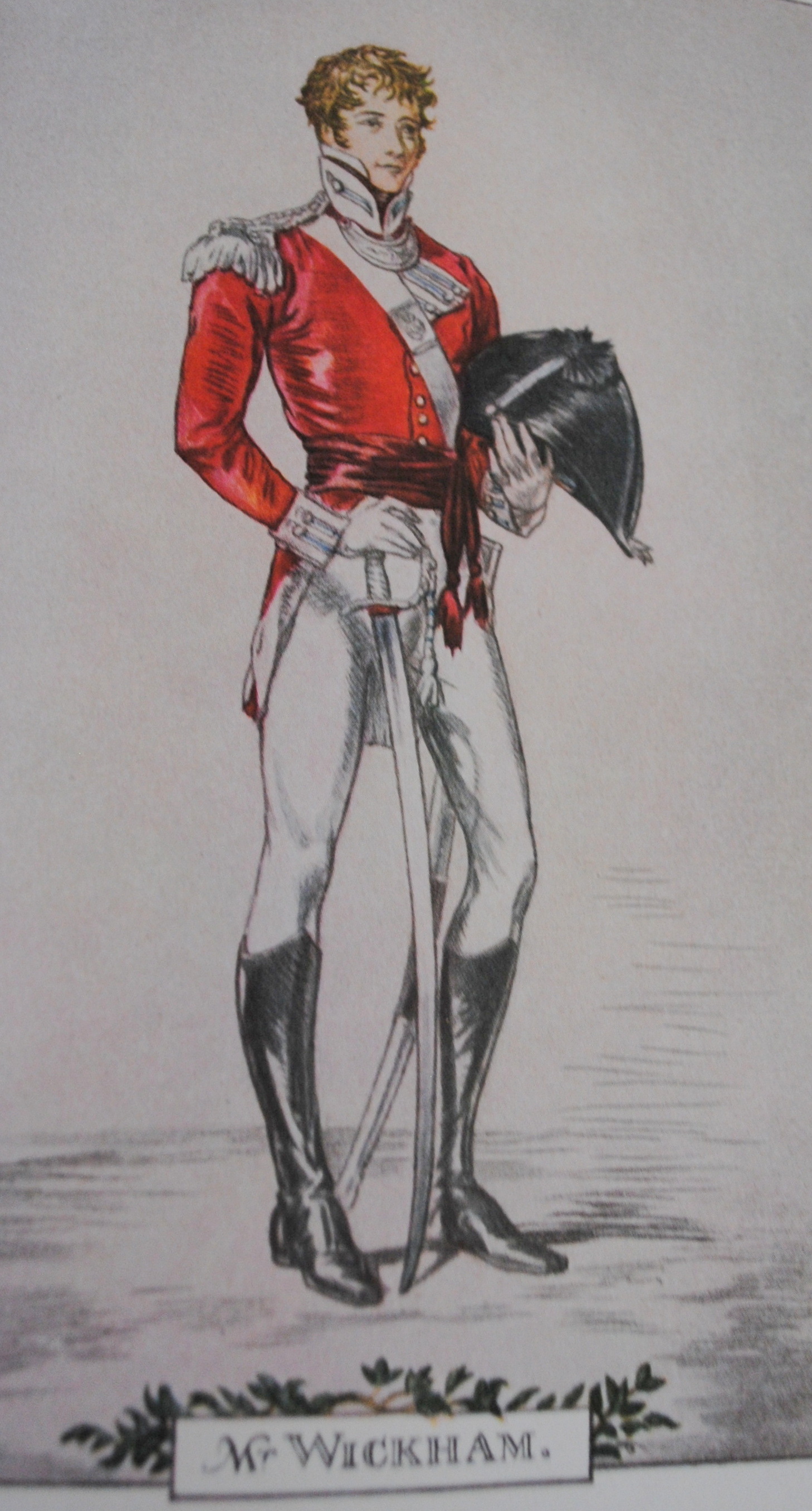
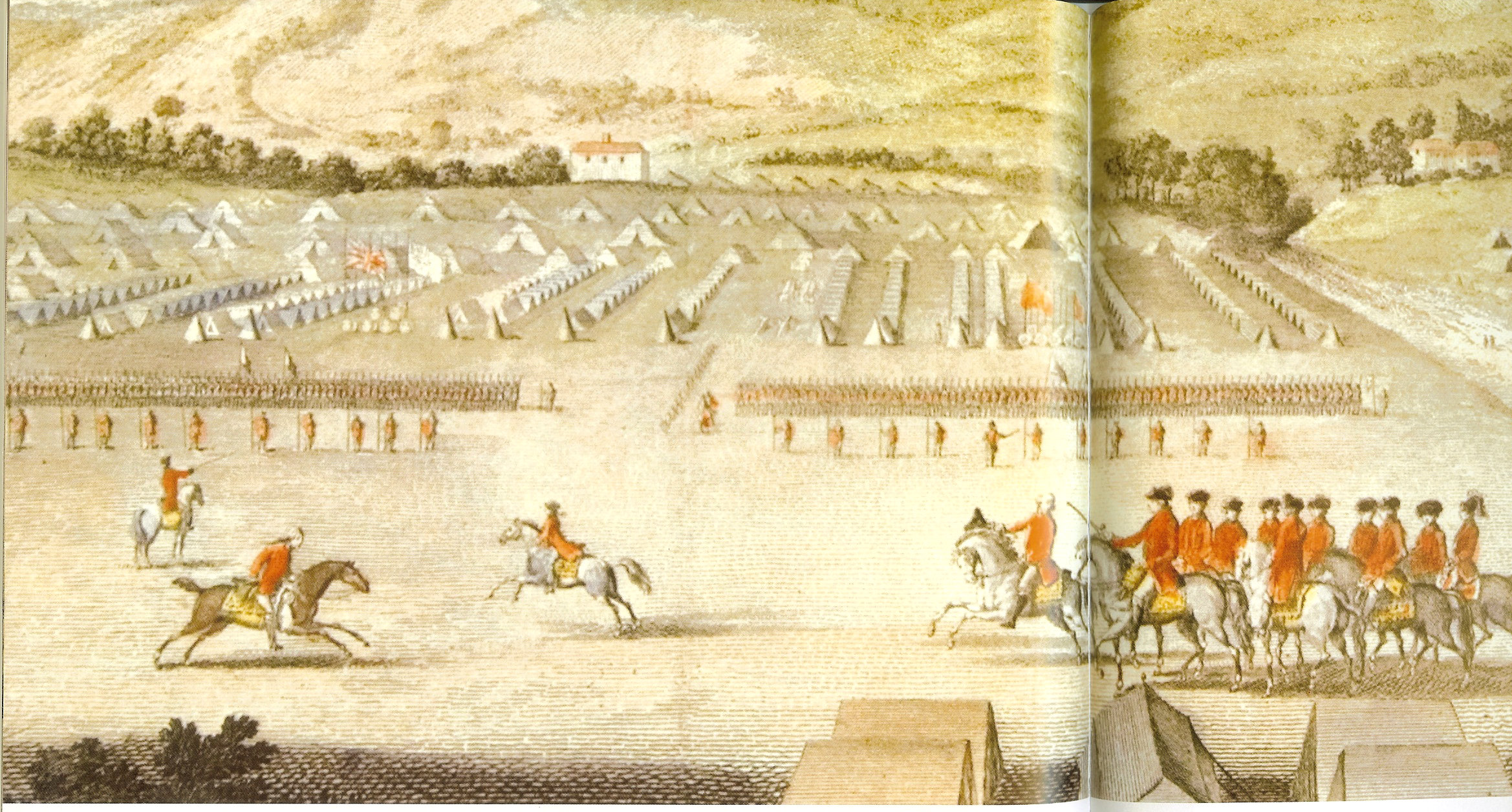
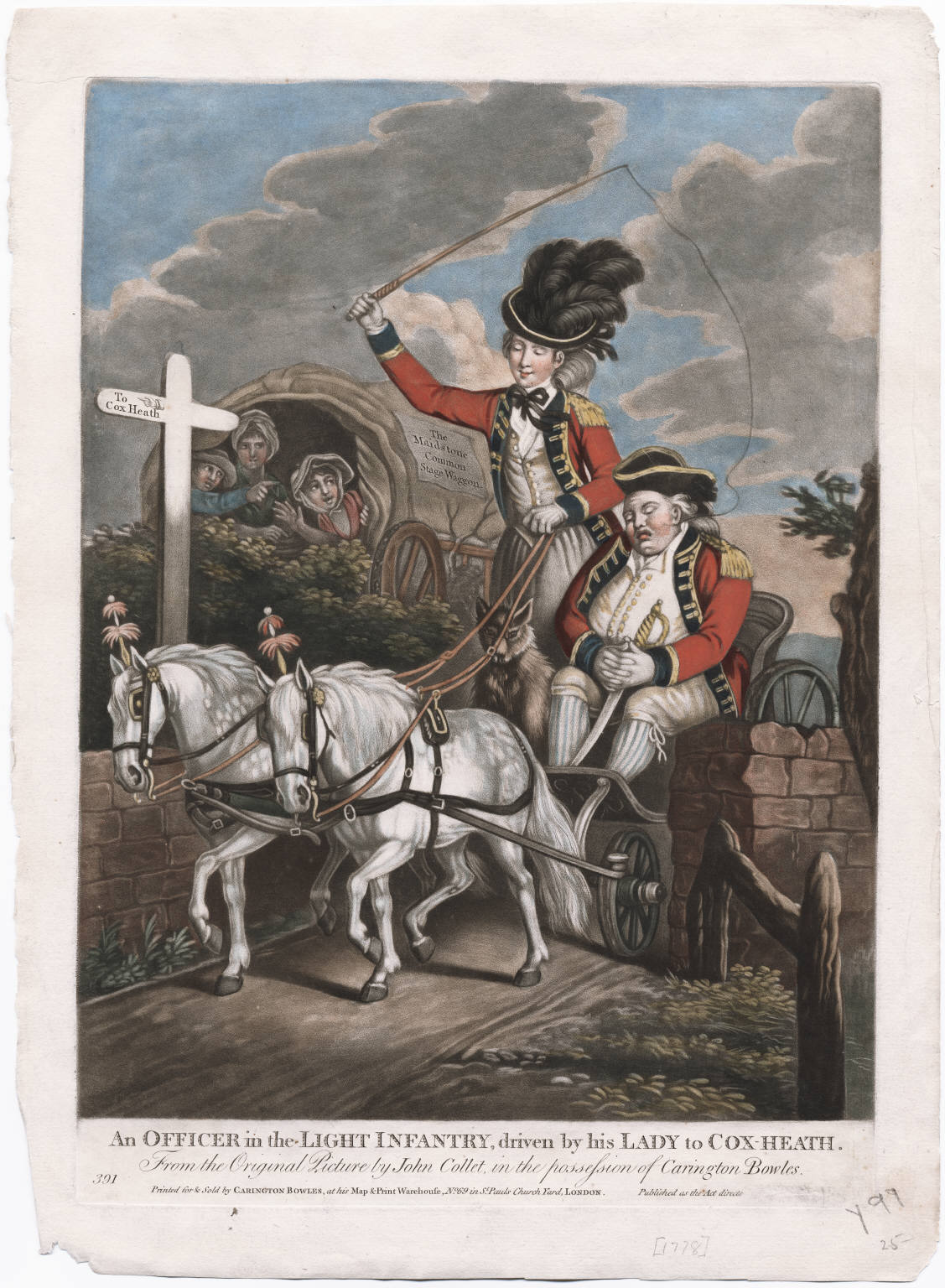
The Society of the Cincinnati, at its headquarters at Anderson House in Washington DC, currently has on exhibit “Homeland Defense: Protecting Britain during the American War” – you can view the online exhibit to see a collection of prints and cartoons that depict the various camps, soldiers, the visits of the fashionable, and other items that reflect Britain’s concern with possible invasion. We must believe that Jane Austen had some of this history in mind when she was writing Pride and Prejudice, with her soldiers, and the mad for red coats frenzy of the younger Bennet girls – and Mrs. Bennet for that matter!
“My dear Mr. Bennet, you must not expect such girls to have the sense of their father and mother. When they get to our age I dare say they will not think about officers any more than we do. I remember the time when I liked a red coat myself very well — and, indeed, so I do still at my heart; and if a smart young colonel, with five or six thousand a year, should want one of my girls, I shall not say nay to him; and I thought Colonel Forster looked very becoming the other night at Sir William’s in his regimentals.” (P&P, vol. I, ch. 7)
Mr Wickham, by Robert Ball, Pride and Prejudice (Doubleday, 1945)
Isaak Jenher. ‘Plan of the Camp at Cox-Heath 1779’ [in Kent] (London, 1779)
[image: Cincinnati Fourteen, Fall 2014, Journal of The Society of the Cincinnati, vol. 51, no. 1.]
By the beginning of 1778, British hopes of an easy victory over the American rebels had vanished. The British army had seized New York City and Philadelphia, but American resistance had proven far more tenacious than anyone in Britain had expected. The costs of prosecuting the war were mounting. Shipping losses were increasing. Parliamentary opposition to the war was growing. The defeat at Saratoga had destroyed British confidence that the colonies could be conquered. Even Lord North, the prime minister, had lost hope of total victory in what he called “this damned war.”
Then in February, France completed an alliance with the rebels. For the first time in a generation, Britain faced the threat of invasion. With most of the regular army in North America, the ministry recruited militia “for the internal defence of this Country.” The army established special camps in southeastern England to train the militia along with regular soldiers, to protect the coastline, and to provide for the defense of London. A distant and increasingly unpopular war suddenly reached the British homeland.
Contemporary novels and plays about military themes, new songs and poems celebrating British strength, and popular prints depicting the camps reflected public anxiety about the threat of invasion. They also reflected contemporary British opinion about the army at a moment when failure in America exposed it to satire and ridicule. The camps had a wide–ranging influence on popular culture. Fashionable ladies, for whom visiting the camps was a part of the social whirl, sported riding habits modeled on regimental uniforms. Cartoonists, meanwhile, took delight in poking fun at preparations for a foreign invasion that never came.
[quoted from the website]
John Collet. ‘An Officer in the Light Infantry, Driven by his Lady to Cox-Heath’ (London, 1778)
[image: Lewis Walpole Library]
Gentle Readers: Today I welcome Tony Grant who has written for us a post on Box Hill. I had the pleasure this spring to spend a day with Tony, as he squired me around Southampton, Portsmouth and Box Hill – it was a rainy, quite miserable day, but the touring was grand, the company terrific! I’ve been to most of the Jane Austen sites – but not to anything we saw this day, from the Dolphin Inn to The Victory, and to the top of Box Hill – it was a world-wind tour of Jane, History, and Geology all rolled into one – Tony here tells of Box Hill, the infamous location that Austen chooses to place her Emma in one of her more self-illuminating “badly-done” scenes… with heartfelt thanks to Tony for the tour to the heart of it all…
**************
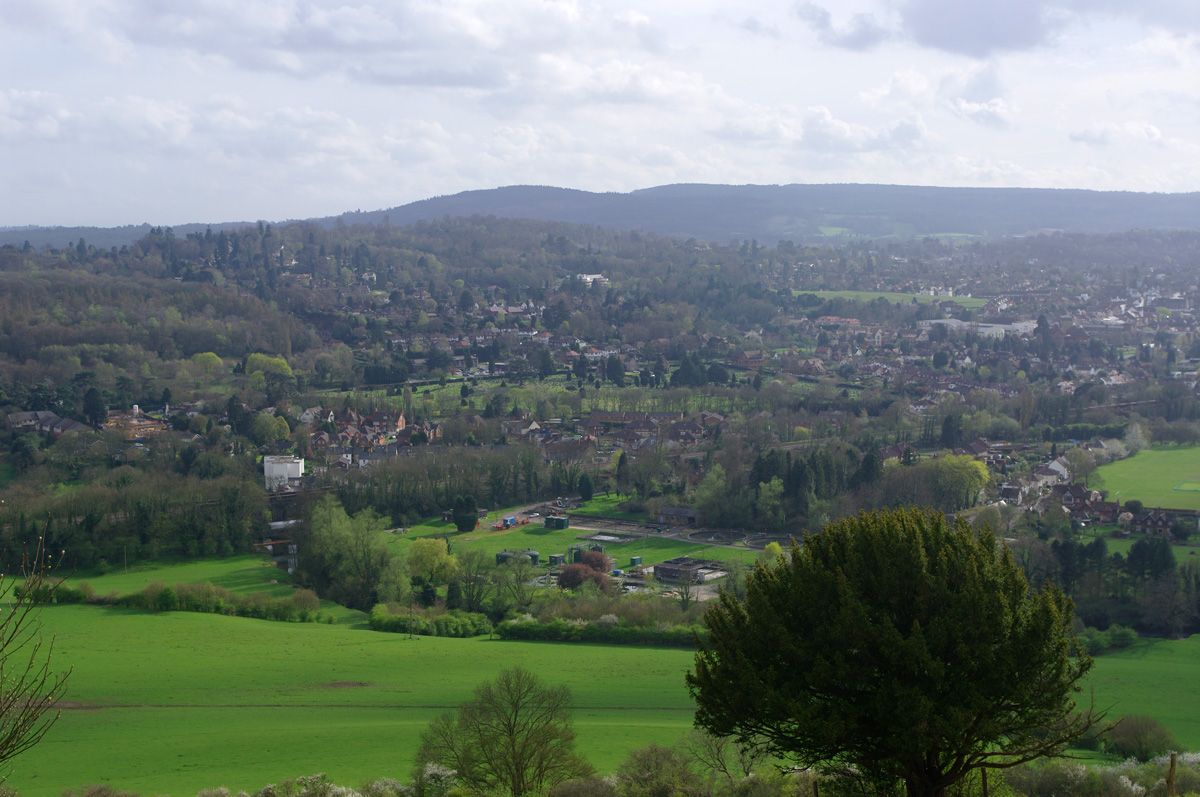
A view of Box Hill, Surrey – George Lambert
Box Hill in Jane Austen’s Emma
On Monday 26th May this year, Deb Barnum [a.k.a. Jane Austen in Vermont] and I drove up to the top of Box Hill. The quickest route is to come off The London Road, known as the A24, which sweeps past the base of Box Hill, paralleling the River Mole, which itself, arcs around Box Hill to the south and west. The A24 leads south from Epsom towards Dorking. A mile before Dorking we turned left at Rykas Café, which is a popular venue for motorcyclists. We took a small B road, overhung with trees. An old rusty sign leaning out of the hedgerow on the left pointed its finger to the summit of Box Hill. We turned into a wooded and high hedged lane which began to immediately rise steeply, bending towards the right. We passed a weathered red brick cottage on the left, set within a ragged, vibrant country garden surrounded by high, smoothly manicured hedges bulging and swelling outwards in billowing shapes. The road soon opened out onto steeply rising chalk grassland. A precipitous drop on our right formed and a steep incline to our left reached upwards.
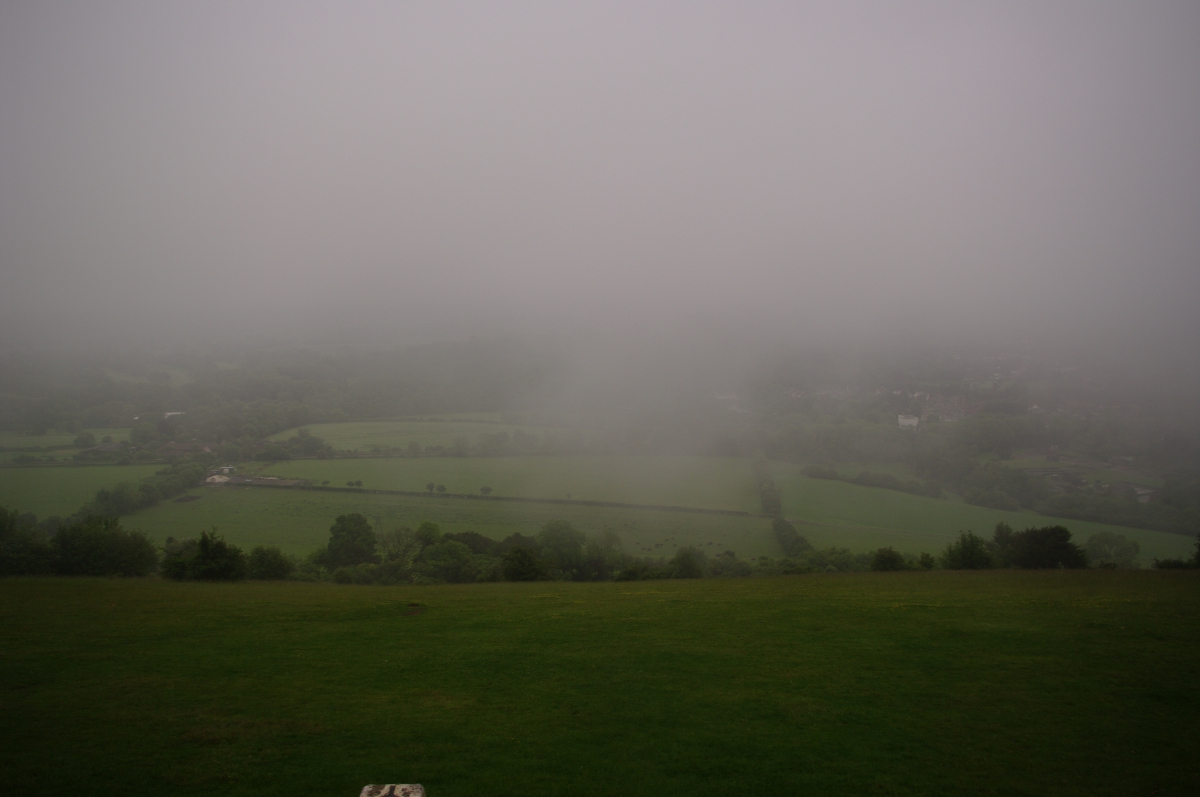
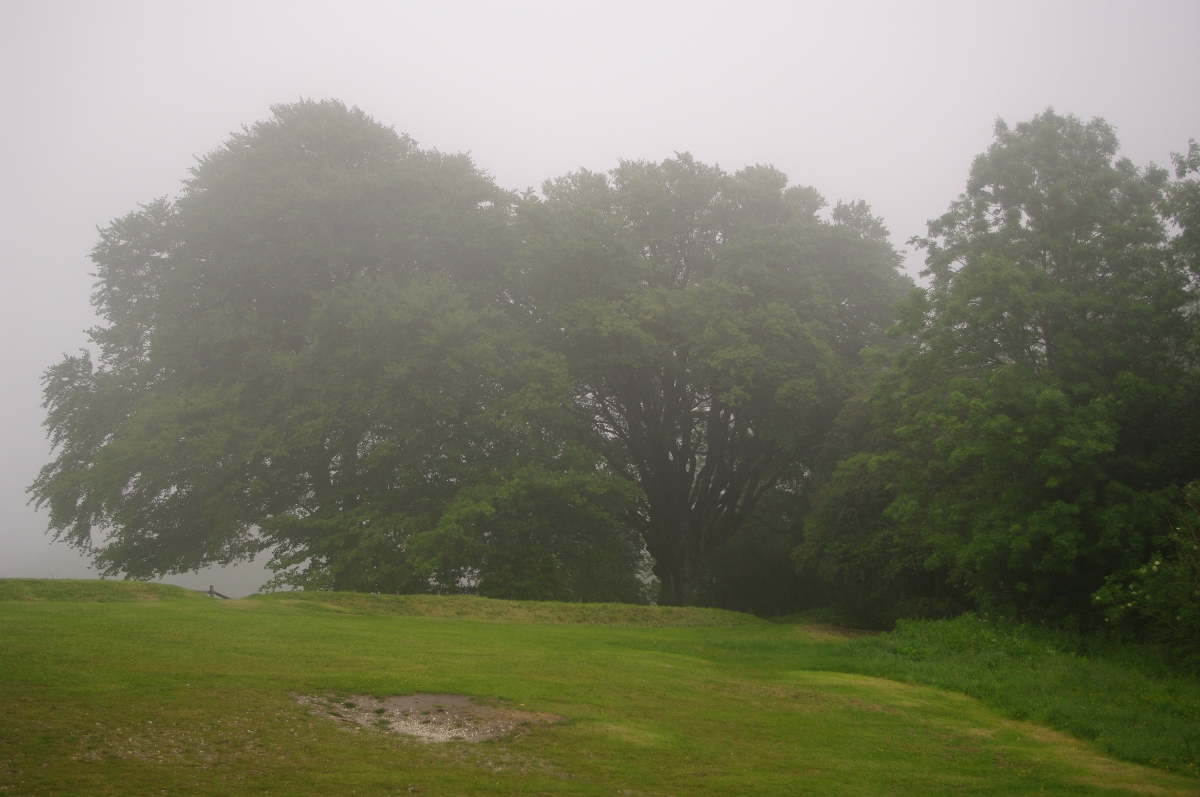
Mist and cloud swirled around us as we mounted the hill along the switch back road. The corners made us turn almost back on ourselves but always took us to steeper and higher levels. The drop to the right revealed hedges of box and scrub, clinging tightly to the side of the hill, interspersed with finely cropped grasses. Chalky outcrops appeared to our left as we rose higher and higher amongst the mist and low clouds. As we neared the summit, trees and woodland gathered around us again. The squat whitewashed National Trust shop and café appeared in front of us and a car park was situated on the left amongst Scots Pines and firs.
We parked the car and I showed Deb the way to the viewpoint we had come to see. We were seven hundred and thirty-five feet above the River Mole and Dorking town was to our right. We could see far into the distance across the
Town of Dorking below
woodlands and fields of Surrey. I suggested Deb take the part of Emma Woodhouse, who in Jane Austen’s novel of that name, visited this very spot with her friends and neighbours but she would have nothing of it. She would be Mrs Elton and nobody else. Deb stood and acclaimed the world standing high on the stone viewing plinth Leopold Salomons had erected in 1914, arms wide to the sky.
It was very near here that Emma Woodhouse and Mrs Elton and their party of friends alighted to picnic at the top of Box Hill in Jane Austen’s novel, Emma. The groups from Highbury and Hartfield, in the novel, have an inauspicious start to their trip, an inauspicious execution of it and an inauspicious end to it. It is a turning point in all their lives. The surface veneer begins to slip from various relationships. Reality begins to poke through Emmas carefully stage managed attempts of conducting other people’s lives. Nothing becomes certain. The Sucklings do not arrive at Hartfield and Mrs Elton’s plan of visiting Box Hill to show the Sucklings the views seems to lose its purpose but she has another thought and becomes adamant about the trip going ahead. The Sucklings can go another time. Mrs Elton’s idea about a trip to Box Hill has an effect on Emma. Emma does not want to be outdone. She has never visited Box Hill before and decides that,
“she wished to see what everybody found so well worth seeing…”
She discusses the trip with the amiable Mr Weston. He is perhaps too amenable and accommodating. In discussion with Mrs Elton he gets the approval of that lady that the two parties, hers and Emma’s join together for one combined trip to Box Hill. Emma is unhappy with the arrangement but as they will all go in different carriages with the people of their own choice perhaps it will not be so bad, she reasons. It would have been better if the horse that was to pull Emma’s carriage had stayed lame of course and so preventing Emma from going, but a quick recovery from this condition, inconveniently perhaps, gave no excuse for Emma not to proceed. A lame horse is a rather lame Jane Austen joke, I think, sprung in the midst of such serious matters. Tongue in cheek comes to mind – a joke at Emma’s expense between Austen and the reader.
Seven miles were travelled in expectation of enjoyment, and everybody had a burst of admiration on first arriving; but in the general amount of the day there was deficiency. There was a languor, a want of spirits, a want of unison, which could not be got over. They separated too much into parties.
This is an interesting passage because Jane Austen seems uncertain. She lists a litany of possible causes for the lack of harmony. She can’t herself decide on one exact cause. This adds realism to the situation. We cannot explain everything in real life and neither can Austen in this scene in Emma.
Austen has Frank Churchill perpetrate, perhaps, a cruel joke, to divert attention from himself and Emma. He asks the ultimate psychoanalysts question, in Emma’s name of course. He whispers to her:
“Our companions are excessively stupid. What shall we do to rouse them? Any nonsense will serve. They shall talk….”
And then for all to hear,
“Ladies and gentlemen, I am ordered by Miss Woodhouse (who, wherever she is, presides,) to say that she desires to know what you are all thinking of.”
Emma immediately tries to nervously laugh the question off. She is taken unawares by this and denies she has anything to do with any such request. There is a desperation in her voice. There is almost fear. She knows she could not, “stand the brunt,” of such raw honesty.
“Let me hear any thing rather than what you are all thinking of.”
There are one or two perhaps, (glancing at Mr Weston and Harriet,) whose thoughts I might not be afraid of knowing.”
Who can or would want to express their real thoughts at the drop of a hat? Is it possible for anybody to express their exact thoughts as they are thinking them? Our relationships would be very strange and probably be put under incredible stresses if we did. Emma is naïve to think even that the thoughts of Mr Weston and Harriet would bear hearing. Our subconscious level is below manners and the social veneer we all carry. It would be delving into our primal depths. This is the sort of thing that Sigmund Freud tried to study and explore. Frank Churchill is being cruel and he knows that nobody would answer this, certainly not himself. Imagine what sort of story would be written if everybody told their thoughts? It is almost the final nail in the coffin of harmony and wellbeing amongst the group on Box Hill.
Deb as Mrs Elton
Deb and I certainly didn’t even approach such a question. Deb, as I said before was just happy to be Mrs Elton and of course Mrs Elton and Mr Elton walked away on their own at Frank Churchill’s question. I wonder what Mrs Elton thought about it? Maybe Deb knows. As for my first suggestion to Deb to play Emma on the top of Box Hill; Emma is obviously an anti-hero. Neither Deb nor anybody else I have spoken to, would willingly be an Emma.
Geology:
Standing high on Box Hill you notice the thinness of the grass under your feet. You see flints sticking out of the pathways and white chalk is revealed in patches everywhere. Box Hill is a geological phenomenon. The cretaceous chalk that comprises Box Hill, was laid down as the microscopic calcareous bodies of plankton on the floor of a tropical sea between 100 and 65 million years ago. Globally chalk is a rare rock formation so it makes the North Downs, of which Box Hill is part, a unique geological area. Originally it was laid as a horizontal chalk platform of uniform thickness. During the period the Alps were formed, about 50 million years ago, upheavals in the Earth’s crust forced this chalk layer into a vast dome. The northern most edge was where the North Downs are now. The dome stretched over to France. The British Isles were joined to the mainland of Europe then. Chalk, being a porous and relatively soft rock, it has been eroded and worn down by the actions of water. All that remains are the North Downs stretching from Guildford in Surrey, just south of London into the northern part Kent and The South Downs stretching from a line formed by the Itchen River between Southampton and Winchester in the west to The Cliffs of Dover on the coast of Kent in the East.
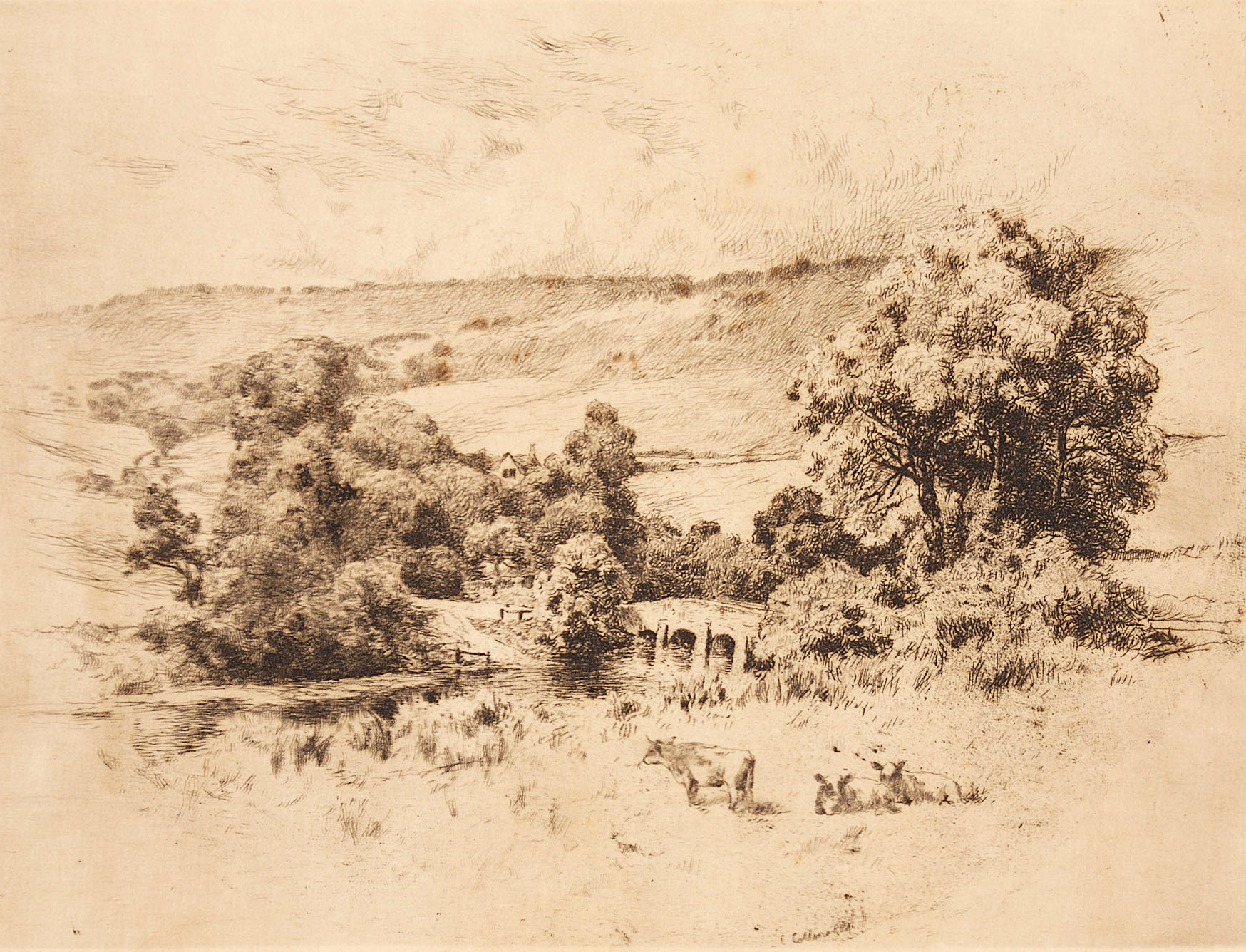
Box Hill Bridge, Dorking – by Alfred Charles Jerome Collins
image: Dorking Museum
On the steep chalk slopes of Box Hill, the 394 feet escarpment and on the sides of the surrounding valleys, downland plants flourish. Because chalk is porous it hardly ever dries out, even in drought conditions which might affect the surrounding landscape. This means plants always have a ready water supply. It is said that plants on chalk downland have a brighter richer colour because of this. Plants such as hawk weed rock rose, bird’s foot trefoil, milkwort, squinancywort and dwarf thistle all thrive in this environment. Box woodland, which is extremely ancient, grows on the steep chalky, thin soiled slopes. It is one of the only trees that will grow in these conditions. The escarpments and valley sides face southwards which means it is often a hot exposed environment. Box Hill derives its name from the box that grows on it. Box has been around since probably the end of the Ice Age and perhaps before that. The characteristics of chalk downland are unique to Box Hill’s geology. There are dry valleys cut into the north side of the hill. This is where the River Mole, which runs under the escarpment of Box Hill has cut its course in the past and where drainage streams and rivulets flowed into it, but because the rocks are porous any streams and rivulets that remain are no longer on the surface but underground. Chalk is easily eroded so it gives a gentle undulating quality to the general landscape. On the steep slopes there are patches of bare chalk and these can gleam white in the sunshine.
Chalk from the North Downs has been quarried in the past. Surrey County Council had a quarry at Brockham nearby to Box Hill. It was used to quarry chalk that could be burned in kilns to produce lime and cement. These quarries, many of them now abandoned have been left to regenerate, plants and wild life and some are now places of special scientific interest. The quarries, because they have sides cut into the chalk, show the structure of the chalk particularly well.
Chalk Down land is a special type of grassland habitat that is actually man made. Over centuries, sheep and cattle have been grazed on them. This has deforested the downland to a certain extent allowed unique wild flowers and animals, only found on downland, to flourish. To keep Box Hill’s downland quality a flock of sheep and a herd of cattle are grazed on it. The sheep on Box hill are Black Welsh Mountain sheep. There are twenty eight sheep, which are moved around the hill on a rotation. Because sheep are ‘nibblers’ they leave the grass short and even. There are also cattle, which graze very differently. Cows use their tongues to rip plants up, which leads to more tufted grassland. The breed used on Box Hill are called Belted Galloway cattle. They can be recognised by their fluffy black bodies with a thick white belt around their middles. Four males graze Box Hill and nearby Headley Heath is grazed by three males and nine females. The animals are moved around Box Hill all the time. If it ceased to be a grassland habitat, trees and woodland would take over and cover it. This would occur through a natural process called succession. This downland supports a great diversity of invertebrates including fourty one species of rare butterflies. The soil is good for snails too. Snails require the calcium in the chalk to form shells.
History:
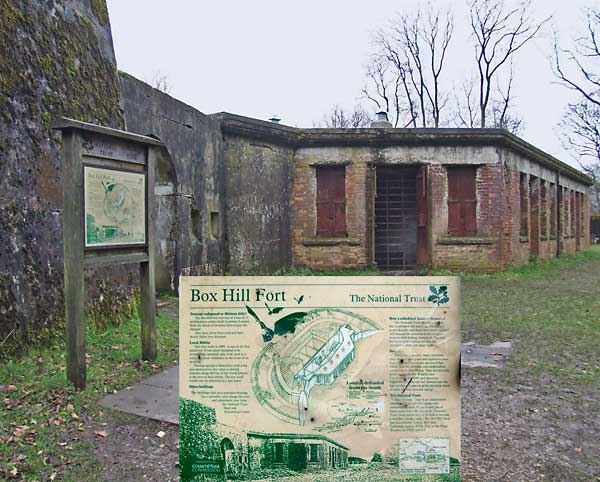
Box Hill has a varied history. The old fort, that can still be seen at the top of Box Hill, was built in the 1890’s and is one of thirteen that were built across the North Downs, collectively known as the London Defence System.. They were to be the last defence of London if Britain was ever invaded. In the late 1890’s there was a treaty with France called the entente cordial but Germany was beginning to increase its strength and many of the stresses and strains that eventually lead to the first world war were beginning to stir. Previously, in the 1860’s, during Palmerstone’s premiership, many forts had also been built around the coast of Britain to defend from a perceived threat from France then. The forts on Box Hill and across the North Downs were never used. I have visited and actually stayed in one of the forts, the fort on The Hogsback just outside of Guildford. It is owned by Surrey County Council and is used for parties of school children to stay at to enable them to explore and study wildlife and local history. The fort on The Hogs back contained officers quarters just outside the ramparts of the fort and a barracks for a small contingent of soldiers inside. The forts were basically armouries for storing shells, and explosives. They comprised of strongly reinforced chambers with specially constructed shelving. The one on The Hogsback had a large area of flat land in front of it on which artillery could be positioned if required. These forts were situated high on the downs,as much as seven hundred feet above the surrounding countryside. The one on the top of Box Hill is dilapidated now and barred from entry. A rare breed of bats has lodged itself inside the fort and cannot be disturbed. To continue the military theme, there are stepping stones that cross the River Mole at the base of Box Hill. During the second world war they were removed to impede invading forces crossing the river. In the area you can also see examples of pill boxes, which were concrete bunkers installed with heavy machine guns and concrete tank traps. Interestingly at the top of Guildford High Street, next to the railway line cutting, hidden amongst dense trees, nowadays you can see a whole swathe of Second World War tank traps covered in ivy and moss.
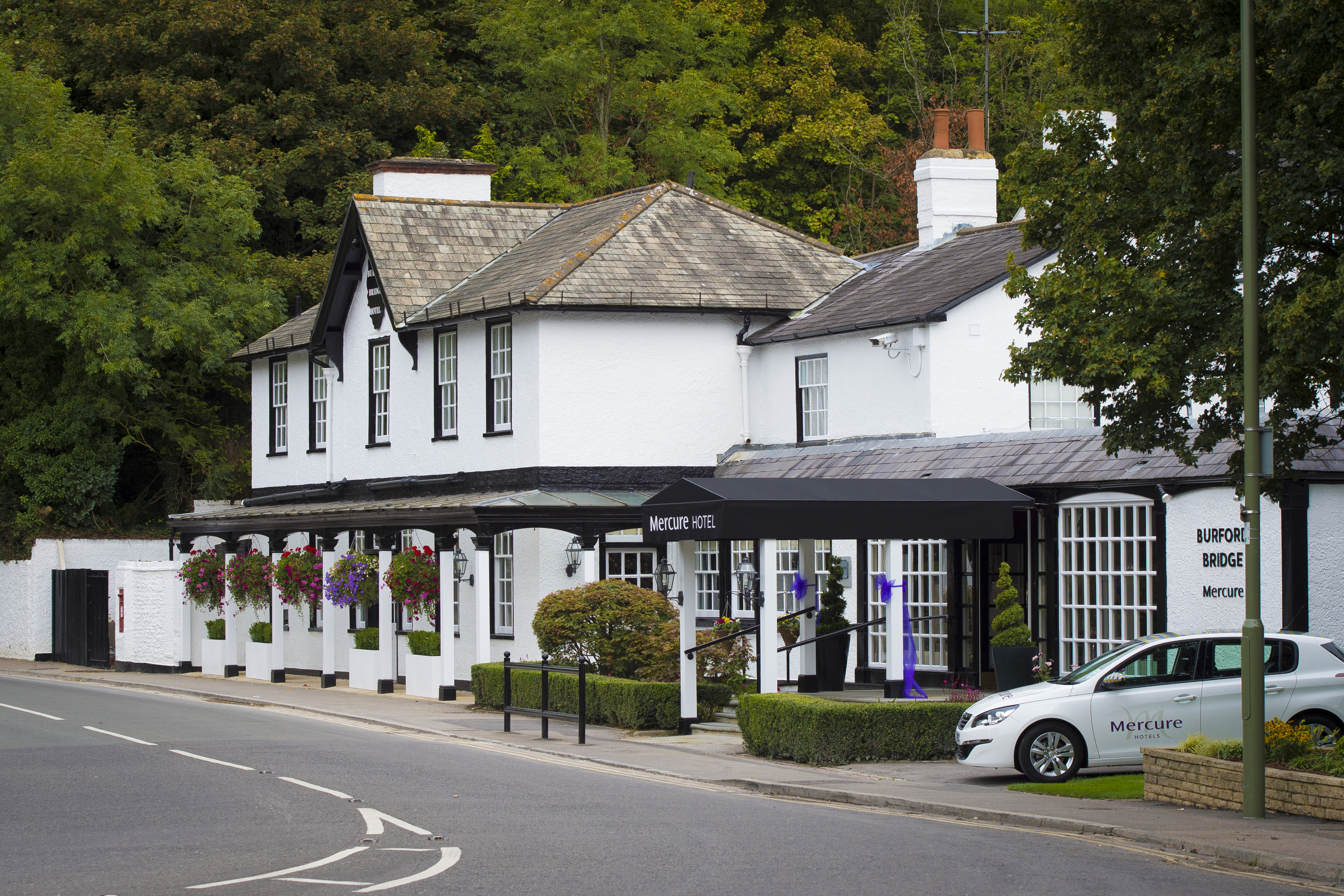
Burford Hotel
Literary Connections:
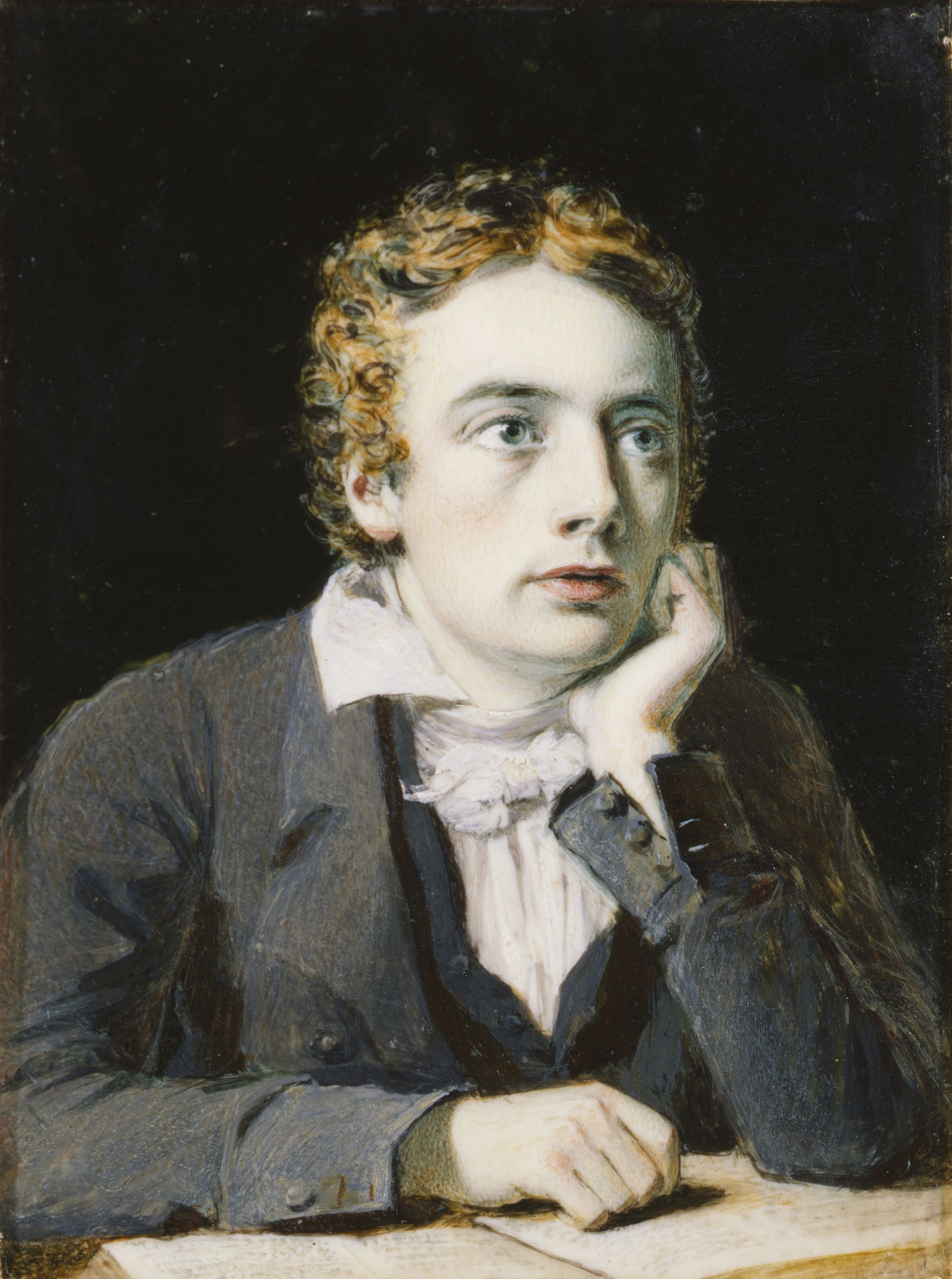
John Keats in 1819, by Joseph Severn – wikipedia
Box Hill has inspired a number of classic authors, not just Jane Austen as I mentioned at the start. John Keats, Daniel Defoe, George Meredith and Robert Louis Stevenson all visited Box Hill. J. M Barrie used to sit on one of the slopes of Box Hill getting inspiration for Peter Pan.
The Romantic Movement, led by William Wordsworth, popularised communing with nature and Box Hill became a popular place to visit. John Keats completed his poem Endymion (1816) while staying at the Burford Hotel next to Box Hill. Its famous opening lines have inspired generations,
“A thing of beauty is a joy forever
Its loveliness increases; it will never
Pass into nothingness; but still will keep
A bower quiet for us….”
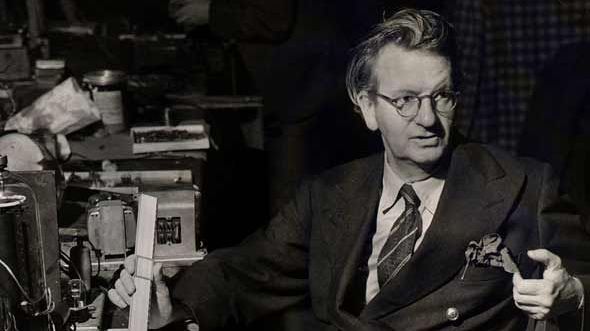
John Logie Baird, the inventor of television, lived in the Swiss Cottage at the top of Box Hill. In the 1930’s he conducted his early experiments in television from the top to the valley below.
John Logie Baird
The strangest individual connected with Box Hill is Major Peter Labelliere. He requested that he be buried upside down on the top of the hill. He believed that the world would go topsy-turvy and that one day he would be the right way up. His other dying wish was that youngest son and daughter of his land lady should dance on his coffin.
One thing you notice, as a driver, on Box Hill is when you descend, especially, winding along the switch back road on steep sided slopes and cliffs that the road surface has had strange, almost aboriginal markings painted on it. Here and there are the hoops of the Olympic movement. In 2012, The Olympics came to London. However, many events were not confined to the capital. The cycling road races were staged in the beautiful leafy, countryside of Surrey. Box Hill was the steepest part of the long distance cycling road race, hence the artistic markings that still adorn the road surface of the road..
On our way back to London, I drove Deb towards Kingston. We passed through an area called Malden Rushett, near the Chessington World of Adventures. There is a small industrial estate, farming land, a pub called The Blue Anchor and an extensive garden centre in Malden Rushett nowadays. The long straight road that passes through this area from Dorking to Kingston was a coaching road in the 18th century. Nothing apart from fields with cattle and maybe wheat growing would have existed there then. If you look on a map you can measure from Malden Rushett cross roads, seven miles to Box Hill, sixteen miles to London, twelve miles to Richmond and nine miles to Kingston – the exact distances from Highbury and Hartfield that Jane Austen reveals in Emma. I mentioned this to Deb as we drove along. I think she was impressed.
the view we saw in the misttop of Box Hill in the mistThe Esteemed Author
All images c2014 Tony Grant unless otherwise noted.
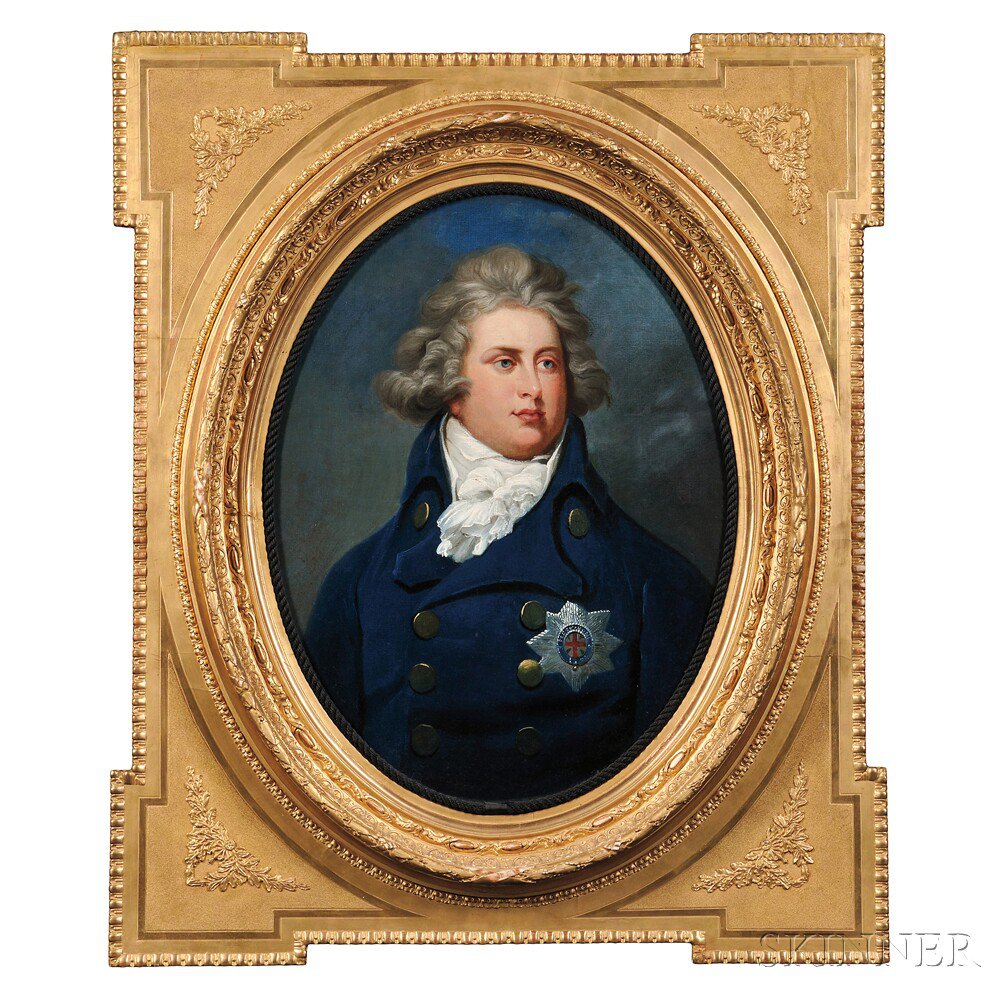
This week, a portrait of the Prince Regent, a.k.a. Prinnie and later George IV, is up for sale at Skinner. Here is the chance you’ve been waiting for – to have his mighty visage staring down at you from your library walls! Whatever would Jane Austen say? – she was not, as we know, a big fan of the Prince. [for more information on Austen’s 1815 visit to Carlton House and the Prince Regent’s Librarian, click here.]
Prince of Wales
British School, 18th/19th Century ~ George IV as The Prince of Wales
British School, 18th/19th Century – George IV as The Prince of Wales
Unsigned, with labels including one from The Closson Art Galleries, Cincinnati, on the stretcher.
Oil on canvas, 28 1/4 x 23 3/4 in. (71.5 x 60.5 cm), framed.
Condition: Lined, retouch, fine craquelure, surface accretions.
N.B. The portrait is somewhat similar in feel to that painted by John Russell, RA, in 1789, now in the collection of the Fogg Art Museum, Harvard University, which may have been the inspiration for this copy.
Stretcher incised “W.MORRILL/LINER” u.c. bar. Also with a label from Art Conservation & Services, San Francisco, California, on the stretcher. Other period labels on the stretcher are unattributed and variously inscribed with numbers. One more promising label is inscribed “S.Buckly & Co/8-5-21”
************
See the full Auction catalogue for a stunning collection of fine silver, snuff boxes, paintings, porcelain, furnishings, and other decorative arts.
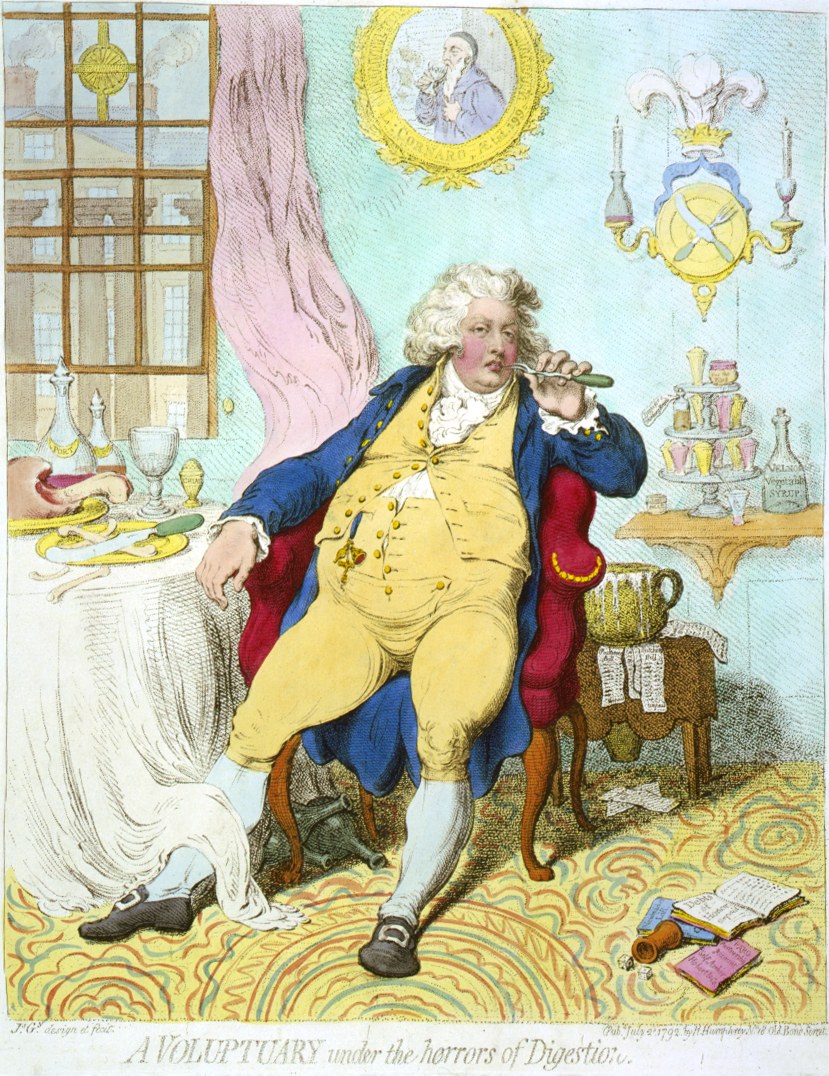
And here is the Prince later as George IV and what the caricaturists and his own profligate ways made of him:
A Voluptuary under the horrors of Digestion (1792)
by James Gillray [Wikipedia]












 Jane Austen in Vermont