Coming soon to your mailbox! ~ the new issue of Jane Austen’s Regency World (May/June 2012, No 57):
Mozart’s Sister: a stunning new film tells of the talented musician eclipsed by a famous brother
Oops, I did it again: drink, drugs, sex and gambling… lax morals prevailed in Georgian England
Taking a tour around Steventon, birthplace of Jane Austen
Rage against the machine: how the Luddites sought to protect their jobs and their families
Exploring the character of Elizabeth Bennet
Plus … all the latest news from the world of Jane Austen, your letters, round-ups from the Jane Austen Society of the UK and the Jane Austen Society of North America, book reviews and quiz!
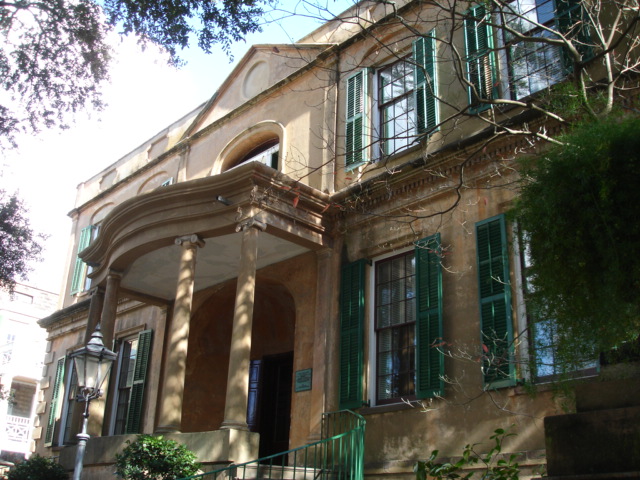
The Owens-Thomas Housein Savannah, Georgia is considered by architectural historians to be one of the finest examples of English Regency architecture in America. Inspired by classical antiquity, this style of architecture takes its name from England’s King George IV, who ruled as Prince Regent from 1811 to 1820.
The house was designed by the young English architect William Jay (1792-1837), one of the first professionally-trained architects practicing in the United States. The elegant residence was built from 1816-1819 for cotton merchant and banker Richard Richardson and his wife Francis Bolton. Mr. Richardson’s brother-in-law was married to Ann Jay, the architect’s sister.
Three years after the house’s completion, Richardson suffered financial losses and sold his house, which later came under possession of the Bank of the United States. For eight years, Mrs. Mary Maxwell ran an elegant lodging house in the structure. Revolutionary War hero Marquis de Lafayette was a guest of the city in 1825 and stayed at the home. On March 19, he is believed to have addressed a throng of enthusiastic Savannahians from the unusual cast-iron veranda on the south facade.
In 1830, planter, congressman, lawyer, and mayor of Savannah, George Welshman Owens, purchased the property for $10,000. It remained in the Owens family until 1951 when Miss Margaret Thomas, George Owens’ granddaughter, bequeathed it to the Telfair Museum of Art.
A National Historic Landmark, the stately former residence is now a historic house museum. It boasts a decorative arts collection comprised primarily of Owens family furnishings, along with American and European objects dating from 1750-1830. The site also includes a beautiful English-inspired parterre garden and an original carriage house—which contains one of the earliest intact urban slave quarters in the South.
[From the website]
Elevation - LOC Floor Plans - LOC
Exterior 1934 - LOC
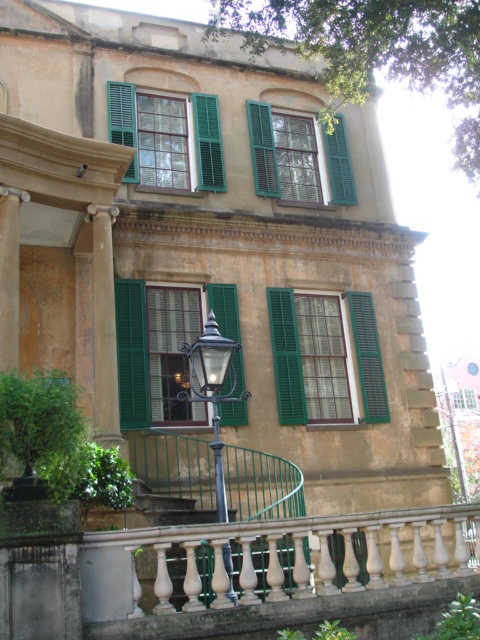
I had the fortune to visit the House last fall – I am just getting to posting these pictures! Unfortunately, no pictures are permitted inside the house, so I only have several exterior and garden shots. The Museum publishes an illustrated guidebook which does contain interior views. If you want to get an idea of what Regency life in America was like during Austen’s lifetime, I highly recommend a visit if you are in the area.
Want to get in the spirit of the upcoming nuptials of Prince William and Kate Middleton? How about reading about some of the previous such celebrations that captured the world from the 12th to the 19th century!
A press notice from Harlequin, publisher of Romance with a capital ‘R’: yesterday they announced the release of seven novellas in ebook format, the “Royal Weddings Collection” – each focusing on a different royal wedding, each written by a different author.
These seven short stories brilliantly capture the drama, pomp and ceremony and high passion of real-life royal weddings,” senior editor Linda Fildew said in a press release. “From Eleanor of Aquitaine to Queen Victoria, these royal romances through the ages bring history vividly to life.”
The titles include:
Terri Brisbin. WHAT THE DUCHESS WANTS (Eleanor, Duchess of Aquitaine and Henry of Anjou, the future Henry II, 1152)
Michelle Willingham. LIONHEART’S BRIDE (King Richard and Princess Berengaria, 1191)
Bronwyn Scott. PRINCE CHARMING IN DISGUISE (Prince George and Caroline of Ansbach, 1704)
Elizabeth Rolls. A PRINCELY DILEMMA (George, Prince of Wales—future George IV—and Princess Caroline of Brunswick, 1795)
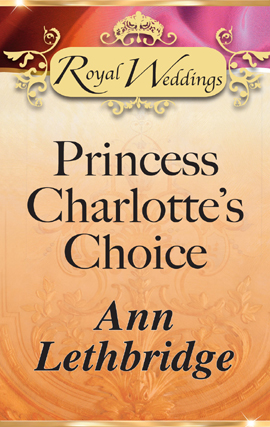
Ann Lethbridge. PRINCESS CHARLOTTE’S CHOICE (Princess Charlotte and Prince Leopold, 1816)
Mary Nichols. WITH VICTORIA’S BLESSING (Queen Victoria and Prince Albert, 1840)
Lucy Ashford. THE PROBLEM WITH JOSEPHINE (Emperor Napoleon and Archduchess Marie-Louise of Austria, 1810).
You can find the seven ebooks at the eharlequin website. They are on sale there for $1.79 each. And if you go to the “Watch the Royal Wedding” website, scroll down for a coupon code for an additional 10% off! [if you are a true lover of Royal Weddings, you should be following this site on a daily basis anyway…]
Time to fire up my Kindle – who can resist!
[ebook covers from the eharlequin website]
Copyright @2011, by Deb Barnum, at Jane Austen in Vermont.
I am posting this at the request of Jane Odiwe, author of Lydia Bennet’s Story, Willoughby’s Return, and most recently Mr. Darcy’s Secret. She has been involved in the interesting detective work of trying to locate the whereabouts of a painting that appears in a Christie’s catalogue from 1983, a “Conversation Piece” pen and watercolor drawing that might be a portrait of Jane Austen’s family. There are similarities to the silhouette illustration we are familiar with:
I append Jane Odiwe’s post in its entirety – you can also go to her blog for further information and read her posts on the artist Ozias Humphrey and his possible connection to the Austen family. [I suggest you print out the family portrait below and then follow along with Jane’s detailed commentary.]
**************************
The ‘Conversation Piece’: Is this a painting of the Austen Family in 1781? [by Jane Odiwe]
Whilst conducting research into the ‘Rice’ portrait, Mr. Robin Roberts discovered a very interesting picture, which seems to have gone unnoticed in a Christie’s catalogue. The sale of the property of Mrs. Robert Tritton took place at Godmersham Park, Kent, between Monday, June 6th and Thursday, June 9th, 1983. Elsie Tritton and her husband had bought the estate in 1936, and the catalogue notes how she and her husband had lovingly rescued the house, and how Elsie, a New Yorker by birth, wished that after her death, their wonderful collection of furniture and clocks, English Conversation Pieces, objets d’art and textiles should be available for others to buy for their own collections. This is a fascinating catalogue to see, and I think the fact that the painting came out of the sale of Godmersham Park is most exciting!
The painting is described in the catalogue as belonging to the English School, circa 1780, pen, and black ink and watercolour, measuring 15½ by 19½ inches. It depicts a family sitting round a table, the adults at opposite ends, with four children beyond.
I think what’s so interesting about the picture is that the more you study it; the more the details become fascinating. It appears to be a wonderful allegorical puzzle, full of the humour and charade that the Austen family loved, reflecting so much of what we know about their family history, finances, with all the literary symbolism they would have enjoyed so much. There are some significant allusions connected with the Austen family, and I am thrilled to share Mr. Roberts’ discoveries with you.
He wonders if it could possibly be by Ozias Humphry painted to commemorate the adoption of Edward Austen by the Knight family who were childless relatives, and there are striking similarities between this painting and the commemorative silhouette drawn up at a similar date. There are what could be the monogram symbols of Ozias Humphry scattered in several places about the painting, on the figures, in a curlicue above the mantelpiece, and a possible signature in the right hand corner, though it is difficult to be certain without seeing the original, and unfortunately, it is impossible to show all the small details on a blog.
If we assume that this is a painting of the Austen family, the central figure shows a young boy who is most likely to be Edward Austen. The family all have their attention turned towards him, and more importantly, their eyes are concentrated on the bunch of grapes, which he holds high up in the air, almost as if being presenting to the viewer. You can almost hear him say, “Look at me, am I not the most fortunate boy in the world? Look what I have!”
Surely the grapes represent the good fortune and wealth that Edward is about to inherit, and the whole family who look as pleased as punch are celebrating with him.
George Herbert makes the connections between grapes, fruit, and inheritance in his poem, The Temple. [see Jane’s blog for the complete poem]
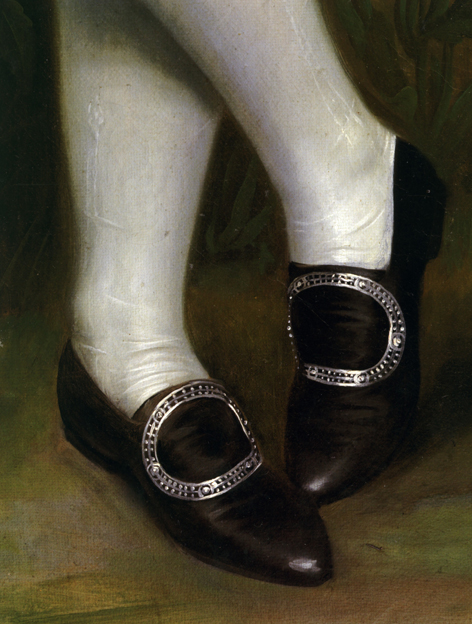
As we observe the painting, the small girl with round cheeks to the left of Edward must be Jane Austen herself! This is also one of the most significant parts to the puzzle, I think. She appears to be clutching what could be a horseshoe nail in her hand, which she points towards Edward, her arm held high in the same way as he holds his grapes aloft. This is where it gets most exciting, and where another connection to Edward Austen is made. On the painting of Edward Austen at Chawton House, there is most distinctly, a horseshoe nail on the ground pointing towards Edward’s feet. This little nail is a symbol, an allusion to the fact that the Knights adopted him. Most interestingly, Jane makes a reference to the horseshoe nail in a letter dated Tuesday, 9th February, 1813. She is talking about Miss Clewes, a new governess that Edward has engaged to look after his children.
shoe detail
Miss Clewes seems the very Governess they have been looking for these ten years; – longer coming than J. Bond’s last Shock of Corn. – If she will but only keep Good and Amiable and Perfect! Clewes & (sic) is better than Clowes. And is it not a name for Edward to pun on? – is not a Clew a nail?
Jane was punning on the word clew (or clue) and the Old French word, clou (de girofle), which in its turn was derived from the Latin, clavus, meaning nail (of the clove tree). The dried flower bud of the clove tree resembles a small nail or tack. Of course, it was a name for Edward to pun on because of his own associations with a small horseshoe nail. This seems to be one of the most significant pieces of the puzzle in the painting!
Now we turn to the gentleman on the left of the painting who is dressed exactly as Mr. Austen in the silhouette attributed to Wellings of Edward’s presentation to the Knight family. He is seated, hands clasped together as though offering up a grateful prayer for their good fortune. Within his grasp it appears he is holding a prayer book, or missal, the silk ribbon of which is draped over his fingers, an indication perhaps of his status as rector, and a man of the cloth. Interestingly, he is the only figure whose eyes are not concentrated on the bunch of grapes, but perhaps this is to indicate he is more concerned with offering grateful thanks in his role of clergyman.
In between Mr. Austen and Jane is Cassandra who rests her hand protectively on her sister’s shoulder, whilst also providing an excellent compositional device leading the eye along through to Jane’s arm to the tip of the Golden Triangle where the bunch of grapes are suspended. The painting follows the traditional composition based on a triangle for optimum placing of the main interest of the work. I also think it interesting to note that the girls’ dresses are of the simple muslin type usually worn by children at this time. Mostly white, they were worn with a ribbon sash, at waist height or higher as in Jane’s case.
On the other side of Edward, it is thought this child most likely to be Francis. James would have been at school at this time, and Henry could also have been away. Charles was too young to be depicted, and would still have been lodged with the family who looked after the infant Austens, as was the custom.
To the far right, as we look at the painting is the formidable figure of Mrs. Austen dressed for the occasion with a string of pearls and a ribbon choker around her neck, complete with more than one ‘feather in her cap’, which must represent her pride and pleasure at the whole event, and by extension, the symbols of nobility and glory. She is further emphasizing Edward’s importance by pointing in his direction, and I think it would be hard to imagine a more pleased mama, in her elegant air, and her smile.
On the table is a further connection with Mrs. Austen. The pineapple, a prized fruit, representing health and prosperity, was first introduced to England in 1772, and the Duke of Chandos, Mrs. Austen’s great uncle, was the first to grow them. The symbolism of the pineapple represents many things, not least the rank of the hostess, but was also associated with hospitality, good cheer, and family affection.
Other dishes of food illustrate further abundance, wealth, and the spiritual associations of Christian values. There is bread and wine on the table; Christian symbols, which represent not only life, and the Communion, but also show there is cause for thankfulness and celebration. The glasses are not yet filled, but there are glasses placed before the adults for a toast. Nearest to us in the foreground, there is another fruitful dish, perhaps plum pudding, representing not only the wealth to come, but also a plentiful future. Placed before Edward, another dish, which also appears to suggest the image of a spaniel dog, may be an allusion to Edward’s love of hunting.
The background to the painting holds its own clues. It’s been suggested that the painting above the mantelpiece could be Zeus abducting Ganymede to the Gods, another reference to the luck of young Edward who has been adopted by the Knight family, and on the opposite wall, could this be a reference to the miniature portrait of George Austen, the handsome proctor, even if this appears to be a larger portrait? In the carpet, the patterns suggest the date may again be replicated, and also an M to symbolize the fact that the couple in the painting are married. Above the looking glass is a crest with what appears to be the date. It would be lovely to have a look at the original to see everything in more detail!
Unfortunately, there appears to be no record of the sale of the painting, and I know that Mr. Roberts, and his sister, Mrs. Henry Rice, would be interested to learn more about the painting. I’d like to make an appeal on their behalf for any information, and if anyone knows of the painting’s whereabouts or can tell us anything about it, please do get in touch with me or with Jane Austen’s House Museum.
I hope you’ve enjoyed this blog as much as I’ve enjoyed hearing all about this little painting. Don’t you think the Austen family would have enjoyed this allegorical puzzle? I’d love to hear your thoughts!
*******************************
All very interesting! – and as with any detective work, one has more questions than can be currently answered. If the original drawing could be located it would certainly help! There is also more information soon to be released about the controversial Rice ‘Jane Austen’ Portrait. Stay tuned! And in the meantime if you have any knowledge of the whereabouts of the “conversation piece” that Jane Odiwe writes about, please contact her via her Jane Austen Sequels Blog.
Copyright @2100, by Deb Barnum, at Jane Austen in Vermont
The “Thomas Lawrence: Regency Power and Brilliance” exhibit that closed in late January at the National Portrait Gallery in London, will be opening on February 24 [through June 5, 2011] at the Yale Center for British Artin New Haven, CT. For those of you, like me, who were unable to catch this in London, now is your chance – not to be missed, certainly for any Jane Austen fan in good standing! – [and thankfully, not too far from me! – I will post my thoughts after seeing it…]
Sarah Barrett Moulton - Pinkie
This is from the Yale Center for British Art website:
Thomas Lawrence: Regency Power and Brilliance will be the first substantial examination of the artist in the United States since 1993 and the first Lawrence exhibition in the United Kingdom since 1979. It will include the artist’s greatest paintings and drawings alongside lesser-known works in order to provide a fresh understanding of Lawrence and his career. The show will also contrast his approach to sitters according to age and gender; juxtapose his public identity with the private world of the artist’s studio; explore Lawrence’s technical innovations as a draftsman and painter; and place him within the broader contexts of the aesthetic debates, networks of patronage, and international politics of his day. The exhibition will bring visitors “behind the scenes” to explore Lawrence’s working methods and the importance of his studio as a workspace, a social space in London, and a space for the display of Lawrence’s own works and his stellar collection of Old Master drawings.
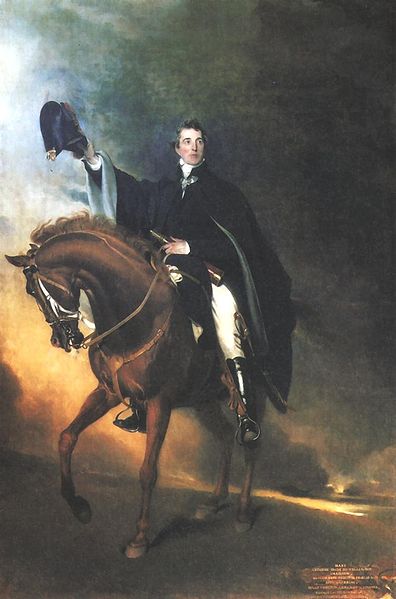
Spanning the scope of the artist’s career, the exhibition closely examines the Regency period, a time defined by the political and cultural role played by George IV (1762-1830), who was Prince of Wales between 1789 and 1811, and then, successively, Prince Regent (during his father’s illness between 1811 and 1820), and crowned king after his father’s death. The exhibition begins with a restaging of Lawrence’s first definitive Royal Academy success in 1790, where he showed Elizabeth Farren (Metropolitan Museum of Art) and Queen Charlotte (National Gallery of Art, London). A display of works from Lawrence’s controversial exhibitions from the 1790s will follow, including Arthur Atherley (Los Angeles County Museum of Art), which challenged traditional notions of masculinity. The next section will examine the period from 1805 to 1815, during which the artist experienced financial and emotional turmoil and created his most innovative and experimental group portraits and half-history portraits. Lawrence was sent abroad by the Prince Regent to paint the victors of Waterloo between 1818 and 1820, and a section of the exhibition will feature portraits such as Arthur Wellesley, 1st Duke of Wellington (private collection) and Charles William (Vane-)Stewart, later 3rd Marquess of Londonderry (National Portrait Gallery, London), as well as the innovative chalk-on-canvas drawings he made during his travels.
Duke of Wellingon on Copenhagen
Another display will include some of his best works on paper, ranging from friendship portraits and commissioned portrait drawings to sketches of historical events, such as the treason trial of John Thelwall (National Portrait Gallery, London). Sparked by a drawing of his studio in 1824 (Yale Center for British Art), the last section of the exhibition will explore new paradigms of masculinity and femininity in Lawrence’s later work and also examine the importance of his portraits of children. The section proves definitively that Lawrence continued to challenge himself as an artist even in the last decade of his career. This display will also highlight an important portrait of the young Julia Peel (private collection), which will be shown exclusively in New Haven. Yale Center for British Art Director, Amy Meyers, asserts, “A critic once wrote of Lawrence’s work that ‘The magic of his art is thrown around the representations of the most ordinary things.’ We are thrilled to be able to share this magic with visitors drawn to the show by the beauty of Lawrence’s paintings, by interest in the period of the Napoleonic wars, and by the changing representations of gender roles in Lawrence’s work.”
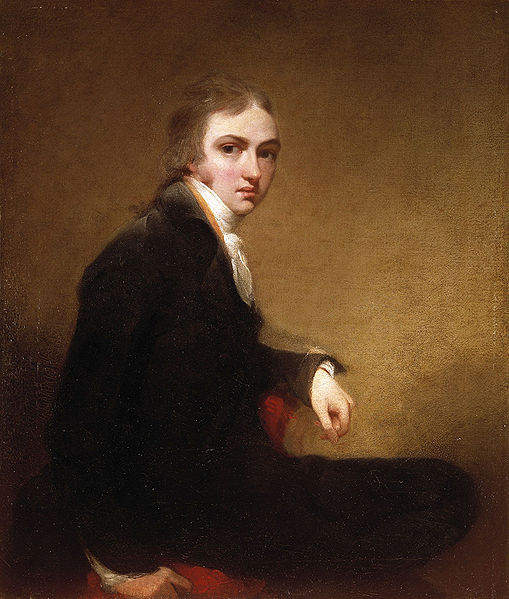
Beginning as a child prodigy working in pastels, Thomas Lawrence succeeded Sir Joshua Reynolds as Britain’s greatest portrait painter. While lacking in formal and artistic education, he rose to the highest ranks of his profession and was appointed President of the Royal Academy in 1820. With the temperament and flair to capture the glamour of the age, Lawrence created the image of Regency high society with dazzling brushwork and innovative use of color. He became not only the most popular chronicler of fashionable London society, but also one of the most lauded (and imitated) portraitists in Europe. Under his brush, portraits emerged that were both startlingly modern, yet grounded in historical forms. They owed their popularity to the fact that Lawrence represented his sitter’s idealized social persona, and also attempted to capture in paint a visual representation of their inner life and character.
Thomas Lawrence: Regency Power and Brilliance has been curated by A. Cassandra Albinson, Associate Curator of Paintings and Sculpture at the Yale Center for British Art, and Peter Funnell, 19th Century Curator and Head of Research Programmes, and Lucy Peltz, 18th Century Curator, at the National Portrait Gallery, London.
The exhibition is accompanied by a fully illustrated book, edited by A. Cassandra Albinson, Peter Funnell, and Lucy Peltz, with essays by Albinson, Funnell, and Marcia Pointon. The book has been published by the Yale Center for British Art in association with Yale University Press and will be available for purchase in the museum shop.
On my TBO* list: with a release date of January 16, 2011 [as per Amazon; publisher release date is February 2011]
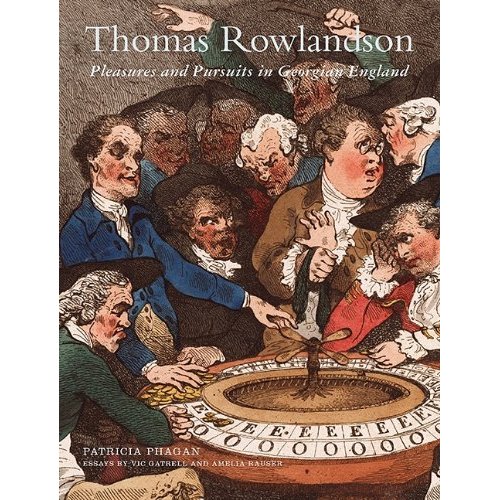
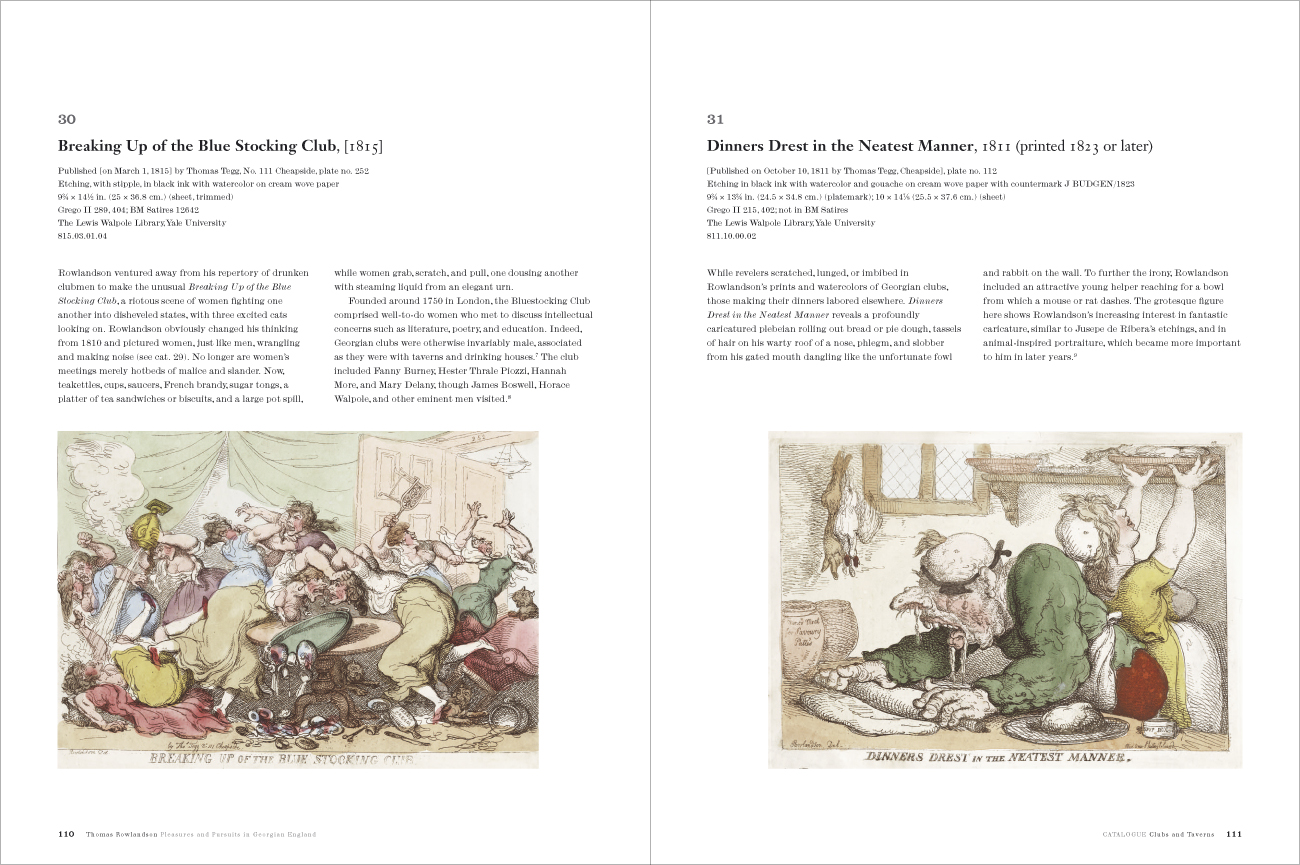
Thomas Rowlandson: Pleasures and Pursuits in Georgian England, by Patricia Phagan; essays by Vic Gatrell and Amelia Rauser. Published by D Giles LTD in association with the Frances Lehman Loeb Art Center, Vassar College, Poughkeepsie, NY, 2011.
This illustrated volume which presents 72 watercolors, drawings, prints and illustrated books to reassess the legacy of this renowned 18th-century satirist. Accompanies the first major exhibition of Rowlandson’s work in North America for twenty years, showing at the Mary and Leigh Block Museum of Art, Northwestern University, Evanston, Illinois, Jan 14, 2011 – March 13, 2011 and the Frances Lehman Loeb Art Center, Vassar College, Poughkeepsie, April 8, 2011 – June 11, 2011 [Click here for information on the exhibit]
Thomas Rowlandson - Pages 110-11
[Click on to enlarge]
About the authors:
Patricia Phagan is Philip and Lynn Straus Curator of Prints and Drawings at the Frances Lehman Loeb Art Center and the co-author of ‘The American Scene and the South: Paintings and Works on Paper, 1930-1946’ (1996) and ‘Images of Women in Seventeenth-Century Dutch Art: Domesticity and the Representation of the Peasant’ (1996).
Vic Gatrell is Life Fellow of Gonville and Caius College, Cambridge, and the author of ‘City of Laughter: Sex and Satire in Eighteenth-Century London’ (2006) [fabulous book!] and ‘The Hanging Tree: Execution and the English People 1770-1868‘ (1994).
Amelia Rauser is Associate Professor of Art History at Franklin and Marshall College, Lancaster, Pennsylvania, and author of ‘Caricature Unmasked: Irony, Authenticity and Individualism in Eighteenth-Century English Prints’ (2008). [from Amazon]
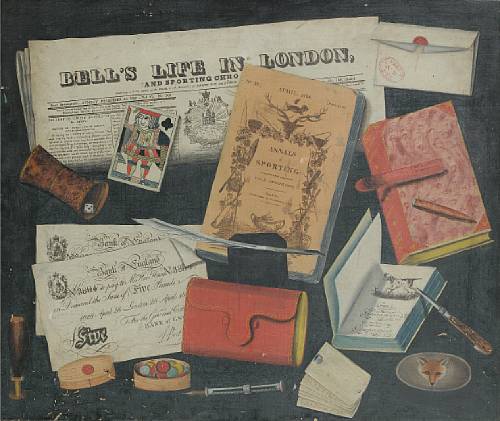
Auction News: see the upcoming Bonham’s Gentleman’s Library Sale, January 19, 2011, New Bond St in London, for all manner of library furniture, desk sets, globes, cabinets, and portraits and paintings that may have been housed in the libraries of the Gentlemen of the Victorian and earlier periods. The online catalogue is available for viewing and bidding!
A Gentleman's Tromp L'oeil - Bonham's Lot 183
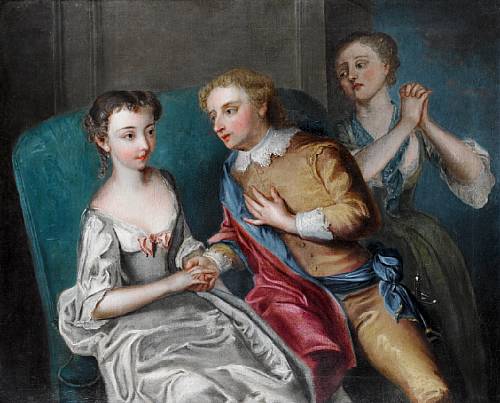
or I love this one – “The Proposal” with Mom listening in and clasping her hands in prayer in the doorway!
'The Proposal' (Circle of Philippe Mercier) - Bonham's Lot 230
Lots more in the catalogue – take a look if you can!
And see this article at Victoriana Magazine for more information on the Victorian Library.
[Images from the Bonham’s Gentleman’s Library Sale, No. 18544]
Copyright @ 2011 Deb Barnum, at Jane Austen in Vermont
I made a promise to myself back in August 2010 to finally read Samuel Richardson’s Clarissa, this promise made after reading Laurel Ann’s Austenprose interview with Lynn Shepherd. Shepherd is the author of the Austen-inspired mystery Murder at Mansfield Park, but also a Samuel Richardson scholar and author of Clarissa’s Painter: Portraiture, Illustration, and Representation in the Novels of Samuel Richardson (Oxford University Press, 2009].
I have had Clarissa sitting on my bedside table for years – a friend gave it to me as a joke, daring me to read the thing – I was tempted to tear it into nine parts [an easy thing to do!] and have each of my book group buddies read their piece of the book and report on it – an easy way to lessen the pain of reading this rather large tome – my copy [the Penguin edition of 1985 with introduction and notes by Angus Ross] measures 9 x 6 x 2.75″ with a total of 1534 pages, a heady feast of endless words in very small print! But alas! I could not go the book destruction route, it’s not in my genetic makeup, and so have just stared at this thing for years, dusting it occasionally, contemplating its use as a doorstop or such [it weighs 2 lbs, 11oz!], but somewhat guilty all the while… an English major who cleverly avoided this book or any Richardson for that matter because everything is just so long and not to mention depressing! And despite Richardson being Jane Austen’s favorite author, and that she read and re-read his works and was greatly influenced by him, I just haven’t done it… until now…
So when I read Lynn Shepherd’s post and saw the brilliant suggestion to read Clarissa in ‘real time’, starting on January 10th, and finishing on December 18th, I thought this was a perfect solution, nearly a whole year to finish the thing, not much time to be spent on a daily basis – how bad can it possibly be? So, Dear Readers, I have begun – January 10th, with already a welcome reprieve as the next letter is not until January 13th…
When I told my gifting friend that I was finally going to read the thing – she wondered how I would be able to put it down and not read ahead – I told her I did not think that would be a problem in this case – and indeed it seems not to be so far!
I welcome anyone else who would like to join me in this – there have been group reads of Clarissa on other listservs – I am not going to post about the book, just periodic updates of my reading progress. My only concern is I am already looking forlornly at Richardson’s other book on my shelf, Pamela, a much shorter and happier exercise in reading what Jane Austen read… – so wish me luck and join me if you can!
Article on Richardson and Austen: “The Source of “dramatized consciousness”: Richardson, Austen, and Stylistic Influence ” by Joe Bray, Style, Spring, 2001.
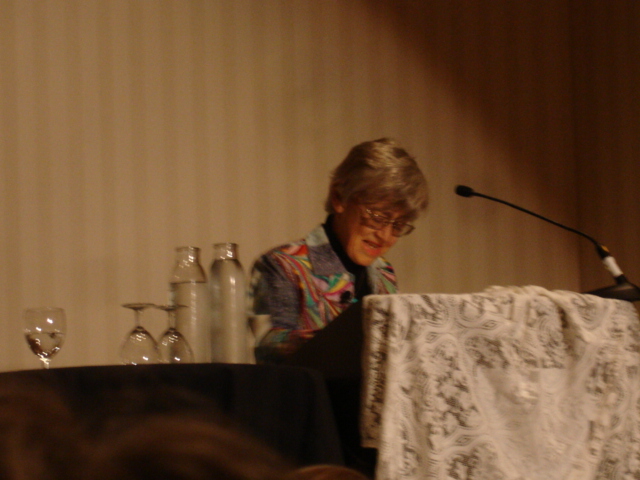
Day Three at the JASNA AGM in Portland: A quick continental breakfast with Laurel Ann and a few friends at the table – discovered that Elaine Bander is quite a scholar of Dorothy L. Sayers –more on this in another post – and then off to the Plenary with JASNA North American Scholar Juliet McMaster on – “‘A Surmise of such Horror’: Catherine Morland’s Imagination.” I have heard Prof. McMaster speak on several occasions and she never fails to express “in the best chosen language” all there is to love about Jane Austen. Today she begins with showing us a “cheap” 1965 paperback edition of Northanger Abbey, where “gothic’ is everything, cover and blurbs teasing us with the horrors that await us in these pages – she ends her talk with surmising that perhaps they didn’t get it so wrong! She presents this by examining the quality of Catherine’s mind – a combination of innocence and wisdom, likening her to the “holy fool” of Shakespeare or Dickens, a “good fool”. Where Henry Tilney is so often the focus of Northanger Abbey criticism, Catherine relegated to the “heroine” that Austen herself seems to denigrate, McMaster gives us a gift: Catherine redeemed and placed in her rightful home next to Austen’s other great heroines.
Juliet McMaster
Catherine, as we know, is described in negatives in those first pages, and Henry teases her about the “intellectual poverty” of a visit with Mrs. Allen – McMaster likens her “brain as a closet,” Catherine’s cluttered and well-stocked but vacuous [Henry and Eleanor are well-stocked but ordered; John Thorpe has a “double occupancy”!] – this “moving toyshop of her mind” is a perfect metaphor for Catherine – she learns aesthetic sensibility [that hyacinth!], not unlike the Romantic sensibility of Coleridge and Wordsworth, and her gothic readings and Henry’s very near prediction of her experiences in the Abbey all serve Catherine in her “awakening, an imaginative awakening, and we end able to love her “faults and all.” [as Mr. Knightley on his Emma!] – and what of Henry’s reprimand? The one scene in NA that has caused the most commentary? often an expression of concern that Henry could end up as tyranical as his father? McMaster believes that Henry is revitalized and rejuvenated by Catherine, and she views his rebuke as almost a “cover-up” – that his surmising Catherine’s thoughts before she has clearly expressed them [go back and read the book!], that Henry is all too aware of the truths about his father – Catherine awakens his own fears, and indeed contributes to his strength in openly defying his father.
I later, in yet another trip to the Emporium!, talked with Professor McMaster and added four more books to my Juvenilia Pressedition, now complete as to Austen’s works, with McMaster’s fanciful illustrations… and one last thought – McMaster threw out this tidbit – “pay attention to when Austen uses the word ‘almost.’”
Juliet McMaster with her "The Beautiful Cassandra"
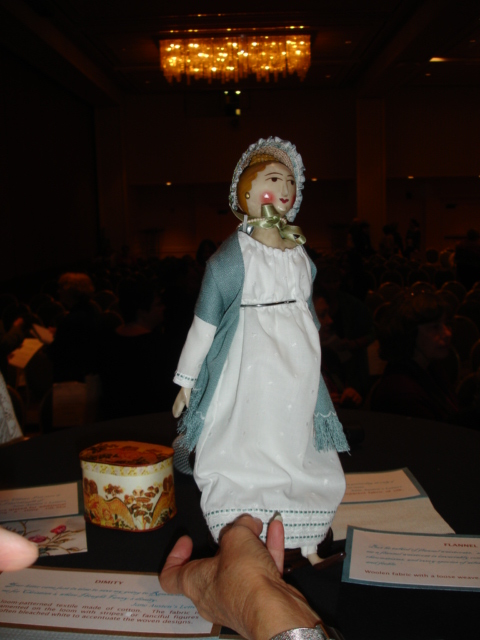
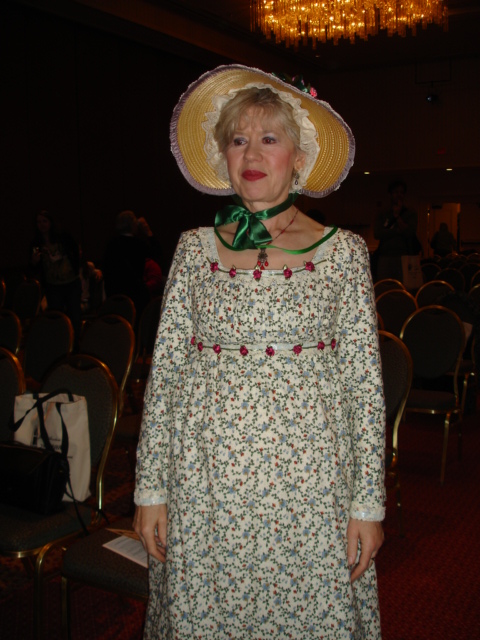
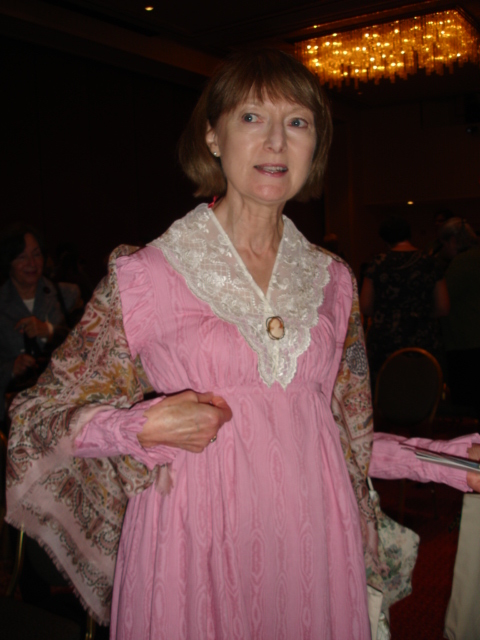
So after feeling quite confident in Catherine’s true place in the Austen canon, on to a fashion session with Mary Hafner-Laney, a specialist in construction of historic clothing in “ ‘I was tempted by a pretty coloured muslin’: Jane Austen and the Art of being Fashionable” – a presentation covering the various fashion sources in magazines, such as La Belle Assemblee, the use of fashion dolls [see illus. below] in the marketing, purchasing and sewing process, all the while citing Austen’s many references to the fashions of the day in her letters, filled as well all know with fashion gossip! and her novels. Mary took us through the process of purchasing the materials, choosing styles, finding a dressmaker, and the costs – i.e. nothing off the racks in Austen’s time! She spoke about Eleanor’s white gowns and other color options, types of fabrics and where they came from and the stores that sold them. Then a few words on undergarments, laundering, remaking and dying, and how one can never have “too much trim”! A lovely and informative talk! and now some pictures of the beautifully clad listeners:
fashion doll
Syrie James and Bonnie WiseKimberly BrangwinPat Panshinthe always lovely Baronda Bradley!
*******
And here, one of the rare negatives at a JASNA event but have to mention because I was so stunned! – Mary did not expect such a large audience [149!] and came without enough handouts – a facsimile of La Belle Assemblee [100], a booklet of fashion samples [50], and a regency fashion illustration with samples [50] – before Mary finished her Q&A, several people started going up front to get a handout – raging mutiny from the ranks! – they returned to their seats abashed [but with their booty…] and I turned to the woman next to me and said “Oh dear! This is going to be like a bra sale at Filene’s basement!” [what are the chances that this woman used to actually work at a Filene’s basement! – yikes!] and sure enough, as soon as Mary gave the go, a mad rush to the front, pushing and grabbing and quite appalling really! – who would have thought this lovely sedate group [and some so fashionably attired] could turn into such a greedy rabble! – yikes again!
On to Elvira Casel – always expected to present a thought-provoking topic, this time on “The Abduction of Catherine Morland: Deception, Sex and Courtship in Northanger Abbey” – she began with first eliminating any expectations that this talk would be about “SEX” – sex is inferred in Austen but that courtship process is full of sexual overtones in being all about finding a sexual / life partner – and the sex part dealt with, she talked about “how honest people can negotiate a world that is often dishonest.” Casal gives us a Henry and a John Thorpe as rivals in the first part of the book – Thorpe’s abduction of Catherine tantamount to a gothic rape, his insidious lies, though propelling the plot, are ineffective because Catherine is on to him early on – and Henry’s immediate attraction to Catherine [who asked for that introduction from Mr. King after all?!], their conversation of the dance showing their developing relationship – Catherine might be puzzled but she does understand that Henry is defining his values, his idea of commitment. Casal posits Henry and Thorpe as would-be narrators – Thorpe’s “fictions” propel the plot, but it is Henry as the true narrator / storyteller – he is very attuned to others, but there are concerns about his controlling nature – it is he who introduces the gothic story to Catherine, he stimulates her imagination – he is culpable here – but Casal sees Henry as ceasing to be the narrator when he seeks to be the hero in Catherine’s own story in the making. During the Q&A, she said what I thought was the most interesting point in her argument: Henry Tilney most resembles Elizabeth Bennet as a character – they both use humor to distance themselves from pain, disguising their true feelings.
Fourth session [wow! My brain is totally taxed – McMaster’s “closet” of clutter, and completely disordered!]
Susan Allen Ford on “Ingenious Torments: Reading Instructive Texts in Northanger Abbey” – Professor Ford, who is working on a book about what Austen’s characters are reading focused on the didactic texts inherent in Northanger Abbey – those specifically mentioned or inferred: Mrs. Morland’s Mirror, with info on John Homespun and family [i.e Henry McKenzie of The Man of Feeling fame] as “cousins” of the Morlands – plain country folk, yet Mrs. Morland’s inadequacy as a parent in her oft-quoted platitudes and clichés of life; the Richardson footnote on woman’s behavior in courtship; and finally Jane Collier’s An Essay on the Art of Ingeniously Tormenting, a satiric anti-conduct book. Collier outlines the various human relationships, emphasizing the aspects of teasing and torment [recall Catherine’s historians “labouring only for the torment of little boys and girls”] in all these relationships. Prof. Ford talks of Austen’s use of the word “torment” – Henry four times, Catherine three, how Isabella personifies the “tormenting” by a friend, the extent of General Tilney “tormenting” Mrs. Tilney. In the end, Austen mocks the prevailing didactic texts of the time by showing their inadequacies “for the emotional tortures in friendship, courtship and family relationships.”
End of breakouts! – so much learned, so much missed – look forward to Persuasions On-line [December 2010] and Persuasions 32 [May 2011] to fill in the gaps!
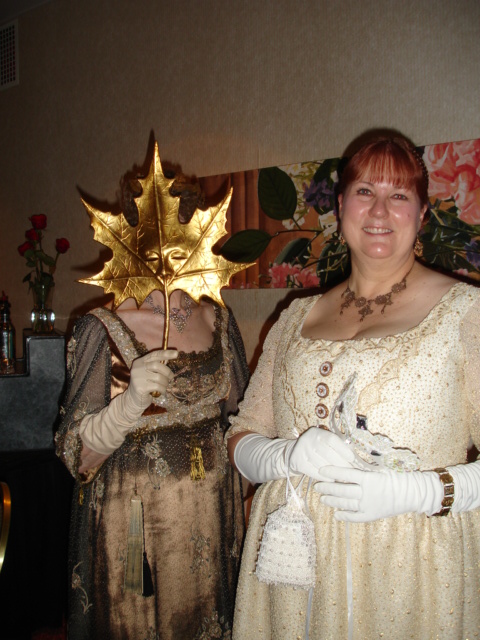
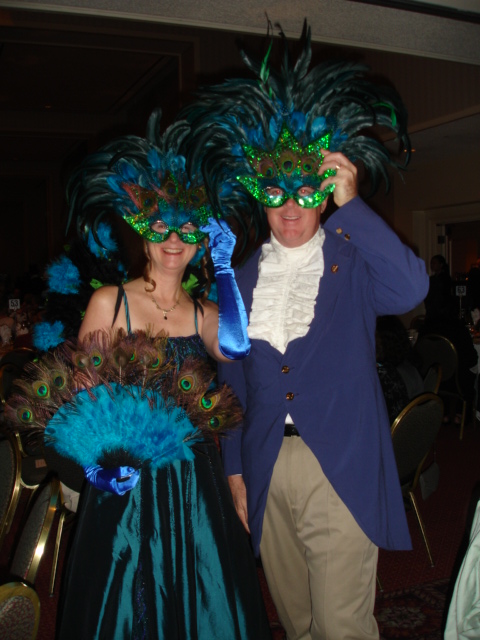
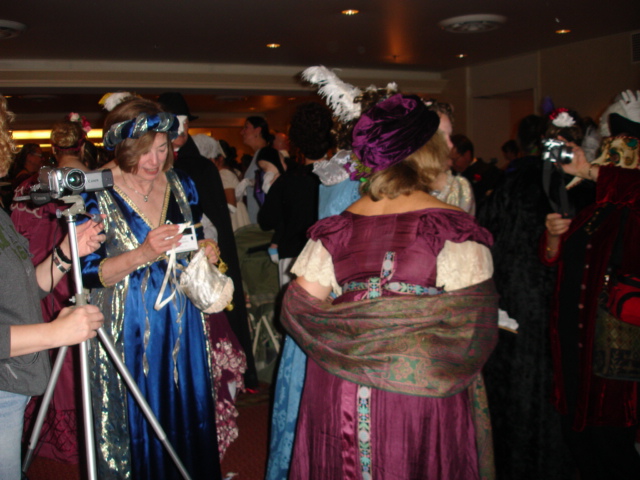
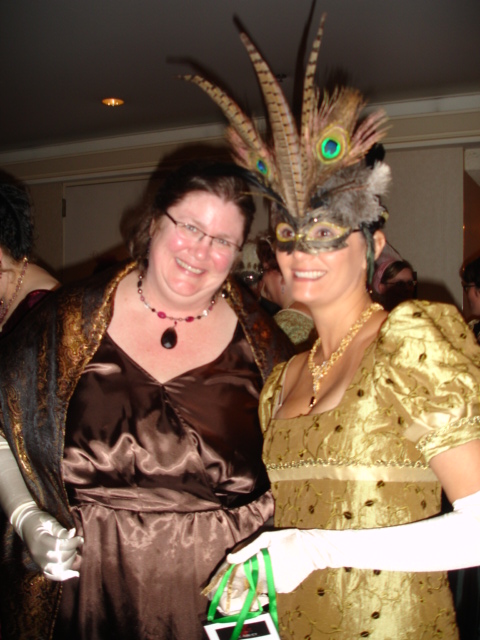
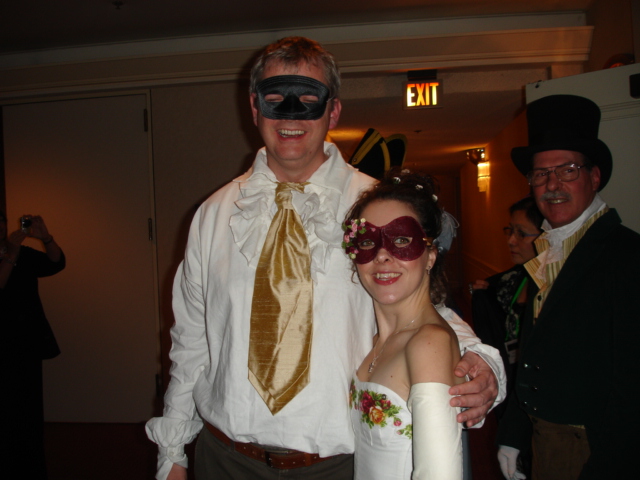
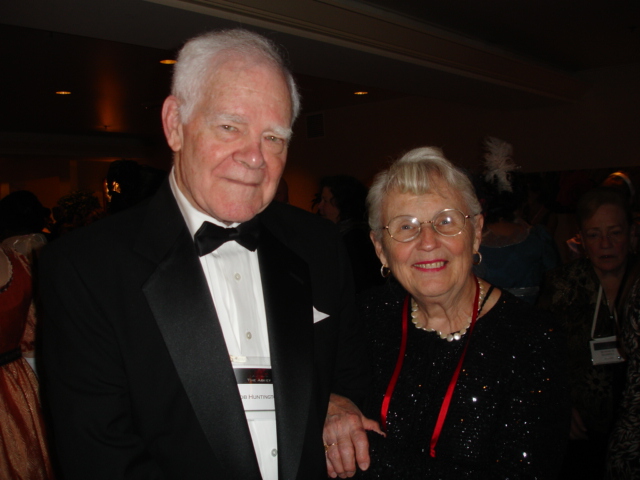
And then, the Banquet and Ball – the AGM had more fashionable Ladies and Gentlemen than I have ever seen – some elaborate Regency, some outrageous costumes for the Bal Masque – my costume still the “pattern-in-the-bag state – only a black velvet Spencer over a long dress – best I could do, but certainly not Promenade material! – which was great because I could just stand there and take pictures. Dinner was great fun – we had a fun table and met all manner of Austen bloggers and web masters: Sue Forgue of Regency Encyclopedia [contact me for passwords]; Diana Birchall of Mrs. Darcy’s Dilemma fame and her blog “Light, Bright and Sparkling”- we bonded on our “born and bred” in New York heritage; she introduced me to Ellen Moody, long known to me from the Austen listservs – I marvel at her Calendars of the novels – so great to meet her – we also bonded on our “born and bred” in New York heritage!… others across the table beyond the hollering needed to hear – will get in touch with them via email – then off to see the Promenade, a fiasco of elevator limitations, so no parading about the streets of Portland for this year – no matter, the foyer and ballroom were quite fine to exhibit the finery! pictures follow with names of those I got permission from – I did go into the Monster Mash event for a bit to hear the three different talks on the gothic – but headed back to the room for a needed respite – alas! my skills at English Country Dance to be exhibited next year! – and again, more and more people up there dancing this year – this is a wonderful trend at the AGMs – back to the sewing machine and ECD instruction for me!
Laurel Ann and Laurie Viera Riglerabsolutely stunning!Syrie James and husband BillDiana Birchall
Baronda and Erica perfect Phantom!
Debbie Aldous and Christina Boydlovely in purple!
and friend”]Tim Bullamore and friendJo Ann and Philip Staples
“]Liz Cooper
Ceil and Bob HuntingtonLorraine and William Hanaway
Carol Moss - JASNA webmaster!Laurel Ann and her roomie!Portland at night...
Tonight at midnight [10-7-10, Pacific Time] is the deadline for commenting on any of the blog posts on the Elizabeth Gaskell Blog Tour and to enter to win the Naxos audiobook of North and South. You can comment on my Gaskell post: Your Gaskell Library, or any of the posts below. Good luck! – Lovely prize! Laurel Ann at Austenprose will be announcing the winner tomorrow, October 8th.
14.) Your Gaskell Library – a select bibliography of written resources and links to MP3′s, ebooks, audio books, other downloads and reading resources available online: Janeite Deb – Jane Austen in Vermont

























 Jane Austen in Vermont