My friend Suzanne is the Innkeeper at the Governor’s House in Hyde Park, Vermont, where she four times a year holds Jane Austen Weekends for those of us who like to retreat into the early 19th century for a few days. She also offers an annual In-Character Weekend, where all manner of various Austen characters people the Inn and where one must remain in character for the whole time or risk being evicted… it is all in good fun, what with archery, and fencing, and quill-making and dancing and efforts to make bonnets and turbans , one easily forgets the call of the internet or the chatter of cell phones, and as long as a resident Lady Catherine or Mr. Collins, or a grave General Tilney do not ruin the festivities, one can really get quite lost in it all. One such weekend is coming up August 7-9, 2015 and you can read all about it here: Governor’s House-JA weekends.
But I write here today about Suzanne’s and my Love of London, discovered several years ago, and about which we have yet to stop talking… We have been there together, and alas! separately, and as she was in the UK this spring without me (I am struggling to forgive her…), I here offer a post that Suzanne wrote on her Innkeeper’s blog a few weeks ago about her latest trip and the rather alarming number of encounters she had with Jane Austen! – here is the first paragraph with a link to the rest of the post … a perfect trip for armchair travelers!
After a tough Vermont winter and a serious bout of flu what form of R and R would be good before getting back to the 24/7 business of running a small inn? As is so often the case, a little Jane Austen seemed like a good plan. I’d been noticing how amazingly often JA is mentioned in whatever I’m reading, from Mr. Churchill’s Secretary to a serious article in the Economist just last week. So I wondered how many encounters there might be as I did some walking in her part of England and decided to chronicle my adventures. And all I can say now is that it is a truth universally acknowledged that Jane Austen truly is everywhere!
Day 1
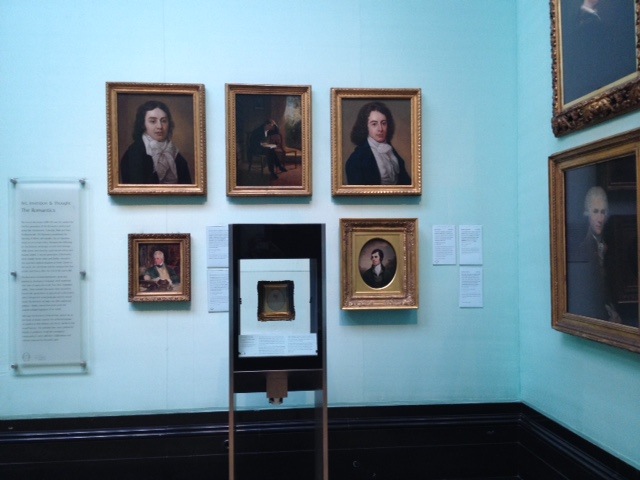
Arriving in London after an overnight flight, I immediately set out for a walk. First stop was Hatchard’s, England’s oldest bookshop founded in 1797. JA’s writings were well represented and it’s always a great place to look for guides to Regency London and places with literary ties, but the appeal for me is the list of authors who were also customers. Next stop was the National Portrait Gallery for “Sargent: Portraits of Artists and Friends”, John Singer Sargent’s striking portraits of Monet, Rodin, Robert Louis Stevenson and others, but certainly not JA who’d lived a century earlier. But returning the long way down from the third floor ladies, I came to this wall of JA’s contemporaries surrounding the tiny portrait of her we know so well.
You can read more about the In Character Jane Austen Weekend for August 7-9, 2015 here: http://www.onehundredmain.com/events/jane-austen-weekends/ – it is not too late to sign up to give the performance of your life, Mr. Collins anyone?? and all you closet Mrs. Allens (dare I say Mrs. Norris??) can come and rave about your fashions to your heart’s content…
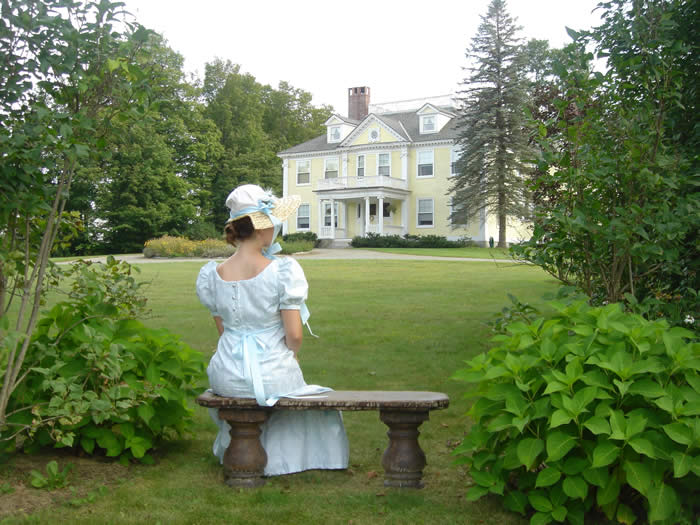
Showing off the Regency style turbans they made that afternoon in Hope Greenberg’s workshop
*********
On another note of interest to members of JASNA-Vermont – Suzanne is hosting us at the Governor’s House for an Afternoon Tea on July 26, 2015, from 2-4, where we will hear my good friend Ingrid Graff speak on “A Home of Her Own: Space and Synthesis in Sense and Sensibility.” As a member of JASNA, Suzanne is offering us this Tea at minimal cost to us, $8. / per person – reservations are required, so please email or call – invitations are being emailed later today to all on our JASNA-Vermont mailing list. Hope to see many of you there!
[Images courtesy of Suzanne B. from her Governor’s House website]
Be on the lookout in your mailbox! – the March/April 2015 (issue 74) of Jane Austen’s Regency World magazine is published this week and is being mailed to subscribers. In it you can read about:
The Iron Duke: A major exhibition marks the Duke of Wellington’s triumph at the Battle of Waterloo
A Book’s Life: One of the rare books at Chawton House Library reveals all
Anyone for Pyms? Barbara Pym, the novelist who was known as the “Jane Austen of the 20th century”
Georgian Illnesses: Examining some of the ailments suffered by Jane Austen’s characters
From Daylesford to Delaford: Is there a connection between Warren Hastings and Sense & Sensibility?
*Plus News, Letters, Book Reviews and information from Jane Austen Societies in the US, UK and Australia
*To subscribe now click here – and make sure that you are among the first to read all the news from Jane Austen’s Regency World!
I first had the pleasure of discovering Julie Klassen while on an camping trek along the East coast – I was looking for some late-night reading while tucked away in that comfortable Airstream bed. I cannot recall exactly how I first came upon The Apothecary’s Daughter – it may have been some kindle special, but though I didn’t know a thing about the author, nor that she was classified as a writer of “Christian fiction,” I loved the title and was hooked from the first page. Since then (and no longer stuck in that Airstream) I have read all of her eight novels, each of them a mix of mystery and romance, with gothic elements and literary illusions in abundance. You will find Jane Austen and the Brontes well represented, especially Jane Eyre.
Her first book The Lady of Milkwood Manor, tells the tale of unmarried motherhood, and each succeeding book focuses on a social issue of the Regency period and the plight of women in this constrained patriarchal world. And yes, there is the Romance, with various brooding Heroes vying for attention, great British houses with secrets to be unearthed, and lovely Heroines who are strong in the face of societal missteps, where faith plays a part in finding one’s way, and all adding up to a perfect read.
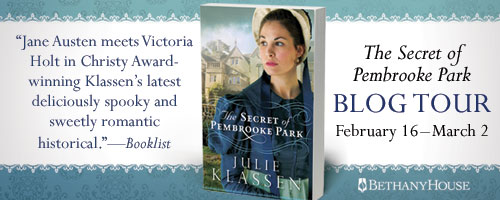
Today we are celebrating Ms. Klassen’s most recent book, The Secret of Pembrooke Park, currently on a blog tour sponsored by Laurel Ann at Austenprose, and where this book was awarded “Best Regency Era novel of 2014.” [the blog tour goes from February 16 – March 2nd]
In the spring of 1818, twenty-four-year-old Abigail Foster fears she is destined to become a spinster. Her family’s finances are in ruins and the one young man she truly esteems has fallen for another woman — her younger, prettier sister Louisa.
Forced to retrench after the bank failure of Austen, Gray & Vincent, the Foster family optimistically pool their resources for another London Season for her sister in hopes of an advantageous alliance. While searching for more affordable lodgings, a surprising offer is presented: the use of a country manor house in Berkshire abandoned for eighteen years. The Fosters journey to the imposing Pembrooke Park and are startled to find it entombed as it was abruptly left, the tight-lipped locals offering only rumors of a secret room, hidden treasure and a murder in its mysterious past.
Eager to restore her family fortune, Abigail, with the help of the handsome local curate William Chapman and his sister Leah, begins her search into the heavily veiled past aided by unsigned journal pages from a previous resident and her own spirited determination. As old friends and new foes come calling at Pembrooke Park, secrets come to light. Will Abigail find the treasure and love she seeks…or very real danger?
We are fortunate to have Julie join us here at ‘Jane Austen in Vermont’ for an interview. [Please see below for the Grand Prize Contest and book giveaway details]
Welcome Julie!
JAIV:You heartily credit Jane Austen as the greatest influence in your writing – tell us how and when you first discovered her, and how she has continued influencing you. And what do you think it is about Jane Austen that she is more popular than ever, in both academia and popular culture?
JK: I have been a fan of Jane Austen ever since I fell in love with Colin Firth as Mr. Darcy in the 1995 BBC/A&E adaptation of Pride and Prejudice. Seeing it led me to read all of Jane Austen’s books and in turn, to set my novels in the Regency period, when her books were published. As far as her on-going popularity, no doubt experts could answer that better than I could, but for me her novels’ endless appeal lies in the ideal they depict–family affection, chivalry, romance, and true love triumphing over adversity–things so many of us long for. Jane Austen’s timeless humor is the icing on the cake!
JAIV:You have many references to Jane Austen’s characters in all your novels. The Girl in the Gatehouse for instance, reads like a sequel to Mansfield Park – a young woman sent from her home, her reputation compromised by the seduction of a rake of a man named Crawford – her name is Mariah, her sister Julia [though I do have to say I was happy not to see Mrs. Norris hanging about!].
In The Secret of Pembrooke Park, we have a handsome, intelligent and caring vicar – does he have a Jane Austen model? Tell us something of your research into the Anglican clergy during this time period.
JK: The Girl in the Gatehouse is one of my favorites. I fondly call it my “ode to Jane,” since it has the most nods to Miss Austen. In The Secret of Pembrooke Park, the character of William Chapman was in a great way inspired by Austen’s wry and witty Henry Tilney in Northanger Abbey. (Although he is more like Edward Ferrars in that he hasn’t a living of his own, nor a wealthy benefactor). Mr. Chapman is handsome and humble, godly and kind, but also a man’s man—athletic, good-humored, and hardworking. To research Anglicanism, I read biographies of 19th-century clergymen, attended several Anglican services in the US and England, and consulted the Book of Common Prayer. But it would take much more than that to become expert, so I had a London vicar’s wife read the manuscript to help me avoid errors. Her husband kindly answered questions as needed.
JAIV:You write what is termed “Traditional Regencies” – i.e. more like Jane Austen and Georgette Heyer than Eloisa James and other “bodice-ripper” writers – Romance for sure with lots of butterflies, quivering lips, and stolen kisses, but no explicit sex scenes. [Jane Austen approves heartily!]. Has it been easy to find a publisher for your Christian-based tales? And have your three Christy Awards helped in spreading the word about your books?
JK: When my first novel was published seven years ago, most historical fiction from Christian publishers was set in post-Civil War America. Now, there are many authors writing traditional regencies. Because of this, I am often credited with inspiring the growth of the genre in the inspirational market. I don’t know if the awards have helped or not, but I am certainly grateful and humbled to have won them!
JAIV:Your books all strongly emphasize the power and presence of a Christian God – both your Heroines and Heroes go through times of doubt and loss and then embrace their faith to find themselves. Do you think this aspect of your work limits your readership? How has your own faith influenced your writing?
JK: I came to faith in my twenties. Like the characters in my novels, I have made many mistakes in my life and am still far from perfect. But I have experienced forgiveness and second chances and this naturally weaves its way into my novels. Considering the time period, it would be more unnatural not to include things like church services and family prayers, which were a regular part of Jane Austen’s life as a clergyman’s daughter and common in society in general. As far as limiting readership, that’s the wonderful thing about publishing—we all like different kinds of books. A good thing, too, or we would need only a few authors rather than the broad spectrum writing today! As writers, the content we choose to include—or not to include—affects our readership. Some people avoid steamy novels, for example, and some avoid sweet ones. The books I write reflect the kind of fiction I like to read and who I am as a person. I appreciate reviews like this one from Booklist, that says, “…the author’s deft incorporation of the faith-based component of her story means this well-crafted romance will have wide appeal beyond inspirational romance fans.” And thankfully, this seems to be the case, because I hear from readers from various backgrounds who enjoy the books.
JAIV:Your epigraphs show a wide reading of early women writers, as well as Jane Austen’s works and letters – is there anyone you have read that you have enjoyed as much as Austen or Bronte [I know you love Jane Eyre!] who has influenced your own writing?
JK: Thank you. I also love Elizabeth Gaskell, Frances Hodgson Burnett, and Georgette Heyer. And no one created characters like Charles Dickens!
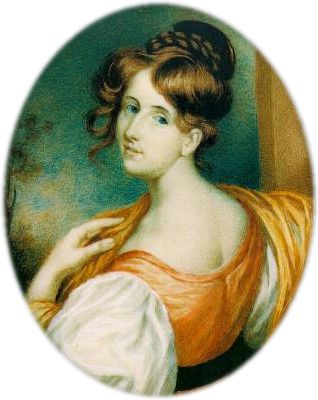
Elizabeth Gaskell (1832) – Wikipedia
–
JAIV:Each of your eight novels has a strong heroine who finds or places herself in a situation that reflects her limited choices as a woman: servant, governess, teacher, medicine healer, a novel-writer [think “Anonymous”!], etc. You cover the topics of unwed motherhood, the life of servitude, loss of inheritance, loss of reputation, herbal medicine, the “evils” of dancing, and more … all about women trapped in social and personal prisons. As a woman of the 21st century, it is difficult to imagine that world of 200 years ago. How do you get it right?
JK: I am sure it helps that I love this time period—my favorite novels, costume dramas, blogs, and research books, are all set in or around this era. I spend a lot of time in Jane Austen’s letters and check my dialogue on an online etymology dictionary to make sure each word spoken was in use at the time. I sometimes have experts read sections or answer questions on certain topics (the military, cricket, blacksmithing, English country dancing, etc.). I am a member of JASNA and learn a lot through their meetings and speakers. And I go to England when I can. It’s an ongoing education! I am certainly fallible and make my share of errors, but I do my research and work hard to accurately portray the era. That said, I write fiction, not history, and occasionally take liberties for the sake of the story. When I do, I acknowledge this in my Author’s Note at the back of the books.
JAIV: The Secret of Pembrooke Park is your longest novel to date, offering again your reader-pleasing combination of mystery, scary gothic elements, and of course Romance, to tell a tale where the reader is never quite sure who the Hero might be and how the mystery will play out – did you know when you set out on your writing journey how it would all be resolved? Which brings us to: can you share with us your writing process? – do you start with a social issue, or a character, or a mystery to be solved?
JK: I submit a synopsis to my publisher in advance, so I have a fairly good idea of how things will be resolved, but there is always room for surprises along the way. My process has evolved over the years and I’m still fine-tuning it. But I usually begin with a situation that intrigues me, e.g. a lady who finds herself working as a wet nurse, or having to go into hiding as a housemaid or, in this case, moving into a long-abandoned manor. From there, I think about what kind of character would be most interesting and satisfying to see in—and grow through—that situation. Specific plot points and twists develop from there.
JAIV:Your next book is already available for pre-order: Lady Maybe, due out in July 2015. Can you tell us something about it? And, what’s up next??
JK: Lady Maybe (Berkley) is about a woman whose startling secrets lead her into unexpected danger and romance in Regency England. And then in December comes The Painter’s Daughter (Bethany House), which is my first novel with a marriage-in-name-only premise.
JAIV: Thank you Julie for so generously sharing your thoughts on writing, your faith, and your forays into the Regency period! I very much look forward to your next two books – such a treat to have two in one year!
*************
Please leave a comment or a question for Julie and you will be entered into the Giveaway Contest!
***************
Grand Giveaway Contest
Win One of Four Fabulous Prizes!
In celebration of the release of The Secret of Pembrooke Park, four chances to win copies of Julie’s books and other Jane Austen-inspired items are being offered.
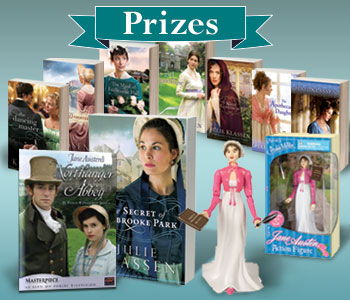
Three lucky winners will receive one trade paperback or eBook copy of The Secret of Pembrooke Park, and one grand prize winner will receive one copy of all eight of Julie’s novels:
Lady of Milkweed Manor (2008)
The Apothecary’s Daughter (2009)
The Silent Governess (2010)
The Girl in the Gatehouse (2011)
The Maid of Fairbourne Hall (2012)
The Tutor’s Daughter (2013)
The Dancing Master (2014)
The Secret of Pembrooke Park (2014)
…and one DVD of Northanger Abbey (2007) and a Jane Austen Action Figure.
To enter the giveaway contest, simply leave a comment on any or all of the blog stops on The Secret of Pembrooke Park BlogTourstarting February 16, 2015 through 11:59 pm PT, March 9, 2015. Winners will be drawn at random from all of the comments and announced on Julie Klassen’s website on March 16, 2015. Winners have until March 22, 2015 to claim their prize. The giveaway contest is open to residents of the US, UK, and Canada. Digital books will be sent through Amazon or Barnes & Noble. Good luck to all!
***************
Author Bio:
Julie Klassen loves all things Jane—Jane Eyre and Jane Austen. A graduate of the University of Illinois, Julie worked in publishing for sixteen years and now writes full time. Three of her books have won the Christy Award for Historical Romance. She has also been a finalist in the Romance Writers of America’s RITA Awards. Julie and her husband have two sons and live in St. Paul, Minnesota. Learn more about Julie and her books at her website, follow her on Twitter, and visit her on Facebook and Goodreads.
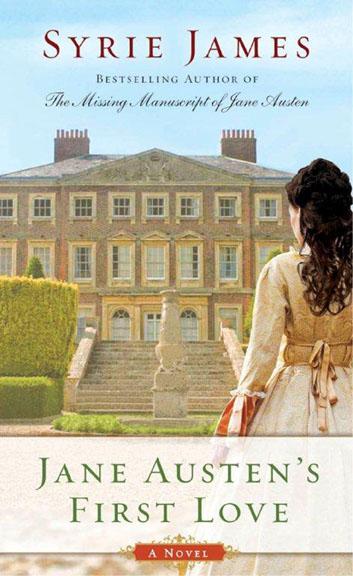
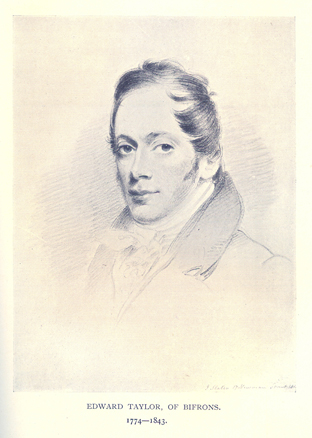
Syrie James’s new work, Jane Austen’s First Love, tells the tale of one Edward Taylor as a possible first love, pre-Tom Lefroy, for Jane Austen. It is fiction, but there is too much truth in the story, based largely on the few comments Austen made in letters to her sister Cassandra and James’ in-depth research into Taylor’s life, to have us shelve this book as merely a pretty fiction.
Syrie also wrote in more detail about Edward Taylor here: http://englishhistoryauthors.blogspot.com/2014/12/edward-taylor-of-bifrons-jane-austens.html – Ron Dunning, of Jane Austen genealogy fame, on reading about Syrie’s book, did some research into this Edward Taylor and has found some amazing connections to Jane Austen’s family – you will see that though Jane may not have had Edward Taylor for herself, future generations saw the Austen and Taylor families very much entwined… so here is Ron to tell us all about it. And thank you Ron for sharing this with us!
*************
A Postscript to Jane Austen’s First Love, by Ronald Dunning
Jane Austen may have been unlucky in her love for Edward Taylor, but four members of his family were more receptive to the attentions of hers. It can be illustrated in a drop-chart of the descendants of Edward Taylor’s parents, Edward Taylor the elder, and Margaret Taylor, to be found on the following link [and see below for an abbreviated version so you can follow the generations]: http://wc.rootsweb.ancestry.com/cgi-bin/igm.cgi?op=DESC&db=janeausten&id=I17370
Bifrons Park, Kent
The number given to each person indicates the level of descent, with the elder Edward and Margaret in the first position. Their daughter Charlotte [JA’s Edward Taylor’s sister] married the Rev. Edward Northey, a Canon of Windsor, and two of that couple’s daughters married sons of Edward (Austen) Knight.
I. The first, Charlotte Northey, married Henry Knight [son of JA’s brother Edward], after his first wife, Sophia Cage, had died. Poor Charlotte had a very short married life too, dying three years later. Their one daughter, Agnes Charlotte Knight, married Narborough Hughes D’Aeth. Agnes had the good fortune that her mother lacked, and lived a long life of ninety years, during which she bore at least thirteen children.
The surname D’Aeth is pronounced Death by the family. I’m told that during the Second World War a Commander D’Aeth of the Royal Navy was promoted to Captain, but his men refused to serve under a Captain Death – so he felt it was best to change his surname. [One plug, if I may – the names Narborough and Cloudesley were given to many boys born to the D’Aeth family, and the reason is interesting. I wrote about it in an article, to be found here: http://www.janeaustensfamily.co.uk/articles/longitude.html]
II. Returning to the chart, Charlotte Northey’s sister, Mary Northey, married Henry Knight’s brother, the Rev. William Knight. Mary was, like her sister, a second wife, and more than twenty years younger than William. She became the step-mother to his eight children, and bore three daughters of her own, those on the chart. Unfortunately she too was visited by tragedy – the daughters, aged between two and five, all died within a week of one another, from smallpox.
III. There were two further connections, both among the descendants of Jane Austen’s fondly-doted-upon Edward Taylor. (Edward is half-way down the chart, the second person with the generational number 2.) His great-granddaughter Dorothy Mary Deedes (generation 5) married Lionel Charles Edward Knight, a great-grandson of JA’s brother Edward Austen Knight. Fortunately, there is no need to report a family tragedy here, since she lived into ripe old age.
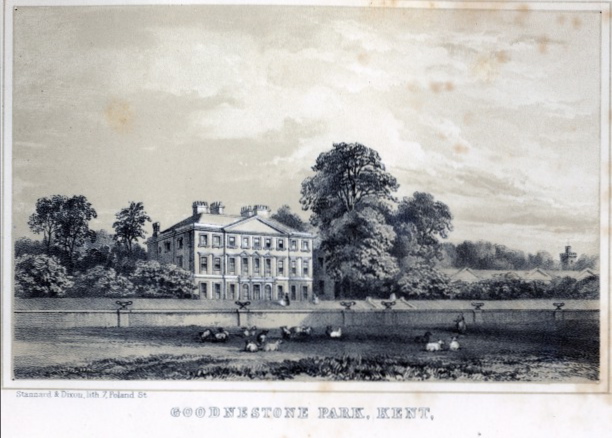
IV. The fourth connection is less obvious – still a descendant of the younger Edward Taylor, but not a person who married a Knight. Nevertheless she brings the story full circle. Dorothy Mary Deedes’s brother, Herbert William Deedes [so Edward Taylor’s great-grandson, but also the great-great-nephew of Edward Austen Knight’s wife Elizabeth Bridges – confused enough now??], had a daughter who is simply identified in the chart as ‘Living Deedes,’ because she is still living. She is the dowager Lady FitzWalter of Goodnestone Park – whence Lady Bridges wrote to announce the betrothal of her daughters, one of them her daughter Elizabeth who married Edward Austen Knight! [see Syrie’s post here on Lady Bridges’ letters] With the Austen pedigree, where one story ends, another begins – Lord and Lady FitzWalter were cousins, both descended from the Bridges. But let’s leave it for another time …
************
Thank you Ron for this! – I append here a portion of the genealogy chart that shows these connections – please visit Ron’s genealogy page http://wc.rootsweb.ancestry.com/cgi-bin/igm.cgi?op=DESC&db=janeausten&id=I17370 for the full chart and links from each name – it is all quite daunting, and why I am showing here only the names that connect Taylor and Jane Austen!
1 Edward TAYLOR of Bifrons; Rector of Patrixbourne b: 26 AUG 1734 [JA’s Edward Taylor’s father]
+ Margaret TAYLOR (LATER PAYLER) b: ABT 1743 d: 27 APR 1780
2Charlotte TAYLOR d: 19 FEB 1837 [Edward Taylor’s daughter]
+ Edward NORTHEY MA, Canon of Windsor b: 22 OCT 1754 d: 18 FEB 1828
3Charlotte NORTHEY d: 28 JUN 1839 [Edward Taylor’s grand-daughter]
+ Henry KNIGHT b: 27 MAY 1797 d: 1843 [son of Edward Austen Knight, JA’s brother]
4 Agnes Charlotte KNIGHT b: 1837 d: 1927 + Narborough Hughes D’AETH of Knowlton Court, Kent; JP, DL, MA b: ABT 1821 d: 1886
5 Lewis Narborough Hughes D’AETH b: 13 MAR 1858 d: 21 OCT 1920
+ Eleanor Frances SNEYD b: ABT 1866
3 Mary NORTHEY b: ABT 1820 d: 07 DEC 1854 [Edward Taylor’s grand-daughter]
+ William KNIGHT Rector of Steventon b: 10 OCT 1798 d: 05 DEC 1873 [son of Edward Austen Knight, JA’s brother]
4 Mary Agnes KNIGHT b: 1843 d: 15 JUN 1848
4 Cecilia KNIGHT b: 1844 d: 09 JUN 1848 4 Augusta KNIGHT b: 1845 d: 09 JUN 1848
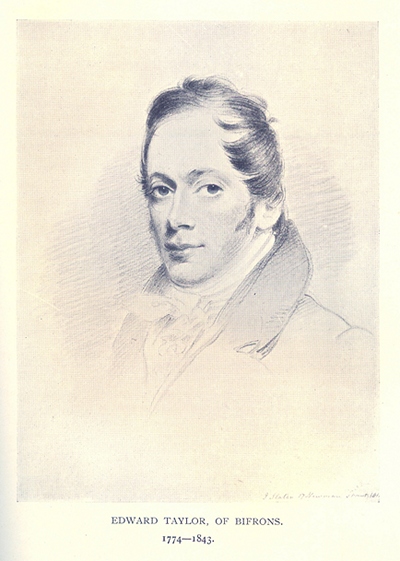
2 Edward TAYLOR Esq., of Bifrons, co. Kent; MP for Canterbury (1807-1812) b: 24 JUN 1774 d: 22 JUN 1843 [this is JA’s Edward Taylor, brother to Charlotte Taylor – her daughters Charlotte and Mary each married Jane Austen’s nephews Henry and William as shown above]
+ Louisa BECKINGHAM
3 Emily Octavia TAYLOR
+ William DEEDES of Sandling Park, co. Kent; JP, DL, MP for East Kent b: 17 OCT 1796 d: 30 NOV 1862
4 Louisa DEEDES
4 Emily DEEDES
4 Mary DEEDES
4 William DEEDES b: 11 OCT 1834
4 Herbert George DEEDES King’s Royal Rifle Corps; of Saltwood Castle b: 28 SEP 1836 d: 05 MAY 1891
+ Rose Elinor BARROW
5 Dorothy Mary DEEDES [great-grand-daughter of Edward Taylor]
+ Lionel Charles Edward KNIGHT b: 13 NOV 1872 d: 29 JAN 1931 [great-grandson of Edward Austen Knight, Jane Austen’s brother]
6 Elizabeth Margaret KNIGHT b: 12 MAY 1909 d: 1996
+ Ian Charles Rose ROSE d: 11 DEC 1962
5 Herbert William DEEDES of Galt, Hythe, co. Kent, and formerly of Sandling Castle and Saltwood Castle
+ Melesina Gladys CHENEVIX-TRENCH JP b: 11 SEP 1884 d: 16 JAN 1966
6 William Francis DEEDES Lord Deedes of Aldington (Kent); Editor of the Daily Telegraph b: 1913 d: 2006
6 Living DEEDES [dowager Lady FitzWalter of Goodnestone Park]
+ FitzWalter Brook PLUMPTRE 21st Baron FitzWalter b: 15 JAN 1914 d: 14 OCT 2004
*************************
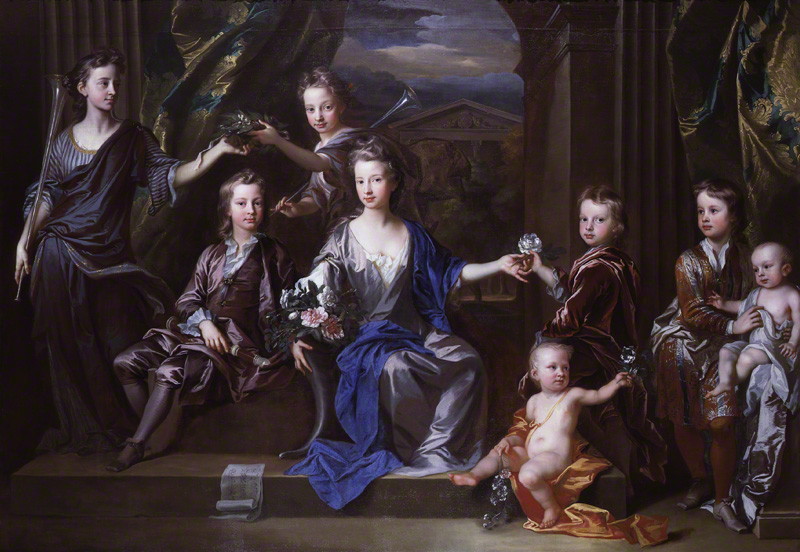
Is your head spinning yet??! If you have questions, please ask away – and any comments on Syrie’s original post will qualify you for the Grand Giveaway – deadline is tonight December 21 at 11:59pm. And just to make your head continue in its spin, here is a portrait of “The Children of John Taylor of Bifrons Park,” by John Closterman, 1696? [from the National Portrait Gallery] – one of these boys is presumably Jane’s own Edward Taylor’s grandfather Herbert Taylor [though he seems to have been born in 1698, so perhaps the dating of the portrait is off? – more questions to ponder!]
You have doubtless been for some time in expectation of hearing from Hampshire, and perhaps wondered a little we were in our old age grown such bad reckoners but so it was, for Cassy certainly expected to have been brought to bed a month ago: however last nightthe time came, and without a great deal of warning, everything was soon happily over. We have now another girl, a present plaything for her sister Cassy and a future companion. She is to be Jenny, and seems to me as if she would be as like Henry, as Cassy is to Neddy. Your sister thank God is pure well after it, and send her love to you and my brother, not forgetting James and Philly…
[Letter from Mr. Austen to his sister Philadelphia Walter, December 17, 1775, as quoted from Deirdre Le Faye, Jane Austen, A Family Record, Cambridge, 2004, p.27.]
*************
In celebration of Jane Austen’s birthday today, JASNA has published its annual Perusasions On-Line Vol.35, No. 1 (Winter 2014). Click here for the Table of Contents to yet another inspiring collection of essays, some from the 2014 AGM in Montreal on Mansfield Park, and other “Miscellany” – all about Jane Austen…and perfect winter reading material…!
“The summer of 1791 is so firmly fixed in my memory that I believe I can never forget it; every detail is as fresh and vivid as if it occurred only yesterday, and looking back, there are times when it seems as if my life never really began until that moment – the moment when I first met him.”
And so begins Jane Austen’s First Love…
Gentle Readers: As part of her Holiday Blog Tour, Syrie James joins us today to answer a few questions about her latest book Jane Austen’s First Love. Syrie has based her tale on the real-life Edward Taylor, mentioned by Austen in her letters – he may have been her never-forgotten First Love and hence perhaps a model for her very own Mr. Darcy. Today Syrie tells us a bit about her research into Edward Taylor and his world and a few thoughts on her favorite Austen books in her own collection. Please see below for the Grand Giveaway Contest information…
JAIV: As far as I can tell, there are three references to Edward Taylor in Jane Austen’s letters:
-Ltr. 6 of Sept 15-16, 1796, where she writes ““We went by Bifrons, & I contemplated with a melancholy pleasure, the abode of Him, on whom I once fondly doated.”
-Ltr. 14 of Dec 18-19, 1798, where she writes the news of Taylor’s possible inheritance; and
-Ltr. 25 of Nov 8-9, 1800, on news of his possible marriage to a cousin and where she makes mention of “those beautiful dark Eyes” [he marries someone else in 1802]
Can you tell us something of the “ah-ha” moment that prompted you to look into this “fondly doated” upon young man of the “dark Eyes” – and finding nothing much, decided to pursue an extensive research project to learn everything you could about him and his family?? When were you held captive by the idea that Jane Austen indeed could have fallen madly in Love with this young man??
SJ: Sure, Deb! The “ah-ha” moment occurred when I was re-reading the above-quoted letter that Jane wrote to her sister Cassandra in Sept. 1796. When I read that line, I sat up in my chair in stunned excitement. Who was Jane talking about? What was Bifrons? Who was the “Him” she referred to? The way she phrased it, whoever it was, it seemed very clear that Jane had once been crazy in love with “Him.”
I quickly learned that the “Him” was a young man named Edward Taylor, and the “abode” was Bifrons Park, the estate in Kent he would one day inherit. To my frustration, there was almost no other information about Edward Taylor in Austen biographies, even though there were those two other mentions of him in later letters that also hinted at how fond she was of him. I knew Jane met him as a teenager while visiting in Kent, but that was about it. So I delved into extensive research—and I’m excited to say that I uncovered his true story. What I learned was groundbreaking. He was an extraordinary young man, and it became very easy to see why Jane fell head over heels for him.
JAIV: I don’t want to ask many questions about the book so as not to give away too much of its plot [no spoilers here!], but I would like to ask, how difficult [or easy!] was it for you to enter into Jane Austen’s head and essentially become her at the age of fifteen? And to put on paper what would be this 15-year-old’s first-person narrative?
SJ: I had such fun writing about Jane Austen at age fifteen! I started with all the qualities she clearly possessed as a grown woman: fierce intelligence, a great (and sometimes snarky) sense of humor, boundless imagination, a love of fashion (governed by a tiny budget), and a driven need to succeed, all tempered by sensitivity and deep affection for those she loved. I then imagined her as a young woman based on what I knew of her life: she grew up in a home filled with noisy, active boys, was educated by them side-by-side, and was included in their sports and games. The juvenilia she wrote as a teenager is also lively and hilarious, an indication of her youthful personality. As with all my other Austen novels, I re-read her work over and over during the composition of this book, to keep her voice in my head.
–
JAIV: Your research interests me a great deal – I know you found previously unknown facts about what appeared to be a very shadowy figure in Jane Austen’s life, and were from there able to fashion a story of possible truth, a lovely weaving of fact and fiction – you have already written about this on several sites and blogs [including here at Jane Austen in Vermont: https://janeausteninvermont.wordpress.com/2014/08/18/guest-post-syrie-james-on-jane-austens-first-love-goodnestone-park-and-the-bridges-family/ ] … so I’d rather ask you a few questions about your own Austen library:
– What do you consider the best, the I-cannot-live-without, book by or about Jane Austen in your collection?
SJ: That’s hard—I have hundreds of Austen-related books. But I guess the one I turn to the most is Jane Austen’s Letters, edited by Deirdre Le Faye. It’s the world’s best window into Jane Austen’s mind, heart, and soul.
JAIV: What book(s) would you say you especially treasure? In the two categories of older / collectible, and more recent works?
SJ: OLDER/COLLECTIBLE:
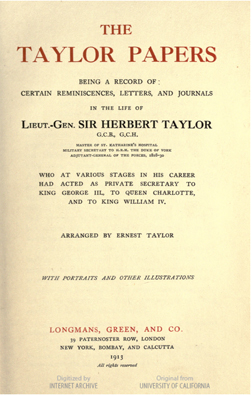
I treasure The Taylor Papers (1913), the rare book I discovered when researching Edward Taylor. A collection of memoirs and letters written by Edward’s brother, Sir Herbert Taylor, it filled in a wealth of details about the Taylor family and the children’s extraordinary and well-traveled childhood, enabling me to understand who Edward Taylor was when Jane Austen met him—and why she adored him.
I also dearly treasure my illustrated set of Jane Austen’s classics (1892, Little Brown & Company). Unfortunately it only includes five of her novels—it’s missing my favorite, Pride and Prejudice.
And I treasure The Brontes: Life and Letters (1908) edited by Clement Shorter, a two-volume work containing all of Charlotte Brontë’s correspondence—it was invaluable when I was writing my novel The Secret Diaries of Charlotte Brontë.
MORE RECENT PUBLICATIONS
Among my favorites (they’re still all older books!) are a whole shelf full of hardcover annotated versions of a great many classics, from Pride and Prejudice, Anne of Green Gables, and Dracula, to the 3-volume set The New Annotated Sherlock Holmes.
JAIV: What title would you most like to own, that either you have been unable to locate or find it is unattainable??
SJ: Pride and Prejudice, (1892, Little Brown & Company) to complete my illustrated set of Jane Austen’s classics.
JAIV: Ah yes! The elusive missing volume – I have a few of those myself!
All this research, invaluable for your fictional tale, should be made available to Austen scholars! – do you intend to write an article about Taylor and his family for one of the Jane Austen publications? [you must!]
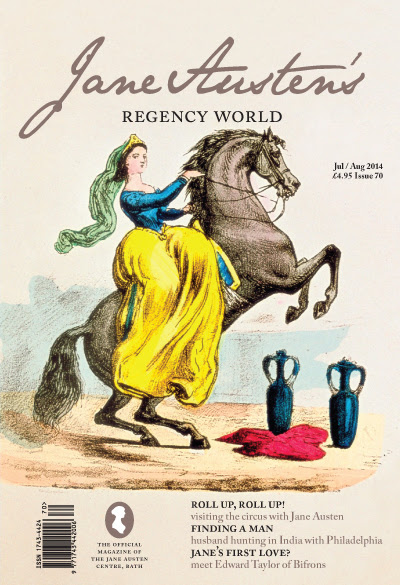
SJ: Actually I did write just such an article. Entitled “Jane’s First Love?” the six-page article with lovely images was published in the July/August 2014 issue of Jane Austen’s Regency World Magazine.
JAIV: Yes, I read that article Syrie – I do hope everyone is able to read it as well.
Your novel tells of Austen before she met Tom Lefroy, the young man we most often hear as being her first and long-held Love [and further rendered into “truth” by the movie ‘Becoming Jane’…]; your book The Lost Memoirs of Jane Austen tells the tale of her mysterious love met at the sea-side in later life. Can you tell us what’s up next??
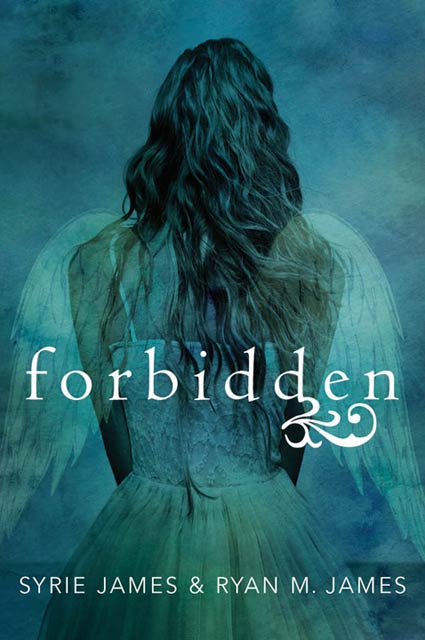
SJ: I have a few other Austen-tales in mind! At the moment, though, I’m hard at work co-writing the sequel to Forbidden with my talented son, Ryan James.
JAIV:Excellent news!
Now, I just have to ask Syrie, as I know you love the movies: if your book was to become a movie, who would you cast in the major roles?
SJ: For Jane Austen, I think Saoirse Ronan, Hailee Steinfeld, or Kaya Scodelario could be a good choice. For Edward Taylor I’d be thrilled to have the role played by Jamie Blackley (from the film IF I STAY) or Douglas Booth, who played Romeo in ROMEO AND JULIET (2013.)
Hailee Steinfeld and Douglas BoothJamie Blackley
JAIV:I can see that you have thought this through – and all very engaging choices – this book is a sure candidate for a book-to-movie venture, don’t you think?! – Anything else you might like to add Syrie??
SJ: Thank you so much for having me here today, Deb. I’m excited to share Jane Austen’s First Love with the world, just in time for the holidays! Readers, do you have any questions for me? Any specific thoughts about Jane Austen’s First Love, or my other books? I’d love to hear!
**********
Thank you Syrie for joining us today! If you have any questions or comments for Syrie, please respond in the comment box below to enter into the Grand Giveaway Contest – all information is below:
Book Blurb: In the summer of 1791, fifteen-year-old Miss Jane Austen is determined to accomplish three things: to do something useful, write something worthy and fall madly in love. While visiting at Goodnestone Park in Kent for a month of festivities in honour of her brother’s engagement to Miss Elizabeth Bridges, Jane meets the boy-next-door — the wealthy, worldly and devilishly handsome Edward Taylor, heir to Bifrons Park, and hopefully her heart! Like many of Jane’s future heroes and heroines, she soon realises that there are obstacles — social, financial and otherwise — blocking her path to love and marriage, one of them personified by her beautiful and sweet tempered rival, Charlotte Payler.
Unsure of her own budding romance, but confident in her powers of observation, Jane distracts herself by attempting to maneuver the affections of three other young couples. But when her well-intentioned matchmaking efforts turn into blundering misalliance, Jane must choose between following her own happily-ever-after, or repairing those relationships which, based on erroneous first impressions, she has misaligned.
Syrie James, hailed as “the queen of nineteenth century re-imaginings” by Los Angeles Magazine, is the bestselling author of nine critically acclaimed novels that have been translated into 18 languages. Her books have been awarded the Audio Book Association Audie, designated as Editor’s Picks by Library Journal, named a Discover Great New Writer’s Selection by Barnes and Noble, a Great Group Read by the Women’s National Book Association, and Best Book of the Year by The Romance Reviews and Suspense Magazine. Syrie is a member of the WGA and lives in Los Angeles. Please visit her at syriejames.com, Facebook or say hello on Twitter @SyrieJames.
*****************
GIVEAWAY DETAILS:
Grand Giveaway Contest: Win One of Five Fabulous Jane Austen-inspired Prize Packages
To celebrate the holidays and the release of Jane Austen’s First Love, Syrie is giving away five prize packages filled with an amazing selection of Jane Austen-inspired gifts and books!
To enter the giveaway contest, simply leave a comment here at Jane Austen in Vermont, or on any of the other blog stops on the Jane Austen’s First Love Holiday Blog Tour: http://www.syriejames.com/LatestNewsPageNEW.php
Increase your chances of winning by visiting multiple stops along the tour! Syrie’s unique guest posts will be featured on a variety of subjects, along with fun interviews, spotlights, excerpts, and reviews of the novel. Contest closes at 11:59pm PT, December 21, 2014. Five lucky winners will be drawn at random from all of the comments on the tour, and announced on Syrie’s website on December 22, 2014. The giveaway contest is open to everyone, including international residents. Good luck to all!
Announcing today the winners of the book giveaway of Sarah Ozcandarli’s Revisit Mansfield Park, How Fanny Married Henry – you can see the original post here.
Sarah has kindly offered two kindle copies of her book, and the winners are:
1. Kerri Spennicchia, who wrote:
As one who has dated multiple Henry’s over the years, I have always agreed with Austen: that he should be tossed to the curb. (However, that doesn’t mean I think Fanny should be saddled with Edmund, after all, he too is a mess.)
I look forward to discovering what life would be like for Fanny should she have been persuaded to marry Henry. (Rather, I look forward to discovering how “you” think this story will progress if they had married.)
2. Allison Sullivan, who wrote:
Oh, I love reimagined classics! This sounds very interesting – going on my kindle wishlist right now!
Congratulations to you both! – you are in for a treat!
Please email me as soon as possible with your contact info and that you indeed have a kindle and Sarah will arrange for your free copy. If you don’t have a kindle, let me know and I will select someone else.
Thanks all for your comments and to Sarah for the giveaways!
UPDATE: The deadline to comment and win a kindle copy of Revisit Mansfield Park, How Fanny Married Henry has been extended until next Sunday November 30, 11:59 pm due to the holiday – winner will be announced December 1st. Sarah has offered a second copy of her book as an incentive to comment! Happy Thanksgiving all!
****************
Gentle Readers: I invite today to ‘Jane Austen in Vermont’ Sarah Ozcandarli, who has written a story reimagining the ending of Mansfield Park, an ending about which all of us, including Jane Austen, have pondered the “what if…?” Her book is titled Revisit Mansfield Park, How Fanny Married Henry – I confess to not having finished the book as yet – it is now on my kindle awaiting a moment to give it the time it deserves (I will say that the first three chapters very nicely summarize the plot and characterizations of Mansfield Park).
Sarah contacted me a few weeks ago to say that a number of my links on the blog led to the dreaded “oops! – where did you find such a link?” – because as all we bloggers know, who has time to go back and check all the links we ever have put out there, links that go nowhere – such a disappointment to the reader – I wonder always, where does this information go to? Some cyberspace default-filled world with thoughts and ideas and information no longer accessible – it is all quite daunting really, isn’t it?? – but I did go in and remove or edit some of these links Sarah told me about, and in our conversation she told me she had written a tale of Mansfield Park with the plot line that Fanny and Henry do end up together (no spoilers here, this outcome, as you see, is in the title!), as do Edmund and Mary – not an uncommon thought among those people largely disappointed with the lacklustre ending of Mary going off to London, Henry off with Maria and then on to his surely dissipated life (a life Fanny could have salvaged if she had only given him the chance he asked her for), and Fanny and Edmund riding off into the sunset of boredom. So I give you a post from Sarah about how her love of Jane Austen began, and what it was about Mansfield Park that made her want to change the ending. Please leave your comment or question for Sarah to win a kindle version of her book – see details below!
***************
First falling in love . . .
“You will not know the day or the hour”, says St. Matthew, but if the agent is Masterpiece Theatre in the year 1981, the day will Tuesday and the hour 8:00 pm. I was toiling through my last semester at university on that fateful night, when there were two contenders for my attention: Electricity & Magnetism II and the BBC’s Pride & Prejudice. I wanted to study E&M, but my housemates Meg and Laurie were determined that I should be acquainted with Jane Austen. They were two against one, but we were all winners, for I fell in love with Lizzy and Darcy and their creator about fifteen minutes into the program.
Once graduated, and free to read according to my own inclinations, Jane Austen quickly became my first favorite among writers and has never descended from that pedestal. I read all I could find about her life and family, I devoured her letters, but oddly enough, I never noticed the vast collection of Austen-related news, fact, and opinion on the internet. One day in 2012 I googled “white soup” and read through one blog, and then another, and realized that our respect for the greatest novelist in the English language need not prevent us from using her characters to people our own stories!
Then writing a book . . .
That being so, I could fulfill my wish (and Cassandra Austen’s as well) that in Mansfield Park Fanny Price should be allowed to marry Henry Crawford, instead of Edmund Bertram. After all Jane herself had written that if Henry had “persevered, and uprightly, Fanny must have been his reward,” and with Jane’s and Cassandra’s opinions of Henry duly noted I was emboldened to write a different ending for Mansfield Park – a sort of Volume III(b) – with plans for a sequel to tackle Edmund and Mary’s problems.
The first difficulty of the story I wanted to tell was that Fanny justifiably disliked and distrusted Henry, and had no
CE Brock -Mansfield Park – Mollands
conception that his interest in her was genuine until Sir Thomas informed her that Henry had made “decided proposals” for her. When Henry left Mansfield a few days later he had achieved very little in his quest to change Fanny’s opinion of him. When next they meet, Henry was in Portsmouth to visit Fanny, and as he took his leave of her, he nearly begged her to advise him to return to his work at Everingham. In Mansfield Park Fanny rather unkindly dismissed Henry’s plea; in my story Fanny observed that:
“Henry had said he would show Fanny by his constancy that he deserved her, and now, when all her friends at Mansfield, excepting perhaps her aunt, had forgotten her even more thoroughly than she had anticipated that they would, here was Henry Crawford, as constant as he had declared he would be, and asking her advice.”
Fanny’s judgment, though in all respects sound, was only once sought in all of Mansfield Park. Edmund asked Fanny to approve his participation in Lovers’ Vows – though Edmund was well aware that Fanny would not approve – and having gotten her opinion, he ignored it. Henry’s request was a much greater compliment, not least because he intended to abide by her advice; he truly wanted to be encouraged to do right by his responsibilities at Everingham. This, I think, is the pivotal moment for Henry and Fanny, when they will move forward together if Fanny tells Henry her opinion, or stall out if she does not.
A chance to win . . .
Dear Readers, please comment or leave a question for me to be entered into the giveaway of the Kindle version of Revisit Mansfield Park, How Fanny Married Henry. [see details below]
Revisit Mansfield Park for Kindle – It is available only in English, but can be purchased from Amazon in the USA, England, Germany, France, Spain, Italy, Japan, India, Canada, Brazil, Mexico and Australia, and may be read for free with the Prime or Kindle Unlimited Programs.
****************
About the author: Sarah Ozcandarli graduated in 1981 from Carnegie-Mellon University with a BS in Physics and English, and went back three years later for an MS in Industrial Administration. Her varied career took her to Pittsburgh, Philadelphia, New York City, Los Angeles and Boston, where she sought and found her Mr. Darcy. They were married in 1996 and live near Boston with a large menagerie of wild and domesticated critters, some of which are now hibernating.
Book Giveaway! Please leave a comment or question for Sarah by Sunday Nov 23, 2014, 11:59 pm to be entered into a random drawing to win the kindle version of Sarah’s book, available to all, but you must of course be a kindle user!
You might consider the question Sarah asks: In your reading of Mansfield Park, have you ever thought that Fanny should have ended up with Henry Crawford and Edmund with Mary? And if so, why?
“How did you find such wonderful letters? I love reading letters from the past. The style is so beautiful. It makes you see the reality of their time.”
Please email me within the next 36 hours with your contact info and the book will be posted to you directly from the publisher – with many thanks to Berkley for the giveaway.
Thank you Syrie for your wonderful post on these Fanny Bridges’ letters – and all your responses to the comments. Sending you very best wishes for the success of this, your latest book – I wonder what is next on your writing desk?!
Just a reminder about the giveaway for Syrie James’s newest book, Jane Austen’s First Love. I am extending the deadline for another week, through the holiday weekend until Tuesday September 2, 2014, with the winner announced Wednesday September 3. Please either comment on this post or the original post where Syrie wrote about Lady Bridges’ letters on her daughters’ marriages – one of those daughters, Elizabeth, married Jane Austen’s brother Edward Austen (later Austen-Leigh). (Sad to say, Elizabeth died at the age of 35 shortly after the birth of her eleventh child). These letters from Lady Bridges to her friend tell the tale of the desire to marry one’s daughters well – not unlike Mrs. Bennet!
Syrie’s new book is about Jane Austen’s acquaintance with Edward Taylor whom she met while visiting the Bridges’s home at Goodnestone Park in Kent. It is the imagined story of Jane Austen’s first love, based on extensive research. Syrie’s previous books on Jane Austen have been first class entertainments as she has taken us into the Regency world we all so love to visit! – and I highly recommend this new work, where we have real-life and fiction so beautifully intertwined.
Please comment or ask Syrie a question either here or on the previous post:
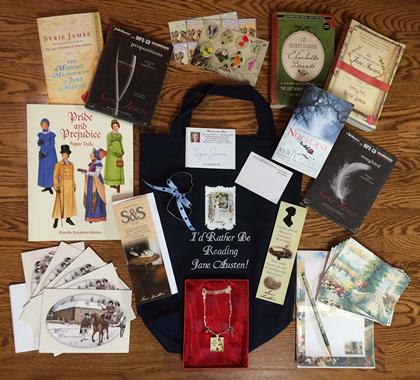
About the Author: Syrie James, hailed by Los Angeles Magazine as “the queen of nineteenth century re-imaginings,” is the bestselling author of nine critically acclaimed novels including The Missing Manuscript of Jane Austen (“A literary feast for Anglophiles”—Publisher’s weekly), The Lost Memoirs of Jane Austen (named one of the best first novels of the year by Library Journal), and The Secret Diaries of Charlotte Brontë (Audie Award, Romance 2011; Great Group Read, Women’s National Book Association). Syrie’s books have been translated into eighteen languages. She is a member of the Writer’s Guild of America and a life member of JASNA. Follow Syrie on twitter, visit her on facebook, and learn more about her and her books at syriejames.com.
Best of luck in the giveaway – You have until September 3rd!



















 Jane Austen in Vermont