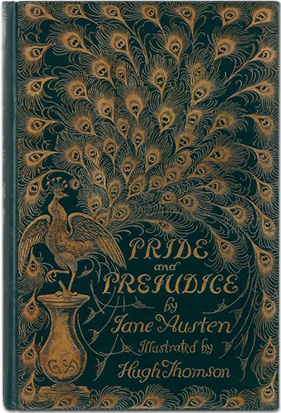
When Jane Austen sold the copyright of her Pride and Prejudice outright to her publisher Thomas Egerton, she, we now know, made the biggest mistake of her life. But hindsight is a dangerous beast, and easy for us to lament this 200 years later. We could also regale Cassandra for selling all the remaining copyrights to Richard Bentley in 1832 for a meager £210 pounds (Bentley also paid the Egerton estate £40 for the P&P copyright). She must have thought it a good bargain at the time – how was she to know that her sister’s novels would continue to be read through the generations, thus granting heirs much in royalty checks.
We don’t really know why Jane Austen chose to sell the Pride & Prejudice copyright rather than publish on commission, the way she published her other works; in all likelihood she didn’t want to take the financial risk. But she really had four options to publish at the beginning of the 19-th century, as did other authors of this time:
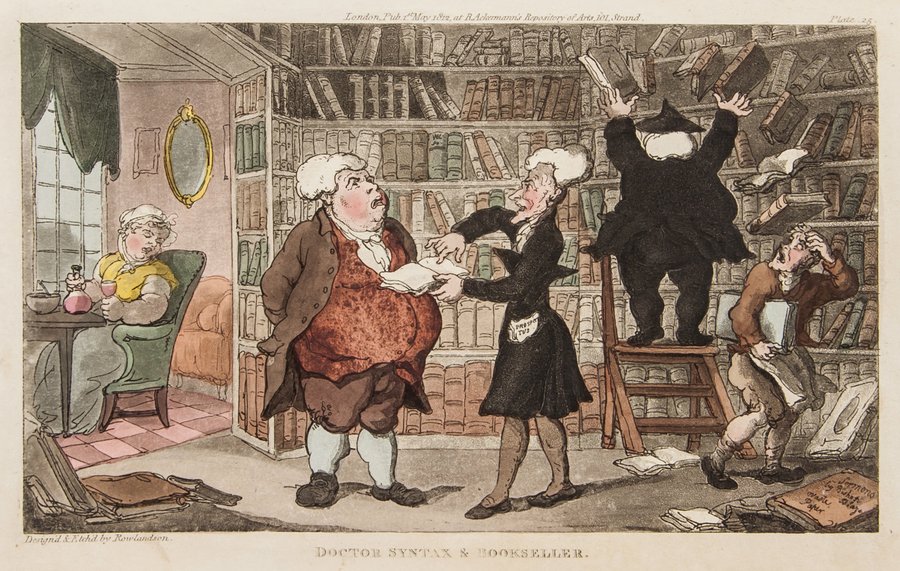
Thomas Rowlandson’s “Dr. Syntax & Bookseller” from William Combe’s The Tour of Dr. Syntax in Search of the Picturesque (1812)
Profit-sharing: the publisher paid for printing and advertising costs; these expenses were repaid as books sold and any profit above those production costs was shared with the author; any loss was absorbed by the publisher. This was a popular way of publishing for unknown authors. Jan Fergus notes that if Austen had used this method for the four novels published in her lifetime, she would have made more money than she did. (Fergus, p. 16)
–
Commission: the author was responsible for all publication expenses – paper, printing, advertising – the publisher distributed the books and took a 10% commission on all copies sold. The author took all the risk here, as if not enough copies sold to cover the costs, the author would be responsible. Austen published all her books this way, excepting her Pride and Prejudice… and from her letters we know that her brother Henry Austen was her financial backer. This seems to have been the most popular way to publish in the early 19-th century, especially for women writers. And it is interesting to note that this form of publishing is in vogue again! – just see all the number of self-published works that appear on Amazon!, this “vanity” publishing no longer less respected than publishing in the traditional way.
–
Sale of Copyright: the author sells the copyright outright to the publisher and is no longer involved. Here the publisher takes all the risk, especially for an unknown author, but also has control over any future editions and can benefit if the book sells well. In the case of P&P, sold to Egerton for £110, Austen would have done better to have published by commission – it went into three editions, though she had no further input in making changes to the text.
–
Subscription: the author would solicit subscribers, who would pay in advance for the promised work and have the privilege of seeing their name in print in the list of subscribers in the work itself. This option usually only worked for well-known and successful authors, or for a work that people might want to see their name identified with. We can look at the concept of modern-day “crowd-funding” as an example of how this works.
***************
It is this last option of publishing that holds our interest today. Jane Austen published anonymously, “By a Lady” (on Sense and Sensibility), or “By the Author of ‘Sense and Sensibility’” (on P&P) (see note below) – she was an unknown authoress and would have had difficulty finding enough willing and wealthy donors to publish by subscription. But Frances Burney, a very successful author at the time, did publish her Camilla (1796) by subscription, the only work she did this way – and this first edition is notable because among the list of 1,058 subscribers (Dow, p. 38) is the name of “Miss J. Austen, Steventon,” only one of two times that Austen’s name appeared in print during her lifetime. She likely paid a guinea for the privilege (Dow, p. 40), and just look at the list on this one page of the illustrious fellow-subscribers!
I have thought for a number of years that this was the only place to find Austen’s name, but Gillian Dow in her article on “Jane, the Subscriber” notes that there is another such title: the non-fiction work Two Sermons by the Rev. T. Jefferson, published in 1808, and where her name is listed as “Miss Jane Austen” and her brother and sister-in-law as “Mr and Mrs Edward Austen of Godmersham.” A look at her letters finds Austen’s references to this Thomas Jefferson (1760-1829) of Tonbridge:
I have read Mr. Jefferson’s case to Edward, and he desires to have his name set down for a guinea and his wife’s for another, but does not wish for more than one copy of the work. [Letter 52. Le Faye, Letters, 4th ed. (2011), p. 132-3.]
And later:
I have now some money to spare, & I wish to have my name put down as a subscriber to Mr. Jefferson’s works. My last Letter was closed before it occurred to me how possible, how right, & how gratifying such a measure would be.” [Letter 54, p. 138]
Thus, we see Jane Austen’s name in print again – one wonders if others might yet surface!
Becoming a Subscriber at Chawton House Library
Chawton House Library
The point of all this is to tell you about a program at Chawton House Library, where you too can become a subscriber! An age-old way of publishing, where you can see your name in print, acquire a copy of a reprint edition of an interesting old title, and support the Chawton House Library in the bargain. Slightly more than a guinea is required of you, but not too much more (a minimum of $50)… You can read about the program and how to donate at the Chawton House Library website here: http://www.chawtonhouse.org/?page_id=58839
“Further to the success of our most recent subscriber publication, The Knight Family Cookbook, which thrilled Subscribers and has proven to be one of the most purchased books in our shop, we are now seeking to progress our latest publication- The Duties of a Lady’s Maid; with directions for conduct, and numerous receipts for the toilette (1825). This facsimile edition, with a new introduction by Mary Ann O’Farrell, will be a fascinating book certain to entertain those who would welcome guidance on how to behave as maid to Lady Catherine De Bourgh – or indeed those who wish to emulate Downton Abbey’s Miss O’Brien. Originally published in 1825, it is a rather rare conduct book offering a unique insight into the lives and duties of servants, as well as the trends and tastes of the Georgian age. Readers can learn how religion should direct a maid in her work, which character traits are essential, and how to keep family secrets. Amusing practical instructions, such as how to dress your lady using padding and bandages to improve her figure and tips on the most advantageous way to display the forehead, are also to be enjoyed.”
[From the CHL website]
Let’s take a peek into this book that you can own in a facsimile edition – no author is noted as you can see: The Duties of a Lady’s Maid; with directions for conduct, and numerous receipts for the toilette (1825).
title pageFrontispiece
Now, I must tell you that you can find this book on Google Books, or at the Hathi Trust – but where is the fun in that? You need this book on your shelf, not only because it is a rare book (it only seems to have been published in this one edition of 1825), but also because you will find the most indispensable information in order to continue on with your life as you know it – after all, we most of us have become our own Ladys’ Maids, haven’t we? – if for any reason you don’t find this all completely relevant (the chapters on cleaning your wardrobe definitely remain so!), then at least it will be a daily reminder of exactly how far we have come. Take a look at the Contents:
CONTENTS _______________
1. DUTIES OF BEHAVIOUR.
-Religion 6
-Honesty and Probity 19
-Diligence and Economy 26
-Attention 39
-Familiarity with Superiors 43
-Good Temper and Civility 50
-Confidence in Keeping Family Secrets 57
-Vanity and Dress 70
-Amusements 84
-Vulgar and Correct Speaking 98
-Change of Place 123
-Courtship 128
2. DUTIES OF KNOWLEDGE AND ART.
-Taste in the Colours of Dress 135
-Carnation 145
-Florid 146
-Fair 147
-Pale 148
-Sallow 149
-Brunette 150
-Artificial Flowers 159
-Taste in the Forms of Dress 162
-Stays and Corsets 175
-Padding, Bandaging, &c, to Improve the Figure 184
-Display of the Forehead 192
-Taste in Head Dresses 199
-Taste in Dressing the Hair 220
-Practical Directions for Hair Dressing, with Receipts. 233
-Cosmetics, &c. with. Receipts 256
-Paints, with Receipts for Rouge, Pearl White, &c 289
-Use and Abuse of Soap 306
-Dress-making and Fancy Needle-work 315
-Care of the Wardrobe, and the Method of Taking out Stains 321
-Method of Cleaning Silks and Chintz, and of Clear Starching, and Getting-up Lace and Fine Linen 324
******************
Some excerpts to entice you:
1. In case you perhaps don’t speak the King’s English – here are some pointers on correcting your shortcomings:
VULGARITIES PECULIAR TO ENGLAND.
The first vulgarity which I shall point out to you as prevalent among the lower orders in England, from Cumberland to Cornwall, is the practice of ending every thing they say with a question. For instance, instead of saying “the bonnet looks very smart,” an English girl will add the question, “an’t it?” or “don’t it?” If this practice of ending what is said by a question, were only employed occasionally, and when it appears necessary, it might be proper enough; but when it is repeated every time a person speaks, as you may observe is the case among the ill-educated all over England, it becomes extremely vulgar. You may thus hear a person say, “I went very quick, did’nt I?” for “I always do, don’t I?” or “Susan worked that very well, didn’t she? she is a good girl, an’t she? and I am very kind to her, an’t I?” You must carefully avoid this vulgar practice of ending what you say with a question, if you are desirous of speaking correctly….
Still more vulgar than either of these is a certain use of the words there and here, along with that and this, as when it is said “that there house,” instead of “that house,” or “this here book,” instead of “this book.” You may, however, without impropriety say “this book here,” or “that house there’s” but never, “this here” nor “that there.” …
One of the very common vulgarities prevalent in England is a peculiarly awkward way of bringing in the name of a person at the end of a sentence, with the words “is” or “was” before it. I cannot describe this more intelligibly, except by an example; for instance, you may hear an ill educated girl say “she was very kind to me, was Mrs. Howard,” instead of correctly saying “Mrs. Howard was very kind to me.” Again, “he is a very worthy man, is Mr. Howard” instead of “Mr. Howard is a very worthy man.” I say that such expressions are not only vulgar but uncouth and awkward, and more like the blunders of a foreigner than a person speaking in her mother tongue; yet nothing is more common than this awkward vulgarity, which I expect you, will never commit after it has been now pointed out to you….
The manner in which certain words are pronounced is also a very evident mark of vulgarity. One of the most remarkable instances of this kind in England is the sounding of an r at the close of words ending in a or o, as when you say “idear” for “idea,” or “fellor” for “fellow,” or “windor” for “window,” or “yellor” for “yellow.” This is extremely difficult to be corrected when once it has become a habit; and so regularly does it follow in every word of similar ending, that you may hear persons say “Genevar” for “Geneva,” as commonly as children say “mammar” and “papar.”
[etc, etc… the Author then goes on to cover the various “Vulgarities in Scotland”…]
***********
2. Mrs. Clay might find a solution to her unsightly freckles with these solutions, Sir Walter would be pleased to know:
CE Brock – Sir Walter Elliot (Mollands)
Freckles.—The sun produces red spots, which are known by the name of freckles. These have no apparent elevation but to the touch it may be perceived that they give a slight degree of roughness to the epidermis. These spots come upon the skin in those parts which are habitually exposed to the air. To prevent freckles, or sunburn, it is necessary to avoid walking abroad uncovered; a veil alone, or a straw hat, is sufficient for most women. There are however others whose more delicate skins require a more powerful preservative. The following is recommended by an intelligent physician:—
Take one pound of bullock’s gall, one drachma of rock alum, half an ounce of sugar candy, two drachms of borax, and one drachm of camphor. Mix them together, stir the whole for a quarter of an hour, and then let it stand. Repeat this three or four times a day, for a fortnight, that is to say, till the gall appears as clear as water. Then strain it through blotting paper, and put it away for use. Apply it when obliged to go abroad in the sunshine or into the country, taking care to wash your face at night with common water, those who have not taken the precautions mentioned above must resort to the means which art has discovered for removing these spots. The following process is recommended as one of the most efficacious for clearing a sunburnt complexion, and imparting the most beautiful tint to the skin ;—at night on going to bed, crush some strawberries upon the face, leaving them there all night and they will become, dry. Next morning wash with chervil water, and the skin will appear fresh, fair, and brilliant.
[Etc, etc – there are several other rather drastic directions…]
*************
3. I must say that the seven pages on “Display of the Forehead” is worth the price of admission alone! But this on making a French dressing for your hair is a must-learn:
Parisian Pomatum.—Put into a proper vessel two pounds and a half of prepared hog’s lard with two pounds of picked lavender flowers, orange flowers, jasmine, buds of sweet briar, or any other sweet scented flower, or a mixture according to your choice, and knead the whole with the hands into a paste as uniform as possible. Put this mixture into a pewter, tin, or stone pot, and cork it tight. Place the vessel in a vapour bath, and let it stand in it six hours, at the expiration of which time strain the mixture through a coarse linen cloth by means of a press. Now throw away the flowers which you have used as being useless, pour the melted lard back into the same pot, and add four pounds of fresh lavender flowers. Stir the lard and flowers together while the lard is in a liquid state, in order to mix them thoroughly, and repeat the first process. Continue to repeat this till you have used about ten pounds of flowers.[my emphasis]
After having separated the pomatum from the refuse of the flowers, set it in a cool place to congeal, pour off the reddish brown liquor, or juice extracted from the flowers, wash the pomatum in several waters, stirring it about with a wooden spatula to separate any remaining watery particles, till the last water remains perfectly colourless. Then melt the pomatum in a vapour bath, and let it stand in it about one hour, in a vessel well corked, then leave it in the vessel to congeal. Repeat this last operation till the watery particles are entirely extracted, when the wax must be added, and the pomatum melted for the last time in a vapour bath in a vessel closely corked, and suffered to congeal as before. When properly prepared it may be filled into pots, and tie the mouths of them over with wet bladder to prevent the air from penetrating. This pomatum will be very fragrant, and form an excellent preparation for improving the gloss and luxuriance of the hair.
[I’m exhausted just thinking about it…] – You might end up looking like this, flowers and all:
[Source: ‘The Flower Garden’ – hand-coloured etched engraving published by M Darly in 1777.
See Bibliodyssey for additional such outrageous hair-dos]
***************
So that gives you a very small inkling of what lies in store in this fascinating little book. You will find insights into the daily life and work of the many rarely seen but obviously-there-lurking-about servants in all of Austen’s novels – what was it like to be the lady’s maid to Lady Catherine or her daughter Anne – dreadful thought! Was it easier being maid to Mrs. Jennings with her overwhelming busyness, or Mrs. Bennet, despite her poor fluttering nerves? We watch Downton Abbey as much for the sometimes more interesting “below-stairs” life than anything that transpires upstairs – and indeed not much changed in servant’s lives from 1825 to the early 1900s. Certainly Anna would have been familiar with this book or something like it.
Think about adding this to your collection of conduct books [everyone should have a collection of conduct books, starting of course with Fordyce’s Sermons, Mr. Collins’ pride and joy in Pride and Prejudice, now published with an introduction by Susan Allen Ford and also available from the Chawton House Library: you can order it here through Jane Austen Books].
Hope I have convinced you of the need to become a subscriber to Duties of a Lady’s Maid – go to http://www.chawtonhouse.org/?page_id=58839 – click on the appropriate link for UK or US contributions. Or think what a great gift this would be for your favorite friend in need of a conduct book of her (or his) own!
The Library will be preparing for publication soon, as the list of subscribers is growing – don’t miss out in seeing your name, or a best friend’s, in print, just like Jane Austen….
1. Dow, Gillian. “Jane, the Subscriber.” Jane Austen’s Regency World 68 (Mar-Apr 2014), 38-43.
2. Fergus, Jan. The Professional Woman Writer.” Cambridge Companion to Jane Austen. Ed. Edward Copeland and Juliet McMaster. Cambridge UP, 1997. See this chapter in both editions of the Cambridge Companion, as well as her Jane Austen: A Literary Life. Macmillan, 1991.
3. The title pages of each of Austen’s works read as follows:
Sense and Sensibility: “By a Lady”
Pride and Prejudice: “By the Author of ‘Sense and Sensibility’
Mansfield Park: “By the Author of ‘Sense and Sensibility’ and ‘Pride and Prejudice’
Emma: “By the Author of ‘Pride and Prejudice,’ &c, &c.”
Northanger Abbey and Persuasion: “By the Author of ‘Pride and Prejudice,’ ‘Mansfield Park,’ &c.”
[Gentle Readers: On a hiatus for a bit, so reposting this from the archives – enjoy!]
“I do not write for such dull elvesAs have not a great deal of ingenuity themselves.”
– Letters, No. 79
Jane Austen wrote the above to her sister Cassandra on January 29, 1813, the day after Pride and Prejudice is published:
There are a few Typical errors – & a “said he” or a “said she” would sometimes make the Dialogue more immediately clear – but “I do not write for such dull elves As have not a great deal of ingenuity themselves.” [the notes remark that this is from Scott’s Marmion: “I do not rhyme to that dull elf / Who cannot image to himself…”]
She could have as soon written “stupid” for her dull elves, as she does in another place in this letter:
The Advertisement is in out paper to day for the first time; – 18s – He shall ask £1-1 for my two next, & £1-8 for my stupidest of all.
I think Jane Austen liked the word “stupid” – it appears in all her writings: the juvenilia, the novels, the letters – and she uses it to great effect. But I would argue that today the word has a more negative connotation, especially when used to describe a person, as in “he is a really stupid man” vs. “this is a stupid movie.” I have been re-reading Pride and Prejudice very SLOWLY and as always, even on this umpteenth read, I find things that amaze – and this time I find myself dwelling on Austen’s “stupids.”
Rowlandson -VADS online
Many of us can call quickly to mind a few of her more famous lines: You can comment below in the “comments” section with: Which book / who said it / to or about whom: 1. “Not that ______ was always stupid — by no means; she learnt the fable of ‘The Hare and Many Friends’ as quickly as any girl in England.” 2. “The person, be it gentleman or lady, who has not pleasure in a good novel, must be intolerably stupid.”
3. “She is a stupid girl, & has nothing to recommend her.”
4. “She had never seen _______ so silent and stupid.”
5. “_____ is as stupid as the weather.”
6. “I feel quite stupid. It must be sitting up so late last night. _____, you must do something to keep me awake. I cannot work. Fetch the cards; I feel so very stupid. ”
7. “If this man had not twelve thousand a year, he would be a very stupid fellow.”
8. “…that he had been sent to sea, because he was stupid and unmanageable…”
********************
And these are only a small sample of Austen’s ‘stupids’ – there are a number more in each novel – it has been interesting to see how and why she uses this term, more freely thrown about in her letters: – just these few here by way of example:
-“We met not a creature at Mrs. Lillingstone’s, & yet were not so very stupid, as I expected, which I attribute to my wearing my new bonnet & being in good looks” [Ltr. 36],
-“And now, that is such a sad, stupid attempt at Wit, about Matter, that nobody can smile at it, & I am quite out of heart. I am sick of myself, & my bad pens.” [Ltr. 53], and
-“I expect a very stupid Ball, there will be nobody worth dancing with, & nobody worth talking to but Catherine; for I believe Mrs. Lefroy will not be there…”[Ltr. 14]
***************
But today I will focus only on Pride and Prejudice, continuing my closer look at the novel throughout this bicentenary year.
We begin by going back to the source, the OED to see how it has been used and its meanings as Jane Austen would have seen it used: [Oxford English Dictionary: www.OED.com ]
Wits Magazine – illus G. Cruikshank – Project Gutenberg
Adj.
1. a.Having one’s faculties deadened or dulled; in a state of stupor, stupefied, stunned; esp. hyperbolically, stunned with surprise, grief, etc. Obs. exc. arch. (poet.). As in Shakespeare’s Winter’s Tale (1623): Is not your Father growne incapeable Of reasonable affayres? Is he not stupid With Age, and altring Rheumes? Can he speake? heare? Know man, from man?
1. b. Belonging to or characterized by stupor or insensibility. Obs. As in Keats Endymion (1818): “My sweet dream Fell into nothing—into stupid sleep.”
1. c. Of a part of the body: Paralysed. Obs.
1. d. Emotionally or morally dull or insensible; apathetic, indifferent. Const. to [compare French stupide à] – As in Steele in the Guardian (1713): “It was a Cause of great Sorrow and Melancholy to me…to see a Crowd in the Habits of the Gentry of England stupid to the noblest Sentiments we have.”
2. As the characteristic of inanimate things: Destitute of sensation, consciousness, thought, or feeling. Obs. As in 1722 W. Wollaston Religion of Nature (1722) – “Matter is incapable of acting, passive only, and stupid.”
3. a. Wanting in or slow of mental perception; lacking ordinary activity of mind; slow-witted, dull. As in J. Addison Spectator (1712) “A Man, who cannot write with Wit on a proper Subject, is dull and stupid.” And Frances Burney in Evelina (1778): “‘Why is Miss Anville so grave?’ ‘Not grave, my Lord,’ said I, ‘only stupid.’”
3. b. Of attributes, actions, ideas, etc.: Characterized by or indicating stupidity or dullness of comprehension. As in J. Jortin Sermons (1771): “Great reason have we to be thankful that we are not educated in such stupid and inhuman principles.”
3. c. Of the lower animals: Irrational. Also of an individual animal, its propensities, etc.: Lacking intelligence or animation, senseless, dull. Obs. As in Goldsmith History of the Earthand Animated Nature (1774): “[The badger] is a solitary stupid animal.”
4. Void of interest, tiresome, boring, dull. As in: Burney, Evelina (1778): “Of all the stupid places ever I see, that Howard Grove is the worst! there’s never no getting nothing one wants.”
5. Obstinate, stubborn. (north. dial.)
B. noun. A stupid person. Colloq. As in Steele Spectator (1712): “Thou art no longer to drudge in raising the Mirth of Stupids…for thy Maintenance.”
******
If we look at the stupids of Pride and Prejudice, we see all of these definitions in their great variety, but the emphasis is on being tiresome, boring as in number 4 above:
CE Brock – Mollands.net
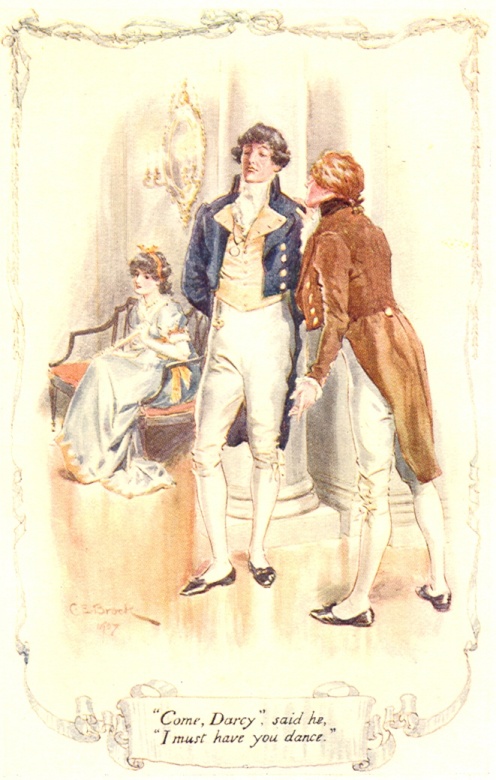
1. “Come, Darcy,” said he, “I must have you dance. I hate to see you standing about by yourself in this stupid manner. You had much better dance.” [vol. I, ch. III]
2. She had been watching him the last hour, she said, as he walked up and down the street, and had Mr. Wickham appeared, Kitty and Lydia would certainly have continued the occupation, but unluckily no one passed the window now except a few of the officers, who, in comparison with the stranger, were become ‘stupid, disagreeable fellows.’ [vol. I, ch. XV]
3. “ Oh! if that is all, I have a very poor opinion of young men who live in Derbyshire; and their intimate friends who live in Hertfordshire are not much better. I am sick of them all. Thank Heaven! I am going to-morrow where I shall find a man who has not one agreeable quality, who has neither manner nor sense to recommend him. Stupid men are the only ones worth knowing, after all.” [vol. II, ch. IV]
from Georgian Index
4. When the gentlemen had joined them, and tea was over, the card-tables were placed. Lady Catherine, Sir William, and Mr. and Mrs. Collins sat down to quadrille; and as Miss De Bourgh chose to play at cassino, the two girls had the honour of assisting Mrs. Jenkinson to make up her party. Their table was superlatively stupid. Scarcely a syllable was uttered that did not relate to the game, except when Mrs. Jenkinson expressed her fears of Miss De Bourgh’s being too hot or too cold .… [vol. II, ch. VI]
5. “Well, he certainly is very agreeable, and I give you leave to like him. You have liked many a stupider person.” [vol. I, ch. IV]
CE Brock – Mollands.net
6. The stupidity with which he was favoured by nature must guard his courtship from any charm that could make a woman wish for its continuance [vol. I, ch. XXII]
7. But why Mr. Darcy came so often to the Parsonage it was more difficult to understand. It could not be for society, as he frequently sat there ten minutes together without opening his lips; and when he did speak, it seemed the effect of necessity rather than of choice — a sacrifice to propriety, not a pleasure to himself. He seldom appeared really animated. Mrs. Collins knew not what to make of him. Colonel Fitzwilliam’s occasionally laughing at his stupidity proved that he was generally different, which her own knowledge of him could not have told her… [vol. II, ch. IX]
8. Wickham will soon be gone; and therefore it will not signify to anybody here what he really is. Some time hence it will be all found out, and then we may laugh at their stupidity in not knowing it before. At present I will say nothing about it.” [vol. II, ch. XVII]
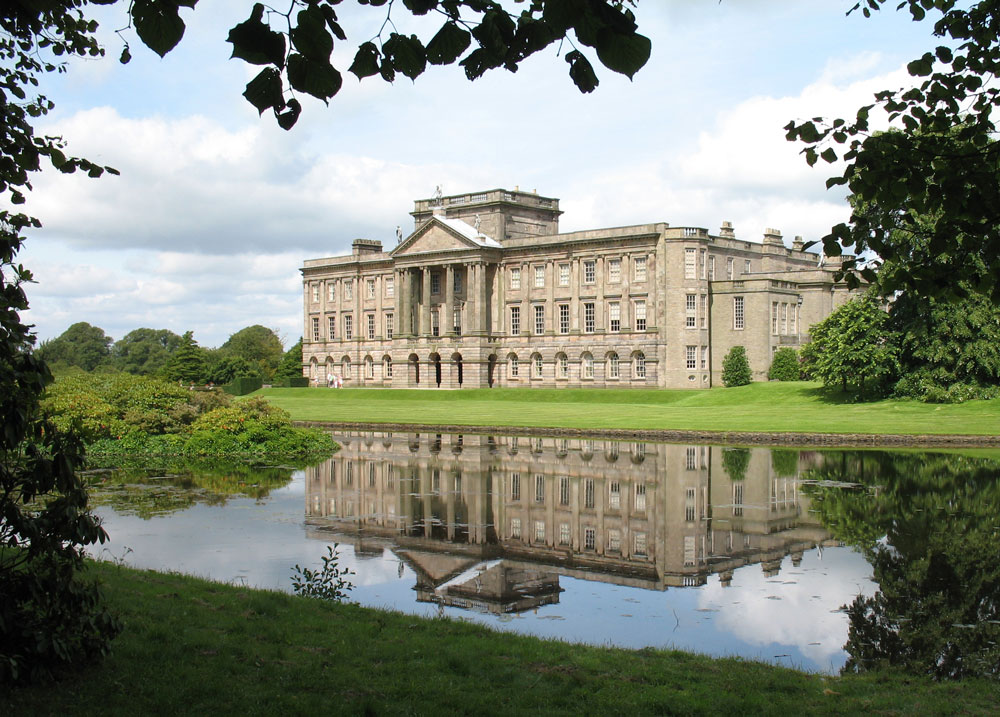
9. Elizabeth was distressed. She felt that she had no business at Pemberley, and was obliged to assume a disinclination for seeing it. She must own that she was tired of great houses; after going over so many, she really had no pleasure in fine carpets or satin curtains. … Mrs. Gardiner abused her stupidity. “If it were merely a fine house richly furnished,” said she, “I should not care about it myself; but the grounds are delightful. They have some of the finest woods in the country.” [vol. II, ch. XIX]
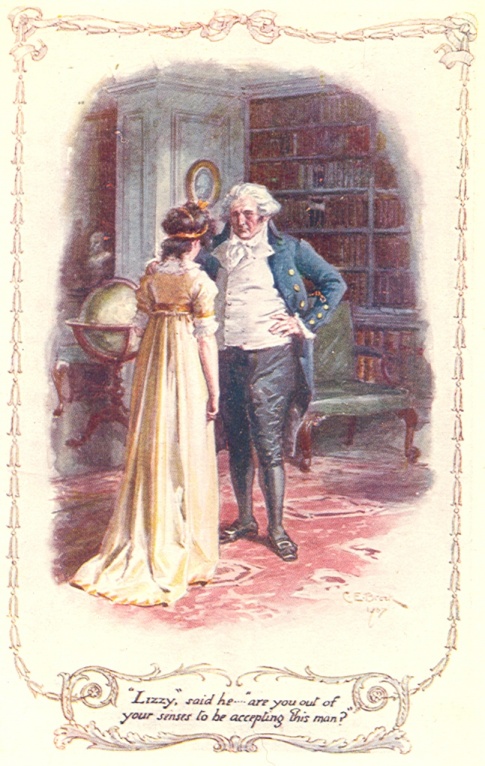
And finally when Mr. Bennet asks Lizzy: “Lizzy,” said he, “what are you doing? Are you out of your senses, to be accepting this man?” – he could as well have called her stupid… [vol. III, ch. XVII]
Note your answers to the eight non Pride and Prejudice quotes at the beginning of this post in the comment area below: how did you do? we shall have no dull elves around here…
Be on the lookout in your mailbox! – the March/April 2015 (issue 74) of Jane Austen’s Regency World magazine is published this week and is being mailed to subscribers. In it you can read about:
The Iron Duke: A major exhibition marks the Duke of Wellington’s triumph at the Battle of Waterloo
A Book’s Life: One of the rare books at Chawton House Library reveals all
Anyone for Pyms? Barbara Pym, the novelist who was known as the “Jane Austen of the 20th century”
Georgian Illnesses: Examining some of the ailments suffered by Jane Austen’s characters
From Daylesford to Delaford: Is there a connection between Warren Hastings and Sense & Sensibility?
*Plus News, Letters, Book Reviews and information from Jane Austen Societies in the US, UK and Australia
*To subscribe now click here – and make sure that you are among the first to read all the news from Jane Austen’s Regency World!
I first had the pleasure of discovering Julie Klassen while on an camping trek along the East coast – I was looking for some late-night reading while tucked away in that comfortable Airstream bed. I cannot recall exactly how I first came upon The Apothecary’s Daughter – it may have been some kindle special, but though I didn’t know a thing about the author, nor that she was classified as a writer of “Christian fiction,” I loved the title and was hooked from the first page. Since then (and no longer stuck in that Airstream) I have read all of her eight novels, each of them a mix of mystery and romance, with gothic elements and literary illusions in abundance. You will find Jane Austen and the Brontes well represented, especially Jane Eyre.
Her first book The Lady of Milkwood Manor, tells the tale of unmarried motherhood, and each succeeding book focuses on a social issue of the Regency period and the plight of women in this constrained patriarchal world. And yes, there is the Romance, with various brooding Heroes vying for attention, great British houses with secrets to be unearthed, and lovely Heroines who are strong in the face of societal missteps, where faith plays a part in finding one’s way, and all adding up to a perfect read.
Today we are celebrating Ms. Klassen’s most recent book, The Secret of Pembrooke Park, currently on a blog tour sponsored by Laurel Ann at Austenprose, and where this book was awarded “Best Regency Era novel of 2014.” [the blog tour goes from February 16 – March 2nd]
In the spring of 1818, twenty-four-year-old Abigail Foster fears she is destined to become a spinster. Her family’s finances are in ruins and the one young man she truly esteems has fallen for another woman — her younger, prettier sister Louisa.
Forced to retrench after the bank failure of Austen, Gray & Vincent, the Foster family optimistically pool their resources for another London Season for her sister in hopes of an advantageous alliance. While searching for more affordable lodgings, a surprising offer is presented: the use of a country manor house in Berkshire abandoned for eighteen years. The Fosters journey to the imposing Pembrooke Park and are startled to find it entombed as it was abruptly left, the tight-lipped locals offering only rumors of a secret room, hidden treasure and a murder in its mysterious past.
Eager to restore her family fortune, Abigail, with the help of the handsome local curate William Chapman and his sister Leah, begins her search into the heavily veiled past aided by unsigned journal pages from a previous resident and her own spirited determination. As old friends and new foes come calling at Pembrooke Park, secrets come to light. Will Abigail find the treasure and love she seeks…or very real danger?
We are fortunate to have Julie join us here at ‘Jane Austen in Vermont’ for an interview. [Please see below for the Grand Prize Contest and book giveaway details]
Welcome Julie!
JAIV:You heartily credit Jane Austen as the greatest influence in your writing – tell us how and when you first discovered her, and how she has continued influencing you. And what do you think it is about Jane Austen that she is more popular than ever, in both academia and popular culture?
JK: I have been a fan of Jane Austen ever since I fell in love with Colin Firth as Mr. Darcy in the 1995 BBC/A&E adaptation of Pride and Prejudice. Seeing it led me to read all of Jane Austen’s books and in turn, to set my novels in the Regency period, when her books were published. As far as her on-going popularity, no doubt experts could answer that better than I could, but for me her novels’ endless appeal lies in the ideal they depict–family affection, chivalry, romance, and true love triumphing over adversity–things so many of us long for. Jane Austen’s timeless humor is the icing on the cake!
JAIV:You have many references to Jane Austen’s characters in all your novels. The Girl in the Gatehouse for instance, reads like a sequel to Mansfield Park – a young woman sent from her home, her reputation compromised by the seduction of a rake of a man named Crawford – her name is Mariah, her sister Julia [though I do have to say I was happy not to see Mrs. Norris hanging about!].
In The Secret of Pembrooke Park, we have a handsome, intelligent and caring vicar – does he have a Jane Austen model? Tell us something of your research into the Anglican clergy during this time period.
JK: The Girl in the Gatehouse is one of my favorites. I fondly call it my “ode to Jane,” since it has the most nods to Miss Austen. In The Secret of Pembrooke Park, the character of William Chapman was in a great way inspired by Austen’s wry and witty Henry Tilney in Northanger Abbey. (Although he is more like Edward Ferrars in that he hasn’t a living of his own, nor a wealthy benefactor). Mr. Chapman is handsome and humble, godly and kind, but also a man’s man—athletic, good-humored, and hardworking. To research Anglicanism, I read biographies of 19th-century clergymen, attended several Anglican services in the US and England, and consulted the Book of Common Prayer. But it would take much more than that to become expert, so I had a London vicar’s wife read the manuscript to help me avoid errors. Her husband kindly answered questions as needed.
JAIV:You write what is termed “Traditional Regencies” – i.e. more like Jane Austen and Georgette Heyer than Eloisa James and other “bodice-ripper” writers – Romance for sure with lots of butterflies, quivering lips, and stolen kisses, but no explicit sex scenes. [Jane Austen approves heartily!]. Has it been easy to find a publisher for your Christian-based tales? And have your three Christy Awards helped in spreading the word about your books?
JK: When my first novel was published seven years ago, most historical fiction from Christian publishers was set in post-Civil War America. Now, there are many authors writing traditional regencies. Because of this, I am often credited with inspiring the growth of the genre in the inspirational market. I don’t know if the awards have helped or not, but I am certainly grateful and humbled to have won them!
JAIV:Your books all strongly emphasize the power and presence of a Christian God – both your Heroines and Heroes go through times of doubt and loss and then embrace their faith to find themselves. Do you think this aspect of your work limits your readership? How has your own faith influenced your writing?
JK: I came to faith in my twenties. Like the characters in my novels, I have made many mistakes in my life and am still far from perfect. But I have experienced forgiveness and second chances and this naturally weaves its way into my novels. Considering the time period, it would be more unnatural not to include things like church services and family prayers, which were a regular part of Jane Austen’s life as a clergyman’s daughter and common in society in general. As far as limiting readership, that’s the wonderful thing about publishing—we all like different kinds of books. A good thing, too, or we would need only a few authors rather than the broad spectrum writing today! As writers, the content we choose to include—or not to include—affects our readership. Some people avoid steamy novels, for example, and some avoid sweet ones. The books I write reflect the kind of fiction I like to read and who I am as a person. I appreciate reviews like this one from Booklist, that says, “…the author’s deft incorporation of the faith-based component of her story means this well-crafted romance will have wide appeal beyond inspirational romance fans.” And thankfully, this seems to be the case, because I hear from readers from various backgrounds who enjoy the books.
JAIV:Your epigraphs show a wide reading of early women writers, as well as Jane Austen’s works and letters – is there anyone you have read that you have enjoyed as much as Austen or Bronte [I know you love Jane Eyre!] who has influenced your own writing?
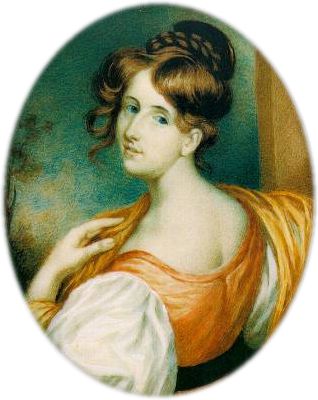
JK: Thank you. I also love Elizabeth Gaskell, Frances Hodgson Burnett, and Georgette Heyer. And no one created characters like Charles Dickens!
Elizabeth Gaskell (1832) – Wikipedia
–
JAIV:Each of your eight novels has a strong heroine who finds or places herself in a situation that reflects her limited choices as a woman: servant, governess, teacher, medicine healer, a novel-writer [think “Anonymous”!], etc. You cover the topics of unwed motherhood, the life of servitude, loss of inheritance, loss of reputation, herbal medicine, the “evils” of dancing, and more … all about women trapped in social and personal prisons. As a woman of the 21st century, it is difficult to imagine that world of 200 years ago. How do you get it right?
JK: I am sure it helps that I love this time period—my favorite novels, costume dramas, blogs, and research books, are all set in or around this era. I spend a lot of time in Jane Austen’s letters and check my dialogue on an online etymology dictionary to make sure each word spoken was in use at the time. I sometimes have experts read sections or answer questions on certain topics (the military, cricket, blacksmithing, English country dancing, etc.). I am a member of JASNA and learn a lot through their meetings and speakers. And I go to England when I can. It’s an ongoing education! I am certainly fallible and make my share of errors, but I do my research and work hard to accurately portray the era. That said, I write fiction, not history, and occasionally take liberties for the sake of the story. When I do, I acknowledge this in my Author’s Note at the back of the books.
JAIV: The Secret of Pembrooke Park is your longest novel to date, offering again your reader-pleasing combination of mystery, scary gothic elements, and of course Romance, to tell a tale where the reader is never quite sure who the Hero might be and how the mystery will play out – did you know when you set out on your writing journey how it would all be resolved? Which brings us to: can you share with us your writing process? – do you start with a social issue, or a character, or a mystery to be solved?
JK: I submit a synopsis to my publisher in advance, so I have a fairly good idea of how things will be resolved, but there is always room for surprises along the way. My process has evolved over the years and I’m still fine-tuning it. But I usually begin with a situation that intrigues me, e.g. a lady who finds herself working as a wet nurse, or having to go into hiding as a housemaid or, in this case, moving into a long-abandoned manor. From there, I think about what kind of character would be most interesting and satisfying to see in—and grow through—that situation. Specific plot points and twists develop from there.
JAIV:Your next book is already available for pre-order: Lady Maybe, due out in July 2015. Can you tell us something about it? And, what’s up next??
JK: Lady Maybe (Berkley) is about a woman whose startling secrets lead her into unexpected danger and romance in Regency England. And then in December comes The Painter’s Daughter (Bethany House), which is my first novel with a marriage-in-name-only premise.
JAIV: Thank you Julie for so generously sharing your thoughts on writing, your faith, and your forays into the Regency period! I very much look forward to your next two books – such a treat to have two in one year!
*************
Please leave a comment or a question for Julie and you will be entered into the Giveaway Contest!
***************
Grand Giveaway Contest
Win One of Four Fabulous Prizes!
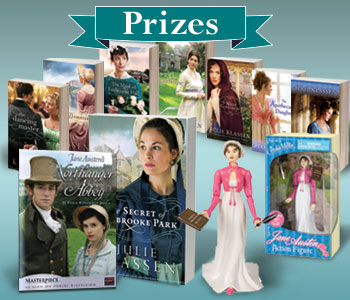
In celebration of the release of The Secret of Pembrooke Park, four chances to win copies of Julie’s books and other Jane Austen-inspired items are being offered.
Three lucky winners will receive one trade paperback or eBook copy of The Secret of Pembrooke Park, and one grand prize winner will receive one copy of all eight of Julie’s novels:
Lady of Milkweed Manor (2008)
The Apothecary’s Daughter (2009)
The Silent Governess (2010)
The Girl in the Gatehouse (2011)
The Maid of Fairbourne Hall (2012)
The Tutor’s Daughter (2013)
The Dancing Master (2014)
The Secret of Pembrooke Park (2014)
…and one DVD of Northanger Abbey (2007) and a Jane Austen Action Figure.
To enter the giveaway contest, simply leave a comment on any or all of the blog stops on The Secret of Pembrooke Park BlogTourstarting February 16, 2015 through 11:59 pm PT, March 9, 2015. Winners will be drawn at random from all of the comments and announced on Julie Klassen’s website on March 16, 2015. Winners have until March 22, 2015 to claim their prize. The giveaway contest is open to residents of the US, UK, and Canada. Digital books will be sent through Amazon or Barnes & Noble. Good luck to all!
***************
Author Bio:
Julie Klassen loves all things Jane—Jane Eyre and Jane Austen. A graduate of the University of Illinois, Julie worked in publishing for sixteen years and now writes full time. Three of her books have won the Christy Award for Historical Romance. She has also been a finalist in the Romance Writers of America’s RITA Awards. Julie and her husband have two sons and live in St. Paul, Minnesota. Learn more about Julie and her books at her website, follow her on Twitter, and visit her on Facebook and Goodreads.
When I was in Library School, one of my favorite classes was a study of book conservation and visit to the NEDCC (the Northeast Document Conservation Center) – this I thought was the place where the things I most loved were given the care they sorely needed. Sadly, I didn’t go into that field [hindsight is a dreadful thing!] – I was more into reading and making sure the right book got into the right person’s hands, believing that our system of free libraries was the grandest example of a free world. I remember as a 15 year-old page in our hometown library, roaming the shelves and discovering the Brownings, and rather than doing my job of re-shelving (I confess this now many years later), I was secretly discovering Poetry, finding Love and Words in the pages of these old books. I’ve never lost that love of an old book – the smell, the touch, the beauty of bindings and paper, the scribbled notes or bookplates or inscriptions of previous owners – not to mention the story being told. That I ended up a used bookseller was likely destiny at work – my favorite set of books in my home was an 1890 Encyclopedia Britannica! (I was not the most current student in history class!)
We now live in a world where the physical book is being rejected for the joy of carrying around 1500 titles on a small tablet that we can also use for all manner of interruptive connections to the real world. This escape into a book can be initiated wherever you are, whenever you want, without the inconvenience of lugging around poundage – I readily admit to loving my kindle! – But it is not the same, no matter how many people argue the point. I don’t remember the books I read this way – I don’t retain where such and such was on a particular page, I miss that smell, that touch, that communion with a physical object that has a history that somehow brings me closer to the author or a binder or papermaker or some previous owner or owners.
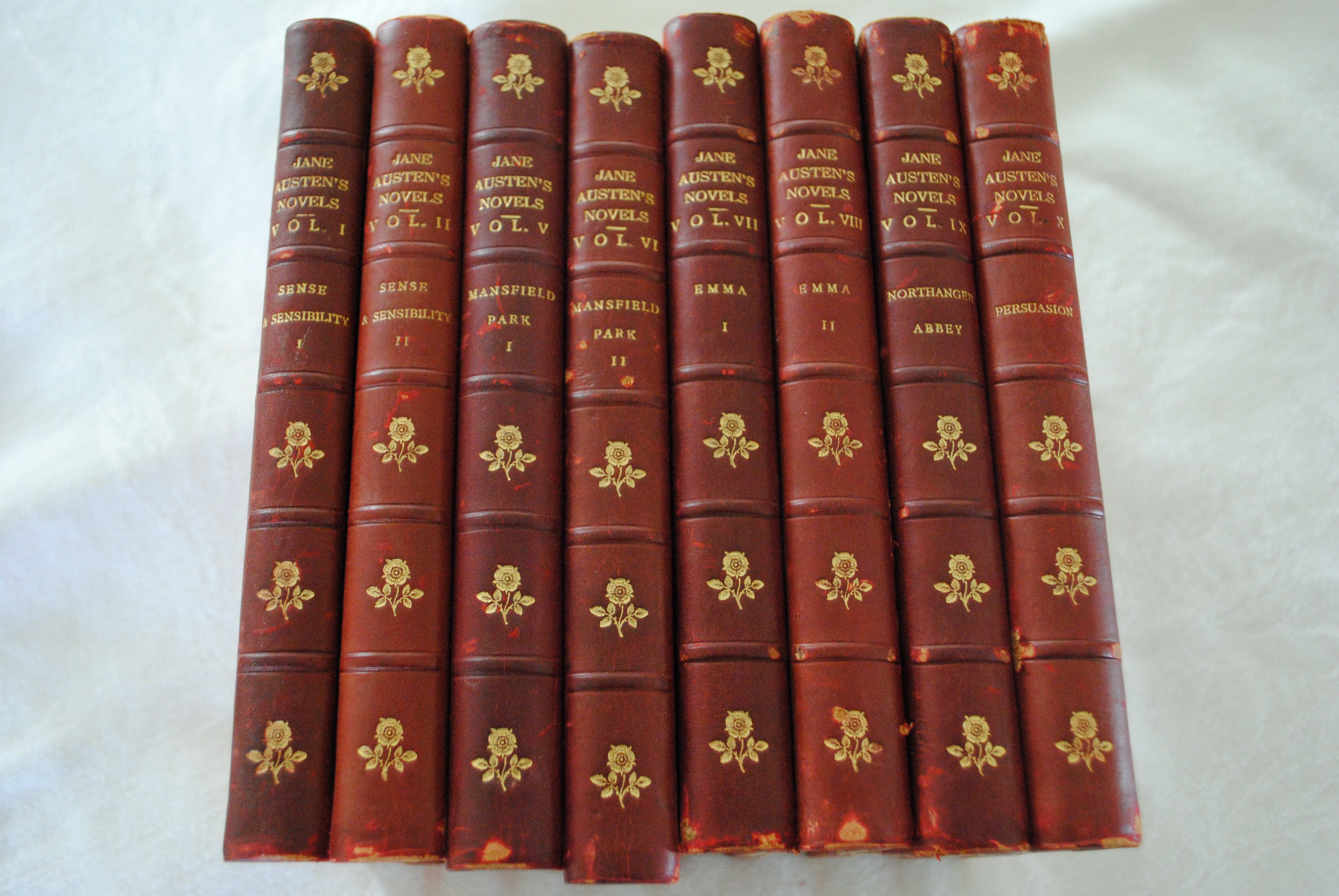
[1898 Dent edition of Jane Austen’s novels – trivia: what is missing??]
I think, I have to believe that the book is not Dead, that an appreciation for the book as an object of beauty and worth may even be stronger than ever, fear of it all disappearing making it all the more valuable to us. And this then brings us to Book Conservation. Because if we don’t take care we shall be losing our very own heritage. I have had any number of books come across my desk that are in appalling states, either too well loved through the years, or just left to disintegrate in some old attic or basement – it is one of the saddest things to encounter really – a book of special significance that is rendered nearly worthless by its poor condition. Enter the conservationist! – Magic can happen! I have been fortunate in finding the most brilliant of these magicians, who has salvaged many a book for me and my customers … And though the value of a repaired work can be affected by such tampering, it is the return to its former state that is the end result, to preserve, protect and savor for the future… The digitizing efforts of so many of our libraries is a glorious thing – making so much accessible to all – I marvel at what is only a keystroke away – but preserving the original must and should be part of this plan.
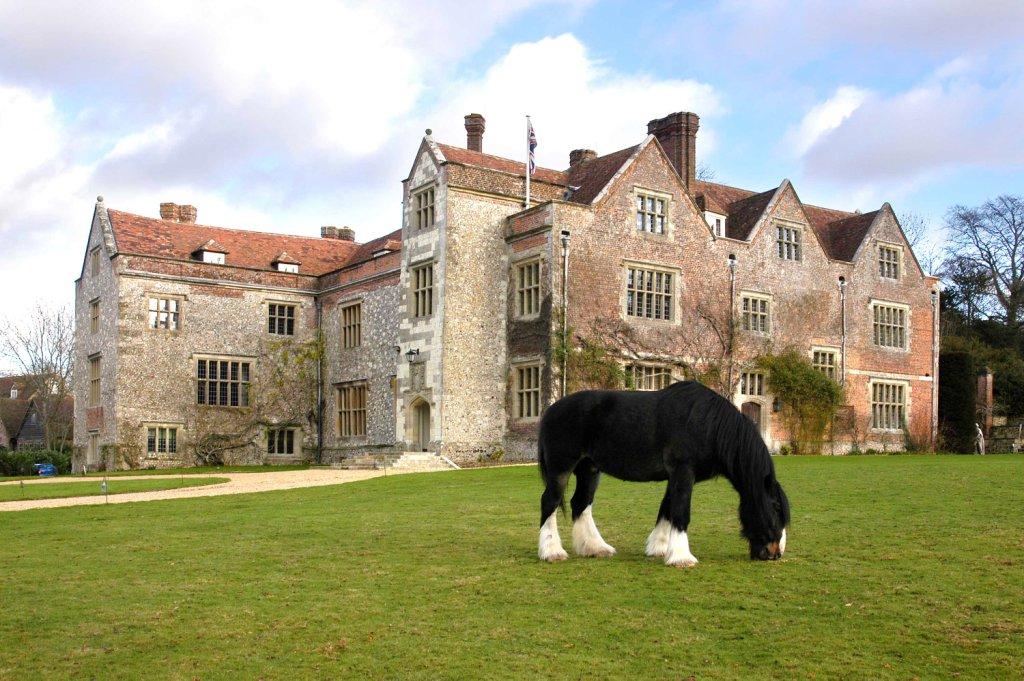
Chawton House Library
And this brings us to Chawton House Libraryand their appeal for their book conservation program – they need our help!
The history of the Chawton House Library [CHL] is a well-known story, at least among most of my readers here, who perhaps have come to know of CHL because Jane Austen brought us there. Read its history if you don’t know it, and you will come away with unending gratitude to Sandy Lerner for making it all possible. If you have read Dale Spender’s classic Mothers of the Novel: 100 Good Women Writers before Jane Austen (Pandora 1986), and other various titles on the subject, you know that the entire literary tradition of women writers has been essentially silenced – if you are over 50, how many women writers did you read in college? How many did you even know about? The foundation and purpose of CHL has been to correct that horrible omission in our collective history, to give these women writers a home of their own, and to make sure none of them are ever again consigned to the neglected heap of second-class literature.
The CHL website offers a wealth of information on many of these women writers:
[for example: Aphra Behn’s The Rover; or, the Banish’d Cavaliers (1729), and Penelope Aubin’s The Inhuman Stepmother, or the History of Miss Harriot Montague (1770)]
The quarterly publication The Female Spectator is mailed to those who become Friends of the Library. Some of the past issues are available online from 1995 – 2010 here: http://www.chawtonhouse.org/?page_id=55522
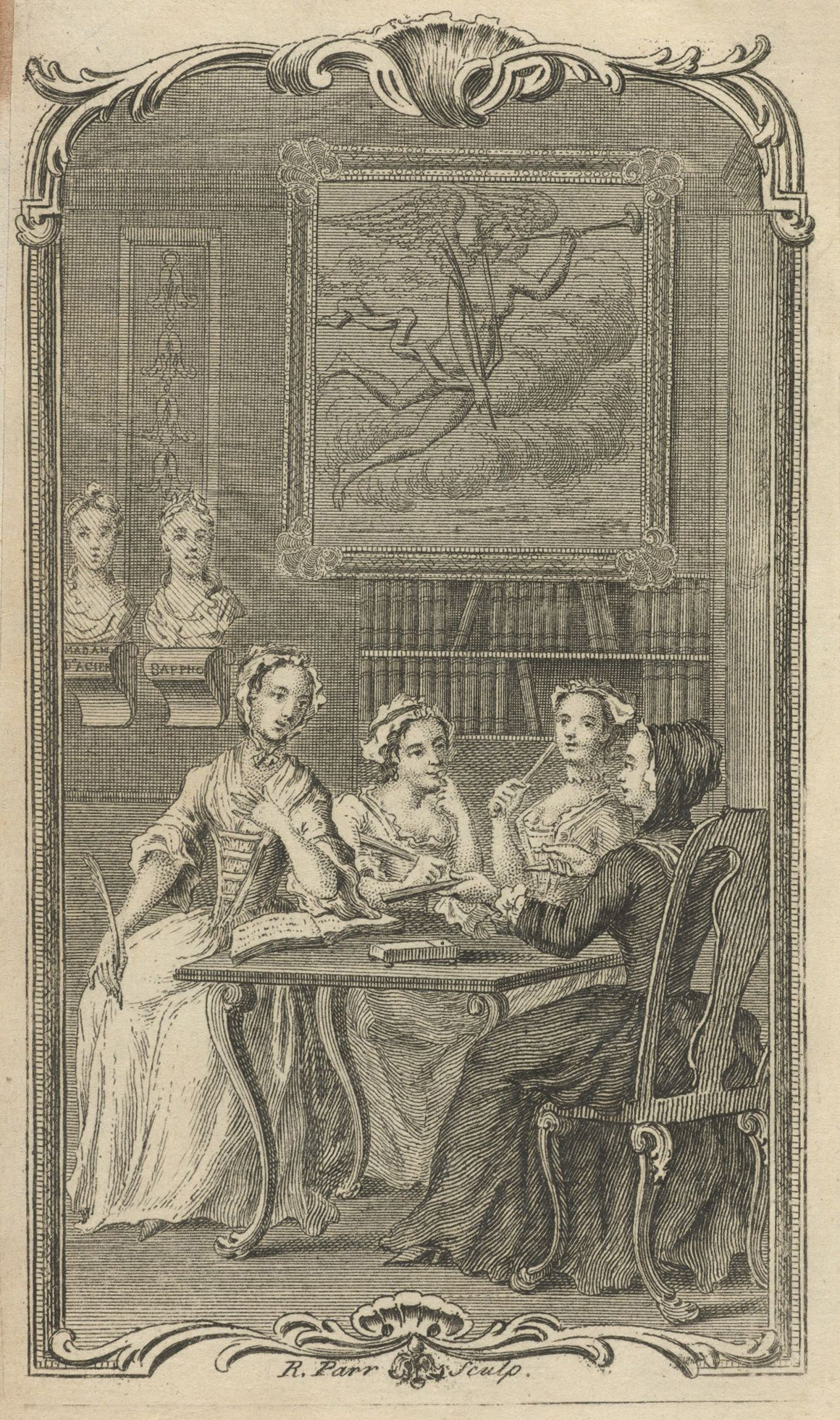
Frontispiece, vol. 1 The Female Spectator, by Eliza Haywood (1744-46) – the title CHL now uses for its quarterly newsletter [image: wikipedia]
_________________
More books in need at Chawton House Library
But the books themselves, the majority really, are in need of repair. Keith Arscott, the Development Director of CHL, in the kick-off for this fund-raising effort, writes:
Thanks to our first and biggest single donation to date – over $3,000 from the George Cadbury Quaker Foundation – we have been able to organise our first conservation skills training day for 10 of our library volunteers to be run by a professional conservator. The donation also covers the first purchase of materials to enable our first volunteers to make a start. And for those of you that don’t know, we also had two generous donations at the reception – one from a red rose and the other from a yellow![the reception for CHL members at the JASNA AGM in Montreal – we were all given roses!] But it is only a start – the Book Condition Survey that we were able to commission after a number of successful funding initiatives concluded that the cost of such a conservation programme would be easily a very large six figure sum – if all the conservation work was undertaken by professional conservators in studio conditions. However, the tremendous interest that our appeal has had with volunteers and their willingness to give their time to help with much of the work – means we have an appeal target in mind of something in the $90,000 range.
And so this is where your help is needed. Gillian Dow, the Executive Director, writes on the website that “small amounts of money can make a very big difference to our programme” and outlines how any donation can contribute to protecting this unique collection:
£1 / $1.70 can buy document repair tape
£6 / $10 can buy unbleached cotton archival ribbon
£10 / $17 can buy an archival box to protect a fragile book
£100 / $162 can pay for a full set of conservation equipment including unbleached cotton archival ribbon, document repair tape and archival boxes
£300 / $486 can pay for a volunteer training day, giving a whole team the necessary skills to carry out vital conservation work
*And here, some great PR from the BBC: last November, they visited CHL and produced a video on the appeal, where Frankenstein and Sense & Sensibility are featured among other titles: http://www.bbc.com/news/uk-england-hampshire-29949168
How to donate? For those of you living in the States, you can donate online directly to the North American Friends of Chawton House Library (NAFCHL) [NAFCHL is a U.S. 501 (c) (3) tax-exempt organization and all donations are deductible for purposes of U.S. income taxes]. NAFCHL will acknowledge U.S. donations as being specifically allocated to our Book Conservation Appeal. See the link on the right sidebar on this page: http://www.chawtonhouse.org/?page_id=58943 . [Everyone else can donate by visiting the same page and choosing the “Virgin Money Giving” link.]
______________
Mary Brunton (1778-1818) – Jane Austen writes about Brunton in her letters [image: wikipedia]
You will find if you spend a bit of time on the CHL website just how many of these women writers have been resurrected from their centuries-long oblivion. They are being studied more than ever as our female literary tradition finds its rightful place in the history of literature. The Chawton House Library has been and continues to be instrumental in finding and keeping these materials – the books, manuscripts, diaries, letters, and artifacts – and we need to preserve it all as best we can so that the Book as we now know it will be there for future generations of readers and scholars. Any donation will be greatly appreciated…hope you can help!
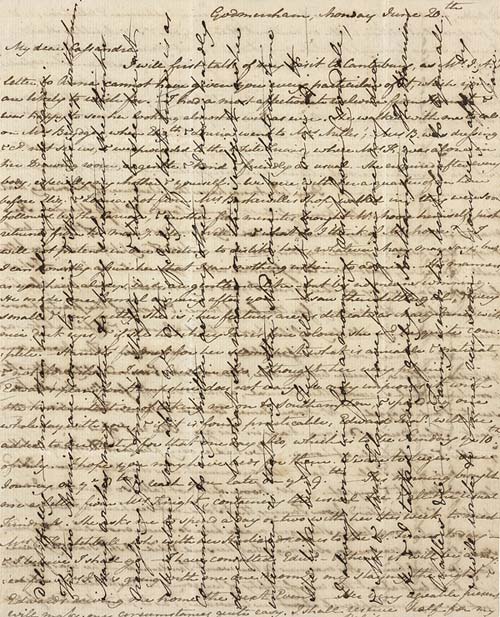
And to end with something about Jane Austen, an essay from the Conservation Center at the Morgan that tells the tale of Austen’s letters and what has been learned in the process of their preservation: “Jane Austen’s Writing: A Technical Perspective” http://www.themorgan.org/blog/jane-austens-writing-technical-perspective
It only seems fitting to end 2014 with a final nod to Mansfield Park. My intention of course had been to spend the entire year discussing the various illustrators of this novel over the past 200 years, but alas! such best intentions are all I have to offer up – so here is the first and final post on illustrating Mansfield Park!
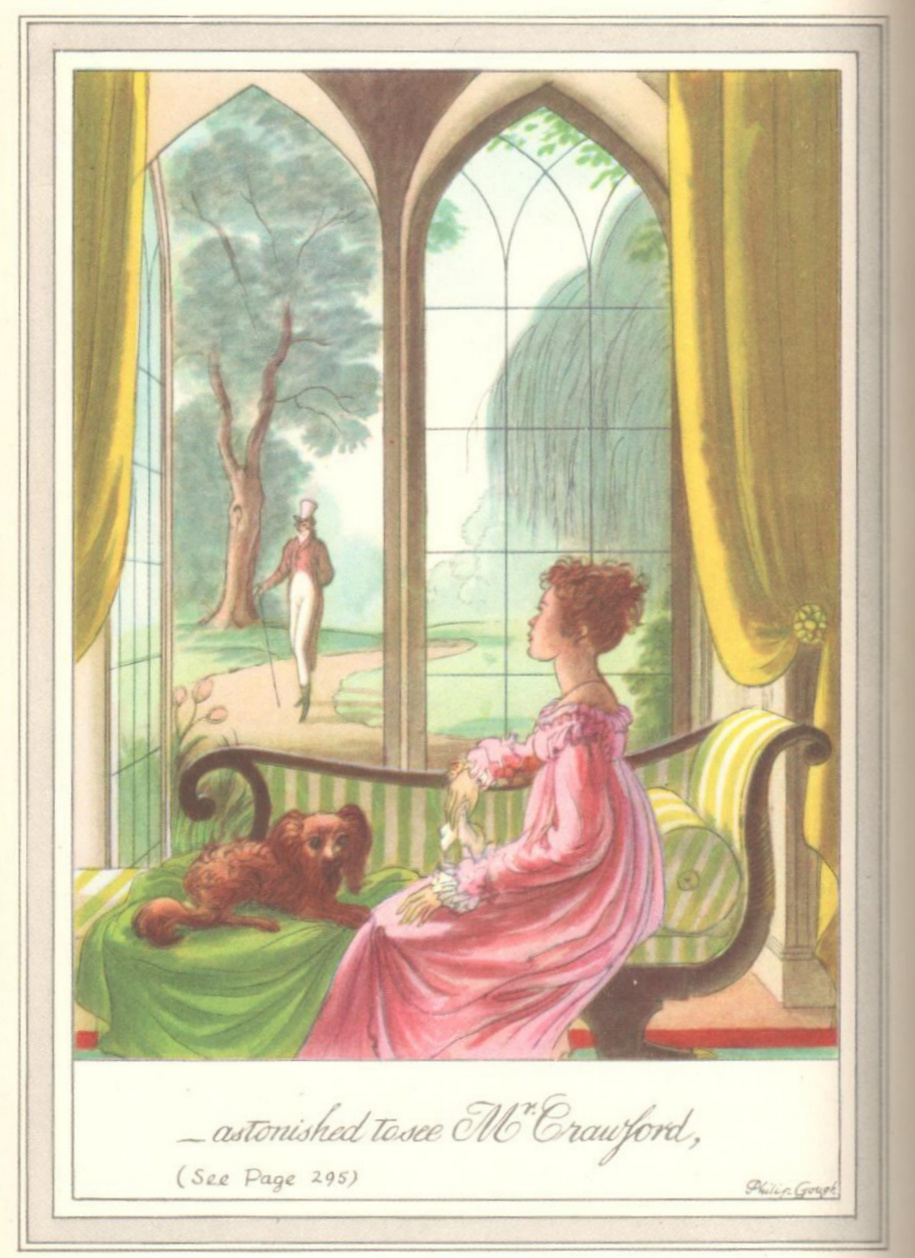
When Macdonald & Co. (London) published its first volume of Jane Austen’s work in 1948, Emma was the chosen work, with Philip Gough as illustrator. It was the 4thvolume in the Macdonald Illustrated Classics series. It is a small book, under 8 inches, bound in red leatherette, with a frontispiece and six full-page plates of watercolor drawings by Gough. There is no introduction. Macdonald published its next Jane Austen in this series in 1951 – Pride and Prejudice, with illustrations again by Gough and again no introduction. If you are lucky enough to have all the six volumes published by Macdonald, you will see that they appear to be a set, all with the same binding and all illustrated by Gough – but they were published over a period of years from 1948 to 1961 as follows – with the No. in the Macdonald series in ():
1948 – Emma (No. 4)
1951 – Pride & Prejudice (No. 23)
1957 – Mansfield Park (No. 34); introduction by Q. D. Leavis
1958 – Sense & Sensibility (No. 37), with Lady Susan and The Watsons; intro by Q. D. Leavis
1961 – Northanger Abbey (No. 40); intro by Malcolm Elwin
1961 – Perusasion (No. 41); intro by Malcolm Elwin
Not sure why Leavis did not do the other introductions – her essays on Jane Austen are magnificent, and a definite must-have for your Austen library. Her Mansfield Park introduction, after stating that MP is “now recognized as the most interesting and important of the Austen novels,” gives us a brief summary of Austen’s life and times, then writes of her theories that Lady Susan is the matrix of Mansfield Park, that Austen was “soaked in Shakespeare,” that the Sotherton sequence is one of the “most remarkable in any English novel” where all the action is symbolic and how its pattern of events is “exactly and awfully repeated” in the final outcome of the book, and finally how Mansfield Park is really a tragedy “in spite of the appearance of a happy ending.”
****************
There is little known about Philip Gough and I cannot find much researching the internet other than he was born in 1908, illustrated a number of children’s books, this Jane Austen series from Macdonald, and a goodly number of dust jackets for Georgette Heyer’s Regency novels.
But it is worth noting that in the introduction to the 1961 Persuasion by Malcolm Elwin (and also quoted by David Gilson in his entry E327 on this edition), Elwin states that the drawings of Hugh Thomson are said to be “too Victorian in their sentimentality to suit the spirit and period of the novels” – and that “Mr. Gough has shown himself a student of the Regency period, and many sound critics have judged him to have succeeded in conveying the subtlety of Jane Austen’s satiric humour.” Gilson also notes a TLS review of this edition (10 November 1961, 810), quoting that “Philip Gough’s illustrations have their own brand of sentimentality, this time of the pretty-pretty sub-Rex Whistler variety.”
How easy it is to get off-track when researching!
–
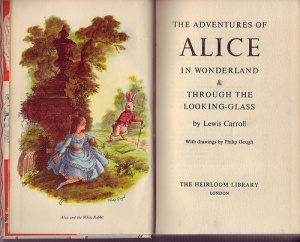
Children’s literature: Gough’s illustrations for children’s works range from Alice in Wonderland for the Heirloom Library to Hans Christian Andersen’s Fairy Tales:
Georgette Heyer: Philip Gough was one of Heyer’s favorite dust jacket illustrators (another was Arthur Barbosa) – you can see many of the jackets here.
But here are a few of your favorite Heyers – and clearly signed by Gough:
Illustrating Jane Austen:
Gough’s watercolors for the Jane Austen novels have a tendency toward “Pretty in Pink” (as they do for Heyer) – indeed I have always looked rather wide-eyed at the abundance of Pink in his Pride and Prejudice – especially in this portrait of Mr. Darcy at the pianoforte…!
You can see all the Emma watercolors here, where again, and as evident in the Gough illustration opening this post, you see one dominant color – it seems that Gough equated the Regency period and Jane Austen with the feminine Pink! https://www.fulltable.com/vts/aoi/g/emma/a.htm
But now to our Mansfield Park, with Gough’s illustrations in the order as they appear in the book:
Frontispiece
Now, go back and look at the illustrations and think about these questions [and comment below with your thoughts…]:
Do the illustrations tell the story?
Does Gough get the characters right?
Why do you think the illustrator chose these scenes to depict? Would you have chosen other scenes?
Do they give a sense of the time and place, the setting of MP?
Does anything in the illustrations give a clue to Gough’s time rather than the time of the novel?
Does Gough get anything really wrong?
Do you have another illustrated edition of MP that you think conveys the story better than these??
Please leave a comment on any and all of these questions – I am interested in your thoughts and welcome the chance to hear from you as we end this year-long celebration of Mansfield Park!
Wishing all of my Jane Austen in Vermont readers
a Very Merry Christmas,
and Festive and Joyful Holidays!
********************
And just to keep us in the Jane Austen spirit [what we are here for after all!],
here is a post from a few years ago on Jane Austen’s very own Scrooge! Can you guess who??
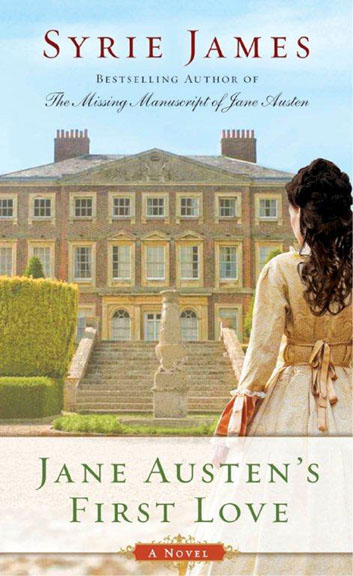
Syrie James’s new work, Jane Austen’s First Love, tells the tale of one Edward Taylor as a possible first love, pre-Tom Lefroy, for Jane Austen. It is fiction, but there is too much truth in the story, based largely on the few comments Austen made in letters to her sister Cassandra and James’ in-depth research into Taylor’s life, to have us shelve this book as merely a pretty fiction.
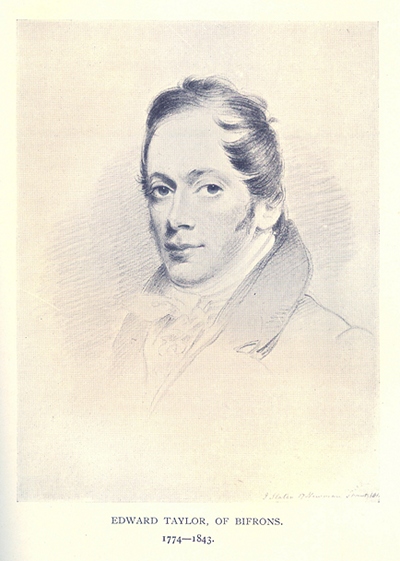
Syrie also wrote in more detail about Edward Taylor here: http://englishhistoryauthors.blogspot.com/2014/12/edward-taylor-of-bifrons-jane-austens.html – Ron Dunning, of Jane Austen genealogy fame, on reading about Syrie’s book, did some research into this Edward Taylor and has found some amazing connections to Jane Austen’s family – you will see that though Jane may not have had Edward Taylor for herself, future generations saw the Austen and Taylor families very much entwined… so here is Ron to tell us all about it. And thank you Ron for sharing this with us!
*************
A Postscript to Jane Austen’s First Love, by Ronald Dunning
Jane Austen may have been unlucky in her love for Edward Taylor, but four members of his family were more receptive to the attentions of hers. It can be illustrated in a drop-chart of the descendants of Edward Taylor’s parents, Edward Taylor the elder, and Margaret Taylor, to be found on the following link [and see below for an abbreviated version so you can follow the generations]: http://wc.rootsweb.ancestry.com/cgi-bin/igm.cgi?op=DESC&db=janeausten&id=I17370
Bifrons Park, Kent
The number given to each person indicates the level of descent, with the elder Edward and Margaret in the first position. Their daughter Charlotte [JA’s Edward Taylor’s sister] married the Rev. Edward Northey, a Canon of Windsor, and two of that couple’s daughters married sons of Edward (Austen) Knight.
I. The first, Charlotte Northey, married Henry Knight [son of JA’s brother Edward], after his first wife, Sophia Cage, had died. Poor Charlotte had a very short married life too, dying three years later. Their one daughter, Agnes Charlotte Knight, married Narborough Hughes D’Aeth. Agnes had the good fortune that her mother lacked, and lived a long life of ninety years, during which she bore at least thirteen children.
The surname D’Aeth is pronounced Death by the family. I’m told that during the Second World War a Commander D’Aeth of the Royal Navy was promoted to Captain, but his men refused to serve under a Captain Death – so he felt it was best to change his surname. [One plug, if I may – the names Narborough and Cloudesley were given to many boys born to the D’Aeth family, and the reason is interesting. I wrote about it in an article, to be found here: http://www.janeaustensfamily.co.uk/articles/longitude.html]
II. Returning to the chart, Charlotte Northey’s sister, Mary Northey, married Henry Knight’s brother, the Rev. William Knight. Mary was, like her sister, a second wife, and more than twenty years younger than William. She became the step-mother to his eight children, and bore three daughters of her own, those on the chart. Unfortunately she too was visited by tragedy – the daughters, aged between two and five, all died within a week of one another, from smallpox.
III. There were two further connections, both among the descendants of Jane Austen’s fondly-doted-upon Edward Taylor. (Edward is half-way down the chart, the second person with the generational number 2.) His great-granddaughter Dorothy Mary Deedes (generation 5) married Lionel Charles Edward Knight, a great-grandson of JA’s brother Edward Austen Knight. Fortunately, there is no need to report a family tragedy here, since she lived into ripe old age.
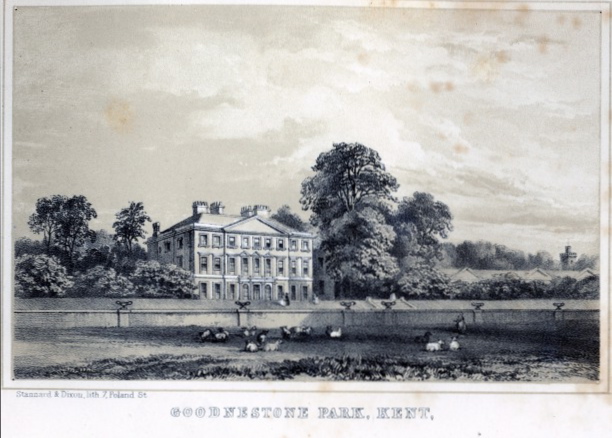
IV. The fourth connection is less obvious – still a descendant of the younger Edward Taylor, but not a person who married a Knight. Nevertheless she brings the story full circle. Dorothy Mary Deedes’s brother, Herbert William Deedes [so Edward Taylor’s great-grandson, but also the great-great-nephew of Edward Austen Knight’s wife Elizabeth Bridges – confused enough now??], had a daughter who is simply identified in the chart as ‘Living Deedes,’ because she is still living. She is the dowager Lady FitzWalter of Goodnestone Park – whence Lady Bridges wrote to announce the betrothal of her daughters, one of them her daughter Elizabeth who married Edward Austen Knight! [see Syrie’s post here on Lady Bridges’ letters] With the Austen pedigree, where one story ends, another begins – Lord and Lady FitzWalter were cousins, both descended from the Bridges. But let’s leave it for another time …
************
Thank you Ron for this! – I append here a portion of the genealogy chart that shows these connections – please visit Ron’s genealogy page http://wc.rootsweb.ancestry.com/cgi-bin/igm.cgi?op=DESC&db=janeausten&id=I17370 for the full chart and links from each name – it is all quite daunting, and why I am showing here only the names that connect Taylor and Jane Austen!
1 Edward TAYLOR of Bifrons; Rector of Patrixbourne b: 26 AUG 1734 [JA’s Edward Taylor’s father]
+ Margaret TAYLOR (LATER PAYLER) b: ABT 1743 d: 27 APR 1780
2Charlotte TAYLOR d: 19 FEB 1837 [Edward Taylor’s daughter]
+ Edward NORTHEY MA, Canon of Windsor b: 22 OCT 1754 d: 18 FEB 1828
3Charlotte NORTHEY d: 28 JUN 1839 [Edward Taylor’s grand-daughter]
+ Henry KNIGHT b: 27 MAY 1797 d: 1843 [son of Edward Austen Knight, JA’s brother]
4 Agnes Charlotte KNIGHT b: 1837 d: 1927 + Narborough Hughes D’AETH of Knowlton Court, Kent; JP, DL, MA b: ABT 1821 d: 1886
5 Lewis Narborough Hughes D’AETH b: 13 MAR 1858 d: 21 OCT 1920
+ Eleanor Frances SNEYD b: ABT 1866
3 Mary NORTHEY b: ABT 1820 d: 07 DEC 1854 [Edward Taylor’s grand-daughter]
+ William KNIGHT Rector of Steventon b: 10 OCT 1798 d: 05 DEC 1873 [son of Edward Austen Knight, JA’s brother]
4 Mary Agnes KNIGHT b: 1843 d: 15 JUN 1848
4 Cecilia KNIGHT b: 1844 d: 09 JUN 1848 4 Augusta KNIGHT b: 1845 d: 09 JUN 1848
2 Edward TAYLOR Esq., of Bifrons, co. Kent; MP for Canterbury (1807-1812) b: 24 JUN 1774 d: 22 JUN 1843 [this is JA’s Edward Taylor, brother to Charlotte Taylor – her daughters Charlotte and Mary each married Jane Austen’s nephews Henry and William as shown above]
+ Louisa BECKINGHAM
3 Emily Octavia TAYLOR
+ William DEEDES of Sandling Park, co. Kent; JP, DL, MP for East Kent b: 17 OCT 1796 d: 30 NOV 1862
4 Louisa DEEDES
4 Emily DEEDES
4 Mary DEEDES
4 William DEEDES b: 11 OCT 1834
4 Herbert George DEEDES King’s Royal Rifle Corps; of Saltwood Castle b: 28 SEP 1836 d: 05 MAY 1891
+ Rose Elinor BARROW
5 Dorothy Mary DEEDES [great-grand-daughter of Edward Taylor]
+ Lionel Charles Edward KNIGHT b: 13 NOV 1872 d: 29 JAN 1931 [great-grandson of Edward Austen Knight, Jane Austen’s brother]
6 Elizabeth Margaret KNIGHT b: 12 MAY 1909 d: 1996
+ Ian Charles Rose ROSE d: 11 DEC 1962
5 Herbert William DEEDES of Galt, Hythe, co. Kent, and formerly of Sandling Castle and Saltwood Castle
+ Melesina Gladys CHENEVIX-TRENCH JP b: 11 SEP 1884 d: 16 JAN 1966
6 William Francis DEEDES Lord Deedes of Aldington (Kent); Editor of the Daily Telegraph b: 1913 d: 2006
6 Living DEEDES [dowager Lady FitzWalter of Goodnestone Park]
+ FitzWalter Brook PLUMPTRE 21st Baron FitzWalter b: 15 JAN 1914 d: 14 OCT 2004
*************************
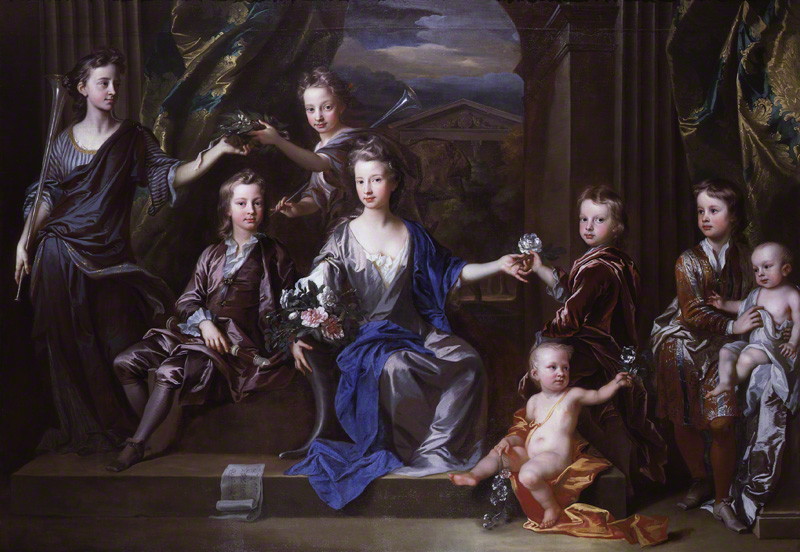
Is your head spinning yet??! If you have questions, please ask away – and any comments on Syrie’s original post will qualify you for the Grand Giveaway – deadline is tonight December 21 at 11:59pm. And just to make your head continue in its spin, here is a portrait of “The Children of John Taylor of Bifrons Park,” by John Closterman, 1696? [from the National Portrait Gallery] – one of these boys is presumably Jane’s own Edward Taylor’s grandfather Herbert Taylor [though he seems to have been born in 1698, so perhaps the dating of the portrait is off? – more questions to ponder!]
You have doubtless been for some time in expectation of hearing from Hampshire, and perhaps wondered a little we were in our old age grown such bad reckoners but so it was, for Cassy certainly expected to have been brought to bed a month ago: however last nightthe time came, and without a great deal of warning, everything was soon happily over. We have now another girl, a present plaything for her sister Cassy and a future companion. She is to be Jenny, and seems to me as if she would be as like Henry, as Cassy is to Neddy. Your sister thank God is pure well after it, and send her love to you and my brother, not forgetting James and Philly…
[Letter from Mr. Austen to his sister Philadelphia Walter, December 17, 1775, as quoted from Deirdre Le Faye, Jane Austen, A Family Record, Cambridge, 2004, p.27.]
*************
In celebration of Jane Austen’s birthday today, JASNA has published its annual Perusasions On-Line Vol.35, No. 1 (Winter 2014). Click here for the Table of Contents to yet another inspiring collection of essays, some from the 2014 AGM in Montreal on Mansfield Park, and other “Miscellany” – all about Jane Austen…and perfect winter reading material…!
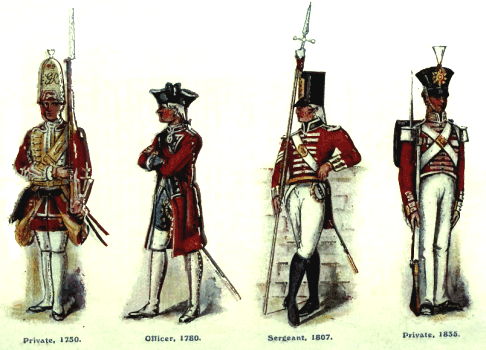
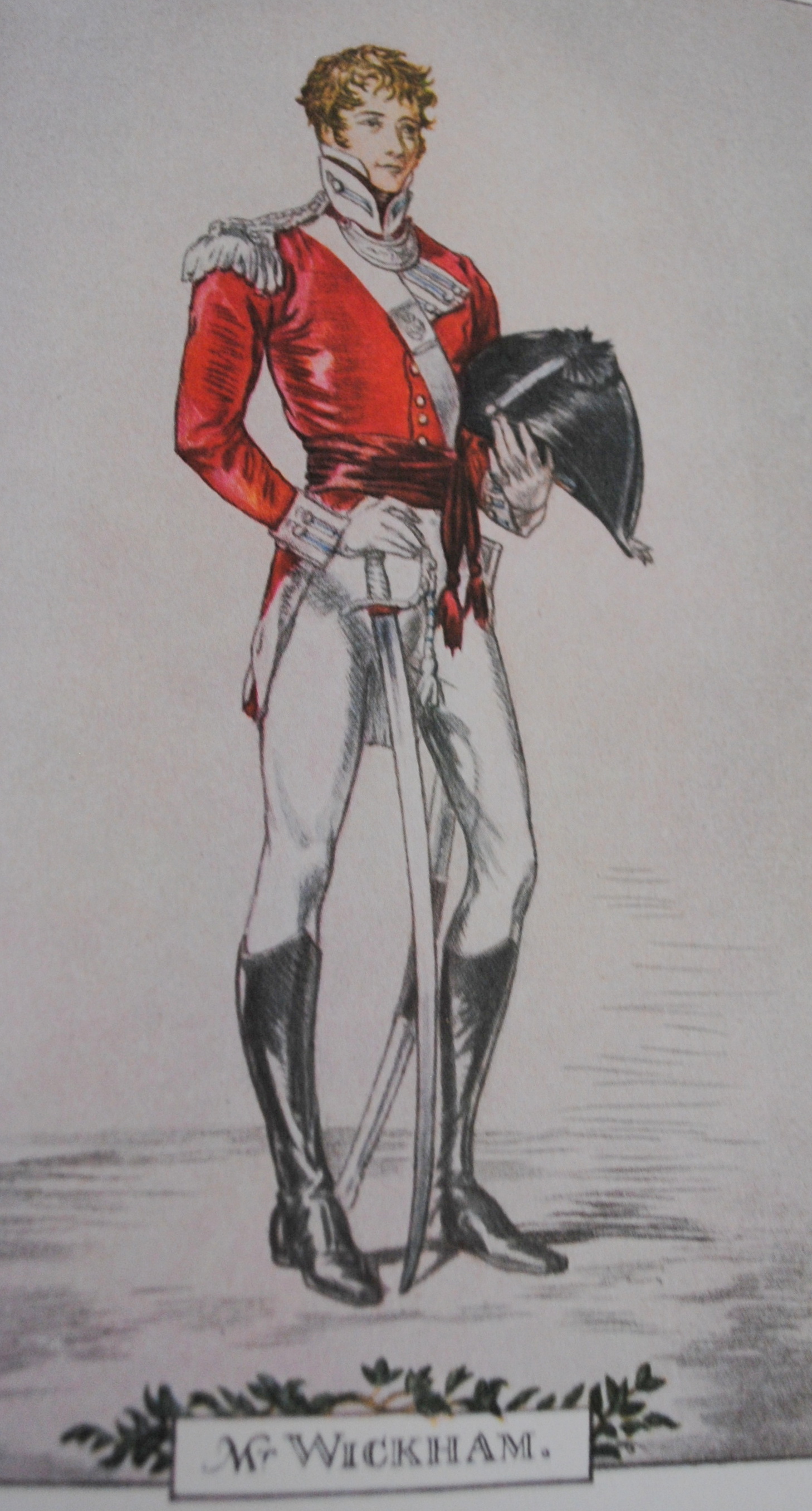
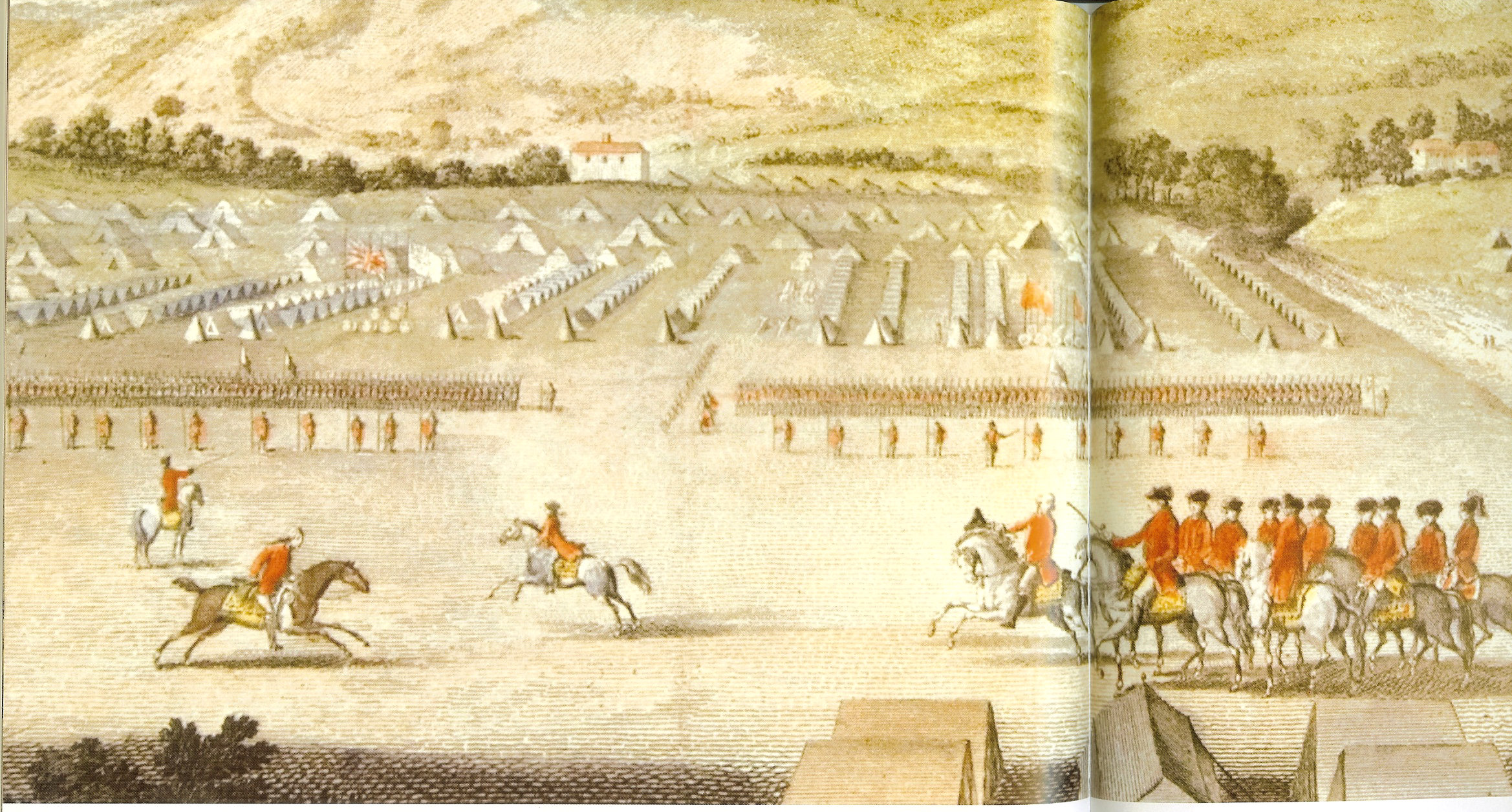
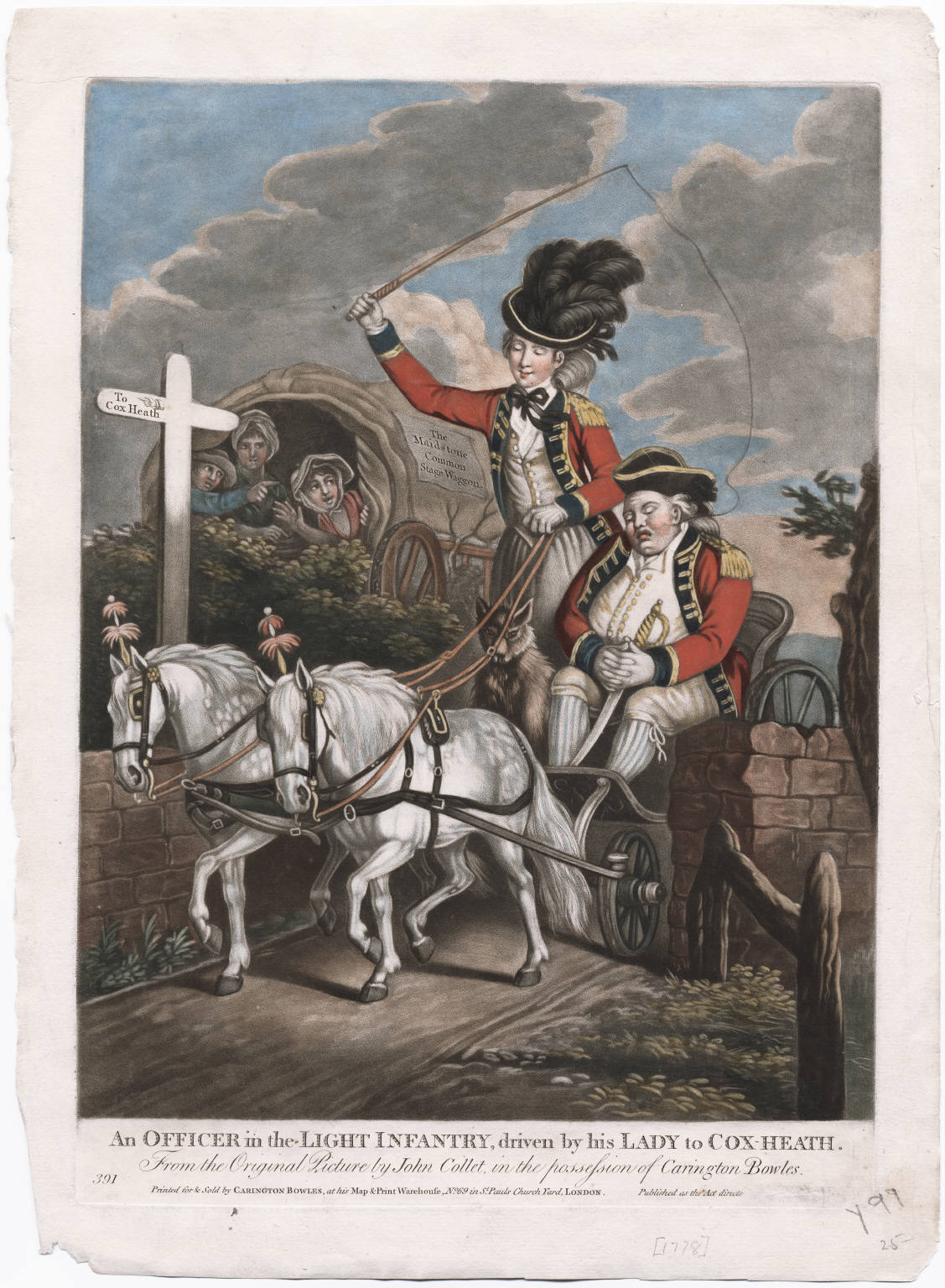
The Society of the Cincinnati, at its headquarters at Anderson House in Washington DC, currently has on exhibit “Homeland Defense: Protecting Britain during the American War” – you can view the online exhibit to see a collection of prints and cartoons that depict the various camps, soldiers, the visits of the fashionable, and other items that reflect Britain’s concern with possible invasion. We must believe that Jane Austen had some of this history in mind when she was writing Pride and Prejudice, with her soldiers, and the mad for red coats frenzy of the younger Bennet girls – and Mrs. Bennet for that matter!
“My dear Mr. Bennet, you must not expect such girls to have the sense of their father and mother. When they get to our age I dare say they will not think about officers any more than we do. I remember the time when I liked a red coat myself very well — and, indeed, so I do still at my heart; and if a smart young colonel, with five or six thousand a year, should want one of my girls, I shall not say nay to him; and I thought Colonel Forster looked very becoming the other night at Sir William’s in his regimentals.” (P&P, vol. I, ch. 7)
Mr Wickham, by Robert Ball, Pride and Prejudice (Doubleday, 1945)
Isaak Jenher. ‘Plan of the Camp at Cox-Heath 1779’ [in Kent] (London, 1779)
[image: Cincinnati Fourteen, Fall 2014, Journal of The Society of the Cincinnati, vol. 51, no. 1.]
By the beginning of 1778, British hopes of an easy victory over the American rebels had vanished. The British army had seized New York City and Philadelphia, but American resistance had proven far more tenacious than anyone in Britain had expected. The costs of prosecuting the war were mounting. Shipping losses were increasing. Parliamentary opposition to the war was growing. The defeat at Saratoga had destroyed British confidence that the colonies could be conquered. Even Lord North, the prime minister, had lost hope of total victory in what he called “this damned war.”
Then in February, France completed an alliance with the rebels. For the first time in a generation, Britain faced the threat of invasion. With most of the regular army in North America, the ministry recruited militia “for the internal defence of this Country.” The army established special camps in southeastern England to train the militia along with regular soldiers, to protect the coastline, and to provide for the defense of London. A distant and increasingly unpopular war suddenly reached the British homeland.
Contemporary novels and plays about military themes, new songs and poems celebrating British strength, and popular prints depicting the camps reflected public anxiety about the threat of invasion. They also reflected contemporary British opinion about the army at a moment when failure in America exposed it to satire and ridicule. The camps had a wide–ranging influence on popular culture. Fashionable ladies, for whom visiting the camps was a part of the social whirl, sported riding habits modeled on regimental uniforms. Cartoonists, meanwhile, took delight in poking fun at preparations for a foreign invasion that never came.
[quoted from the website]
John Collet. ‘An Officer in the Light Infantry, Driven by his Lady to Cox-Heath’ (London, 1778)
[image: Lewis Walpole Library]
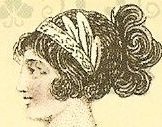


 “Further to the success of our most recent subscriber publication, The Knight Family Cookbook, which thrilled Subscribers and has proven to be one of the most purchased books in our shop, we are now seeking to progress our latest publication- The Duties of a Lady’s Maid; with directions for conduct, and numerous receipts for the toilette (1825). This facsimile edition, with a new introduction by Mary Ann O’Farrell, will be a fascinating book certain to entertain those who would welcome guidance on how to behave as maid to Lady Catherine De Bourgh – or indeed those who wish to emulate Downton Abbey’s Miss O’Brien. Originally published in 1825, it is a rather rare conduct book offering a unique insight into the lives and duties of servants, as well as the trends and tastes of the Georgian age. Readers can learn how religion should direct a maid in her work, which character traits are essential, and how to keep family secrets. Amusing practical instructions, such as how to dress your lady using padding and bandages to improve her figure and tips on the most advantageous way to display the forehead, are also to be enjoyed.”


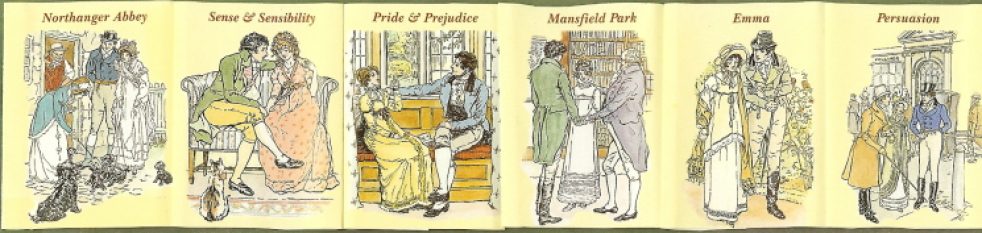
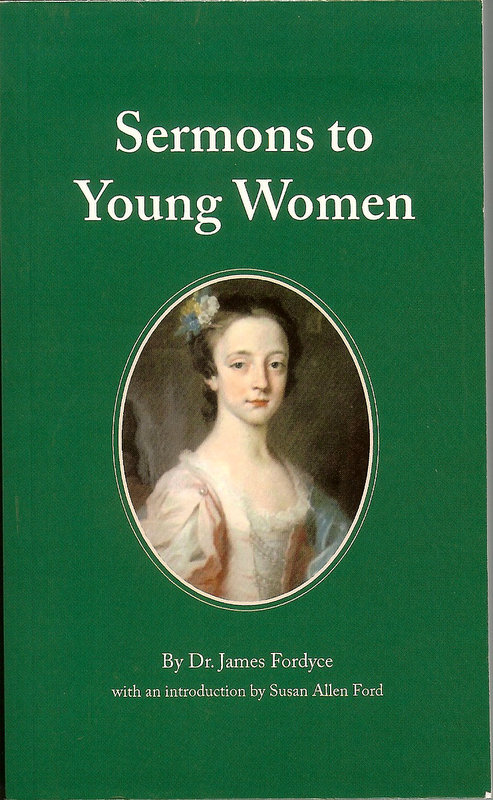 collection of conduct books [everyone should have a collection of conduct books, starting of course with Fordyce’s Sermons, Mr. Collins’ pride and joy in Pride and Prejudice, now published with an introduction by Susan Allen Ford and also available from the Chawton House Library: you can order it here through Jane Austen Books].