I have been lately reading a document titled A Brief Summary in Plain Language of the Most Important Laws Concerning Women, by Barbara Leigh Smith Bodichon, London, John Chapman, 1854. [click here for this link to the transcribed text] – it, as the title suggests, is a brief summary of the laws in England as of 1854 relating to women, i.e single women, married women, property rights of married women, separation and divorce, widows, illegitimate children and their mothers, etc. Much of this one knows from just reading Jane Austen and understanding her life and times, but this is worth a look to see the realities all laid out in black and white …
But there was one section I must share, as it tells it all, and is quite funny in its context, so I offer this as your daily chuckle!
No public employments:
The church and nearly all offices under government are closed to women. The Post-office affords some little employment to them; but there is no important office which they can hold, with the single exception of that of Sovereign.
and to that I can only add, “Long live the Queen!”
Well, here are a few pictures finally from the Philadelphia AGM – too many shots from far away, too many with not enough light, too many with too much movement – but I hope they will at least convey some of the fun had by all!
A few shots at Winterthur [I was amazed that you were allowed to take photographs! – but I bought the guidebook anyway…]]
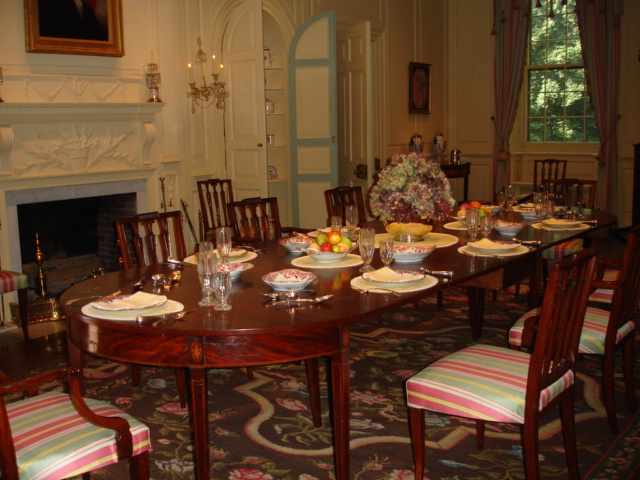
The dining room at Winterthur
The winding stairwell at Winterthur
My buddy and great birder Sara in the Winterthur conservatory,
with an eagle…
A lovely harp at Winterthur [no Mary Crawford in sight!]
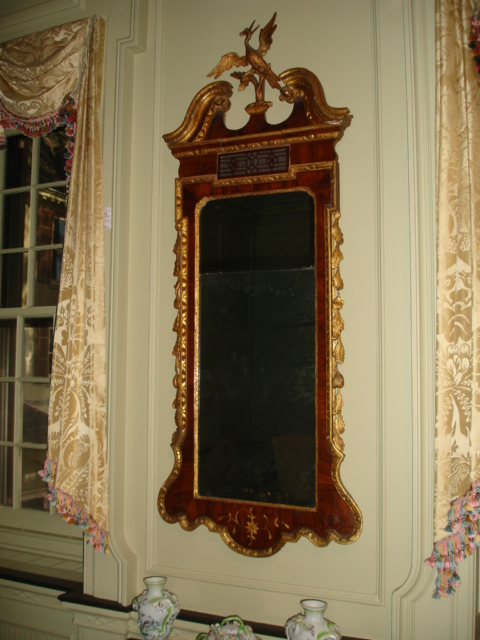
Martha Washington’s very own mirror
And now on to the first evening…
The lovely Elizabeth Garvie [a.k.a. Elizabeth Bennet] reading from Austen’s “The Three Sisters” [and way too far way…]
A runway full of Lisa Brown’s “Dressing Mr. Darcy” very accommodating models:
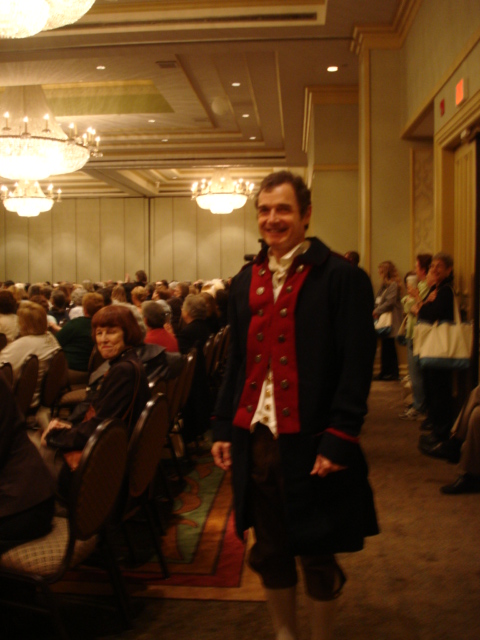
William Phillips of Chicago
Ray Skelly of Valley Forge, PA
’tis a lady, methinks! Karen Noske of Rochester NY
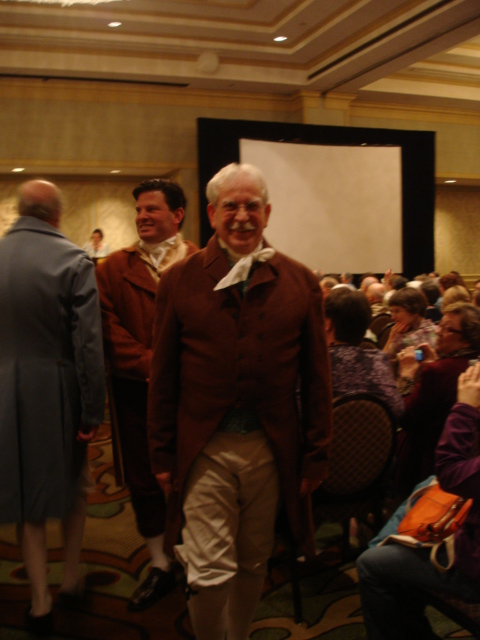
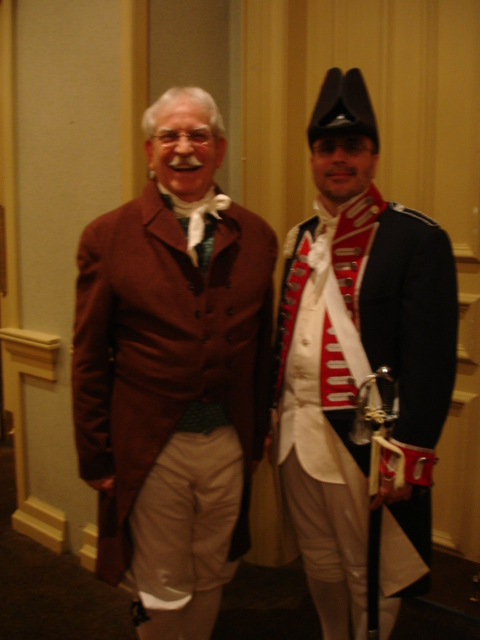
The pack of Regency gentlemen and soldiers…
The handsome fellows, William Phillips and Jeff Nigro
Some fashionistas and the Regency Ball Promenade ~
The always beautifully adorned Baronda Bradley in her day dress…
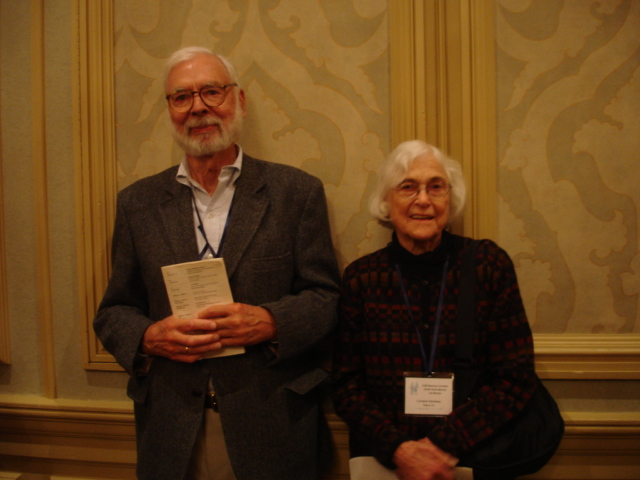
our very own Lorraine and William Hanaway
[though we have to share them with Pennsylvania…]
And lovely Baronda again, this year with her Regency Beau!
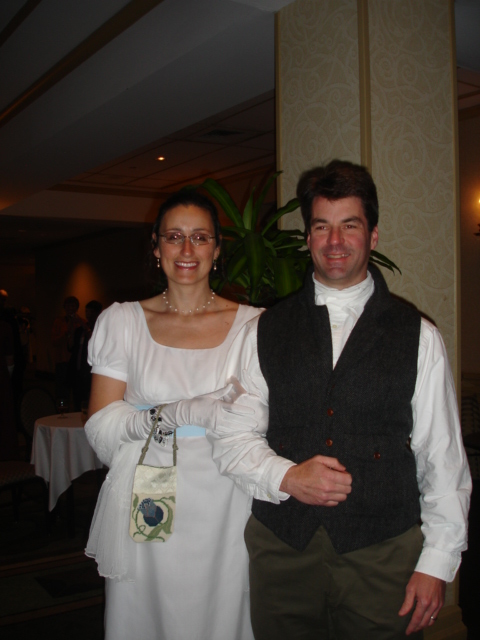
Two couples who come to our Vermont gatherings ~
kudos to them for the fabulous fashions!
The Promenade returning for the Ball
Capt. Michael Green, Lorna Green, and Nick Wells [as General Tilney! yikes! I disinvited him to the party!] – all from the London, Ontario Chapter
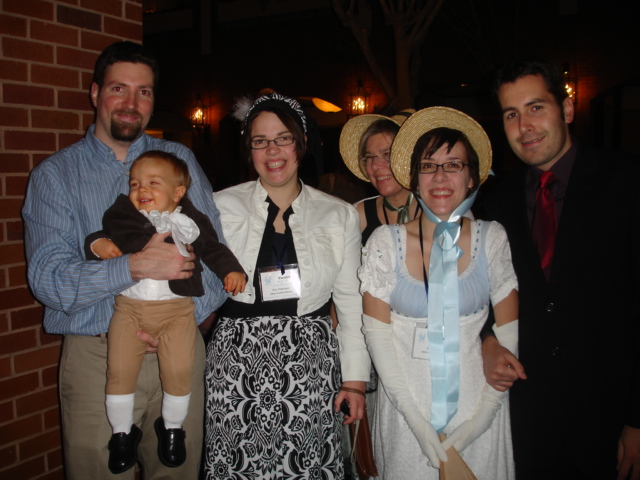
The Jane Austen Books family!
Greg holding Colin, Amy, Jennifer, Beth & Adam
and finally, the cutest Darcy of all…
Colin Frederick Patterson!
Thank you one and all for making this another
such memorable Jane Austen event!
Ok, here I go again…. [please note that due to a computer / camera glitch, all my pictures of the AGM which I was to include in this post, i.e the “Darcy” models, the Regency Ball fashionistas, etc. will not be on here at present – still working on this, but lack the time and patience to be honest! – will post them separately when I can…]
Day 3: Up for a continental breakfast, another Regency Emporium visit… then on to the next Plenary speaker, the always delightful Maggie Lane ~ “Brothers of the more Famous Jane: the Literary Aspirations, Achievements and Influences of James and Henry Austen”. As the emphasis is often on Austen’s brothers Francis and Charles and their naval world, Lane spoke only here on the professional and literary brothers, Henry, often considered Jane’s favorite brother, and James, who she thinks is in need of a reassessment. It is James, she says, who wrote the majority of the essays in his and Henry’s publication “The Loiterer” [Lane also posits here that the “Sofia Sentiment” letter is NOT by Jane – more on this in another post…] – and James who wrote plays and poetry throughout his life, and it was James with whom Jane shared a similar taste in literature. Austen’s one negative comment about him [and the only negative comment about a family member] has perhaps been over-credited as her general view. Lane goes on to compare James to Austen’s characters: in youth, like Edmund Bertram; in later life, Dr. Grant!, and the use of the name “James” in two of her characters, James Morland and James Benwick, both young men who fell in love easily, a trait attributed to James Austen in his youth.
Henry Austen, [Oh! what a Henry!] the brother who had a lot of enthusiasm [but often of the short-term variety!], is credited with being the chief negotiator with Austen’s first publisher Thomas Egerton, and likely helped to fund her publications. He was the “interesting” brother, the one who married his “outlandish” cousin Eliza de Feuillide, the one who is likely the model for Henry Tilney, as well as Henry Crawford! But Lane also gave us the side of Henry that resulted in the Biographical notice of Austen that began the “Dear Jane” view that persists today – Henry puffed up their social standing, and in the second edition added more religious references and removed the literary mentions of Burney and Edgeworth. Lane also believes it was Henry’s ambition that resulted in Austen being buried in Winchester Cathedral rather than her beloved Steventon. In the end however, the immortality of both brothers “is only due to Austen’s genius.”
On to the next two breakouts, and again a struggle to choose, but I decided on Peter Sabor’s “Brothers and Sisters for Brothers and Sisters: Jane Austen’s Juvenilia”, a wonderful discussion of the various dedications written by Austen to her siblings in her juvenile works. This was very informative and enjoyable, Dr. Sabor being an energetic and engaging speaker, with all sorts of tidbits about Austen’s early works [he is the editor of the Cambridge edition of the Juvenilia]. As I have been reading through these works over the past few months [with much laughing out loud in the process!], this offered a different approach to the works based on her dedications, what Sabor feels were very thoughtful choices on Austen’s part. As most readers of Austen know, none of her novels bear dedications, excepting of course Emma, where her over-wrought dedication to the Prince Regent was not of her own choosing!
After lunch, a quick pop-in to Lisa Brown’s fun fashion demonstration “Dressing Mr. Darcy” ~ with most excellent and accommodating models, walking the “runway” in all manner of Regency fashions for the men of consequence and their military counterparts. [pictures forthcoming…]
The third Plenary session with Dr. Ruth Perry who eloquently spoke on the topic of the weekend, “Brotherly Love.” The author of Novel Relations: the History of the Novel and the Family in English Society 1750-1810, [and speaker at the Boston 2000 AGM on “Sleeping with Mr. Collins” for those who recall that!], Dr. Perry summarized how the changes in English society changed the view and treatment of women within the family: as Susan Allen Ford in her session [as mentioned above] suggested, class mobility and geographical movement, changes in marriage choices, the inheritance laws, the increase in population, all led to changes in what was considered the immediate family – emphasis shifted to the conjugal family rather than the biological. This is apparent in Austen’s own life with her dependence on her brothers’ voluntary support and provision of means of travel, when their priority was their own families. Perry also emphasizes the literary / historical as well as the biological influences on Austen in her writings, and how good brothers = good husbands: in Northanger Abbey, Henry Tilney as affectionate brother and lover of muslin; John Thorpe shows his character by the way he talks to his sister and mother; Captain Tilney chafes at family responsibility; James Morland a good brother and friend to Catherine; the various brother and sister ties in Mansfield Park – Edmund combines the conjugal and fraternal but is inattentive to his sisters [perhaps because there are two of them? – this is a good question…]; the selfish Henry Crawford, fond of Mary, but does not write to her or provide her with a home; Mr. Knightley who speaks of Mr. Martin as an excellent son and brother; Charles Musgrove, who tellingly supports his sisters over his wife; the housekeeper’s praise of Mr. Darcy as a good brother… etc. … lots to mine here as you can see – the need to re-read each book to just look at the brothers and what they do and say and what they don’t!
Last breakout session – Jan Fergus on “My Dear Charlotte” the new book by mystery writer Hazel Holt. I wanted to hear Dr. Fergus’s talk because I had just read the book and was intrigued by it – it is a novel set in the early 19th century written in letters, like Austen’s Lady Susan, but Holtuses selected words or sentences or ideas from the text of Austen’s actual letters and weaves in Austen’s words with her own story. It is a fun read [I will review it in another post] – and what Fergus calls the “only successful imitation of Austen” on the market today. The plot does not come from Austen, only those words taken out of context that fit into Holt’s story – at once a mystery and a romance. Fergus is a friend of Holt, and after her talk she graciously made herself available in the Regency Emporium to offer the book with signed bookplates for sale. I highly recommend it – the most fun is the ferreting out Austen’s words from Holt’s – it helps to be very familiar with Austen’s letters!
The Banquet and Regency Ball: after a few moments at the author’s book signing table, on to a delicious dinner to meet old and new friends at our table, watched the promenade of those regally dressed, and took some pictures for your viewing enjoyment [all photographs shown with permission of the subjects! – and will be forthcoming…]
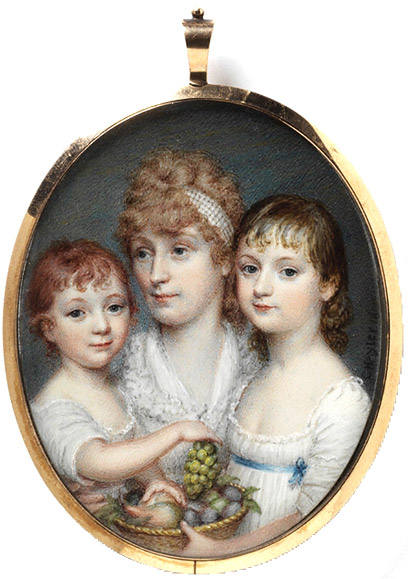
And after watching the dancers for a bit, I wandered into the evening talk I unfortunately only heard the last two-thirds: Dr. Janine Barchas on “The Sister Arts and Jane Austen”, a fascinating visual exploration of the surnames and places that Austen uses in her novels and the possible connection to contemporary artists: Reynolds, William Hodges, William Larkin, and Charles Hayter’s miniatures. It was a packed, standing room only crowd for those non-English Country Dancers among us [though I do so love to dance!] – and all were entranced with this take on names in Austen. [Dr. Barchas will be presenting an address titled “A Big Name: Jane Austen and the Wentworths” at the August 2010 conference Jacobites and Tories, Whigs and True Whigs: Political Gardening in Britain c.1700 – c.1760, to be held at Wentworth Castle, given by the Wentworth Castle Trust and The Garden History Society.]
[Charles Hayter miniature – from Wikipedia]
Day 4: After some housekeeping duties for the Regional Coordinators [a great meeting for sharing ideas, as always…but alas! missed the Episcopal Church Service at the historic Christ Church], we all gathered for the final Plenary session with John Mullan as he addressed us all on “Sisterly Chat” – a wonderfully engaging and humorous talk that will yet again send one back to all the novels for a re-read with a view to all the goings-on between sisters! The sister relationship was paramount in Austen’s own life and thus in the novels; there is indeed more “chat” between sisters than between lovers. Mullan is talking about the intimate talk between sisters when they are alone in a special place – the films show this visually, but in the books you have to look for it closely. He reviewed the controversy from a few years back – “Was Jane Austen Gay?” complete with the newspaper articles and letters, the question hinging on the sleeping arrangements between she and Cassandra – Mullan quoted the final letter in the months-long submissions of raging letters which referenced the furniture company records that proved that Jane and Cassandra did indeed have separate beds! But all this led to the many examples of the various sisters in the novels and how and where they do or do NOT share confidences. And after quoting Keats’s “unheard talk”, Mullan runs through the examples of the talk that takes place off-stage, where the reader is “invited to infer what has been said”, with nods to Fanny [his favorite parts of Mansfield Park are when Fanny is not there!], the sisters Steele in what he calls their “mutual espionage” and of course can you imagine the chat between the Bingley sisters who are “always together, almost ganging up” on all around them! This was fabulous – I hope it will be published in Persuasions, so all may enjoy this fresh approach!
The Bingleys in P&P
So another AGM is done – I have skimmed over a lot – there were the essays by high school and college students, and the winning short story in that contest [see the JASNA site to read these – very inspiring to see another generation making room for Austen’s books in their lives!]; Steve Lawrence, the Director of Chawton House Library quickly summarized all the goings-on and handed out hearty thanks to all of JASNA for the generosity of so many members.
The JASNA banner was then dutifully passed on to the coordinators in the Oregon / Southwest Washington Chapter who will be hosting next year’s AGM: Jane Austen and the Abbey: Mystery, Mayhem and Muslin in Portland on the Halloween weekend of October 29-31. We were also given a delightful treat by the North Texas Region, who will be hosting us in October 14-16, 2011 in Fort Worth, Texas for 200 Sense & Sensibility, celebrating the 200th anniversary of its publication – two very cute cowboys [and they could sing too!], who to the tune of “Home on the Range” gave us a good sampling of how terrific this 2011 AGM will be [“chatting with Deirdre Le Faye” brought the house down!]
Final thanks to Elizabeth Jane Steele and her team at the Eastern Pennsylvania JASNA Chapter, who put on a lovely weekend – no words really to thank all the volunteers who have spent countless hours in preparation, just so a very appreciative crowd of Austen-obsessed souls could spend four days in the early nineteenth century! – I know this Janeite is still having troubling re-entering the 21st!
The 2009 JASNA AGM ~ Jane Austen’s Brothers and Sisters in the City of Brotherly Love
Philadelphia October 9-11, 2009
The best-laid plans of course often go astray – so my hopes to do a close analysis of everything going on the 2009 AGM have been sadly reduced to a mild wish to present a quick summary… so here goes…
The Eastern Pennsylvania Chapter of JASNA has indeed put on a lovely event – the City of Brotherly Love opened its wide arms for all 550 of us obsessed Janeites, offering great tours, excellent hospitality, lively and elegant evenings, and fabulous sessions filled with all things Jane. I always upon returning home have the worst time re-entering the 21st century – and this time more than ever. And time spent with my best-AGM and travel buddy Sara, just adds to the treat … and this year the special treat of JASNA-Vermont friends Kelly and Carol…
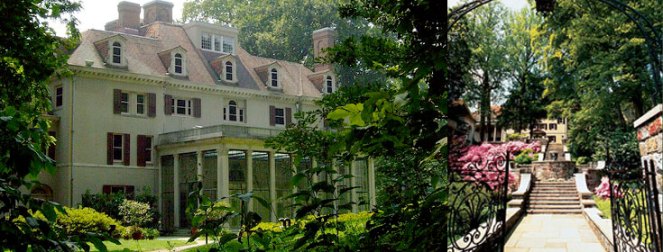
Day 1: A tour of Winterthur on the Thursday, one of my favorite places through books only, was a living reality of the beauties of home and garden, what one man with a lot of money was been able to preserve for future generations. I discovered that Electra Havemeyer Webb, the founder of the Shelburne Museumhere in Vermont and one of the first collectors of American art and decorative arts, was the inspiration behind Henry du Pont’s veering away from the popular collecting of European antiques toward acquiring Americana. It was a lovely day and a wonderful way to start that entry into the late 18th-century the rest of the weekend promised! [only downside: I missed the talks on writing and Wedgwood.]
Thursday evening ~ “Elizabeth Garvie in Conversation with Dr. Elisabeth Lenckos” was a special offering this year and began with a short clip of the first proposal scene in the 1980 Pride & Prejudice. Ms. Garvie, who most everyone knows as Elizabeth Bennet in that adaptation, and now an active patron of the Jane Austen’s House Museum in Chawton, charmed the audience with her engaging and honest responses to Dr. Lenckos’s questions: the realities of filming a television production in the late seventies; how she portrayed a sister with four sister siblings without any of her own [she had a mother with FIVE sisters!]; a few comments on deleted scenes [falling off the log during that outdoor reading of Darcy’s letter…]; how each new P&P adaptation has something to offer each new generation with a reinterpretation of Austen [though she didn’t like the pig in the 2005 movie either!] She ended the talk with a very humorous reading from one of Austen’s juvenilia pieces, “The Three Sisters.”
Day 2: Had breakfast with several Austen-L / Janeites participants [though I have been only a lurker for years!] – and ended up having a rousing discussion on Georgette Heyer!
An early visit to the Regency Emporium always ends with too many books and items that add to the weight of my suitcase [and those flying rules now are intimidating – even Austen cannot impel me to go over that 50lb limit!] – thankfully Jane Austen Books where I spent most of my time [and money] sends everything media mail after the conference, so I just set up a running account of sorts – almost guilt-free ~ and shopped happily away… The Emporium is great fun to catch up with many of the other regions, Chawton House Library [director Steve Lawrence was there], Jane Austen’s Regency World Magazine[with editor Tim Bullamore],Austentation [two tables filled with regency accessories!] and a few other vendorswith Austen-related goodies ~ I went back many times over the course of the conference…
Off to a talk on tea by Mim Enck from the East Indies Company – and learned how to make the perfect “cuppa”… and then a talk with visuals by Louise West, from the Jane Austen’s House Museum, on the exciting new addition to Chawton Cottage, the dreams, the funding, and the lovely reality. The grand opening was in July – if you have been to Chawton, but not since this work was done, put it on your next Austen trip itinerary!
***************************
Marsha Huff, current JASNA President, welcomed all to the first official gathering, giving over the podium to our very own Vermont member Lorraine Hanaway [who was there for the founding of JASNA in 1978] who introduced the first Plenary speaker, Jan Fergus. I love Dr. Fergus’s talks – she inspired a whole new way of looking at Austen in her “The Whinnying of Harpies”? Humor in Jane Austen’s Letters” [Persuasions 27 (2005)] and has continued to regale her audiences with the humor of Austen’s whines ever since! Today she spoke on “’Rivalry, Treachery between sisters!’ Tensions between Brothers and Sisters in Austen’s Novels” – and the various ways in which Austen’s fictional siblings either love and support or compete with one another. Some of this thinking is based on the conduct books of the 18th-century, but also the reader must have awareness of the problems that arose between siblings due to the inheritance laws of the time. Fergus showed by example Austen’s use of humor as a form of criticism between characters and how a sense of humor or lack thereof is an important gauge in understanding Austen’s characters: i.e Marianne lacks humor and openness, thus her lack of understanding Elinor’s humor causes friction between them; Mr. Woodhouse has no sense of humor, just doesn’t get it!; and finally an emphasis on Elizabeth and Jane and how their different personalities and use of humor causes an undercurrent of almost comic aggression on Elizabeth’s part. I liked this differing view of Elizabeth, not so perfect but with a tendency toward jealousy…
************************************
One of the problems in the AGM is choosing between the breakout sessions – so much to hear, so many speakers – whichever one you choose leaves you knowing that you are, regardless of how great your chosen session might be, missing so much else. One can only hope that many of the talks you miss will be in the next issue of Persuasions. I am a voluminous note-taker – but alas! none of my friends are, so after a full day of events and all things Austen being bandied about, one is lucky to get a few intelligible sentences about a missed session – I know if I didn’t take notes, I would have trouble piecing this all together – and indeed even my notes leave me stupefied occasionally! – so I can only present a few thoughts of the four sessions I did go to, knowing full well I am only scratching the surface of the possibilities…
I went to hear Jocelyn Harris, author of ….Jane Austen’s Art of Memory and A Revolution Almost Beyond Expression: Jane Austen’s ‘Persusaion’, who spoke on “Jane Austen: Frances Burney’s Younger Sister”. Harris’s emphasis is to move away from the biological interpretation of Austen toward an historical one, Austen being very connected to her historical and literary references. In Persuasion, Austen shows her knowledge of the Navy, Nelson and the Napoleonic Wars, but Harris also shows how the two cancelled chapters of Persuasion are steeped in Frances Burney’s The Wanderer. I confess to having read several books by and about Burney, but The Wanderer has sat upon my TBR pile for many a year, never opened, largely due to the negative contemporary reviews and all those succeeding. But Dr. Harris has inspired me to finally pick it up, though she says herself it will be a bit of a “slog” – a perfect winter read perhaps…?
*************************
Then on to Susan Allen Ford’s “’Exactly what a brother should be’? The Failures of Brotherly Love”: Again, with an emphasis on the contemporary conduct literature [and with a very helpful handout with bibliography and selected paragraphs], Ford reviews the examples of fraternal love in the various novels in the context of the time – issues of inheritance, personality differences, the role of women and the emphasis on them as daughters and mothers rather than sisters, the economic realities of the sister’s lives. And while she says that “the fraternal role is difficult to define in Austen because the characters as brothers are not often in the foreground”, it was an interesting discussion on their varying degrees of success and failure: John Dashwood as a brother [yikes!]; the parallels between Edward and Robert Ferrars; Tom Bertram, the prodigal son; the jealousy between Darcy and Wickham, but Darcy’s anxiety and his overriding concern to be a good brother; James Morland as a good brother who wrongly throws his sister into the hands of the Thorpes [yikes again!]; and Edmund, brother / lover who neglects Fanny once Mary appears on the scene [this is when one audience member graciously invited everyone to join the SLEUTH club = “SLap Edmund Upside The Head” – there were many joiners on the spot!] ~ Dr. Ford’s choices? – Edmund the biggest failure [he indeed has NO relationship with his sisters], and most successful? [drum-roll please!] HENRY TILNEY [Mags are you listening??] – and I couldn’t agree more! [love the Henry!] – but an interesting question – who would yours be??
Then off to dinner with Sara and friends of hers who live in Philadelphia for a few short hours back in the 21st century – we went to an Israeli restaurant right across from the hotel [ Zahav ] and one of the best meals I have had in a good while – even the wine from the Golem Heights was superb!
Up tomorrow – Day 3 and 4…. meanwhile post a comment on your choice for the best and worst brother in Austen…
My mailbox gives such pleasure most days! – I have been away for the past week, but before leaving I received the latest issue of The Female Spectator [Vol. 13, No. 3, Summer 2009], published by the Chawton House Library and thus have a few things of interest to share with you….
1. “Reprinting the Domestic: New Publications from the Chawton Collection” –
The Chawton House Library has published the first in its projected series of reprints of books in their collection on women’s lives in the long eighteenth century – cookery books, guides on how to manage domestic servants, how to dress and educate one’s children, instructions on behavior and self-improvement: Elizabeth Smith’s The Compleat Housewife, originally published in 1753, is now available for purchase for £18 [+ shipping], by visiting the Library’s new online shop at www.chawtonhouse.org/shop/index.html
The next title in the series is James Fordyce’s Sermons to Young Women, the reading of which made the Bennet sisters cringe, though it may have been the reader [Mr. Collins] rather than the content?… can’t wait for this one…
2. Gillian Dow’s introduction to the July 2009 conference at the Chawton House Library on “New Directions in Austen Studies” is included in the newsletter with the news that selected papers from the conference will be published in a special issue of Persuasions On-Line in Spring 2010. This is great news for those of us who could not attend the conference!
3. An article on Frances Brooke, an English writer living in Canada from 1763-1768, by Richard J. Lane. Brooke wrote her novel The History of Emily Montague [1769] during her Canadian stay and it has been considered the first Canadian novel due to its commentary on social life in Quebec at that time. Lane contends that her writings deserve a reassessment.
4. another article “Jane Austen’s Bad Girl: ‘The Beautiful Cassandra’ vs the Conduct Books” by Olivia Murphy. Murphy writes that Austen’s juvenile work The Beautiful Cassandra [from Volume the First] was an explicit reaction to the conduct books of the late eighteenth century – i.e Cassandra in her “day well spent” engaged in all manner of “bad” behaviors for young ladies. But such a day! [if you haven’t read this, do so now – it is Austen at her very best!]
***********************************
The Female Spectator is the quarterly newsletter of Chawton House Library. You can subscribe by sending a donation to the Library [£55 annual membership] or to the North American Friends of Chawton House Library [starting donation is $50.] – see the website for more information. It is a worthy cause – and one of the perks is this newsletter showing up in your mailbox!
New Haven, Connecticut is the scene for the Elegant Arts Society’s Regency Assembly, taking place on Saturday, October 17; further events on Sunday, October 18:
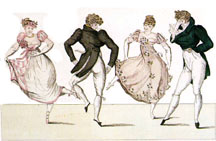
“Please join the Ladies and Gentlemen of The Elegant Arts Society for a weekend of the delightful dances of the era of Jane Austen, Napoleon, Lords Nelson and Byron, and Beau Brummel.” There will be country dances done in period style, quadrilles, waltzes (including the bouncy sauteuse waltz), and reels, including the lively nine-person Country Bumpkin. “Spare Parts” provides the music.
This is part of a weekend of events that includes a park stroll, and tea-and-games on Sunday. Venues are Trinity Lutheran Church and St. Thomas Episcopal Church, both in New Haven. Advance reservations are strongly recommended, as the Assembly has a limit of sixty attendees.
We include the flyer (in PDF): page 1 and page 2; and a registration form.
As well, for further information, dance-instructor Susan de Guardiola’s website (www.kickery.com) and an email address for the Elegant Arts Society (info at elegantarts dot org).
A dance workshop takes place on the Saturday from 2:00 to 4:30, with the Assembly Ball beginning at 7:30 p.m. Period costume is admired and encouraged, but not required (though they will assist you in proper attire should you desire!); otherwise, dress is formal for the ball, informal (no jeans or T-shirts) for the card party, and casual for the workshop.
Corinne! Congratulations on winning the book giveaway of Juliet Archer’s The Importance of Being Emma! Please email me your address and contact information – the publisher Choc-Lit will send you the book directly.
Many thanks to everyone for the great questions and comments – and especially to Juliet Archer for her in-depth responses that gave us some great insights into her imaginative re-creation of a 21st century Emma and Mr. Knightley. Cannot wait for the next book with Captain Wentworth and Anne!
[On a side note – I have Austen scholar Dr. Joan Klingel Ray here with me for the weekend as she will be speaking at our JASNA-Vermont gathering tomorrow – she happily assisted me by pulling the winning name out of a hat this evening! I also I think she has become very interested in this very modern Mr. Knightley!]
Again, thanks to all, and a hearty thanks to Laurel Ann at Austenprose for posting the book giveaway news on Jane Austen Today – and hence sending all those comments our way!
Reminder to all: the deadline for posting comments and / or queries to author Juliet Archer to win a free copy of The Importance of Being Emma is midnight Friday September 25!
A reminder to all who happen to be in lovely autumnal Vermont on Sunday September 27, to join us for our celebration of Jane Austen’s move to Chawton! We are hosting former JASNA President and current President of the North American Friends of Chawton House Library Joan Klingel Ray.
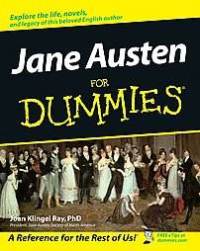
Author of Jane Austen for Dummies, Prof. Ray, as “Doctor of Austenology” will regale us with her humorous Austenesque insights in her presentation “Jane Austen for Smarties” ~ to be followed by a mini-concert with Lar Duggan and Dominique Gagne of “Impropriety” and dancing demonstrations by a few couples from the Burlington Country Dancers[with our own JASNA member Val Medve and husband Tom!] Light refreshments will be served, plenty of time for questions and answers with Joan, and copies of JA for Dummies will be available for sale – all graciously autographed by the author!
Dr. Ray is a Professor of English and President’s Teaching Scholar at the University of Colorado, Colorado Springs. She has published scholarly articles on Charles Dickens, George Herbert, Nathaniel Hawthorne, Samuel Johnson [the subject of her dissertation], and thankfully for all of us, Jane Austen. A number of these articles on Austen are available at the JASNA website, and I append several of the links here for your reading enjoyment.
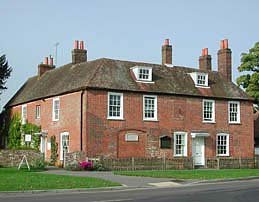
We are celebrating the 200th anniversary of Austen’s July 1809 move to Chawton Cottage. After five years of living in Bath [1801-1806] and three years in Southampton [1806-1809], Mrs. Austen and Cassandra and Jane finally were coming home to their beloved Hampshire. Her brother Edward Knight [nee Austen] had inherited the estate at Chawton House, now home to the Chawton House Library for Early Women Writers, and offered the nearby Cottage to his mother and two sisters. It was here that Austen was finally able to persue her writing – she revised the three novels she had penned at Steventon [Northanger Abbey, Sense & Sensibility, Pride & Prejudice] and wrote three more [Mansfield Park, Emma, Persuasion]. We can be forever grateful to Edward for this gift of a such a home!
Hope you can join us for the celebration! The event runs from 2-5 pm and is free and open to the public. The Hauke Family Campus Center is at 375 Maple Street, Champlain College, Burlington, Vermont.
“Victorians versus Victorians – Understanding Dear ‘Aunt Jane’,”Persuasions30 (2008), p. 53-66. [not yet online; this is also the paper of her “Smarties” talk, so don’t read it if you are joining us on Sunday!]
And finally, see the post at AustenBlog for August 18, 2006, where Mags and Joan have a lively conversation on reading Austen, writing about Austen, JASNA, the AGMs, the writing of Dummies, and the dangling “equipment” of pigs in the 2005 Pride & Prejudice.
And now, after all that reading homework, please join us on Sunday!
Take a quick look at the JASNA website where a select bibliography on “Austen’s Siblings in Fact and Fiction in JASNA Publications” has been posted ~ all in preparation for the upcoming AGM in Philadelphia, City of Brotherly Love. All the articles are in JASNA publications, many with online links.














 Jane Austen in Vermont