Austen Literary History & Criticism · Book reviews · Books · Collecting Jane Austen · Jane Austen · Jane Austen Societies · JASNA · Literature · Regency England

The JASNA 2012 AGM in Brooklyn ~ Part I: My Jane Austen Book Stash

I have not gone missing, though it may seem that indeed I have fallen off the planet – not quite so dramatic though it does almost feel like that – we have sold our house and amidst the joys of house packing, packing up my book business – all gone to storage as we do not have a place to call home – concerns about my son’s surgery, a September 23rd JASNA-Vermont event of grandiose proportions [three speakers, a fabulous afternoon!], and then off to the JASNA AGM in Brooklyn – a lovely respite into the late 18th century from which I am still fighting re-entry!  I was hoping to post about the AGM right away and fear I am slowly forgetting about all the fabulous events of Jane Austen Land in Brooklyn – but I shall start today with a booklist of new purchases – the Emporium filled with goodies as usual – and though the lack of a home and the memory of packing all those books forced me into more conservative behavior at the book stalls, I confess that book buying is my only true vice and I could not completely resist, so here are the latest additions to my Jane Austen library:!
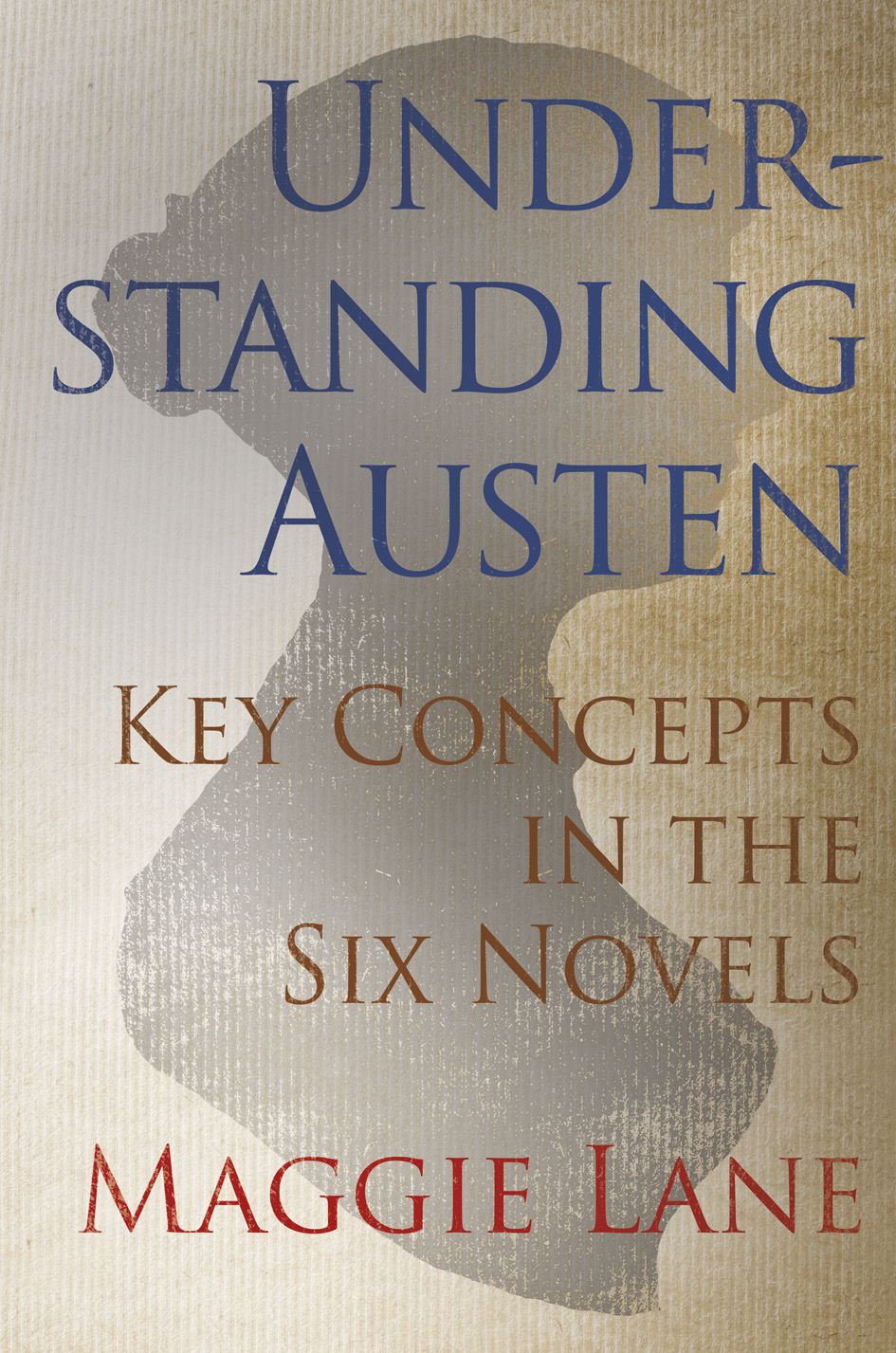
Maggie Lane. Understanding Austen: Key Concepts in the Six Novels. London: Robert Hale, 2012.  ISBN: 978-0-7090-9078-6

Lane has written a number of Austen-related texts and this book will be a most welcome addition to my collection of her other works. Her essays in Jane Austen’s Regency World magazine are always insightful, often just focusing on a single term and how Austen employs it [for example in the Mar / April 2011 issue, she takes on Austen’s concept of “home”] – in this book, Lane delineates Austen’s 18th century language, clarifying for the reader the meanings of such words as “elegance” and “openness” to “candour” and “gentility” and “mind” and “spirit” – a lively entry into Austen’s world that adds to our understanding and appreciation of what she was really saying to her readers…
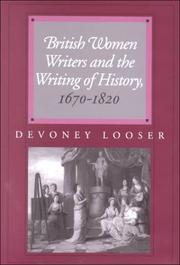
Devoney Looser. British Women Writers and the Writing of History, 1670-1820.  Baltimore: Johns Hopkins UP, 2000. ISBN: 0-8018-6448-8

Ashamed to say I do not have this in my collection – so happy to remedy that with this discussion of Lady Hutchinson, Lady Mary Wortley Montagu, Charlotte Lennox, Catharine Macaulay, Hester Lynch Piozzi, and Jane Austen and their historically-informed writings… perfect winter reading…
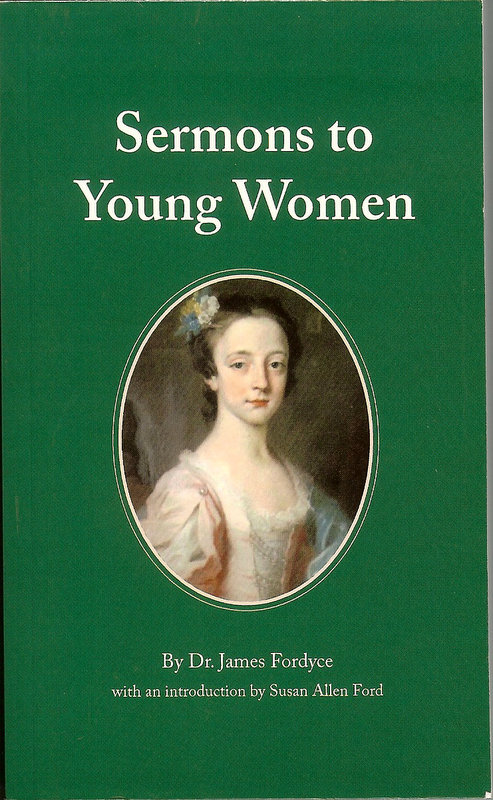
James Fordyce. Sermons to Young Women. Introduction by Susan Allen Ford. Chawton: Chawton House Press, 2012.
ISBN: 978-1-907254-07-9

One of the best-selling conduct books of Jane Austen’s day, Fordyce’s Sermons to Young Women we mostly know as the reading material of the odious Mr. Collins, the words of which Lydia Bennet patently ignored… This is a paperback facsimile of the 10th edition from the Chawton House Library collection, and necessary reading material if one is to understand the world that Jane Austen was writing in – we might laugh at some of the directives for female behavior now and think we indeed have “come a long way baby” – but read it we must to truly “get” Austen… purchase supports the Chawton House Library, and as Susan Allen Ford, JASNA’s intrepid Persuasions editor, has written the introduction, one should just add this to their shelves without further ado…

******************
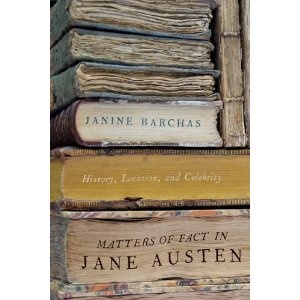
Janine Barchas. Matters of Fact in Jane Austen: History, Location, and Celebrity. Baltimore: Johns Hopkins UP, 2012.  ISBN: 978-1-4214-0640-4

“Janine Barchas makes the bold assertion that Jane Austen’s novels allude to actual high-profile politicians and contemporary celebrities as well as to famous historical figures and landed estates…the first scholar to conduct extensive research into the names and locations in Austen’s fiction by taking full advantage of the explosion of archival materials now available online.” [from the jacket]

I had the pleasure of introducing Professor Barchas at her AGM presentation on “Jane Austen Between the Covers: A Brief History of Book Cover Art.” She took us through the last 200 years of marketing Jane Austen through the physical aspect of the book, a long-term project she is working on to create a visual bibliography of Austen’s works.  Barchas has given a number of breakout sessions at the past AGMs, always incorporating the graphic and visual aspects of Austen’s world and tying them to her fiction.  I am most anxious to read her newest work, and can heartily recommend it…

Claudia L. Johnson. Jane Austen’s Cults and Cultures Chicago: U Chicago P, 2012.  ISBN: 978-0-226-40203-1

Also another must-have for your Austen collection… Johnson “shows us how Jane Austen became ‘Jane Austen,’ an exalted yet seemingly ordinary figure… [by passing] through the four critical phases of Austen’s reception: the Victorian era, the First and Second World Wars, and the establishment of the Austen House and Museum in 1949…” [from the jacket]

Elizabeth Aldrich. From the Ballroom to Hell: Grace and Folly in Nineteenth-Century Dance Evanston: Northwester UP, 1991.  ISBN: 0-8101-0913-1

This book went into a second printing in 2000, so very happy to pick it up. It offers up “a collection of over 100 little-known excerpts from dance, etiquette, beauty , and fashion manuals from roughly 1800-1890, to include step-by-step instructions for performing the various dances, as well as musical scores, costume patterns,  and the proper way to hold one’s posture, fork, gloves, and fan…”

Hazel Jones and Maggie Lane. Celebrating Pride and Prejudice: 200 Years of Jane Austen’s Darling Child.  Bath: Lansdown Media, 2012.  ISBN: 978-0-9573570-0-6

A compact, illustration-filled tribute to P&P, as Jones and Lane “investigate the reasons for its popularity and describe the extraordinary history, reception and afterlife of the phenomenon that is Pride and Prejudice.” [from the back cover].  I was fortunate enough to be purchasing this from publisher Tim Bullamore just as Maggie Lane was at the Jane Austen’s Regency World magazine table – so having it signed by both authors is an additional treat! – and Colin Firth graces the cover, so who could resist!

Sarah Emsley, ed. Jane Austen and the North Atlantic: Essays from the 2005 Jane Austen Society Conference in Halifax, Nova Scotia, Canada Jane Austen Society, 2006. ISBN: 0-9538174-7-4

I had wanted to go to this conference but was alas! unable to, so happy to pick up this collection of four essays – have meant to since 2006 when it was first published…
The Jane Austen Companion to Love. Naperville: Sourcebooks, 2009.  ISBN:  978-1-4022-4016-4

This was a lovely gift from Sourcebooks in our AGM bag of goodies…. Filled with quotes from the novels and illustrations by the two Brock brothers – a perfect bedside book…and gift for your favorite Austen-loving friend.

***********************

Several books highlighted at the AGM I already have, so shall give them a mention here as well:

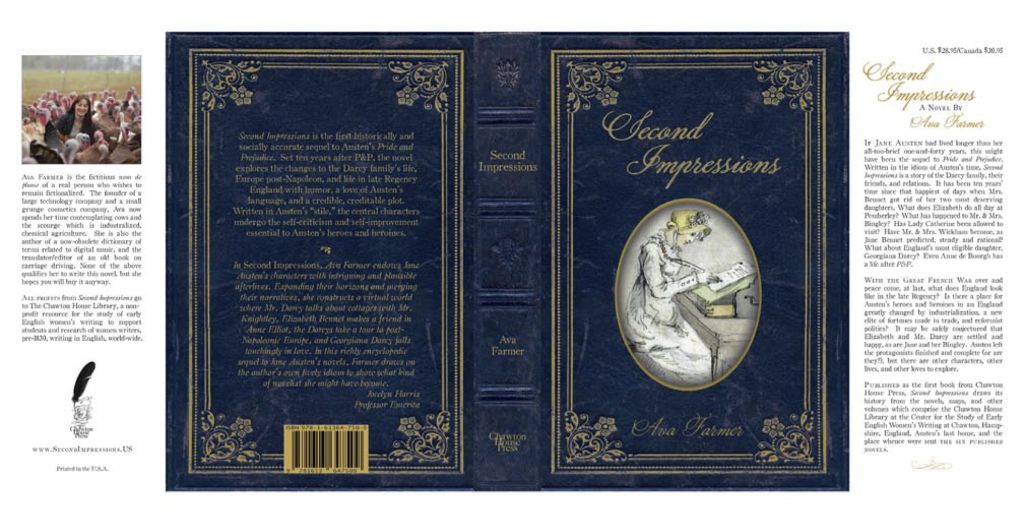
Ava Farmer, a.k.a. Sandy Lerner. Second Impressions.  Chawton House Press, 2011. ISBN: 978-1-61364-750-9

Ms. Lerner was at the AGM as a plenary speaker – her talk “Money Now and Then: Has Anything Changed?” – was an interesting analysis of whether Jane Austen was knowledgeable about the issue of money in her novels – will write more about this in another post – but want to mention her book here – she will be coming to Vermont in December to speak at our annual birthday Tea! – and her book will be available for sale, all profits to support Chawton House Library. You can visit the book’s website here: http://www.secondimpressions.us/

Susannah Fullerton. A Dance with Jane Austen: How a Novelist and her Characters went to the Ball.  London: Frances Lincoln, 2012.  ISBN:  978-0-7112-3245-7

A delight to meet and chat with Susannah, the president of JASA, and author also of Jane Austen and Crime, one of my favorite books on Austen.  Here Susannah takes on the Regency ballroom, filled with beautiful contemporary illustrations, and everything you wanted to know about Dance!

Juliette Wells. Everybody’s Jane: Austen in the Popular Imagination New York: Continuum, 2011.  ISBN:  9781441145543

Nearly done with this one – and another must-have for your Austen library: “An investigation of Jane Austen’s popular significance today – why Austen matters to readers, how they make use of her novels, what they gain from visiting places associated with her, and why they create works of fiction and nonfiction inspired by her novels and life.” [from the back cover]
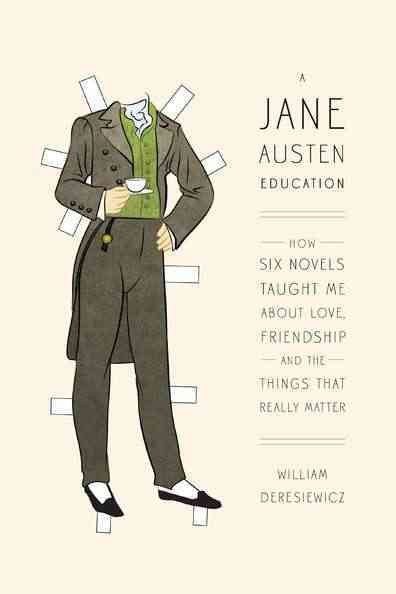
William Deresiewicz. A Jane Austen Education: How Six Novels Taught Me About Love, Friendship, and the Things That Really Matter.  New York: Penguin, 2011.

Deresiewicz spoke the evening of the Ball on “Becoming a Hero: Being a Man in Austen’s World” – his book is a delightful journey through the six novels and how his reading of them made him a better man…

*************************

Used Books? – my real downfall, but I only bought two items from the used bookseller Traveler’s Tales, where I usually drop a bit more blunt – I didn’t get to the booth until a few days after the Emporium opened and most items of interest were already gone… but I did find this:
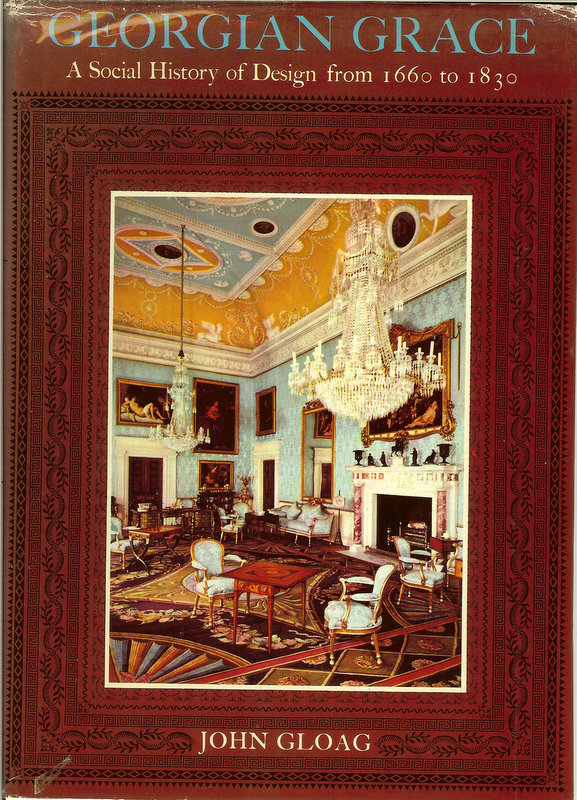
John Gloag. Georgian Grace: A Social History of Design from 1600 to 1830. London: Spring Books, 1967, c1956. – a must have for anyone interested in the architecture and decorative arts of the period – who can resist a book with chapters such as “‘A Dish of Tea’” and “Pray be seated” and “‘The toilet stands dispay’d’” and the like!

And this, a Rowlandson print – you must visit the Jane Austen’s World blog where Vic [my delightful roommate!] shares her purchase of FOUR of these Rowlandson prints!

Here is my one and only: “The Harvest Home” by Thomas Rowlandson (1821)

****************

…and last but not least, my favorite annual purchase at the AGMs is the Wisconsin Region’s “A Year with Jane Austen” Calender, this for 2013 a celebration of Pride and Prejudice: you can order your own copy here: http://www.jasna.org/merchandise/calendar-2013.html [I purchased a number to sell at our JASNA-Vermont Austen Boutique…]

******************

More to come about the AGM so stay tuned!

c2012 Jane Austen in Vermont
Jane Austen · Literature

Jane Austen ~ A Poem

Found in my research travels for the 2008 Persuasions “Jane Austen Bibliography”: a poem by X. J. Kennedy on Jane Austen. Mr. Kennedy is a “poet, translator, anthologist, editor, and author of children’s literature and textbooks on English literature and poetry.”

Jane Austen’s Donkey Cart – Chawton

 Jane Austen Drives to Alton in Her Donkey Trap

Disappointing waters at Cheltenham Spa
Hadn’t erased dark patches from her skin,
Nor could she still walk miles untiringly.
Well, then. Out back she harnessed Polly Sue
And set off into kindled warmth that May
Squandered on the dregs of day.

“Composition seems to me impossible,” she said,
“With a head full of doses of rhubarb
And joints of mutton”—
Nevertheless, on the rough road back to Chawton,
She closed a stubborn sentence in her mind
As one might fasten a button.

Looming, the near-horizon wore a hue
Softer than garnet’s, fullness she might carry,
The first shy sycamore leaves
Uncertainly poking through
Like the affections of a girl
Whose mother hadn’t decreed a man to marry.

With faithful clop her donkey drew the load
Of oolong, sugar, pink embroidery thread,
Her quiet drive portending one last story.
Today, our rented compact squeezes left,
Scrapes weeds and fenceposts while around the road’s
Blind bend there thunderstorms a ten-ton lorry.

_________________________

From:

Kennedy, X. J. “Jane Austen Drives to Alton in Her Donkey Trap, and: Temps Perdu, and: The Odors of New Jersey.” Hopkins Review 1.3 (2008): 413-15.

[Donkey Cart image from Pinterest]

Further reading:

The X. J. and Dorothy M. Kennedy website

X. J. Kennedy at Wikipedia [contains a full list of all this works]

Mr. Kennedy is scheduled tonight, Tuesday, July 17, 6:30 p.m, for a reading at the Center for the Arts, Cafe at the Somerville Armory, 119 Highland Ave., Somerville, MA.  Two other poets to be announced; open mike.  Admission $4.

c2012 Jane Austen in Vermont
Auctions · Books · Jane Austen · Literature · Rare Books

Jane Austen on the Block! ~ The RING and the Books…

An exciting day in Austen-Land! The much-touted Ring is up for auction!, as well as first editions of five of Austen’s novels [wherever did the Sense and Sensibility end up?] – here are the details from Sotheby’s Sale No. L12404 English Literature, History, Children’s Books and Illustrations – London | 10 July 2012  – I will report later today the results… See the results in red below – to include buyer’s premium…..

Lot 59: Austen, Jane. GOLD AND GEM SET RING

ESTIMATE: 20,000 – 30,000 GBP Sold for £152,450  (about $236,298.)- also learned that the ring is actually natural turquoise not the odontalite as noted in the catalogue.  The bidding was quite fun to watch – all quite dramatic as the auctioneer baited the bidders in room, on the telephone and the internet  to keep the bidding going…  [update 2: “a battle between eight bidders … was eventually bought by an anonymous private collector over the phone, the auction house said” (from Reuters.com)]

set with a cabochon blue stone, natural turquoise, size K½ with sizing band, once belonging to Jane Austen, in a contemporary jeweller’s box (“T. West | Goldsmith | Ludgate Street | near St Paul’s”)

[with:] autograph note signed by Eleanor Austen, to her niece Caroline Austen, “My dear Caroline. The enclosed Ring once belonged to your Aunt Jane. It was given to me by your Aunt Cassandra as soon as she knew that I was engaged to your Uncle. I bequeath it to you. God bless you!”, 1 page, November 1863, with address panel on verso and remains of black wax seal impression, fold tears; also with three further notes by Mary Dorothy Austen-Leigh detailing the ring’s later provenance, 5 pages, 1935-1962

[more detailed provenance here: http://www.sothebys.com/en/auctions/ecatalogue/2012/english-literature-history-childrens-books-and-illustrations/lot.59.html – click on “catalogue notes”]
Lot 55: Austen, Jane. MANSFIELD PARK: A NOVEL. EGERTON, 1814

ESTIMATE: 3,000 – 5,000 GBP  Sold for £5250 (about $8,138.)

12mo (174 x 102mm.), first edition, 3 volumes, without half-titles, nineteenth-century half calf, marbled boards,  some spotting and browning, some gatherings proud,  recent expert repairs to binding and joints.

Lot 56: Austen Jane.  NORTHANGER ABBEY: AND PERSUASIAN…WITH A BIOGRAPHICAL NOTICE OF THE AUTHOR, JOHN MURRAY 1818

ESTIMATE: 2,500 – 3,500 GBP  Sold for £4000 (about $6200.)

12mo (175 x 102mm.), 4 volumes, first edition, watermarks, without half-titles, nineteenth-century half calf, marbled boards,, some slight staining to edges of some leaves, browning and spotting, recent expert repairs to joints and spines, some edge-wear. Northanger Abbey was completed in 1798 or 1799, and then substantially revised over time. Persuasion, a more gentle satire of manners, was written between 1815 and 1816. The novels were published posthumously in this tandem edition of 1,750 copies.

Lot 57:  Austen, Jane.  PRIDE AND PREJUDICE: A NOVEL. LONDON:G. SIDNEY FOR T. EGERTON, 1813.

ESTIMATE: 20,000 – 30,000 GBP  Sold for £22,500 (about $34,875.)

12mo (174 x 102mm.), 3 volumes, first edition, watermarks, without half-titles and advertisements, nineteenth-century half calf, marbled boards, B12 of volume 1 crudely opened and slightly creased, some gatherings proud, some spotting, staining and browning to text, volumes 1 and 3 re-backed, some recent expert repairs to binding and joints, some edge-wear.

Lot 58: Austen, Jane. EMMA: A NOVEL. C. ROWORTH FOR JOHN MURRAY, 1816.

ESTIMATE: 10,000 – 15,000 GBP  UNSOLD – bidding went to £7500

12mo (172 x 103mm.), first edition, without half-titles, nineteenth-century half calf, marbled boards, some creases at edges of some leaves, some spotting and browning, some gatherings proud, volume 1 re-backed, recent expert repairs to binding and joints, some edge-wear.

[All titles have the bookplate of Bridget Mary McEwen.]

Further Reading about The Ring:

The Guardian, 6 July 2012: http://www.guardian.co.uk/books/2012/jul/06/jane-austen-ring-for-auction

Diana B. at Austen Authors: http://austenauthors.net/jane-austens-ring

Julie W. at Austenonly: http://austenonly.com/2012/06/21/first-editions-and-jane-austens-ring-a-bumper-austen-sale-at-sothebys-on-july-10th/

[and please note at the end of this post wherein Deirdre Le Faye weighs in on the ring’s provenance – the date of the note from Eleanor Austen as noted in the printed catalogue is incorrect … and now corrected in the online version]

[Text and image from the Sotheby’s catalogue]

@2012 by Jane Austen in Vermont
Books · Jane Austen · Literature

Jane Austen and her “Best Literary Sex Scene”

It seems that on almost a daily basis Jane Austen makes some list or other. Yesterday, The Guardian offered up a list of the “Best Literary Sex Scenes: Writers’ Favourites” and there she is yet again, despite claims that there is no sex in Austen – read here what Howard Jacobson (his The Finkler Question won the 2010 Man Booker Prize) has to say:

Softcore porn is the literary equivalent of those feathery wimp-whips and talcum’d cufflinks you see in the windows of sex toy shops. If you’re going to torture your lover, at least break the skin, I say. You would expect me, therefore, to chose the scene I find most erotic from the pages of De Sade or Bataille. But as far as writing goes, the best sex is the most implicit. So I nominate the scene in Persuasion in which Captain Wentworth wordlessly, and with none of their past grievous history resolved, assists a fatigued Anne Elliot into a carriage. There is no overt sexuality, no titillatory play with power and dependence – he helps her in and that’s that. “Yes – he had done it. She was in the carriage and felt that he had placed her there, that his will and his hands had done it.” Anne might tell herself that the kindness proceeds from what remains of “former sentiment”, but Wentworth’s hands have been on her body, and we never doubt that it’s her body that receives the shock of the contact as much as her mind.

 I couldn’t agree more … what might your favorite sex scene in Jane Austen be?

You can read about the other titles and scenes here:

http://www.guardian.co.uk/books/2012/jul/06/best-literary-sex-scenes-writers-favourites

***********************

And also check out John Mullan’s latest “10 of the Best” – Jane Austen appears on most of his lists it seems!  this week is about “wills” and of course, what would be the plot of Sense and Sensibility without that pesky will:

http://www.guardian.co.uk/books/2012/jul/06/john-mullan-ten-of-best-wills

Sense and Sensibility by Jane Austen. The novel is shaped by a will. Henry Dashwood’s uncle leaves his wealth not to his own family, but to his son by a previous marriage and a four-year-old grandson. His wife and daughters, who have attended on the old man for years, are disinherited in favour of a child who has gained his affections by “an imperfect articulation, an earnest desire of having his own way, many cunning tricks, and a great deal of noise”.

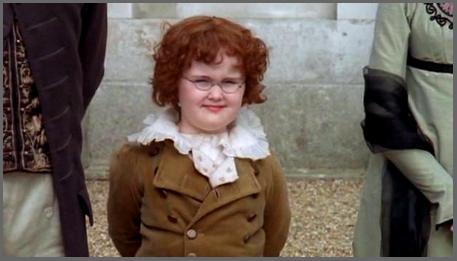
[Master Harry Dashwood – image from Austenprose]

You can link to Mullan’s other weekly lists here: http://www.guardian.co.uk/books/series/10ofthebest

c2012 Jane Austen in Vermont
Austen Literary History & Criticism · Collecting Jane Austen · Jane Austen · Jane Austen Societies · JASNA · Literature

JASNA Persuasions 33 and Persuasions 32.2 ~ It’s All About Sense & Sensibility!

News from JASNA:

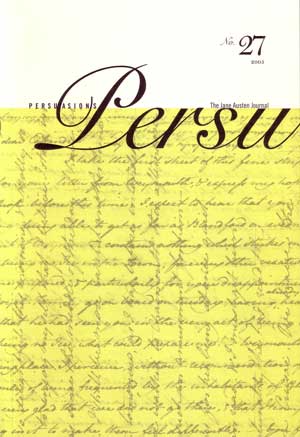
The latest issue of Perusasions – volume 33 [not as the image indicates!], papers from the Fort Worth AGM on 200 Years of Sense and Sensibility has been mailed to members [and like me you hopefully already have received it!]  The journal is not online – you must be a JASNA member to receive it.  Here is the table of contents:

http://jasna.org/persuasions/printed/pers33.html

And Persuasions On-Line 32.2(Summer 2012) is now available – and this is online:

200 Years of Sense and Sensibility
Selected Essays from the Conference at the University of St. Andrews

 Here is the index page: http://jasna.org/persuasions/on-line/vol32no2/index.html

Certainly enough interesting reading for the weekend!

@2012 Jane Austen in Vermont
Great Britain - History · Jane Austen · Literature

Guest Post: Shakespeare’s Richard III at the Swan Theatre

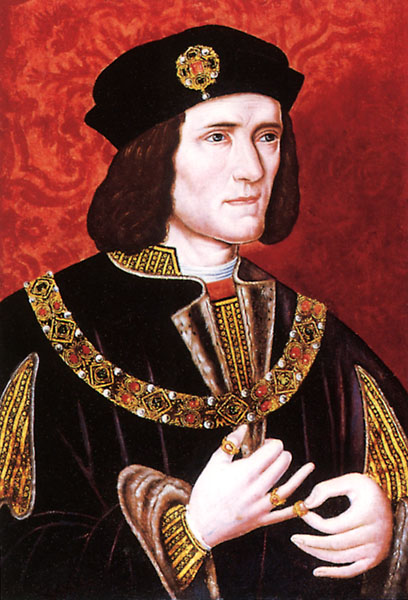
Richard III, by an unknown artist – National Portrait Gallery

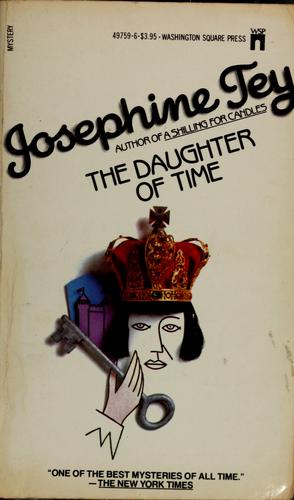
Fellow Readers:  I welcome this morning Christopher Sandrawich, in a guest essay on the new production of Richard III at the Swan Theatre in Stratford-upon-Avon – [Chris last posted here on his visit to Worthing, wherein he wrote of his concerns about the closing of the “Library Passage”, the twitten frequented by Jane Austen during her stay in Worthing in 1805.] – I expressed some jealousy of his attendance at this new take on Richard III, and he kindly offered to write a full review, which only increases my jealousy to nearly rabid levels … I confess to an obsession with the much maligned Richard since reading many years ago Josephine Tey’s The Daughter of Time,

[The Daughter of Time – cover from Open Library]

where through the eyes of her detective Alan Grant , she sets out to “prove” the innocence of Richard III – [ a compelling read and I highly recommend it!] – but I digress! – and how does any of this relate to Jane Austen you might ask? – well,  let’s recall her first paragraph in Northanger Abbey, where she denigrates Catherine’s father so: 

Her father was a clergyman, without being neglected, or poor, and a very respectable man, though his name was Richard … 

And later in a 1796 letter to her sister, she remarks on Mr. Richard Harvey’s match being put off, “till he has got a better Christian name, of which he has great Hopes.” [Letters, p. 10] 

No one has ever satisfactorily explained this aversion to the name ‘Richard’ – and if you read her History of England, her tale of Richard III is a tad contradictory, so one does not quite know what she really thought [forever the elusive Jane] – though she does say she is “inclined to suppose him a very respectable Man” [see above!] and later “I am inclined to beleive true” that he did not kill his two nephews. So Jane likely would have been a reigning member of the Richard III Society, no?

[You can read Austen’s History here at the British Library, and here at Jane Austen’ Fiction Manuscripts , both in the original edition and facsimile. Here is Cassandra’s sketch of Richard, hump and all:

… but I am digressing again, the ‘play is the thing’ after all, and here is Chris on that right now,  Shakespeare’s view of poor Richard though it be:

******************

Richard III at the Swan Theatre, Stratford upon Avon
on Thursday 15th June 2012

As those in the know, know, we are well into the start of the World Shakespeare Festival 2012 planned to coincide with the Olympic Games and Para-Olympic Games taking place in London, England this year. Using some thirty stages throughout the UK and bringing artists, companies, directors and actors from all over the world we are seeing an unprecedented celebration of all of Shakespeare’s work which is as daring as it is inspiring as all the productions and adaptations are fresh and new. As we live close to Stratford, if ninety miles is close, then six plays have been pre-booked for family and friends. As the Tempest at the RSC has already come and gone leaving us panting for the next, then a few days ago it was the turn of Richard III at the Swan Theatre. Four still to see.

All three Stratford stages have a new, and similar, look with a “Thrust Stage” and a three tiered horseshoe around for spectators which allows for uninterrupted views and a warm closeness to the action that is almost tangible. The action is as central to the audience as seems possible to achieve and all with the minimum of fuss. All the stages also allow for actors to make entrances along aisles through the spectators onto any of the four corners, and frequently lines are spoken just feet away or from behind the spectators. This allows the audience an intimate relationship with whatever is unfolding right in front of, or alongside, their vantage point. The RSC, The Swan and the Courtyard now differ only in size. Chatting to other theatre goers before the performance we found some who had been to the RSC the previous night buzzing with fervour about Julius Caesar whilst others who had seen King John at The Swan were interested in what a different play, but with the same actors, would feel like for them. I find these newly redesigned staging arrangements to be an improvement on the old, but I never felt any previous cause for complaint, anyway.

The Programme opens with something ‘saucy’ from James Shapiro that I will share with you,

In 1602, John Manningham, a law student at London’s Middle Temple, jotted down in his journal a racy story that had been making the rounds:

“Upon a time when Burbage played Richard III, there was a citizen grown so far in liking with him, that before she went from the play she appointed him to come that night unto her by the name of Richard III. Shakespeare, overhearing their conclusion, went before, was entertained, and at his game ere Burbage came. Then message being brought that Richard III was at the door, Shakespeare caused return to be made that William the Conqueror was before Richard III.”

David Garrick as Richard III – by Hogarth –Liverpool Museum

Amusing though the story is it provides an insight into just how charismatic, powerful and sexy the character of Richard III appears despite the hump, limp and withered hand on top of being “cheated of feature by dissembling nature”. The problem for any actor playing Richard III is just how to be so very seductive, both with other characters and the audience, whilst trying to resemble “a bottled spider”, and in turn show such a bewildering array of character traits in turn as they suit the opportunity of the moment. Taking the audience with him on his ascent and continuingly vicious butchering ascent to the throne is an art so that we almost feel sorry for his immediate fall happening abruptly in the classical style of the Roman Plays about despots. To say that the character facets and motivations of Richard III are complicated is like saying astronomical distances are large. Much easier to say than to grasp or understand.

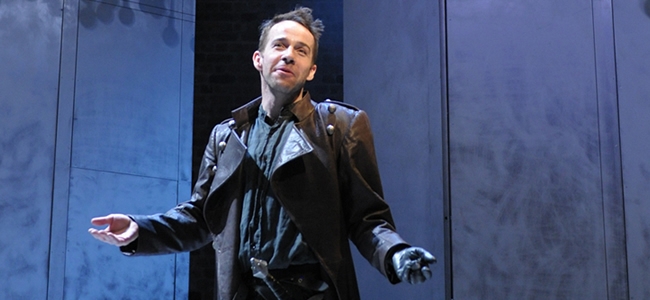
[Jonjo O’Neill as Richard III]

The actors were attired mainly in modern dress apart from weapons and armour but Richard III wears boots and leathers (just like a biker) throughout, even when he puts on ermine for his crowning moment. There is little in the way of props and so the rapidity with which the scenes change from the Tower, to Streets, Castles, Palaces and countryside keeps the pace of this long play galloping along. Including a twenty minute intermission, presumably whilst Jonjo has a lie down and takes pause to get his breath back, this play runs for three and a quarter hours. Only Hamlet’s longer. Jonjo O’Neill and all the cast require a large dollop of stamina to maintain this level of intensity.

The beauty of seeing new productions of Shakespeare’s Plays that bring the old lines afresh to modern audiences is to see how the Director’s interpretation works, or not. It is simultaneously a challenge to avoid reworking the past and a risk to make a new departure into untested waters. I was idly wondering if we were in for a rendition of the play along the lines Richard Dreyfuss’ character in “The Goodbye Girl” is forced to take in his off-Broadway production; and if modern audiences were quite ready yet to see a version in which Richard tries to become King and Queen at once. Well, Roxana Silbert’s direction takes a moderately conventional line, as one might expect.

You can see a clip of O’Neill as Richard III in Act I,  Scene I  here:
[a youtube link that refuses to embed today!]

http://www.youtube.com/embed/K9wzWYtYGBI

However, Jonjo O’Neill’s teeth were blackened (at least I hoped so) so that they resembled “points” reminding me strongly of Christopher Walken’s “Hessian Horseman” in Sleepy Hollow (a film of a Washington Irving story) and I wondered if the same hellish, relentlessly remorseless, murdering intent as the headless horseman was being suggested with each of Gloucester’s crocodile smiles. Whilst on the subject of films I rate Al Pacino’s Looking for Richard very highly indeed. It’s well worth watching and boasts an all-star cast.

Jonjo O’Neill’s depiction of Richard III is wryly beguiling, horrifying, dynamic, passionate, charmingly subtle, brutal, and focused on his ambitious rise, and rise, as those between him and the throne are disposed of piecemeal, by trickery, villainy or craftily laid spoors, and always by the hands of others. The energy displayed throughout in these constant betrayals wanes only as does his declining star in the ghost-filled night before Bosworth Field. To watch at the start of events Jonjo confront, bewilder, disarm and finally seduce the beautiful Lady Anne as she stands by her husband’s bier is as exciting as it seemed unlikely in its success. After this he seems capable of anything. 

The role of Richard III is very demanding containing over 1000 lines and about one-third of the play. There is hardly a scene he is not in, but even when he is not speaking other characters are speaking of him, mostly with as much spluttering vim as they can muster. Whilst I thought Jonjo O’Neill’s performance was a triumph, it must be said that the whole cast put a lot of energy and verve into their performances and the rousing ovations given at the end were well-deserved.

First Quarto, wikipedia

In writing this “History Play” about Richard III, Shakespeare synthesises a rich brew of facts and scenarios from a wide range of historical, literacy and dramatic sources. We must recognise the politics of the times and realise that Richard III was the last of the Plantagenet’s and Elizabeth I was a Tudor just like Richmond who defeats him in battle. So, like Thomas More before him Shakespeare paints Richard much blacker than other accounts may show. Looking at likely sources we have Edward Halle’s Union of the Two Noble and Illustrious Families of Lancaster and York (1548) from which Shakespeare takes the nightmares before the Battle of Bosworth and the suggestion for “A horse! a horse! my kingdom for a horse!” It is said that Shakespeare gets his idea for the wooing of Lady Anne from the Senacan tragedy Hercules furens with Lycus’ wooing of Megara. There is also a document edited by Raphael Holinshed, Chronicles of England, Scotland and Ireland (1587) from which Shakespeare takes the idea of Henry’s corpse bleeding afresh with Richard III mere presence coupled to the violence of the original deed. But it is Thomas More’s History of King Richard III, so biased against Richard as to make him Machiavellian, and “The Prince” was widely read at the time, and gives full reign to the idea of ruthlessness in powerful men when disposing of competitors whilst dissembling and breaking promise as it suits. It must be borne in mind that these plays are fictions and any attempt to treat them as historically accurate is doomed to failure. It was Shakespeare’s intention, it seems, to entertain and explore ideas about human relationships and the truth of history is a casualty in this exercise. The Play is very popular and still entertains today, and in turn I was staggered, bewildered and shocked as I followed headlong the tortuous twists and turns (trying not to be confused by the multiplicity of Edwards) in hot pursuit of Richard’s rise to power, and left the theatre thrilled, entertained and wondering if this sort of thing still goes on in the corridors of power . . . . . . . . . . . . . surely not?

************************

Further Reading:

@2012 Jane Austen in Vermont, by Christopher Sandrawich
Books · Jane Austen · Literature · Museum Exhibitions · News · Social Life & Customs · Women Writers

In My Mailbox! ~ The Female Spectator Spring 2012

The Female Spectator, (Vol. 16, No. 2, Spring 2012), the newsletter of the Chawton House Library, showed up last week in my mailbox – this 12 page newsletter always offers something new and exciting to be discovered and shared!: 

1. “Chawton Chronicles: A Letter from the CEO” – Stephen Lawrence talks about what has been accomplished at the Library since its inception in 2003, especially the academic initiatives and activities and the Visiting Fellowship Programme.  And he writes of the upcoming Spring Gala of the JASNA-Greater Chicago Region where Sandy Lerner, Elizabeth Garvie, Lindsay Ashford, and Stephen will all be in attendance for the “Chawton Comes to Chicago” event [which took place on May 5 – visit the website for a photo gallery of the event – accessible to members only I’m sorry to say!]

2. A lovely tribute to Vera Quin, author of In Paris with Jane Austen (2005) and Jane Austen in London (2008), by Gillian Dow – you can read my blog post on Ms. Quin here. 

3.  “Talking Portraits at CHL” – by Sarah Parry – about the project to bring to life with actors in full costume the various portraits housed in the Library: the portraits of Mary Robinson, Elizabeth Hartley, and Catherine (Kitty) Clive were the portraits chosen for this first effort. 

[Image of  Catherine “Kitty” Clive from CHL at the BBC Collection]

4. “Curious Consumption: Cookery Books at CHL” – by Lindsey Phillips. An essay on her research into the exchange of culinary information and recipes between Britain and the West Indies; included is a recipe for “pepper pot” from Maria Eliza Ketelby Rundell’s American Domestic Cookery (ed. of 1823), which you can find here at Google Books. 

5. “The Day the Descendants Came to Tea: Revelations and Connections from a Chawton House Fellowship” – by Katharine Kittredge, on the author’s study of Melesina Trench (1768 – 1827), an Irish writer, poet and diarist, and Kittredge’s connection with her relatives after her research was published in Aphra Behn Online. [her article in ABO can be found here.]  And click here for Kittredge’s biography of Trench on the CHL website.

Melesina Trench – wikipedia

6.  “The Language of Women’s Fiction, 1750-1830” – a conference report by Christina Davidson – one hopes the papers discussed will be published at some point…?

7. “‘Not in All Things Perfect’: The North Welsh Gentry in Fiction and History” –  Mary Chadwick shares her research on a collection of English-language manuscript letters, poems, etc. written by members of a North Welsh gentry community and collected by one family, the Griffiths of Garn, and how this compares to the writing of the various novelists who set their tales in Wales (including Jane Austen in her Juvenilia!), in particular Elizabeth Hervey’s The History of Ned Evans (1796) [and recently re- published in the CHL / Pickering & Chatto series.

 ******************

And reasons to be at the CHL, and a continuing source of depression for those of us who cannot! : 

Lectures:

June 7 [today!]: Dr Laura Engel on “Much Ado About Muffs: Actresses, Accessories, and Austen”

June 20. Professor Elizabeth Kowaleski Wallace on “‘Penance and Mortification for Ever’: Jane Austen and Catholicism.”

June 25. Evening Talk and Book Launch: Dr. Katie Halsey “‘A Pair of Fine Eyes’: Sight and Insight in Jane Austen’s Novels.”

When Mr. Darcy meditates on the pleasure bestowed by “a pair of fine eyes” in Pride and Prejudice, he does so because eyes are so very expressive. In this talk, Dr Katie Halsey explores the relationship between the physical eye and the eyes of the mind in Austen’s novels.

This talk is part of Alton’s Jane Austen Regency Week, and the launch of Katie Halsey’s new book: Jane Austen and her Readers, 1786 – 1945 [and soon to be added to my bedside table…]

 Exhibition:

“Jane Austen’s Bookshop: An Exhibition” 18 June – 6 July, 2012

This exhibition explores how readers and writers in Winchester shared printed material (books, playbills, engravings &c). Men and women, young and old, gentry and middle classes, rich and poor, Protestant and Catholic – all participated. The Austen family purchased literature from the bookshop of John Burdon (today still a bookshop), while scholars at Winchester College published their works in their own city. The newly founded hospital produced annual reports, and local newspapers such as the Hampshire Chronicle promoted all kinds of publications in advertisements and reviews.

Come to Chawton House Library to learn more about book production and circulation. Find out what kind of material was published in Hampshire in the eighteenth century, and just what the Austen family might have read.

You can receive The Female Spectator from CHL by becoming a member / friend – information is here: I heartily recommend it!

@2012 Jane Austen inVermont
Austen Literary History & Criticism · Collecting Jane Austen · Jane Austen · Literature · News

In My Mailbox! ~ The Female Spectator Vol. 16, No. 1 ~ Chawton House Library

The Female Spectator, Vol. 16, No. 1 (Winter 2012) , the newsletter of the Chawton House Library is out!
Here are the contents to whet your appetite:    

  • “Some Treasures in the Chawton House Library Collection” by Margaret S. Yoon, about her “discovery” at the CHL of two very important books for her studies. 
  • “The Suit for a Case; Or, A Case for a Suit” – by Eleanor Marsden – on the recently restored suit belonging to Edward Austen Knight, and the need for a conservation-grade display case.  [Lovely to see that JASNA member Sue Forgue of the JASNA-Greater Chicago Region, and author of the website Regency Encyclopedia , has already made a generous donation to the cause!] – if your are interested in helping, please email the Development Director at eleanor.marsden@chawton.net
  •  “The Sheridan Trial” – by Helen Cole – an account of the 1787  Trial of Mrs. Lydia Sheridan, wife of Major Henry Sheridan, for adultery with Francis Newman, Esq., and the inclusion of an engraving in the CHL copy that does not seem to fit the tale…
  •  “A Conference of Our Own: On the 20th Anniversary of the BWWA” – by Pamela Corpron Parker – on the upcoming conference of the British Women Writers Association, June 7-10, 2012 at the University of Colorado, Boulder.  See here for more details: http://www.bwwc2012.com/
  •  “Second Impressions by Ava Farmer: A History of a Novel” – by Sandy Lerner – on the writing and publication of her recently published Second Impressions, a sequel to Pride and Prejudice, and 26 years in the making…[see more at the Chawton House Press website
  • “‘Poetry of Taste and Refinements’: Consumer Literature in Nineteenth-Century Annuals” – by Serena Baiesi – on the fashionable gift-books with their collection of engravings and literary pieces, published between 1822 and 1850. 
  • And, “The Chawton Chronicles” – the letter from the CEO Stephen Lawrence [with the very exciting news that Dr. Gillian Dow will be taking on a broader role at CHL as Deputy Chief Executive and Director of Research!]; this issue’s “Faces of Chawton” column on Ray Clarke, the Maintenance Technician at CHL and his appreciation of CHL for his own and future generations; and the always-depresses-me because-I-live-over-here-and-not-over-there “Dates for your Diary” feature of upcoming lectures, tours, and conferences [you can look here on the website for upcoming events: http://www.chawton.org/news/index.html ]

You can visit the Chawton House Library here  and their blog here

If you are interested in membership, you can look here if you are in the US [North American Friends of the Chawton House Library] and here is you are in the UK [Friends of Chawton House Library.

Pickering & Chatto header

Note that Pickering & Chatto is re-publishing a number of the rare books housed in the Chawton House Library collection in new scholarly editions.  This Chawton House Library Series is organized into three areas: Women’s Memoirs, Women’s Travel Writings, and Women’s Novels.  How lovely it would be to buy at least ALL the 10 novels for $675  / £395 ! 

Copyright @2012 Jane Austen in Vermont
Books · Jane Austen · Jane Austen Popular Culture · Literature · Rare Books

A Jane Austen Sighting ~ in Northumberland!

If you have seen the Friday Video on the Two Nerdy History Girls blog today, you will find this great short on the background to the “Keep Calm and Carry On” poster that is now seen and heard everywhere.  I didn’t realize that the poster was discovered in a box at this fabulous bookstore, Barter Books in Alnwick Station, Northumberland, and the rest as they say is history.

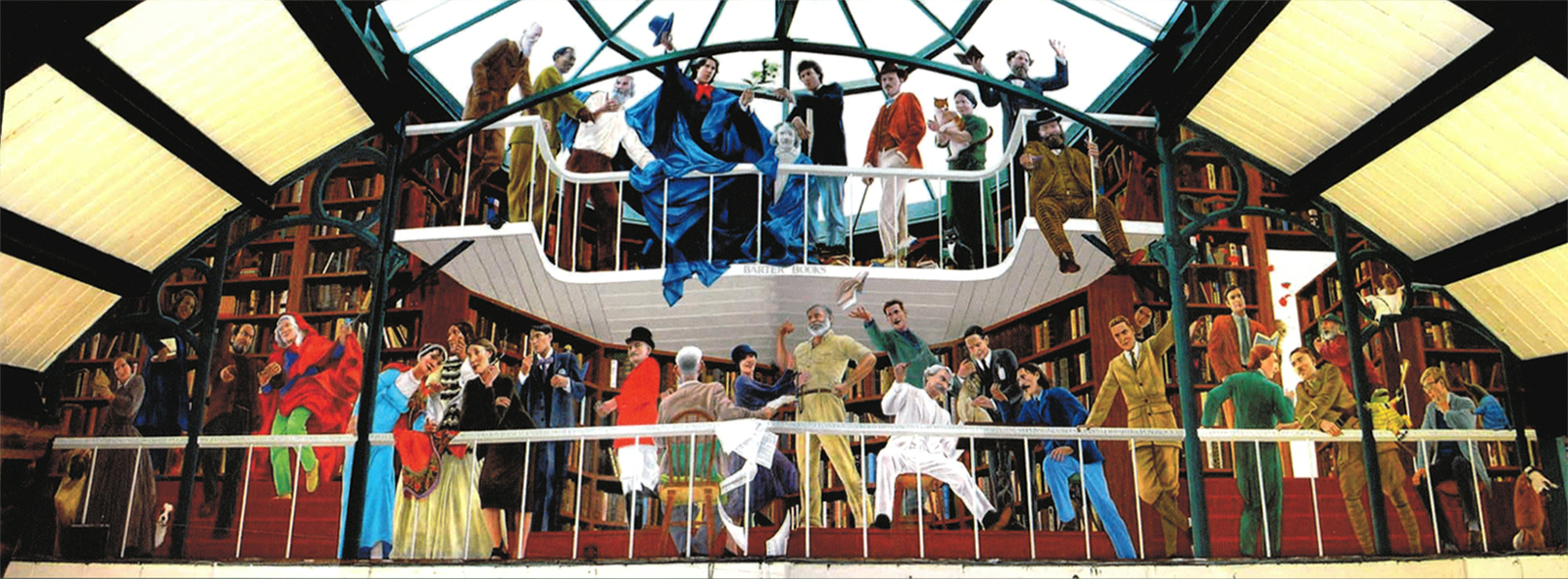
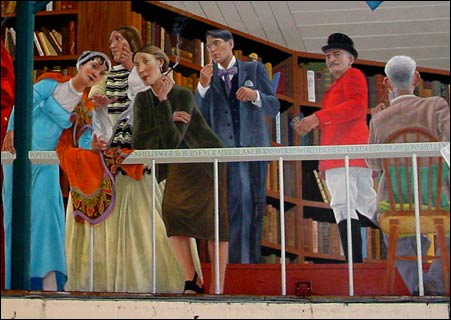
But in searching around the bookstore’s website (one of my addictions sorry to say), I discover a lurking Jane Austen in the “Writer’s Mural” in the shop:  visit the website yourself to explore the painting and enlarge the various images and find out why each author has been included, but here is the full painting, by Peter Dodd, the panel with Jane Austen, and a closeup of her image…

Famous Writers Gallery, by Peter Dodd
Jane Austen and Friends
Jane Austen closeup

Are any of your other favorite writers lurking about here? – if you were to compile such a wall mural, which authors would you put in it?

All Images courtesy of Barter Books – visit them soon!

Copyright @2012 Jane Austen in Vermont
Jane Austen · Jane Austen Popular Culture · Literature · Movies · Query

A Jane Austen Siting ~ Pride & Prejudice in 16 words or less…

Scrolling through the “guide” on my television the other day, in dire need of pure entertainment, I came upon the 2005 Pride and Prejudice, though barely recognizable by its description – it read:

A convoluted courtship begins between a young woman and
the handsome friend of a wealthy bachelor.

And thus a major classic of the English language reduced to sixteen words, with nary a mention of Jane Austen, not to mention Elizabeth or Mr. Darcy! I was quite sure I had slipped off the guide into the Hallmark Channel!

If you had the assignment to do a write-up on any of Austen’s novels in 16 words or less, what would you write?? [I was asked this once in a radio interview and I had a complete brain-cramp and froze up, not my greatest life moment! – one should always be prepared for such a question, don’t you think?]

So Gentle Readers, please comment with your capsule of Austen! – think Twitter but even shorter…

Copyright @2012 Jane Austen in Vermont