Austen Literary History & Criticism · Books · Collecting Jane Austen · Illustrations · Jane Austen · Jane Austen Illustrators · Jane Austen Merchandise · Jane Austen Popular Culture · Literature · News · Publishing History · Rare Books

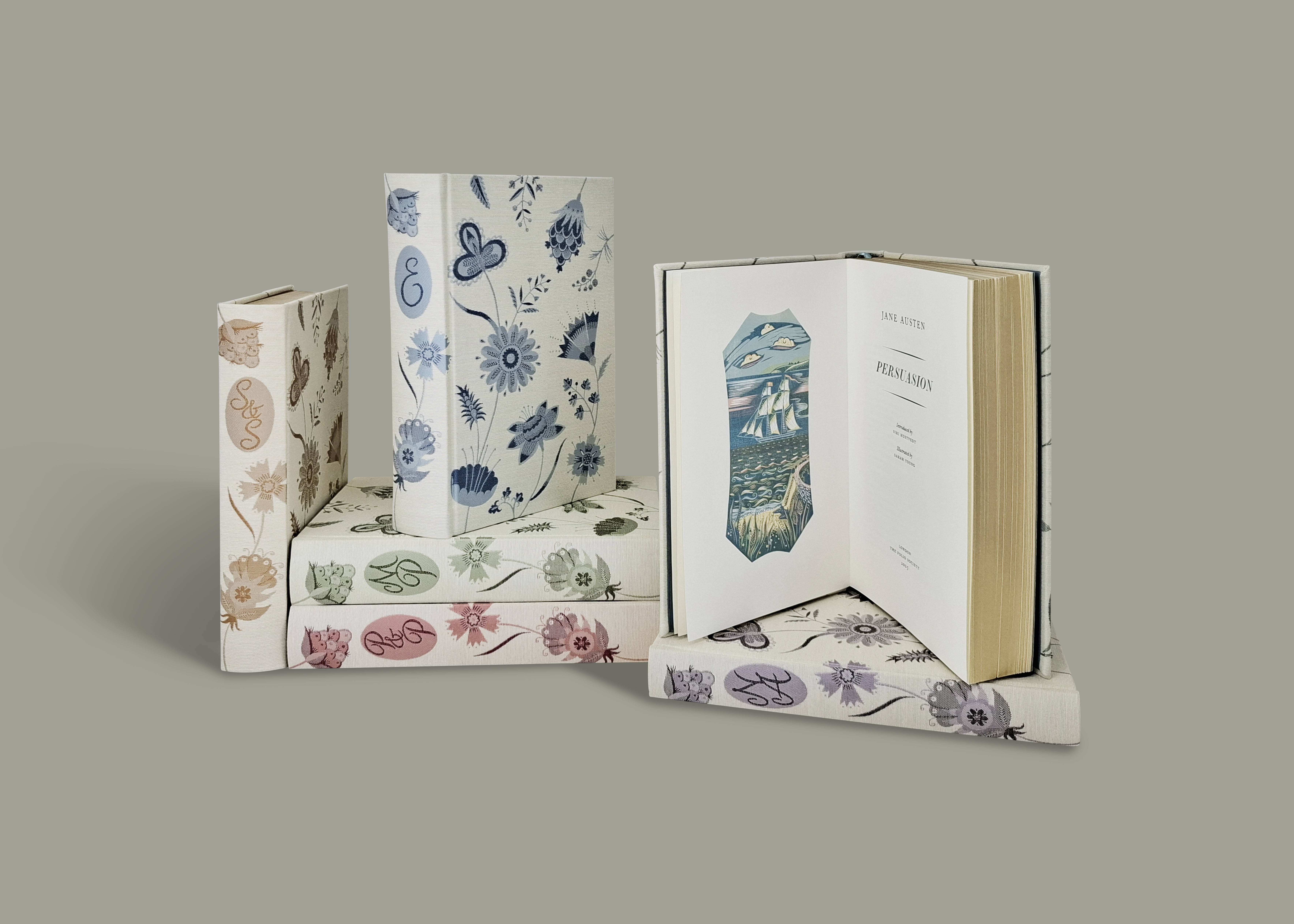
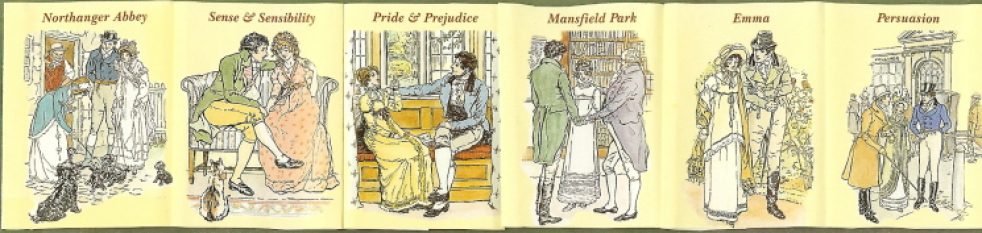
A New Jane Austen Edition! Folio Society 2025

The Complete Novels by Jane Austen, The Folio Society, 2025.

**************

The Complete Novels by Jane Austen, The Folio Society, 2025.

From Pride and Prejudice: “…in earnest contemplation…”
Illustrations © Sarah Young 2025, from The Complete Novels by Jane Austen, The Folio Society.

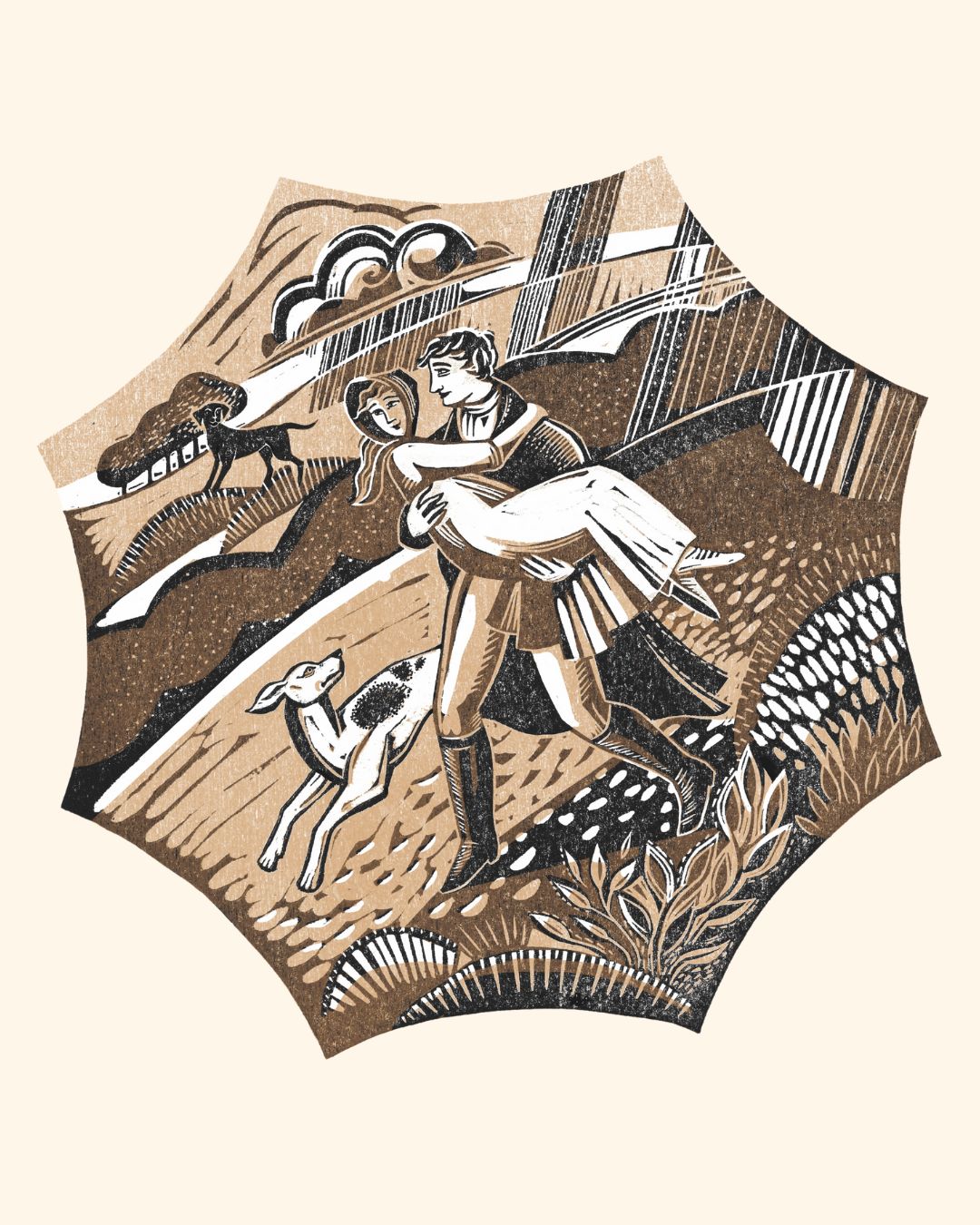
From Sense and Sensibility: the Willoughby rescue…
Illustrations © Sarah Young 2025, from The Complete Novels by Jane Austen, The Folio Society.

From Pride and Prejudice: The Letter!
Illustrations © Sarah Young 2025, from The Complete Novels by Jane Austen, The Folio Society.

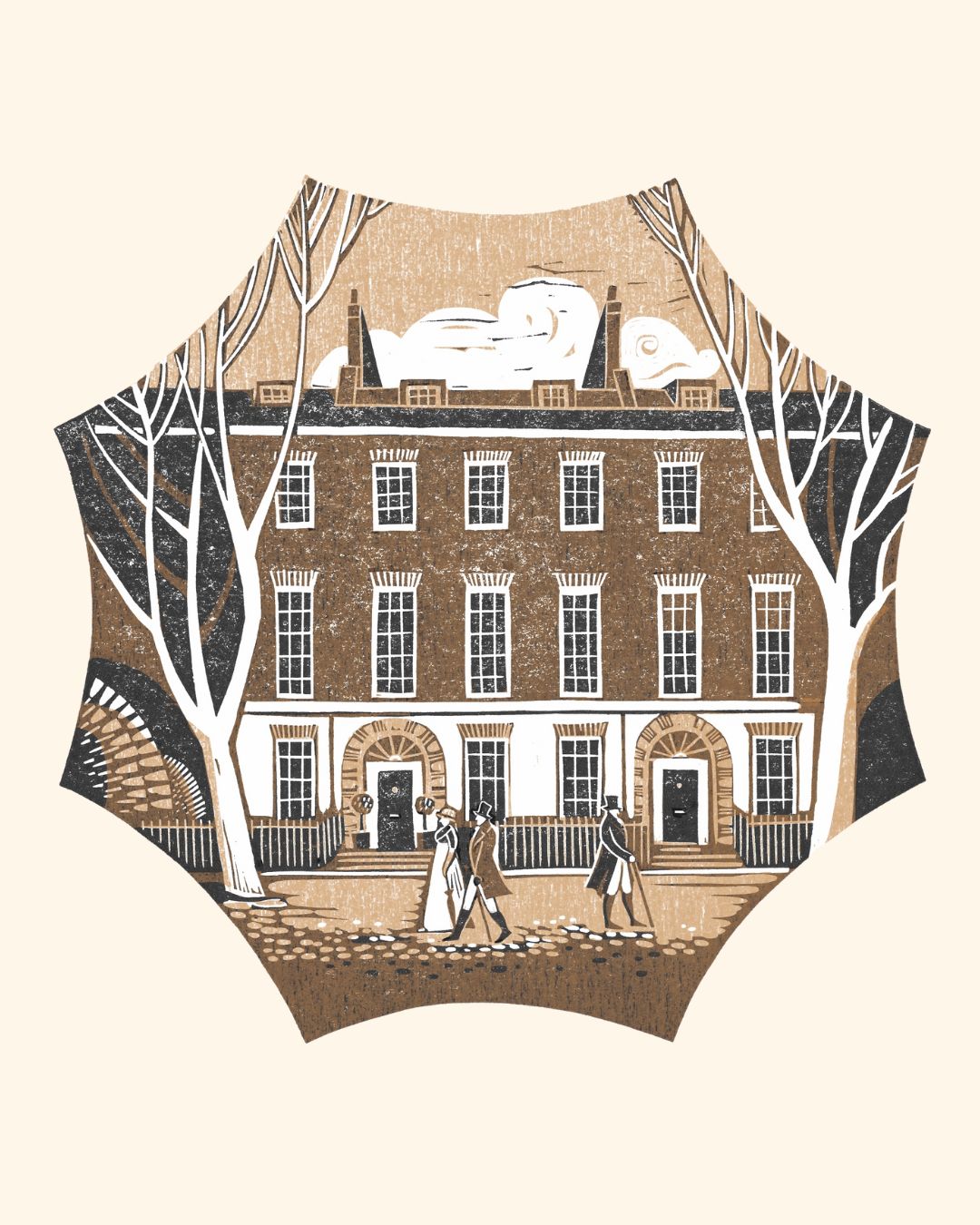
From Sense and Sensibility.
Illustrations © Sarah Young 2025, from The Complete Novels by Jane Austen, The Folio Society.

[you can follow her work on instagram here: https://www.instagram.com/sarah.a.c.young/ ]
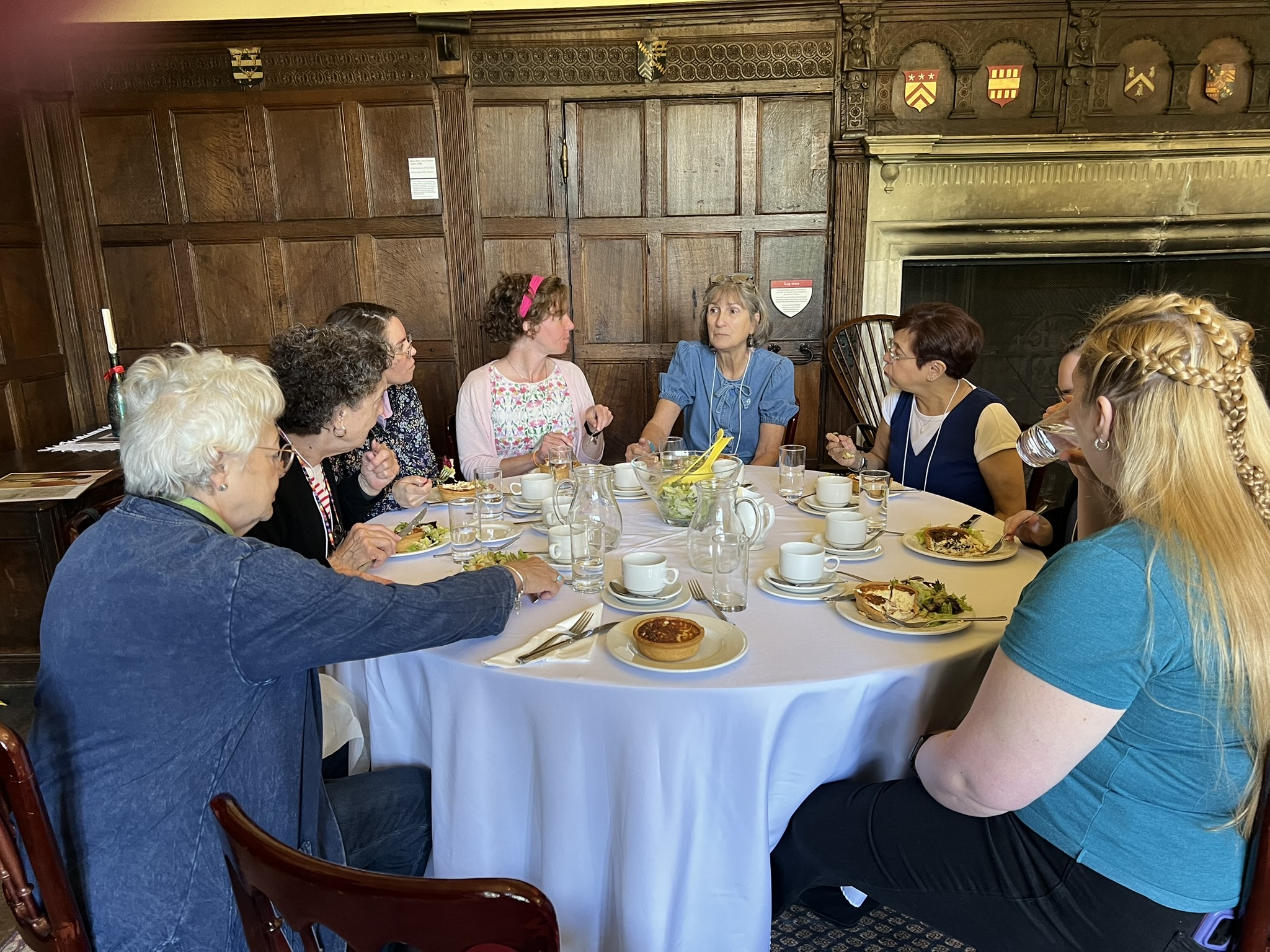
The Complete Novels by Jane Austen, The Folio Society, 2025.

c2025JaneAustenInVermont
Austen Literary History & Criticism · Chawton House · Decorative Arts · Domestic Arts · Fashion & Costume · Georgian England · Georgian Period · Godmersham Park Library · Great Britain - History · Jane Austen · Jane Austen Circle · Jane Austen Merchandise · Jane Austen Popular Culture · Jane Austen Societies · Jane Austen's Letters · JASNA · Museum Exhibitions · NAFCH - North American Friends of Chawton House · Rare Books · Regency England · Social Life & Customs · Women Writers
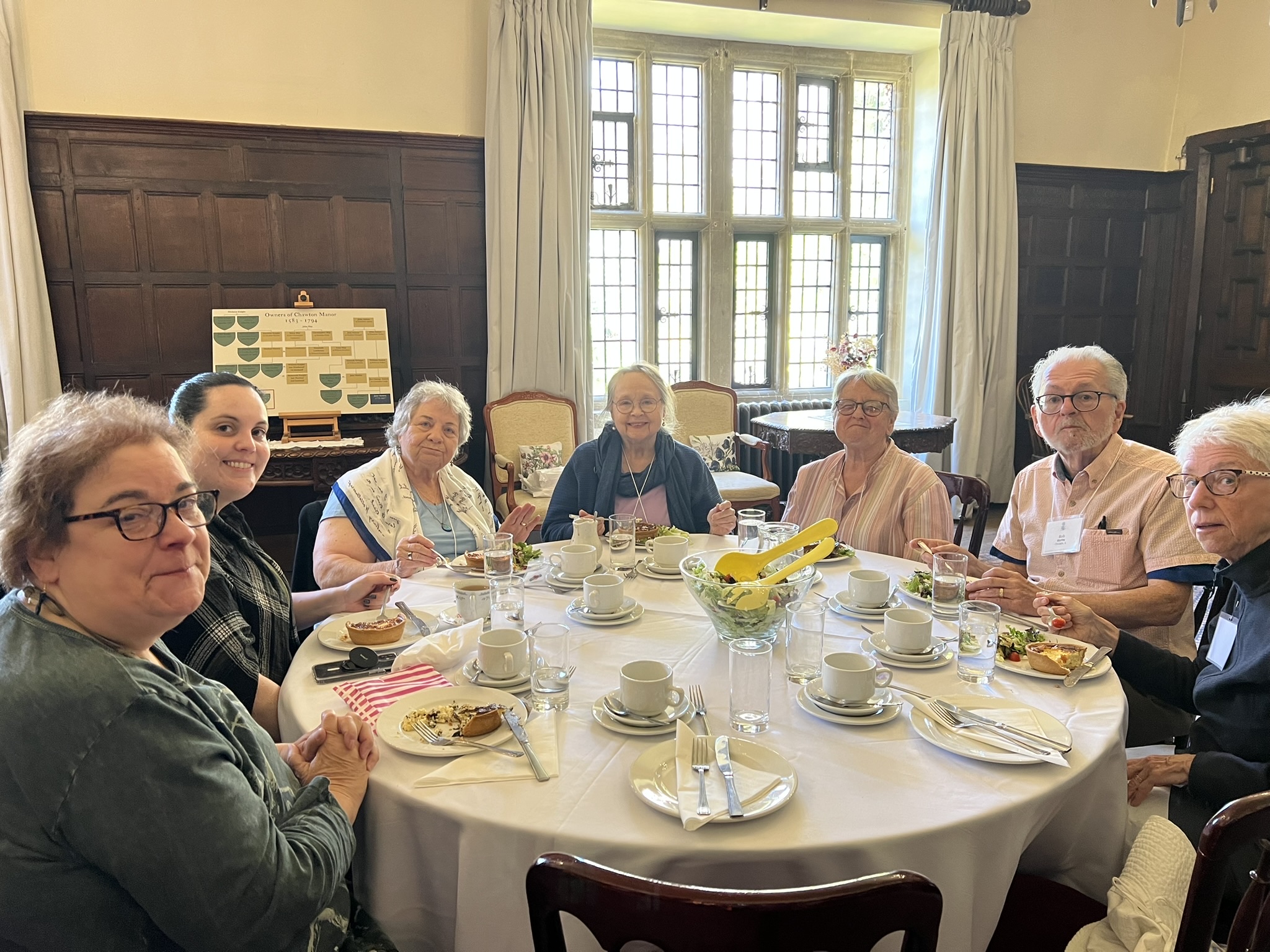
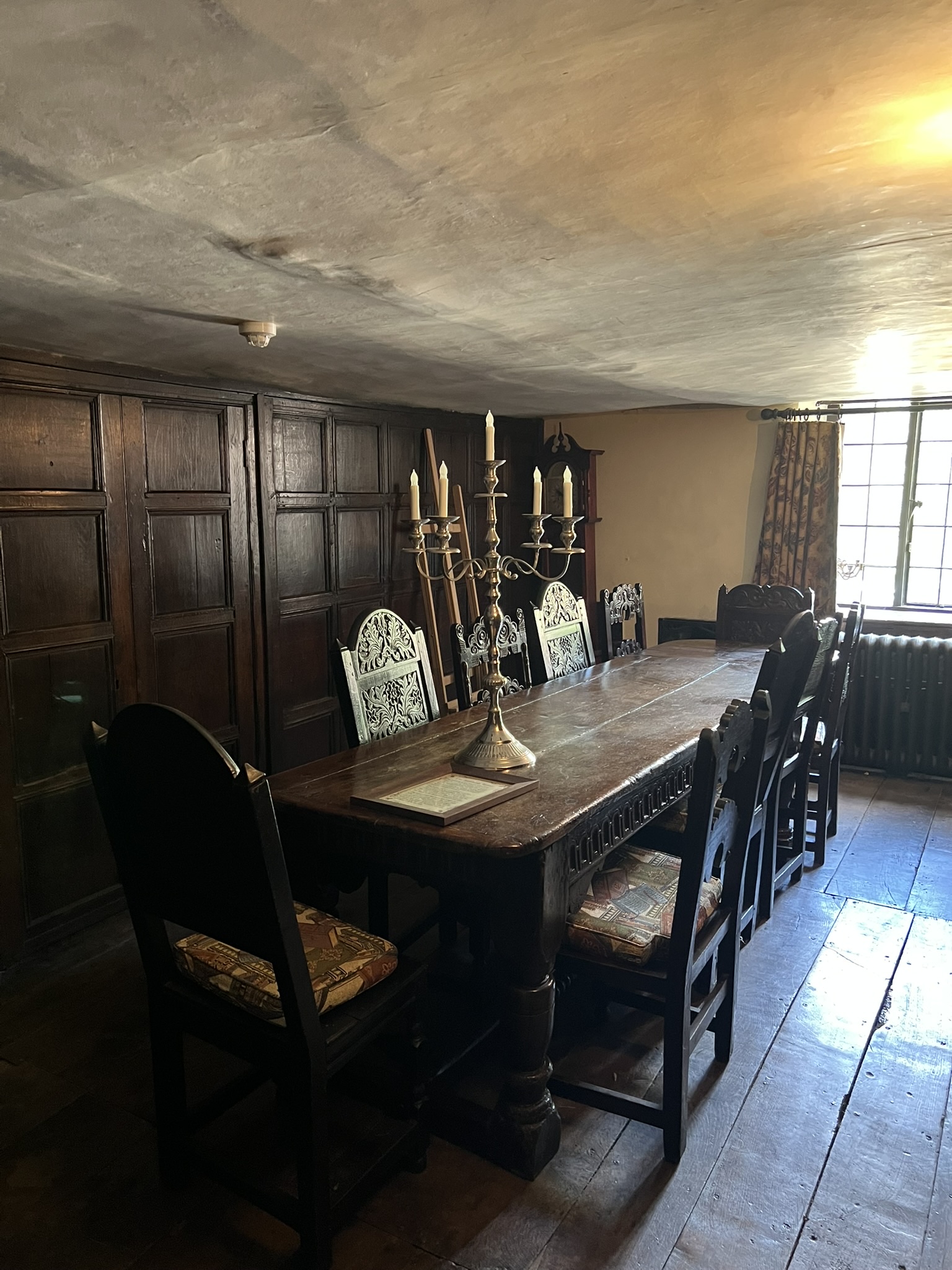
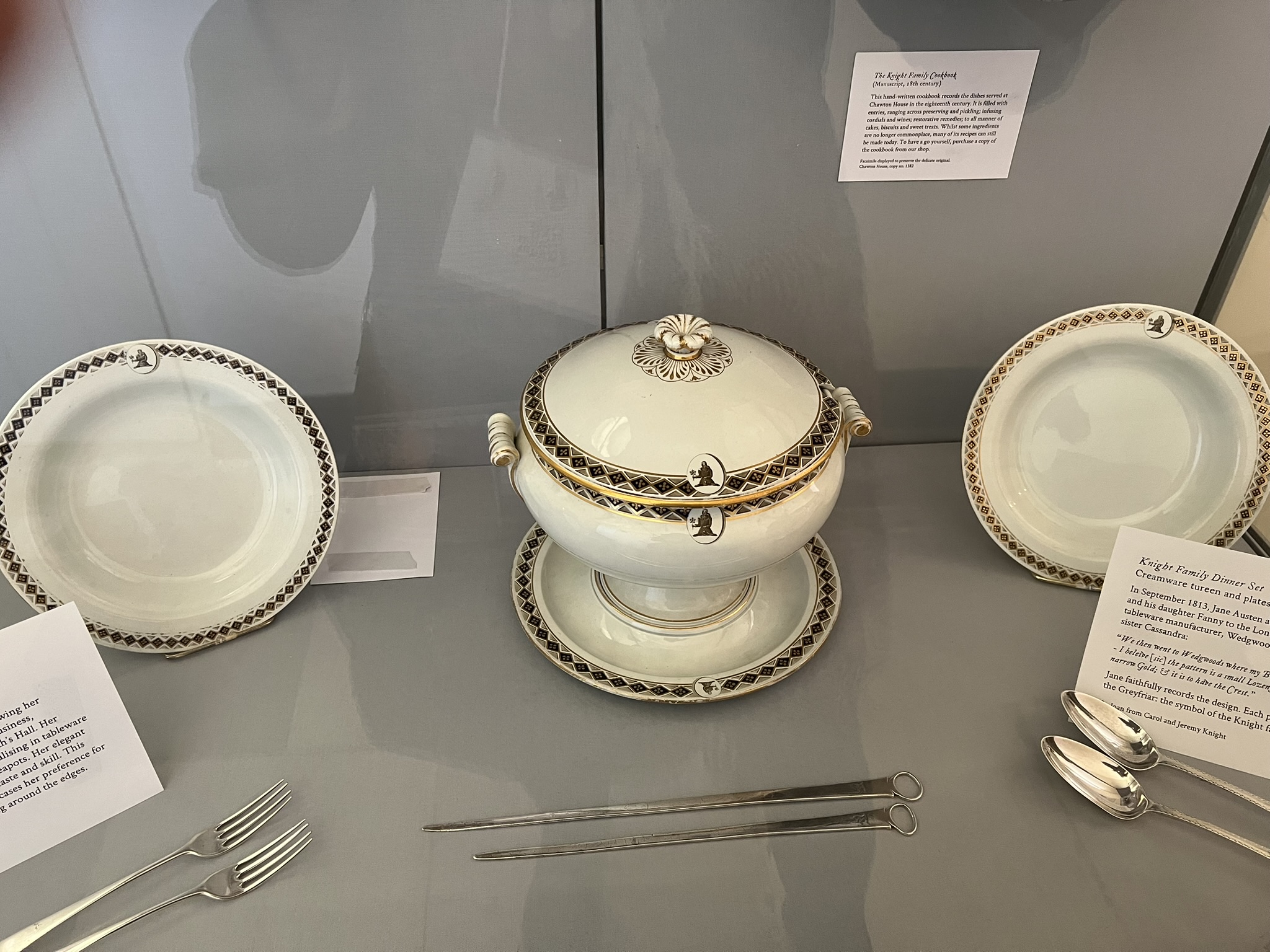
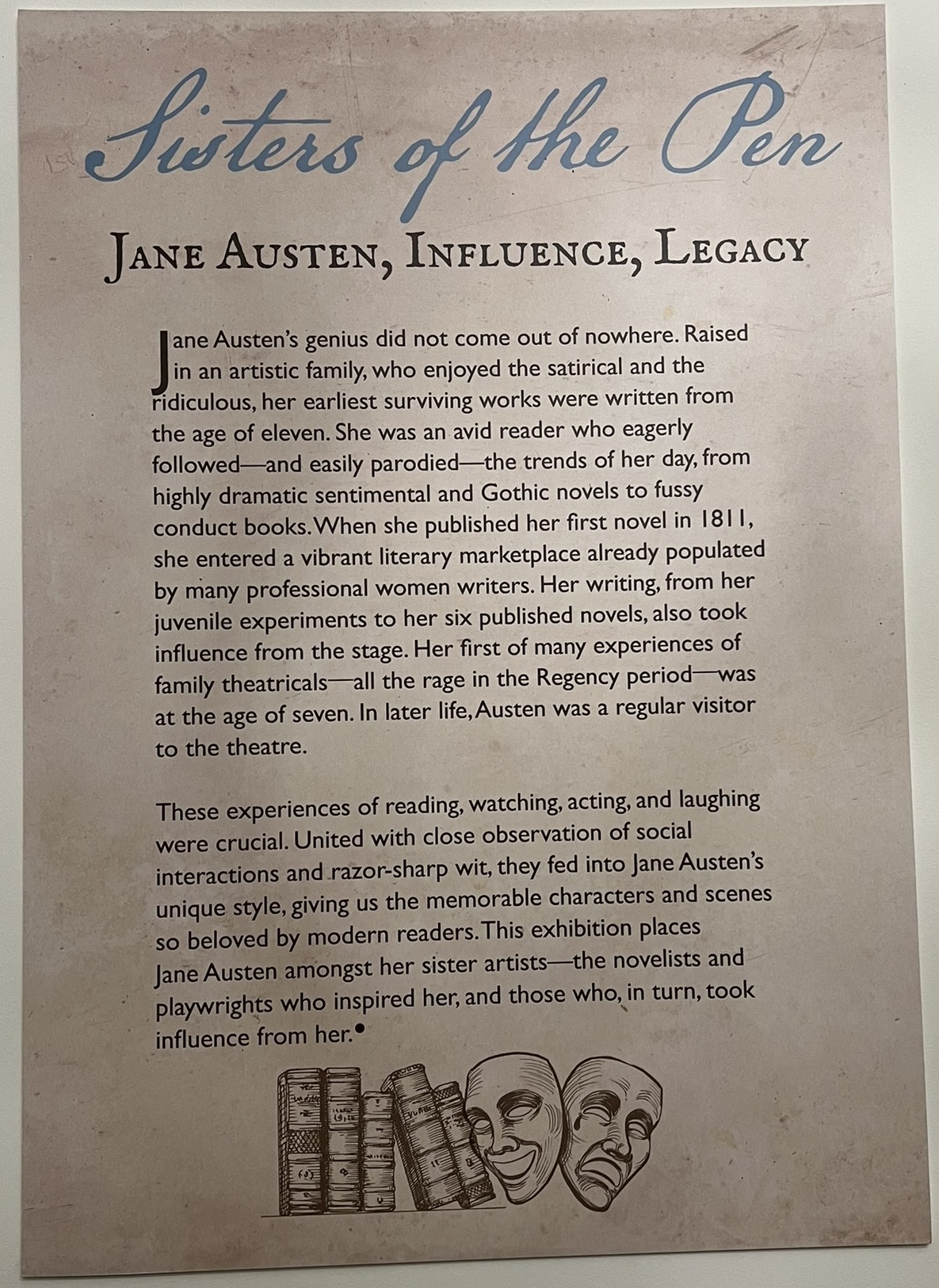
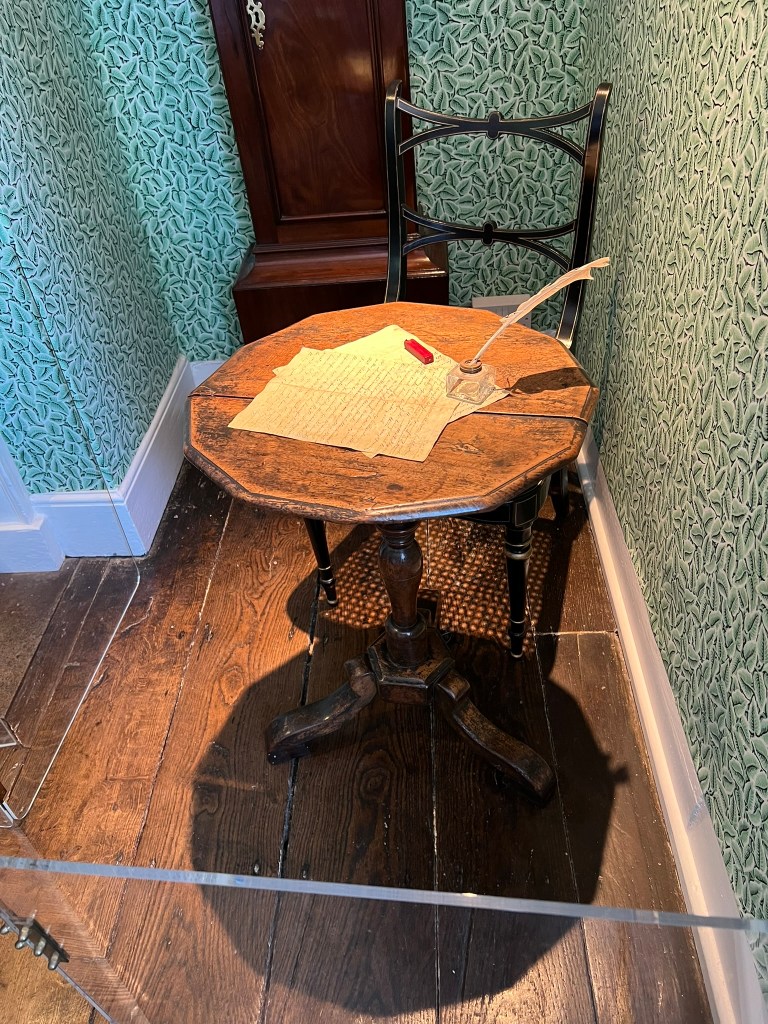
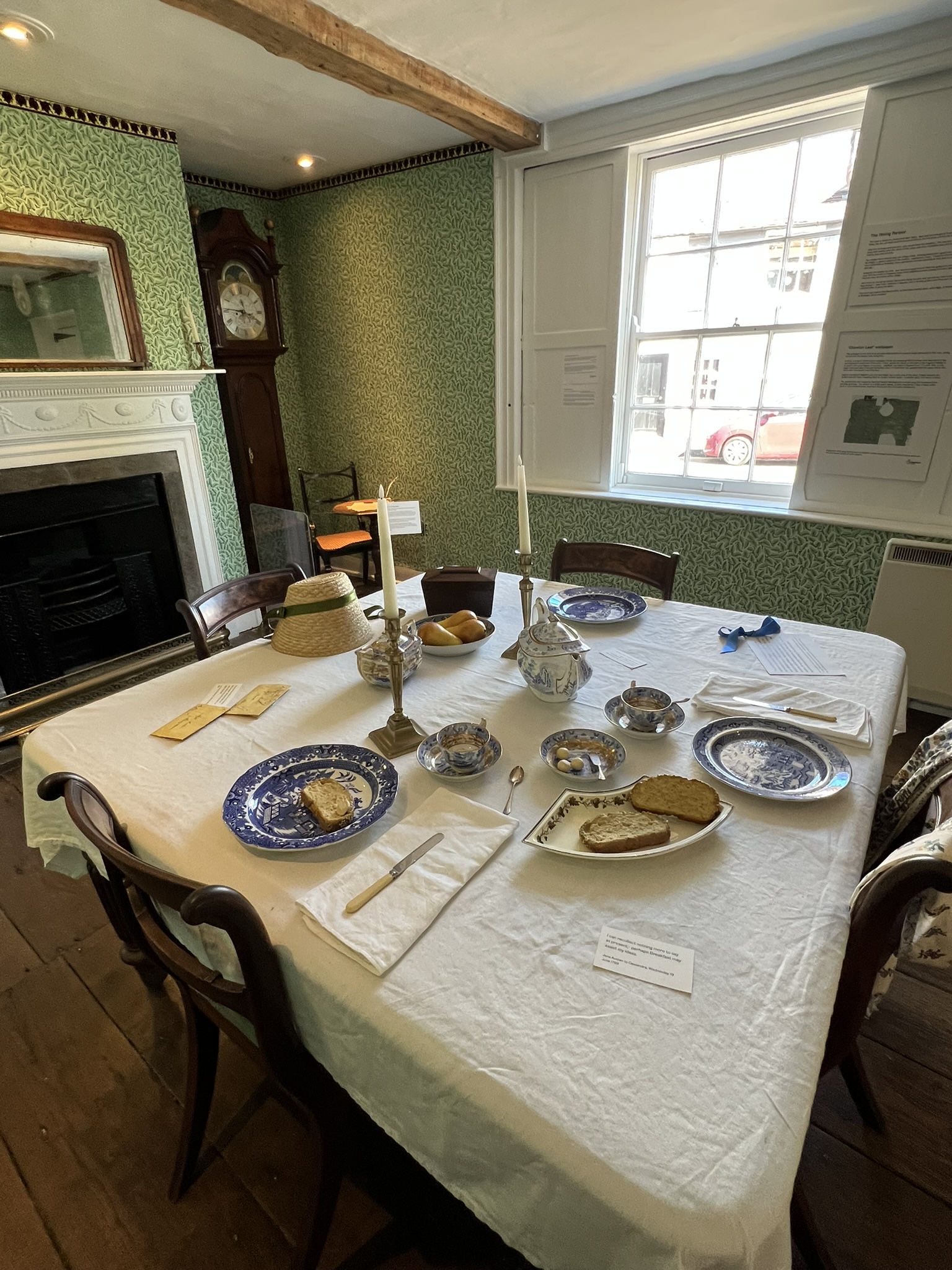
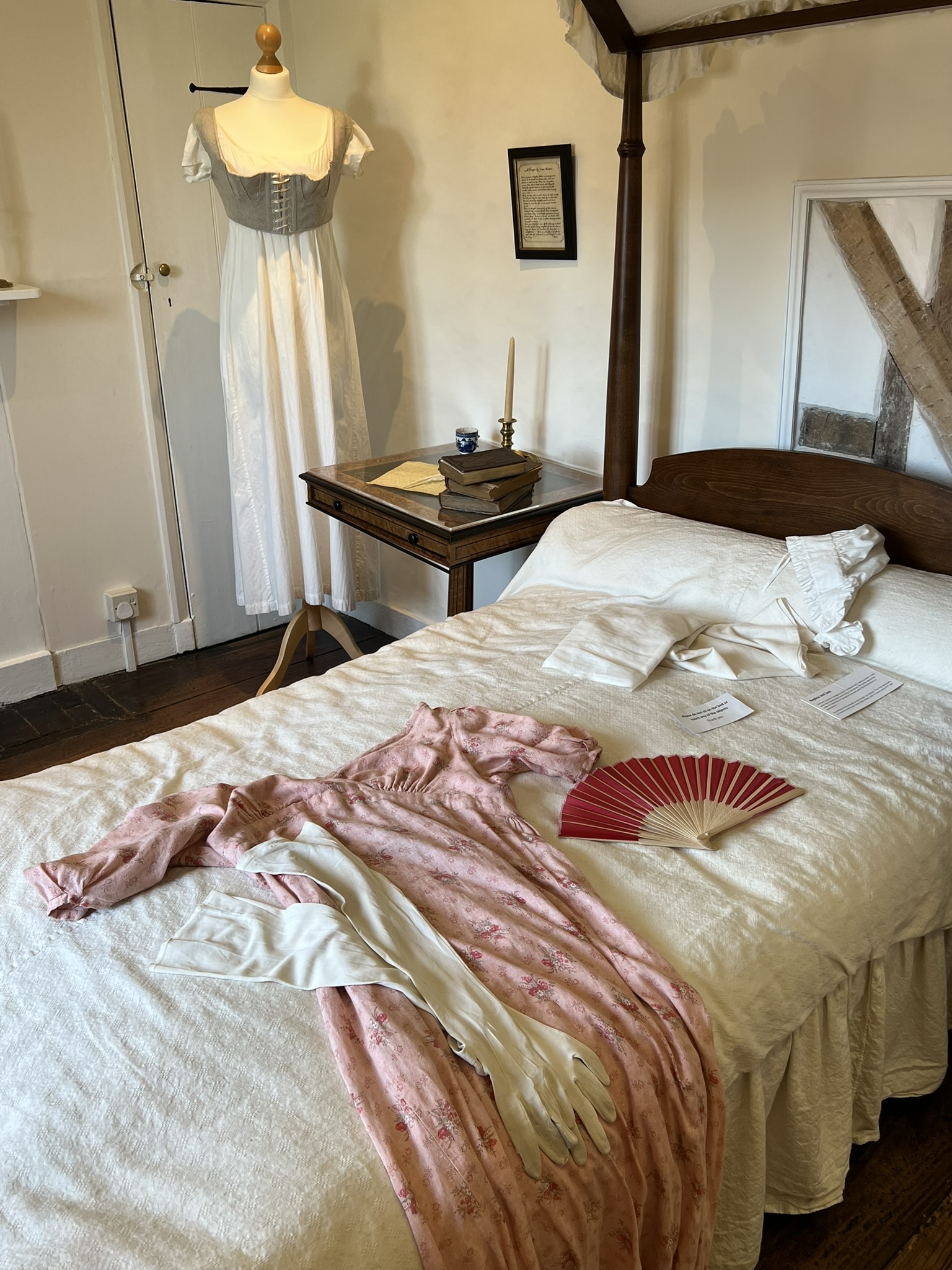
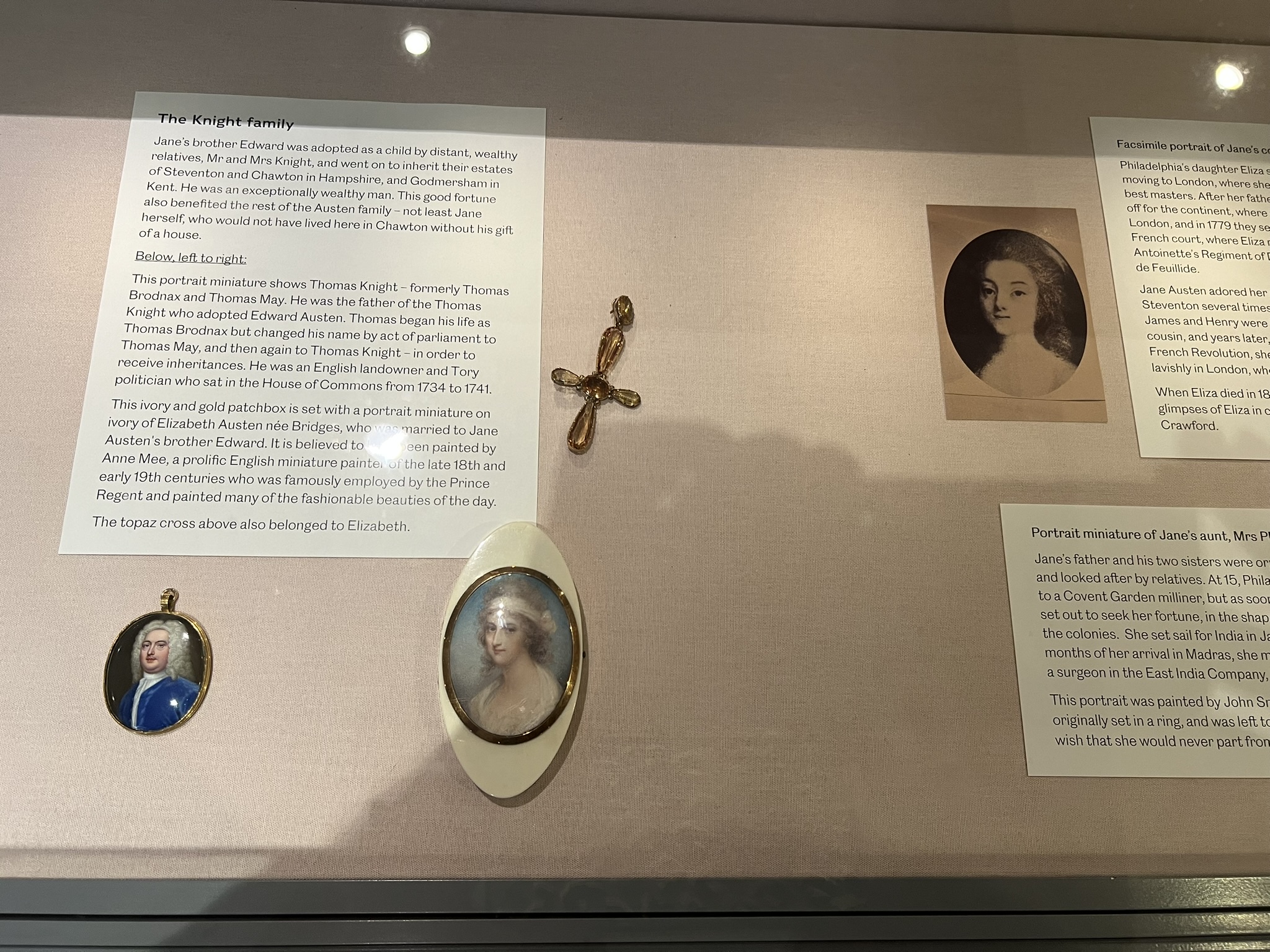
Adventures with Jane! Day VIII: The Delights of a Visit to Chawton

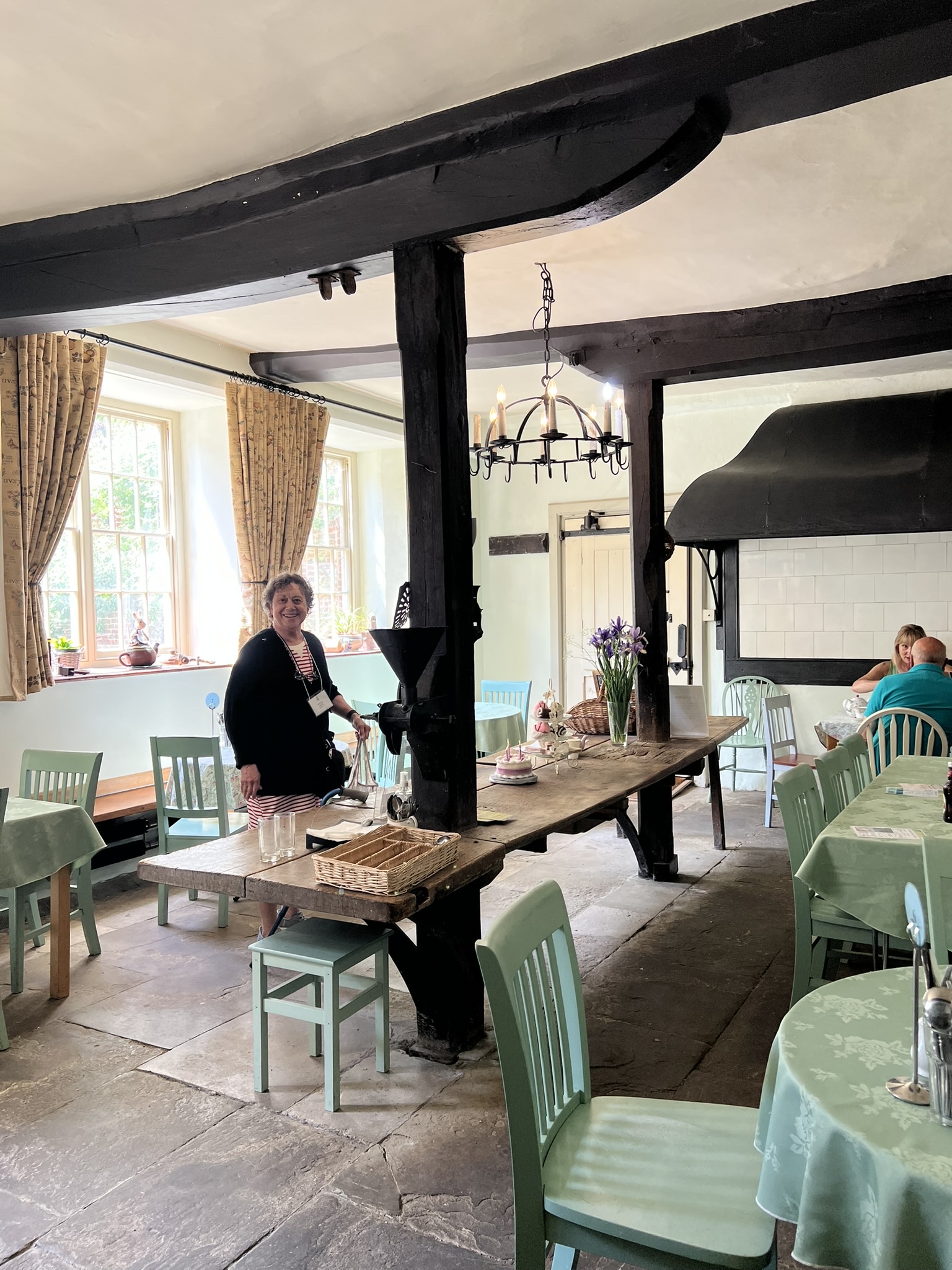
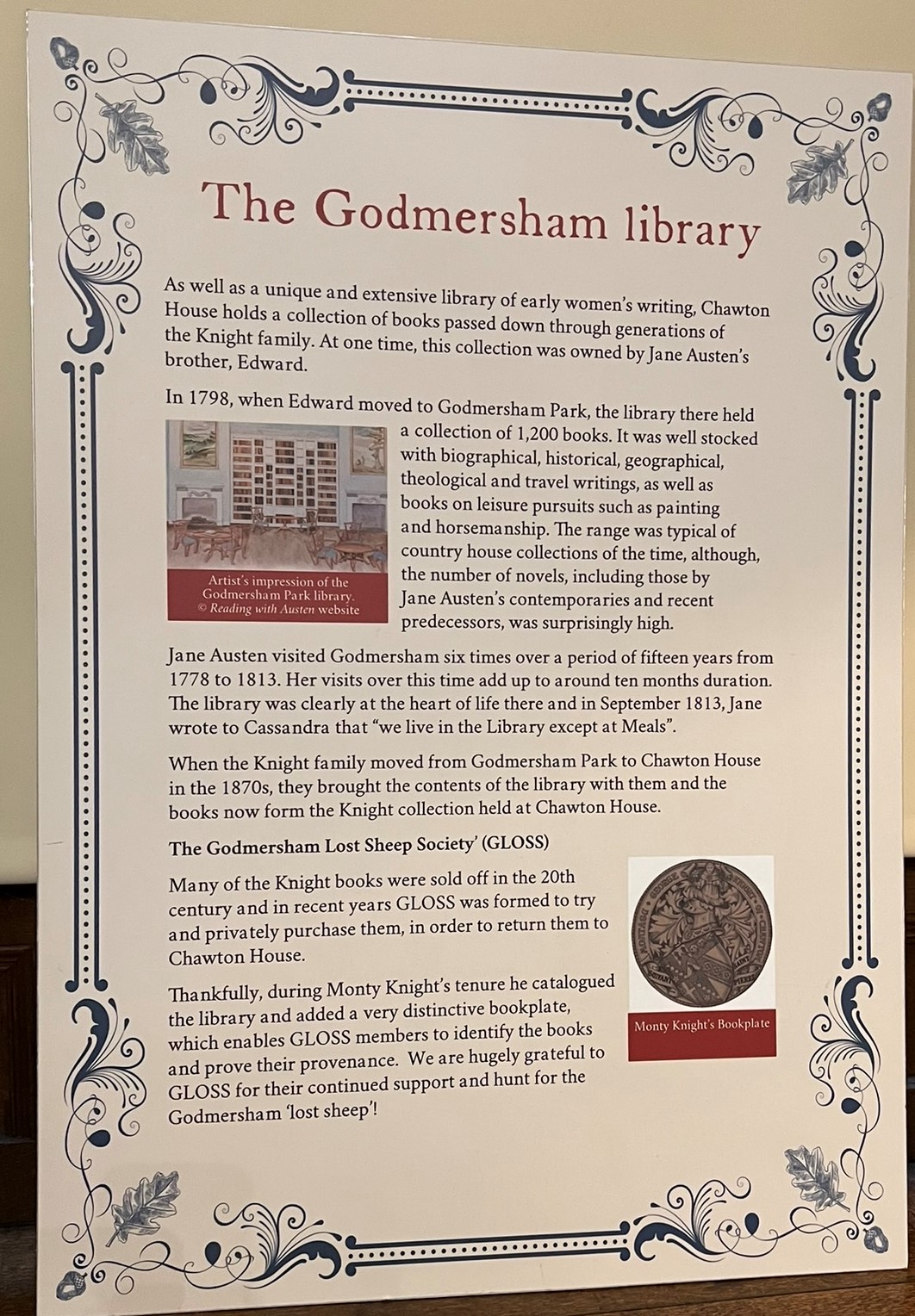
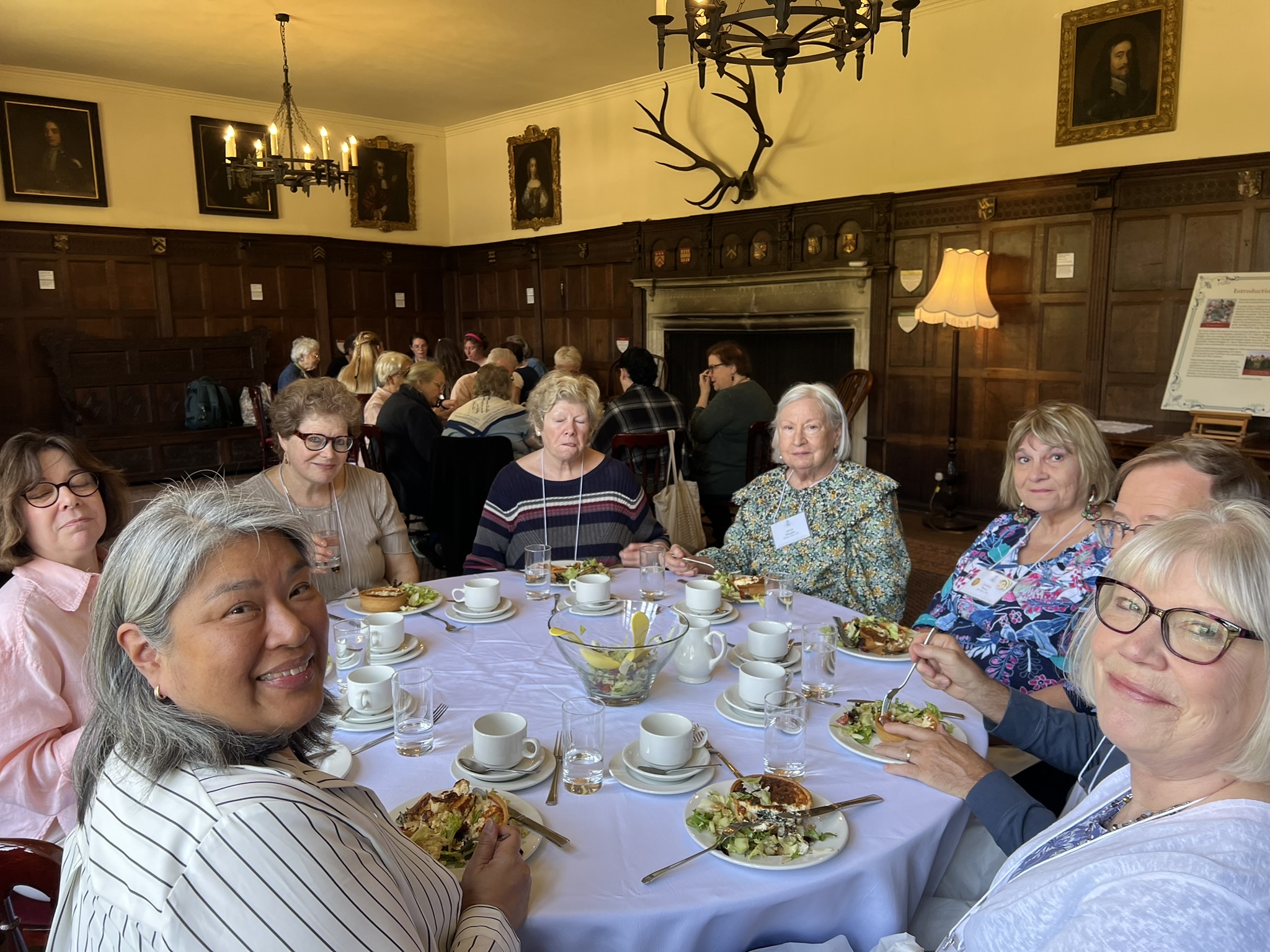
The Tea Room

************

– Janine Barchas, 2025

Jane Austen, 29 May 1811 from Chawton
to Cassandra at Godmersham Park

c2025JaneAustenInVermont
Austen Literary History & Criticism · Great Britain - History · Jane Austen · Jane Austen Circle · Jane Austen Genealogy · Jane Austen Popular Culture · JASNA · Museum Exhibitions · Rare Books · Regency England

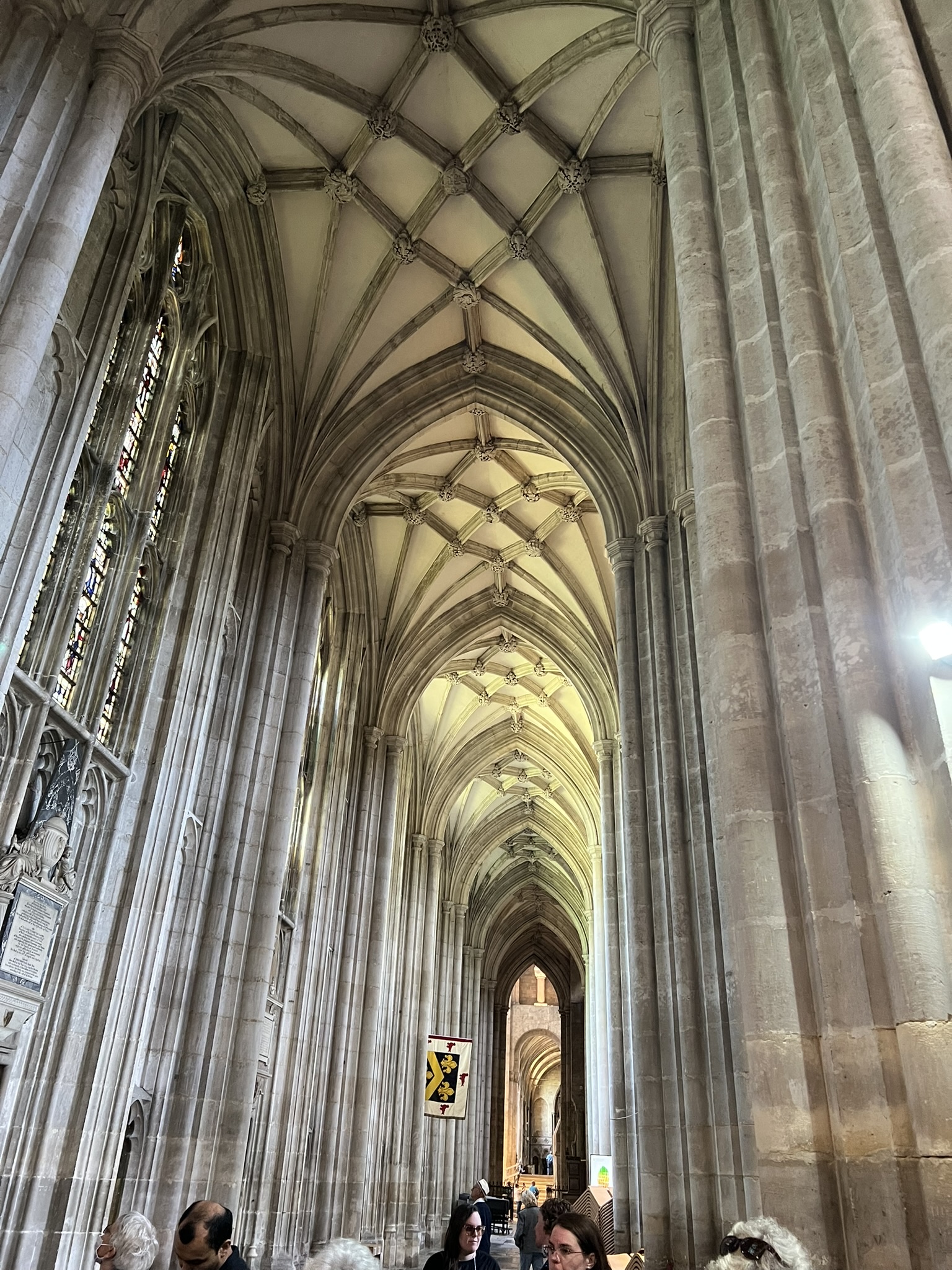
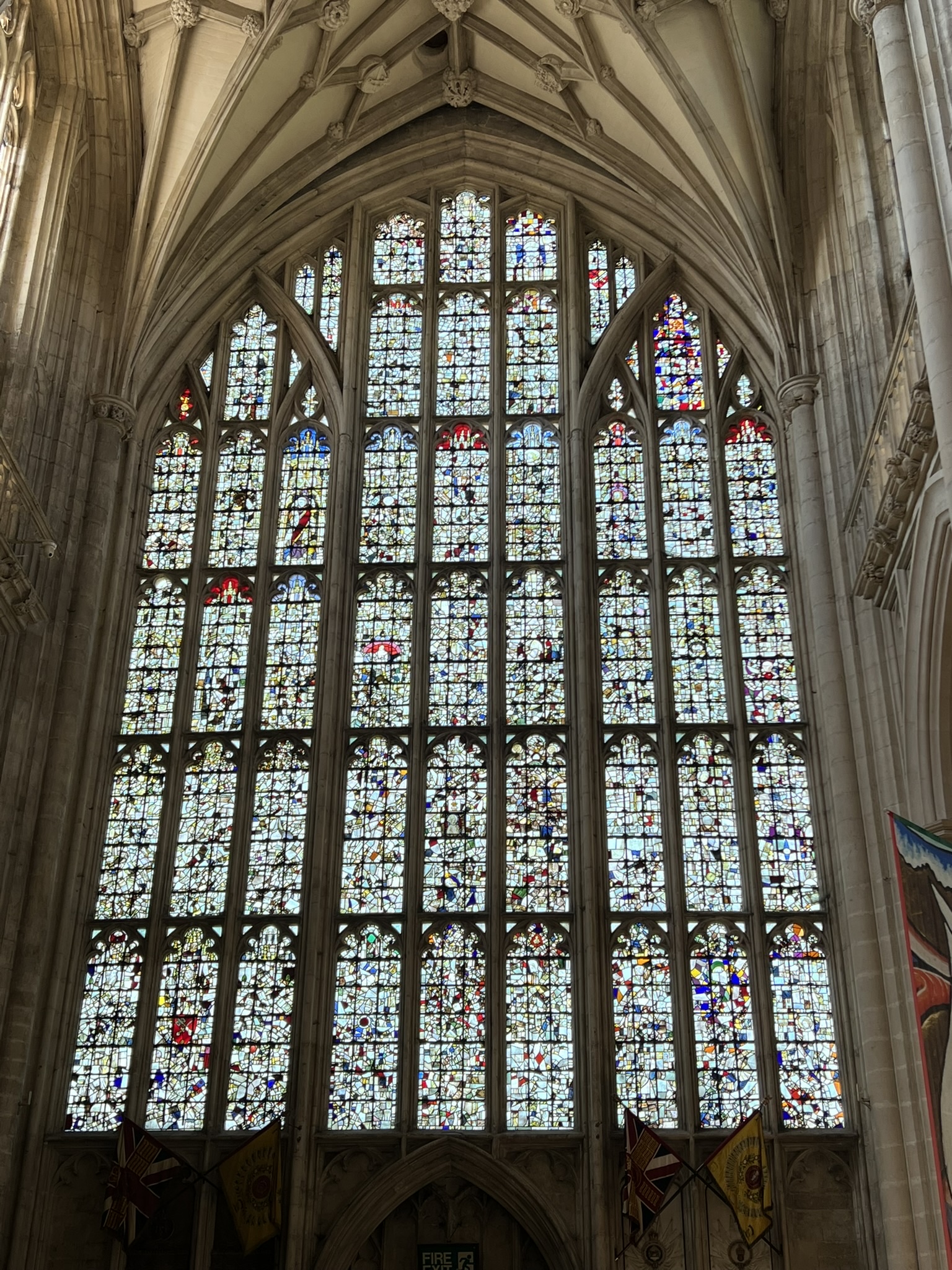
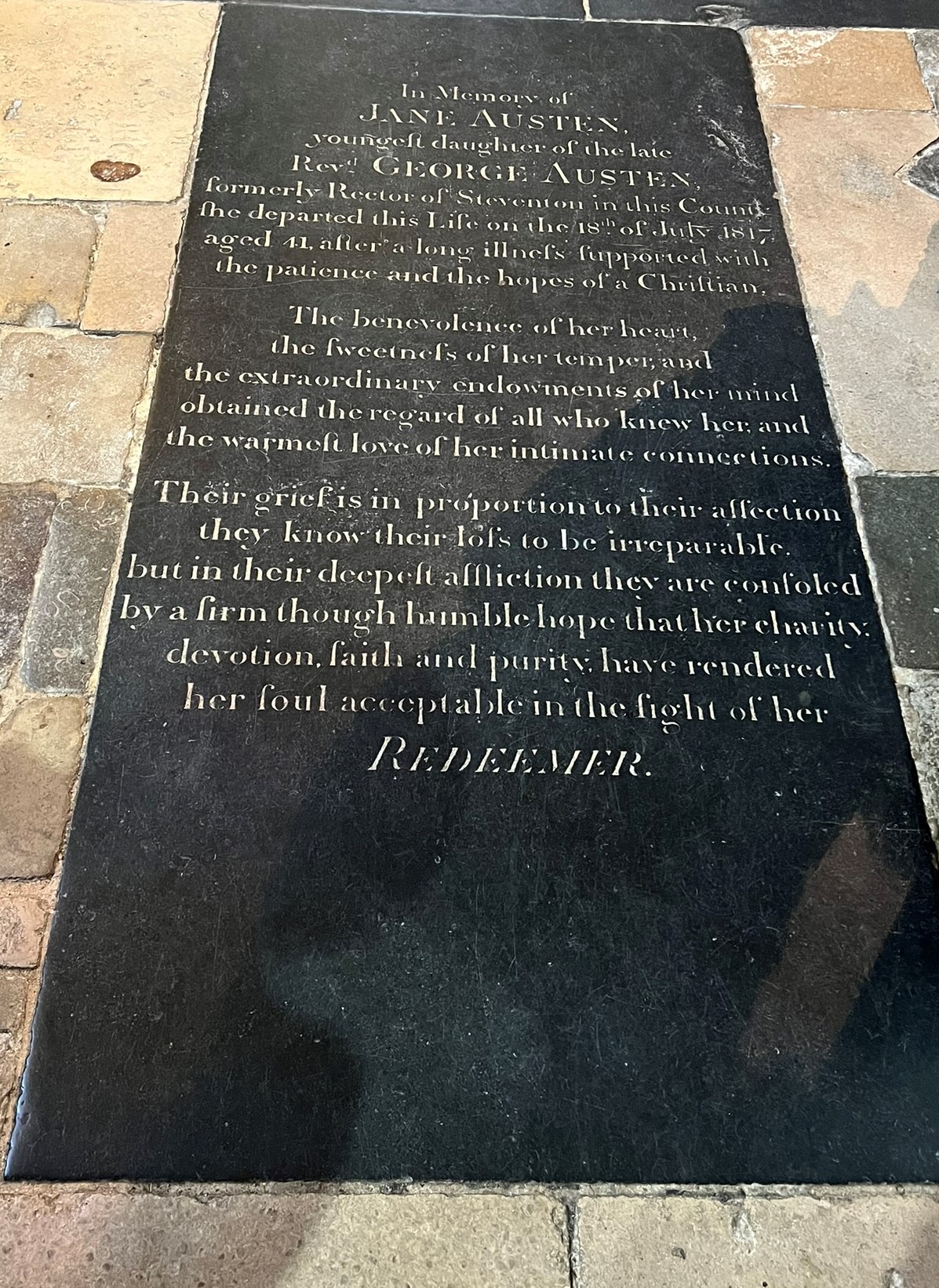
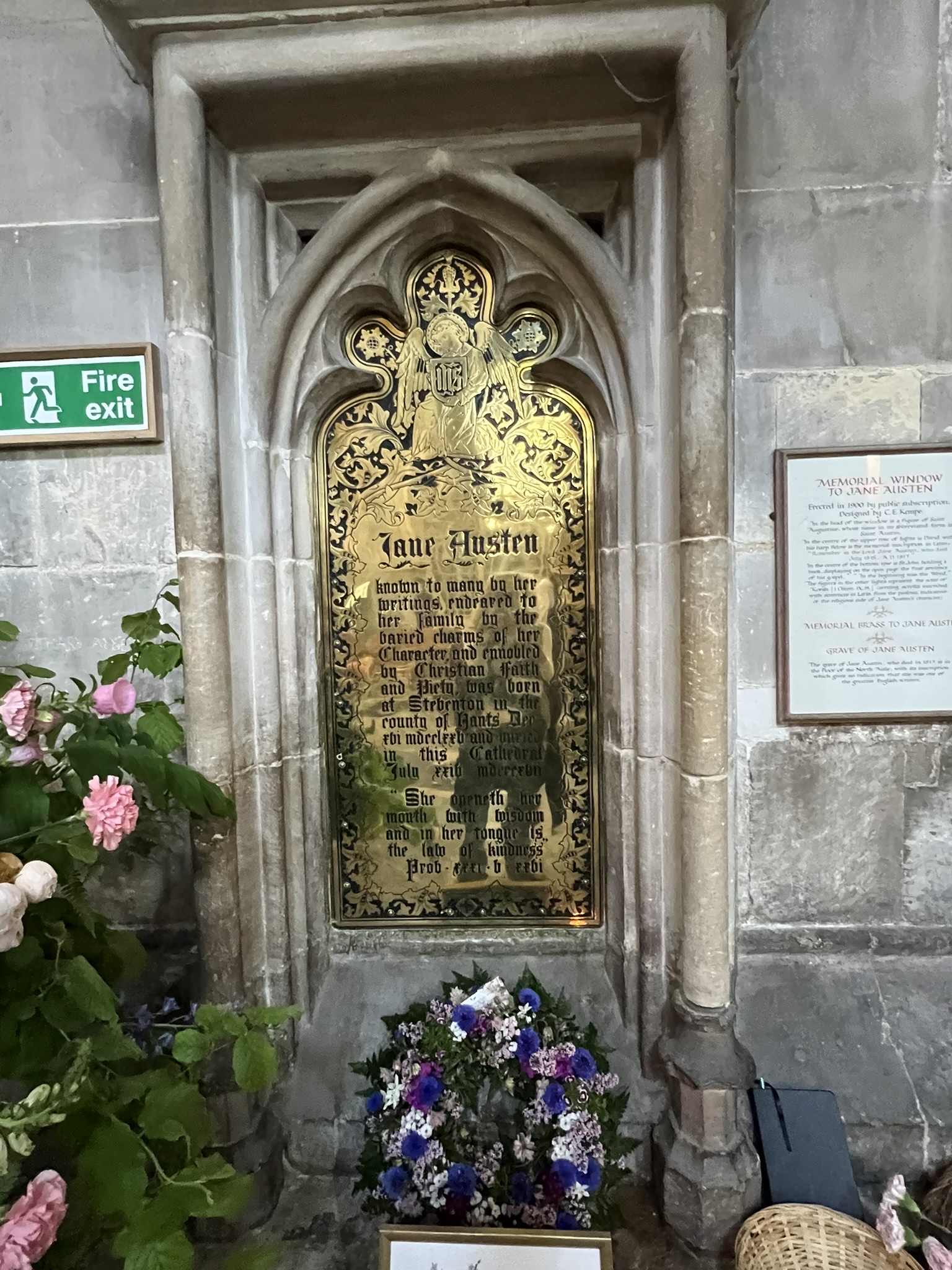
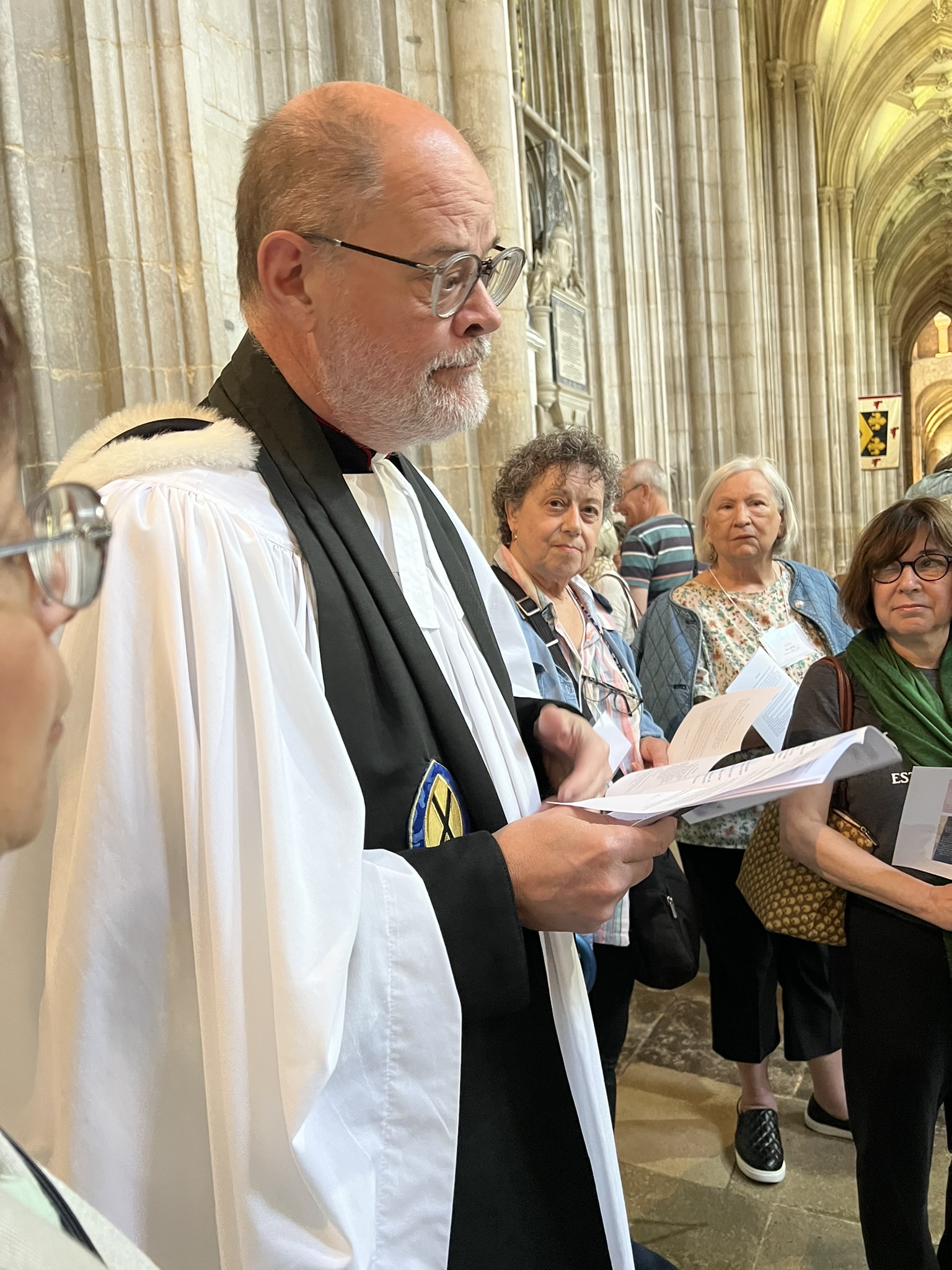
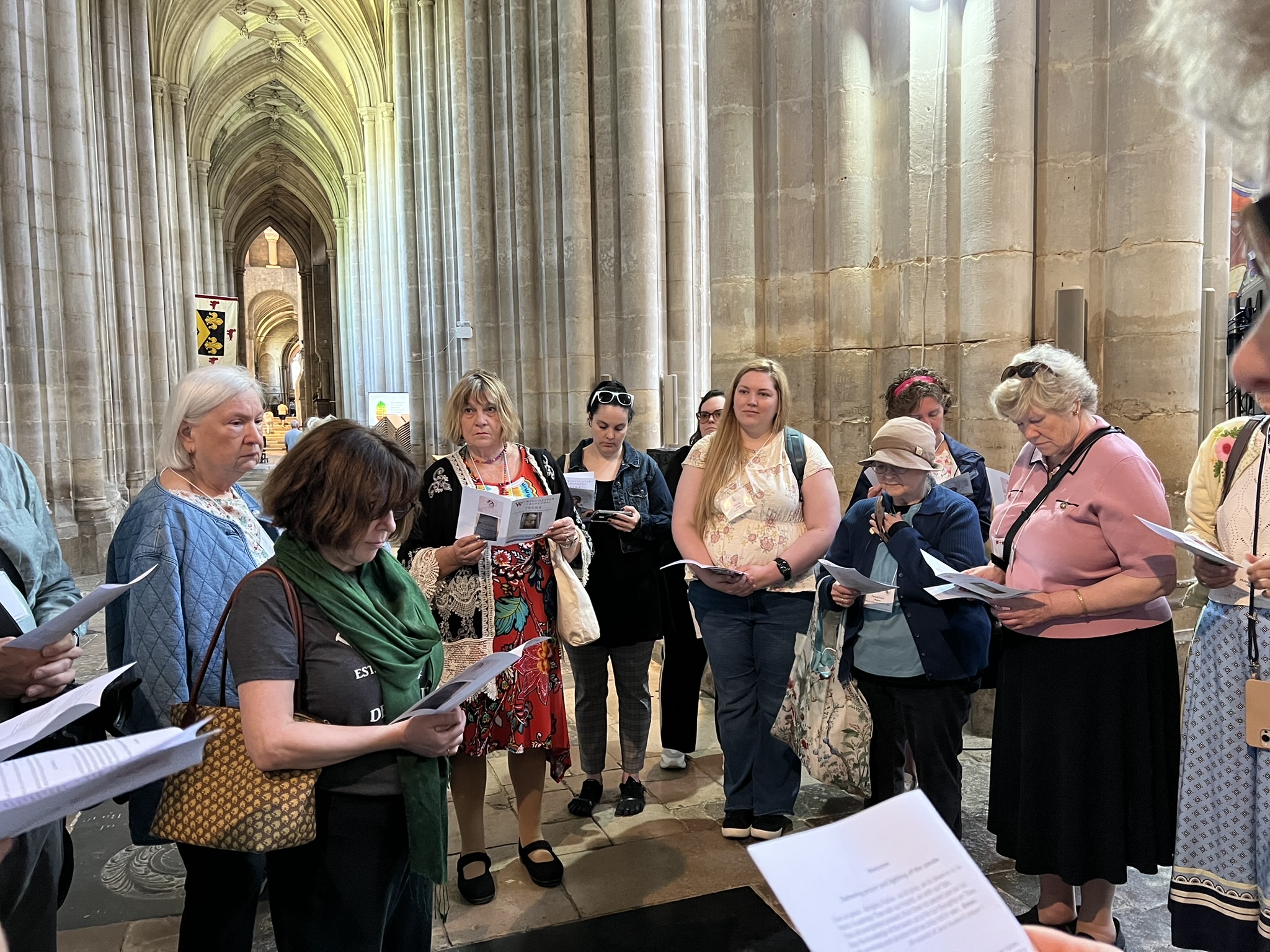
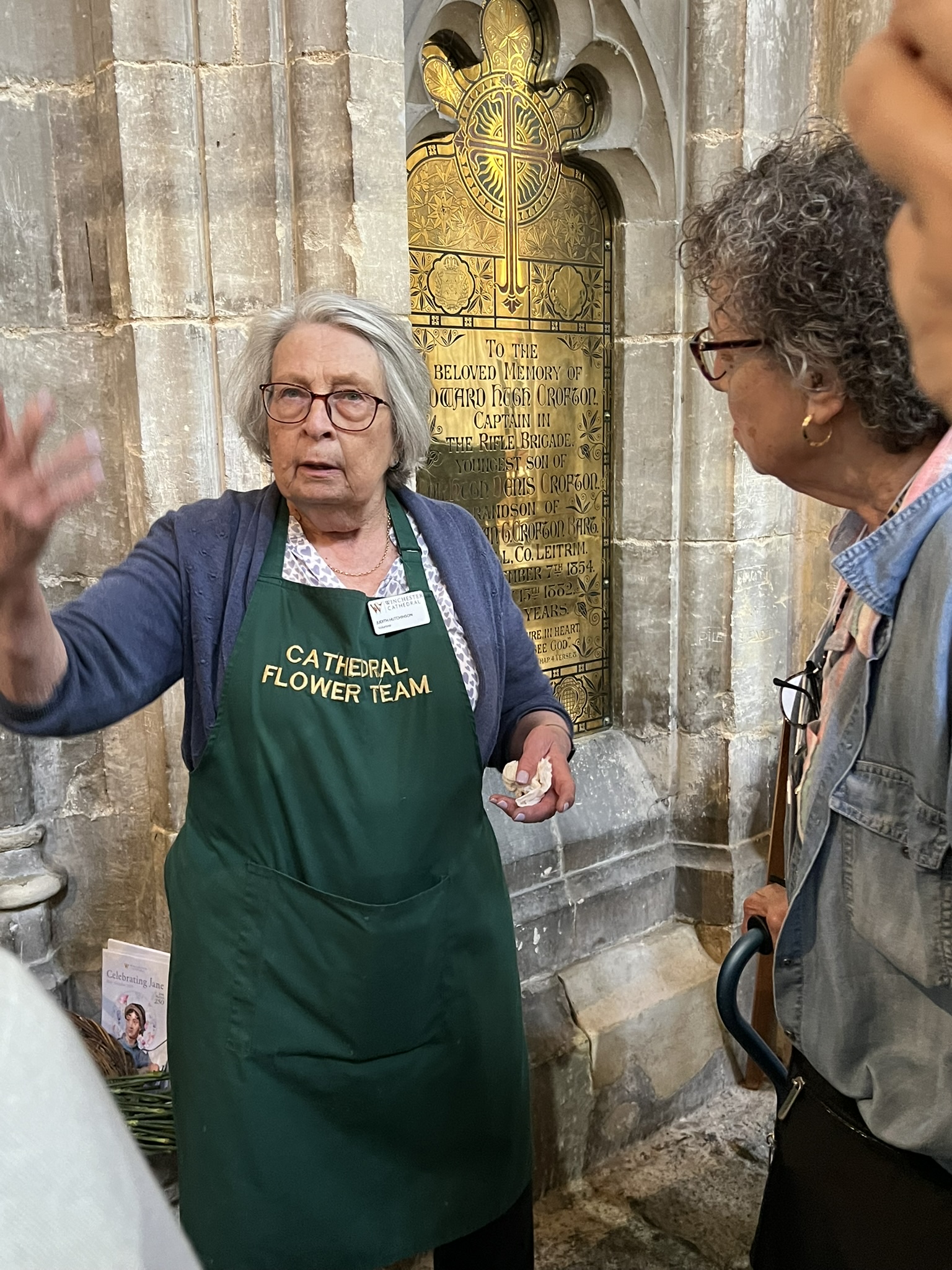
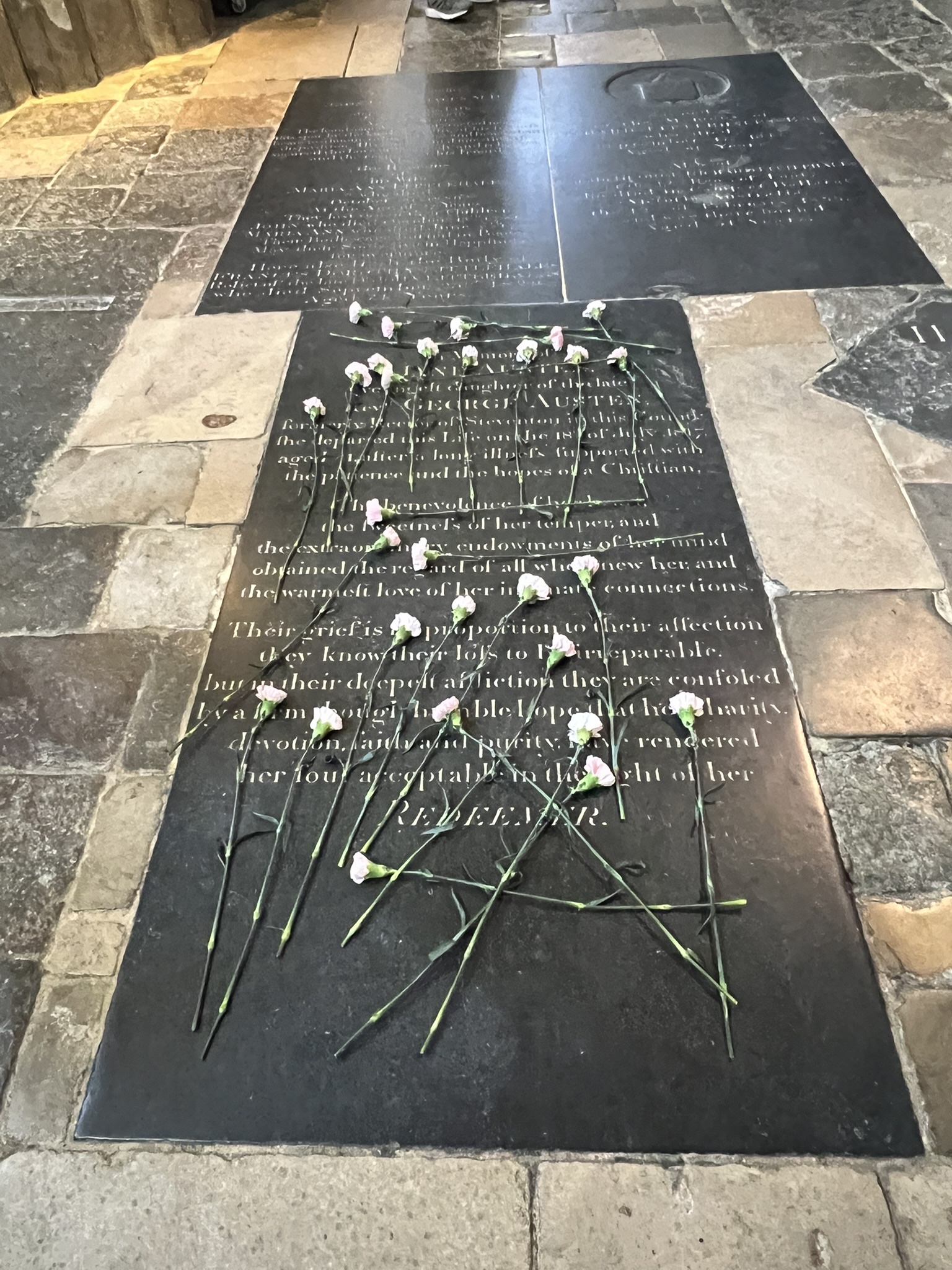
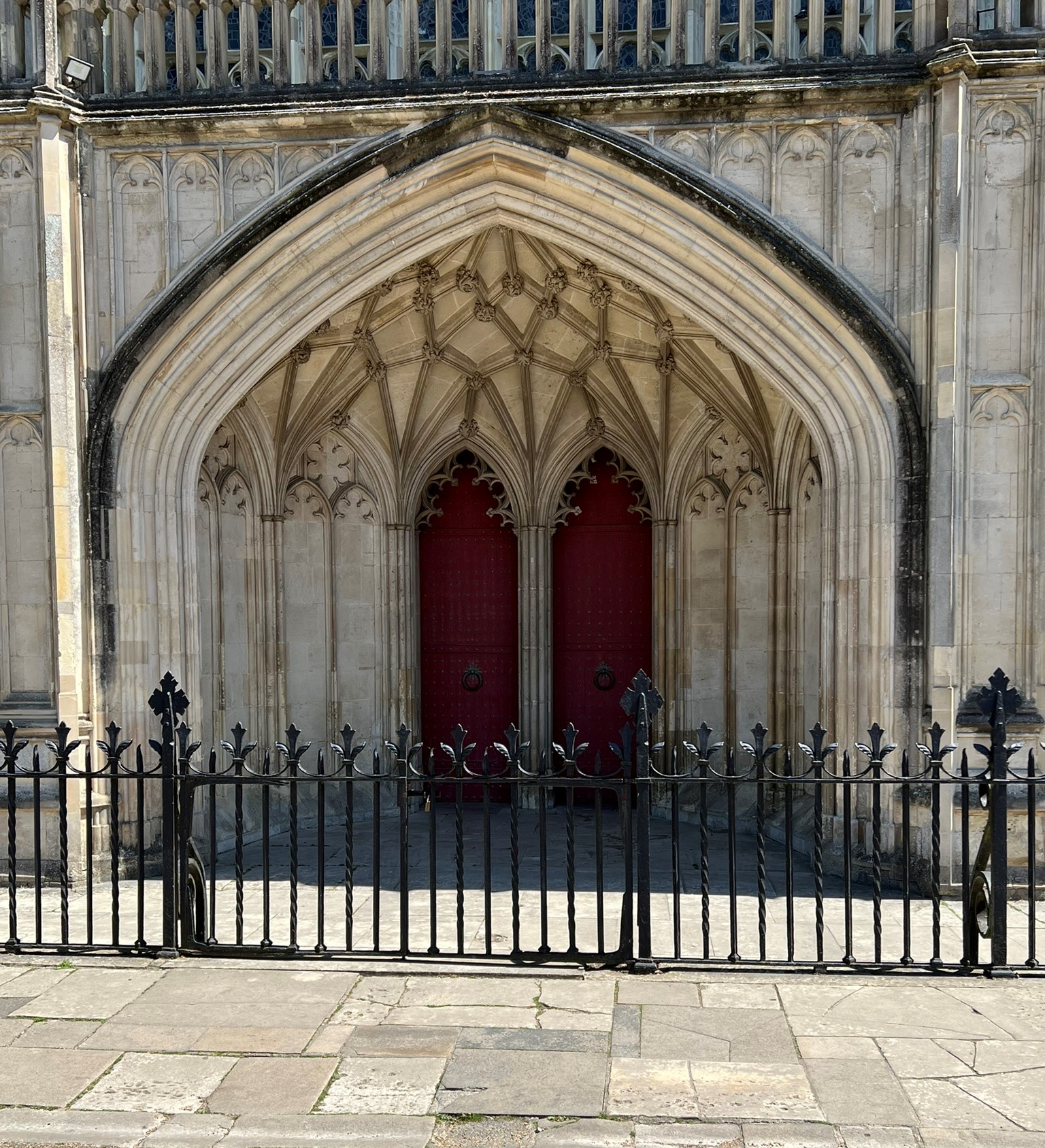
Adventures with Jane! Day VII: Winchester, the Beautiful and the Sad…

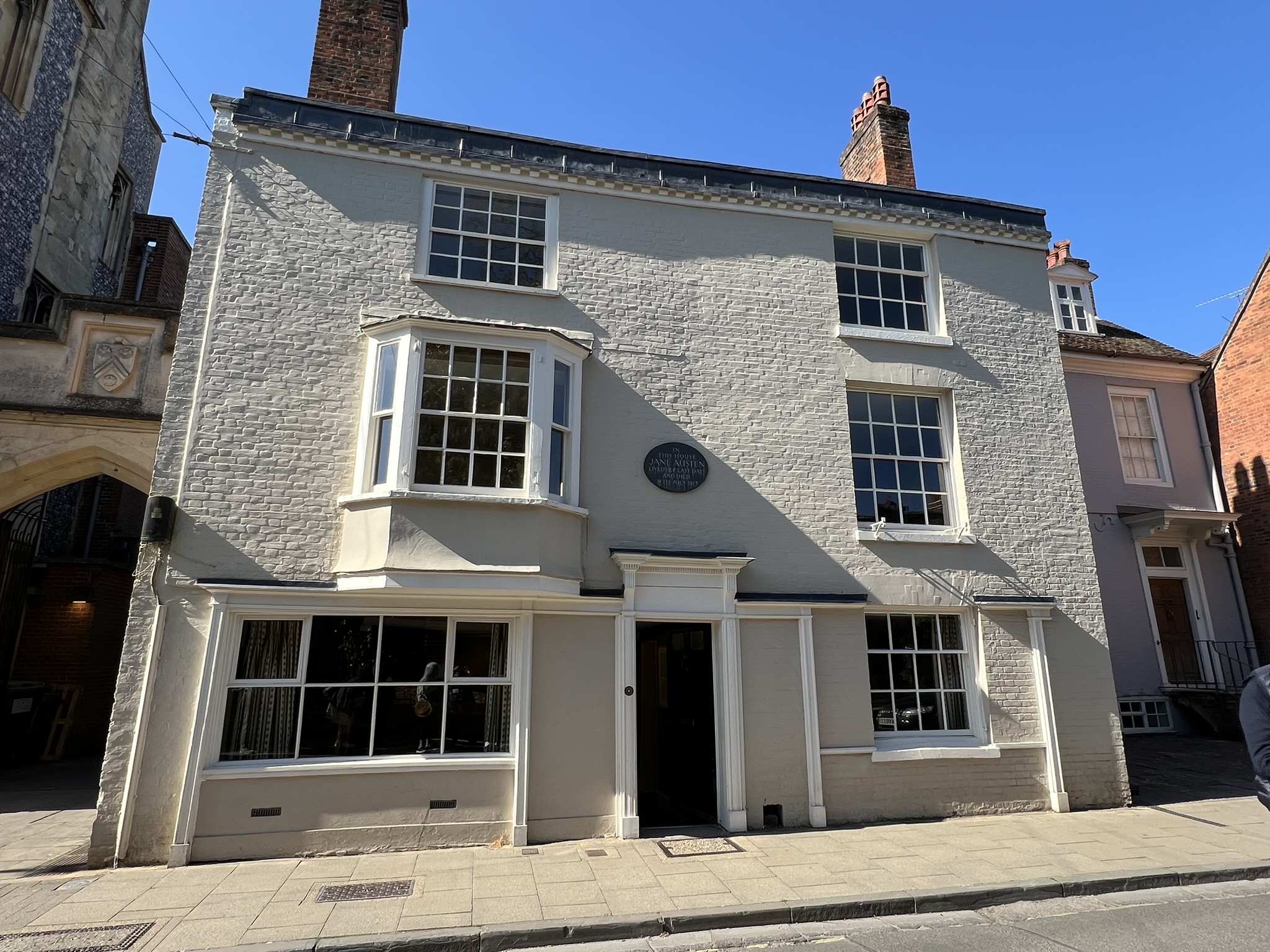
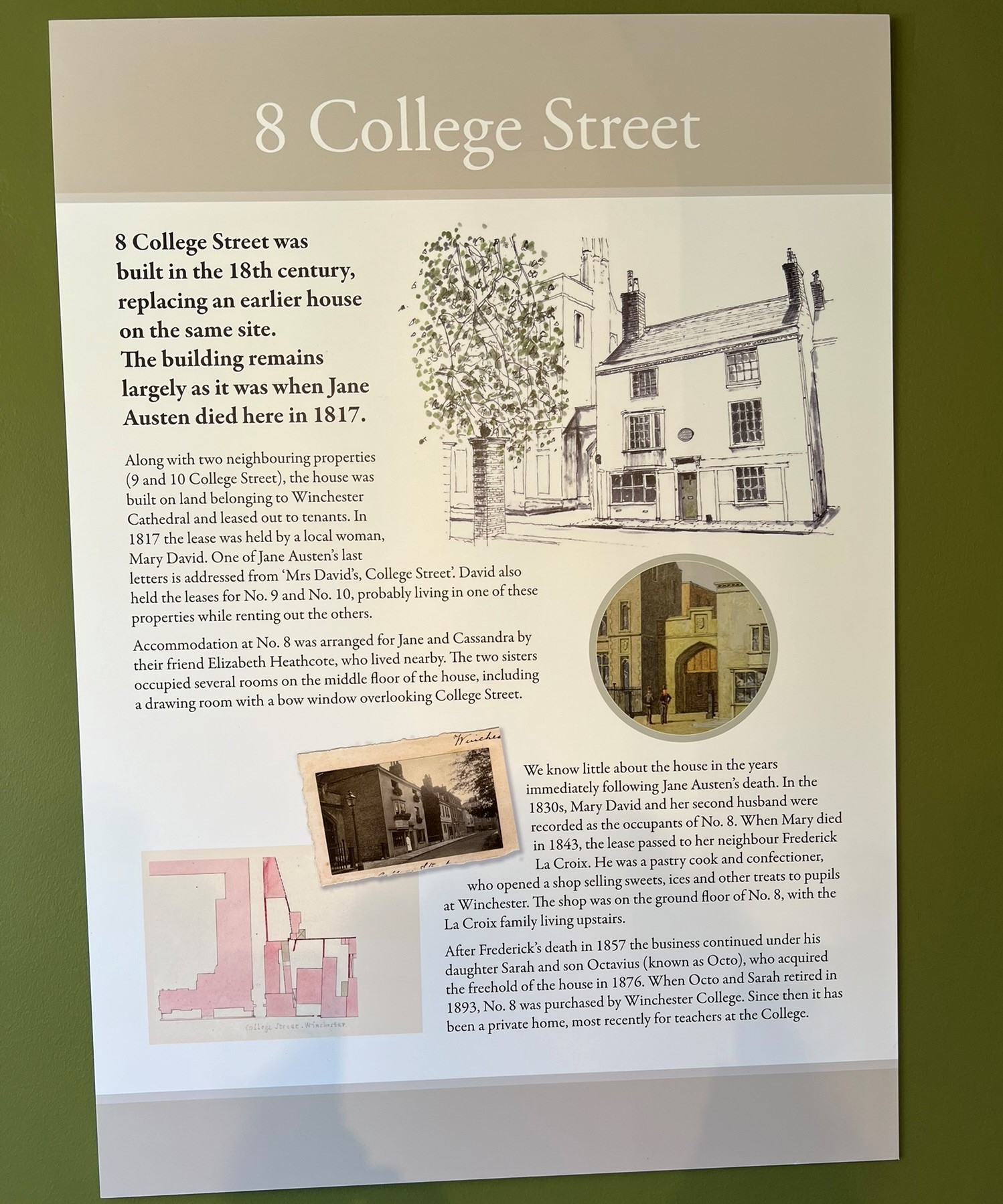
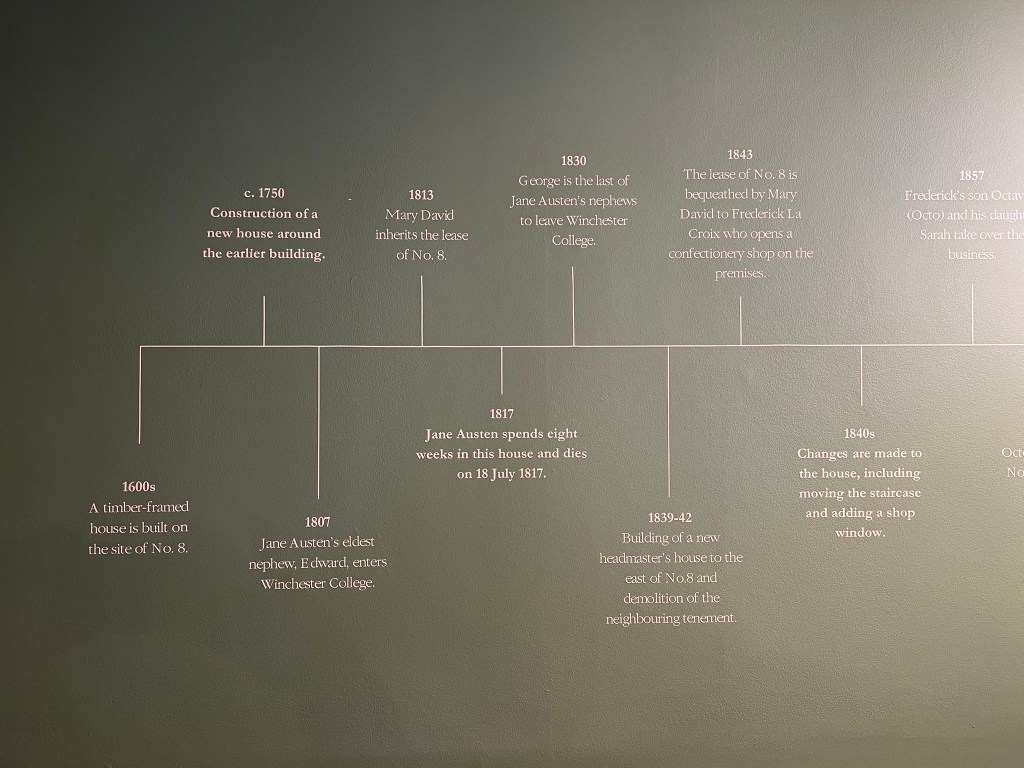
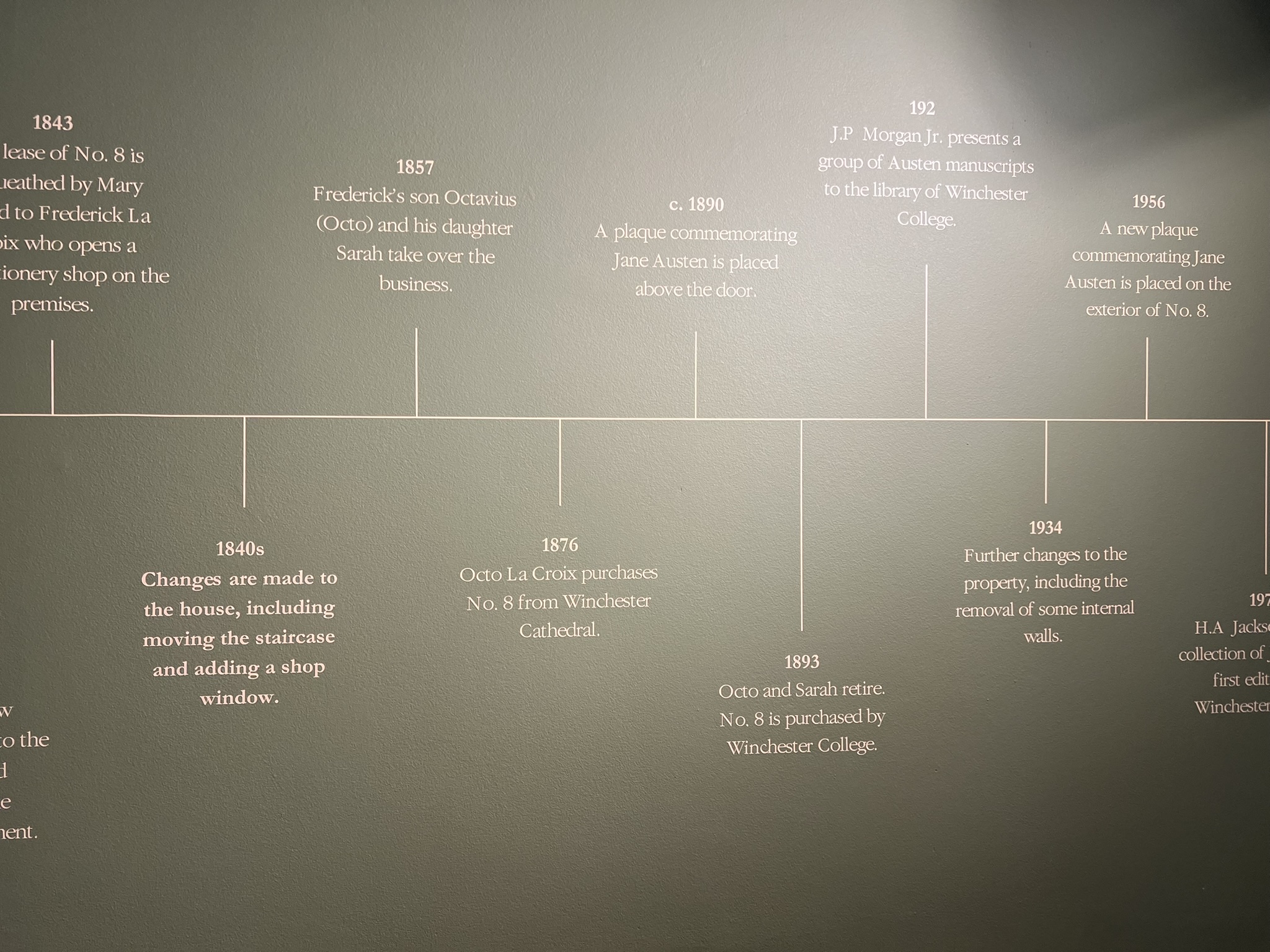
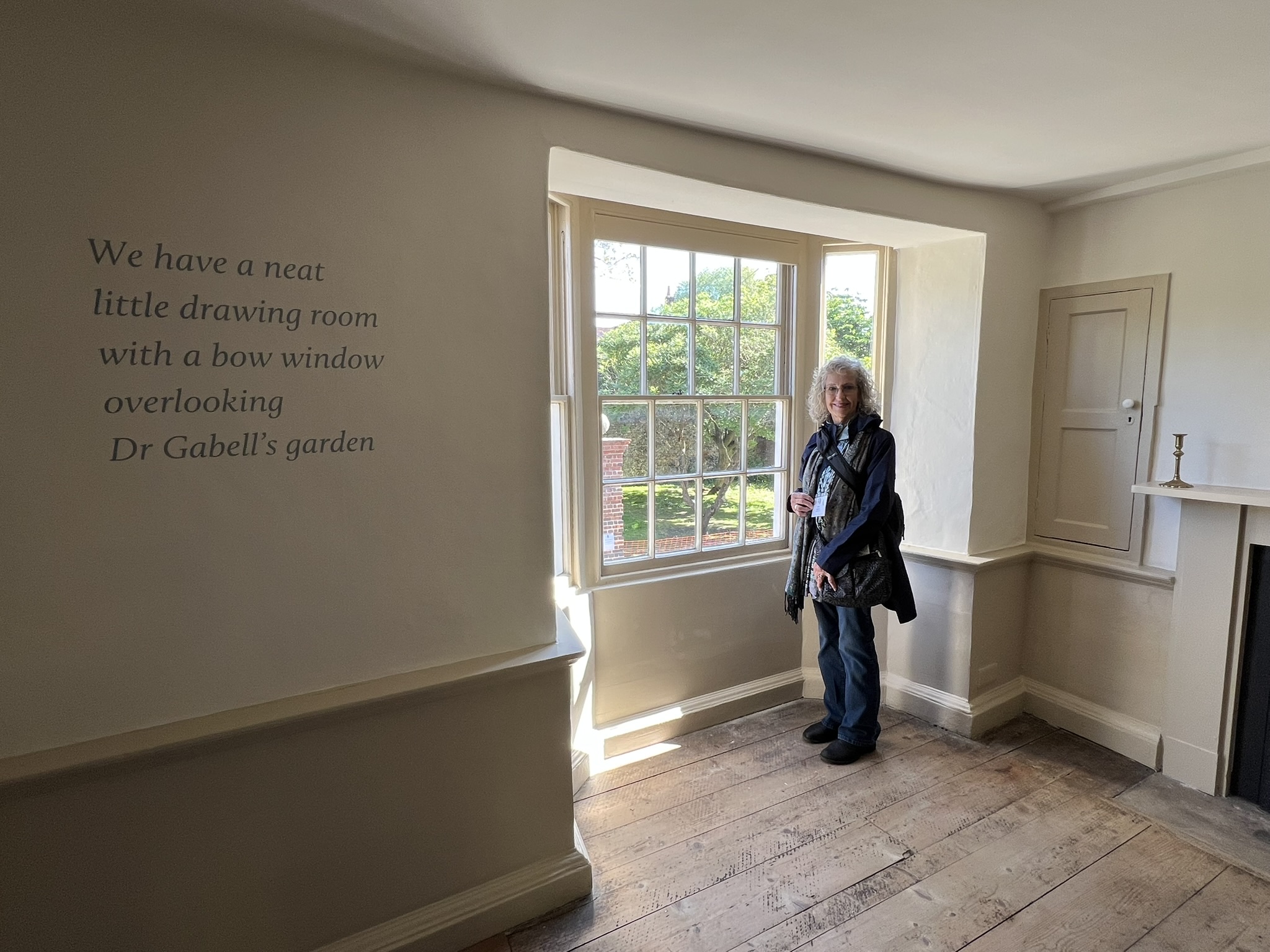
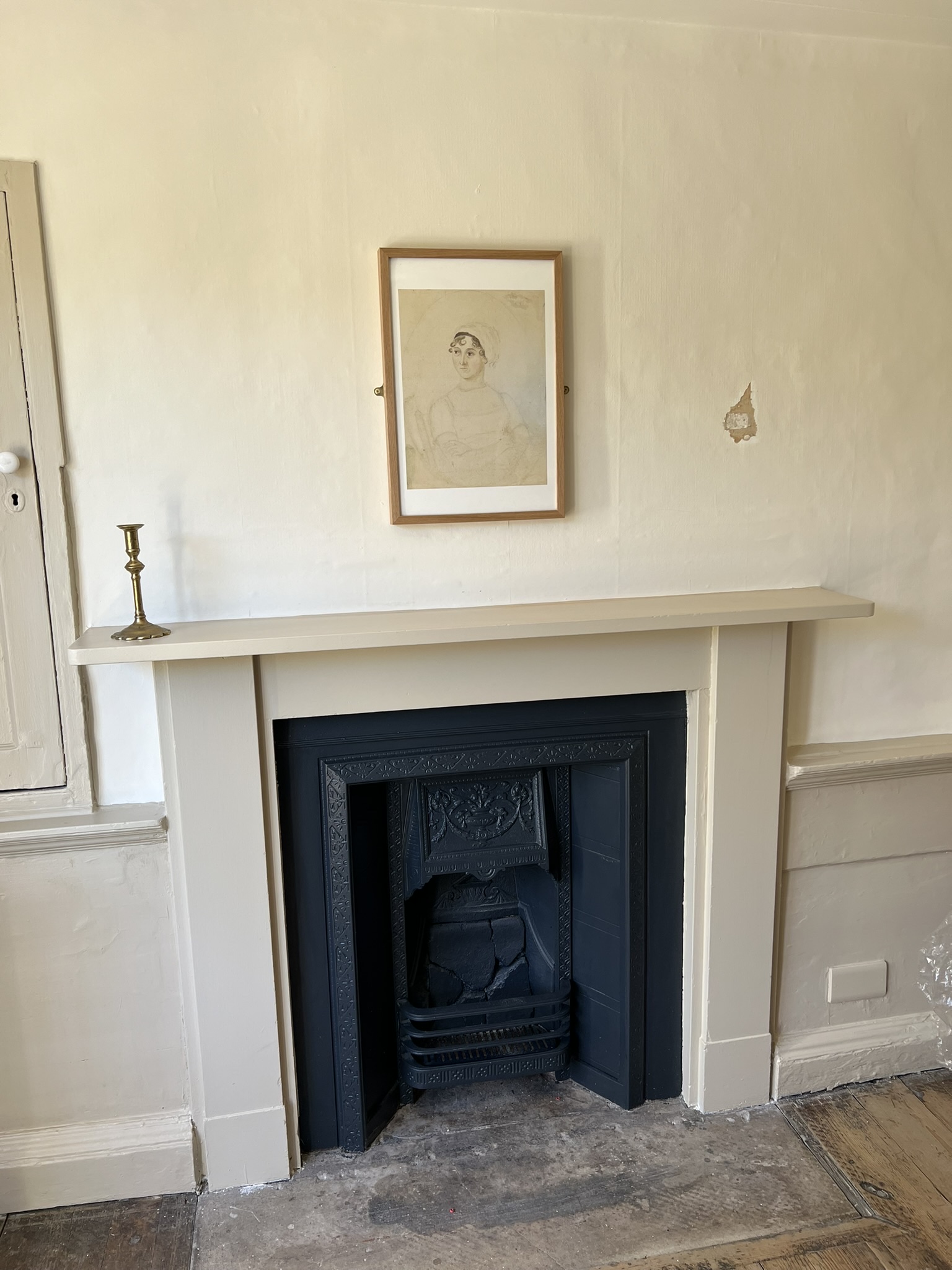
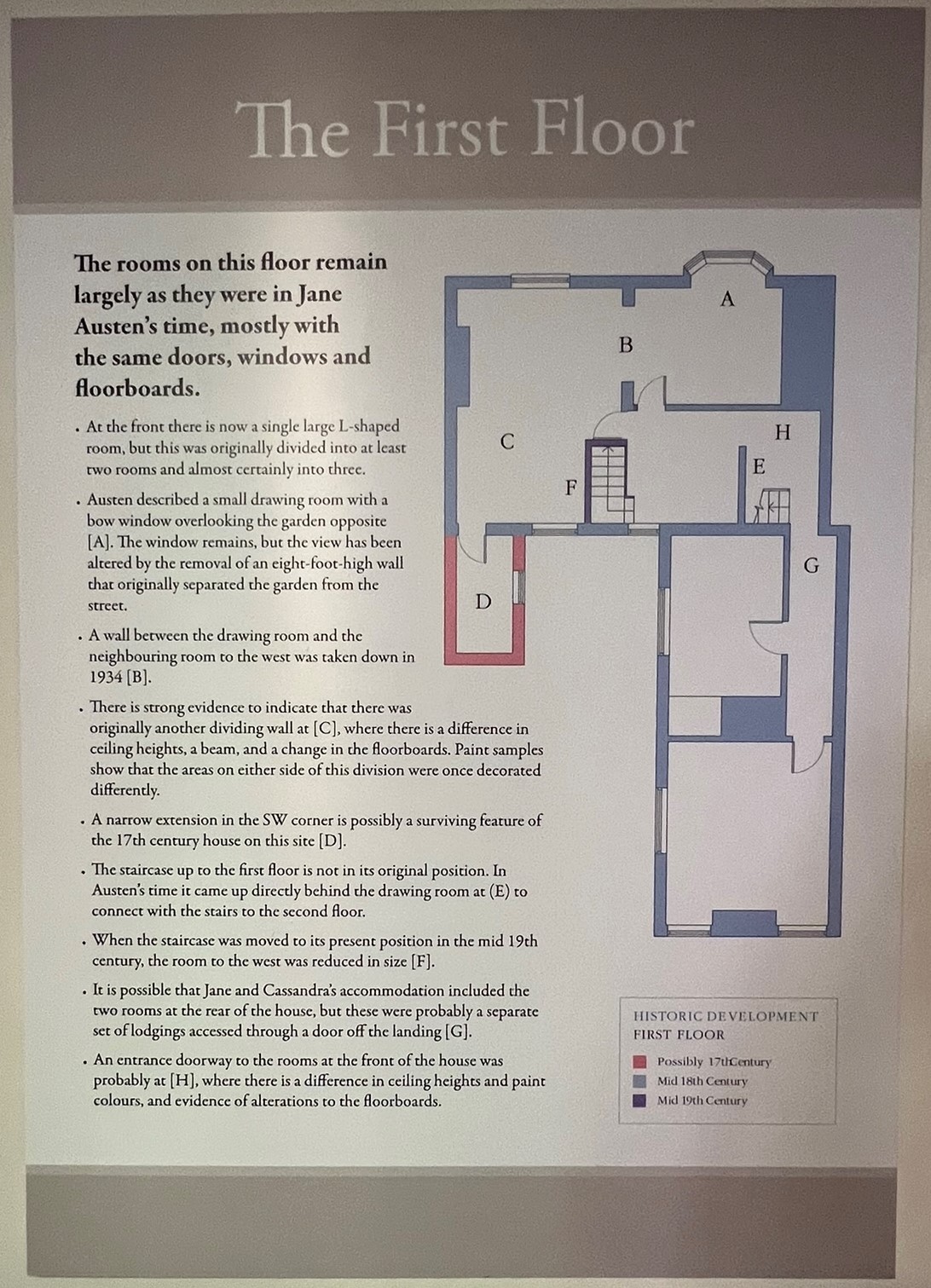
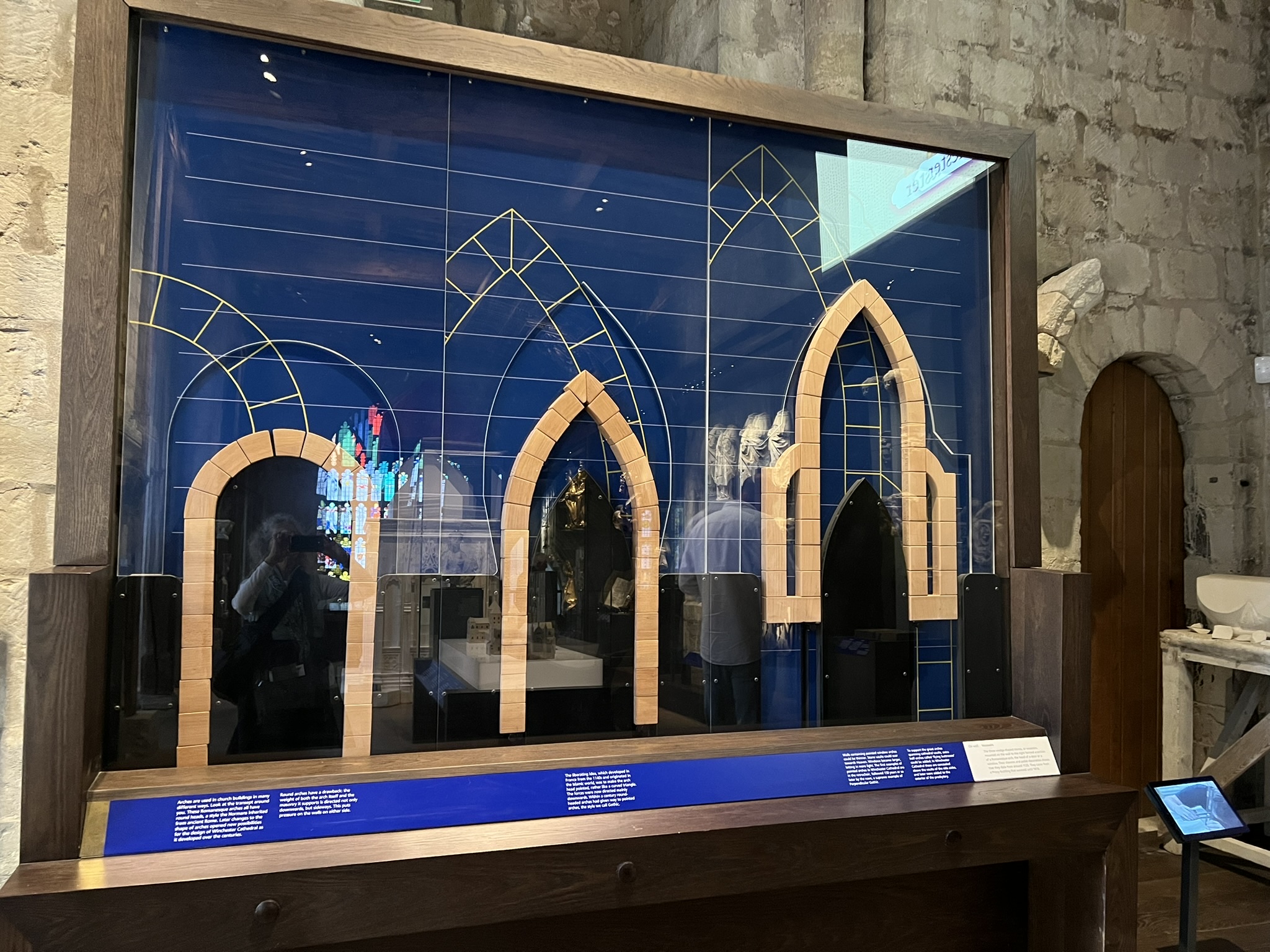
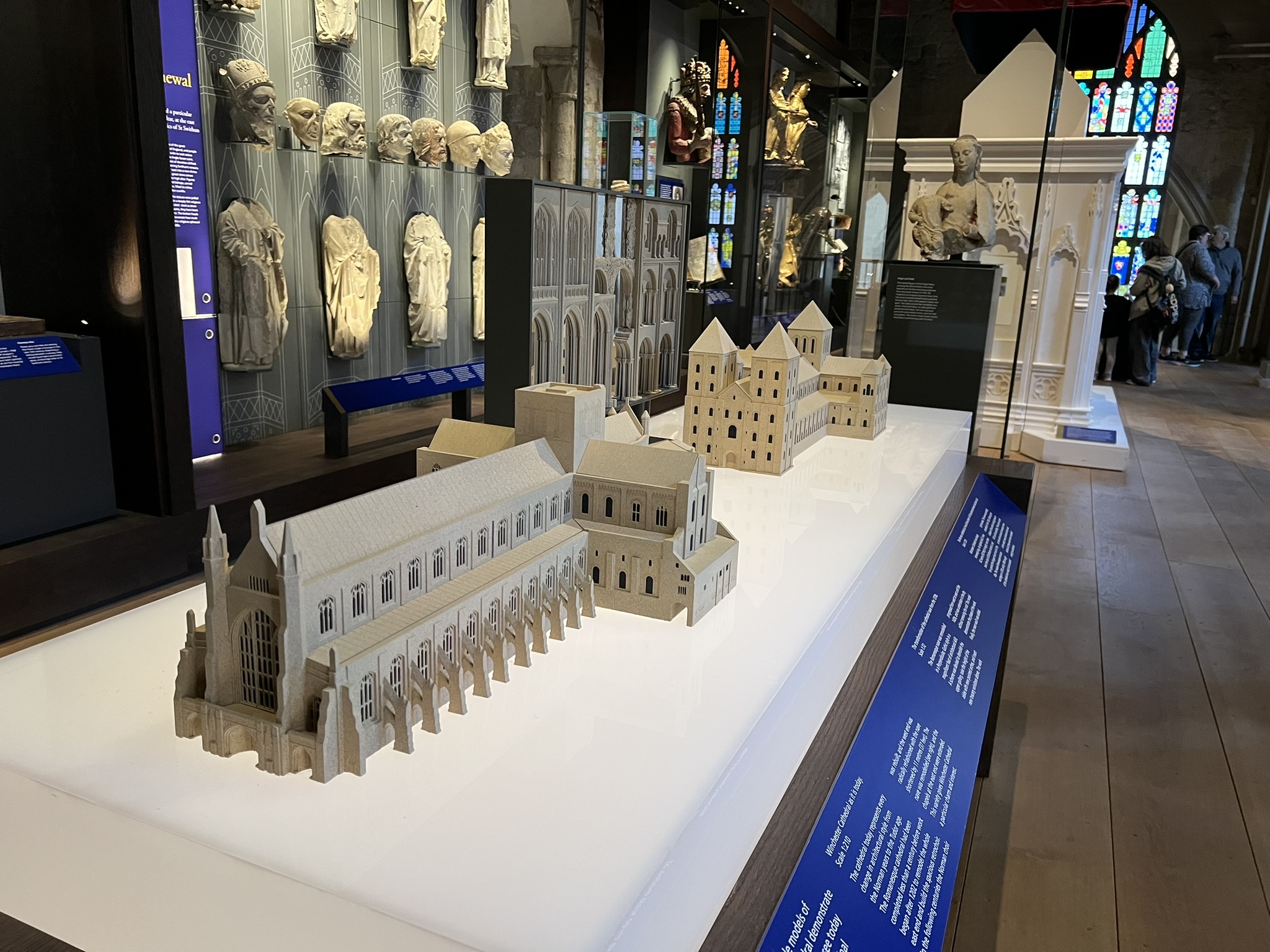
Matching the original paint colors…[the colors surprised me – different in every room, colorful and deep – I didn’t take photos of every room sorry to say…]

****************

****************

***********

***********

https://www.facebook.com/winchestercathedral/videos/307368896851773

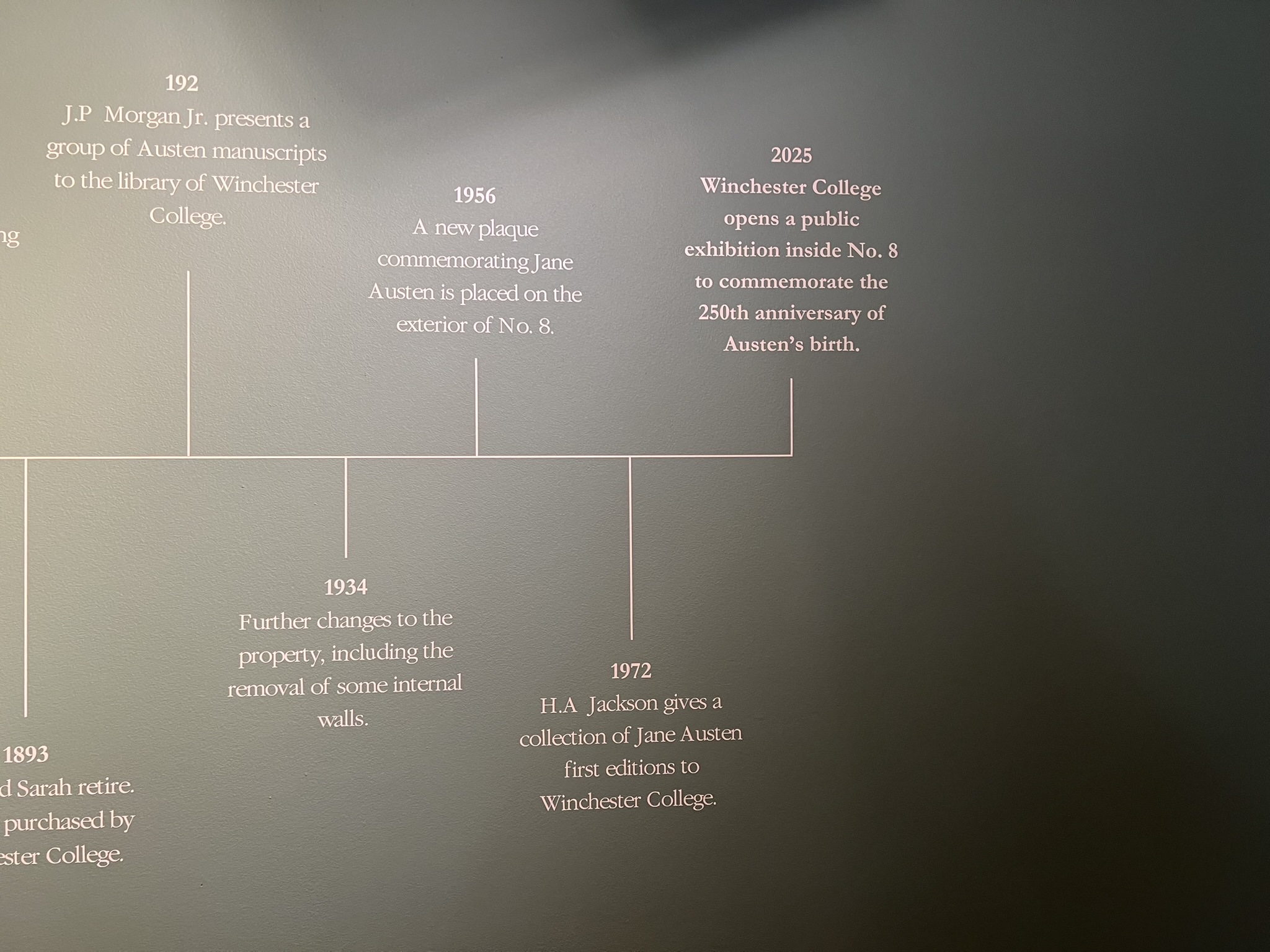
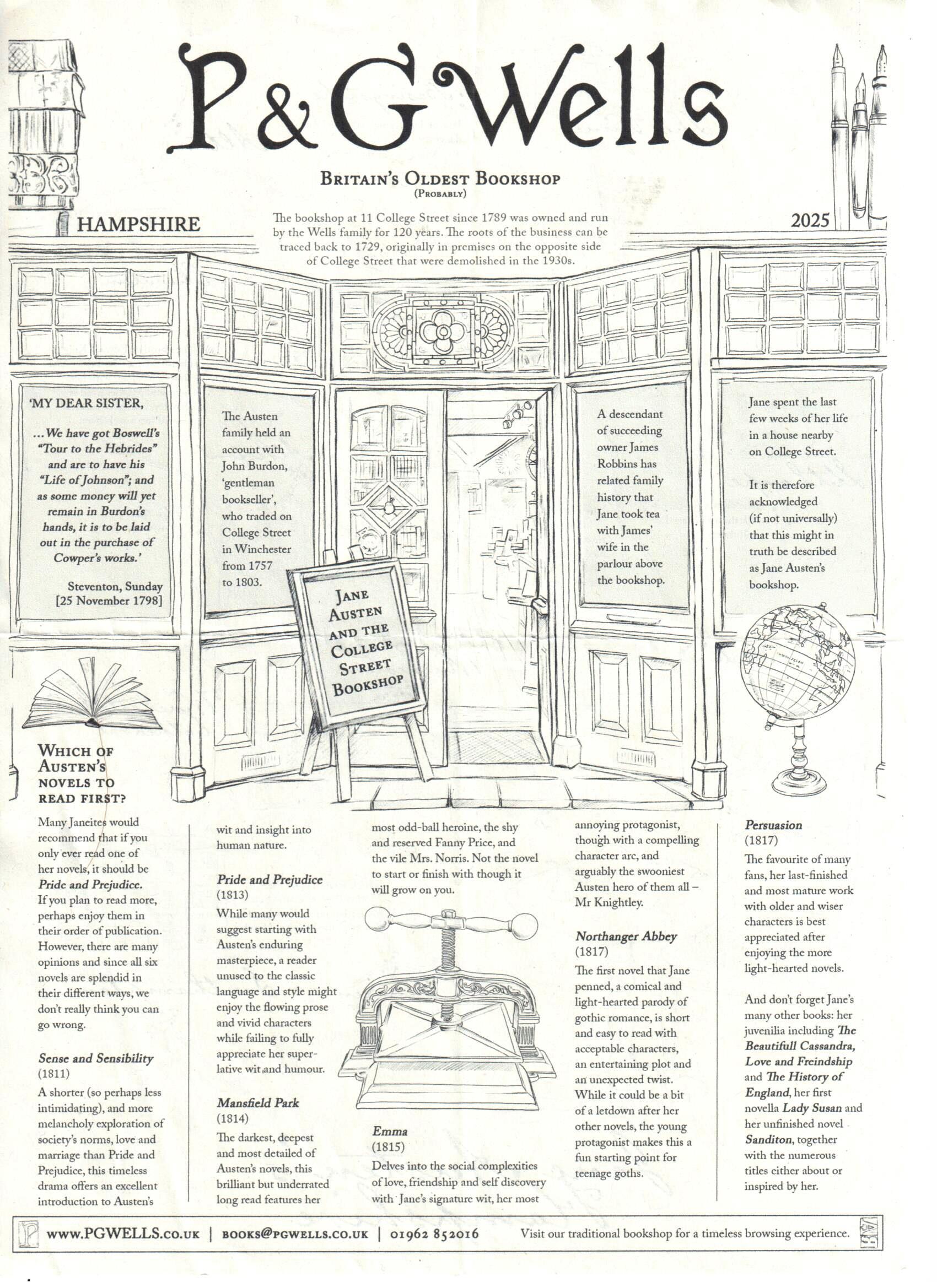
Here is the flier they have celebrating Jane Austen’s 250th:

c2025JaneAustenInVermont
Austen Literary History & Criticism · Books · Collecting Jane Austen · Georgian Period · Godmersham Park Library · Jane Austen · Jane Austen Circle · Jane Austen Societies · JASNA · Literature · Rare Books · Regency England

“Jane Austen, Book Owner”

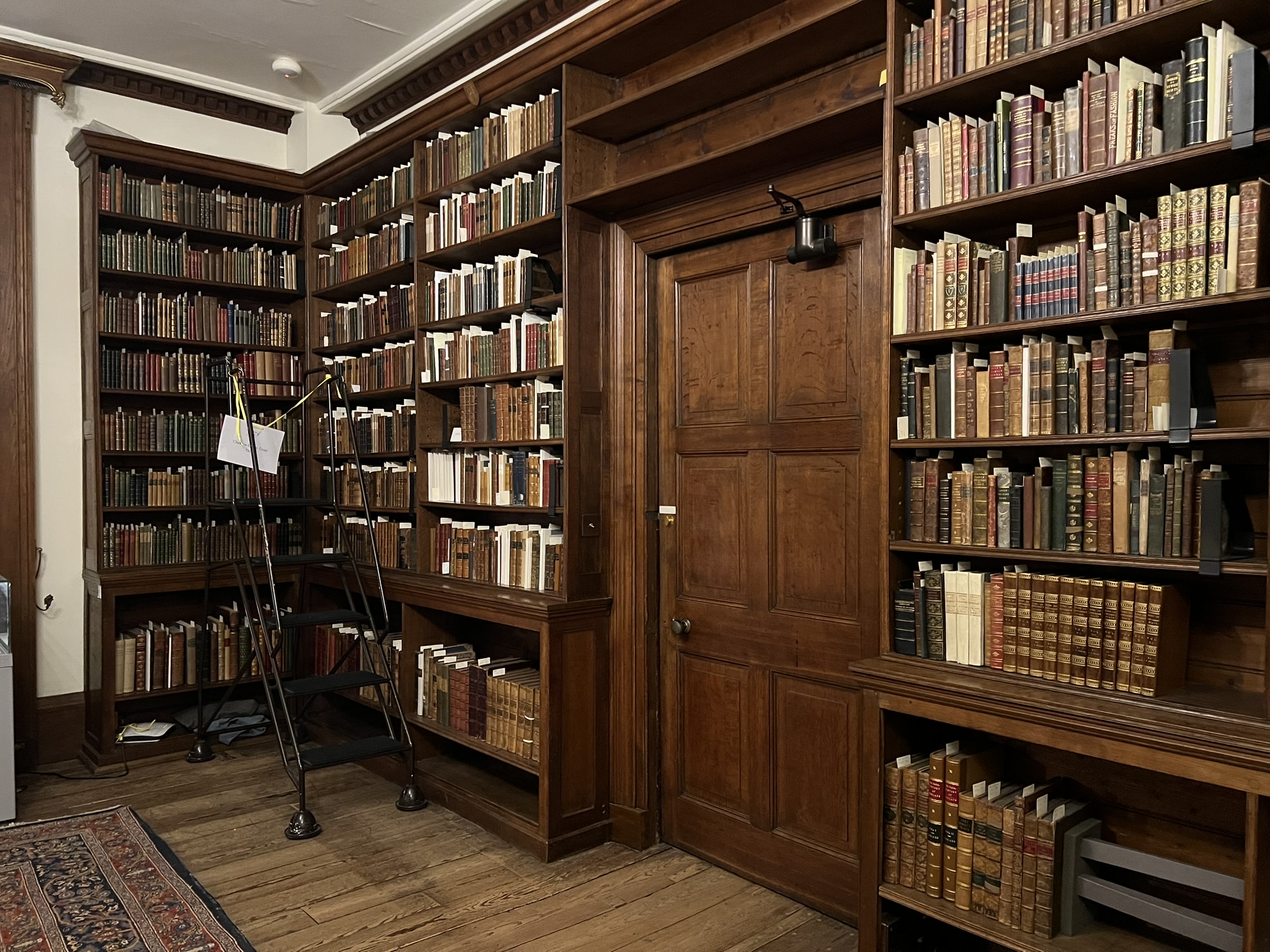
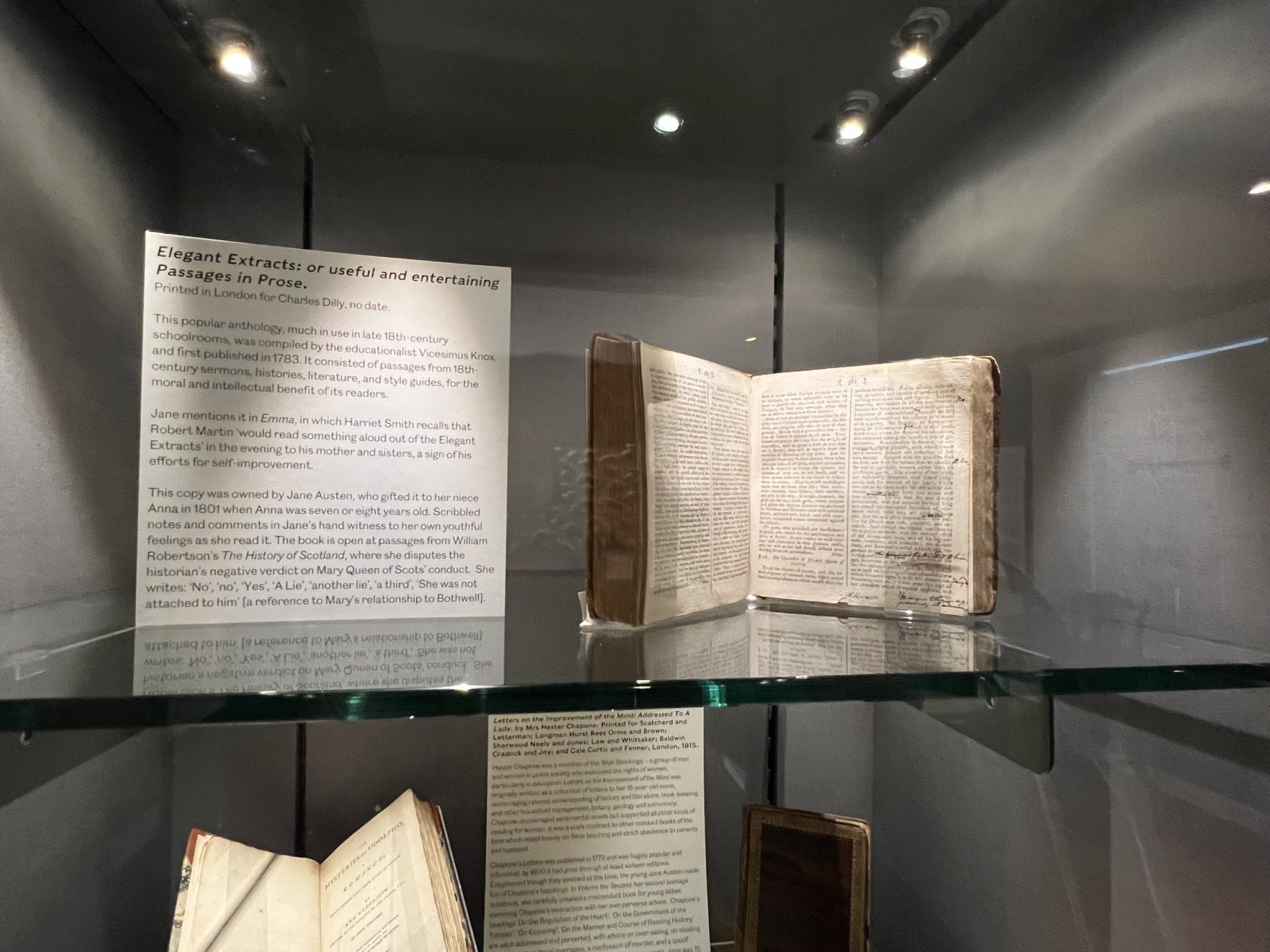
This was the title of my talk at the JASNA AGM in Cleveland last month. I covered a variety of topics, focusing mostly on female book ownership in Jane’s Austen’s time and how she fit into that world of being a “book owner.” David Gilson in his A Bibliography of Jane Austen lists 20 titles that are known to have been owned by Austen, the only way of knowing for sure because she inscribed them. There were others that she gifted to family members and I have included those as well.

The wealth of information on Jane Austen as a reader is quite overwhelming – I direct you to the recently published What Jane Austen’s Characters Read (and Why) by Susan Allen Ford (Bloomsbury, 2024), where there is an excellent summary of her reading in the introduction and chapter one. Also see my bibliography posted below. But my focus was just on the books Austen owned, fitting those into the various subject categories of a gentleman’s or elite lady’s private library, and thereby seeing the variety of works she felt strongly enough about to inscribe her name with that pride of ownership.


I will not be publishing this paper, though I might gradually publish it in sections on this blog – but I did have handouts at the talk and so I am putting both of those on here now: the list of books Austen owned and where they are now, and a very select bibliography of the many books and articles and websites I consulted during my research.

I will add that the Richardson Sir Charles Grandison that was in David Gilson’s private collection is indeed at King’s College Library, Cambridge, as Peter Sabor suggested at the end of my talk. So I have edited the handout to reflect that.

More to come on this very interesting topic, but wanted to get these handouts available to people, as we didn’t have enough during the breakout session.

Jane Austen’s Library:

Jane Austen, Book Owner: Select Bibliography:

*************
Thank you to all of you who came to my session – very hard choices – I wanted to be at other talks myself! For those of you who have the virtual component of the meeting, my talk was recorded and is available at that virtual JASNA link you would have been sent via email.

If you have any questions, please feel free to contact me.

c2024JaneAustenInVermont
Austen Literary History & Criticism · Collecting Jane Austen · Illustrations · Jane Austen · Jane Austen Illustrators · Rare Books

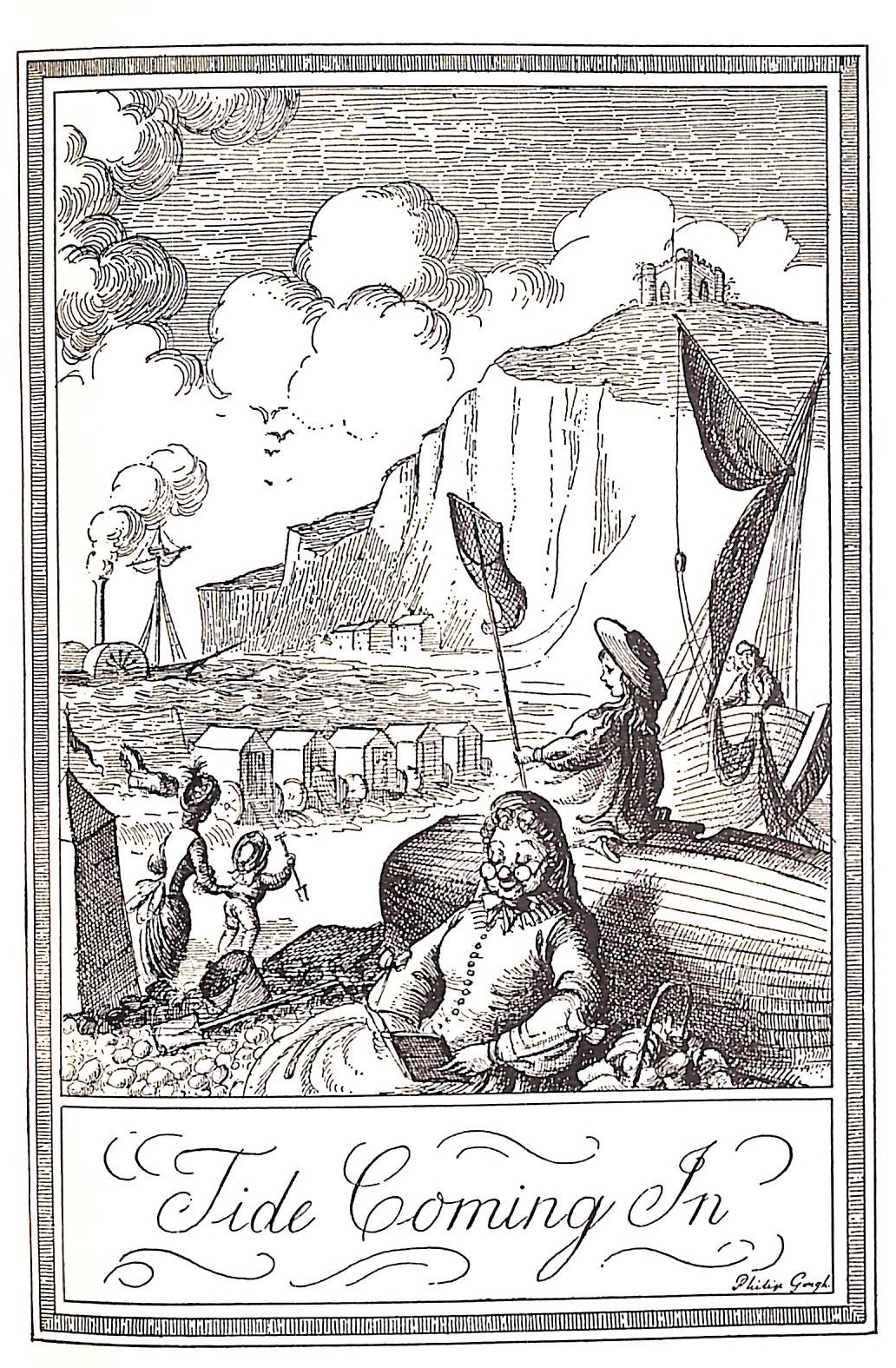
Guest Post: Philip Gough, Jane Austen Illustrator ~ by Hazel Mills

Gentle Readers: I welcome today, Hazel Mills, who has most generously written a post about one of Austen’s many illustrators, Philip Gough. I had written two posts on Gough [see below for links] but little was known about him personally. Hazel has done some extensive research into his life and works, and she shares this most interesting information with us here. Thank you Hazel!

***************

Philip Henry Cecil Gough

by Hazel Mills

          The artist, Philip Henry Cecil Gough, was born on the 11th June 1908 in Warrington, Lancashire, England, the eldest of four children. He was born to Cyril Philip Gough and Winifred Mary Hutchings.

          Philip was from a long line of leather tanners, curriers and bark factors, the latter using bark to soften leather. His family were wealthy owners of tanneries with evidence of his father travelling abroad to the USA in 1925 on business.

          Philip’s paternal grandfather, also a Philip, had carried on the family business in Wem, Cheshire with two of his three brothers. It obviously provided a good income as all four brothers had been to private boarding schools. In 1880, the tannery company of grandfather, Philip, and his brother was dissolved and Philip continued alone.[1]

          It is Philip’s maternal side that gives us the clue to his artistic side. His mother Winifred, also born into a family of tanners, travelled to Brussels to study Art and Music before her marriage. She also played the viola in various orchestras. [2]

          Before 1914 the Gough family moved to Moore, near Runcorn in Cheshire [3] and then in 1921, at the age of 12, Philip was sent to Loretto School, just outside Edinburgh, Scotland, as a boarder.[4] On the 4th and 5th April of that year Philip assisted in the painting of the scenery in the staging of “Much Ado About Nothing” [5] in the gymnasium of the school. The art master he assisted was Colonel Buchanan-Dunlop, who, during the famous ceasefire at Christmas 1914, led the singing of the carols from a sheet sent to him from Loretto School. [6]

          Again in 1924, Philip painted scenery for the school production of “A Midsummer Night’s Dream”, which was performed in aid of the Edinburgh Royal Infirmary, again assisting Col. Buchanan-Dunlop. [7]

Liverpool Art School record

          Philip left school in 1925. [8] It is known that he attended art school in Cornwall and Liverpool. He entered Liverpool College of Art in February 1926 and a year later, while still at the college, designed the scenery for the pantomime, “Robinson Crusoe”, at the Garrick Theatre in London. In 1928, after leaving the Liverpool College of Art, he designed about 60 costumes for “A Midsummer Night’s Dream” for the Liverpool Playhouse with a photo being published in the “Graphic newspaper” on 19th January 1929 [9] It is also thought that he designed shop windows around this time.

Midsummer Night’s Dream – Gough scenery and costumes

          1929 saw Philip working on a prestigious new project. He was responsible for all the scenery and costumes for A.A. Milne’s new play, “Toad of Toad Hall” at the Liverpool Playhouse, based on Kenneth Grahame’s book, “Wind in the Willows”. “The Stage” described Philip’s work as “both novel and extremely beautiful”. [10] At this time, Philip was still only twenty one years old. A.A. Milne also wrote a play of “Pride and Prejudice” called “Miss Elizabeth Bennet”. This was also produced at the Liverpool Playhouse. But sadly it was not Philip that did the scenery for this one, but a Charles Thomas. [11]

          In September of the following year, Philip designed scenery and costumes for “Charlots’s Masquerade”, a variety show at the Cambridge Theatre in London. There is even some Pathé News footage of this in existence. [you can view it here:

****************

It must be around this time that Philip meets his first wife, Mary O’Gorman, as the London Electoral register of 1930 shows him living in what appears to be a lodging house at the same address as her. It’s not know if they were actually living together as the listing is just alphabetical. Over the next eight years Gough is involved in costume and set design for at least seven productions, the first two at the Liverpool Playhouse but the following ones were all in various locations in London.

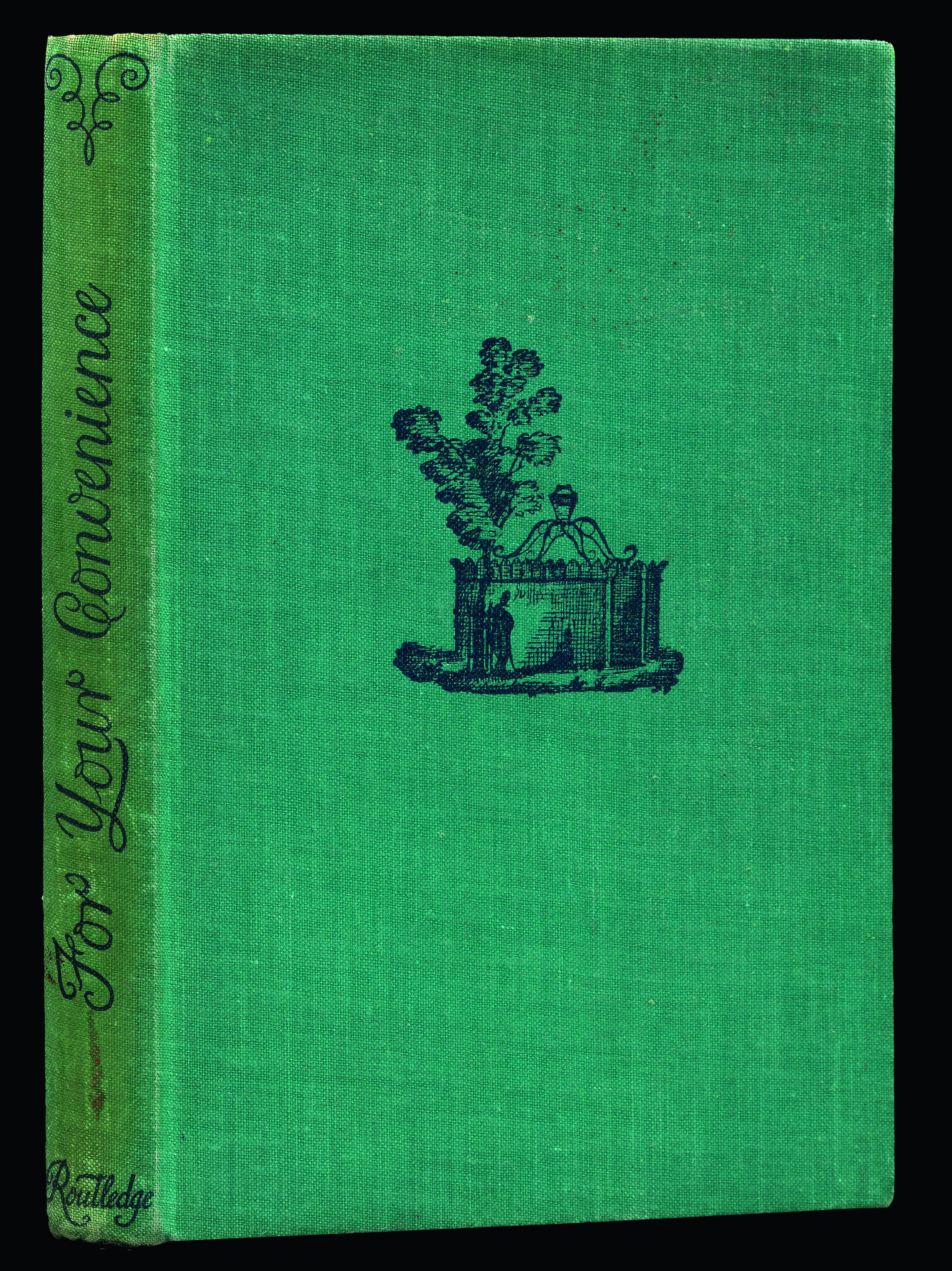
          Towards the end of this time the first book illustrated by Gough that I could find was the wonderfully named*, For Your Convenience: a learned dialogue instructive to all Londoners & London visitors, overheard in the Thélème Club and taken down verbatim by Paul Fry, [pseudonym for Thomas Burke] and published by Routledge in 1937.

“For Your Convenience”
“For Your Convenience” endpaper map

[* this book is republished today as For Your Convenience: A Classic 1930’s Guide to London Loos – in 1937 it was a heavily disguised guide to London toilets for homosexual encounters.]

***********

In 1939 Philip married Mary Catherine O’Gorman in Chelsea. The 1939 England and Wales register shows the married couple living in elegant  Walpole Street, Chelsea. The house is again the home of what appears to be boarders. Philip is described as working as an artist and designer of theatrical scenery, Mary is a secondary school teacher.

The following year Philip worked on “The Country Wife” at the Little Theatre, Haymarket, London and The Illustrated London News reported that the “décor by  Mr. Philip Gough is the chief charm of this production.” [12]

“New Book of Days”


The next few years, over the time of the Second World War, seem to be a very quiet time for Philip. I can only find his illustration of a book by Eleanor Farjeon called The New Book of Days, an anthology of rhymes, proverbial tales, traditions, short essays, biographical sketches and miscellaneous information, one piece for each day of the year. In 1936, Philip had also designed the sets and costumes for a play by Eleanor and Hubert Farjeon, called “The Two Bouquets”.

Philip’s father died in 1946 when Philip was still living in Chelsea. In 1948 he appears to have left his wife and is now living at another address in Chelsea with a Joan Sinclair.

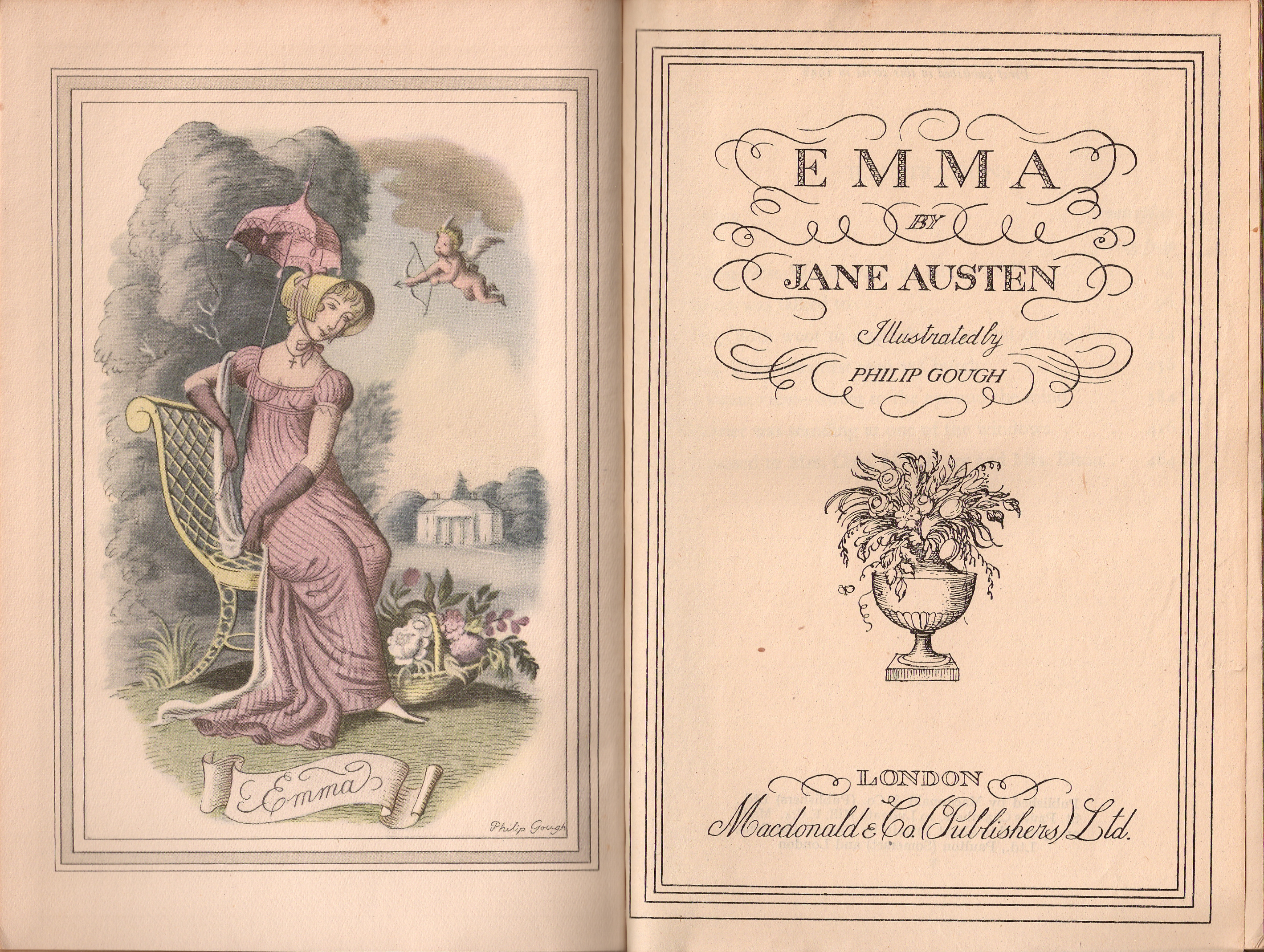
1947 was a prolific year as a book illustrator, with four books for Peter Lunn publishers including “Fairy Tales” by Hans Christian Andersen. The following year would be his foray into Jane Austen Novels with the 1948 publication of Emma, published by MacDonald for their Illustrated Classics series. 

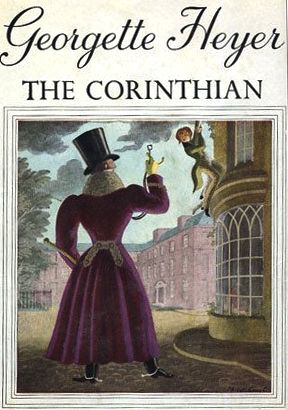
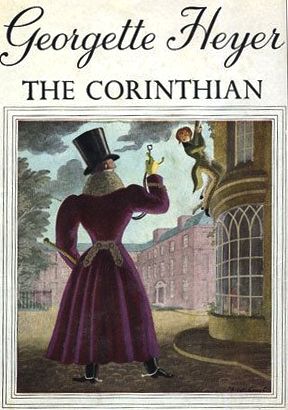
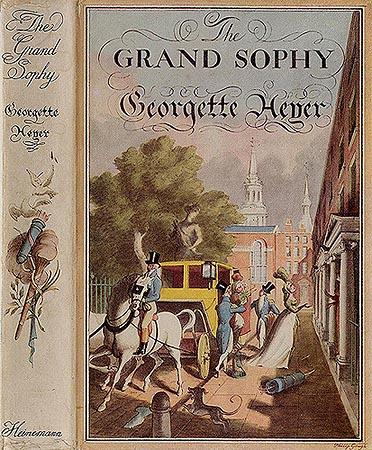
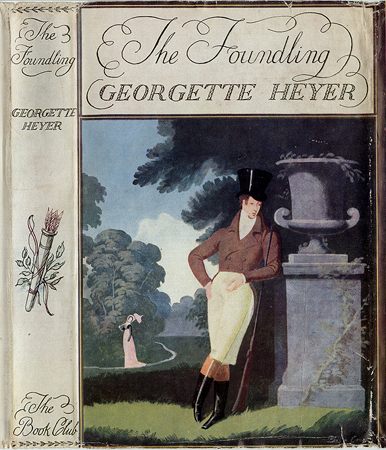
I have tracked down forty-two books between 1937 and 1973 where he drew illustrations throughout, but in addition Philip designed many, many more dust jackets for novels such as those of Georgette Heyer:

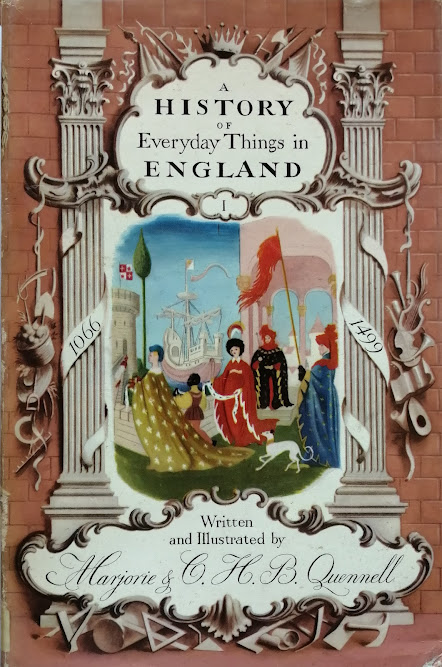
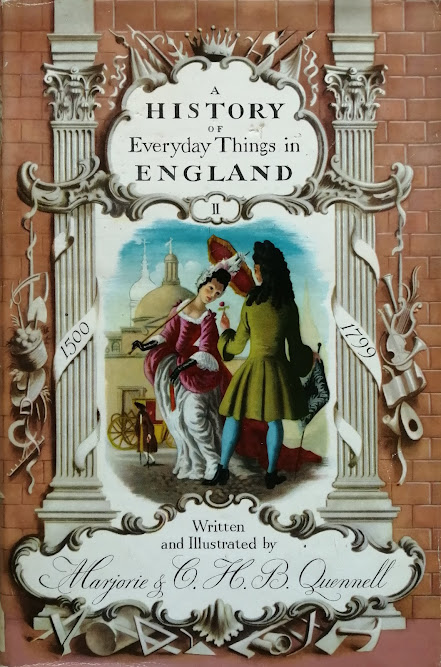
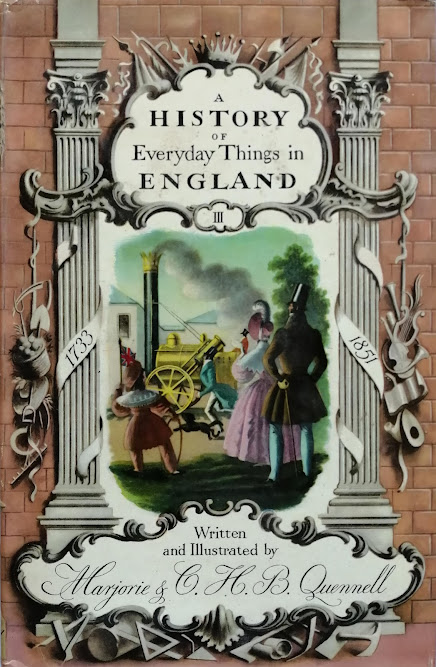
and non fiction tiles such as 1960s reprints of the four volume “A History of Everyday Things in England” that first appeared in 1918:


Philip also did a few more set designs in the 1950s but more of his time was spent illustrating books including Pride and Prejudice (1951), Mansfield Park (1957) and Sense and Sensibility (1958) for Macdonald. You can see many of the illustrations here:

https://janeausteninvermont.blog/2021/08/15/collecting-jane-austen-macdonald-illustrated-classics-illus-by-philip-gough/

and here:

https://janeausteninvermont.blog/2014/12/30/jane-austens-mansfield-park-in-pictures-the-illustrations-of-philip-gough/

*****************

In Philip’s personal life, tragedy hit when his mother was killed in an accident when she was hit by an army truck in 1952.  Philip married Joan in 1953 which is the last year in which I can find any more set and costume designing.

Northanger Abbey

          1961 saw the Macdonald publication of both Northanger Abbey and Persuasion with his illustrations and he continued to illustrate books until at least 1973.

          Philip Gough died in London on 24th February 1986, leaving a fortune of £42,661.

          Philip’s sisters also deserve a mention. Sheila May Gough was qualified as a nurse and during WWII joined the ‘Queen Alexandra’s Imperial Military Nursing Service’. She served in Europe before being posted to Malta.  In 1943 Malta became the base for the invasion of Sicily.  It was codenamed ‘Operation Husky’ and began on the night of 9 July and lasted for six weeks.  Sheila was awarded the ‘Associate of the Royal Red Cross’ for “special devotion to duty…and complete disregard for her own safety”. [13] Sheila remained unmarried until the age of 58, in 1975, when she married Donald Verner Taylor C.B.E. who had been in the Army Dental Corps in Malta at the same time as her.

          Less is known of his sister Gwendoline Winifred other than she was a school teacher at a boarding school in Nottingham in 1939 [14] but in 1941 sailed to South Africa where she stayed until 1946. [15] More is known of  Brenda Irene, or rather Flight Officer Brenda Irene Gough. The 1939 register records that Brenda was working as a secretary for the Civil Nursing Reserve and living in Wimbledon.  She joined the WAAF (The Women’s Auxiliary Air Force) after May 1941 .  In 1943, Brenda was promoted to Section Officer in the Administrative and Special Services Branch and later promoted to Flying Officer.  During the war women were paid two thirds of the salary of their male counterparts.

Philip Gough has left an enormous body of work and original works of his illustrations can achieve high prices today, for example, a signed original gouache artwork  for the dust wrapper to Georgette Heyer’s The Foundling currently commands a price of around $2,500.

**********************

Footnotes:

  1. The London gazette May 27 1881
  2. Obituary Cheshire Observer Dec 01 1951
  3. Kelly’s Directory 1914
  4. https://archives.loretto.com/archive/the-lorettonian/1921-vol-44/777604-1921-vol-44-0031jpg?q=gough
  5. https://archives.loretto.com/archive/the-lorettonian/1923-vol-46/777827-1923-vol-46-0026jpg?q=gough
  6. https://www.loretto.com/christmas-truce-commemoration/47361.html
  7. https://archives.loretto.com/archive/the-lorettonian/1924-vol-47/777740?q=gough
  8. https://archives.loretto.com/archive/the-lorettonian/1925-vol-48/777849?q=gough
  9. The Graphic – Saturday 19 January 1929
  10. The Stage – Thursday 26 December 1929
  11. The Era – Wednesday 9 September 1936
  12. Illustrated London News – Saturday 20 April 1940
  13. National Archives
  14. 1939 England and Wales Register
  15. UK incoming and Outgoing passenger lists

Image acknowledgements:

  • Liverpool College of Art Record -Liverpool College of Art Archives
  • Mid summer Night’s Dream Image courtesy of Mary Evans Picture Library (c) Illustrated London News/Mary Evans Picture Library.
  • For Your Convenience images – Care of Daniel Crouch Rare Books – crouchrarebooks.com

________________________________

Author bio:

Hazel Mills is a retired science teacher and a founder member and Chair of the Cambridge Group of the UK Jane Austen Society. Until her move to Denmark, she was a Regional Speaker for the Society. Hazel discovered Austen as a thirteen year old Dorset schoolgirl when reading Pride and Prejudice and fell in love for the first time with Mr Darcy. She has researched the history of Jane Austen’s time, presenting illustrated talks, around England and Scotland, on diverse subjects including: Travel and Carriages in Jane Austen’s time; the Life of John Rawstorn Papillon, Rector of Chawton; Food production and Dining; Amateur Theatricals at Steventon, and the Illustrators of Austen’s novels. She lives in a lovely house overlooking the sea with her husband who built her a library to house her extensive Austen collection, which includes over 230 different copies of Pride and Prejudice.

***************

Do you have a favorite Philip Gough illustration?? Please leave a comment below.

©2022, Jane Austen in Vermont and Hazel Mills
Auctions · Chawton House · Fashion & Costume · Jane Austen · NAFCH - North American Friends of Chawton House · Rare Books

Let’s Go Shopping!! Auction to Support Chawton House!

Please visit this Auction site to see what’s on offer from the North American Friends of Chawton House   – their annual auction that coincides with the JASNA AGM (just completed): https://www.nafch.org/agm-2021-auction

The auction goes until this Friday October 22, 2021 at 12:00 pm EDT

1. Late nineteenth-century, wooden writing slope with mother-of-pearl detail.  English. When closed: 8½ x 12 x 4¾ inches. (Est. $250)

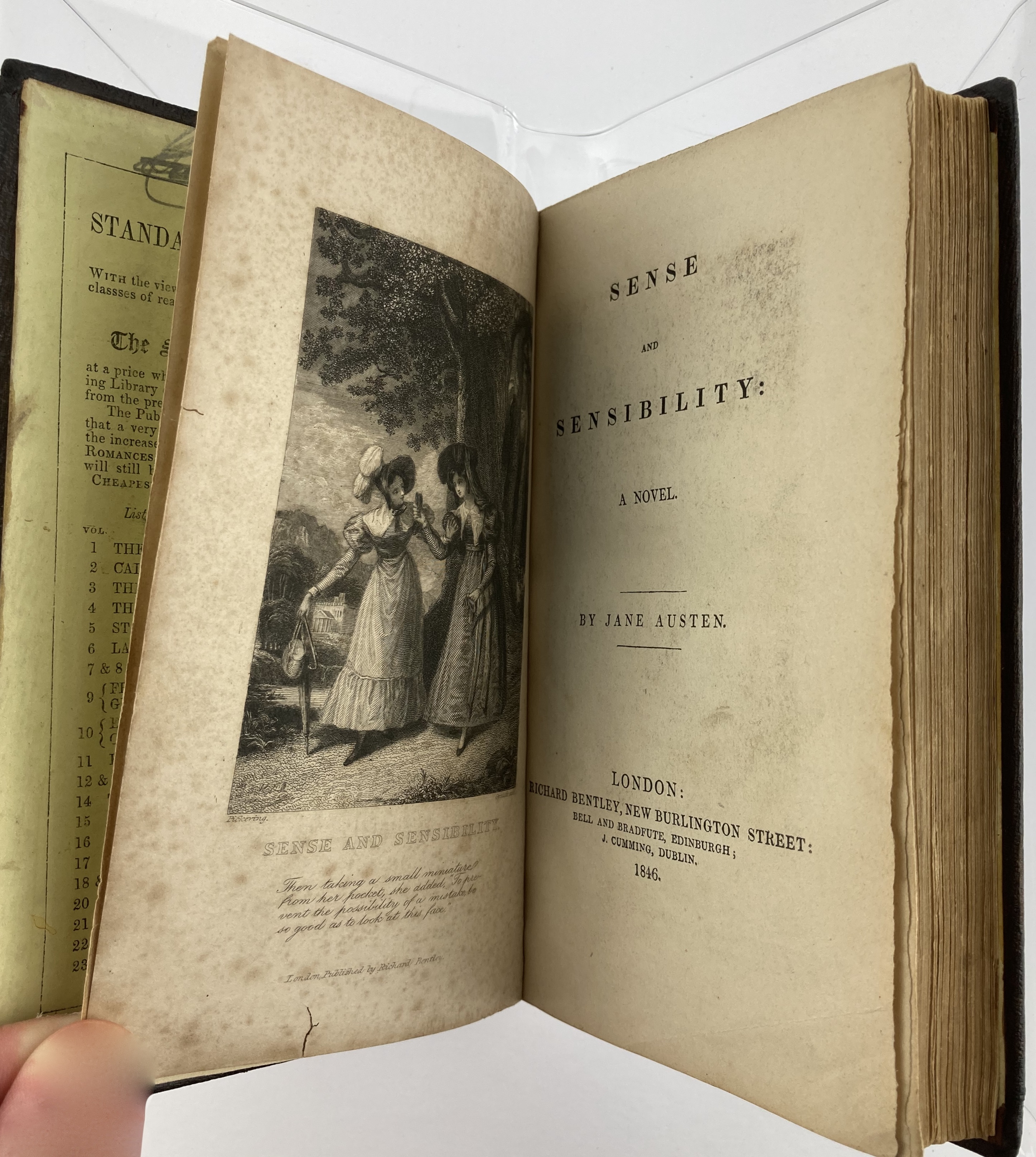
2. Jane Austen, Sense and Sensibility, in Richard Bentley’s “Standard Novels and Romances” series (London, 1846).  In original trade binding, stamped with “2/6” on spine.  Extremely rare. (Est. $650-1000)

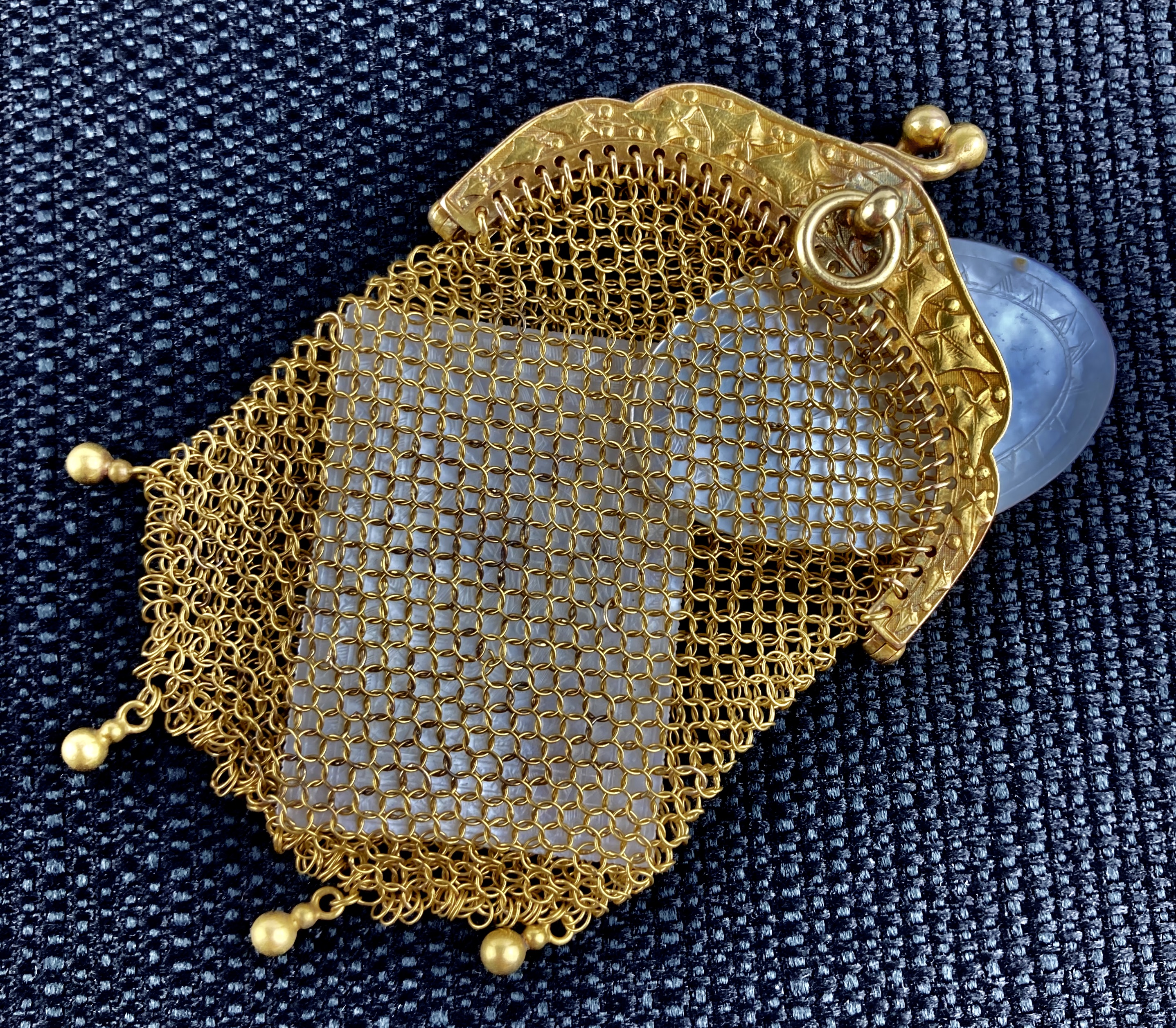
3. Antique gold chainmail coin purse.  3¼ inches. Edwardian, circa 1902.  (Est. $100-250+)

4. Victorian sterling silver jewelry dish, with another of silver plate in a later design (c. 1920s).  Each are 2 ¾ inch diameter. Victorian, circa 1890s.  (Est. $50+)

5. Two 14K gold miniature portrait pendants, with diamond chips.  3 cm and 2½ cm.  Early 20th century.  English. ($100-120 for the pair)

6. Two costume jewelry pendants of painted ladies.  4½ cm and 2½ cm.  Timeless.  ($50 for the pair)

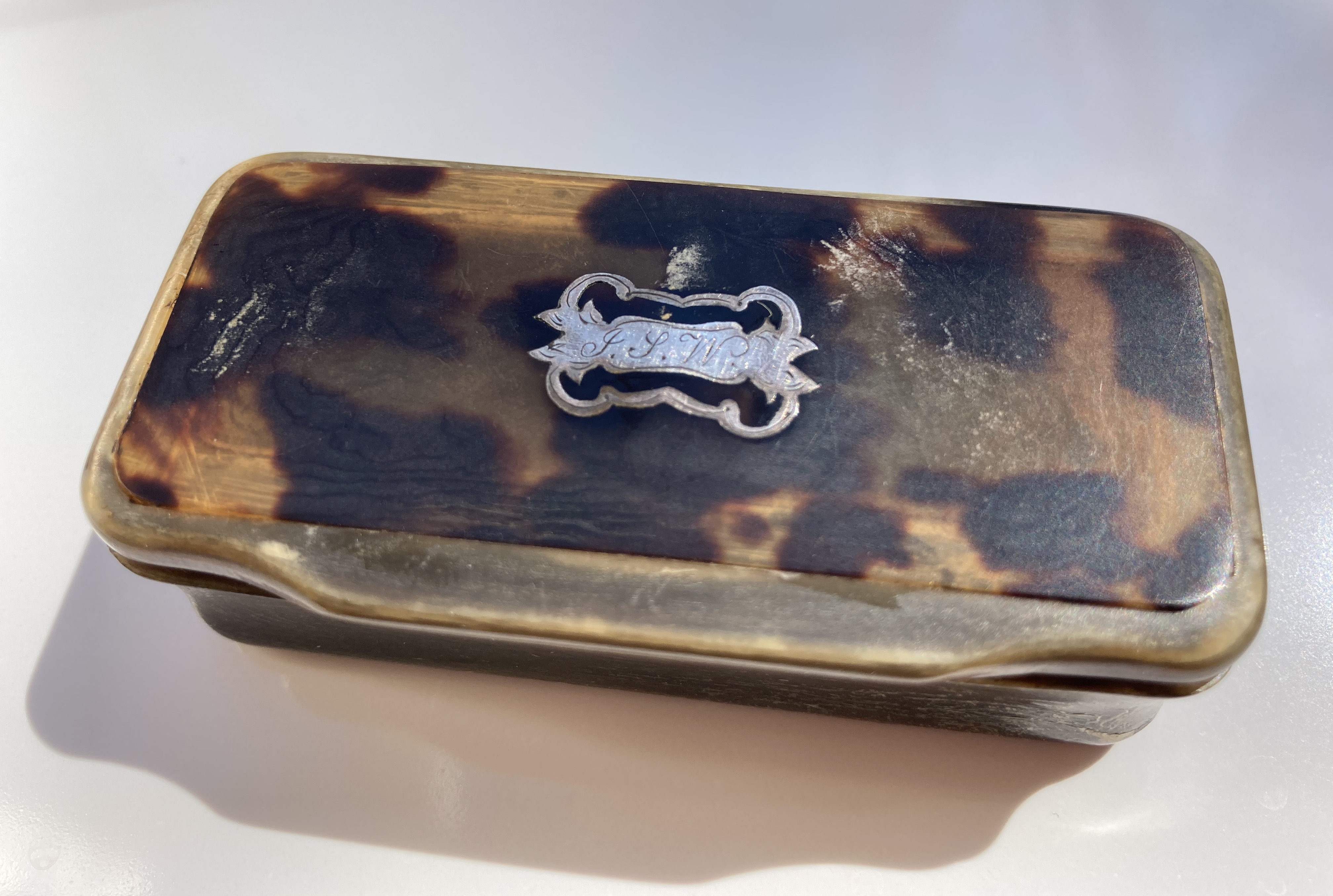
7. Late 18th century silver-mounted horn & tortoise snuff box. Top lid is 3.5 cm x 7.5 cm. Marked on the bottom with a tag from over a decade ago, at last purchase: $260.

8. Champleve enamel, bronze carriage clock with decorated panels. 19th century, French.  18 cm high. ($400)

9. Artist book, by Linda Dennery: R. W. Chapman, Jane Austen: A Critical Bibliography (Oxford, 1953). ($500)

**********************

Visit and bid! These amazing items can be yours at the click of a button – all to support Chawton House!

Thank You!

©2021 Jane Austen in Vermont

Austen Literary History & Criticism · Collecting Jane Austen · Illustrations · Jane Austen · Jane Austen Illustrators · Publishing History · Rare Books

Collecting Jane Austen: Macdonald Illustrated Classics, illus by Philip Gough

So I am back from an RV trek up north – finally able to get to Vermont and visit with family and friends – almost SEVEN weeks with no stable or reliable internet connection on any given day – and I actually survived the deprivation. Thankfully Trooper was not writing his usual journal of this trip [ https://trooperslog.wordpress.com/  ] so did not need to be uploading all his commentary and pictures every day.

But now back home with access to my shelves and resuming posts on “Collecting Jane Austen” with a short post on one of my favorite sets of Jane Austen’s novels: The Macdonald Illustrated Classics (London, 1948-61), with illustrations by Philip Gough and introductions by various scholars for four of the six volumes.

I have written about this set before, and so direct you to that blog that focused mostly on Gough’s illustrations for Mansfield Park: https://janeausteninvermont.blog/2014/12/30/jane-austens-mansfield-park-in-pictures-the-illustrations-of-philip-gough/

I’ll repeat here the description of the set:

When Macdonald & Co. (London) published its first volume of Jane Austen’s work in 1948, Emma was the chosen work, with Philip Gough as illustrator. It was the 4thvolume in the Macdonald Illustrated Classics series. It is a small book, under 8 inches, bound in red leatherette, with a frontispiece and seven other full-page plates of watercolor drawings by Gough. There is no introduction. Macdonald published its next Jane Austen novel in this series in 1951 – Pride and Prejudice, with illustrations again by Gough and again no introduction.  If you are lucky enough to have all the six volumes published by Macdonald, you will see that they appear to be a set, all with the same binding and all illustrated by Gough – but they were published over a period of years from 1948 to 1961 as follows – with the No. in the Macdonald series in ():

  • 1948 – Emma (No. 4)
  • 1951 – Pride & Prejudice (No. 23)
  • 1957 – Mansfield Park (No. 34); introduction by Q. D. Leavis
  • 1958 – Sense & Sensibility (No. 37), with Lady Susan and The Watsons; intro by Q. D. Leavis
  • 1961 – Northanger Abbey (No. 40); intro by Malcolm Elwin
  • 1961 – Perusasion (No. 41); intro by Malcolm Elwin

Not sure why Leavis did not do the other introductions – her essays on Jane Austen are magnificent, and a definite must-have for your Austen library. Her Mansfield Park introduction, after stating that MP is “now recognized as the most interesting and important of the Austen novels,” gives us a brief summary of Austen’s life and times, then writes of her theories that Lady Susan is the matrix of Mansfield Park, that Austen was “soaked in Shakespeare,” that the Sotherton sequence  is one of the “most remarkable in any English novel” where all the action is symbolic and how its pattern of events is “exactly and awfully repeated” in the final outcome of the book, and finally how Mansfield Park is really a tragedy “in spite of the appearance of a happy ending.”

All of the novels were published with a stiff clear mylar wrapper with the title and “Illustrated by Philip Gough” in mustard yellow, and “By Jane Austen” in blue, with nothing on the spine but the gilt titles on the red backstrip showing through. These wrappers are nearly impossible to find. I only have the one for my Emma volume.

****************

There is little known about Philip Gough and I cannot find much researching the internet other than he was born in 1908, illustrated a number of children’s books (Alice in Wonderland, Hans Christian Andersen’s Fairy Tales are two examples); this Jane Austen series from Macdonald; and a goodly number of dust jackets for Georgette Heyer’s Regency novels (see below). There is a list of 14 books on Goodreads illustrated by him but this list is not complete – Jane Austen is not listed!)
[ https://www.goodreads.com/author/list/1981672.Philip_Gough ]

It is worth noting that in the introduction to the 1961 Persuasion by Malcolm Elwin (and also quoted by David Gilson in his entry E327 on this edition in his A Bibliography of Jane Austen), Elwin states that the drawings of Hugh Thomson are said to be “too Victorian in their sentimentality to suit the spirit and period of the novels” – and that “Mr. Gough has shown himself a student of the Regency period, and many sound critics have judged him to have succeeded in conveying the subtlety of Jane Austen’s satiric humour.” Gilson also notes a TLS review of this edition (10 November 1961, 810), quoting that “Philip Gough’s illustrations have their own brand of sentimentality, this time of the pretty-pretty sub-Rex Whistler variety.”

[example of a Rex Whistler drawing]

[Source: http://www.theguardian.com/artanddesign/2013/aug/25/rex-whistler-british-artist-exhibition ]

*********************

Illustrating Jane Austen:

Each of the novels begins with a chapter I heading drawing in black and white as well as a drawing on the title page. Emma as the first published of the novels is an exception – there are chapter heading illustrations for each of the odd-numbered chapters; all the other novels have only the one heading chapter I as well as the title page. Each novel has 7 watercolors (Sense and Sensibility only has five; there is one watercolor each for Lady Susan and The Watsons and each begins with a black and white drawing.) I find these watercolor illustrations a little too precious – there is a tendency toward “Pretty in Pink”– as you will see in these examples from each novel in the order of publication below. There is also some rather odd scenes of what Gough chose to illustrate and they are often placed so far from the actual text being quoted that they serve more as a distraction rather than illuminating the story. But these are quibbles – I love this set and am privileged to have it on my shelf – it is almost impossible to find as a full set, and each volume can be quite expensive when located (Emma is the most elusive) – my advice is to buy them when you see them and grin and bear it.

So now for a few examples of Gough’s illustrations from each of the novels:

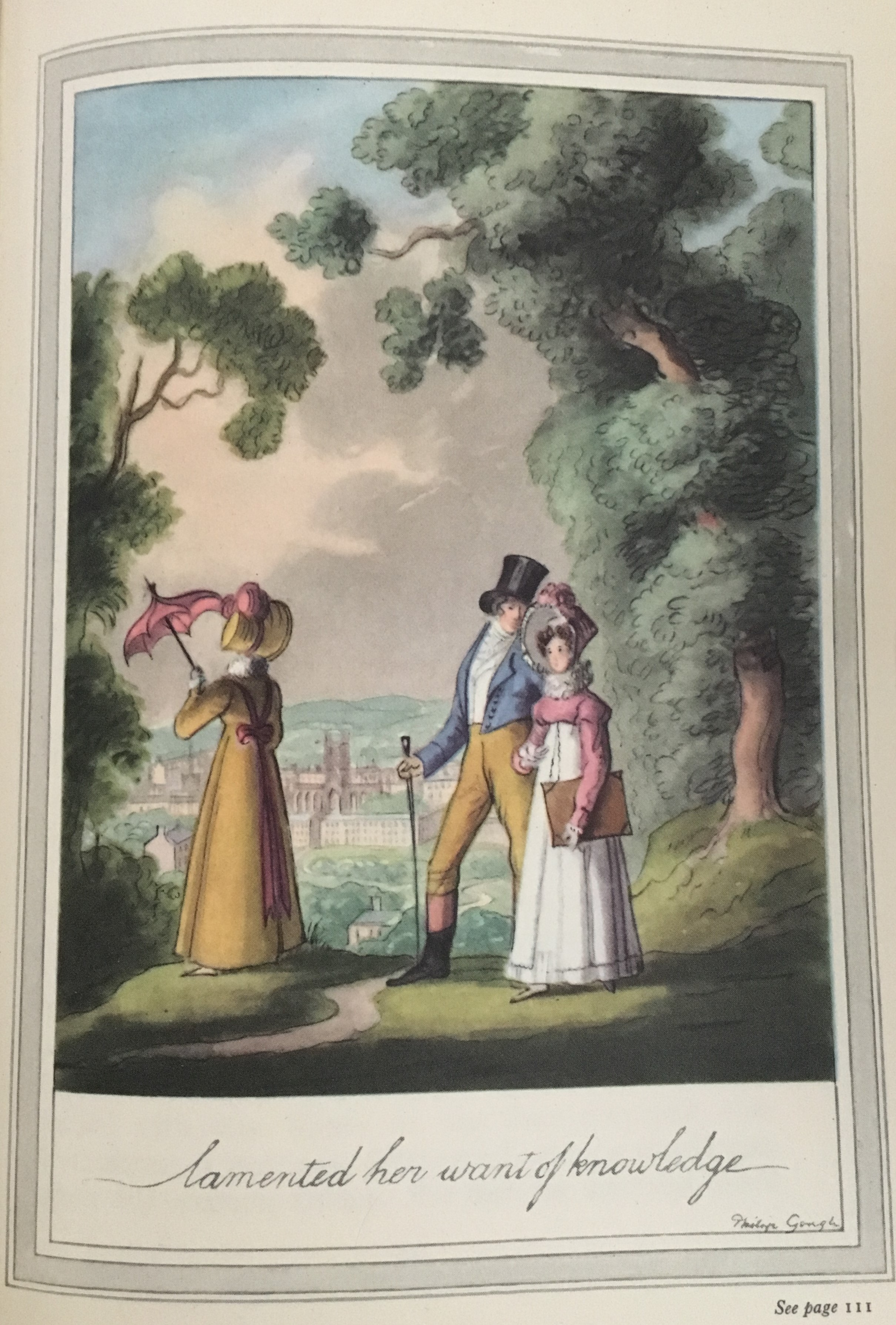
Emma (1948): Gough definitely equated the Regency period and Jane Austen with the feminine Pink – and in Emma there is a good deal of it!

You can see all the Emma illustrations here, including two of the many chapter headings: https://www.fulltable.com/vts/aoi/g/emma/a.htm

Title page and frontis – notice the Cupid!
“A sweet view…” with what appears to be a Mormon tabernacle standing in for Donwell Abbey

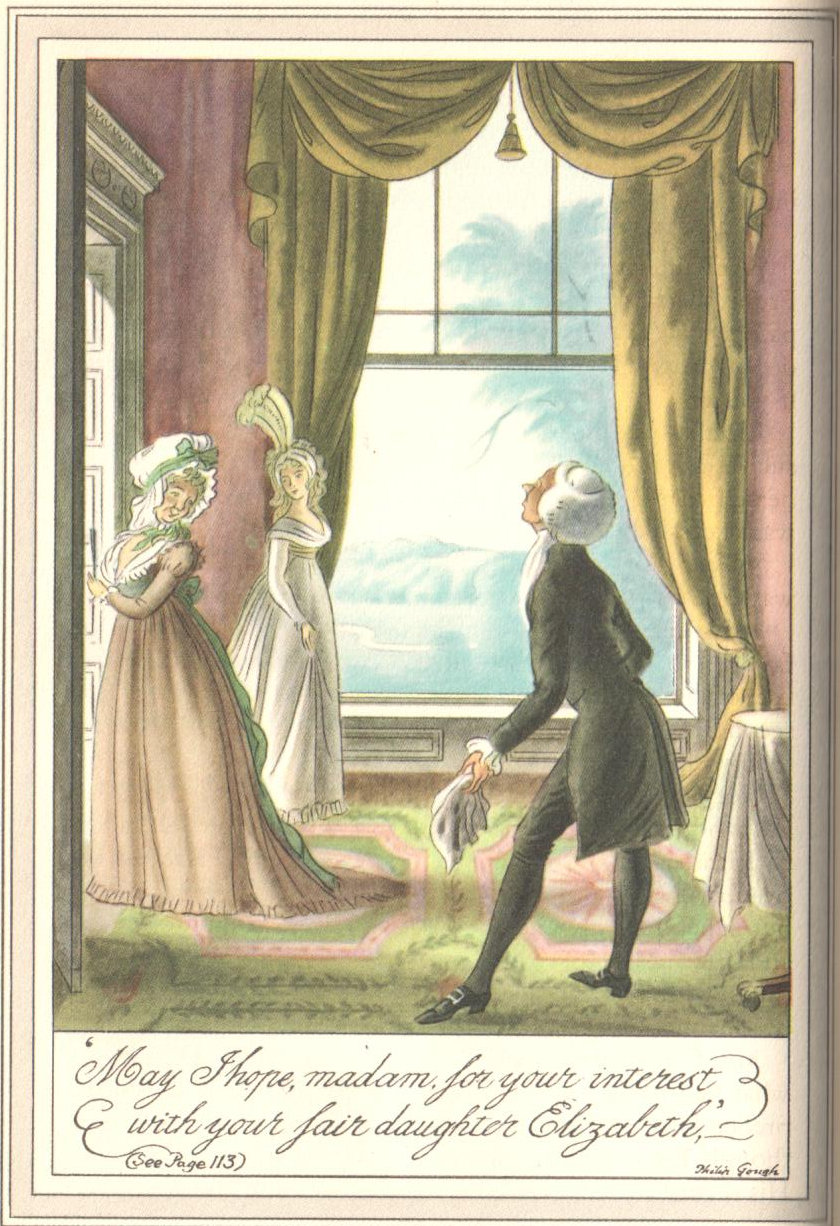
Pride and Prejudice (1951): I have always looked rather wide-eyed at the abundance of Pink in Gough’s Pride and Prejudice especially in this portrait of Mr. Darcy at the pianoforte…!

And we must include Gough’s simpering Mr. Collins:

****************

Mansfield Park (1957): here is one example, but as noted above you can see all seven illustrations here: https://janeausteninvermont.blog/2014/12/30/jane-austens-mansfield-park-in-pictures-the-illustrations-of-philip-gough/

Sense and Sensibility (1958):

And of course it is indeed not Willoughby, but Edward…

Northanger Abbey (1961):

Persuasion: (1961)

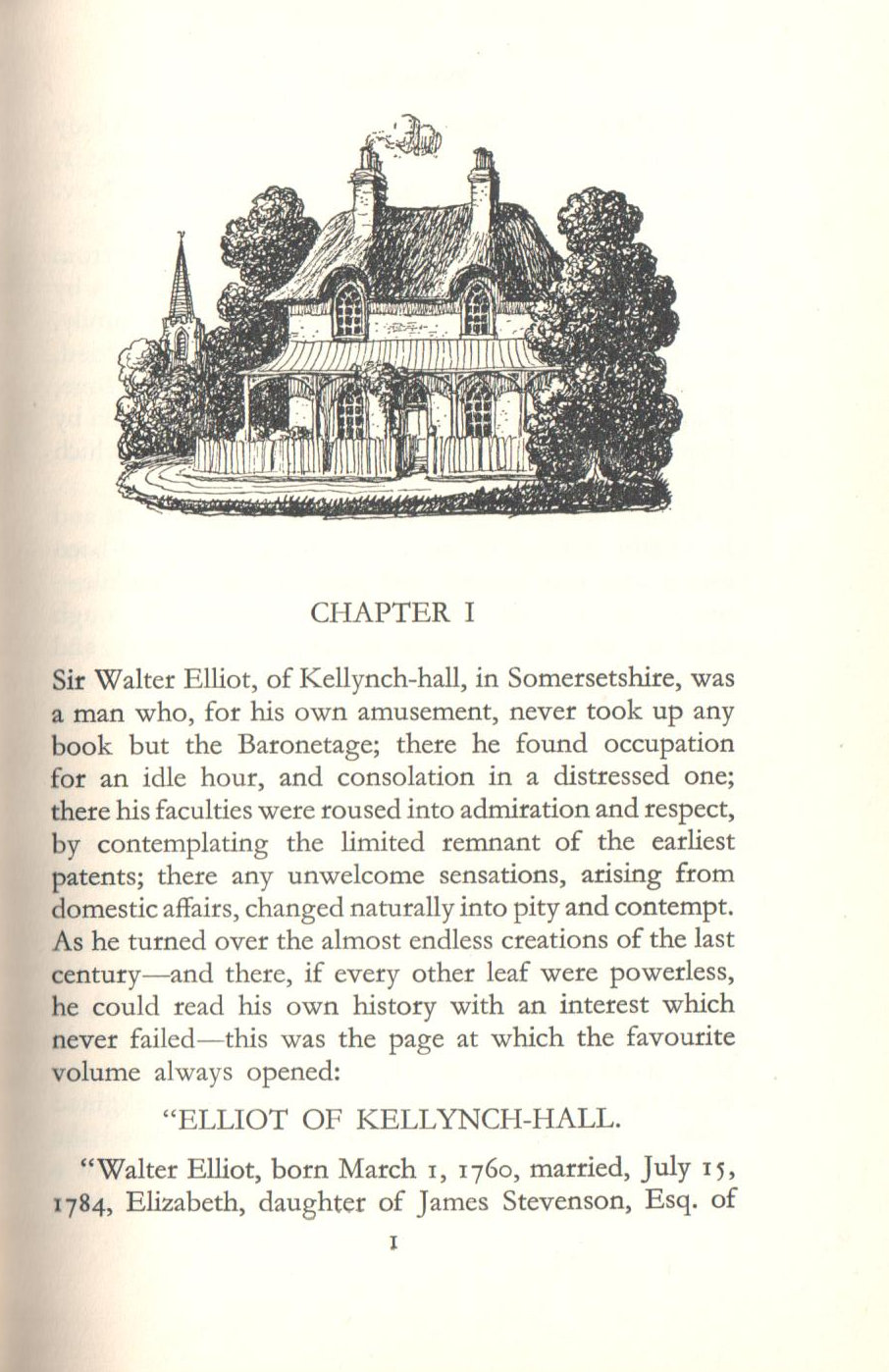
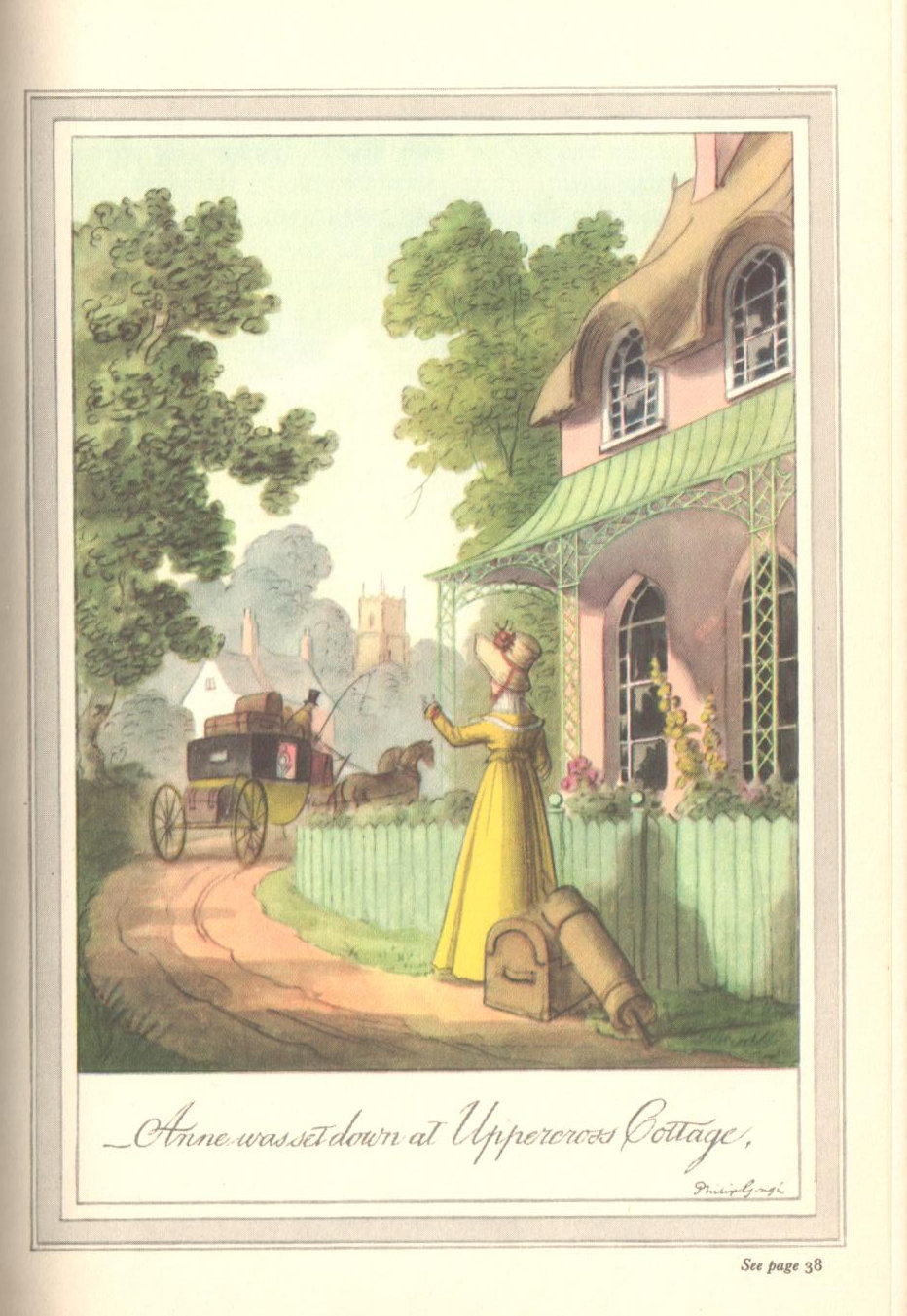
Chapter heading from Ch. I of Persuasion: you would think this should be Kellynch Hall at the start of the novel – but this is certainly not grand enough for Sir Walter! We find on page 42 that it is Uppercross Cottage and here we see it in full color:

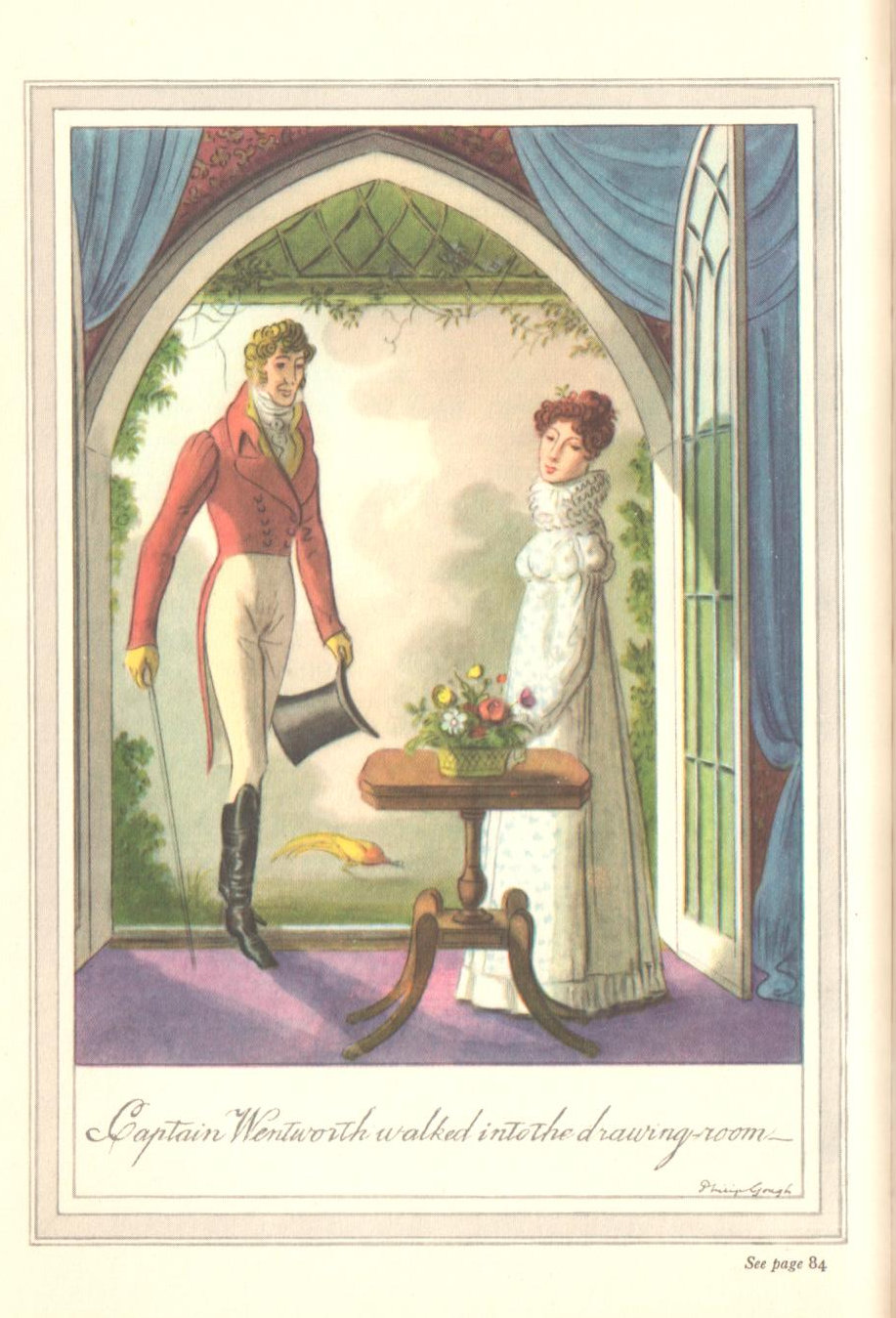
We shall end with Captain Wentworth, because, why not – we see him neither in a navy uniform (this is for another post – how many illustrators portray the good Captain in uniform??), nor is he in Pink, but an odd color nonetheless!

******************

Gough cover illustrations for Georgette Heyer – some examples (I LOVE these!):

Do you have a favorite Gough illustration??

©2021 Jane Austen in Vermont

Austen Literary History & Criticism · Collecting Jane Austen · Illustrations · Jane Austen · Jane Austen Illustrators · Publishing History · Rare Books

Collecting Jane Austen: The Novels of Jane Austen, Dent, 1898.

Of all the Jane Austen sets, this Dent publication is probably the most well-known because of the Brock brothers illustrations – they have continued to be published over and over again, and the ones we think of when we think of “Jane Austen illustrated.”

The Novels of Jane Austen, J. M. Dent, 1898 [Molland’s]

1892 was a watershed year for Austen and the beginning of the many Dents – but today we will focus on this set published by J. M. Dent in 1898 in 10 volumes and edited by R. Brimley Johnson – it was the first to offer Jane Austen in color. You can find all the interesting information in Gilson at E90. But a quick summary and a few pictures will surely entice you to want this on your shelves – and if the set is hard to come by or beyond your price range, a fine adventure is trying to put a set together yourself, as individual volumes are often available.

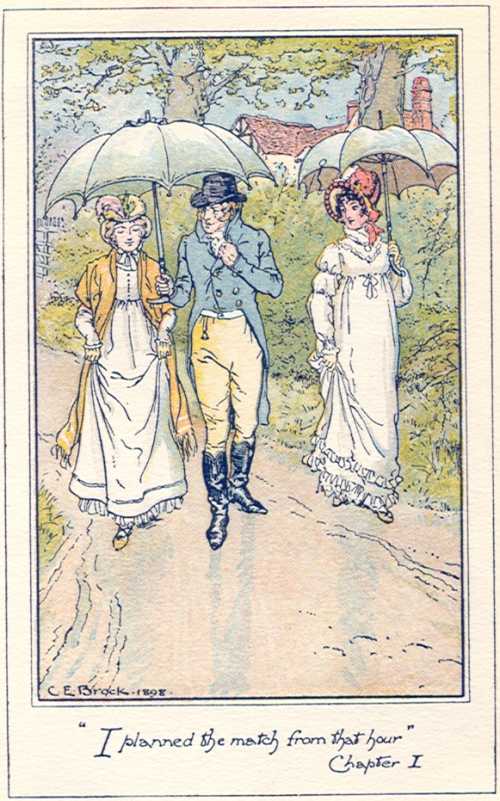
Dent had originally published Austen’s novels in 1892, also edited by Johnson, but with sepia-toned illustrations by William C. Cooke [more on this set in another post]. But in 1898, Dent used the same text plates but deep-sixed the Cooke illustrations and took on the Brock brothers to render Austen in livelier watercolors reproduced by 6-color lithography with each volume having 6 illustrations. Charles Edmund Brock did Sense & Sensibility (vols. 1 and 2), Emma (vols. 7 and 8), and Persuasion (vol. 10). Henry Matthew Brock did Pride & Prejudice (vol. 3 and 4), Mansfield Park (vols. 5 and 6), and Northanger Abbey (vol. 9).

[You can read about the Brocks here at Molland’s with an excellent essay by Cinthia García Soria here:  http://www.mollands.net/etexts/other/brocks.html ]  You can also google their names and many of the Jane Austen blogs have posts on the Brocks and other illustrators.

The Brocks owned a number of Regency era furnishings and decorative arts, as well as a large collection of fashion prints – they had many costumes made, having family and friends model for them and perhaps why their illustrations seem so very authentic!  Laura Carroll and John Wilshire call these Brock-illustrated editions “Chocolate-box” – gift-book quality, beautiful inside with delicate pen or brush drawings, and outside with gilt embossing and Arts and Crafts inspired design; another critic refers to the Brocks’ work as “delicate teacup and saucer primness”! [See their essay “Jane Austen, Illustrated” in A Companion to Jane Austen, Wiley-Blackwell, 2012, pp. 62-77.]

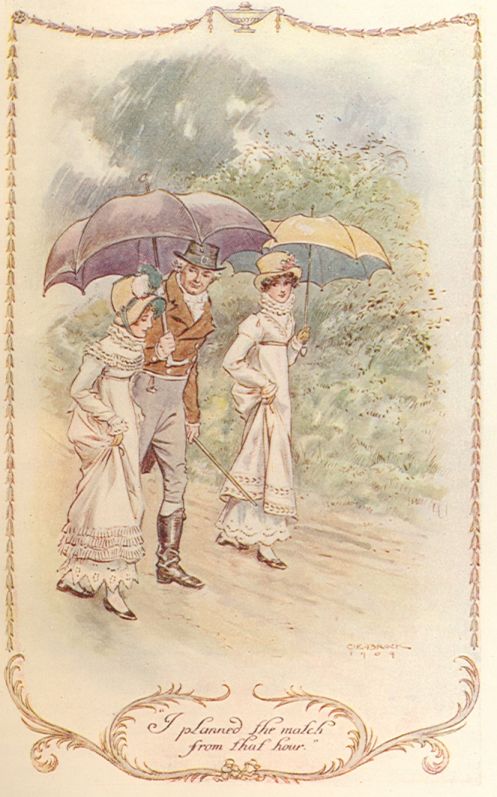
C. E. Brock had previously illustrated Pride and Prejudice with black and white line drawings – this was published by Macmillan in 1895. He would go on in the years 1907-09 to illustrate all the novels for another Dent publication, their Series of English Idylls (with 24 watercolor illustrations in each volume; they were all later published as a set with fewer illustrations in each volume.) To compare CE Brock’s two very different styles in these two editions is an interesting way to spend at least an afternoon! Here is one example from Emma, the infamous romance-inducing umbrella scene:

******************

To follow all the wild publishing of Austen at the end of the 19th century and the beginning of the 20th requires a degree in bibliography, or at least a great deal of patience – and certainly you must have Gilson by your side. There were many, many reprints with many variations as to the number of illustrations, the quality of the reproductions, and binding types – it is great mess for the book buyer / collector – and all I can say is do your homework and buyer beware…!

American printings are another great mess, various publishers over a span of years, with varying number of illustrations, and in many cases a poorer reproduction quality. The most important thing to remember is that the earliest edition will have the higher price but also better quality printing and illustrations. As an example, compare these HM Brock 1898 and 1907 printings of Darcy giving Elizabeth his letter in Pride & Prejudice:

[this doesn’t show up very well in the scan – but there is a huge difference in the detail, color, and quality of the print]

Here are a few illustrations: I have various volumes and parts of the green cloth 1898 set, but also this 1898 set bound in leather – this one my favorite, but alas! it is missing something very important!

Dent 1898 – red leather – my set, lacking the all-important what?  P&P!

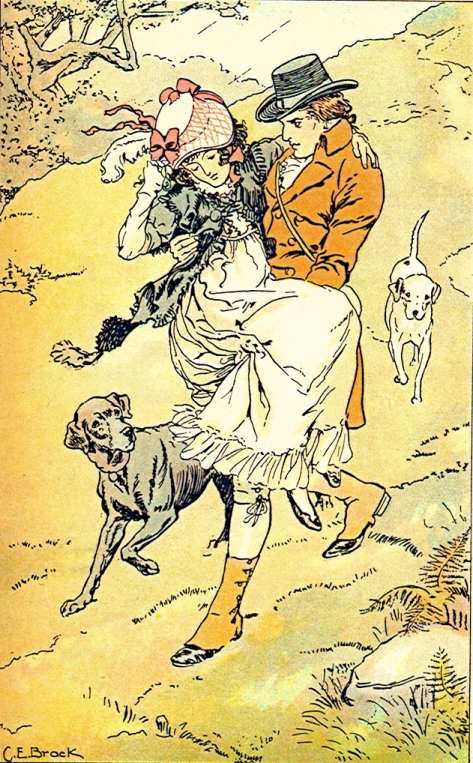
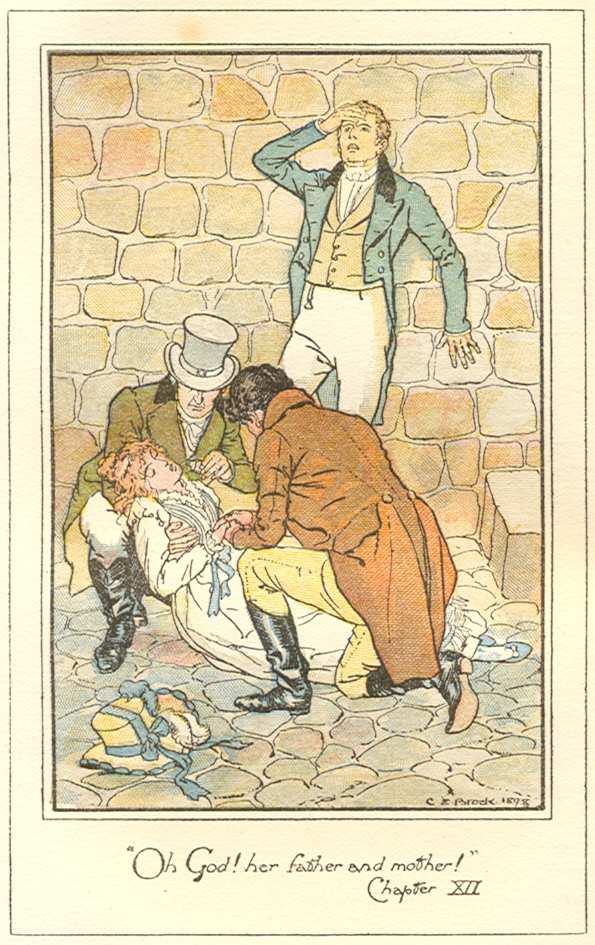
CE Brock, S&S – Willoughby rescuing Marianne

CE Brock, Persuasion, 1898:
The Fall! / The Letter!

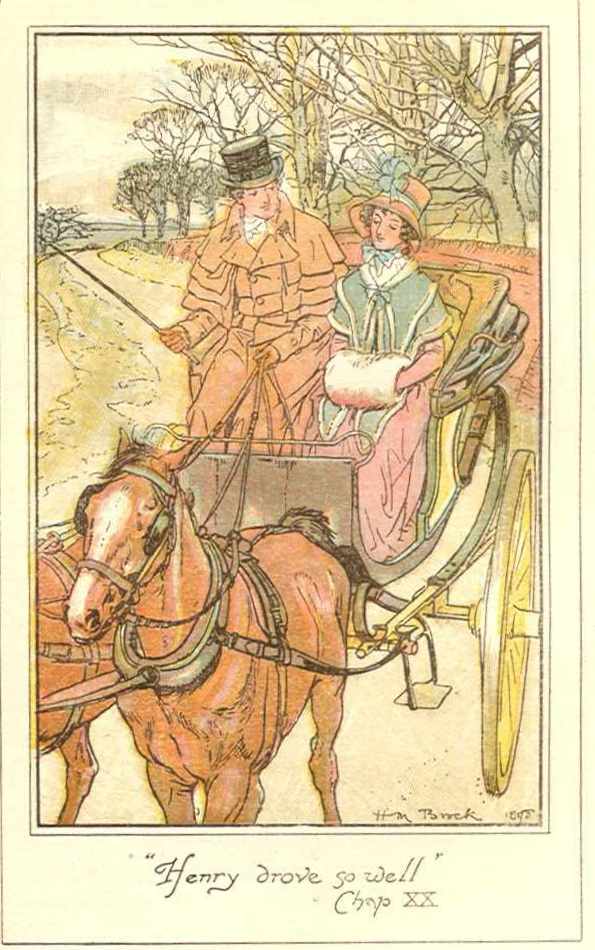
HM Brock, NA, Henry drove so well [Mollands]
HM Brock, MP, Mary and her Harp

********************

Compare:

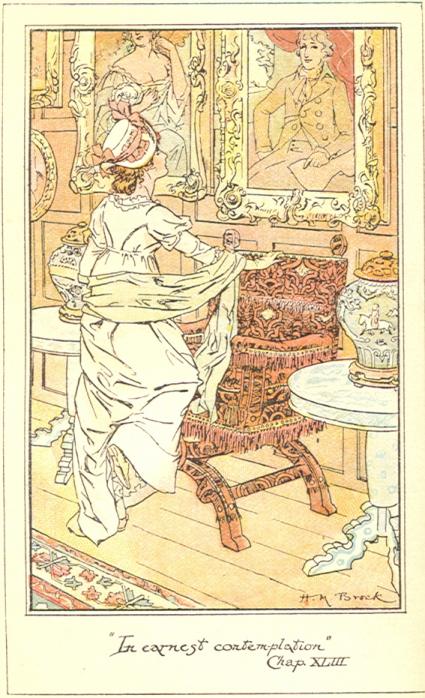
One of my favorite scenes in Pride & Prejudice is Elizabeth “in earnest contemplation” – here we can see CE Brock’s line drawing for Macmillan in 1895 and HM Brock’s in 1898, and CE Brock’s in 1907 [are you sufficiently confused yet??]

CE Brock, Macmillan, 1895 / HM Brock, Dent, 1898

CE Brock, Dent, 1907 [though this is not exactly the same quote you get the idea…]

*************

You can see the many Brock illustrations for the various editions of each novel by visiting the amazing Molland’s here: http://www.mollands.net/etexts/

******************

The Brocks are most often compared with Hugh Thomson: there are various critical interpretations of these two most popular Austen artists, some more approving of Thomson’s humor and his almost caricatured characters, while others preferring the more effective facial expressions and body language of the Brocks that seem more realistic despite the rather overdrawn borders and settings – do notice the detail in the fashion, the furnishings, and landscape, and what scenes are chosen – we can compare these to Thomson in future posts. The point is, you need them both

Mr. Knightley on his horse

Hugh Thomson, Emma, Macmillan, 1896 / CE Brock, Emma, Dent, 1898

********************

Stay tuned for a post on Hugh Thomson and his several Jane Austen editions – in the meantime, tell me your favorite of the Austen illustrators – I haven’t posted about mine yet…

©2021, Jane Austen in Vermont

Austen Literary History & Criticism · Books · Chawton House · Collecting Jane Austen · Georgian Period · Illustrations · Jane Austen · Jane Austen Illustrators · Publishing History · Rare Books · Social Life & Customs

Collecting Jane Austen ~ ‘Sermons to Young Women’ by James Fordyce

I shall take a little side road today with this discussion of must-haves in your Jane Austen collection – here an example of a book Jane Austen had read, referred to, satirized, and which then became the most interesting thing about Mr. Collins in Pride and Prejudice.

Part of collecting Jane Austen is to learn about and possibly add to your collection those books known to have been read by her, a fascinating list compiled from the many allusions in her novels and her letters. You can start with R. W. Chapman’s “Index of Literary Allusions, which you can find online.

Chapman’s list first appeared in the NA and P volume of the Oxford edition we looked at last week – more has been added to this – but this is a good start – you could spend the rest of your life just collecting “allusion” books and you will completely forget what you were collecting in the first place.

But Fordyce is one you must have, should read, for if nothing else it will give you a better idea of where Mr. Collins is coming from and what Austen has to say about both he AND Fordyce.

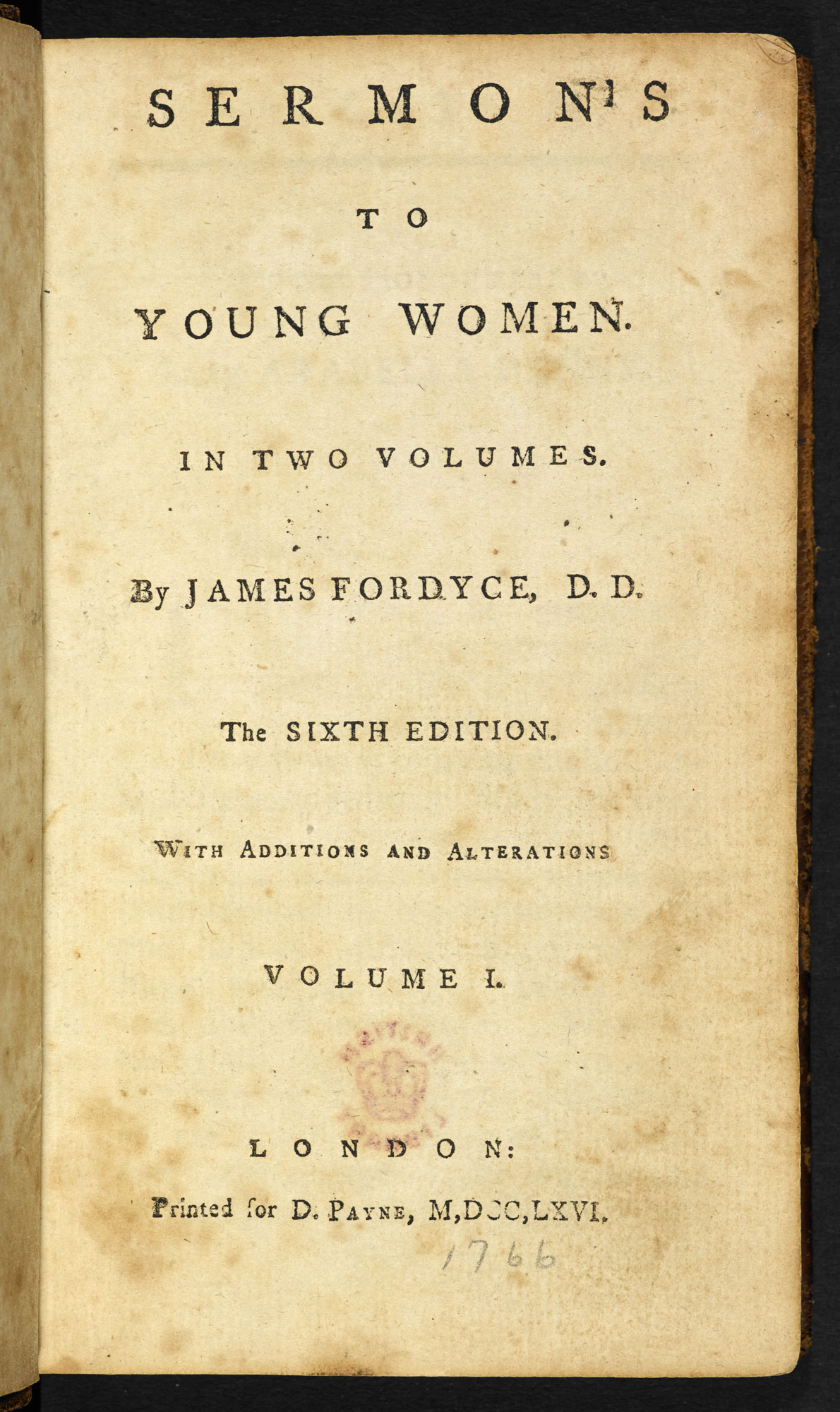
Sermons to Young Women, by Dr. James Fordyce, is certainly one the most well-known of all the various conduct manuals Austen would have had access to, published in London in 1766, “and by 1814, the year after Pride and Prejudice appeared, it had gone though 14 editions published in London alone.” [Ford, intro, i].

We all recall that in Pride and PrejudiceMr. Collins chooses to read Fordyce’s Sermons aloud to the Bennet sisters, Lydia especially unimpressed:

By tea-time, however, the dose had been enough, and Mr. Bennet was glad to take his guest into the drawing-room again, and, when tea was over, glad to invite him to read aloud to the ladies. Mr. Collins readily assented, and a book was produced; but, on beholding it (for everything announced it to be from a circulating library), he started back, and begging pardon, protested that he never read novels. Kitty stared at him, and Lydia exclaimed. Other books were produced, and after some deliberation he chose Fordyce’s Sermons. Lydia gaped as he opened the volume, and before he had, with very monotonous solemnity, read three pages, she interrupted him with:

“Do you know, mama, that my uncle Philips talks of turning away Richard; and if he does, Colonel Forster will hire him. My aunt told me so herself on Saturday. I shall walk to Meryton to-morrow to hear more about it, and to ask when Mr. Denny comes back from town.”

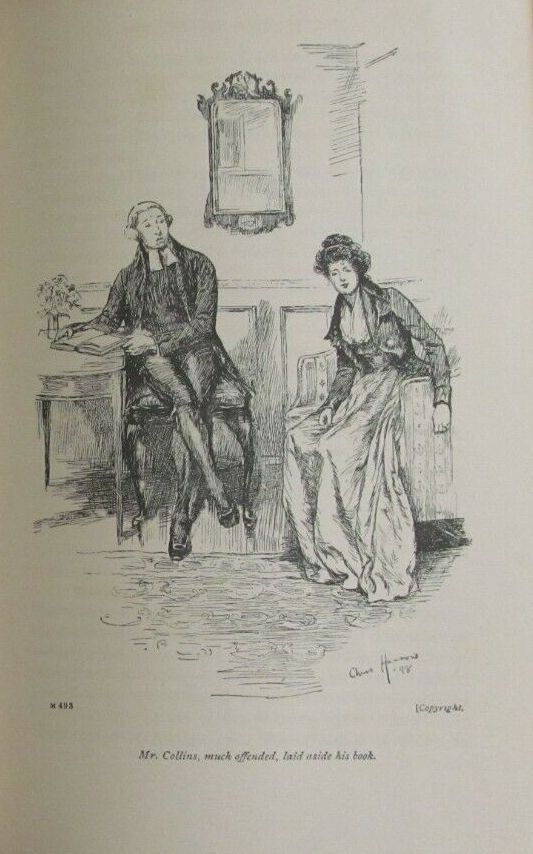
Lydia was bid by her two eldest sisters to hold her tongue; but Mr. Collins, much offended, laid aside his book, and said:

“I have often observed how little young ladies are interested by books of a serious stamp, though written solely for their benefit. It amazes me, I confess; for, certainly, there can be nothing so advantageous to them as instruction. But I will no longer importune my young cousin.” [P&P, Ch. XIV]

Collins, done with such young and frivolous young ladies, heads off for a game of backgammon with Mr. Bennet…

Illustrators of Pride and Prejudice have turned this scene into a visual treat:

Hugh Thomson, P&P (George Allen, 1894)

Chris Hammond, P&P, Gresham, 1900

**************

Fordyce (1720-1796) was a Scottish Presbyterian minister and a poet, but is most known for his Sermons. He also published Addresses to Young Men in 1777. But would we even be talking about him today if it weren’t for Jane Austen??!

As for his poetry, this is the only poem to be found on the Eighteenth-Century Poetry Archive, attesting to Fordyce’s seeming obsession with Female Virtue…

TRUE BEAUTY

The diamond’s and the ruby’s blaze
Disputes the palm with Beauty’s queen:
Not Beauty’s queen commands such praise,
Devoid of virtue if she’s seen.

But the soft tear in Pity’s eye
Outshines the diamond’s brightest beams;
But the sweet blush of Modesty
More beauteous than the ruby seems.

****************

Further Reading:

  1. For more information you can read this essay on Fordyce and P&P by Susan Allen Ford in Persuasions On-Line Mr. Collins Interrupted: Reading Fordyce’s Sermons with Pride and Prejudice [POL 34.1 (2013)].
  2. Here are some images and commentary at the British Library: https://www.bl.uk/collection-items/sermons-to-young-women
  3. Here’s the full text of a 2-volumes-in-one American edition from 1809 [the 3rd American from the 12th London edition] at HathiTrust: https://babel.hathitrust.org/cgi/pt?id=mdp.39015008247788&view=1up&seq=5
  4. If your main concern is with “Female Virtue,” the University of Toronto has these two abstracts for your reading pleasure – From Sermon IV: On Female Virtue; and From Sermon V: On Female Virtue, Friendship, and Conversation: http://individual.utoronto.ca/dftaylor/Fordyce_Sermons.pdf
  5. As you will see in the comments below, A. Marie Sprayberry sent me this link to her excellent Persuasions On-Line essay on Fanny Price and Fordyce: “Fanny Price as Fordyce’s Ideal Woman? And Why?” http://www.jasna.org/persuasions/on-line/vol35no1/sprayberry.html

Much has been written about Austen and Fordyce – the point being, you need a copy. You can find it in one of its original editions on used bookstore sites for not over the top prices – or there are many, many reprints out there.

One of the best of these is the facsimile reprint of the 10th ed. of 1786 and published by Chawton House Press in 2012. Susan Allen Ford wrote the valuable introduction and it also includes a fine bibliography. This edition is unfortunately out-of-print and I am hoping that they will republish it in the near future. It was a best-seller in its time and again today! Who knew!

©Jane Austen in Vermont