Austen-lover and author Jennifer Forest sends information about her new book (due out in the UK July 6 and available for pre-order), Jane Austen’s Sewing Box (Murdoch Books; 224 pages; £14.99).
If you love handicrafts, this books contains 18 projects, which involve sewing skills, needleworking, netting, painting, paper craft and knitting! Forest has set the projects in their history and literary context, placing Regency-era handiwork alongside extracts from the novels; an explanation of why women made such items; full color photos; and step-by-step instructions.
“Yes, all of them [are accomplished women] I think. They all paint tables, cover screens and net purses.” — Charles Bingley
Jennifer describes the book:
The projects in Jane Austen’s Sewing Box are both objects of beauty and useful for our contemporary lives. Using a range of techniques and readily-available materials and tools, the projects are easily accessible for all skill levels and interests.
All projects are modelled on:
projects worked by Jane Austen’s characters
work of her circle, and noted in her letters
original objects from the Regency period
As a sewer-knitter-crocheter-needleworker, I can’t wait to see this book.
Look for information on Jennifer Forest, and Jane Austen’s Sewing Box, on her website. And stay tuned for a guest appearance by Jennifer on this blog…
Please see Kelly’s post below this for Part I – we have both been swamped these past two weeks and FINALLY getting to our respective posts on Hope Greenberg’s fabulous talk on fashion at our June 7th JASNA-Vermont gathering … with the beautiful backdrop of the Chapel at the Vermont College of Fine Arts, and a capacity crowd …
First I append a guest post from our own Janeite Marcia:
Fashionable Sunday in Montpelier
Hope Greenberg’s presentation on Sunday June 7, 2009 provided much, much more than I imagined. Who knew fashion was so complex?
For me, the most fascinating part was learning about how Austen used references to clothing and fashion to develop her characters. While reading Sense and Sensibility, it was clear that Lucy Steele’s manners were lacking, her behavior even tacky. Hope used the scene where Lucy inquires of Marianne regarding her clothing, and even her clothing allowance, to illustrate how Lucy is revealed as crass and ill-mannered.
As Hope Greenberg described, in addition to Lucy’s inquires of Marianne, from Wickham’s (Pride and Prejudice) only needing regimentals, to Mrs. Allen (Northanger Abbey) talking of little but clothing, we are treated to exquisite development of many of the Austen characters by these brief, but powerful, references to wardrobe, clothing, and fashion. We all accept that Lucy is uncultured, Wickham is without depth of character, and Mrs. Allen is a mere silly airhead. These are the perfect, subtle, understated Jane Austen descriptions which leave the reader with no doubt of the author’s meaning, while wondering where the impression came from.
While there are few enough references in the Austen novels regarding fashion and clothing, each of those mentioned by Hope Greenberg is amazingly revealing and powerful. Thanks to Hope, those of us who attended on Sunday will be more aware of such references and techniques as we reread Austen and will certainly be able to better appreciate the genius of Jane Austen.
It was a lovely way to spend a Sunday afternoon. Thank you to JASNA-Vermont!
Thank you Marcia for your thoughts! We were most fortunate to have Hope spend a few hours with us – as a Humanities Computing Specialist at the University of Vermont, Hope has combined her love of history and 19th-century material and literary culture with her love of historic clothing and English Country Dance – she offered us a visual feast [with a new Macintosh program that presented all the fashion illustrations in the mode of flipping the pages of a book!] taking us through the process of dressing a lady of fashion from her linen shifts, corsets, petticoats, dresses, pelisses /spencers, to her shawls, hats and muffs, reticules, and other accessories; and dressing the man of fashion with his shirts, breaches / trousers, weskits, cravats, jackets and the glorious greatcoat – all this shown in the various fabrics and textiles of the time, with Hope’s actual dresses, fashion illustrations, and photographs from the trove of 18th and 19th century clothing in the UVM Fleming Museum. Hope ended her talk with a quick run through the various changes in fashion over the short period from the late 1780s to the 1820s – the French influence; the military influence; the return to the classical Egyptian and Grecian styles; the waist going up; the waist going down; the petticoat as an undergarment to the petticoat as part of the main dress; Beau Brummel’s affect on male fashion; the central role of the fashion magazines – all this in a short 2-hour whirlwind of muslin, linen and silk! [alas! we did go over a bit!]
And as Marcia mentions above – I too learned much from Hope’s references to Austen’s use of clothing details [or lack thereof] to delineate character – Willoughby’s shooting jacket; Nancy Steele’s obsession with her appearance; the lack of description of Bingley and Darcy, yet the emphasis on Wickham’s “regimentals”; Mrs. Bennet’s ridiculous concerns with wedding clothes and carriages; Lydia’s silliness about her bonnet; Mrs. Elton in Emma [no more need be said!]; Mrs. Allen in Northanger Abbey – and only Henry Tilney [dear Henry!] being “forgiven” for his extensive clothing musings!
So we heartily thank Hope for sharing her expertise with us – we are all alot wiser about Regency fashion and more attuned to Austen’s brilliant commentary.
Ditto Kelly’s thanks for a gracious afternoon in Montreal, a la Donwell Abbey and strawberry picking; hearing a fascinating preview of Jan Fergus’s upcoming AGM talk on “Tensions between Brothers and Sisters in Austen’s Novels”; and sharing a delicious tea with other JASNA-Montreal members [my daughter joined me for this trek to Montreal – and she loved all the Austen chatter – it is my daughter after all who got me re-reading Austen when she was studying Emma in college nearly 20 years ago – she called me up to say she seemed to be the only one in the class who thought Emma was FUNNY – I knew then and there we had raised her right!] Anyway, I digress – a huge thank you to Elaine Bander for a wonderful afternoon!
And a little counterpoint to my blogging partner and cohort in JASNA-Vermont – who ever said that Knightley was a “namby-pamby”?? – I always viewed him as a very strong character – so we need to have a lively discussion about this! And of course lots to discuss about Mr. Collins – I agree that the 1995 makes him out to be SUCH a dolt [and the Lost in Austen character is just too CREEPY!] – the Elizabeth Garvie P&P rendition is much truer to the book [the music alone captures his essence] – but think we need to go back to the novel to see what Austen really says about him – and she makes no bones about making him out to be quite ridiculous. Kelly, we should have a session JUST on Mr. Collins – I think we could get a rousing discussion going! [there is also a book just on him by the way, titled “Mr. Collins Considered” – a great place to start, as well as the Irene Collins [no relation!] book on Austen and the clergy…]
In this brilliant new work, Amanda Vickery unlocks the homes of Georgian England to examine the lives of the people who lived there. Writing with her customary wit and verve, she introduces us to men and women from all walks of life: gentlewoman Anne Dormer in her stately Oxfordshire mansion, bachelor clerk and future novelist Anthony Trollope in his dreary London lodgings, genteel spinsters keeping up appearances in two rooms with yellow wallpaper, servants with only a locking box to call their own.
Vickery makes ingenious use of upholsterer’s ledgers, burglary trials, and other unusual sources to reveal the roles of house and home in economic survival, social success, and political representation during the long eighteenth century. Through the spread of formal visiting, the proliferation of affordable ornamental furnishings, the commercial celebration of feminine artistry at home, and the currency of the language of taste, even modest homes turned into arenas of social campaign and exhibition.
Amanda Vickery is reader in history, Royal Holloway University of London, and the author of The Gentleman’s Daughter: Women’s Lives in Georgian England, which won the Whitfield, Wolfson, and Longman-History Today prizes. She is also the co-editor, with John Styles, of Gender, Taste and Material Culture in Britain and North America, 1700–1830.
… a definite addition to your want list – and if you don’t already have it, you must also add Vickery’s previous work …
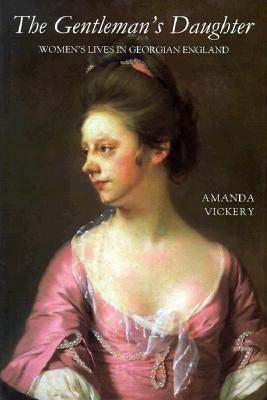
The Gentleman’s Daughter: Women’s Lives in Georgian England[Yale University Press, 1998; softbound edition, 2003] is already on my toppling TBR pile(s). Here are a few [of the many] reviews of this earlier work, the winner of several history/ literary awards:
Yesterday, a FedEx box left on my stoop prior to lunch yielded up a BIG surprise: my contributor’s copies of JASNA’s annual journal PERSUASIONS, vol. 30 (2008). A brief email to Susan Allen Ford, the journal editor, to congratulate her on an ‘awesome’ volume, was answered by an email which said she hadn’t received her copies yet! Vermont’s good fortune (and mine) to be located next door to New Hampshire — from where the packages seem to have originated…
The first article I read was Edith Lank‘s telling of her annotated Brabourne edition of Austen letters. One curious thing: how could the books languish EIGHT years on her shelves, unopened?! A used book never passes my threshold without a thorough perusal! There is more on Miss Lank’s edition in Persuasions-Online.
Joan Klingel Ray offers up an interesting look at Victorian era perceptions of Austen, though I must comment that to Edward — a nephew who was in his late teens when his aunt died — Jane would surely have remained, over the 50 ensuing years, his “dear Aunt Jane”. Joan and I take differently, I think, to James-Edward Austen-Leigh’s Memoir of Jane Austen. Joan knows the descendents; but I’ve come to know Edward and Emma through their own words! So: a discussion to look forward to when Joan Klingel Ray visits Vermont in September (see our EVENTS page).
I would be telling a lie if I didn’t confess that the very first article I checked out was my own… Oh, the pictures look lovely! (They come via the collection of The British Museum.) I had been so worried after seeing the proofs. Susan Allen Ford has been very positive in her reaction (the anonymous reader, too) to this article, in which I examine an Emma Austen 1833 trip to Derbyshire in the steps of Elizabeth Bennet. The article was only improved by their wishes for a lengthier piece and some illustrations.
The Chicago AGM’s theme of Austen’s legacy brings up many fascinating ideas: Jocelyn Harris invokes Dr. Johnson; Deb will surely be interested in turning straightaway to Janine Barchas‘ article on Gaskell’s North & South (Deb highly recommends the new TV series, which she’s been watching) — but what will she think of the author’s assumption that it is a veiled recreation of P&P??? Sarah Parry‘s article on “The Pemberley Effect: Austen’s Legacy to the Historic House Industry” is surely next on my list.
A special ‘legacy’: the writing desk that once belonged to Austen, has been in the family, and now has been donated to The British Library. Freydis Welland‘s personal take on this piece of history opens the always pleasurable MISCELLANY section of Persuasions. Although I’ve not seen Lost in Austen, Laurie Kaplan‘s article which closes the journal has the oh-so-tempting title “‘Completely without Sense’: Lost in Austen“.
More comments than this — teasing tantalizers or tantalizing teasers, since the journal (according to the JASNA website) is schedule to mail out on May 1st — will have to wait. The one thing that keeps me from delving deep into my copy is an article I’m working on, and I must get back to work.
A new book alert: Jane Austen & Marriage by Hazel Jones, to be published in July 2009, is now available for pre-order.
Jane Austen & Marriage
by Hazel Jones
Continuum Books, 2009
“It is a truth universally acknowledged, that a single man in possession of a good fortune must be in want of a wife.” –Pride and Prejudice
Description:
The question of marriage lies at the center of Jane Austen’s novels. The issues bound up in the pursuit of love, happiness, money, and status were those of her day and informed the plots and morals of her work. In this fascinating book, Hazel Jones explores the ways in which these themes manifest themselves in Jane Austen’s life and fiction, against the backdrop of contemporary conduct manuals, letters, diaries, journals and newspapers. Drawing on original research, this entertaining and detailed study provides a charming and profound insight into the world of Jane Austen.
Table Of Contents:
Acknowledgements
Introduction
1: The Advantage of Choice
2: The Power of Refusal
3: An Acquaintance Formed in a Public Place
4: White Satin and Lace Veils
5: Where N Takes M, For Better, For Worse
6: Wedding Journeys
7: Scandal and Gossip
8: A Contract of Mutual Agreeableness
9: Domestic Happiness Overthrown
10: The Simple Regimen of Separate Rooms
11:The Years of Danger
12:An Old Maid at Last
Notes
Bibliography
Index
Review at Continuum Books:
Hazel Jones has written a masterful accounting of the crucial role played by marriage in Jane Austen’s novels and the world she and her characters lived in. Brilliantly researched and documented — including information taken from the fascinating and sometimes troubling “conduct manuals” on the proper interaction between the sexes — Jane Austen and Marriage offers deep insights that inform not only one’s reading of Austen’s novels but of the treacherous social bedrock underlying the lives of women living in that time. And in so doing, Hazel Jones has presented the reader with another testament to the long, hard march of women throughout history. It is a book that reflects Jane Austen’s own penetrating gaze and insight into Regency society and no doubt will find a place in the library of even the most sophisticated “Janeite”.’
[Alice Steinbach, Pulitzer Prize-winning journalist and author of Without Reservations: The Travels of an Independent Woman.]
About the Author:
Hazel Jones taught English at Exeter University, specializing in Jane Austen. She tutored courses on the novelist for the thriving Summer Academy Programme, which attracted students from all over the world. She continues to organize Jane Austen residential courses for adults at various venues in the UK, focusing on her novels and her life and times.
Jane Austen & Crime, by Susannah Fullerton. 3rd edition. Jones Books, 2006 [Fullerton is the President of the Jane Austen Society of Australia]
A new approach to Jane Austen seemed impossible, but Susannah Fullerton . . . has brilliantly hit on the theme of crime and punishment in Austen. Fullerton shows how the Regency world . . . was really a dangerous place with a fast rising crime rate and a legal system that handed out ferocious sentences. Her book will be essential reading for every Janeite.”-Claire Tomalin, author of Jane Austen: A Life
I admit to passing over this book when it was first available – somehow, I just didn’t want to sully my love of Austen and the “pictures of perfection” the world of her novels presents. One knows, of course, that it is there, lurking behind the scenes, with a brief reference here, or a shady character there; and as readers of Jane Austen know, these references would have been better understood by her contemporaries than by us today, unless we are well-versed in the social history of Georgian and Regency England.
My interest peaked with my recent absorption in several detective novels set in the Regency period (the Julian Kestrel series by Kate Ross) – these mysteries evoke the time beautifully – the lovely clothes, the balls, the always proper social behaviors – but also the underbelly of this world – the crime, the poverty, the seedy desperate lives, the world that Dickens and his characters inhabited. Indeed there are many non-fiction books on this subject, just on London alone [see below for further reading], but I turned to Fullerton’s book to get not only a quick overview of the crime of the time, but to see it in the context of Jane Austen’s life and works. As Fullerton begins:
Why Jane Austen and Crime? Why the juxtaposition of these seemingly disparate concepts? Simply put, because the relationship is there. Crimes against human life, crimes against property, crimes of passion, social crimes, grim punishments, and even fictional (Gothic) crime were very much a part of the Georgian world. Ever the perceptive observer of her society, Jane Austen does indeed include comments on crime and the effects of crime in her letters, in her juvenilia and, treated very differently, in her mature novels. An examination of crime in Jane Austen’s world and fiction suggests many new perceptions of her work and gives a greater understanding of her genius. [p.3]
And Fullerton ends with:
Jane Austen was not a reformer. She suggests no solution to these problems. Rather she was a highly perceptive observer of her society who commented incisively on the behaviour of men and women. She included criminal behavior in her works and she included punishment even, if unlike Dickens, she never made crime the climax of her story or chose a prison as the setting for a novel. She was aware of the confused laws which governed the Georgian age, she knew of the debates concerning the softening or abolishing of these laws, she wove her knowledge into the fabric of her writing. Crime became a part of her plots, crime revealed character, crime emphasized duty and responsibility, and crime even united some of the heroines and heroes. She examined the inclination to do evil, analysed the faulty propensity which drives a man to wrong-doing, depicted the damage cause by doing wrong and described criminal feelings in her characters. In doing so she reflected and commented on the Georgian criminal scene with accuracy and sharp intelligence. [p. 217]
And in between, Fullerton neatly presents the subject in fine organized fashion:
Crime against life (murder and suicide)
Crime against property (theft)
Crimes of passion (adultery, elopement, prostitution, rape, bastards)
Social crime (duelling, poaching, smuggling, gaming)
Gothic crime
Punishment and the law (gaols, hanging, other punishments, men of the law)
Within each section, the subject is analyzed in its historical context with many factual references to the laws and the notable crimes of the time, then in the context of Austen’s life; for example, her Aunt Leigh Perrot on trial for theft; her brother Edward Knight a magistrate at Godmerhsam. Fullerton then takes us through the novels and letters to show by example how any specific crime drives the plot or shapes a character – we see John Dashwood clearly painted as the thief he is; Willoughby as a serial seducer; the gravity of Wickham’s intended “elopement” with Georgiana and the actual with Lydia; even Mrs. Norris’s petty thefts, rather glossed over in Mansfield Park, but there for the close reader to see; we learn that Harriet Smith’s talking to the gypsies in Emma was actually a crime punishable by death by hanging!; how the theft of the chickens in Emma, actually brings about the marriage of Emma and Knightley; the smuggling of tea and other luxuries, a crime more serious than murder [London tea smugglers operated in gangs of up to 50!, and most of London enjoyed this favored beverage in its smuggled form [p. 142], certainly Jane loved her tea as did many of her characters]; the very brief reference to Brandon’s duelling with Willoughby in Sense & Sensibility, so deftly written by Austen that we barely know of it: “We met by appointment, he to defend, I to punish his conduct.” [Fullerton points out that with this one sentence, Brandon becomes the only one of Austen’s heroes to engage in criminal activity. [p.124]]. We see Emma’s slight of Miss Bates as more than just an uncomfortable rudeness, but really a crime of bad manners, a wickedness [p.217] on Emma’s part that tells us more about her than almost anything else in the book – it is the turning point in the story when Emma finally sees herself. And what of John Thorpe?- his lies and holding Catherine in his carriage against her will; the issues of adultery and imprisonment in Mansfield Park; the gaming laws that allowed only the wealthy to own sporting dogs, as John Middleton and Mr. Darcy. The list goes on with these references, some obvious, some mere mention, Fullerton pulling it all together, and by giving us a better understanding of the contemporary social and moral expectations, we better understand what Austen was speaking of…
”]I most appreciated Fullerton’s many references to the juvenilia – it is in these works that Austen shows us the realities of her greater society, all indeed presented in an exaggerated manner with her youthful humor, but we do see how she understood this underside of life in both London and her country villages, a knowledge also apparent in the quick, short references in her letters. For instance, in this short passage from Letter 95 [Le Faye, p. 248], Austen writes her sister from Godmersham Park:
Edward and I had a delightful morn for our drive there…. He went to inspect the Gaol, as a visiting Magistrate, & took me with him. – I was gratified – & went through all the feelings which People must go through I think in visiting such a Building.”
Austen then goes on to talk of shopping and a party, etc., but what did she actually SEE on that visit, and how frustrating she tells no more! Here Fullerton gives us what Jane doesn’t – she explains exactly what the Canterbury Gaol would have been like, exactly what Austen would have experienced. Austen’s reference to being “gratified” takes us back to the juvenilia where crimes are everywhere, punishment handily doled out, all in high humor.
I highly recommend this book – with all the factual references linked so well to Austen’s world, the many contemporary illustrations, helpful notes and bibliography aside – it is actually a fabulous and entertaining read! This is not a long book or a great scholarly analysis of Austen and how crime figures in her works, but the interweaving of the laws of the day, real crimes and punishments, with the innumerable references to the fiction and letters, some so easy to miss on a casual reading, all this gives us a heightened awareness of how while Austen seems to present a nearly perfect social order on a very tiny scale, that not far behind the scene are some very serious worldly concerns, frighteningly real and not so pretty.
Thomas Rowlandson - The Duel
5 Full inkwells (out of 5)
The book is available from Jones Books. However, the JASNA-VermontChapter has several copies for sale, so, if you would like to support our local group, please contact us directly.
Further Reading:
Fullterton provides a bibliography on the many aspects of crime of the period. I list here only a few:
Bovill, E.W. English Country Life: 1780-1830 [Oxford, 1962]
Collins, Philip. Dickens and Crime [Macmillan, 1962]
Emsley, Clive. Crime and Society in England 1750-1900[ Longman 1987]
Harvey, A.D. Sex in Georgian England [St Martin’s, 1994]
Ives, Sidney. The Trial of Mrs. Leigh Perrot [Stinehour, 1980]
Low, Donald. The Regency Underworld [Sutton, 1999]
McLynn, Frank. Crime and Punishment in Eighteenth Century England [Routledge, 1989]
Murray, Venetia. An Elegant Madness: High Society in Regency England [Viking, 1999]; published as High Society: A Social History of the Regency Period 1788-1830 in the UK in 1998]
Picard, Liza. Dr. Johnson’s London [St. Martin’s, 2002]
Sinclair, Olga. Gretna Green: A Romantic History [Chivers, 1989]
Janeite Kelly will give a talk entitled Georgiana Darcy and the ‘Naïve Art’ of Young Ladies at the Governor’s House in Hyde Park on Friday, 30 January 2009. Our hostess, Suzanne Boden (a new JASNA -Vermont member!) invites you to join us for an entire Weekend dedicated to Austen’s Pride and Prejudice:
Friday, 30 January – 8:00 pm informal talk (see below), with coffee and dessert ($14)
Saturday, 31 January – 3:00 pm Afternoon Tea ($20)
Saturday, 31 January – 7:00 pm Book Discussion & Dinner ($35)
Sunday, 1 February – 11:30 am Brunch & Austen Quiz ($15)
All four activities ($75) and a weekend package that includes B&B accommodation at the Governor’s House (starting at $295 single) also available. Contact Suzanne at info [at] onehundredmain [dot] com or (802) 888-6888 (toll free 866-800-6888).
The starting point for Kelly’s illustrated talk is Elizabeth Bennet’s journey through Derbyshire with the Gardiners (also the subject of her article “Derbyshires Corresponding: Elizabeth Bennet and the Austen Tour of 1833,” which appears in Persuasions this spring). As Elizabeth tours Pemberley, P&P’s narrator tells readers:
“The picture gallery, and two or three of the principal bed-rooms, were all that remained to be shown. In the former were many good paintings: but Elizabeth knew nothing of the art; and from such as had been already visible below, she had willingly turned to look at some drawings of Miss Darcy’s, in crayons, whose subjects were usually more interesting, and also more intelligble.”
Looking at the work of several young ladies, including Cassandra Austen, during a period covering the first half of the 19th century – we examine fashion, home, family and life in England during the “lifetime” of Darcy’s young sister Georgiana.
As the little drawing above done by Diana Sperling illustrates: Elizabeth Bennet had good taste!
I love my mailman ~ it seems he brings me a surprise almost daily! Today, I find the latest issue of Jane Austen’s Regency World [Jan/Feb 2009, Issue 37], and here give you some thoughts on the contents:
“End of the Regency” about the soon to be released film on young Queen Victoria [March 2009 in Britain], starring Emily Blunt (on the cover above) as Victoria and Rupert Friend as Prince Albert (he starred in the 2005 P&P as Wickham and was fabulous in Mrs. Palfrey at the Claremont)
“Write-on” about the importance of correspondence and the ways of letter-writing in Jane Austen’s time
“Why I Dig Jane” a talk with Alan Titchmarsh, popular British TV personality, gardener, and novelist [his latest book, Folly, is set in Bath and currently on the British best-selling fiction list] ~ He confesses that his favorite character is Emma.
“Illustrating Jane Austen” an article on the incomparable Hugh Thomson
“Playing Mary Bennet” on the actress Ruby Bentall, who acted the role of Mary Bennet in the Lost in Austen series (“with spindly glasses and horrible hair”…)
“Pottery and Poetry” which traces the life of Thomasina Dennis, 1770-1809, a comtemporary of Austen’s who worked for the Wedgwood Pottery family. The article includes some history of Josiah Wedgwood and his business [ironically, this week the Waterford / Wedgwood company announced it is filing for bankruptcy]
“Petticoat Politics” looks at the complex nature of Regency undergarments, never mentioned, but a large part of “dressing Jane” and her contemporaries
“Madame de Stael” and the story of why perhaps Jane Austen refused to attend a London literary salon at which Madame de Stael was to be present (could it have been her tempestuous love-life??)
“My Jane Austen” the column this month by Virginia Claire Tharrington on her months as an intern at the Jane Austen Centre in Bath (she also posted several weekly articles on Austenprose while she was there)
“A Goodly Heritage” by Marsha Huff, President of JASNA, on this past year’s Annual JASNA AGM in Chicago
“Portrait of a Lady” on the Jane Austen Society of the U.K. and the event presented in the fall by History Wardrobe on the fashion of Austen’s time
And Joceline Bury offers three book Reviews:An Aristocratic Affair by Janet Gleeson, a biography of Henriette Ponsonby, Countess of Bessborough and sister of Georgiana, Duchess of Devonshire [The American title is: Privilege and Scandal: The Remarkable Life of Harriet Spencer, Sister of Georgiana]; The Immortal Jane Austen by Maggie Lane, a no-frills biography of a mere 50 pages, but laced with many illustrations and highly recommended by the reviewer; and Jane Austen Visits London by Vera Quinn, the charming little book that concentrates only on Austen’s travels to and writings about London [see my comments on this book here.]
So all in all a fine issue, and a perfect way to spend the upcoming weekend, immersed in all things Regency!
New book soon to be published: A Companion to Jane Austen (Blackwell Companions to Literature and Culture), edited by Claudia L. Johnson and Clara Tuite [Blackwell, 2009], described as follows at Blackwell.com: a comprehensive survey of contemporary Austen studies while covering the full breadth of the novelist’s work and career. Focusing on changing contexts and cultures of reception, this work provides groundbreaking interpretations in more than forty essays by a distinguished team of influential literary critics and Austen scholars. Sections include: The Life and the Texts; Reading the Texts; Literary Genres and Genealogies; Political, Social and Cultural Worlds; and Reception and Reinvention. As a scholarly reference and comprehensive survey of the most innovative speculative developments in the field, A Companion to Jane Austen illuminates the power of Austen’s novels to enchant readers.” Priced at a hefty $199.95… you can pre-order before its official publication at the end of January.
And not to be confused with the four other “companion” titles, also all “essential Austen”:
The Jane Austen Companion, edited by J. David Grey, A. Walton Litz, and Brian Southam [Macmillan, 1986]
The Cambridge Companion to Jane Austen, edited by Edward Copeland and Juliet McMaster [Cambridge, 1997]
Jane Austen: a Companion, by Josephine Ross [John Murray, 2002]
The Jane Austen Companion. a 1996 DVD of popular music from Austen’s times by Haydn, Fasch, J.C. Bach, Boyce, Schubert and others.
When, in the spring of 2008, I was offered the opportunity to submit a novella for a proposed Regency Christmas anthology, I was delighted. After all, I love the Regency period, and I love the traditions of Christmas.
But I realized, of course, that tremendous differences exist between Christmas as it was observed in England in 1816 and Christmas as we celebrate it in America today. I immediately understood that I needed to do considerable research into the traditions of a different time and a different culture.
Fortunately, since I’ve had a long-time interest in the Regency period, I already possessed quite a few research resources. I delved into my files and soon found myself learning about the Christmas traditions during the Regency period. This in turn led to my writing a story called “A Tradition of Love” about Alethea, who adores Christmas, and her new husband, Robert, who says he has no time for trivialities such as Boxing Day, the Wassail Bowl, the Christmas Candle, the Yule Log, and Christmas Dinner. With just three weeks to go before Christmas Eve, Alethea struggles to find a way to teach her solemn husband to accept help with his responsibilities and to join her in creating their very own Christmas traditions.
“A Tradition of Love” is one of four novellas that make up the anthology entitled A Cotillion Country Christmas, to be released December 4, 2008, as an ebook by Cerridwen Press. The first story, “A Christmas Surprise” by Cynthia Moore, features Clara, who has loved Julian since she first saw him at a debutante ball in London. Several years later, Julian is forced to marry Clara because of gambling debts. After traveling to India soon after their marriage, Julian is now returning home for the holidays and Clara uses the magical spirit of Christmas to her advantage.
Amy Corwin is the author of “Christmas Mishaps” in which the magic of Christmas transforms a series of misfortunes into a gift of love for Caroline Bartlett. Now it is up to her to overcome her mistrust of the unexpected offer from a younger man.
And Barbara Miller’s “Country House Christmas” tells the story of Diana Tierney, who is so caught up in the past mystery of why Richard Trent was shipped off to war that she doesn’t realize he is coming to love her as much as she has always loved him.
If you enjoy Christmas stories, especially those set in times and places different from our own, I invite you to check out A Cotillion Country Christmas. Simply visit www.CerridwenPress.com anytime after December 4 and download the anthology. You’ll be in for four Christmas treats!
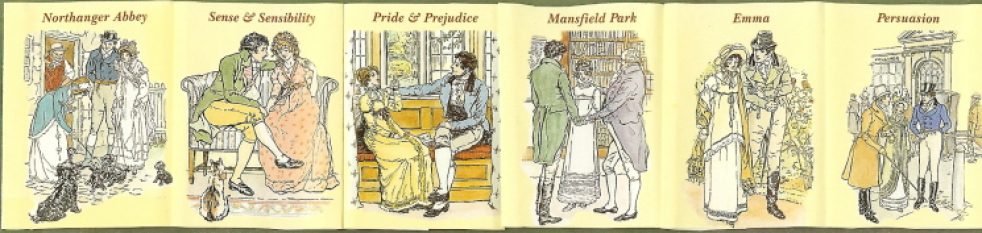
 Austen-lover and author Jennifer Forest sends information about her new book (due out in the UK July 6 and available for pre-order), Jane Austen’s Sewing Box (Murdoch Books; 224 pages; £14.99).

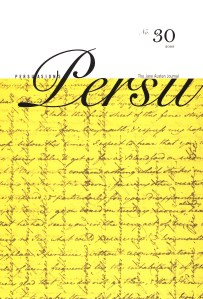 Yesterday, a FedEx box left on my stoop prior to lunch yielded up a BIG surprise: my contributor’s copies of JASNA’s annual journal
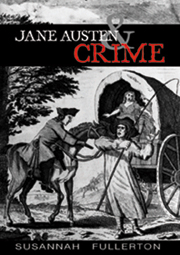 A new approach to Jane Austen seemed impossible, but Susannah Fullerton . . . has brilliantly hit on the theme of crime and punishment in Austen. Fullerton shows how the Regency world . . . was really a dangerous place with a fast rising crime rate and a legal system that handed out ferocious sentences. Her book will be essential reading for every Janeite.”-Claire Tomalin, author of Jane Austen: A Life
![The three villains in horsemen's greatcoats [Thomson, NA]](https://janeausteninvermont.blog/wp-content/uploads/2009/02/thomson-horsemen-crime.jpg?w=663 "thomson-horsemen-crime") I most appreciated Fullerton’s many references to the juvenilia – it is in these works that Austen shows us the realities of her greater society, all indeed presented in an exaggerated manner with her youthful humor, but we do see how she understood this underside of life in both London and her country villages, a knowledge also apparent in the quick, short references in her letters. For instance, in this short passage from Letter 95 [Le Faye, p. 248], Austen writes her sister from Godmersham Park:
I most appreciated Fullerton’s many references to the juvenilia – it is in these works that Austen shows us the realities of her greater society, all indeed presented in an exaggerated manner with her youthful humor, but we do see how she understood this underside of life in both London and her country villages, a knowledge also apparent in the quick, short references in her letters. For instance, in this short passage from Letter 95 [Le Faye, p. 248], Austen writes her sister from Godmersham Park: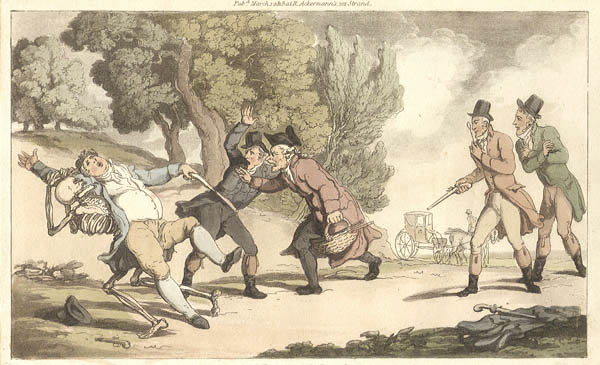
 Kelly will give a talk entitled Georgiana Darcy and the ‘Naïve Art’ of Young Ladies at the Governor’s House in Hyde Park on Friday, 30 January 2009. Our hostess, Suzanne Boden (a new JASNA -Vermont member!) invites you to join us for an entire Weekend dedicated to Austen’s Pride and Prejudice:
 New book soon to be published: A Companion to Jane Austen (Blackwell Companions to Literature and Culture), edited by Claudia L. Johnson and Clara Tuite [Blackwell, 2009], described as follows at
  Jane Austen in Vermont