A new exhibition takes a closer look at a glittering yet turbulent era. In October of 1810, England’s King George III slipped into that final madness from which only death would release him, nearly a decade later. The following February, Parliament authorized the king’s estranged and profligate eldest son, the Prince of Wales (the future George IV), to rule in his place as regent. Extravagant, emotional, controversial, and self-indulgent, the prince regent lent his name and many of his characteristics to a glittering era.
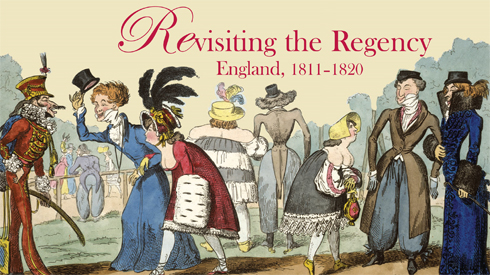
In commemoration of the 200th anniversary of this extraordinary decade, The Huntington presents an exhibition titled “Revisiting the Regency: England, 1811–1820.” Opening April 23 in the West Hall of the Library and continuing through Aug. 1, the exhibition draws on The Huntington’s extensive holdings of rare books, manuscripts, prints, and drawings documenting this historic era.
The term “Regency England” usually evokes Jane Austen’s world of graceful country-house living and decorous village society, the elegance of London’s fashionable elite, or the licentious activities of the prince and his aristocratic Carlton House set. Ladies followed the latest fashions in La Belle Assemblée while gentlemen copied Beau Brummell’s severe elegance. Readers found new works by a generation of England’s greatest poets and novelists: Austen, Lord Byron, John Keats, Samuel Taylor Coleridge, and Sir Walter Scott. Londoners enjoyed a rich theatrical and musical life, watching Edmund Kean’s premiere in Richard III or hearing the first English production of Mozart’s Don Giovanni. Art lovers followed the latest exhibits at the Royal Academy. Under the prince’s patronage, architect John Nash created the fantasy Royal Pavilion at Brighton and remade London’s West End with the new developments of Regent’s Park and Regent Street.
Yet underneath this ordered upper-class surface lay a far more complex and turbulent world: more than a century of intermittent war with France ended at Waterloo, but peace revealed wrenching poverty, social unrest, the strains of rapid industrialization, and growing calls for political reform. The first railroads, gas lighting, and other advances in technology altered the landscape of everyday life.
This rich cavalcade of people and events provided irresistible targets for a brilliant generation of visual satirists. The witty, savage, and iconic images of George Cruikshank and his fellow caricaturists, well represented in the exhibition, capture all the vagaries of an extraordinary decade in English arts, letters, science, and society.
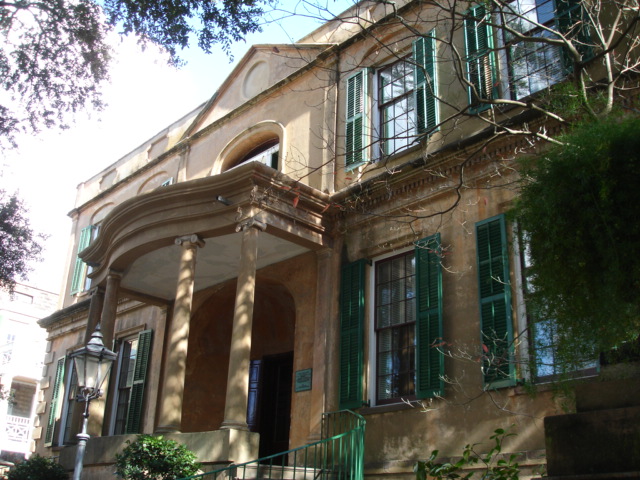
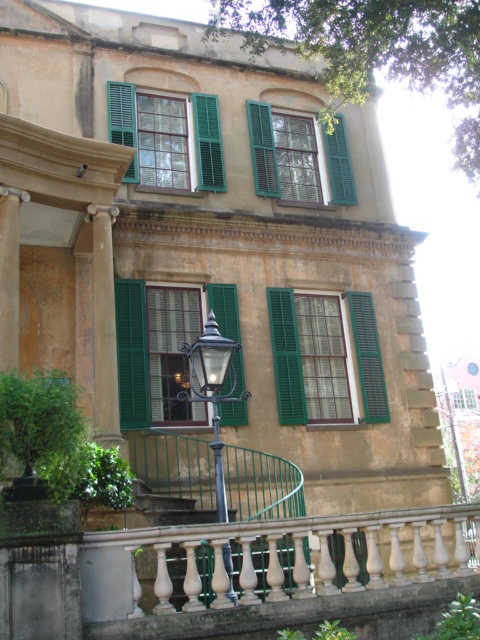
The Owens-Thomas Housein Savannah, Georgia is considered by architectural historians to be one of the finest examples of English Regency architecture in America. Inspired by classical antiquity, this style of architecture takes its name from England’s King George IV, who ruled as Prince Regent from 1811 to 1820.
The house was designed by the young English architect William Jay (1792-1837), one of the first professionally-trained architects practicing in the United States. The elegant residence was built from 1816-1819 for cotton merchant and banker Richard Richardson and his wife Francis Bolton. Mr. Richardson’s brother-in-law was married to Ann Jay, the architect’s sister.
Three years after the house’s completion, Richardson suffered financial losses and sold his house, which later came under possession of the Bank of the United States. For eight years, Mrs. Mary Maxwell ran an elegant lodging house in the structure. Revolutionary War hero Marquis de Lafayette was a guest of the city in 1825 and stayed at the home. On March 19, he is believed to have addressed a throng of enthusiastic Savannahians from the unusual cast-iron veranda on the south facade.
In 1830, planter, congressman, lawyer, and mayor of Savannah, George Welshman Owens, purchased the property for $10,000. It remained in the Owens family until 1951 when Miss Margaret Thomas, George Owens’ granddaughter, bequeathed it to the Telfair Museum of Art.
A National Historic Landmark, the stately former residence is now a historic house museum. It boasts a decorative arts collection comprised primarily of Owens family furnishings, along with American and European objects dating from 1750-1830. The site also includes a beautiful English-inspired parterre garden and an original carriage house—which contains one of the earliest intact urban slave quarters in the South.
[From the website]
Elevation - LOC Floor Plans - LOC
Exterior 1934 - LOC
I had the fortune to visit the House last fall – I am just getting to posting these pictures! Unfortunately, no pictures are permitted inside the house, so I only have several exterior and garden shots. The Museum publishes an illustrated guidebook which does contain interior views. If you want to get an idea of what Regency life in America was like during Austen’s lifetime, I highly recommend a visit if you are in the area.
Want to understand more about the life of a Regency-era woman? Nancy Mayer of Regency Researcher fame will be offering an online workshop on “The Regency Woman.” The class is offered through the Colorado Romance Writers and will run from April 4 – 29, 2011. Cost is $25. for non-members, $20. for members.
The Regency Woman: Online Workshop at Colorado RomanceWriters
April 4 – 29, 2011
DESCRIPTION: The Regency woman. She was a woman of stern morals and little laughter. A governess who didn’t feel oppressed and a governess who did. She owned her own business. She was an author, a poet, a scientist, a runaway. She lived a discreet and quiet life and she was notorious. She was the faithful wife and the mother of many children, or a divorced woman who had to give up her children to escape her husband.
No one pattern, not even a pattern card of propriety, fits all the women but despite their differences there were some things they had in common. The class will look at the world of the Regency woman from the domestic, political, social, and economic angles, using the lives of real women as examples. While I will try to include a great deal of new material, some of the information I have presented before has to be repeated.
BIO: Nancy Mayer has been trying to write Regency romances for more years than she wants to remember. She is always getting distracted and sidetracked by research.
*******************
[text and image from CWR]
Visit the website for more information and to sign-up. Scroll down to find Nancy’s class and read about the other interesting workshops as well! [The class is run as a Yahoo Group.]
Copyright @2011, by Deb Barnum, of Jane Austen in Vermont
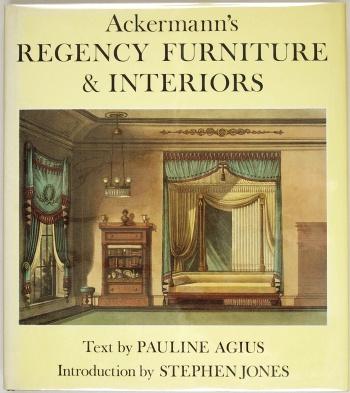
What does one do with the books we want but cannot now justify the expense or even afford at all? I maintain an endless list of such books I discover in my reading or book-hunting travels. I periodically search to see if I can find a copy that doesn’t break the bank. Here is one book I have had on my wish-list for ages, but it is impossible to find for much less than $200. But is is oh! so lovely! and I want it – I see it today in the Joslin Hall Rare Books catalogue and other than drooling all over my keyboard for a bit, I shall have to pass on the $300. price tag, yet again:
Agius, Paul[ine]. “Ackermann’s Regency Furniture & Interiors” Marlborough; The Crowwood Press: 1984. Published between 1809 and 1828, Ackermann’s ‘Repository of Arts, Literature, Commerce, Manufactures, Fashions and Politics’ provides an unparalleled window into the high-class world of Regency England. Gathered here are several hundred illustrations of furniture and interiors as first published by Ackermann. A Regency-style tour de force. Hardcover. 10″x11″, 200 pages, color and b/w illustrations, dj. Minor wear. $300.00
I love London – I had the fortune to spend a semester there in 1968 – the late 60s, a crazy invigorating time the likes the world has never seen again. When I started college, men and women were housed on opposite sides of the campus, by 1969, we were sharing dorms! I went to the London School of Economics to study political science, I, an English and sociology major – but there was one ‘political sociology’ course offered and more importantly the opportunity to finally visit the land where my parents were born. So I ended up scouring The Times every day and learning politcal theory [ugh!] and British legal history [fascinating] and researching race relations in 1968 Britain to fulfill my sociology requirement [wonderful but exhausting and depressing], but I was in London! I had all sorts of plans to meet Prince Charles [we are of an age!], and we did have sort of an encounter [another tale!]; but alas! it was not to be, and surely I am none the worse! – but I did meet my future husband on this abroad program – and thus began my ongoing love affair with England. Today I collect books about London and try to visit when I can [never often enough] and I think I might have finally gotten a handle on the London map and the squares and the history only to discover another alley, nook, or cranny yet to be discovered and studied.
My London collection suffers the fate of most collectors: not enough shelves to house the ones I have and certainly not enough for the potential stacks of London-related books – I started to limit my collecting to children’s books about or set in London, then started to just find materials about the late Georgian – Regency periods – still too many books – I have notebooks filled with bibliographic data and now engage in mad forays into google-books, which substantially helps my shelf problem as well as my pocketbook but not the fact that I love BOOKS!
A friend and I are giving a talk on Jane Austen’s London next month, so I have been pulling a lot of research together, reading some of those books I have on the shelf [and the floor!] and finding the myriad of information online – it is quite daunting really! But in this search I discovered that the Regency Romance author Louise Allen was publishing a short guide titled Walks Through Regency London – certainly a book I had to have… so hot off the presses it arrived, and it is quite the delight!
This is a book of walks, it is not a history of Regency London – for that you can spend an inordinate amount of quality time reading all those resources I mention above. What Ms. Allen has given us is a guide to walking around the prime areas of Regency London. The major drawback for me in trying to write this review is that I am the ultimate armchair traveler here, chained to my sofa [no fainting allowed] in snowbound Vermont trying to imagine trekking around these streets – how I wish I had this guide last February when I last visited Town! I took the Old Mayfair London Walks [1] tour, though I had been forewarned that it was not a literary-driven outing – What! I bellowed – no Jane Austen? No sneaking around the streets of Sense & Sensibility, looking for Willoughby or Edward, or Mrs. Jennings, or avoiding Fanny Dashwood if we should see her coming? No Jane Austen!? I cried! – “No Jane Austen” he said, clearly proud of eliminating her from the itinerary. It is great and instructive fun seeing the houses and imagining former inhabitants [thank that Blue Plaque program!], the architectural piece, but I wanted the “This is where Byron lived” (#8 St. James’s) and “This is where the Wedgwood had his showrooms”, and “This is where all the dancing took place at Almack’s.”
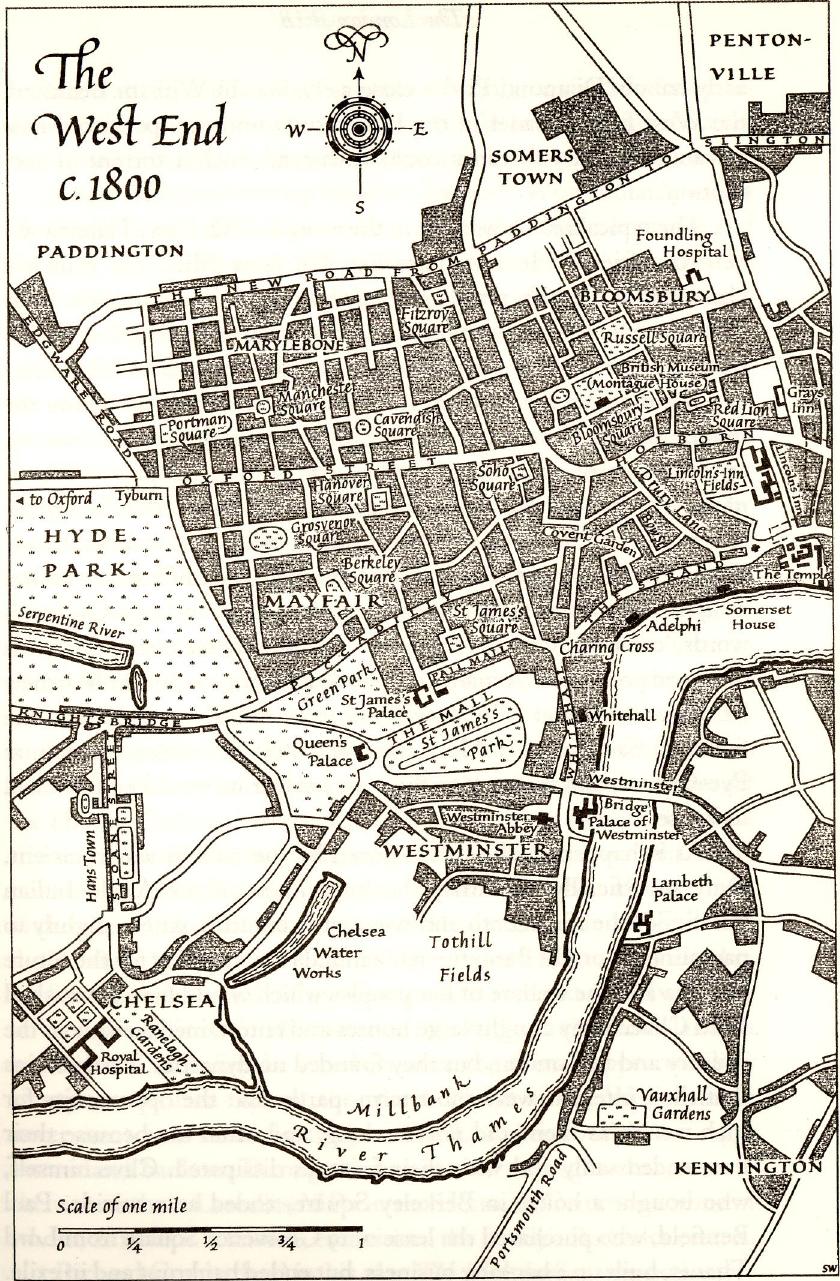
So how I wish I had this guide last year – it is the reason Louise wrote this book – her extensive Regency era research for her historical novels needed an outlet! And how hard the Regency is to pin down! – What was where when? When did that burn down? When was that demolished? Is that Victorian mansion camouflaging a Regency interior? Is this modern monstrosity on the plot of some famous building that Austen would have known and visited? One can get lost in their Horwood’s [2] trying to figure this all out – and even those maps changed so much over the several years of its editions, it could be a lifetime commitment to make sense of it all…
[Map image: The West End, c.1800. From Christopher Hibbert, London: The Biography of a City, 1969.]
In Walks Through Regency London, Louise tries to do just that, give substance to this very illusive nature of the Regency, as she says “fire, war and redevelopment have destroyed, changed and blurred the physical evidence of [the] past – yet it can still be found, sometimes intact, sometimes only as a ghost.” [Intro, p. i.] Walks is by no means a comprehensive guide – it is factual and anecdotal as you follow the directions on each tour: on this corner, such and such stood, this is where Wellington had his boots custom made; this is where Princess Caroline lived during her trial (# 17, now rebuilt), and Almack’s, now a new modern building at 26-8 King St, and this is where Frances Burney lived, etc … a mere 46 pages, but cram-packed!
I cannot verify all the data and comment on its reliability without doing the physical piece the guide is meant to accompany – one can read and follow along with a map [3], registering the endless details the guide provides, feeling the Regency come to life as you round each corner, filled with the buildings Jane Austen would have strolled by, made purchases in, as she likely took her own notes on where to place her characters in Sense & Sensibility so firmly (and proudly!) in Mayfair.
In her interview, Louise says she had enough material for twenty walks but chooses only ten (there are ten walks of about 2 miles each), and indeed, this is my only quibble [4] with the book! In its very compact 46 pages of quite small print, it all ends far too soon – I could have kept walking for at least another ten such tours! [easy to say from the sofa] – It is nicely presented with color illustrations from the author’s own print collection of London streets and fashions that set the scene; quotes from a contemporary source, the 1807 Picture of London (by John Feltham I believe, though this is not cited); walking directions; visiting information for public places (and sometimes a website); literary landmarks; shops, shops and more shops (so Regency!) – and add to this and Louise’s offering of the most interesting literary and historical tidbits and delicious gossip of the time and interspersed with commentary on what we see today.
Here are the ten walks:
St. James’s
Hyde Park and Kensington Gardens
Mayfair North
Piccadilly and South Mayfair
Soho North
Soho South to Somerset house
British Museum to Covent Garden
Trafalgar Square to Westminster
The City from Bridewell to Bank
Southwark and the South Bank
And here one short example from Walk 4: Piccadilly and South Mayfair where we happen to find Austen’s publisher John Murray:
Turn into the Royal Arcade, so through into Albemarle Street and turn left and walk down towards Piccadilly. (On Sundays go past the Arcade, turn left into Stafford Street and then left into Albemarle Street).
Virtually every literary ‘name’ of the 19th century must have come to Albemarle Street to visit the publisher John Murray. The firm moved to no. 50 in 1812 and has been there ever since. Amongst the greats, Murray published Jane Austen and Lord Byron, and, at Byron’s wish, burned his diaries after his death.
The street had at least three hotels in the Regency period including the Lothian and the Clarendon. The most famous was Grillon’s opposite John Murray’s. Louis XVIII stayed there in 1812 during the somewhat premature celebrations of Napoleon’s defeat.
Guests could have borrowed books from “Earle’s original French, English, Spanish and Italian circulating library … now moved to No, 47, Albemarle-street, Piccadilly, where all new books in the instructive and entertaining classes of literature are constantly added…”
Retrace your steps, turn left into Stafford Street to Dover Street and turn left.
Footnotes:
1. Note that London Walks does have a Jane Austen tour in their itinerary – when I was there, the guide was ill, so no Jane Austen for me that week! But I do not see it now on the schedule either – but I highly recommend these London Walks, where you can visit the haunts of Shakespeare and Dickens, Sherlock Holmes, the Inns of Court, Secret or Haunted London, and Greenwich, etc – it is all there for your to discover with their knowledgeable and entertaining guides.
2. For the most accessible access to the Horwood Map if you don’t have the Regency London A-Z book on your shelves, see the fabulous Regency Encyclopedia – you will need a password: JAScholar / Academia [case-sensitive] – click on Map Gallery and then Tour Regency London and then go exploring!
3. Ms. Allen says that “the book has been designed to not require a map. However, a standard tourist pocket map is helpful in locating tube stations and bus routes and in linking up walks. I use The Handy London Map and Guide by Bensons MapGuides. Otherwise all you need are a comfortable pair of shoes and an active imagination!” [p. i.]
4. quibble #2: a few spelling snafus: Cruickshank [should have no ‘c’] and Gilray [should have 2 ‘l’ s, though I believe it can also be spelled with one!] are both misspelled, but as Jane herself would likely overlook this, so alas! shall I!
4 1/2 full inkwells out of 5 ~ Highly recommended! … whether you are sitting in a chair or fortunate enough to have this guide as you meander around Town, you will enjoy the journey!
[Image from Nassau Library.org]
Your turn! – if anyone has any questions of Louise, please ask away! – see details for the book giveaway below… You can visit Louise’s website here and find her on Twitter @LouiseRegency
If you would like to order the Regency Walks book, you can do so directly from her website – I can attest to the book being mailed right away, arriving safe and sound and very quickly!
Book Giveaway: Please enter the drawing for a copy of Walks Through Regency London, compliments of ‘Jane Austen in Vermont’, by asking Louise a question or commenting on any of the three posts about this book. Drawing will take place next Wednesday 2 March 2011; comments accepted through 11 p.m. EST March 1st. [Delivery worldwide.]
Copyright @2011, Deb Barnum, at Jane Austen in Vermont.
Book Giveaway! ~ See details at the end of this post.
I welcome again Louise Allen for the second part of my interview about her new book Walks Through Regency London ~ [click here for Part I]
JAIV: Hello again Louise! – now let’s talk about your fiction: I have to make the embarrassing confession that I have not read any of your Regency romances! Your website says you write “Scandalously witty Regency romance” – how are you different from the other writers in this genre?
LA: I write romance, so obviously there is emotional intensity, but I have a well-developed sense of humour and I don’t enjoy writing about people who can’t laugh at themselves and the situation they find themselves in. A hero who isn’t witty isn’t quite a hero for me and my heroines, who all have a bit of me in them somewhere, are more likely to find the light side of any disaster, pick themselves up and carry on. And scandalous? Well, I’m told I write “hot” historicals – which means that I tend to have slightly older, more experienced and/or less conventional heroines who might have convincingly amorous encounters.
JAIV: What book would you suggest a “newbie” start with? [I promise to order a copy right away!]
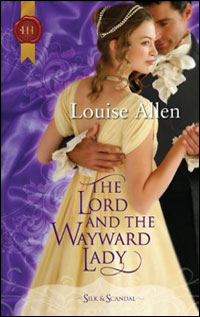
LA: Well, I’ve just won a CataRomance Reviewer’s Choice Award for The Lord & the Wayward Lady which is the first of a series of eight books I wrote with five other authors. I also wrote the seventh in the series, The Officer and the Proper Lady which I have to confess is a favourite of mine. Or you might like to start with a trilogy which comes out in the States later this year (August, September, November) – “The Transformation of the Shelley Sisters.” The first one is Practical Widow to Passionate Mistress.
JAIV: You have several stand-alone titles and several titles in series – which do you prefer to write? Is it hard to let a character go when there is no sequel in the wings?
LA: I do enjoy being able to stretch myself over a series and I love revisiting characters from earlier books. And yes, I hate letting my characters go! But it does make scheduling problems and there is more flexibility and variety with stand-alone books. My next one will be a singleton and I’m just starting it. Mills & Boon is producing a series set in historical houses owned by the National Trust, linking a fictional romance with real events and people, and I’m lucky enough to have been asked to do one. I’ve chosen Wimpole Hall in Cambridgeshire. When I’ve completed that I’ll be writing one set entirely in India in the 1790s.
JAIV:This National Trust series sounds intriguing! Are any of your other characters based on historical figures?
LA: I will occasionally have real characters “walking on” – the Prince Regent or Wellington for example – but all my heroes and heroines are entirely fictitious. I try very hard to make sure historical events take place as the records show and I’m not making people act out of character.
JAIV: What is your writing process? – do you plan ahead or as you have said yourself do “the Hero and Heroine take over and sabotage all your efforts at discipline”?
LA: I’m what is known in the business as a “pantser” – I fly by the seat of my pants into the fog – rather than being a planner. But I need to know my characters very well before I start, then I put them in a situation and I hope I can keep control of them!
JAIV: Do you have a favorite character? – the Hero? The Heroine?
LA: I need to be able to identify with the heroine – and hope my readers will too. And I have to be a little bit in love with the hero (luckily my husband is secure about this!). Some heroes though, stay with me – Hal Carlow in The Officer and the Proper Lady and Jack Ryder in The Dangerous Mr Ryder for example.
JAIV: What makes a great Hero? A great Heroine?
LA: My heroes have to be men of honour, even if sometimes that is buried rather deeply. They must have courage – physical and moral – and they need an edge of darkness, of danger. And a sense of humour, of course! Great heroines have the reader living the book with them – and I wish there was a recipe for achieving that. I know I’ve succeeded when my editor says (in a good way) “ was in tears over x or y”.
JAIV: Do you believe in the transformation of the Rake, his redemption? –
LA: That depends on the rake. There were some genuinely unpleasant and vicious Regency rakes. I believe that a man who has, for good reason, become cynical and cold and destructive can be redeemed by love, but there are things I wouldn’t countenance in one of my heroes.
JAIV: How do you come up with names? Ravenhurst, Carlow, etc…
LA: What a good question – I wish I knew the answer! I tell my subconscious to get on with it and end up with lists and jotted notes on every scrap of paper. Then I have to try them out and see what works. Sometimes a character insists on a different name and I have to give in.
JAIV: If you were giving advice to budding writers, what would it be?
LA: Write, write, write – you have to learn technique and you have to build your writing “muscles”. Listen to constructive advice from agents, publishers, published writers and think about what they are saying. But never over-polish your work so that you lose you unique “voice”.
JAIV: Your covers – do you have input or is this out of your hands?
LA: Out of my hands!
UK cover
US cover
JAIV: You mention that your last work is part of a “continuity series” of eight books written by six different authors. How ever did you all come together in such a task? And how different was the writing process for your two books in this series? – what are the other titles and authors, and should the series be read in order?
LA: The editors at HMB in Richmond, London, put us together – we didn’t know each other so it was a sharp learning curve. Fortunately we got on very well together, which was a good thing as we had to come up with the over-arching mystery that links the books, all the characters and eight plots ourselves, subject to editorial approval. For me it meant I had to plan far more than I usually do and the process was slower as we were all writing at the same time and constantly checking back and forth to ensure continuity of plot and characterization, especially as we were all using each other’s characters. But it was a wonderful experience and we are still firm friends. The books can be read alone, but if read in order you also get to follow the mystery through to its conclusion. In order they are:
The Lord & the Wayward Lady (Louise Allen)
Paying the Virgin’s Price (Christine Merrill)
The Smuggler & the Society Bride (Julia Justiss)
Claiming the Forbidden Bride (Gayle Wilson)
The Viscount & the Virgin (Annie Burrows)
Unlacing the Innocent Miss (Margaret McPhee)
The Officer & the Proper Lady (Louise Allen)
Taken By the Wicked Rake (Christine Merrill)
JAIV: I am interested in your current “work in progress” – to be set in India – you have recently visited to inspire you and help in your research – I had the good fortune to visit India a few years ago and was so moved by the beauty of the people and the culture – what were your impressions? And what works are your reading for your historical research?
LA: As I said above, this is now the book after next. I went to India last year and used some of that experience in my “Danger & Desire” trilogy (out in the States next year) but I wanted to do one set there entirely, and rather earlier than I usually write – the late 1700s. I love India, even at its most chaotic, and Rajasthan where we were in January had the most incredible palaces and forts, many of which we stayed in. I’m reading through a pile of quite academic material on the East India Company but I found William Dalrymple’s The White Moghuls very inspiring and for light relief there is always William Hickey – Memoirs of a Georgian Rake.
JAIV: What is the most essential tool in marketing your work?
LA: Constant contact with readers is paramount. I keep my website up to date, I tweet and I’ll do talks wherever and whenever I can. Next week I’m speaking at a US base in Norfolk!
JAIV: And finally a question about the publishing aspect of books vs. Kindle [etc.] – I see that many of your works are available in the ebooks format – have you seen an increase in sales because of this?
LA: I love books, but I love my Kindle too and I’m really pleased that many of my out of print books are becoming available in e-formats. It is too early to say what impact it is having on sales, but I don’t think there is any option other than to go along that route. Having said that, I can’t see the paper book dying any time soon, thank goodness.
JAIV: And finally, what do you like to do when not writing??!
LA: I read voraciously, travel, go antiquing, garden and talk endlessly to other writers.
JAIV: Anything else you would like to say?
LA: Thank you very much for having me! And do get in touch if you are coming to London – I’d love to meet members of your Society.
JAIV: Thank you Louise for sharing your thoughts with us – You have been most generous with your time! To All: Please look for my review of Walks Through Regency Londonin Friday’s post.
Your turn! – if anyone has any questions of Louise, please ask away! – see details for the book giveaway below… You can visit Louise’s website here and find her on Twitter @LouiseRegency
If you would like to order the Regency Walks book, you can do so directly from her website – I can attest to the book being mailed right away, arriving safe and sound and very quickly!
Book Giveaway: Please enter the drawing for a copy of Walks Through Regency London, compliments of ‘Jane Austen in Vermont’, by asking Louise a question or commenting on any of the three posts about this book. Drawing will take place next Wednesday 2 March 2011; comments accepted through 11 p.m. EST March 1st. [Delivery worldwide.]
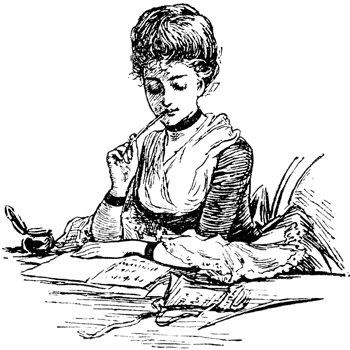
[All images from Louise Allen’s website, except the letter-writing sketch which seems to be everywhere…]
Copyright @2011, Deb Barnum, at Jane Austen in Vermont.
NOTE: Book giveaway! ~ see the end of this post for details!
Please welcome author Louise Allen today as she answers questions about her new book on Regency London. Louise is a very successful writer of historical Regency romances, over thirty-five titles to date! Her interest in all things Regency is fed by constant research into the period, as well as the development of a fine collection of prints and ephemera from the era – all this to help in her writing. In December 2010 she released her first non-fiction work titled Walks Through Regency London [available direct from her at louiseallen [dot] regency [at] tiscali [dot] co [dot] uk
JAIV: Thank you Louise for joining us here in Vermont today! I was so pleased to get your new book on Regency London hot off the press! – I ordered two copies and gave one to another London-obsessed friend and she is most enjoying your book!…we only wish we could both be in London together and exploring Town with your book in hand, rather than this armchair traveler thing! – hopefully, sometime soon…we’re working on it!
JAIV: So first, tell us something about yourself.
LA: Thank you very much for inviting me to join you – it is great to be in Vermont, even if only in cyberspace! I live in the East of England with my husband and we are about to move even further east, to a cottage on the North Norfolk coast. I was first published back in 1985 and for years I wrote alongside my full-time job as a property manager, but for the last three years I’ve been writing full-time and I love it.
JAIV:When did you first discover your love of the Regency period? Why this time and place?
LA: I think I first became aware of it when reading Georgette Heyer as a teenager. I’ve always been an historian – I studied landscape history, historical geography and archaeology at university – but it took me a while to settle on the “long” Regency as a period to write in. My first book was set during the English Civil War of the 17thc but my editor encouraged me to look at the Regency and I fell in love with it. I think it is because it occupies a transitional place between the agricultural and aristocratic world of the 18thc and the rapid technological change and urbanization of the Victorian era. Boundaries are always interesting and complex and it is also sufficiently different and yet recognizable, which makes it fascinating to write about. And I’m English, so English history felt right.
JAIV: Did you read Jane Austen as well as Georgette Heyer? – do you re-read them? Which are your favorite titles, if it is possible to choose?
LA: Yes, to both authors and yes to re-reading. Austen – I love Pride & Prejudice, but I find Sense & Sensibility more interesting. I was at Jane Austen’s house at Chawton last year and it was very moving to walk in her garden and to see her tiny writing table. Heyer favourites? The Grand Sophy and also The Toll Gate, which isn’t everyone’s choice, but I’m tall, so I identify with the heroine!
JAIV: You obviously use London and the London social scene in your fiction, and the need to be accurate has led you to amass a great deal of research through the years – hence your “Walks” book – what first prompted you to pull all this together and publish it?
LA: My husband and I love walking, and we love London, so it was no hardship to start exploring when I wanted to check details. Then we got hooked and started exploring specific areas – when I looked at my notes and our photos I realized that I had the makings of a book.
JAIV: You cite the 1807 The Picture of London guidebook as your main source. What other books did you use? – there are so many works on London – which are your favorite and why?
LA: I use the 1807 guide because it is fun to take it for a walk where it must once have gone with its Regency owner – it is the real thing, much used and slightly battered. We also take the invaluable A-Z of Regency London published by the London Topographical Society. Their historical A-Zs are a brilliant resource. When I checked my shelves just now I found I have 55 reference books on London, so it is a problem to pick out just a few, but I would say The London Encyclopedia (published by Macmillan) is an essential. Peter Ackroyd’s London: The Biography is full of fascinating, unusual and often downright weird information and Dan Cruickshank’s book on the sensual life of London The Secret History of Georgian London is about so much more than sex.
JAIV:What are your favorite haunts in London, for both Regency times and the present?
LA: The St James’s area is the best preserved Georgian/Regency quarter. Soho is endlessly fascinating – so many layers of history. The City, although it has been leveled by the great fire and then again by the Blitz still preserves its medieval street patterns and modern office blocks must contort themselves to fit the shape of some ancient workhouse or monastery cloister. You can even see the curved walls of Newgate Prison fossilized in the shape of an ultra modern building. But it is hard to find a part of London that isn’t interesting if you are prepared to be very nosy!
JAIV: The book is fact-filled and anecdotal, and culled from so much available information – how did you decide what to include and what not to include?
LA: It was a nightmare! I had enough material for twenty walks, but I tried to chose ones that gave a variety of experiences, which were all about 2 miles long and which could be split up if walkers wanted to have a shorter route or spend more time in a museum.
JAIV:Did you discover anything surprising in your research and exploration? Something you did not already know?
LA: It wasn’t so much new facts that I found but places which gave me a real frisson of excitement: the 1820s operating theatre where you can see the marks of the surgeons’ saws on the table; the last galleried coaching inn left in London; the great scales in Berry Bros & Rudd where Byron used to weigh himself; having a drink in Tom Cribb’s own pub and exploring the back alleys behind Almack’s which were once filed with high-class brothels and gambling dens. Perhaps the most unexpected discovery was in a Chinese supermarket in Soho – walk past stacks of dried herbs and fish, bags of rice and look up and realize you are in a very old house indeed – and in the back is still the sweeping 18thc staircase. This is the Turk’s Head coffee-house and Dr Johnson and Joshua Reynolds were just two of the great men who socialized here.
[Image of Samuel Johnson: Johnsonese.com]
JAIV: The illustrations in your book are from your own collection. What other ephemera from the era do you look for? When did you start becoming a serious collector? – and did your writing come first or vice versa?
LA: The writing came first then the more I wanted to know about the period, the more I would look for items from it. I collect fashion prints 1790-1820, prints of London from Ackermann’s Repository, coaching and sporting prints, bills and invoices, playbills and anything else that I can get my hands on. I started buying fashion prints when I stubbed my toe on a box of over thirty, all framed, under the table at an auction. I got them for a song and as the porter staggered out to the car with them he said, ‘Bloody hell, madam, you don’t half buy in bulk!’ He didn’t know how true it was, I’m afraid – I’ve got about 1,000 prints now.
[Charles Street]
JAIV: Where are your favorite haunts to find items? How do you categorize and store them?
LA: On-line and live auctions, antique fairs and antique shops are all good places to search, but auctions are the most productive. I store them in archival-quality binders on acid free paper, or have them framed by a specialist framer using acid-free mounts. I arrange the fashion prints by date, the London prints by street and everything else by subject.
JAIV: You bring the Regency so to life! – better to have this guide while actually walking around London – but even so this journey of readinghas been delightful… Which of your walks is your favorite? – what is your favorite part of London?
LA: Thank you! I enjoy them all – it depends on my mood. If I am feeling like high society and shopping, Mayfair and St James’s are best. Hyde Park is great for a good walk, Soho is vibrant and slightly edgy and the City surprisingly dark and sinister.
JAIV: The process of writing fiction and non-fiction is quite different – explain the process for writing this Walks book.
LA: I was very conscious the whole time that I had to make this crystal-clear for people to follow. It would have more than doubled the cost if I’d included maps, so users needed to be able to do without, or use it in conjunction with an ordinary pocket map. Then, once I had plotted each walk out on a modern map it was a question of picking out the relevant points of interest or short snippets of interesting information and weaving them in with the directions – and then re-walking to check every turning and fact.
JAIV: Do you have another non-fiction Regency-era book in the works?
LA: We are tracing the original route of the Great North Road, the main coaching route between Edinburgh and London – but not on foot! This is great fun and needs a lot of detective work and old maps. I see this one as possibly being a Kindle book rather than a print one.
JAIV: Thank you Louise for joining us today for Part I of this interview! – Louise is happy to answer any of your questions, so please ask away!
Stay tuned: Part II tomorrow where I continue this interview with Louise on her Regency Romances and her thoughts on writing; followed by Part III, a book review of Walks Through Regency London.
If you would like to order the Regency Walks book, you can do so directly from her website – I can attest to the book being mailed right away, arriving safe and sound and very quickly!
Thank you again Louise for joining us today – looking forward to continuing our discussion tomorrow!
Book Giveaway: Please enter the drawing for a copy of Walks Through Regency London, compliments of ‘Jane Austen in Vermont’, by asking Louise a question or commenting on any of the three posts about this book. Drawing will take place next Wednesday 2 March 2011; comments accepted through 11 p.m. EST March 1st. [Delivery worldwide.]
[All images excepting Dr. J from Louise Allen’s website]
Copyright @2011, Deb Barnum, at Jane Austen in Vermont.
The “Thomas Lawrence: Regency Power and Brilliance” exhibit that closed in late January at the National Portrait Gallery in London, will be opening on February 24 [through June 5, 2011] at the Yale Center for British Artin New Haven, CT. For those of you, like me, who were unable to catch this in London, now is your chance – not to be missed, certainly for any Jane Austen fan in good standing! – [and thankfully, not too far from me! – I will post my thoughts after seeing it…]
Sarah Barrett Moulton - Pinkie
This is from the Yale Center for British Art website:
Thomas Lawrence: Regency Power and Brilliance will be the first substantial examination of the artist in the United States since 1993 and the first Lawrence exhibition in the United Kingdom since 1979. It will include the artist’s greatest paintings and drawings alongside lesser-known works in order to provide a fresh understanding of Lawrence and his career. The show will also contrast his approach to sitters according to age and gender; juxtapose his public identity with the private world of the artist’s studio; explore Lawrence’s technical innovations as a draftsman and painter; and place him within the broader contexts of the aesthetic debates, networks of patronage, and international politics of his day. The exhibition will bring visitors “behind the scenes” to explore Lawrence’s working methods and the importance of his studio as a workspace, a social space in London, and a space for the display of Lawrence’s own works and his stellar collection of Old Master drawings.
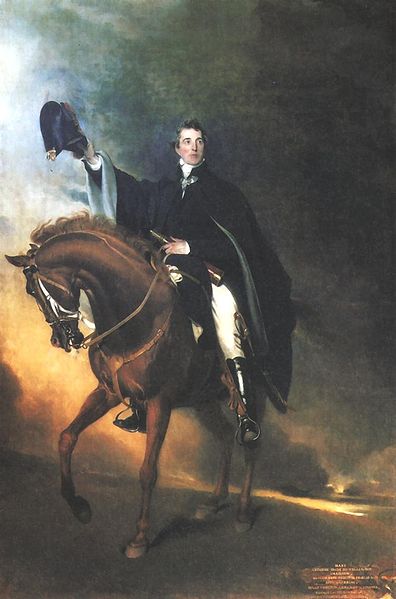
Spanning the scope of the artist’s career, the exhibition closely examines the Regency period, a time defined by the political and cultural role played by George IV (1762-1830), who was Prince of Wales between 1789 and 1811, and then, successively, Prince Regent (during his father’s illness between 1811 and 1820), and crowned king after his father’s death. The exhibition begins with a restaging of Lawrence’s first definitive Royal Academy success in 1790, where he showed Elizabeth Farren (Metropolitan Museum of Art) and Queen Charlotte (National Gallery of Art, London). A display of works from Lawrence’s controversial exhibitions from the 1790s will follow, including Arthur Atherley (Los Angeles County Museum of Art), which challenged traditional notions of masculinity. The next section will examine the period from 1805 to 1815, during which the artist experienced financial and emotional turmoil and created his most innovative and experimental group portraits and half-history portraits. Lawrence was sent abroad by the Prince Regent to paint the victors of Waterloo between 1818 and 1820, and a section of the exhibition will feature portraits such as Arthur Wellesley, 1st Duke of Wellington (private collection) and Charles William (Vane-)Stewart, later 3rd Marquess of Londonderry (National Portrait Gallery, London), as well as the innovative chalk-on-canvas drawings he made during his travels.
Duke of Wellingon on Copenhagen
Another display will include some of his best works on paper, ranging from friendship portraits and commissioned portrait drawings to sketches of historical events, such as the treason trial of John Thelwall (National Portrait Gallery, London). Sparked by a drawing of his studio in 1824 (Yale Center for British Art), the last section of the exhibition will explore new paradigms of masculinity and femininity in Lawrence’s later work and also examine the importance of his portraits of children. The section proves definitively that Lawrence continued to challenge himself as an artist even in the last decade of his career. This display will also highlight an important portrait of the young Julia Peel (private collection), which will be shown exclusively in New Haven. Yale Center for British Art Director, Amy Meyers, asserts, “A critic once wrote of Lawrence’s work that ‘The magic of his art is thrown around the representations of the most ordinary things.’ We are thrilled to be able to share this magic with visitors drawn to the show by the beauty of Lawrence’s paintings, by interest in the period of the Napoleonic wars, and by the changing representations of gender roles in Lawrence’s work.”
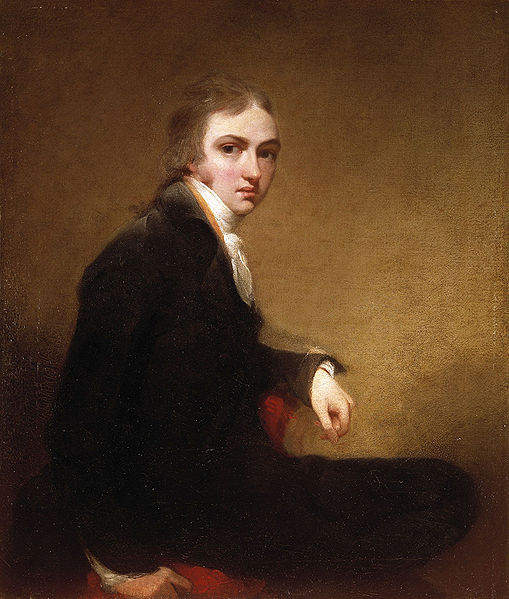
Beginning as a child prodigy working in pastels, Thomas Lawrence succeeded Sir Joshua Reynolds as Britain’s greatest portrait painter. While lacking in formal and artistic education, he rose to the highest ranks of his profession and was appointed President of the Royal Academy in 1820. With the temperament and flair to capture the glamour of the age, Lawrence created the image of Regency high society with dazzling brushwork and innovative use of color. He became not only the most popular chronicler of fashionable London society, but also one of the most lauded (and imitated) portraitists in Europe. Under his brush, portraits emerged that were both startlingly modern, yet grounded in historical forms. They owed their popularity to the fact that Lawrence represented his sitter’s idealized social persona, and also attempted to capture in paint a visual representation of their inner life and character.
Thomas Lawrence: Regency Power and Brilliance has been curated by A. Cassandra Albinson, Associate Curator of Paintings and Sculpture at the Yale Center for British Art, and Peter Funnell, 19th Century Curator and Head of Research Programmes, and Lucy Peltz, 18th Century Curator, at the National Portrait Gallery, London.
The exhibition is accompanied by a fully illustrated book, edited by A. Cassandra Albinson, Peter Funnell, and Lucy Peltz, with essays by Albinson, Funnell, and Marcia Pointon. The book has been published by the Yale Center for British Art in association with Yale University Press and will be available for purchase in the museum shop.
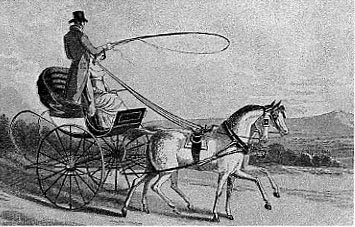
There is much that we do not know about Jane Austen, and the much that we do “know” has been pieced together from letters and family remembrances and historical contexts. But one thing we know for sure is that Austen was familiar with ALL the carriages of her day. This is best illustrated by her Juvenilia piece “The Memoirs of Mr. Clifford: an Unfinished Tale” [MW 43], written between 1787-90, when Austen was 12 – 15 years old: this is what she says:
Mr Clifford lived at Bath; and having never seen London, set off one Monday morning determined to feast his eyes with a sight of that great Metropolis. He travelled in his Coach & Four, for he was a very rich young Man & kept a great many Carriages of which I do not recollect half. I can only remember that he had a Coach, a Chariot, a Chaise, a Landau, a Landaulet, a Phaeton, a Gig, a Whiskey, an Italian Chair, a Buggy, a Curricle & a wheelbarrow. He had likewise an amazing fine stud of Horses. To my knowledge he had six Greys, 4 Bays, eight Blacks & a poney.
[what! no barouche!!]
Austen used carriages in her novels as a way to indicate income and social status but also as a way to delineate character – for example, we know most everything about John Thorpe in Northanger Abbey by just listening to the way he describes his horse and carriage! [Thorpe has been called the most horse-obsessed character in all of literature!]; we know that Willoughby cannot afford the carriage and horses that he has, that he is a fast driver, and that his driving a large chaise with four horses to visit Marianne when he thinks she is dying show how much he wants to get there and quickly, at any cost [but of course he is now married to Miss Gray, so cost does not matter to him…].
Coaching Inns:
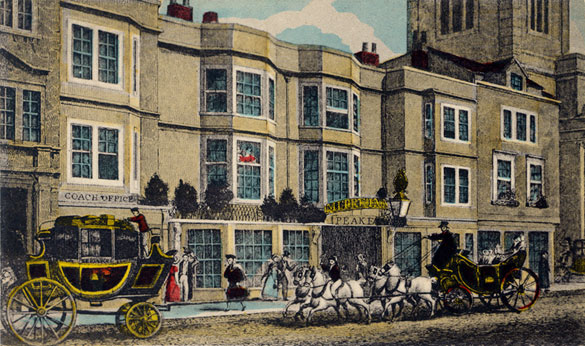
Austen would have also known the Coaching Inns of her day – she would have stayed in them during her own numerous travels. But in Sense and Sensibility there are only two mentions: Edward staying at an Inn when he leaves London after he is disinherited, and Robert and Lucy Ferrars at the New London Inn in Exeter following their marriage. But all the characters would have stayed at Inns for any of the longer trips, as was explained in the previous post.
Carriages:
There are numerous specifically noted carriages in S&S. “Carriage” is a general term: there were many variations in nomenclature and design, and big discrepancies even among the same “named” vehicle. There were differences in “construction, function, size, speed and appearance.” [Rogers] And there was a full class-system of horse-drawn vehicles; the wealthy often had unique designs made to order.
Some understanding of the parts of a carriage helps to identify a particular type: see this link at The Georgian Index for a glossary of carriage terms, as well as this diagram:
So, just a few carriage part terms:
1. C-Springs: a curved spring of C-shape, made up of several overlapping plates or leaves. They where introduced in the late 18th century (shortly after the S-Spring) and replaced the primitive wooden pillar attached to the axle, from which braces extended to the coach body.
2. Elliptical spring: Carriage spring made up of two sets of overlapping steel plates or leaves bolted together in elliptical or semi-elliptical form. It was invented by Obadiah Elliot in England (1804) and made the ride much smoother and the carriages more stable.
3. Lights: called “moons” [as per Chapman]: for dress carriages: the simplest were wax candles in tin tubes in a circular casing; for traveling coaches – lamps with oil in square casing [Adams]
In the country, social engagements were dependent upon the moon, traveling at night unsafe: for example in S&S, Sir John Middleton has asked other neighbors to join their party, but “it was moonlight and everybody was full of engagements.”
A few definitions about the people of the horse and carriage era:
1. Postilion or post boy: a person who rides the leading nearside horse of a team or pair drawing a coach or carriage, when there is no coachman
2. Groom: a male servant employed to care for horses; at times accompanying an owner’s carriage
3. Ostler: a groom or stable boy employed at an Inn to take care of guest’s horses
4. Tiger: a boy or small man employed as a groom on the back of a curricle or other small carriage. Name derived from the yellow and black striped waist coat worm by the groom [OED: A smartly-liveried boy acting as groom or footman; formerly often provided with standing-room on a small platform behind the carriage, and a strap to hold on by; less strictly, an outdoor boy-servant. obs.slang. ]
5. Livery: historical- distinctive dress or uniform worn by an official, retainer, or servant (and given to him or her by the employer) [term from c1290 in Old French] – a footman’s livery of two suits would cost about £20, as much as his year’s wages
********************
And now to the carriages ~ I will post about each type and how and where they appear in Austen’s works over the next several days:
FOUR WHEELED VEHICLES:
1. Long Wagon:
-similar to the American covered wagon
-carried goods and passengers – did “the practical work of the nation” with 6-8 draft horses
-not specifically mentioned in Austen, except off stage
2. Carts
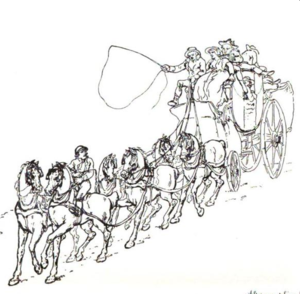
3. the Coach: “Kings of the Road” – called the most dignified of moving objects
• a large, enclosed 4-wheeled carriage, a fixed head, doors and windows
• pulled by at least four horses, for long-distance travel, traveled @ 7 miles / hour
• 4-6 passengers, in two seats facing each other; also passengers on top
• C-springs helped as shock absorbers
• public use OR persons of wealth or high rank
[the term “hackney coach” is what we would call a modern day taxi, and were most often cast-off coaches from the original owners]
A leisurely weekend of literary-inspired diversions has something for every Jane Austen devoteé. Slip quietly back into Regency England in a beautiful old mansion. Take afternoon tea. Listen to Mozart. Bring your needlework. Share your thoughts at a discussion of Sense & Sensibility and how the movies stand up to the book. Attend the talk entitled ~ “Making Sense of Jane Austen’s World” * ~ Test your knowledge of Sense & Sensibility and the Regency period and possibly take home a prize. Take a carriage ride. For the gentleman there are riding and fly fishing as well as lots of more modern diversions if a whole weekend of Jane is not his cup of tea. Join every activity or simply indulge yourself quietly all weekend watching the movies. Dress in whichever century suits you. It’s not Bath, but it is Hyde Park and you’ll love Vermont circa 1800.
**************************
* “Making Sense of Jane Austen’s World” – Inn owner Suzanne Boden will be talking on the architecture, furnishings and other decorative arts of the Regency Period; Deb Barnum of JASNA-Vermont [yours truly] will be talking about travel in the late 18th and early 19th century – the horse and carriage era – and how Austen’s characters travelled in Sense & Sensibility – [and there is a lot of moving about in this book!]
*Or come for just an afternoon or evening and choose from these activities:
Informal Talk with Coffee and Dessert, Friday, 8:00 p.m., $14.00
Afternoon Tea, Saturday, 3:00 p.m., $20.00
Book Discussion and Dinner, Saturday, 7:00 p.m., $35.00
Jane Austen Quiz and Sunday Brunch, Sunday, 11:30 a.m., $15.00















 Jane Austen in Vermont