I have decided to open a Facebook account for our Jane Austen Region here in Vermont. One, because I hear tell from the New York JASNA Region and a few others who have done this that it is great way to reach out to the younger people in the area who are Austen fans, and Two, because it is just so easy!
I had set up an account last April, but never did anything with it…no profile, no pictures, no postings – I mean really, who wants to know that daily goings-on of a bookworm anyway? I envisioned posts like:
- Deborah bought an estate of books today.
- Deborah sold 3 books today.
- Deborah cleaned and mylared 50 books today.
- Deborah went to the post office today, same as yesterday.
- Deborah spent too much time on her blogs today.
- Deborah had peanut butter & jelly for lunch today – dinner isn’t looking much better.
etc., you get the picture; I mean really, WHO CARES?!
As my email was changing (thanks to the mighty Verizon-Fairpoint conversion), I was editing all my information on every site (a veritable nightmare), went into Facebookand found I had FIVE friends who wanted to connect with me. So I quickly filled everything out, uploaded a picture, found more friends, and now feel like I am comfortably in the 21st-century, though quite sure I will not spend a lot of time there – I am already way-too-tied to the computer as it is – but I did set up this Jane Austen account and will use it to advertise our events and connect with other Austen-folks out there. [I invite you to join us!]
A quick search however, was quite the eye-opener – the number of Austen-related accounts is absolutely mind-boggling, the number of members in each even more so, and I didn’t even search every possible combination, so know there must be many more. Some, like ours, are JASNA Chapter sites; some are quite funny; some anti-Austen / pro-Bronte, some hate Mr. Darcy, some want to be enslaved by Mr. Darcy!; some prefer Knightley or Henry Tilney [Mags, you should be running this one!]; and don’t even try to locate all the ones just on Pride & Prejudice – the book, the movies, the characters, the movie stars, on and on it goes. I really do wonder if anyone actually works or studies anymore! All manner of Austen-related things turn up – see for instance the recent “Austenbook” that renders the entire story of Pride & Prejudice into a Facebook posting – it’s near perfect! http://www.much-ado.net/austenbook/
And as always, a funny story ~ I was searching “Pride & Prejudice” and the results included all sorts combinations, and while scrolling down the first few, I discover my son’s name! – now this was a shock! – I mean my son is a great young man, but he and Jane Austen are like oil and water (he once called me from college to ask if she was dead yet!), and I have always tempered my effusions about her whilst in his presence – so as my son and I are “friends” on Facebook, I can look at his profile – and what to my surprise but I find he has listed P&P as one of his favorite books! – here’s his list: Crime and Punishment, Siddhartha, Where the Red Fern Grows, Into Thin Air, Undaunted Courage, Killer Angels, Pride and Prejudice, The Incredible Journey, Into the Wild, Eiger Dreams – there it is in black & white!- every Austen-lover’s dream! to pass it on! I recall he read P&P in high school after I bribed him into it for a pair of hiking boots; he read it, passed a quiz on its finer points and did confess to liking it, but to go PUBLIC with that??! Anyway, my faith is restored and I have hope for the world! [and he is adamant that it is not on there as a “chick-magnet”!]
So I give you a sampling [and member numbers on the date I searched]: take your pick and join any and all! It’s a whole new world out there – yikes! whatever would Jane say! [note: I abbreviate her name (JA) and novel titles]
Searching “Jane Austen Society”:
- The Honorable Ladies Society for the Appreciation of Jane Austen [JA]- 30
- JA Appreciation Society – 25
- People who are vexed by people who are vexed by JA society – 22
- JA Tea Society – 10
- JA Adoration society -1
- The Mr. Collins Appreciation society – 231 [!]
- PEERS [period events & entertainments re-creation society] – 184
- I want to live in a costume drama – 173
- JA made my expectations too high – 147 [with a “ditching Mr. Darcy” logo]
- Students of a JA persuasion – 908
- Ms. Sharp appreciation society – 77
- Ultimate chick-flick appreciation society – 51
- The Finer things club – 25
- Bronte sisters pawn JA – 22
- English Majors against JA [EMAJA] – 17
- JA’s novels explain the universe – 13
- Society for advocates for sound grammar & syntax – 13
- The not so JA movie club –
- I want to live in JA’s times – 7
- Card & Quill society [see website: A Social Club for nostalgic ladies]
- Amen to breeches, cravats & top hats! [with 5 reasons to join: Darcy, Wentworth, Mr. Thornton, Henry Tilney, & Roger Hamley]
Searching “Jane Austen”: [more than 500 results, many just names]
- Jane Austen – 20,671 fans [+1; I just joined…]
- JA fan club – 21,753
- I love Mr. Darcy enough to make JA uncomfortable – 8,002
- JA gave me unrealistic expectations of love – 4,393
- I should be a JA character – 3, 185
- JA books are ruining my sense of reality and I love it! – 2,617
- Which JA character are you? – 4,013 [monthly active users]
- Which JA heroine are you? – 1,168 [monthly users]
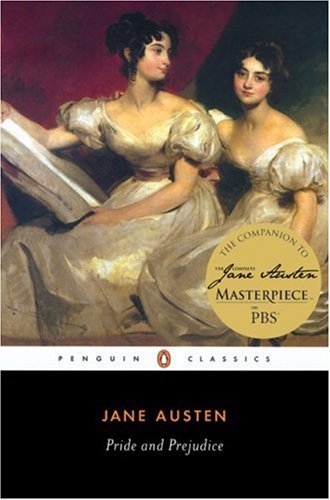 Searching “Pride & Prejudice”:
- Addicted to P&P – 15, 684
- BBC P&P appreciation society – 6,792
- I can recite the BBC version of P&P word for word – 3, 978
- I can’t stop watching P&P! – 3,154
- If my life could be a book, I would want it to be P&P – 859
- Which P&P guy are you? -76
- For the love of P&P – 840
- Darcy is for lovers- we love P&P – 609
- For those who ardently admire & adore P&P – 503
- Why can’t we dance like they do in P&P? – 610
- Not only have I seen the movie, but I’ve actually read P&P – 286
Searching “Elizabeth Bennet”:
- All I ever needed to know I learned from Elizabeth Bennet – 696
- I love Mr. Darcy so much, it’s enough to make E.B. uncomfortable – 178
- I wish I were E.B. – 154
- In a perfect world, I’d be E.B., and Mr. Darcy would be my man – 125
- My secret identity is E.B. – 24
- I wish I were E.B. (so I could have sex with Mr. Darcy) – 6
Searching “Mr. Darcy”:

- Colin Firth will always be my Mr. Darcy – 22,443
- I refuse to settle for anything less than Mr. Darcy – 15,022
- Every girl should have a Mr. Darcy in her life – 8,195
- Take me to Pemberley, Mr. Darcy – 3,119
- I have Mr. Darcy syndrome & it is f___ing up my life! – 771
- Girls waiting for men to romantically wander out of the mists toward them – 1391
- Mr. Darcy is an idiot – 45
Searching “Sense & Sensibility”:
- We very much dislike Willoughby – 84
- I know S&S by heart – 162
Searching “Mr. Knightley”:
- Mr. Darcy … Mr Knightley… and other honorable gentlemen we love – 725
- Mr. Knightley is better than Mr. Darcy – 36
- I am going to marry one of the men in JA’s novels – 2,671
Searching “Henry Tilney”:
- Basically I am in love with fictional men – 6, 129 [up to 6,164 today]
- Henry Tilney is my gothic hero – 338
Searching “Captain Wentworth”:
- I love Captain Wentworth – 414
- All the good men lived 200 years ago in lonely women’s imaginations – 527
************************
What’s scary is this is just a sampling! and while we can assume there is overlap in numbers, we are still talking about upwards of 30,000 people! [shouldn’t we introduce them all to JASNA??] But I do take great comfort in the very obvious fact that Jane Austen in alive and well and joyfully being bandied about cyberspace!
[Now I think I must needs go & create my own “I love my Captain Wentworth Paper-doll” page!]


!["Bath Compared with London," said Mr. Tilney, "has little variety." [Paul Hardy]](https://janeausteninvermont.blog/wp-content/uploads/2009/02/na-hardy-pic.jpg?w=663 "na-hardy-pic") ”]”]
”]”]![Joan Hassall [Folio Society, 1975]](https://janeausteninvermont.blog/wp-content/uploads/2009/02/na-hassall.jpg?w=663 "na-hassall")
![Shades from Jane Austen [1975]](https://janeausteninvermont.blog/wp-content/uploads/2009/02/na-shades.jpg?w=663 "na-shades")
![Peter Firth as Henry [1986]](https://janeausteninvermont.blog/wp-content/uploads/2009/02/na-tilney-firth.jpg?w=663 "na-tilney-firth")
![J.J. Feild as Henry [2008]](https://janeausteninvermont.blog/wp-content/uploads/2009/02/na-henry-jj-feild2.jpg?w=663 "na-henry-jj-feild2")
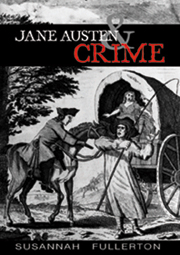 A new approach to Jane Austen seemed impossible, but Susannah Fullerton . . . has brilliantly hit on the theme of crime and punishment in Austen. Fullerton shows how the Regency world . . . was really a dangerous place with a fast rising crime rate and a legal system that handed out ferocious sentences. Her book will be essential reading for every Janeite.”-Claire Tomalin, author of Jane Austen: A Life
![The three villains in horsemen's greatcoats [Thomson, NA]](https://janeausteninvermont.blog/wp-content/uploads/2009/02/thomson-horsemen-crime.jpg?w=663 "thomson-horsemen-crime") I most appreciated Fullerton’s many references to the juvenilia – it is in these works that Austen shows us the realities of her greater society, all indeed presented in an exaggerated manner with her youthful humor, but we do see how she understood this underside of life in both London and her country villages, a knowledge also apparent in the quick, short references in her letters. For instance, in this short passage from Letter 95 [Le Faye, p. 248], Austen writes her sister from Godmersham Park:
I most appreciated Fullerton’s many references to the juvenilia – it is in these works that Austen shows us the realities of her greater society, all indeed presented in an exaggerated manner with her youthful humor, but we do see how she understood this underside of life in both London and her country villages, a knowledge also apparent in the quick, short references in her letters. For instance, in this short passage from Letter 95 [Le Faye, p. 248], Austen writes her sister from Godmersham Park: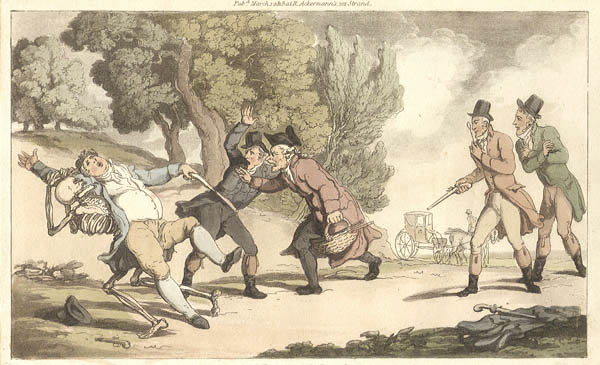

 Jane Austen in Vermont