Books · Jane Austen · Literature

A Better Title for Jane Austen’s Mansfield Park?

There is a fabulous and funny blog out there called Better Book Titles, by Dan Wilbur, a comedian and writer – he says:

This blog is for people who do not have thousands of hours to read book reviews or blurbs or first sentences. I will cut through all the cryptic crap, and give you the meat of the story in one condensed image. Now you can read the greatest literary works of all time in mere seconds!

A new Better Book Title will be posted every weekday. Every Friday a reader’s submission will be posted. Redesign and titles by Dan Wilbur unless credited otherwise. Please use proper credits when reprinting.

 It is well-worth your time to sort through the posts [you can also search for an author – go to bottom of page and click on “Archives” and a search screen will appear at the top of the page] – as expected, the Brontes are quite funny and spot-on:

[Charlotte Bronte – Jane Eyre]

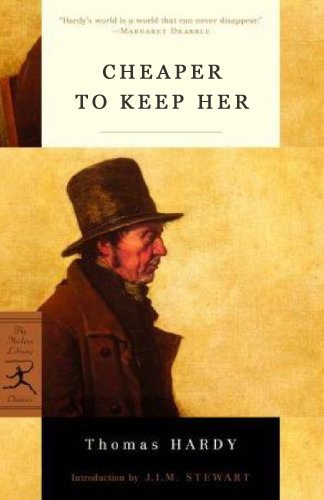
as is Thomas Hardy’s The Mayor of Casterbridge:

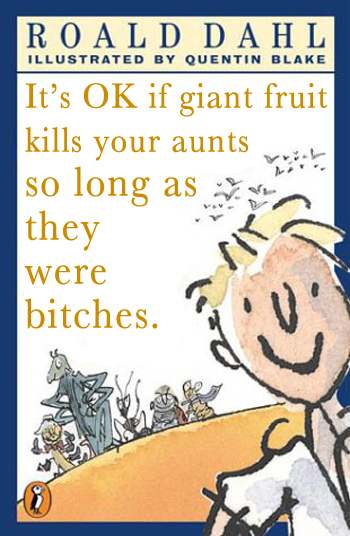
Here is one of my laugh-out-loud favorites:

[Roald Dahl – James and the Giant Peach]

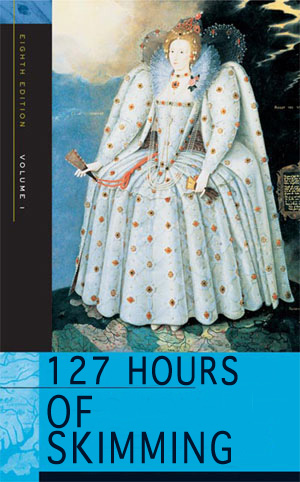
and this:

 [Norton Anthology of English Literature ]

and who can resist this by Virginia Woolf?

[ Virginia Woolf – The Waves ]

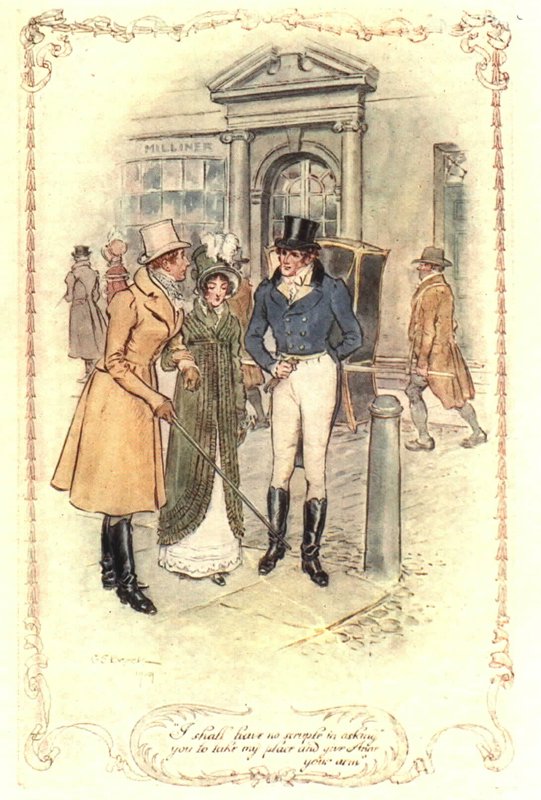
But what of Jane Austen? – well, she has only one title represented, and this a reader submission [ by Henry Schenker ] last November:

 [ Jane Austen – Mansfield Park ]

…which we can all appreciate! But surely Mr. Wilbur can come up with something for Austen’s other titles! – is it perhaps that he just can’t bring himself to read her books? – at any rate, what might you submit for an Austen “better book title”?? – put on your thinking caps and comment below!

All images from the Better Book Titles website, which you must visit – check out all the Shakespeare…

You can follow Mr. Wilbur on twitter: http://twitter.com/#!/betterbooktitle

Copyright @2011 Deb Barnum, of Jane Austen in Vermont
Jane Austen · News

Jane Austen Weekends in Vermont! ~ Two of Them!

Well, my traveling co-hort and lover-of-London buddy Suzanne, of the Governor’s House in Hyde Park, Vermont, will be hosting not just one but two Jane Austen weekends in a row:

Governor's House in Hyde Park, Vermont

This coming weekend [August 12-14] will be on Persuasion – come learn about the Royal Navy! discuss Anne Elliot’s dilemma! obsess over Captain Wentworth’s letter! [sigh…]

Then next weekend [August 19-21] the Governor’s House will be treading new ground – a weekend of guests who will each come in the guise of one of Jane Austen’s characters – here is your chance to dress up* [not required, but it helps…], speak, and act, well, act like anyone you want to be:  Mr. Collins, or Mrs. Bennet, or Mr. Darcy; or how about Mrs. Elton, Mary Musgrove, Jane Fairfax or Miss Bates, or can you resist trying a hand at Lady Catherine? – the list an endless one of endearing and annoying characters!  Maybe you will meet your very own Mr. Darcy or Mr. Knightley or find a Henry Tilney to spar with[there shall be no encouragement of the Willoughbys or Wickhams of the world, but we do hope they shall attend for the sake of the interest of all participants…]

Alas!! I cannot go, but shall try to pop in for pictures to share… but if you could go, who would you most want to be?? – remember you must act the part for the entire weekend!

You can view the details here:
http://www.onehundredmain.com/jane_austen.html

And here is the upcoming schedule for future Jane Austen weekends: call early to reserve – they fill up fast.  [There are plans for another ‘in-character” weekend, so stay tuned for an announcement.] 

Special Weekend in Character
August 19 – 21, 2011

Series 4: Persuasion

Brock illus - Persuasion - Molland's


Friday evening talk: Captain Wentworth’s Royal Navy

January 28 – 30, 2011
August 12 – 14, 2011
September 9 – 11, 2011
January 6 – 8, 2012

Book Group Weekend: Pride and Prejudice
February 25 – 27, 2011
(additional availability)

Series 5: Emma

January 27 – 29, 2012
and other dates to be announced

****************** 

Or come for just an evening and choose from these activities:
  Informal Talk with Coffee and Dessert, Friday, 8:00 p.m., $14.00
  Afternoon Tea, Saturday, 3:00 p.m., $20.00
  Book Discussion and Dinner, Saturday, 7:00 p.m., $35.00
  Jane Austen Quiz and Sunday Brunch, Sunday, 11:30 a.m., $15.00

  All four activities: $75.00

********************** 

100 Main Street•Hyde Park,VT05655
phone: 802-888-6888 • toll free: 866-800-6888
email: info [at] onehundredmain [dot] com

************************* 

*If your wardrobe is sadly lacking in proper Regency attire, here are a few links to assist you: 

So, who would you want to be?? if you had this chance, would you want to play the part of one of Austen’s annoying characters or one of her endearing ones?? – and of course that leads to – what outfit would you choose?? Please comment – inquiring minds want to know!

Copyright @2011 Deb Barnum of Jane Austen in Vermont.
Austen Literary History & Criticism · Books · Jane Austen · Query

Why Jane Austen? ~ and the winner is….

Char Brooks! 

Congratulations Char! – Please send me an email with your address and phone number by next Monday August 15, 2011 [or the names shall be put back in the hat for another random drawing!] 

Thank you all for commenting and sharing “why Jane Austen?” in your life.  For those who didn’t win, you can find the book at your local bookstore, or you can order online from the powers that be!  I highly recommend it!

And again, a hearty thank you to Rachel Brownstein for so gracioulsy visiting us here at Jane Austen in Vermont and sharing her knowledge and love of Jane Austen with us all!

And finally, one of the comments from Lev Raphael posed this question:

Where’s your most exotic locale for reading one of her books?
For me it was in a hammock in my uncle orchard outside Tel-Aviv.

A great question! – Please comment if you would like to share!

Copyright @2011 Deb Barnum, of Jane Austen in Vermont.
Austen Literary History & Criticism · Author Interviews · Books · Jane Austen

Why Jane Austen? – Book Giveaway Deadline…

Last chance to enter the book giveaway drawing for Why Jane Austen? by Rachel Brownstein:  deadline is tomorrow Wednesday August 10th at midnight – drawing on Thursday August 18.  You can comment on either of these posts, on Why Jane Austen in your life, or just stop by and say “hello”!

Part I: https://janeausteninvermont.wordpress.com/2011/07/31/rachel-brownstein-on-why-jane-austen-an-interview-and-book-giveaway/ 

Part II: https://janeausteninvermont.wordpress.com/2011/08/01/interview-and-book-giveaway-why-jane-austen-by-rachel-brownstein/

Winner will be announced Thursday afternoon…!

Copyright @2011 by Deb Barnum, of Jane Austen in Vermont
Auctions · Books · Jane Austen · Literature · Museum Exhibitions · News

The Penny Post Weekly Review ~ All Things Austen

The Penny Post Weekly Review

  August 7, 2011

It’s been way too long since the “weekly” Penny Post has arrived in your mailbox – I am afraid to change the name to “monthly” (though more accurate today!)  because then I shall not be diligent enough to get it out at all! – so some of this may be old news, but I am including it if it is worthy of a mention in case you missed it on the first go-round on the blog-sphere … 

News & Gossip:

Book Giveaway! – Don’t forget to comment on the Rachel Brownstein interview post to be included in the drawing for a copy of Why Jane Austen? – deadline is Wednesday August 17.

Chawton House Library: Jane Austen’s SENSE AND SENSIBILITY: a bicentennial celebration – Saturday 17 September 2011:  http://www.chawtonhouse.org/news/files/studydayflyerincprog0511.pdf

The Austenesque Extravagana is in full-swing at the Austenesque Reviews blog – join the fun – it lasts all month! : http://janeaustenreviews.blogspot.com/


The Circulating Library:  

The John Murray archive at the National Library of Scotland [Murray was Jane Austen’s publisher]:  http://digital.nls.uk/jma/

Dickens and Massachusetts: A Tale of Power and Transformation – at UMass Lowell:  http://www.uml.edu/college/arts_sciences/English/Dickens/default.html

At the Circulating Library: A Database of Victorian Fiction, 1837-1901 offers a biographical and bibliography database of nineteenth-century British fiction. Currently, the database contains 7335 titles by 2494 authors (more statistics). The database is hosted by the Victorian Research Web, a major and free research resource for Victorian scholars:  http://www.victorianresearch.org/atcl/

The English Novel 1830-1836http://www.cf.ac.uk/encap/journals/corvey/1830s/

British Fiction, 1800-1839http://www.british-fiction.cf.ac.uk/

Thackeray exhibit at the Houghton Libraryhttp://hcl.harvard.edu/libraries/houghton/exhibits/thackeray/


Websites, blogs, etc: 
 

Indie Jane.org:  Indie Jane is a new blog and community that celebrates and supports independent/non-traditionally published Austenesque literature:  http://indiejane.org/   [currently discussing Sense & Sensibility: http://indiejane.org/2011/08/book-club-questions-are-up/  ]

A blog just about teapots!:  http://teapotsteapotsteapots.blogspot.com/

Museums / Exhibitions: 

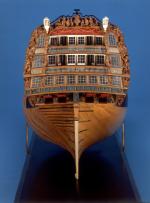
The Royal George Warship , 1756

George III ship models at the National Maritime Museumhttp://collections.nmm.ac.uk/usercollections/
7d7ded6fb50d6031e2884961a201bd85.html
 
[see other online collections here as well]

Caricature exhibition at the Library of Congresshttp://myloc.gov/Exhibitions/swanngallery/Pages/default.aspx?s_cid=500015


Articles of Interest:

A follow-up on these posts on TEA by Mary Ellen Foley: here are the links to all 5 posts: 

[And see also this link  http://www.nicecupofteaandasitdown.com/ ]

Henry Tilney alert!:  http://teachmetonight.blogspot.com/2011/07/dancing-with-metaphors.html

Thoughts on the sale of The Watsons at The Culture Concept: http://www.thecultureconcept.com/circle/in-trust-for-a-nation-a-jane-austen-treasure-the-watsons

WashingtonPost:  Five Myths about Jane Austen:  http://www.washingtonpost.com/opinions/five-myths-about-jane-austen/2011/07/08/gIQAZALCEI_story.html

A blog post on the gardens at Jane Austen’s Chawton house: http://sisterarts.typepad.com/sister-arts-gardens-po/2011/07/jane-austens-gardens.html

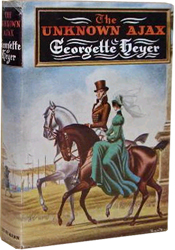
On Georgette Heyer, at Abebooks:  http://www.abebooks.com/books/historical-regency-romance-bestselling-detective/georgette-heyer.shtml?cm_mmc=nl-_-nl-_-110630-h00-georgetCA-_-01cta 

On Princess Diana – Magazine covers, 1981-1997:
http://www.howtobearetronaut.com/2011/07/diana-on-the-cover-of-a-magazine-1981-1997/?utm_source=feedburner&utm_medium=email&utm_campaign=Feed%3A+HowToBeARetronaut+%28How+to+be+a+Retronaut%29 

Byron memorial book found at a Church book sale [and thankfully donated to the Library!]:  http://www.nls.uk/news/press/2011/07/byron-memorial-book 

Diana Birchall shares her latest trip to England in ongoing posts – these so far, with tons of fabulous photographs!:

Tiles stolen from Wiltshire church where Jane Austen’s uncle was the vicar and where he is buried:  http://www.thisiswiltshire.co.uk/news/9181605.
Tiles_are_stolen_from_rural_church_for_third_time_in_under_a_month/

Book Thoughts:


Lev Raphael’s take on P&P – Pride and Prejudice: The Jewess and the Gentile: http://www.levraphael.com/pride-and-prejudice-jewess.html

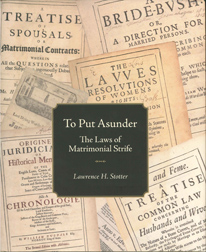
To Put Asunder: The Laws of Matrimonial Strife by Lawrence A. Stotter  http://www.oakknoll.com/detail.php?d_booknr=106293
– ISBN 9781587902109 – Price: $ 150.00   
From the website: 

Taking its cue from Matthew 19:6, “What, therefore, God hath joined together, let not man put asunder,” this book describes humankind’s actions in doing just that. 

A readable selected history of family law, To Put Asunder traverses more than two thousand years of continuing attempts by various societies to inhibit the desires of men and women, kings and commoners, to terminate their unsatisfactory marriages. The stories revealed are surprisingly engaging when the reader is introduced to the lives and personalities of some who were directly affected by family law.

The Supernatural Jane Austen series website [by Vera Nazarian]:  http://www.norilana.com/sja.htm


The Regency Period:
 

Amanda Vickery on The Old Bailey: http://yalebooks.wordpress.com/2011/07/27/amanda-vickery-returns-to-radio-4-for-series-two-of-voices-from-the-old-bailey/

A short article at How to Be a Retronaut on the science of phrenology in 1831:  http://www.howtobearetronaut.com/2011/07/sixty-miniature-heads-used-in-phrenology-1831/?utm_source=feedburner&utm_medium=email&utm_campaign=Feed%3A+HowToBeARetronaut+%28How+to+be+a+Retronaut%29

Auctions: 

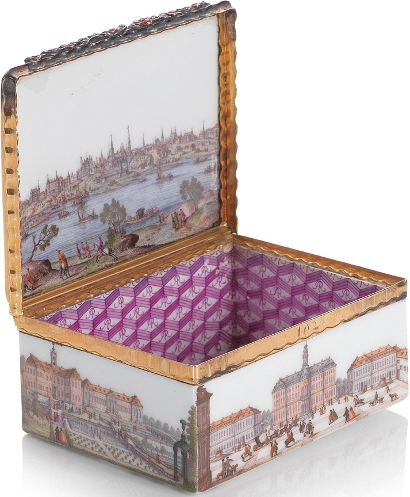
Meissen gold-mounted Royal snuff box made for Augustus III, Elector of Saxony and King of Poland: sold for 1.3 million 

The Snuff box collection at Bonhams auction sold for:  £1,700,000 ($2.7m) in London, on Tuesday July 5: http://www.paulfrasercollectibles.com/section.asp?docid=7381&n=060711  
[see the auction link for listing of all the snuff boxes and sale prices]

Shopping: 

18th century shoes at The American Duchesshttp://www.american-duchess.com/ [thank you Marti!]


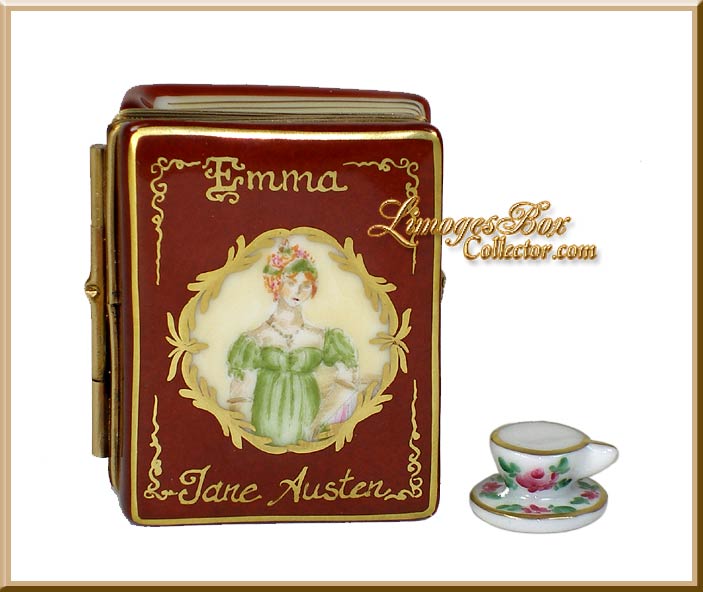
Jane Austen Limoges boxes on sale: https://www.limogesboxcollector.com/index.php?cPath=138&osCsid=s5l4u07plc3fdkqar01nbh2fp1

For Fun: 

Word Fighter gamehttp://blogs.forbes.com/traceyjohn/2011/07/20/jane-austen-throws-down-in-new-word-fighter-game/

Jane Austen’s Pride and Prejudice Trivia Game:http://www.marinagames.com/pandp/pandptrivia.html

*********************************************

If you find any especially interesting Austen-related bits, please email me – I will include items in next week’s Penny Post Weekly Review!

Copyright @2011 by Deb Barnum, of Jane Austen in Vermont 
Austen Literary History & Criticism · Author Interviews · Book reviews · Books · Collecting Jane Austen · Jane Austen · Literature

Part II: Interview and Book Giveaway! ~ Why Jane Austen? by Rachel Brownstein

Contrary to the main current of popular opinion today, Jane Austen’s novels are not first of all and most importantly about pretty girls in long dresses waiting for love and marriage; and they are not most importantly English and Heritage, small and decorous and mannerly and pleasant. Read with any degree of attention, they do not work well as escape reading: there are too many hardheaded observations and hard, recalcitrant details in them…  
[ Rachel Brownstein, Why Jane Austen? p. 247]
 

Hello Professor Brownstein! And welcome to Jane Austen in Vermont

I had the pleasure of hearing you read from your newest work Why Jane Austen? at the JASNA-Massachusetts May meeting [see photo below].  You have very graciously agreed to this interview (as well as to speak at our June 2012 JASNA-Vermont gathering!] – so I heartily welcome you today to discuss your new book on Jane Austen. 
JAIV:  You strive in this work to undercut conventional thinking on Jane Austen, by offering us a good number of “essays” on novels, authorship, women writers [but much on Byron!], neighbors, gossip, language, biography, the importance of re-reading – you move from the real life, the fictions, the use of words, and personal anecdote in such a seamless weaving of thoughts, that I marvel at the weight of each sentence [for example, I love this one:  “Emma is as nosy as a novelist about private lives” [p. 223] – one could think about that sentence for hours! 

But to start, just tell us a little about why you titled your book Why Jane Austen?

RB:  The book asks why there is so much interest in this particular long-dead woman novelist: why Jane Austen right now and not, say, George Eliot or Virginia Woolf, or Jane Austen’s contemporary, the novelist and poet Charlotte Smith?


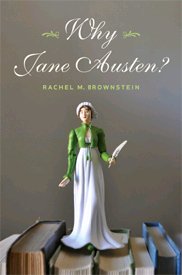
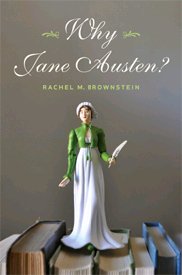
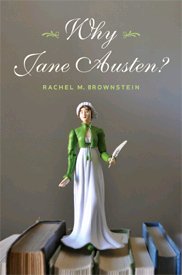
JAIV:  And one must ask about the cover! – Who decided to use the Jane Austen action figure?

RB:  It was I who brought my action figure—along with other pieces of Austeniana I own–to the office of Columbia University Press.  It was the brilliant art director who decided to put it on the cover, and the brilliant photographer, I think, who placed the figure on top of the books. 


JAIV:  I completely agree with your insistence on calling her “Jane Austen” – unable to call her “Austen” (“would have startled her, makes me wince a little” [p. 11]), nor just “Jane”, nor certainly “Dear Jane” – why is this so for Jane Austen and for no other author?

RB:  I think it’s Claire Harman, in her book, “Jane’s Fame,” who observes that she’s the only author people call by her first name alone.  This is a really interesting question.  I think she’s “Jane” because of a mix of doting indulgence and a condescension that verges on contempt—the kind familiarity brings.  It’s partly a function of her being a woman, and unmarried, and long-ago, and therefore girlish, and in some way small—you know, they talk about her small canvas, her narrow range.  It’s deplorable, really—and really a function of misreading her novels as merely delightful.


JAIV:  One of the main themes in your book is based on the Katherine Mansfield quote that serves as an epigraph:

 “The truth is that every true admirer of the novels cherishes the happy thought that he alone – reading between the lines – has become the secret friend of their author.”

Is this why you think that Jane Austen has and continues to have such a profound pull on her readers?

RB:  Yes.  I think her conspiratorial confidence in her readers is flattering and engaging.  After all, she’s so smart and so charming, and she takes us into her confidence. 

JAIV:  Your first chapter begins with Pride and Prejudice and its emphasis on “truth” – the first sentence staking its claim on the rest of the novel with this term: “it is a truth universally acknowledged” (certainly the most discussed opening line in literary history!) – you say the word “truth” occurs in Pride and Prejudicetwenty-four times, and one of your main themes is to show the power of the novel to reveal truths. This isn’t a question, but please explain a little if you can.

RB:  One of the reasons I start there is to begin to suggest it’s worth looking at the words in Jane Austen’s novels—not only the stories and the characters and the themes, but the words that convey all those.  Also, the great matter of truth is the question about novels, isn’t it: why spend time reading fictions that don’t tell you anything that’s true? What’s the value of other people’s fantasies? What can we learn from novels?  What truths do they have to tell?  Jane Austen wrote that novels are about human nature; George Eliot suggested later on that novels give a reader “a shape” for her “expectations.”  Neither of these is clear, but both seem to me very suggestive.   

Jane Austen’s novels, it seems to me, raise questions about the language in which we say what’s true and not true, and therefore about the capacity to know and tell truths, or the truth.
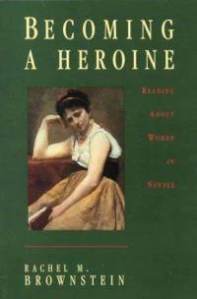
 

JAIV:  Your seminal book Becoming a Heroine: Reading about Women in Novels was published in 1982, and re-published in 1994 with a new postscript.  You were then trying to place your own learning and thinking and writing in the context of the feminist criticism of the previous decade.  Are there any shifts in your thinking since then that you could comment on? [You mention that this new book is really an atonement – that such previous readings of Jane Austen as “a paragon of proto-feminist romance” are misreadings, i.e. “not reading her as she is meant to be read.” [p. 8]  – and that Why Jane Austen? is written in “defense of Jane Austen and in self-defense as well…” [p. 10]]

RB:  I’m a little tongue-in-cheek about the matter of atonement, and a little serious too.  I’m sorry about some things that have been done in the name of feminism, but I continue to be a feminist, and a feminist literary critic, and I am especially feminist as a meta-critic, or critic of the critics.  It seems to me immensely important that Jane Austen was a woman. 

Austen’s relationship to romance is complicated: she wrote romances that are also anti-romances.  Reading them as books about women’s issues, I think, does Jane Austen a disservice. They are about men and women, and dreams and realities, and greed and social climbing.  She said they were about human nature; and she adds that they are written in “the best chosen language.” My argument is that it’s worth paying attention to all of that, not only to some of it. 


JAIV:  Again about Becoming a Heroine: Would you write about the same books today? [note: Heroine contains a full chapter on Jane Austen that touches on all her novels; the other works discussed in separate chapters are: Richardson’s Clarissa; Charlotte Bronte’s Villette; The Egoist by George Meredith; George Eliot’s Daniel Deronda; Henry James’s Portrait of a Lady; and Mrs. Dalloway by Virginia Woolf] 

RB:  No—but I still love all those novels, and enjoy teaching and talking about them. 

JAIV:  So if “No”, what works would you write about now?

RB:  I don’t think I can answer your question about the books I’d include in another version of “Becoming a Heroine”–I’d have to write another book. In other words, the novels I DID write about there come together in a series or sequence that (to my mind) suggests a development in the idea of a heroine. A novel reader who has an even slightly different idea could set up a different sequence of novels.  So no, there’s nothing I’d change, unless I changed everything–or something basic in the central idea.


JAIV:  This new work is similar to Heroine in being more a meditation on Jane Austen, combining scholarly and textual analysis, literary biography, historical context, all melded together with your own story as a reader, a student, and a teacher.  I found it a very engaging read, each sentence packed-full, the approach to the subject very different from the usual scholarly work.  As soon as I finished, I knew a re-read was required, not to mention the need to re-read all of the novels and look again with your critical eye!  If one could take only one thing from this book, what would you want it to be?

RB:  Thank you for your very kind words.  The one thing I would want a reader to take from my book is this: go and reread Jane Austen!


JAIV:  You write constantly posing questions to the reader – a wonderful teaching strategy! – and especially effective in one’s efforts to make a “Life of Jane Austen” out of the details in the novels – and in our efforts to find her in her characters, in her language, in her plots, we find her all the more illusive..  We cannot help ourselves – we have only such scant tidbits of information! Why do you think this is a dangerous approach?

RB:  It’s dangerous if you believe the life story you compose for Jane Austen—but taken with a grain or two of salt it’s fun. 

JAIV:  Your personal story that you so generously weave through this book is similar in some ways to William Deresiewicz’s new work A Jane Austen Education [and he indeed writes a lovely blurb for your work on the jacket cover (note: this is quoted in yesterday’s post)] – at least your “confession” of early on being way too clever and cool to read Jane Austen, then later way too clever and cool to not be in the know about Jane Austen – do you think that this is still the view of readers / non –readers of Jane Austen?

RB:  Deresiewicz, who is a generation younger and a man, says he started out thinking those classic novels were dull and boring, and not for readers like him. My story is very different.  When I was in college—and I went to a woman’s college, in the mid-1950s–literary girls were expected to know Jane Austen without taking a course in the novels.  My freshman English teacher engaged me in a conversation about Pride and Prejudice although it was not assigned reading: it was as if just because you were a young woman reader you already knew your Jane Austen.  Things are different now: being in the know about Jane Austen has changed a lot since then.  Today, for many people, it means being up on the latest pop-cultural Jane-related phenomenon, the zombies or whatever.


JAIV:  Any comment on Deresiewicz’s book? – it seems to have generated mixed reviews.

RB:  Let’s take another page from Jane Austen’s book—Northanger Abbey—and leave the reviewers out of it.  The Deresiewicz book is a lively read and the voice is engaging.  And I am amused by the idea of a man owning up to learning life lessons from Jane Austen. 

   
JAIV:  I like your answer of taking that cue from Jane Austen

There are a number of anecdotes you tell where you put yourself in time and place (and these are not always pleasant encounters!) – is there any concern of people discovering themselves between the pages? – or is everything politely disguised?

RB:  I don’t know about politely.  I scrambled details, left things out, and added bits, and no one actually real is all there, I sincerely hope.  You’ll recognize the echo of Henry Austen: my aim was to write about human nature, not individuals.


JAIV:  Which Jane Austen novel did you first read? Does it remain your favorite? [a horrible question, but one must ask!]

RB:  Pride and Prejudice: a predictable answer, but one must try to tell the truth. 

JAIV:  Your commentary about the movie adaptations – “adaptation is translation” [p. 35] is a wonderful essay.  You mention loving “Clueless” – can you share what other of the various adaptations worked the best? The least?

RB:  I admire Roger Michell’s beautiful film version of Persuasion, and I found lots to like in the astute choices made in making the Emma Thompson -Ang Lee Sense and Sensibility.  And of course I love the BBC miniseries of Pride and Prejudice—so much that Joe Wright’s version, starring the thoroughly miscast Keira Knightley, seems to me all wrong.

JAIV:  The inevitable Sequels / Continuations question:  What are your thoughts!?

RB:  Some work; others don’t; several work well in parts, but don’t measure up.  Jane Austen sets the bar very high.  I was surprised and delighted by the first half of Colleen McCullough’s The Independence of Miss Mary Bennet.   


JAIV:  Well then, I must ask what you think about the second half!

RB:  I was disappointed in the second half of “Miss Mary Bennet” because the emphasis moved–disproportionately, I felt–from Mary to Darcy, and the plot thickened too much.  I liked the stuff that seemed Austenian but a little outre–Mary and her money falling in the muck–and was less interested in the stuff about enslaved children imprisoned in caves.  It is of course very professional–being by a pro–but then it gets extravagant and falls apart.  It’s Darcy’s fault.


JAIV: Oh dear! – I thought Darcy could never be at fault for anything! 

But as for another of Jane Austen’s heroes, you call Edward Ferrars “morose, depressed, self-involved, and boring” [p. 247] – are you in the camp of preferring Colonel Brandon as the more proper mate for Elinor? What then happens to Marianne?

RB:  I was writing as a reader, not a novelist. 

 JAIV:  Good answer! 

You speak of Jane Austen’s best readers being those who feel they are complicit with her take on human nature – I could say the same about your writing – you invite the reader into your secret world of ‘Understanding the truth about Jane Austen’ – you brought me into your world years ago when I read of you [in Heroine] as a fifteen-year-old hiding out in the bathroom reading Henry James hugging your “secret knowledge that [your parents] were harboring a viper in their bathroom.” [p. 5]  I love this!  Do you find students still coming to you with that wide-eyed wonder of discovering literature as transporter, as transformer?

RB:  Yes.  This is one important reason why I continue to love teaching.


JAIV:  You make many references to “best readers” or “reading well” or “close readers”  – how I would have loved to taken one (or more!) of your classes, where you question, question, question, to make the student sit up, take notice, and shift his / her thinking –  [you offer a wide range of bibliographical references that shall add weight to my bookshelves and deduct funds from my book budget!] –  How does one become such a reader without going back to school?!

RB:  I’m with Elizabeth Bennet, when she tells Lady Catherine, of her and her sisters, that “We were always encouraged to read.”  Read and reread, is my advice—and don’t believe everything you read.


JAIV:  Your chapter on “Why We Reread Jane Austen” focuses on Emma – and you devote a number of pages to just the use of the word “understanding” – can you tell us a little about this?

RB:  I’m fascinated by the word and by the process of coming to understand something or someone and by what Locke called “the understanding,” the mind.  And you can see that word as a key to Emma, where insistent repetitions of the word begin to make the reader understand its shades of meaning.  The heroine prides herself on her understanding, or intellectual power, but she misunderstands what’s going on, and imagines mutual understandings among her friends—relationships, we call them–that sometimes do and sometimes don’t exist. 


JAIV:  Your last sentence:

 “And in the face of the Kindle and the Nook, the iPad and the graphic novel, not to mention the ongoing crisis in education and the widely lamented decline of serious reading, there is some anticipatory nostalgia as well for the once-thriving, once-glamorous, once-literary book business.” 

Can you explain your concerns?

RB:  I was nostalgically harking back to a time when the book business was more literary, and not so commercially driven. 

 
JAIV:  In your Heroine, you tell an amusing anecdote about visiting your Doctor and his comments about Georgette Heyer, and in so doing give a lovely tribute to her writings.  Have you continued to read her?  Can I ask that horrible question again of which is your favorite? 

RB:  I haven’t read Heyer for such a long time – I adored all the novels with their saucy heroines years ago; I’m going to revisit them again; but I’m afraid I have nothing more to say about them now… sorry! 


JAIV:  The oft-asked question of a writer:  How do you work? 

RB:  In fits and starts—and with a lot of false starts.  I’ve finally learned to write on my laptop, but I still have to print the thing out and go over it with a pen, and that remains my favorite part of the writing process.


JAIV:  And finally, have you ever written any fiction yourself?  Is there a novel in you somewhere??

RB:  Yes I have, and Yes I think there is, but No, I’m not ready to talk about it.


JAIV:  Anything else you would like to share

RB:  Thank you.  I enjoy the opportunity to clarify what I might have left unclear, and I enjoy the chance to keep on talking about Jane Austen.  One of the things I learned from Lionel Trilling—the mid-20th-century critic whose last unfinished essay, “Why We Read Jane Austen,” is echoed by the title of my book—is that the conversation around Jane Austen is almost as interesting as what she herself says.  I am always eager to engage in that conversation, which always interests me.

JAIV:  Thank you so much Rachel for joining us today – it is true that the conversation around Jane Austen is endlessly interesting! – and your book asks many probing questions of its readers for those conversations to continue!  

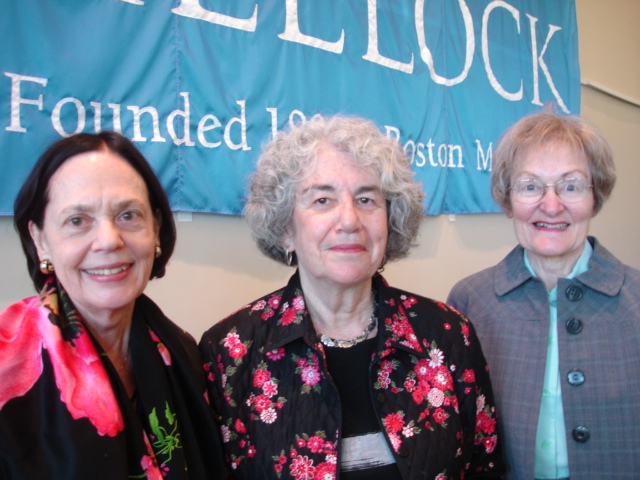
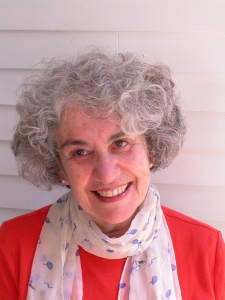
l. – r.: Marcia Folsom, Rachel Brownstein, and Nancy Yee,
JASNA-Mass Meeting, May 2011 at Wheelock College
[photo – D. Barnum]

*******************

 Book Giveaway!

If anyone has a comment or a question for Professor Brownstein, please post it on either this post or yesterday’s post – – you might like to answer “Why Jane Austen? in your own life! –

 You will be entered into the Book giveaway random drawing for a copy of Why Jane Austen?  – the deadline is midnight next Wednesday night August 10, 2011 – Winner will be announced on Thursday August 11, 2011  [worldwide eligibility].

************************

Why Jane Austen?, by Rachel Brownstein
Columbia University Press, 2011
ISBN:  978-0231153904 ; $29.50
search inside at Amazon.com

About the Author: Rachel M. Brownstein is professor of English at Brooklyn College and the CUNY Graduate Center. She is the author of two critically acclaimed books, Becoming a Heroine: Reading About Women in Novels and Tragic Muse: Rachel of the Comédie-Française.

Click here for my review and bibliography

Copyright @2011 by Deb Barnum, of Jane Austen in Vermont
Austen Literary History & Criticism · Books · Collecting Jane Austen · Jane Austen · Jane Austen Popular Culture · Literature

Part I: Rachel Brownstein on Why Jane Austen? ~ An Interview and Book Giveaway!

Why Jane Austen? indeed! We might all ask that of ourselves, the question of why she is still avidly read these 200 years later; why the movies; why the many continuations, the fan fiction and the mash-ups; why all the Austen-related blogs and social networking sites; and why the continuing scholarly interest in finding and discussing yet another approach, another meaning.  A few years ago we had Jane’s Fame by Claire Harman (Cannongate, 2009) and Jane Austen’s Textual Lives by Kathryn Sutherland (Oxford, 2005), both brilliant analyses of the past two centuries of Jane Austen studies and cultural popularity.  Now in the bicentennial year of Austen’s first published work, Rachel Brownstein has given us an engaging treasure-filled meditation on Jane Austen as writer, woman, social commentator, and 21st-century icon.  Don’t miss reading this book…

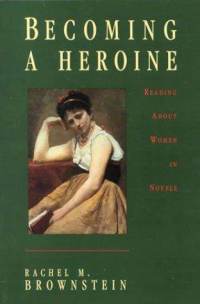
I had the good fortune to hear Dr. Brownstein speak to the JASNA-Massachusetts region this past May.  Brownstein has been one of my very own heroines ever since the publication of her Becoming a Heroine: Reading about Women in Novels (Viking, 1982), where she weaves her own personal narrative into an analysis of the various feminist literary critical approaches to late 18th and 19th century literature.  Heroine is notable also for its loving critique of Austen’s six novels – it is a must read.  [She further discusses Richardson’s Clarissa, Bronte’s Villette, George Meredith’s The Egoist, Daniel Deronda by George Eliot, Portrait of a Lady by Henry James, and Virginia Woolf’s Mrs. Dalloway.] 

But what I love most about this book was her own story, her hiding in the bathroom at fifteen, behind a locked door, discovering literature, and “feeling transformed into someone older, more beautiful and graceful, moving among people who understood delicate and complex webs of feeling, patterned perceptions altogether foreign to my crude ‘real’ life … [all the while hugging] the secret knowledge that [her parents] were harboring a viper in their bathroom.” [p. 5] – didn’t we future English majors all find ourselves in that bathroom?

So what does an early feminist critic make of Jane Austen’s continuing popularity? And how as an English professor does Brownstein  make Jane Austen relevant to a college student in the 21st century, most all baffled by and suspicious of Austen’s world where “virgins are bent on finding rich husbands and no one works”, where everything is really about love and money, but we are shown nothing of the sex or the working [quoting Brownstein, May, 2011].

At this May talk, Dr. Brownstein read from her first chapter, surely making each of us wishing to be transported into one of her classrooms, to have her question our complacent assumptions, to dare to strip the works of all the critical analysis and take each sentence, each word back to the writer who wrote them – she dares us to be better readers, closer readers, understanding more with each re-read.  What does Jane Austen say to us and why does she continue to speak to us 200 hundred years later? 

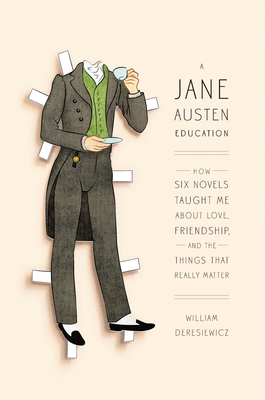
I read this book on the heels of William Deresiewicz’s A Jane Austen Education: How Six Novels Taught me About Love, Friendship, and the Things That Really Matter (Penguin, 2011) – also a meditation of sorts, a very engaging personal one on how reading each of the novels changed the author’s life, each chapter a probing essay on how he saw way too much of himself in the least–liked of Austen’s characters.  Deresiewicz’s is an easy read, a well-written journey of discovery and we willingly and happily go along for the ride, having countless ah!-ha! moments as we nod in agreement at his insights.  But while Brownstein’s Why Jane Austen? is similar in its personal aspects, it is a far more scholarly text, with extensive notes, referencing previous criticism, biographies and popular culture run amok [what she calls “Jane-o-mania”, deliberately following the term “Byromania’ [p. 6]] with such a slight-of-hand, so jam-packed, that just like an Austen novel, a re-read is absolutely required!

Deresiewicz, incidentally, offers a lovely tribute on the cover of Why Jane Austen? – it is worth sharing:

Why Jane Austen? Is a warm-hearted, personal, and humane meditation on Austen and Austenolatry.  It is also in the tradition of Becoming a Heroine, smart, witty, eloquent and joyfully wide-ranging, a mixture of anecdote, cultural criticism, biography, literary history, and close reading.  By bringing serious literary thought to a wider audience – the book is accessible to anyone acquainted with Austen’s novels – it performs one of the most important services of humanistic scholarship.

I cannot say it better myself! In this book where the emphasis in on truth, the truth that fiction affords us, Brownstein shows us by beginning her work with an epigraph of Katherine Mansfield’s famous comment on Austen:

The truth is that every true admirer of the novels cherishes the happy thought that he alone – reading between the lines – has become the secret friend of their author.

– she shows us that we who read and re-read Austen indeed become sure and fast friends, illusive though she be.  Brownstein just brings us closer, and it is a lovely journey.

***********************

Book Giveaway!!

Dr. Brownstein has been most gracious in doing an interview here at Jane Austen in Vermont [as well as coming to speak to our JASNA-Vermont region in June 2012! – we cannot wait!]  Please join me tomorrow when I post the interview, and hear directly from Prof. Brownstein as to “why Jane Austen?” –  any comments and questions will be forwarded to Dr. Brownstein for her response – you indeed might like to address “Why Jane Austen? in your own life!

 You will be entered into the Book giveaway contest for a copy of Why Jane Austen? by leaving a comment on either this post or on tomorrow’s interview – the deadline is midnight next Wednesday night August 10, 2011 – Winner will be announced on Thursday August 11, 2011  [worldwide eligibility].

*****************************

Further reading:

**Note the following upcoming event: Reading at Gibson’s Bookstore, Concord, NH. Thursday, August 25 at 7 p.m. – come in costume! see the flyer here: Why Jane Austen

 *****************************

BIBLIOGRAPHY 

Works: 

Becoming a Heroine: Reading about Women in Novels. New York: Viking, 1982 [reprinted Columbia UP, 1994 with a new postscript]

“ChosenWomen.” Out of the Garden: Women Writing on the Bible.  Ed. Christina Buchmann and Celina Spiegel. New York: Ballantine, 1994.

“Endless Imitation: Austen’s and Byron’s Juvenilia.”  The Child Writer from Austen to Woolf.  Ed. Christine Alexander and Juliet McMaster. Cambridge: Cambridge UP, 2005. 122-37. [reviewed in JASNA Newshttp://www.jasna.org/bookrev/br222p17.html ]

“England’s Emma. Persuasions 21 (1999): 224-41.

“The Importance of Aunts.” Fay Weldon’s Wicked Fictions. Ed. Regina Barreca. Lebanon, NH: UP of New England, 1994.  [pp.]

“Interrupted Reading: Personal Criticism in the Present Time.”  Confessions of the Critics. Ed. H. Aram Veeser. New York: Routledge, 1996. 29-39.

Northanger Abbey, Sense and Sensibility, and Pride and Prejudice.” The Cambridge Companion to Jane Austen. Ed. Edward Copeland and Juliet McMaster. Cambridge: Cambridge UP, 1997. 32-57.

“Out of the Drawing Room, Onto the Lawn.”  Jane Austen in Hollywood. Ed. Linda Troost and Sayre Greenfield. Lexington, KY: UP Kentucky, 1998. 13-21.

 “Personal Experience Paper.” Personal Effects: The Social Character of Scholarly Writing. Ed. Deborah H. Holdstein and David Bleich. Logan, UT: Utah State UP, 2001. 220-31. 

“Rachel, au Coeur des lettres.” Rachel, Une Vie Pour le Théâtre, 1821-1858. Paris: Musée d’art et d’histoire du Judäisme, 2004.  41-55.

“Romanticism, a Romance: Jane Austen and Lord Byron, 1813-1815.”  Persuasions 16 (1994): 175-84.     

Tragic Muse: Rachel of the Comedie-Francaise. New York: Knopf, 1993. 

Book Reviews:

Rev. of Jane Austen, by Deirdre Le Faye. http://www.jasna.org/bookrev/br153p25.html

“Tenderized.” Rev. of The Uncommon Reader, by Alan Bennett.  Commonweal 135, 10 May 2008.

Rev. of Our Kind: A Novel in Stories, by Kate Walbert. WSQ: Gender and Cutlure in the 1950s. 33. 3-4 (2005): 365-68.

“What Becomes A Legend.”  Rev. of Blonde, by Joyce Carol Oates, and Seeing Mary Plain, by Frances Kiernan. The American Prospect, August 28, 2000.

Rev. of Secrets of the Flesh: A Life of Colette, by Judith Thurman.  Boston Sunday Globe, October 31, 1999.

Rev. of God’s Funeral, by A.N. Wilson.  Boston Sunday Globe, June 20, 1999.

Rev. of I Married a Communist, by Philip Roth. Commonweal, January 15, 1999.

Rev. of Shakespeare: The Invention of the Human, by Harold Bloom. Boston Sunday Globe, November 1, 1998.


Recent web articles and links:

A radio interview with Mark Lynch of “Inquiry” on WICN (90.5 FM), on NPR:
http://www.wicn.org/podcasts/audio/rachel-m-brownstein-why-jane-austen

Rachel Brownstein’s response to the Kathryn Sutherland kerfuffle last November on the Language Log blog: http://languagelog.ldc.upenn.edu/nll/?p=2805

The Daily Beast – her response to V. S. Naipaul on Jane Austen http://www.thedailybeast.com/articles/2011/06/23/jane-austen-unsentimental-writer-for-our-times.html

The Huffington Post:  Jane Austen books you may not have discovered yet – Professor Brownstein offers up 11 lesser known works:  http://www.huffingtonpost.com/rachel-m-brownstein/jane-austen-books_b_885281.html#s298967&title=Northanger_Abbey

The Page 99 Test blog: http://page99test.blogspot.com/2011/06/rachel-brownsteins-why-jane-austen.html

An essay by Professor Brownstein at Austenprose:  http://austenprose.com/2011/06/28/why-jane-austen-blog-tour-with-author-rachel-m-brownstein-and-a-giveaway/

An essay at the Montreal Reviewhttp://www.themontrealreview.com/2009/Why-Jane-Austen.php


Reviews of Why Jane Austen?:

At the Chronicle of Higher Education, by Gina Barreca: http://chronicle.com/blogs/brainstorm/37550/37550

At The New York Times:  “Lessons from Jane Austen” by Miranda Seymour: http://www.nytimes.com/2011/06/12/books/review/book-review-a-jane-austen-education-and-why-jane-austen.html?_r=2&ref=review

at Simple Pleasures Books blog: http://simplepleasuresbooks.wordpress.com/2011/07/01/book-review-why-jane-austen-by-rachel-m-brownstein/

at Bluestalking Bloghttp://bluestalking.typepad.com/the_bluestalking_reader/2011/06/why-jane-austen-by-rachel-brownstein.html

this just added: “A Pleasure, but not a guilty one” at Commonweal.com –  http://commonwealmagazine.org/verdicts/?p=413

 Copyright @2011 by Deb Barnum, of Jane Austen in Vermont
Auctions · Jane Austen · News

Strange Bedfellows ~ Jane Austen and Sports Illustrated?

Well, maybe not such strange bedfellows after all ~ Jane Austen did, as we all surely know, invent baseball [and here], so why not give her a well-deserved mention in Sports Illustrated?

I write this because my son went out of his way to drive over to my house just to show me what he assumed would be a glorious surprise – a Jane Austen siting that I surely couldn’t know about!  But alas! I had to tell him the truth that I already did know about not only the sale of The Watsons manuscript, but also the Sports Illustrated mention! – he is now more impressed than ever with my literary detective abilities, my ceaseless knowledge of everything and anything on Jane Austen [thank goodness for google alerts!] – but I felt that his efforts deserved a blog post, so here it is:

Go Figure

$1.4 million

Price fetched at auction by Sheffield FC, the world’s oldest soccer club, for its printed and handwritten versions of the game’s original rules, which were drafted in 1858.

$1.6 million

Price fetched at the same auction for the original draft of Jane Austen’s unfinished novel The Watsons.

Click here to see it on the page in SI: Austen Sports Illustrated

******************************

Now I realize the SI editors were just following the same auction and wanted to show the comparison between the value of some old soccor rules and classic literature, but can this mean that Jane Austen in the Swimsuit issue will not be far behind?

‘Mermaids at Brighton’ – William Heath, c1829

[Image: Wikipedia]

 Copyright @2011 by Deb Barnum, of Jane Austen in Vermont
Jane Austen · Jane Austen Merchandise · Jane Austen Popular Culture · News

Jane Austen Cards for Every Occasion!

Jane Austen at home in Bath

I received the information on these cards just before I was off on a holiday, so just now getting to post about them…. 

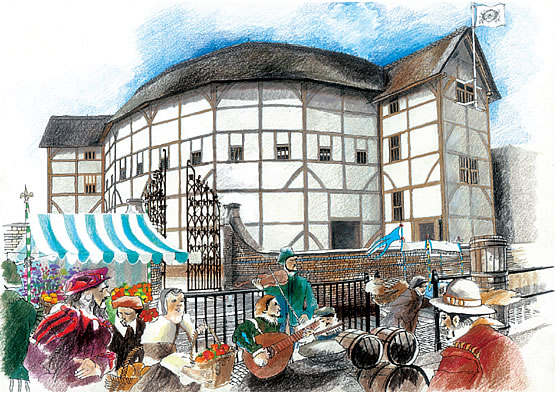
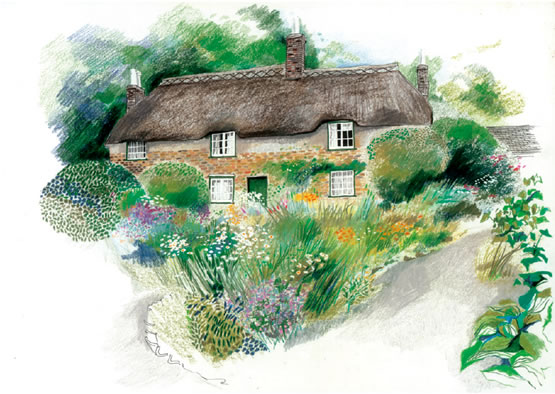
Tony Heaton’s “Greetings from England” line of cards and limited edition prints are quite lovely, our interest being of course those connected to Jane Austen [though certainly not limited to Austen only [isn’t that a name of a blog out there somewhere?] as I for one cannot resist the Shakespeare, the Hardy,  or a number of the grand stately houses he depicts.   Mr. Heaton, MDesRCA, kindly sent me several samples of the Jane Austen set – I will be ordering a number of each to sell at our meetings to benefit our JASNA-Vermont group.

Here is a sampling of what you will find when you visit the Greetings from England website:  

[the images below are very small – go to the website to see a full-size image – the cards are quite large (8×6) and suitable for framing if you did not want the expense of a limited print (which are 12×18)]

Shakespeare’s Globe Theatre:


Thomas Hardy’s cottage:


Wordsworth’s cottage:

The Cerne Abbas Giant:

There are many Heritage sites in the UK – from Westminster Abbey, The Tower of London, Greenwich’s Royal Naval College, to the coastline of West Dorset and East Devon…

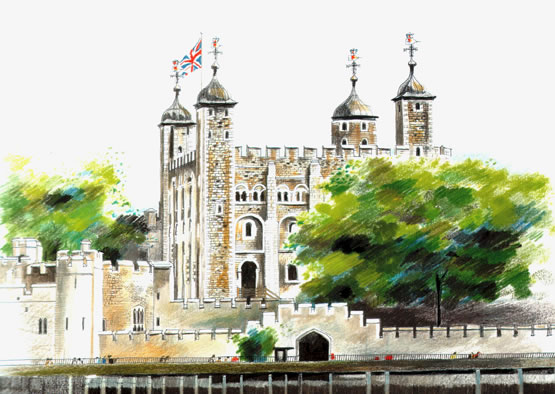
Tower of London

And for Jane Austen? – for that is why we are here after all…

Chawton Cottage
Royal Crescent, Bath

and Jane Austen’s Bath:

There are a number more, so please visit the site to see these and more full-sized images at:  http://www.greetingsfromengland.co.uk/

***************************

And this lovely little surprise, as I find if all does not come back to Jane Austen, it is sure to come full circle to Vermont:

The American Museum in Britain – Vermont Quilt
Detail of one side of a Log Cabin-Barn Raising quilt made by
Sarah Bryant of Mount Holly, Vermont, New England USA – 1886
*************************

*All images from the Greetings from England website, copyright Tony Heaton, and used with permission.  Please request permission directly from Mr. Heaton for re-use of any kind.  Mr. Heaton also creates home portraits – contact him at his website for further information.

Copyright @2011 by Deb Barnum, of Jane Austen in Vermont.
Jane Austen · Regency England · Social Life & Customs

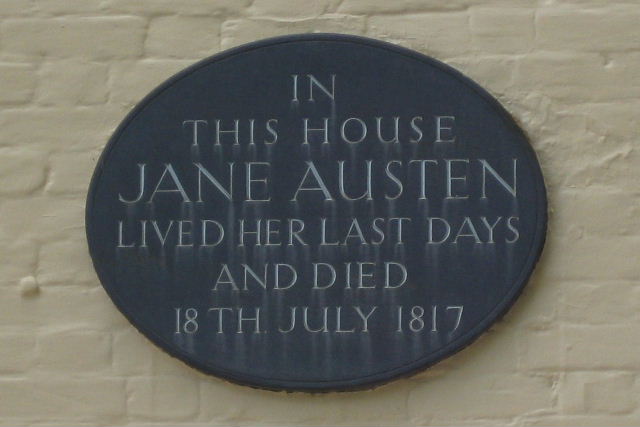
In Memory of Jane Austen ~ July 18, 1817

[I append here the post I wrote last year on this day]

July 18, 1817.  Just a short commemoration on this sad day…

No one said it better than her sister Cassandra who wrote

have lost a treasure, such a Sister, such a friend as never can have been surpassed,- She was the sun of my life, the gilder of every pleasure, the soother of every sorrow, I had not a thought concealed from her, & it is as if I had lost a part of myself…”

(Letters, ed. by Deidre Le Faye [3rd ed, 1997], From Cassandra to Fanny Knight, 20 July 1817, p. 343; full text of this letter is at the Republic of Pemberley)

There has been much written on Austen’s lingering illness and death; see the article by Sir Zachary Cope published in the British Medical Journal of July 18, 1964, in which he first proposes that Austen suffered from Addison’s disease.  And see also Claire Tomalin’s biography Jane Austen: A life, “Appendix I, “A Note on Jane Austen’s Last Illness” where she suggests that Austen’s symptoms align more with a lymphoma such as Hodgkin’s disease.

The Gravesite: 

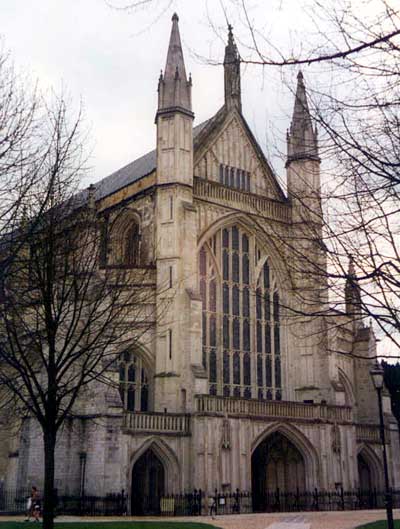
Austen is buried in Winchester Cathedral

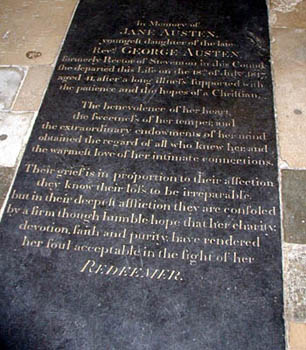
….where no mention is made of her writing life on her grave: 

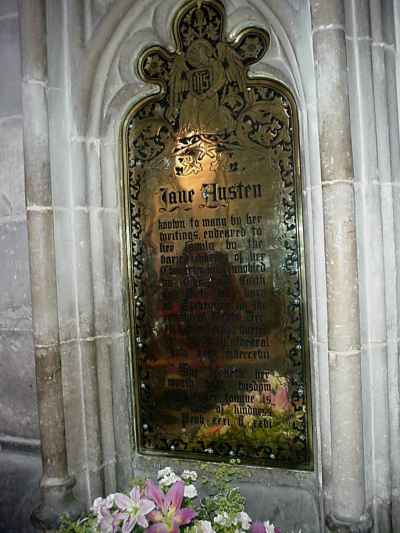
It was not until after 1870 that a brass memorial tablet was placed by her nephew James Edward Austen-Leigh on the north wall of the nave, near her grave:

It tells the visitor that:

Jane Austen

[in part] Known to many by her writings,
endeared to her family
by the varied charms of her characters
and ennobled by her Christian faith and piety
was born at Steventon in the County of Hants.
December 16 1775
and buried in the Cathedral
July 18 1817.
“She openeth her mouth with wisdom
and in her tongue is the law of kindness.”

The Obituaries:

David Gilson writes in his article “Obituaries” that there are eleven known published newspaper and periodical obituary notices of Jane Austen: here are a few of them:

  1. Hampshire Chronicle and Courier (vol. 44, no. 2254, July 21, 1817, p.4):  “Winchester, Saturday, July 19th: Died yesterday, in College-street, Miss Jane Austen, youngest daughter of the late Rev. George Austen formerly Rector of Steventon, in this county.”
  2. Hampshire Telegraph and Sussex Chronicle (vol. 18, no. 928, p. 4)…”On Friday last died, Miss Austen, late of Chawton, in this County.”
  3. Courier (July 22, 1817, no. 7744, p. 4), makes the first published admission of Jane Austen’s authorship of the four novels then published: “On the 18th inst. at Winchester, Miss Jane Austen, youngest daughter of the late Rev. George Austen, Rector of Steventon, in Hampshire, and the Authoress of Emma, Mansfield Park, Pride and Prejudice, and Sense and Sensibility.  Her manners were most gentle; her affections ardent; her candor was not to be surpassed, and she lived and died as became a humble Christian.” [A manuscript copy of this notice in Cassandra Austen’s hand exists, as described by B.C. Southam]
  4. The Hampshire Telegraph and Sussex Chronicle published a second notice in its next issue (July 28, 1817, p. 4) to include Austen’s writings.

There are seven other notices extant, stating the same as the above in varying degrees.  The last notice to appear, in the New Monthly Magazine (vol. 8, no. 44, September 1, 1817, p. 173) wrongly gives her father’s name as “Jas” (for James), but describes her as “the ingenious authoress” of the four novels…

[from Gilson’s article “Obituaries”, THE JANE AUSTEN COMPANION [Macmillan 1986], p. 320-1]  

Links to other articles and sources:

Copyright @2011 by Deb Barnum, of Jane Austen in Vermont